Crab Nebula (M1) — supernova remnant imaged by Herschel and Hubble Space Telescopes

Category: Essays

Essays on energy science and physics

Crab Nebula (M1), supernova remnant · ESA/Herschel/PACS; NASA, ESA & A. Loll/J. Hester (Arizona State Univ.) · NASA Image Library ↗

  • THE BLACK HOLE EXCLUSION PRINCIPLE

    ENERGY SCIENCE ESSAY NO. 6A

    THE BLACK HOLE EXCLUSION PRINCIPLE

    Copyright, Harold Aspden, 1997

    Abstract: In this Essay I attack the standard cosmological doctrine of the Black Hole and point to the fallacies in what is being written on that subject in books which, as best sellers, merely entertain a gullible public by deception practiced under the guise of being good science. To be true, the authors, in the main, are merely echoing the views of others who claim to know their science, but, collectively, this is a case where the blind merely lead the blind. The sad side of all this is that science has intruded into religious belief and brought more confusion into what we are free to imagine about the wonders of Creation.

    INTRODUCTION

    I have shown in Essay No. 6 why it is that the atom is not a self-luminous object bent intent on its own destruction. It is not because there is a tiny ‘Black Hole’ at the centre of each atom pulling the light back by its gravity force. No, it is because, as my physics tell me, the electrons in the atom work together defensively as a team. They avoid scoring an ‘own goal’ by playing in positions which keep the ball in play without scoring any goals at all! No energy quanta are released unless there is intrusion from the external world.

    As I explained in Essay No. 6, the familiar radiation of electromagnetic waves by a radio antenna results from the concerted efforts of electrons which are forced into a radiating situation so as transfer energy to the external world. However, left alone, those electrons will try to take up residence in an atom in the metal of the antenna and will hibernate in that inner world.

    My argument in Essay No. 6 was that one needs to understand how an electron conserves itself, before trying to understand why the electron structure of an atom does not self-destruct. One needs to understand how an electron can cooperate with other electrons to radiate electromagnetic waves before one can understand how those electrons live together in that atom. That is why I traced the error in Larmor’s derivation of the Larmor formula, though the real error was made by those scientists who applied the formula to an isolated electron. Energy is conserved and the property of the inertial mass of an electron arises because that energy is conserved and not radiated by the electron.

    The Exclusion rules governing the quantum states of electrons in the atom are nothing other than the permitted rules of play by which the Larmor formula will conform to a no-radiation condition. That was the subject I wrote about in Essay No. 6.

    Physicists should learn from that lesson and take to heart the observation that, until they understand the true nature of the gravitational action of that inertial mass property, they have no right to be speculating about how G, the Constant of Gravity, performs inside their so-called ‘Black Hole’.

    Yet, to my utter astonishment, I see that the Pauli Exclusion Principle, which helped atomic physicists to interpret the electron structure of the atom, has been dragged into play as a governing principle which controls the size of collapsed stars! Can it be that the no-radiation theme of my interpretation of the Larmor formula is at work in the so-called ‘Black Hole’? No, all that the Pauli Exclusion Principle does, so they say, is to stop the star from contracting too far under the force of gravity, but yet sufficiently for the gravity field close to the very compact stellar mass to be so powerful that it prevents the escape of light.

    Well, if you can believe that, you must know something about protons, electrons and neutrons, that I do not know, and here I ask you to take stock of what you really know about neutrons. Protons will not allow themselves to be compressed together by the pull of gravity. They repel one another with a powerful electrostatic force and those electrons will, by their mutual repulsion, form an outer encapsulating sphere of charge around what inevitably is extended sphere of charged plasma. So you have to put your faith in neutrons to contemplate stellar collapse.

    I will, therefore, now digress onto the topic of the neutron and take a look at those books on cosmology to see what they have to say about the properties of the neutron.

    ABOUT THE NEUTRON

    I refer to a book entitled ‘The Whole Shebang’ by Timothy Ferris. Here, in a book published in 1997 by Wiedenfeld and Nicholson, London, are some 393 pages devoted to the Cosmos, the ‘Big Bang’ and those ‘Black Holes’. The index shows nine page references to ‘neutrons’ and four to ‘neutron stars’.

    The first reference tells me that atomic nuclei comprise protons and neutrons, the hydrogen atom having a proton as its nucleus, but ‘add a neutron to the one-proton nucleus of a hydrogen atom and you have deuterium’. The second reference tells me, firstly, that ‘during the first minute of cosmic expansion the ambient energy level fell below that of the strong nuclear force, permitting protons and neutrons to bond together as atomic nuclei’. Secondly, it then goes on to say: ‘Turn up the heat in the oven and you overwhelm the nuclear binding energy. The protons and neutrons in atomic nuclei cannot stay together: You’ve wrecked basic atomic structure, and resurrected the state of the universe when it was a couple of minutes old.’

    The next two references, several pages on, include the words: ‘After one second, the rate of weak interactions became slower than the cosmic expansion rate, at which point the ratio of protons to neutrons “froze out”, remaining fixed ever after. Had that been the end of the story, the neutrons would have met an ignoble fate. Left to themselves, free neutrons decay, each becoming a proton, an electron , and an antineutrino, in an average of fourteen minutes and forty-nine seconds. Fortunately for the future of atoms, protons and neutrons continued to be slammed together at high velocities in the heat of the big bang, while the level of destructive interference from photons soon dropped below that of the strong nuclear force. The strong force was then free to bind protons and neutrons together, drawing neutrons into the sanctuary of atomic nuclei, in which environment they cease to decay.’

    There is further mention of neutrons as part of a theoretical pattern called the ‘Eightfold Way’, but that tells me nothing about the neutron as an actor on the cosmic scene. So I turn to the references to ‘neutron stars’. Then I read (p. 82 of the book):

    “If, however, the core of the dying star weighs more than 1.4 solar masses, its gravity overwhelms the exclusion principle and the electrons are smashed into protons, turning the protons into neutrons. The result is a neutron star. …. Neutron stars rotate rapidly; some spin more than a thousand times a second. Those with magnetic fields emit intense streams of energy at radio wavelengths from their magnetic poles. When these radio beams happen to be oriented so that they strike the earth, the result is a rapidly beeping radio pulse. such neutron stars are called pulsars. …. From the standpoint of general relativity, since curved light rays demark curved space, a black hole is an object wrapped up in a kind of faberge egg made of space.”

    On page 85 we see:

    “Neutron stars spin rapidly because their rotation velocity increases as they contract, just as skaters spin faster when they pull in their arms. Owing to the superconductivity of the nuclear particles that a neutron star contains, it generates a powerful magnetic field.”

    We have jumped now into the physics of superconductivity, something we all associate with the cold matter, but yet we are still delving into a stellar inferno that emits radio waves!

    The reference on page 90 tells us that Joseph Taylor and Russell Hulse of Princeton University ‘won a 1993 Nobel Prize for studies of binary neutron stars showing that the stars are approaching each other at just the rate that relativity predicts as a consequence of energy being carried away from the system by gravitational waves’.

    The other reference on page 124 merely says that Zwicky and Baade ‘were the first to propose that the burnt-out cores of supernovae can survive as neutron stars.’

    So there you are. You have just seen a scan of the story of neutrons so far as they relate to cosmology. They only live for quarter of an hour or so, when we can catch a glimpse of them in the laboratory, but they normally are safe and enjoy everlasting life in that ‘sanctuary’ of the atomic nucleus, though some find themselves trapped by gravity in that fast-spinning ‘neutron star’.

    Would you be surprised if I now tell you that the neutron in that ‘sanctuary’ is not a neutron at all. It is an anti-proton which has pushed an aether particle out of a lattice site in the all-enveloping aether. That is why it seems to be ‘neutral’ and why, incidentally, it has a magnetic moment as if it has a negative electrical charge, and why, not surprisingly, it decays into proton form and sheds an electron when it comes free from that aether sanctuary. There is a form of proton which is stable because it is really a three-particle composite of an antiproton and two positive beta particles, the latter being positive electrons or positrons.

    Of course, you will not believe what I have just said. It sounds too far-fetched, but then surely you must have your doubts about that tale of the cosmos recounted in the above quotations. You ought also to have doubts about what physicists tell you about protons and their quark constitution, given that those same physicists do not have a clue as to what really determines the proton/electron mass ratio as 1836.1527. You see, they do not pay attention to my very precise theoretical derivation of that quantity, which features in these Web pages, especially in the Tutorial Note section. They do not pay attention to the papers on that which I have authored and which appear in reputable scientific periodicals. Nor, indeed, do they take any interest in, for example, the conference paper of mine recorded at pp. 345-359 in the NATO ASI, Series B: Physics Vol. 162 publication: ‘Quantum Uncertainties – Recent and Future Experiments and Interpretations’, Editors: Honig, Kraft and Panarella, Publishers: Plenum Press (1987). That paper was entitled ‘The Theoretical Nature of the Photon in a Lattice Vacuum’, but it included a section on ‘proton creation in relation to photon theory’. It also included a section on ‘the charge-mass ratio of atomic nuclei’, where I explain how the A/Z ratio of an atom can be explained by ‘seeing’ a neutron really as a charged particle that has replaced a unit of aether charge at a lattice site in that structured aether.

    You may ask how an atomic nucleus can have antiprotons hidden in the aether surrounding its nucleus. Well, the answer is quite simple. Suppose that there is a central charge Ze at the heart of that atomic nucleus and that there could be antiprotons that have expelled those negative aether particles from their lattice sites in positive continuum of the aether medium. Those aether particles, which I call quons or sub-electrons elsewhere in these Web pages, can become electrons, so we do have a viable proposition. However, why bother then with protons? Yes, indeed, why say there are protons in the nucleus? After all, the data we have about atomic nuclei tell us that there is a positive charge Z times that of the electron and a mass A times that of the nucleon, the nucleon mass being approximately the mass of a proton. So why not just have A antiprotons hidden in that aether region nucleated by the Ze charge?

    Well, I worked all this out and found that the electric energy potential of that antiproton aether system could tell me how A would relate to Z with Z increasing and, lo and behold, the result was astonishing. It corresponded exactly with the atomic structure of the elements. If you find that hard to believe look up that NATO Conference publication just mentioned. All you really need to know is that an atomic nucleus is a cluster of antiprotons, each of which sits in an aether lattice site, neutralized electrically by the ‘holes’ vacated by aether particles. Those sites are then linked together by what you could call ‘gluons’, but what are really chain-like links formed by electrons and positrons. The central charge Ze can hold that cloud of antiprotons together because they plus that central charge can move bodily through space, relocating in the aether. This ‘holding together’ has its limits. A central charge Ze+ will hold a sphere of distributed charge 2Ze together, as an entity, limiting A/Z to 2 for such a configuration. If that antiproton charge is spread over the whole of a sphere, as by occupying a roughly-equivalent spherical volume of the structured aether lattice, that A/Z factor increases to 2.5. Above this, the antiproton site occupancy can become tenuous and the atom will tend to be unstable. Note then that, just above bismuth, Z=83 in the periodic table, with its abundant isotope A=209, we do enter the realm of radioactive atoms.

    So, take note of what I say here. There is purpose in looking more closely into the role which the aether can play in making what really are antiprotons appear to be neutrons. What then is the chance of there being ‘neutron stars’, unless you are prepared to see a star as having an enormous central core of positive charge? How then will you explain how that electrical core holds together? Such are your future problems if you are a cosmologist. However, let us be sensible and pay more attention to the structure of those atoms we can reach in our laboratories on Earth. Why, indeed, do the nuclear charges of those atoms hold together, at least up to a Z value of 100 or so? When that problem has been solved, then one can try to extrapolate the findings to the idea of the ‘neutron star’. The Pauli Exclusion Principle might tell some physicists that neutron stars cannot collapse under gravity beyond a certain threshold level, but can those ‘gluons’ tell them also that the far stronger electrostatic repulsion forces that go with keeping the ‘neutron star’ picture can be overcome by those ‘gluons’?

    So, you see therefore that I am locked into the belief that the neutron is not going to allow itself to form into a so-called ‘neutron star’. Nor can I accept that it can play a kind of progressive barn dance, in combining and separating from the proton in a recurrent sequence, during the hypothetical process of ‘Big Bang’ creation. I can see that my view is a minority opinion, but since the majority of the scientific community has no idea how to build an atom, except by high energy processes which are more likely to destroy the atom, I will keep faith with my own research findings.

    Before one talks about ‘neutron stars’ one should study the make-up of the neutron to see if it can come apart. It is electrically neutral and that means that it comprises a plurality of charges, positive and negative. It exhibits a negative magnetic moment which can tell us quite a lot about its composition because it seems that a positive charge (beta particle) can separate from it for exactly one part in 23 parts of the time. See 1985a]. The neutron decays and the decay products include an electron. Together with that magnetic moment information, this tells me that the neutron really comprises four charges, an antiproton, an electron and two positive beta particles. Note that beta particles are emitted by atomic nuclei and seen in their radioactive decay.

    So, tell me how you can be sure that a neutron does not break up into those primary charges once you wander into the realm of the supernovae. Once you are left with electrons and protons and their antiparticles you cannot escape the fact that, if they become unglued and so are free as a gaseous plasma, then the preferential and stronger mutual acceleration of gravity between the dominant protons will build up a positive core charge which arrests all chance of gravitational compaction. there is just no way one can contemplate that ‘Black Hole’ idea unless one abolishes the electrostatic force between electric charge!

    So we are then left to ponder on the evidence which cosmologists think they have to prove that ‘Black Holes’ exist. They say that there is evidence of stellar objects which do not emit light but yet have a strong gravitational field that can act on visible stars and so be detected. So there are heavy stars! They then say that Subrahmanyan Chandrasekhar argued theoretically that no star could avoid gravitational collapse if its mass exceeds something of the order of 1.4 times that of the sun, because, below that limit, they are ‘prevented from collapsing any further by a quantum physics rule called the Pauli Exclusion Principle’. So, thanks to Pauli, the world of cosmology is sure that one simply cannot have a star that much heavier than the sun, unless it has collapsed into a very dense object. Yet, there is evidence of unseen stars that have such high mass. So, here is the ‘Black Hole’!

    Well, it puts great faith in the Pauli Exclusion Principle, and its extension beyond the realm of the atom, to adopt such a belief and I deplore the fact that there are those who absorb academic funding to build on such fantasy.

    Now, at this stage, I am going to halt this discourse. Time is pressing and I have other priorities. I have begun my attack and will continue the fight soon, developing this Essay further. It seems however, worthwhile to load this Web page as it stands, rather than hold it in abeyance pending completion.

    This is the status of this text on October 1, 1997.


  • THE EXCLUSION PRINCIPLE

    ENERGY SCIENCE ESSAY NO. 6

    THE EXCLUSION PRINCIPLE

    Copyright, Harold Aspden, 1997

    Abstract: In this Essay I seek to place on record some comments concerning the ‘Pauli Exclusion Principle’. I regard the rules by which atomic physicists determine the permitted quantum states of electrons in atoms as needing careful scrutiny as they are, in some respects, based on erroneous physical foundation. If we reinterpret the evidence and build on a new physical platform, there are important implications extending well beyond the province of the atom. Not only are certain cosmological issues involved, but there are specific aspects of Energy Science intermediate the atom and cosmology that are affected, notably in the technological fields concerned with energy radiation and the nature of ferromagnetism. This is the subject of this Essay. My approach may seem speculative but it will remove that arbitrary aspect which prevails in the simple textbook treatment of atomic theory and it should arouse doubts concerning the elaborate mathematical jungle that surrounds the analysis of the Schoedinger equation in the more advanced textbooks. That can but help to further physics education, but, more important, it can afford a new insight into the energy activity that accompanies the ferromagnetic state but precludes loss of energy by the multi-electron atom.

    INTRODUCTION

    No two electrons in an atom can exist in the same quantum state. Why? Is this because a scientist named Pauli made such an assertion or is it because Nature has good reason for avoiding such a situation? If it is Nature’s will, then there must be a physical reason. If we have not, as yet, discovered that reason then we must decipher, if we can, the governing pattern in case that gives us a clue concerning that reason. Pauli’s exclusion rules have not provided enough enlightenment and so, maybe those rules are incorrect, and there is an alternative way of deciphering that pattern of events we see in the quantum world of the atom. Let me now show you that alternative.

    PAULI’S EXCLUSION RULES

    Pauli proposed the ‘Exclusion Principle’ in 1925. It requires that no two electrons in the same atom can have the same set of quantum numbers n, l, mL and ms. In a magnetic field, where space quantization comes into play, each set of n, l, mL, ms corresponds to a single, distinct energy level. In other words, no two electrons in the same atom can have exactly the same energy in a magnetic field.

    The rules specified by Pauli are:

    n (principal quantum number): n = 1,2,3…
    l (azimuthal quantum number): l = 0,1,2….(n-1)
    mL (magnetic quantum number): mL = 0, +1,-1,+2,-2,…(n+l),(n-l)
    ms (spin quantum number): ms = +1/2, -1/2

    Now, if you apply these rules, you may verify by reference to textbooks on atomic physics that they lead to a succession of atomic electron shells that could be filled by 2, 8, 18, 32 … electrons in an ascending sequence, though they do not explain why atoms with many electrons can have unfilled shells in the outer regions. Yes, they do allow one to define sub-shell groups and one can, by reference to Bohr-Sommerfeld theory, argue that highly elliptical electron orbits would affect the way electrons can screen the charge of the nucleus to cause electrons to begin to fill the higher-order shells, but the result is imprecise. At least, though having empirical foundation, it is sufficiently uncertain as to its logical physical basis that I have felt obliged to develop my own interpretation of what is involved.

    If you can understand the physical conditions implied by Pauli’s rules and distinctions expressed by words such as ‘spin’ and ‘magnetic’, when read in juxtaposition with ‘orbital’, then, fair enough, you can be content with what you learn from those textbooks.

    For my part, I do not accept the rules prescribed by Pauli, even though they find some support in the technique adopted for finding solutions to the Schroedinger equation. I prefer the following interpretation.

    THE ASPDEN EXCLUSION RULES

    As I see it, an electron cannot produce a magnetic field except by virtue of its orbital motion. When an electron, as an embodiment of electric charge, moves, its centre moves as well and invariably that electron describes some kind of orbit, given that it stays within the atom. The notion of ‘spin’ suggests rotation of the body of that electron charge about its centre, but the disposition of the electric charge as seen from a distance where the electron asserts its magnetic influence is still seated at that centre. ‘Spin’, whatever that means, does not imply the production of a magnetic field or a magnetic state that can affect energy potential according to the sense of that ‘spin’.

    Now, I admit that in my own writings elsewhere, as in my book ‘Physics without Einstein’, I have derived that master equation, the Schroedinger equation, in terms of an aether having structure which gives the photon a physical form. There I have also addressed the question of the ‘spin’ state in a way which distinguishes it from the normal orbital motion. There, however, I was envisaging motion of the electron charge centre in a minor orbit, as motion superimposed on the main orbital motion about the atomic nucleus, which in turn is motion superimposed upon other rotation, such as that of Earth about its own axis. To me, ‘spin’ in the sense inferred by Dirac is a false picture. My notion of ‘spin’ is connected with the action which we see as the photon and I picture electrons as migrating around their normal atomic orbits and halting that migration periodically to perform their photon spin by describing the minor orbit in a kind of dance partnership with something in the structure of the aether. However, these notions do not affect what I now have to say about the ‘Exclusion Principle’.

    The governing rule that I apply is based on the assumption that the electrons of a non-excited atom will interact precisely in such a way as to avoid shedding energy by electromagnetic radiation. There is my first statement that brings physics into play. The mathematician is satisfied with a ‘solution’ to an equation for which three variables have integer values, something which tends to hide the problems posed by the physical attributes implied by those integers.

    Next I observe that Pauli was prepared to accept that electrons could occupy states in which their orbital quantum number is zero, as well as their ‘magnetic quantum number’ being zero. That tells me that he did not consider electrons as something ‘real’, as otherwise he could never have prescribed conditions where the electron can pass through the very centre, the nucleus, of the atom billions of times every microsecond. Those zeros imply the possibility of oscillation of the electron right through the atomic nucleus. I maintain that such a state of motion has to be excluded, merely by exercising common sense but physics is, of course, involved as well!

    So my task is to decipher the ‘Exclusion’ rules, keeping the electron orbit as my prime feature and assigning quantum states of perturbed motion to build the 2, 8, 18, 32 electron shells and so conform with the empirical evidence on which Pauli fabricated his ‘rules’.

    There are therefore just two rules to keep in mind. These are:-

    (i) that an electron will not, by its own action, radiate the energy stored in the atom nor will it join with other electrons in a conspiracy to radiate that energy, and:

    (ii) that the quantum numbers governing the orbital motion of an electron about the atomic nucleus must not require the electron to penetrate that nucleus by collapsing that orbit into such an oscillation.

    THE RADIATION FACTOR

    Years ago, in the 1950s, I encountered a hostile reception in my efforts to explain in terms of aether properties how it is that a magnetic field stores energy in the vacuum that is recoverable from an inductive reaction. I was told to read about Einstein’s theory, with its account of E=Mc2.

    Instead, since I did have a fairly extensive knowledge of both the Special and the General Theories of Albert Einstein, I set about interpreting the true physical basis for that famous equation. I simply asked myself to consider what it was that determined the inertial property of an electric charge, having the electron in mind. My intuition said that if an electron was acted upon by an electric field stemming, of course, from other charges present in its environment, then it would be accelerated according to the force acting on that electron charge as restrained by its inertial reaction. What is then more logical than the tentative assumption that the electron will respond to the action of that field precisely in such a way as it must to conserve energy from being dissipated by electromagnetic radiation?

    I knew enough about Einstein’s original writings to know that he had made a glaring mistake in his famous 1905 paper: ‘On the Electrodynamics of Moving Bodies’, when he wrote:

    “A ponderable material point can be made into an electron by the addition of an electric charge, no matter how small. We will now determine the kinetic energy of the electron. If an electron moves from rest under the action of an electrostatic force F, it is clear that the energy withdrawn from the electrostatic field has a value equal to the integral of eF over the range of electron travel. As the electron is to be slowly accelerated, and consequently may not give off any energy in the form of radiation, the energy withdrawn from the electrostatic field must be put down as equal to the kinetic energy of the electron.”

    I place emphasis on that last sentence. I ask any physicist reading this to weigh the significance of those words. To me they say that the mass-energy of an electron moving at a given speed depends upon the history of the manner in which it has been accelerated. Accelerate it very slowly and you conserve energy, meaning that its kinetic energy gained will equal that shed by the drop in electric potential of the electron’s interaction with that electrostatic field. Allow it to accelerate rapidly in a stronger field and, still conserving energy, there will be energy radiation, meaning that the kinetic energy is not a prescribed function of speed and mass only. Furthermore, you can easily show, as is well established in classical electron theory (meaning theory in no way dependent upon Einstein’s ideas) that the so-called relativistic mass equation for increase of mass with speed can be derived from the equation E=Mc2, only if it is assumed than an accelerated electron does not radiate energy.

    So I knew that it was an essential truth in physics that derivation of the well-known Larmor formula for energy radiation by the accelerated electron was fundamentally flawed. I searched for that flaw and found that Larmor had assumed the acceleration of the charge as a source of a propagated field disturbance and had further assumed that energy in that disturbance travels through the vacuum at the speed of light, without bringing the accelerating field F into his formulation. The Larmor formula is:

    dW/dt = 2e2f2/3c3

    When I corrected that analysis, duly allowing for that accelerating field, I found that the rate of energy dW/dt radiated by a charge e accelerated at the rate f is simply zero, provided the intrinsic electric energy E of the charge is (eF/f)c2. If one defines mass M as that accelerating force eF divided by acceleration f, then that gives us a physical derivation of the formula E=Mc2. More than this, however, it tells us what inertia really is. Inertia is the property of every electric charge arising from its determination to conserve itself against electromagnetic radiation of the energy it possesses.

    It was, incidentally, many years later that I found an editor of a scientific periodical who was willing to publish such heresy. A brief version of my analysis appears under the title ‘Inertia of a Non-radiating Particle’, International Journal of Theoretical Physics, v. 15, pp. 631-633 (1976). See abstract [1976b] in the Bibliographic section of these Web pages.

    Einstein was right in assuming that the electron did not radiate energy when accelerated, but he need not have declared that the acceleration had to be slow. He was sadly very wrong in not seeing the relevance of his assumption, as otherwise he might, in 1905, have come to see the correct way of justifying the E=Mc2 formula, albeit rooted in classical physics and not his notions about relativity.

    This has important bearing upon our problem of the Exclusion Principle, because one must now ask the question:

    What happens in terms of energy radiation if two electrons share precisely the same state of motion about a common centre?

    Well, the answer is clear. If each of those electrons refuses to radiate energy belonging exclusively to the field of each such electron, then what is left is the energy seated in the field interaction as between those two electrons. Now, I well understand that the Larmor formula is relied upon in classical electromagnetic field theory to account for energy radiation by a radio antenna. However, the current oscillations in such an antenna involve billions of electrons all sharing the same acceleration, that is, in their collective behaviour they do not comply with the Pauli Exclusion Principle, meaning that they are not restrained by quantum considerations from shedding energy by radiation. Note then that the Larmor formula would need a factor n2, where n is a very large number. If we subtract n from n2 to take account of the fact that no electron radiates its own energy, then that radio antenna has to get by with radiation proportional to n(n-1) instead of n2. I know of no experiment that can be sensitive enough to demonstrate such a difference, given that n really must be enormous even for very small antenna currents. So you must not let your knowledge of energy transfer by radio waves or even the heat you feel from sunlight influence you into saying that I am wrong to believe that an electron cannot radiate itself.

    However, we can distinguish between the two circumstances when we point to the electron energy states in an atom. No two electrons can exist in the same state of motion in the same atom, as otherwise n(n-1) would be finite and energy would be radiated continuously by the non-excited atom. Note that n as just used is not the quantum number n to be used in the onward discussion of the quantum states of electrons in atoms.

    CONCERNING THE LARMOR RADIATION FORMULA

    The formula for Larmor radiation presented above presupposes that the electrons all share the same acceleration. Now, in an atom the electrons all have different accelerations and we need to consider how the formula is affected by the interaction of fields set up by two electrons having accelerations f1 and f2. Well, you will not be surprised if I say that the formula becomes:

    dW/dt = 2e2(f1.f2)/3c3

    where the notation (f1.f2) implies the scalar product of the two acceleration vectors, meaning a zero result if they represent acceleration in directions at right-angles to one another or their product times the cosine of the angle between those directions if they are not mutually orthogonal in that sense.

    Next we need to consider the electron motion in an atom, this involving us in some of the standard dynamics of elliptical motion under a central inverse square law of force.

    A NOTE ON ELLIPTICAL MOTION

    The motion of a particle attracted to a centre according to the inverse square law of force is elliptical in form and that ‘centre’ is a focus point S, as shown in the Figure below. Here there are two ellipses, each sharing the same focus, but we concentrate attention on the one illustrated by the darker orbit.

    Standard principles of dynamics tell us that the motion of any particle around that orbit, if subject only to that central force, has rather special features in that it can be resolved into two velocity components p and q. The component p always acts in the same direction, in the plane of the orbit and at right angles to the major axis of the ellipse. It has a constant value regardless of the position of the particle in the orbit. It therefore involves no acceleration! The component q is also of constant value but it lies in the plane of the orbit and is always directed at right angles from the radius vector drawn between the focus and the particle. Since it changes direction as the particle goes round the orbit it does involve an acceleration vector and this can itself be resolved into two components, both lying in the plane of the orbit, one along the major axis of the ellipse and the other along the semi-major axis of the ellipse.

    Please note that the way in which the p and q vectors are drawn on the left hand side of the figure as to their magnitudes do not combine, as they should, to give resultant motion along the orbits. This is solely because the shape of the orbits and the focus position are badly illustrated and do not allow a proper vector presentation.

    If there were two particles, two electrons, moving in counterbalance, and they were to sit, each at a location, such as at the two positions marked by those velocities p and q, then the acceleration of one electron is exactly opposite to that of the other and they are moving anti-parallel. This means that remote from the atom the radiating electromagnetic field actions cancel and so, notwithstanding the fact that the scalar product of the two accelerations is finite, there is no energy radiation by the Larmor formula.

    However, that is not a viable condition, because, for motion in an elliptical orbit subject to attraction to a focus according to the inverse square law, those two electron cannot keep positions juxtaposed about that focus. They would then, of neccesity, radiate energy owing to their collective action. Therefore, we must conclude that motion in a circular orbit is essential for the two-electron situation, whereas elliptical motion is not ruled out for the single electron situation.

    Now, if we complicate things a little, and imagine that another single electron has orbital motion in that second coplanar ellipse shown in the Figure, we can see that there is one, and only one condition, where that scalar product of the two accelerations (that effective with a single electron in each such elliptical orbit) can be zero for the interactions between electrons in the two elliptical orbits. This applies if the semi-major axis of the second orbit lies parallel with the semi-minor axis of the first orbit and vice versa. The q velocities of the second orbit are at right-angles to those of the first orbit.

    This means that we can have two electrons moving in orbits with the same cyclic period of motion and still do not have any energy radiation according to the Larmor formula. Here, then, is a vital factor concerning the way in which electrons can occupy quantum states in an atom and not promote dissipation of their energy by radiation. We do not need to make hypotheses about quantum conditions. All we are saying is that Nature acts in its conservative way to keep the atom active as it preserves its energy.

    Now, before proceeding to the formal interpretation of the several quantum levels of the electron states in atoms, just now add a third dimension to what is shown in the Figure above. Suppose that in the mutually orthogonal third dimension there is an additional linear oscillation, quantized by orbital motion, as from the side or top, as it were. We have discussed two degrees of freedom in our coplanar account and this means a zero oscillation mode, or zero quantum number, in that third dimension. You will now see that if we allow motion in that third dimension, it will alter the cyclic period of the system and that will sever its phase relationship with the coplanar system shown. There will then be no radiation owing to the interactions between such added quantum states. Remember that the frequency of oscillation modes has to be the same to set up an energy radiation condition, as in that radio antenna we mentioned.

    The way to think of this is to consider only true circular motion and say that the quantum number assigned to that third axial dimension of the system shown in the figure is zero, whereas we could say that a three-axis quantization is, say, 3,2,0 and 2,3,0 and declare that there are two electrons in each of those quantum states, given that they are moving in dynamic juxtaposition. Remember that atomic theory contemplates the use of four quantum numbers to meet this requirement.

    So what we shall be doing next is looking at the quantum states of the orbital electron patterns that are allowed in an atom, based on the above ‘non-radiation’ exclusion principle, as we attempt to present an overview of atomic structure.

    THE QUANTUM STATES

    Now, going back to first principles and partially covering the same ground, one needs to build a picture of an electron charge having a linear component of oscillation through that atomic nucleus, knowing of course that this has to be complemented by a second such linear component of motion at the same frequency to preclude electron collision with the nucleus. Ask yourself what circumstance, seen from a distance, would allow two such electron charges to have similar (but not identical) motion, without setting up an oscillation in the remote field. You will be right if you conclude that anti-phase oscillation by the two charges along the same axis will mean a neutralization of their radiation capabilities.

    Therefore, there can be two electrons in the same energy state if they move in opposition. Note that I do not use the word ‘spin’. My picture is of two electrons in similar orbits about the atomic nucleus but each providing dynamic balance for the other. This is my ms quantization and I contrast this with the half-quantum spin unit assumed in standard theory.

    Next we must consider orientation.

    It is appropriate for each electron shell, corresponding to a different n value, to specify three mutually-orthogonal axes, our aether and our atom belonging to what is the traditional but now historic world of 3-space. The modern theoretician in physics lives somewhere else, somewhere called ‘four-space’. Therefore, we adopt axes x, y, z and take our primary n-quantum electron state as being that for which there are equal-amplitude modes of electron oscillation in the x and y axes with the timing of the oscillations being in phase-quadrature. In short, the main electron orbit is a circle of quantum number n. Note that I am regarding x and y as the two axes of the Figure above, with z as the third dimension, z being the only axis along which we can have a zero oscillation or zero quantum number.

    We can only have two electrons in such an orbit, those moving in dynamic balance in the different ‘s’ states. We cannot have electrons moving in such circular orbits also in the y,z planes or the x,z planes, because that would put more than one electron into a common state of component motion along one or more of those axes and we have just seen why that is impossible.

    Now, I am not saying that we must preclude multiple-electron component motion in any given axis centred on the nucleus of the atom. What is precluded is a combination of those electrons having the identical periods of oscillation, unless, of course, there is reciprocal pairing in the sense that the electron oscillations along a given axis are in anti-phase or there is that phase-quadrature feature that I discussed by reference to the Figure. There can be four electrons sharing the same set of quantum numbers, provided the oscillation modes attributable to those quantum numbers are assigned to different x, y axes, given the anti-phase mode of oscillation.

    This allows us to specify the governing rules, but we will not use the four terms ‘principal’, ‘azimuthal’, ‘magnetic’ and ‘spin’, as if they impart some non-physical coded meaning to the quantum numbers they signify. The word ‘magnetic’ does tell us why electron orbits can adopt orientations referenced on a common base direction normal to the x,y plane if the z axis represents the direction of an external magnetic field, but we need not use that expression in our system of definition. It is easier to specify n and the x, y, z quantizations and double the result to allow for the permissible dynamically-balanced combinations. An odd electron number in a given orbit implies dynamic balance involving the atomic nucleus, whereas an even number implies dynamic balance as between the electrons.

    The general rule to apply is to declare that the electron having a quantum level of n has an x or y quantization equal to n, with x and y ranging in unit steps from 1 to n, and z quantization ranging from 0 to a quantum level one unit below the lower of x and y. The principle involved here is that the orbital component motion defined by the x,y quanta will turn to oppose the external magnetic field.

    Put another way, if (x,y,z) denotes the relevant set of quantum numbers, z cannot equal or exceed x or y.

    The number of electrons in the sequence of electron shells is then found by counting the numbers of x,y,z quantum states and doubling the result for each such shell. For example, taking n as 4, there are 32 states, based on the following 16 combinations:

    (4,4,0) (4,4,1) (4,4,2) (4,4,3)
    (4,3,0) (4,3,1) (4,3,2) (3,4,0)
    (3,4,1) (3,4,2) (4,2,0) (4,2,1)
    (2,4,0) (2,4,1) (4,1,0) (1,4,0)

    The corresponding 9 combinations giving 18 states for n=3 are:

    (3,3,0) (3,3,1) (3,3,2)
    (3,2,0) (3,2,1) (2,3,0)
    (2,3,1) (3,1,0) (1,3,0)

    The corresponding 4 combinations giving 8 states for n=2 are:

    (2,2,0) (2,2,1) (2,1,0) (1,2,0)

    whereas the n=1 state comprises the single combination (1,1,0) and so there are two electrons in that state.

    OCCUPANCY OF ELECTRON SHELLS

    The nucleus of an atom determines the total number of electrons in the shells, but those shells are not necessarily completely filled in the ascending n sequence. This theory offers some insight into this process.

    The number of electrons in the n shell is 2n2, because we have doubled the number of combinations to allow for the dynamic balance corresponding to the ‘s’ state, as discussed above. As just shown, this gives the sequence: 2, 8, 18, 32, 50 .. , but there is another factor which governs and, indeed, limits the range of these electron shells.

    To supplement the x,y,z quantizations, we need to say here that the n shell cannot intrude into the n+1 shell. We cannot have x2+y2+z2 for one n state exceeding that quantity for an n+1 state.

    As can be verified, it is only when the number of electrons becomes 18 that electrons from the n=3 shell can begin to creep into the n=4 shell. 10 are needed to fill the K and L shells, the n=1 and n=2 shells, respectively. There are four combinations: (3,2,0), (2,3,0), (3,1,0), (1,3,0) for which the sum of the squares value is no greater than 13. It needs a value of 17 to match the lowest sum of the squares value for n=4. The question we then ask is whether the 19th electron in the atomic build-up will go into the (3,3,0) state or the (3,2,1) state or contrive to jump to the (4,1,0) or (1,4,0) state.

    The (3,3,0) state offers 18 notional ‘energy’ units based on the sum of the squares argument. The (3,2,1) state requires 14 such units and 17 will take us to the n=4 level. Given that the empirical evidence tells us that potassium, which has 19 electrons, has that single n=4 electron, we are guided to think that the atom tries to fill that circular electron orbit once the energy factor goes above 13.

    It now seems appropriate to develop our account in a rather different way. We list the electron sites in the n=5 shell in ascending order of notional ‘energy units’ as a measure of the sum of the squares of the three quantum numbers.:

    2 states (5,1,0) each require 26 energy units
    2 states (1,5,0) each require 26 energy units
    2 states (5,2,0) each require 29 energy units
    2 states (2,5,0) each require 29 energy units
    2 states (5,2,1) each require 30 energy units
    2 states (2,5,1) each require 30 energy units
    2 states (5,3,0) each require 34 energy units
    2 states (3,5,0) each require 34 energy units

    The higher quantum states of the n=4 shell are now listed in a corresponding way:

    2 states (4,4,3) each require 41 energy units
    2 states (4,4,2) each require 36 energy units
    2 states (4,4,1) each require 36 energy units
    2 states (4,4,0) each require 32 energy units
    2 states (4,3,2) each require 29 energy units

    As can be seen there are only eight electron states in the n=4 shell that are capable of intruding into the n=5 shell before there is a progressive filling of the n=4 shell.

    We then see that Xe with 54 electrons is the atom at which the n=5 shell has acquired 8 electrons, whilst the n=4 shell has remained at 18 electrons from Pd (46 electrons).
    This seems to fit well with the theory.

    At this point, it is of interest to look at the stage when an electron creeps from the n=4 shell to the n=5 shell. Empirically, this occurs at the atom Rb for which the atomic number A is 37, the n=4 shell having reached the 8 electron stage at A=36. Again we have that curious circumstance where it needs 26 energy units to feed the (5,1,0) state, but there are 20 electron states of the 32 in the n=4 shell that have the energy condition below that level. So, again, we see a need for a rogue electron to somehow transfer to the upper higher electron shell and, indeed, many more rogue situations come into play as A increases.

    It may be that there are actions at work which try to avoid the more complex orientations of electron orbits that seem possible at the higher n values. It seems more logical that an electron in orbit, responding to oppose a magnetic field, will prefer to react to a magnetic field as a circular orbital form or, as suggested by Bohr-Sommerfeld theory, that there are screening effects at work which make the central nuclear charge less effective upon the electrons in the more complex orbits. However, note that the Bohr-Sommerfeld theory argued in terms of highly elliptical orbits, whereas the theory we are discussing here rules out the possibility of there being elliptical electron orbits in atoms.

    On such a speculative note, I will end this discussion of my interpretation of the Exclusion Principle, because I have reached my objective. That is to introduce a form of atomic theory which makes more sense from the viewpoint of ferromagnetism.

    To summarize, however, notwithstanding such discrepancies which apply only at large n values, it is submitted that the physical basis for the Exclusion Principle presented here has at least some measure of a valid foundation. We no longer need to imagine that Pauli’s authority holds sway in governing the electronic structure of atoms. More to the point, we can now say that those scientists who extend the rules of the Exclusion Principle beyond the bounds of the atom and take them into the realm of cosmology are merely gambling with misconceived notions. Also, as just indicated, we can come to terms with an aspect of ferromagnetism that is all-important when we explore the technological aspects of Energy Science.

    THE NATURE OF FERROMAGNETISM

    I invite you now to answer a simple question. The ferromagnetic state is said to arise from the 3d electrons in the iron atom. What does this mean? The 3d electron state has a orbital quantum number of 2 and the n value of an electron in this state is n=3. A question I ask myself is whether I should interpret ferromagnetism as attributable to an n=2 electron state in which the electron describes a circular orbit, the (2,2,0) state of my theory, or whether I should comply with orthodox opinion and relate ferromagnetism with that mystical ‘spin’. The answer is that I prefer to follow the route that gives results helpful to the advance of energy technology. As I see it ferromagnetism in iron stems from the n=2 state but where the orbital quantization of the two electrons per atom that contribute to the state of ferromagnetism is that associated with two Bohr magnetons.

    In the iron atom, the dynamic balance of two electrons setting up the paired ‘s’ states is precluded in the ferromagnetic condition. The two electrons still comply with the Exclusion rules developed in this Essay. However, where there is ferromagnetism, those x,y,z axes can be actively reorientated as the prevailing field direction in a magnetic domain flips between the preferred crystal axes. This means that the two electrons contributing to ferromagnetism operate in a time division sequence.

    Using now a slightly different notation for the polarization directions based on the x,y,z axes, effectively one electron will spend 2/3rds of the time in the (+2,+2,0) state producing polarization in the direction at right angles to the x,y plane. That leaves 4/3rds of the effect of a single electron to be shared equally between the states (0,+2,+2), (0,-2,-2), (+2,0,+2), (-2,0,-2), meaning that the polarizing effects of the latter cancel each other. I am using the + and – signs here to express direction of polarization and the numbers signify the Bohr quantization. Note that in this ferromagnetic state, where there are strong interaction forces acting on the electrons owing to special structural features of the crystal, I have stepped away from the two-electron dynamic balance feature and am now regarding each of those electrons as independent in their orientations, the + and – signs signifying the opposite vector directions of the magnetic moments set up by the electrons in their orbits.

    The case I put is that iron owes its state of ferromagnetism to 2/3 of the effect of a single electron in a standard n=2 circular orbit according to the Bohr atom model. I say that the polarizing effect of the field produced by that electron is really double the value we assign by standard theory but that there is an inductive reaction in the field medium, the aether, which half cancels the mean value of that polarizing effect, but always directs its reaction in opposition to the instantaneous combined action of the two electrons.

    Now I have already mentioned, in connection with electron ‘spin’, the notion that the electron in orbit about an atomic nucleus really jumps from position to position in which it is locked together with something spinning that is the seat of the action we term the ‘photon’. What this means is that the electron really moves at a very rapid speed as it jumps around that orbit. If it spends only a small fraction of the time in its orbital progression and most of the time in its photon association, it will travel much faster in its orbital jumps than applies if it were to progress around the atomic nucleus normally in a kind of planetary motion.

    This alters the time-sharing of those quantized states of the electrons that contribute to ferromagnetism. At any instant it can be assumed that it is unlikely that both electrons will be in orbit at the same instant. In effect, therefore, the 2/3 polarization factor of one electron accounts for the primary magnetic field and the reaction effect, which is half of this 2/3 factor, or 1/3 is directed for only one third of the relevant time in opposition to that primary field. For two thirds of that time the reaction opposes those lateral orbital quantizations, namely those of the quantized states (0,+2,+2), (0,-2,-2), (+2,0,+2), (-2,0,-2).

    Summing the overall effect it amounts to (2/3) less (1/9) times whatever is the contribution of the single electron in that n=2 ferromagnetic activity. This is (5/9) times the n=2 factor, doubled to allow for the inductive reaction. This amounts to 2.222 in terms of the unit of magnetic quantization associated with an atomic electron. In units familiar to the physicist this is 2.222 Bohr magnetons. In fact, the observed saturation magnetization of iron is very slightly less than this, its maximum measured value being 2.221 Bohr magnetons per atom at the lowest temperature.

    That doubling factor as applied to the field produced by electric current in a normal air cored solenoid applies because the inductive reaction in that case is a halving effect, so the net field we measure has the normal value. However, when we switch off that current, the reaction effect at the unity value becomes primary in its action and collapses to return the induction energy that was stored in that field.

    So, you see, what I have described about the Exclusion Principle in atomic theory has important links with ferromagnetism and the physical processes involved in the storage of energy in a magnetic field.

    I shall next advance on this same theme to discuss an important issue in cosmology, namely the absurdity of the so-called ‘Black Hole’. My reason is the reliance which misguided cosmologists have placed on the extension of the Exclusion Principle to the structural properties of very dense conglomerations of matter.

    However, here I offer the reader a choice. The energy technology route I follow is founded on ferromagnetism and I begin that journey by an Essay on that subject. One link, the ‘Continuation’ link will progress to the cosmological topic. The other will take you to the ferromagnetism topic.


    To continue press:
    To stay with ferromagnetism press:
  • ‘WARM SUPERCONDUCTIVITY’

    ENERGY SCIENCE ESSAY NO. 5

    ‘WARM SUPERCONDUCTIVITY’

    Copyright, Harold Aspden, 1997

    What follows in this Essay No. 5 is the text of an Essay I wrote in August 1992. I planned at that time to write a book entitled ‘Energy Science Essays’, but other pressures intervened. Having now launched these Web pages, I have been looking through my papers and have decided to present this 1992 text without amendment. My plan is to comment on later developments elsewhere in these Web pages. However, what I wrote at the time sits well in the overall chronology of what I want to say as I extend the theme to magnetism and other areas, some of which are already of record in these Web pages. In a sense, I wrote this Essay at a time when I was collecting empirical evidence to give support to what I had first introduced in my 1989 paper [1989a] abstracted and referenced in the Bibliographic section of these pages, but also as now presented more fully in the earlier Essay No. 3

    INTRODUCTION

    We must hope that in the not-too-distant future the phenomenon of superconductivity will become one that we can harness at room temperature. Energy technology could change dramatically if electricity could be transported inexpensively over large distances. Thin superconductive wires carrying high current with no ohmic loss and requiring no special low temperature cooling would, indeed, have a great impact upon the electrical power industry.

    In the following discussion, consistent with our treatment of other aspects of the energy science, we shall not recite what is conventional in the theory of superconductivity. Our path will be one of exploration of new ideas in search of clues and the interpretation of any clues that we may discover. As with many problems in science, one cannot just focus on the problem directly in the hope that some flash of inspiration will guide us forward. If that was a likely route to success then others would have reached our destination well before us. The guiding principle we will pursue will be the assumption that it is absurd to imagine that electrons can move through any substance without some loss of energy. They must meet resistance. However, we will make the daring assumption that there is some process at work in a superconductor by which energy is supplied to those electrons, much as occurs when they traverse a thermoelectric junction where they gain energy from an EMF associated with Peltier cooling. Of course, we are not saying here that there is a junction and that Peltier cooling is occurring. The point made is an analogy. Electrons can gain energy from an EMF induced by whatever process causes cooling of the substance through which they travel.

    NORMAL SUPERCONDUCTIVITY

    Before speculating on hypothetical ideas, let us marshall a few facts to guide us. An obvious consideration is to take note of the known critical temperature properties of normal superconductivity in metals and see if that guides us to our first clue.

    For this purpose, the author will use as a reference source tabular data in a 1955 book by Shankland entitled “Atomic and Nuclear Physics”. In Table 8 on page 266 of this work, Shankland lists 22 metal elements and gives the date of discovery of their superconductive property (between 1911 and 1951) and the observed transition temperature.

    The five metals in this list which had transition temperatures greater than 4.38K were:

    			TABLE I
    
    	Vanadium   Z = 23  Tc =  5.1 K  A =  50.94
    	Niobium    Z = 41  Tc =  9.22K  A =  92.91
    	Technetium Z = 43  Tc = 11.2 K  A =  98.9
    	Lanthanum  Z = 57  Tc =  5.4 K  A = 138.91
    	Lead       Z = 82  Tc =  7.26K  A = 207.19
    

    Note that the data for A, the atomic weight of the element, has been added by this author. The reason for adding this data about the atomic weight is that the author suspects that there is something in the vacuum field system acting as a dynamic balance for a rhythmic motion of particles of matter which they have owing to their interaction with something that characterizes the vacuum state.

    If an ionized molecule has a motion about a centre of gravity which it shares with something in counterbalance having the same mass, then the impact of an electron upon that molecule as the electron is absorbed will translate as an impact through the centre of gravity plus a turning couple about that centre of gravity. The latter adds angular momentum which can be conserved by this dynamically balanced system until an electron is emitted from the same or another molecule to restore the balance.

    Now this would only work well, meaning that little energy is lost, if the ‘something’ in counterbalance with the molecule has a matching mass. By transferring the linear impact to a point midway between the two masses (at their centre of mass), the energy dissipating vibrations are minimized.

    Note that, with superconductivity in mind, one can think in terms of the collision being more likely if the ionized molecule moves in a direction opposite to the electron. In this case the reverse motion of a positive ion and the forward motion of an electron represent current flow in the same direction. Such a current has a self-inductance and the arrest of the electron and the slowing down of the ion capturing the electron implies a sudden change in inductive energy. This means that an EMF is set up which urges restoration of current flow and so the emission of an electron from a nearby molecule which is facilitated if that molecule happens to be moving in a forward direction. This, in its turn, means that, in emitting the electron, the latter molecule is retarded in its motion.

    A reader familiar with electrical engineering principles will see from this that the thermal energy of those molecules can be deployed into sustaining the self-inductance of this system and that, to keep the energy balance, the electrons substituted for those absorbed actually gain energy in the process. What this means is that a current might possibly be sustained thermodynamically provided the dynamic balance is such that the impact of the electron absorption and of the reaction impulse of electron emission is carried through the centre of gravity of a balanced system. It is this possibility that causes the author to seek evidence of the mass quanta best suited to provide this dynamic balance. Hence the interest in the molecular weight of the substances which have good superconductive properties. This introduces the theme which we now address in detail in our enquiry into the phenomenon of superconductivity.

    Note that we have here introduced mechanical principles into our argument, presuming that, if the collision energy can be deployed into angular momentum as opposed to linear vibrations, then there will be less heat dissipated and the conductivity property must therefore be enhanced. This argument should apply equally to a situation where molecules collide without there being any free electron motion. In other words, it could have bearing upon thermal conductivity as well. We will not, however, seek to bring such thermal conduction properties in this empirical investigation, being well aware that generally the two are closely related so far as normal conductivity in metals is concerned.

    EMPIRICAL DATA

    There is something having a mass quantum value that is deemed to provide the dynamic balance of the field medium. That is our assumption as we move forward in our investigation. However, with hindsight and the benefit of several years of research, the author has discovered that there are two such quanta, one being substantially heavier than the other, and so we will advance with that thought in mind.

    Now, for reasons discussed elsewhere [1989a], it is appropriate to refer to these balancing quanta as ‘gravitons’ and so our investigation will aim to establish the respective mass quanta of two types of graviton, which will be termed the ‘graviton’ and the ‘supergraviton’. The latter have the larger mass. The ‘graviton’ is a term used conventionally in physics to refer to something of a virtual nature that mediates in the gravitational interaction.

    Looking at the five values of A listed above it is not reasonable to expect to see a link with two distinct mass quanta. We need more data before our analysis can begin. To find such data it is appropriate to extend the idea of our scheme in the following way. If the process contemplated can account for why normally conductive metals become super-conductive, may it not also explain why substances which one thinks of as semi-conductors really exhibit the normal conductivity we associate with metals? With this in mind one can survey various available data sources, but one which came to this author’s attention will suffice for the immediate purpose. It was published in 1984 and is a commercial summary of certain substances classified as ‘Electrocatalysts and Solid State Ionic Conductors’ (issued by Basic Volume Limited of 12/13A Cotswold Street, London, England).

    The referenced text devoted 39 pages, each to describing the properties of a different electrocatalyst, and included a statement concerning conductivity type as well as the molecular mass data applicable to the chemical composition. Of the 39 examples listed, some were specifically identified as having metallic conductivity (denoted MC) or a transition from semiconductor to metallic conductivity (denoted SC/MC) and in the latter category some were to have such a transition near to room temperature (denoted SC/MC/RT). Those that were so identified are listed below:

    		TABLE II
    
    	 La0.5Sr0.5MnO3  	MC
    	 LaCoO3		SC/MC
    	 La0.5Sr0.5CoO3 	MC
    	 La2NiO4		SC/MC
    	 La3Ni2O7	SC/MC/RT
    	 La4Ni3O10	SC/MC/RT
    	 SrLaNiO4	MC
    	 LaNiO3		MC
    	 La2CuO4		MC     
    	 LaCuO3		MC
    	 SrMoO3		MC
    

    Now, before examining the data concerning molecular weight, the reader is asked to consider the following statistical proposition. Suppose that, having regard to the progression in atomic weights of the elements of the periodic table and the myriad of molecular compositions that are possible, including small molecular clusters of several similar molecules, we consider a range of numbers chosen at random from, say, 200 to 1000. Now, we ask: “Given an optimum numerical value, say 100, what is the chance that a number chosen at random will have a value within 2% of a multiple of the prescribed optimum number 100?”

    To make the problem just a little easier, let us extend the range of numbers to be from 197 to 1019, which brings those within 2% of the 200 and 1000 norms fully into the range. There are then 8 numbers centred on 200 and 40 numbers centred on 1000 that will be counted, along with 12+16+20+24+28+32+36 intervening numbers, altogether making a total of 216 out of 823. Roughly, there is a 1 in 4 chance of a molecular unit chosen at random satisfying the criterion presented in this arbitrary way. If the range were extended by three steps to be from 197 to 1325 then the range extension by 316 would add 144 chances, a less than 1 in 2 chance of the criterion being satisfied at random in this extended range.

    With this as background, it is noted that the 39 substances chosen for presentation in the commercial handbook mentioned above were not chosen at random. They were selected because they were electrocatalysts. There was something special about their physical properties. Furthermore, the 11 substances listed above were chosen from those 39 because the handbook declared that there was something special about their electrical conductivity property. This is of interest to this survey because a substance which might reasonably be deemed to be a poor conductor has, for some mysterious reason, acquired metallic conduction properties. We are, of course, directing our attention to that theme introduced above by which some kind of mass coupling can affect the process of energy exchange involving conduction electrons.

    The 39 substances listed in the reference data book included a specification of their molecular weights. Thus, for example, LaNiO3 has a molecular weight of 245.618. If we consider this as forming in collective groupings of 4 such molecules the group would have a mass number of 982.472. This is within 2% of 10 times the arbitrary unit of 100 taken as the test criterion in the above statistical example. On that test this particular substance meets the required conditions.

    Logically, the reader will see that, if we track through all 39 substances in this way, we should expect no more than a one in four match if the range extends to a mass number of 1019 and no more than a one in two match if the mass number falls in the range 1020 to 1325.

    However, this is not what we find. On the contrary, without exception so far as the 11 above-listed substances are concerned, all meet the test condition 100%. Indeed, 8 of the 11 meet the condition in the 197 to 1019 range and, so far as the other 3 are concerned, these meet the condition in the 1020 to 1325 range but the latter fall well within 1% of the 100 norm. Note that the second-listed substance ‘2 Lantanum Strontium – (1,1,6)’ has a mass number of 220.194 and a cluster of 5 such molecules has a combined mass of 1100.97. Based on 11 units of 100, this is within 0.09% of the set norm.

    When we come to assess the whole 39 substances recommended for their electrocatalytic properties, the test criterion is satisfied within the 1325 range by all but 4. Statistically, this is astounding unless (a) there is a definite physical connection between the mass quantity and the physical property selected and (b) the 100 arbitrary norm selected for discussion happens, fortuitously, to be extremely close to the mass unit of the dynamically reacting quantum that we are seeking.

    Of the 39 substances, the test is satisfied within the 197 to 1019 range by 28 and within the 1020 to 1325 range by 7. Note that 28 in 39 compares with the statistically probable ratio of 216 in 823 and 35 in 39 compares with the statistically probable ratio of 350 in 1139.

    So that you may check what I say here, I list in TABLE III all 39 of the compositions alongside their molecular weights.

    		TABLE III
    
    	 NiAl2O4		176.670
    	 CoAl2O4		176.893
    	 CUAL2O4		181.500
    	 MnTiO3 		160.838
    	 CrVO4 		166.938
    	 Cu3V2O8		420.503
    	 NaCrO2		106.984
    	 CuCr2O4		231.529
    	 ZnCrFeO4 	237.210
    	 CoMn2O4		232.806
    	 CuMn2O4		237.405
    	 LaMnO3		241.846	
    	 La0.5Sr0.5MnO3	216.204
    	 CoFe2O4		234.624
    	 ZnFe2O4		241.061
    	 NiCr2O4		226.699
    	 LaFeO3		242.750
    	 La2CoO4		400.741
    	 La4Co3O10	892.433
    	 LiCoO2		97.873
    	 NaCoO2		113.921
    	 MnCo2O4		236.802
    	 NiCo2O4		240.574 
    	 LaCoO3		245.840
    	 La0.5Sr0.5CoO3 	220.194
    	 La2NiO4		400.52
    	 La3Ni2O7	646.132
    	 La4Ni3O10	891.764
    	 LiNiO2		113.649
    	 NaNiO2		113.698
    	 La2Li0.5Ni0.5O4	374.6365
    	 SrLaNiO4	349.237
    	 LaNiO3		245.618
    	 La2CuO4		405.350     
    	 Eu2CuO4		431.462
    	 LaCuO3		250.42
    	 CoMoO4		218.870
    	 CuMoO4		223.483
    	 SrMoO3		231.56
    

    THE GRAVITON MASS

    We still do not have enough data to determine the mass of the dynamically reacting mass quantum of the vacuum field background. Certainly there is a suggestion that a mass of about 100 atomic units is indicated, but this is too high to be realistically associated with the dynamic balance needed by much lighter atoms.

    Looking at the data already listed for the five superconductors, there appears to be an atomic cluster connection possibility if the dynamically balancing reaction unit were to interact with a pair of Vanadium atoms, or three Lanthanum atoms or one single Lead atom. A mass value of 102 lies within 2% of the 100 norm selected empirically above and is also within 2% of the value needed to match the Lead atomic clusters. A 2.09% discrepancy applies for the Lanthanum atomic cluster.

    Therefore, one wonders if the 102 mass might be more representative of the supergraviton dynamically reacting property. It is appropriate also to note that atomic elements present their individual masses by their isotopic form. Take Uranium as a familiar example. U235 becomes superconductive below 2.1K, whereas U238 becomes superconductive at the higher temperature of 2.2K. This was reported in 1967 (R. D. Fowler et al, Physical Review Letters, 19, 892 [1967]) and this was significant because this finding was contrary to what was expected from conventional theories of superconductivity. Something was overriding the normal action. There is something special concerning U238 in relation to U235 as far as superconductivity is concerned. Let us make a check using the atom cluster argument in relation to the dynamic mass balance. 3 U238 atoms adds to a mass of 3×238 or 714 units, which is exactly 7 times 102. 3 U235 units adds to 3×235 or 705 units, which is 7 times 100.7. Here, then is a hint that the 102 supergraviton mass value may be more likely than our arbitrary choice of 100.

    Looking now at the niobium and technetium superconductors, using their actual mass numbers of 92.91 and 98.9, respectively, our problem here is that of finding a graviton link. Both are less than 102 and it would take rather many atoms in a cluster to justify the dynamic balance being shared by nearly as many supergraviton units. Accordingly, bearing in mind that these two metals are exceptional in their superconductive properties, the logical hope is that both are very close to being integer multiples of the normal graviton mass.

    Now, one has to be careful in expecting Nature to conform with mathematical logic. Physical processes that depend upon the evolutionary effects and mutual interactions between numerous physical forms tend to be governed by energy adjusting to its optimum state and also by electric particles engaging in a contest for survival. The ruling action is one of ‘survival of the fittest’ as particles of the same family interact to give support by enhancing their mutual equilibrium. The root of this is their ability to exchange energy at a rate of exchange related to their own family characteristics as implicit in their mass property.

    When we consider the graviton and the supergraviton we are considering two separate families of virtual particles. These virtual particles can be present in empty space or in dense matter, dense meaning in relation to substance which is composed of heavy atoms. These have atomic nuclei which have dynamically-centred concentrations of mass measured in tens or hundreds of atomic mass units. In the empty space medium, which is the seat of action of the virtual energy world of the sub-quantum vacuum, and in air and water, for example, the prevalent mediator in the gravitational action will be the basic graviton form.

    There is evidence connected with the theoretical derivation of G, the constant of gravitation, in terms of the usual charge and mass properties of electrons or protons, which tells us that the graviton has a virtual mass-energy of a few GeV. Indeed, it has a composition involving the tau lepton. However, in dense matter and particularly in metals composed of atoms high in the periodic table, it would take too many such gravitons to focus their dynamic balance on each atomic nucleus. It then becomes energetically desirable for a supergraviton state to consolidate the gravitons into a supergraviton form. The theory associated with this phenomenon has revealed [1989a] that the criteria for this transmutation of form between the graviton and supergraviton family involves 31 graviton systems deploying their energy to create 2 supergravitons.

    From the viewpoint of this discourse on superconductivity, the question at issue is that of determining whether the supergraviton exists side-by-side with gravitons in a particular substance. For example, if a dense metal contains inclusions formed by holes or atoms of low mass, will there be gravitons in the virtual energy world associated with those inclusions and exclusively supergravitons in the virtual energy associated with the crystals constituting the metal proper?

    The answer to such a question depends upon the evidence of the mass resonance found in superconductive properties. Given technetium and niobium, which both involve heavy atomic nuclei having values marginally related to the mass already assigned to the supergraviton, can we exclude what could appear as a normal graviton component?

    It is to be noted that a cluster of 11 niobium atoms of 92.91 atomic weight has a composite mass of 1022, which is very close to 10 units of 102.

    The random chance of taking a number of the order of 100 in magnitude and finding an integer multiple of it to be within 0.2% of an integer multiple of particular value, which we assume is 102, is about 1 in 5 if the integer multiple is as much as 10. If the match is to be within 0.05% the chance is 1 in 5 when the integer multiple is 20 or 1 in 2 when the integer multiple is a little over 30.

    The relevant formula for estimating this is:

    p = kN’N

    where p is the probability factor governing the chance of a resonance, involving a group of N particles of atomic mass A, being within a factor k of an integer multiple N’ of supergravitons of atomic mass G’. Note that the factor k represents the degree of approximation to the equality of N’G’ and NA.

    The derivation scans an arbitrary mass range from 0 to N’G’ and assigns 2kG’x units to segments of this range with x incrementing from 1 to N’. Upon summation the result obtained is kG'(N’)2 and there are N times that many chances in N’G’ of the match condition indicating supergraviton resonance. The probability factor p is therefore kN’N.

    We will now examine the five metal superconductor highlighted in TABLE I above as having higher than normal Tc values. We explore the proximity of a match in an integer relationship referenced on the G’=102 mass value. Thus niobium needs 11 atoms (N) to form a cluster balanced by 10 supergravitons (N’) and the match holds true to within k=0.2%=1/500. This appears to present the 4.5 to one chance that defies the odds, because p should be 0.220 whereas at match (meaning p=1) was found with the designated k value. Such a discrepancy if repeated with other substances has to mean that there is an underlying physical phenomenon at work that has guided us to that choice of niobium, by virtue of its superconductive property.

    			TABLE IV
         
    Vanadium   Tc=5.10K  A= 50.94  N=2   N'= 1   k=0.12%	 
    Niobium    Tc=9.22K  A= 92.91  N=11  N'=10   k=0.20%
    Technetium Tc=11.2K  A= 98.90  N=33  N'=32   k=0.01%
    Lanthanum  Tc=5.40K  A=138.91  N=11  N'=15   k=0.13%
    Lead       Tc=7.26K  A=207.19  N=32  N'=65   k=0.001%


    Note that all five of these metals would appear to defy the statistics of a random process. The expected random value of p, based on the rounded value of k in the table, is 0.0024, 0.220, 0.106, 0.214 and 0.021, respectively for these metals, yet their k values give unity probability. The metals have not been chosen because they gave the best fit, but because they were the highest Tc values of record at the time the list was compiled by Professor Shankland. There is really no chance that this 102 matching can be fortuitous. There has to be physical significance in this finding!

    THE PEROVSKITE COMPOSITION

    It is noted that some of the substances listed in TABLE II are of perovskite composition and that it is of record in the science literature (Jonker and Van Staten, Physica, v. 16, pp. 337 and 599, 1950) that compounds of the form (La1-xAx)MnO3 have a perovskite composition centred around the lanthanum atom or its substitute denoted by the symbol A, which here represents calcium, strontium or barium. It was reported that this substance had good electrical conductivity for values of x between 0.2 and 0.4 and that in this range the substances were also ferromagnetic.

    Note that the manganese atoms form a simple cubic structure and that Mn stands next to Fe, Ni and Co in the periodic table of elements. The latter are ferromagnetic.

    What is of interest here is that this particular substance comes close in composition to the first amongst the list of 11 in TABLE II above. Important also is the fact that manganese has a 100% abundant isotopic form of atomic mass number 55.

    The compounds covered by this generic formula can be made up in what, hopefully, might be very close to a homogeneous mass-distributed system. This is provided calcium is selected as the substitute variable. Calcium 40 is a 97% dominant isotopic form, which means that a fairly definite mass value applies whether the particular atom has the calcium or lanthanum composition. For the lanthanum-centred structure the unit mass number is 242 and for calcium-centred structure it is 143. Assuming that the aim is to have a molecular grouping which is a multiple of 102, one needs to imagine the molecules responding in clusters of 5. Thus 5 calcium centred molecules has a total mass of 715 units which is 7 times 102.14. In fact, since the calcium and the manganese isotopes have actual masses slightly below the integer values, the combination of 5 such molecules gives a result even closer to the 102 norm.

    The latter condition takes the substance outside the bounds of the 40% A-component of the generic formula specified by Jonker and Van Staten and one is therefore left to wonder whether the simple calcium trioxymanganate would be a conductor. Since the 0% A-component version lanthanum trioxymanganate is included in the above reference list of 39 but is stated only to be a semiconductor, one must, however, assume that the 20% to 40% range specified is a constraining condition.

    It is possibly of significance that a cluster of 5 molecules is needed to establish the dynamic matching under discussion. Given such a cluster one can see how one or two molecules in the 5 can have the calcium-centred form. The different cluster versions have, respectively, masses that are 11 units of 101 and 10 units of 101.2. This might suggest that, in spreading its action over several molecules, the supergraviton has an effective mass value that is closer to 101 atomic units than to 102 such units.

    WARM SUPERCONDUCTIVITY

    In proceeding from this point, the reader should take note of the fact that the evidence discussed above all dates from data of record before 1984, which is before the Nobel prizewinning breakthrough on ‘warm superconductivity’ was reported. This is a reference to the discovery of perovskite properties of superconductivity at temperatures exceeding that of liquid nitrogen.

    There were several compositions that then became the centre of interest, one of which is amongst the above list of 11. This is La2CuO4 which has a molecular weight of 405.35 units on the C-12 scale. Note that this is very nearly 4 times 101. Another high Tc superconductor reported was Sr2CuO4 which has a molecular weight of 302.78 which is very nearly 3 times 101. Note that one gives a value marginally above 101 and the other a value marginally below 101 and that the discrepancy is a very small fraction of one per cent in each case.

    This again urges one to the conclusion that there is something special about the quantum of 101 mass units and that, for these molecular clusters involving many atoms, we mean 101 and not 100 or 102.

    As an aside here, however, one must conjure a picture of a group of atoms forming molecules which, in turn, form groups or clusters which tend to have their own dedicated supergraviton system, with the supergraviton form jumping around to spread its favours amongst all the group components in acting as a dynamic balancing agent. Perhaps, if the supergravitons have only to range over a few atoms in a metal crystal (as for the U238 situation), their effective mass is higher at the 102 value. If they have to share their effects in ranging over 7 atoms, as in the two superconductor substances just mentioned, or 25 atoms, as in the manganese perovskite, then some of their reacting capacity is wasted in a component of disordered motion in migrating over the necessary range. They would then lose some effectiveness and this could be why the 101 value comes into evidence in these substances.

    EVEN MORE EMPIRICAL DATA

    The reader may think that the emphasis being placed on the optimum mass number of 102 is just a ‘play on numbers’ that has no physical meaning. It is tempting to suggest that if what I am saying is true one should be able to contrive the artificial creation of molecules from isotopes which fit the mass match condition and thereby produce new superconductors. Hopefully this could take us into the realm of the warm superconductor at ambient temperatures.

    Well, the author here admits that the idea did present itself so strongly that patent protection was sought for this very proposition, though the U.S. Patent Examiner was not amenable to the granting of a patent in the absence of a proven and demonstrable showing of the working invention. The U.K. Patent Office was more obliging and GB Patent No. 2,210,870 dating from an application filed on October 12, 1987 was duly granted on this subject.

    In the event, however, the author later came to realize that the workers in this new and specialist field tend to be intent on developing their own ideas. They do not listen to theories offered by intruders. In the absence of demonstrable proof of a working invention, the commercial value of the patent, which was a mere speculative venture, is therefore minimal. Also, it was only after that patent was granted, that the research by Jonker and Van Santen at the Philips Eindhoven-Netherlands Laboratories reported above and dating from as long ago as 1950 came to the author’s attention. As explained above, it concerns perovskites having compositions which could be deemed relevant to the territory covered by the author’s patent. On the other hand, that 1950 research presumably did not probe the high conductivity phenomenon discovery with superconductivity and the magical 102 atomic mass number in mind. An extension of that research on manganese compounds could well be warranted.

    To add just a little to show that we are not here talking about mere numbers, but rather something physical, it is interesting to consider how the properties of a superconductor can be affected by very slight adjustment of the molecular mass. The way this can be done experimentally is to consider metals which form hydrides by absorbing hydrogen or deuterium.

    An extensive review of research on this very subject appeared in 1978 in a report by Stritzker and Wuhl [Sadly, in the lapse of time, some five years, between writing this text in a draft form and preparing it for these Web pages, I have lost the specific reference data.]. On page 246 et seq of the referenced text they explain how for some substances the addition of H or D causes the critical superconductor temperature to increase whereas for other substances the addition causes a critical temperature decrease.

    The standard argument adopted to explain these effects is that impurities can influence superconductivity, but that really is a vague design criterion if one seeks to fabricate the perfect superconductor.

    The data discussed includes mention of the effect of adding H to niobium alloys. These were chosen because Nb was the superconducting element with the highest Tc value of 9.2 K. The alloys investigated were Nb-Pd, Nb-Pd-Mo, Nb-Pd-W and Nb-Ru.

    Now, before we consider the findings, note the atomic weights involved. These are Nb=92.91, Pd=106.4, Mo=95.94, W=183.85 and Ru=101.07.

    Taking a pairing of an atom of Nb and Pd the combined mass number is 199.31, very slightly below twice the value we said was optimum. Therefore, if we add one or two atoms of H or D we should bring the relevant mass quantity closer to the optimum dynamic condition and should increase Tc.

    Taking Nb-Pd-Mo we can see also that the Pd and Mo atoms might pair together to give a mass number of 202.34. Simply add two H or one D atom to this pair to form what is effectively a hydride molecule and the optimum match at twice 102 is expected for these components of the alloy. Tc should be increased for this alloy when absorbing hydrogen.

    Taking Nb-Pd-W much depends upon the amount of Pd in the alloy but if W were to combine with two Pd atoms to give a combined mass number of 396.65 we would again need to add just a few hydrogen atoms to bring this closer to being a multiple of the 101 or 102 quantity which our analysis says should increase Tc.

    Finally, Nb-Ru is interesting because we know that Nb as a non-alloyed element has the Tc value of 9.2 K. If we add one atom of Ru of mass number 101.07 plus one hydrogen atom as well, we are adding the optimum 102 mass value. The value of Tc must therefore increase.

    For these reasons, all four alloys should show improved superconductor performance when hydrogen is added. In the event, quoting the source text:

    Nb based alloys were chosen because Nb is the superconductive element with the highest Tc (9.2 K) and dissolves large amounts of H. The transition temperatures of the alloys investigated varied between 0.4 and 3 K. A remarkable Tc increase of about 2 to 4 K is observed in these alloys after addition of H.

    If the reader thinks that this comes about merely from the addition of hydrogen and has nothing to do with the 102 mass resonance, then let the following further evidence from the Stritzker and Wuhl review come under consideration.

    They refer to the alloy HfV2 which has a Tc value of 9.7 K and point out that when the composition became HfV2H the value of Tc dropped to 4.9 K, but further, when deuterium was added instead of hydrogen to bring the composition to HfV2D the value of Tc became 2.8 K.

    Now, looking solely at the pair formed by the two vanadium atoms, which incidentally has a 99.76% isotope of mass number 51, these have a combined mass number of 102, which is the value we are prescribing for near resonance and good superconductivity. If we now add a single H atom, the mass value moves away from optimum and so Tc should decrease. If, instead, we add a single D atom, then Tc should decrease even further. This is exactly what is reported.

    Quite clearly, we are not dealing here with something that is merely fortuitous ‘number play’.

    To confirm what is said even further, consider the simple metal elements vanadium, niobium and tantalum and add hydrogen. The reported review notes that vanadium has a Tc value of 5.3 K. As just observed above we recognize that two V atoms have a combined mass number 102. Similarly Nb has a Tc value of 9.2 K and 11 Nb atoms have a combined mass number of 10x(102.20). Tantalum has a 99.99% isotopic form of mass number 181 and 5 Ta atoms therefore have a combined mass number of 9x(100.56). Its Tc value is rather lower at 4.4 K.

    Now read further from the quoted review article:

    Satterwaite and Peterson searched in vain for superconductivity above 1.2 K in the compounds VH2, NbH2 and TaH.

    Evidently the added hydrogen took the first two metal hydrides off their resonant mass values, but in the case of tantalum, here, admittedly, we do see a departure from the theme we are advancing. Is it speculation, however, to wonder whether the dynamic resonance adapts to a larger cluster of atoms if there is a closer fit to the 102 condition for a somewhat larger grouping? Thus, for tantalum, it is noted that the 181 mass number really corresponds to 180.948 atomic mass units and 13 such units combine as a mass of 23x(102.27). In this circumstance it becomes understandable why the addition of hydrogen does reduce the Tc value of TaH so markedly.

    Following this theme one can now examine the corresponding effect of varying the composition of a warm superconductor perovskite by addition of oxygen.

    F. Devaux, A. Manthiram and J. B. Goodenough (Physical Review B, 41, 8723-8732 [1990] have presented data showing the progressive increase of Tc from zero to near 100K as x changes from 0.4 to 1.0 in YBa2Cu3O6+x and the progressive decrease of Tc from near 100K to zero as y changes from 0.1 to 0.4 in Nd1+yBa2-yCu3O6+x, where x=0.94+0.5y.

    These two results provide a way of testing the ‘102-theory’ and determining its the optimum resonance mass and the width of the resonance.

    For the Y-based composition we find that with Y=88.90, Ba=137.34, Cu=63.54 and O=16.00, the molecular unit has a mass number 650.2+16x. Therefore we expect two such molecules to define a resonant group, making the mass 1300.4+32x units dynamically reacting with 13 supergravitons.

    The authors state that the value of Tc is at a plateau maximum when x is between 0.90 and 0.98, which implies a supergraviton mass having a value between 102.246 and 102.443. When x is 0.4 Tc is zero so a lower limit on the graviton mass is 101.015, which is a little just over 1% below the resonant condition.

    For the Nd-based composition, we see that Nd=144.24 replaces Y=88.9, meaning that, when y=0, which is when x=0.94, we have an extra mass quantity of 55.34 to add to the 650.2+16x value above. In this case the result of 720.58 represents a molecule which stands alone as a resonant unit interacting with 7 supergravitons. With y=0 to y=0.1, the value of Tc is at its plateau and this corresponds to a superconductivity induced by partial resonance at a supergraviton value between 102.94 and 102.89, which seems high from our foregoing analysis. However, as y in increases to 0.4, taking x up to 0.96, this adds 0.32 in oxygen mass and 2.76 in Nd-Ba mass to the y = 0 value, making the loss of superconductivity occur for a system of mass 7(103.38), which is 723.66. The mass quantity of 103.38 fixes an upper limit on the bounds of the supergraviton resonance.

    From this one can see that the evidence points to a resonant effect centred on a supergraviton state having 102.3 atomic mass
    units, with 1% either way, for the small molecular cluster being enough to destroy resonance and so the superconductive state.

    Note that it was suggested earlier that if many individual atomic structures were sharing in the group reaction, the effective mass value could be effectively reduced to 101. However, where one or two molecules constitute a dynamically reacting group, the supergraviton value of about 102 is governing. Where three individual atoms, as with U238, form a group, the 102 value holds.

    It is submitted that very strong evidence has been presented to show that something special affecting superconductivity centres on a mass quantum of 102 atomic mass units.

    A full explanation of how this can be justified in terms of physical theory is, as already mentioned, of reference elsewhere [1989a].

    However, to end this empirical account of the 102 phenomenon, let us just bring the endeavour up to date by noting that the author is writing this text in July 1992 and referring to the review given in the July 1992 issue of Physics World. On page 37 under the title ‘Superconductors’ Ken-Ichi Sato describes a substance identified as 2223-BSCCO which has a Tc value of 110 K and a composition (Bi,Pb)2Sr2Ca2Cu3O10.

    Inevitably, the author applies the ‘102 test’ to find the following:-

    	Pb:207.19	2xPb:414.38		
    	Bi:208.98			  2xBi:417.96
    	Sr: 87.62	2xSr:175.24	  2xSr:175.24
    	Ca: 40.08	2xCa: 80.16	  2xCa: 80.16
    	Cu: 63.54	3xCu:190.62	  3xCu:190.62
    	 O: 16.00	10xO:160.00	  10xO:160.00
    	(SUM):		    1020.40       1023.98
    

    Quite clearly, there are 10 dynamic reacting supergraviton mass quanta involved but a single molecular compsition, and, depending upon the relative composition content of lead and bismuth the mass quantum indicated ranges from 102.04 atomic mass units to 102.39 atomic mass units.

    Compare this with the findings deduced above from the 1978 review of superconductive hydride compositions.

    CONCLUSIONS

    What has been attempted in this Essay is an explanation of the phenomenon of superconductivity in a way which leads us to a reacting mass quantum in the vacuum field. It would be foolish to ignore the very strong evidence which the above empirical argument provides. There is a strong case for suspecting that the supergraviton, which is the name we assign to the reacting mass quantum, has a mass value of the order of 102 atomic mass units, which might in some cases reduce to 101 units in certain large molecular systems.

    More important, from an energy science viewpoint, is the guidance which the above research should offer in helping researchers to find superconductive substances which have even higher critical temperatures. Such research should focus on the need for that homogeneity of mass distribution which can interact efficiently with that supergraviton mass quantum.

    The chemistry of warm superconductivity can, it seems, help to tell us something about the reaction properties of the vacuum field, which is the primary topic of the author’s work.

    Nothing has been said about the BCS theory of superconductivity but that is understandable, having regard to the fact that the author’s theoretical objective has been to connect this remarkable phenomenon with the quantum features of gravitation. It is the author’s thesis that the ability of electricity to flow as current, meaning transported electrical charge, by travelling through material substances without apparently encountering resistance depends simply upon a dynamic balance and reaction processes inherent to the vacuum field. This is the realm which governs not only the action of gravitation (hence our choice of the name ‘graviton’ above) but the quantum of action we know as Planck’s constant, which is a universal regulator sourced in the vacuum field.

    From an energy science point of view the graviton is a catalyst which assists in the thermodynamic actions between a flow of electrons and the quasi-rigid crystalline structure, not only of matter but also that of the aether. Superconductivity is a clear manifestation of the ability of the vacuum medium to assert action which causes a reversal of the degenerative process we associate with the second law of thermodynamics.

    FOOTNOTE

    Warm superconductivity was a topic that hit the media headlines in 1987. At that time superconductivity was, so far as this author was concerned, a low temperature phenomenon with little future except as applied to the magnetizing coils of powerful electromagnets. One application which had, however, been a subject of some personal attention was the possibility of building superconductive field windings into the alternators used in association with turbine prime movers to generate electrical power. To operate such machines with their innermost core system cooled to liquid helium or liquid hydrogen temperatures has its problems.

    The author had, by association with co-inventor Frank Mumford of Southampton University in England, before he joined GEC’s Engineering Research Centre at Stafford, contributed to the idea of a new form of electrical generator which has its main field windings on the stator structure. This became the subject of granted U.K. Patent No. 2,183,102. The need to convey current across brushgear and sliprings to feed a powerful magnetic field set up by a superconductive circuit was thereby avoided. The patent application was filed before the news of the breakthrough discovery of perovskites which are superconductive at liquid nitrogen temperature 77K. This was seen as a step which could benefit the ‘Inside-out’ design of the machine we had patented. It had special promise, because whereas the new superconductors were of a brittle composition in comparison with metals and alloys, this weakness as a design property is less important for applications in a stator structure compared with use in a high speed rotor.

    A curious circumstance was drawn to the author’s attention at the time ‘warm superconductivity’ was ‘hot news’. This was in respect of a substance that was said to be superconductive at room temperature and had led to the grant of a U.S. Patent. (Again, sadly, the author has misplaced the reference data and so cannot quote it in these Web pages.) This described the invention as comprising a series of very thin bismuth filaments embedded in a matrix composition.

    Bismuth has an atomic mass number of 209 and so it is not a good candidate for the multiple-of-102 classification explored above. One may, however, wonder whether something akin to the molecular mass number effect in the perovskites could develop by surface oxidation along these bismuth filaments. For example, bismuth oxide Bi2O3 has an molecular atomic mass number of 466 and two such molecules form a group that is slightly greater than 9 times 102. The difference is too great to meet the criteria suggested above, but maybe the constraints enforced by the filamentary path feature can relax the criteria just a little. Also, one should keep in mind that what a physicist regards as ‘superconductive’ need not necessarily be essential in fabricating some types of electrical power equipment. If loss is the primary criterion, the a superconductor having sporadic but short-lived interludes of normal conductivity can still have scope for commercial application.

    When one considers electrical conductivity in very thin films or wires, where the thickness is less than the mean free path of the charge carriers, it could well be that a very substantial enhancement occurs over the bulk conductivity. Perhaps the constraint of guiding the electron motion to be in-line with the flow path so far as possible, with less chance of random divergence by collision, can regiment the energy exchanges so that ohmic losses actually fall below the cooling effect resulting from collisions which cause the slowing down of the counter moving opposite-polarity ionic lattice structure.

    If the claim to have achieved room temperature superconductivity in bismuth filaments is unwarranted, then our speculation here on that topic serves little purpose. However, as already stated, one needs to be cautious about what is meant by ‘superconductivity’. It has come to mean zero resistivity, but from a technological viewpoint a very substantial reduction of resistivity well below that of a normal metal for the same temperature may well suffice as a ‘superconductive’ condition.

    According to ‘Superconductor Week’ Vol. 6, No. 26 for August 24, 1992, there is now a school of thought which argues that there are ‘radical differences’ when comparing certain characteristics of high Tc and low Tc compounds. The alternative argument is that both are similar and that the phenomena are explicable in terms of conventional BCS pairing via electron-phonon interaction and a special Fermi surface feature called the “van Hove singularity (vHs)”. However, the developing opinion is that one needs to pay attention to the fact that a magnetic field applied to a high Tc superconductor develops a gradual electron-pairing because of the strong thermal fluctuations. For a low Tc superconductor excess magnetic field leads to an abrupt step function in the resistivity transition.

    This suggests that there is still much to learn about the effects of a magnetic field upon electrical current flow through conductors and the thermodynamic interactions associated with those effects, particularly in thin films and filaments. Hopefully, the vast amount of effort going into research on superconductivity research will bring its reward, but a different aspect of electrical conductivity began to capture this author’s attention early in 1988.

    The author’s research had been attentive to experimental anomalies in electrodynamics and the underlying theory where current is carried not just by electrons, but also by heavy ions, as in plasma discharges using cold cathodes. The current breaks up into filaments when such discharges reach certain critical levels of current. The author had long thought that here was a process where the discharge involved avalanche process of an in-line organized filamentary flow of charge carriers, one behind the other, in short transitory bursts. Transiently, this means that current flows without collision and so without loss, for those momentary periods before the filament collapses and a new one is regenerated to sustain the discharge.

    The latter was deemed by this author to occur also in bulk metal, and the only pointers, it seemed, to such a phenomenon were the implications to be drawn from certain electrodynamic force anomalies in the cold cathode arc discharges, a phenomenon which had ceased to command interest in mainstream physics.

    This situation, so far as this author was concerned, changed in a dramatic way in 1988, when it came to attention that something unusual could happen to the thermoelectric EMF generated by the Seebeck Effect in a thermocouple subjected to a magnetic field. Tests to verify this were performed by John Scott Strachan, a research scientist in Edinburgh, Scotland and it was realized that this could imply that oscillations were occurring in the current flow across the bimetallic junctions. Here was a clue to that suspected filamentary surge process in current conduction through metals.

    The consequence of this was a first meeting between the author and Strachan on the occasion of a conference held in Canada in July 1988. Peripheral to that event, and before leaving Canada to return home, a plan for building a test device for converting heat into energy, incorporating a magnetic and thermoelectric structure, was agreed.

    This venture promises the means for the conversion of heat to electrical energy and vice versa at a level of efficiency which surpasses prior art techniques by an enormous margin of performance.

    That project can be linked in a way with the subject of this Essay by reference to the filamentary flow of electrons through ‘superconductive’ channels. One has only to consider a concentrated flow of filamentary current across a Peltier cooled junction interface between two metals. It is then realized that cooling at a spot in the junction interface will enhance the conductivity and possibly cause the regenerated current filaments to take the path of least resistance, always through that same spot. The result is that the conventional thermocouple chokes itself by reducing the effective temperature at the Peltier cooled interface to a value far below that of the external heat input. The spot temperature falls and could go down to the superconductity threshold Tc, were it not for the fact that the Peltier current flow would cease if the temperature fell to that of the Peltier heated junction interface. This action devastates the efficiency of the conventional bimetallic thermocouple.

    *****

    Since the above Essay was written, in 1992, that thermoelectric project ran into problems, owing to what this author now regards as a progressive magnetic saturation of the device in a curious manner connected with the start-up and switch-off heat cycle arising from repeated demonstrations. In 1997 the topic became the subject of Energy Science Report No. 3 of record in these Web pages.
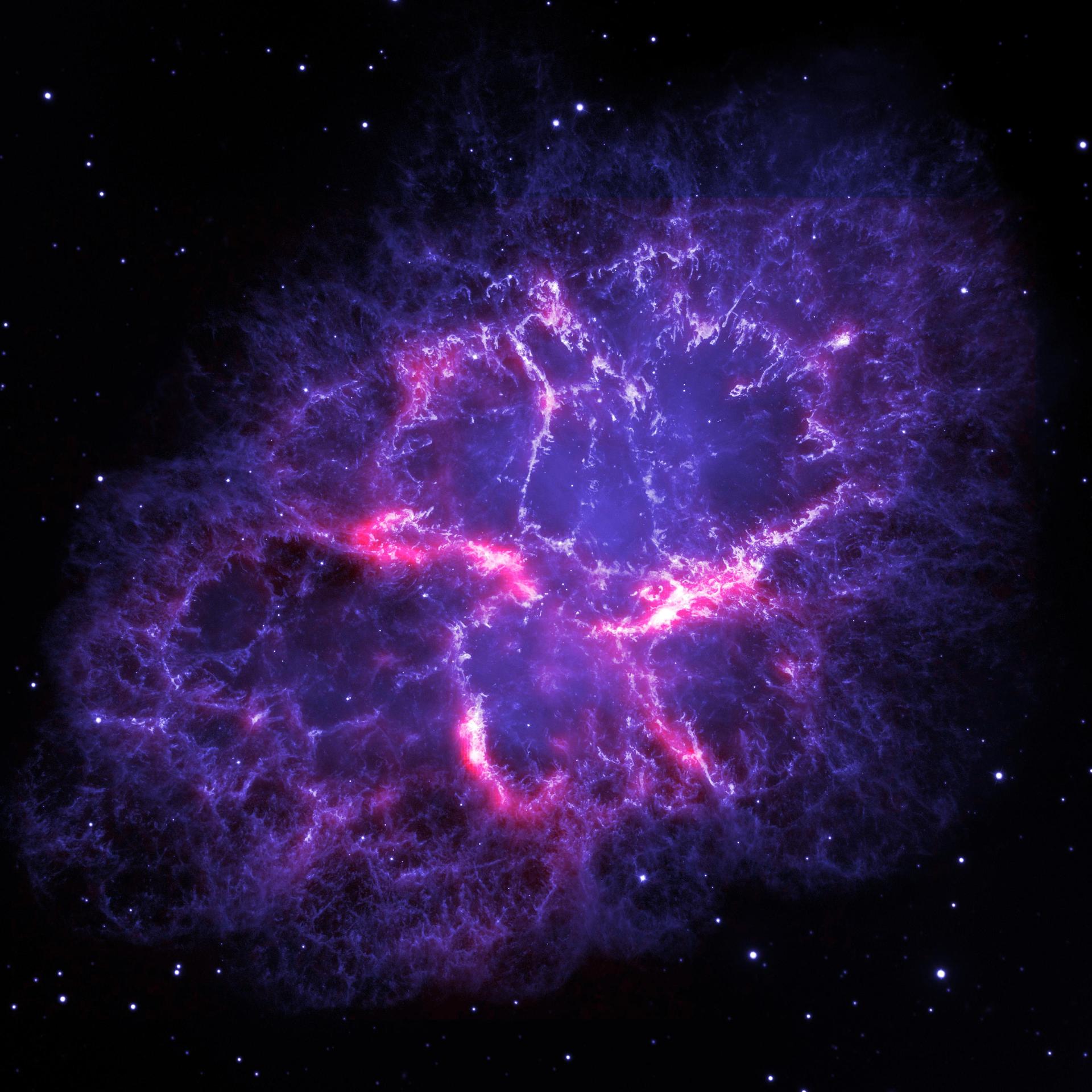

  • PHOTONS, BOSONS AND THE WEINBERG ANGLE

    ENERGY SCIENCE ESSAY NO. 4

    PHOTONS, BOSONS AND THE WEINBERG ANGLE

    Copyright, Harold Aspden, 1997

    Several years ago, in 1986, whilst I was a Visiting Senior Research Fellow at the University of Southampton, progress in my theoretical research was rapid and I was avidly writing papers and seeking publication. The success I had is evident from the Bibliography in these Web pages. However, most of the papers I offered to mainstream physics periodicals were rejected on superficial scrutiny by their editors and referees. In retrospect, going through the resulting piles of manuscripts in an effort now to bring order into my affairs, there are some I cannot destroy. One such paper is now reproduced as this Essay, to show those in academia what they have turned away from, as they strive to explain in their own mysterious way, what has already been explained so much better in my writings. I will let the paper speak for itself and simply say here that reference No. 5 in the paper was published in Physics Letters in 1986 (see reference 1986k in the Bibliography of these Web pages).


    ‘A NON-EMPIRICAL DERIVATION OF THE W+/- and Zo BOSON MASSES BASED ON PHOTON LATTICE THEORY’

    H. Aspden

    Department of Electrical Engineering
    University of Southampton
    Highfield, Southampton, England.
    Abstract

    The physical derivation of a formula f(n)=4(1+8n)4/3 is shown to lead to the measured values of W+/- and Zo via the simple expressions W++W=f(2) and Zo=f(2)-f(l), giving mass in proton units. W+/- and Zo are 82.0 and 93.8 GeV, respectively.

    *****

    It is well known that the discovery in 1973 of the electrically neutral weak interaction mediated by the Zo boson led to the specific prediction of the mass properties of W+/- as well as Zo bosons. These part-empirical mass values were well confirmed by the CERN collider experiments, which measured:

    W+/- = 83.0 +/- 2.8 GeV/c
    Zo = 93.8 +/- 2.3 GeV/c

    as reported, for example, by Kenyon [1]. On this basis, the electroweak theory stands well supported and there may seem little point in seeking to elucidate these mass quantities any further.

    However, from a recent theoretical investigation concerning the diffraction of single neutrons and the concept of the ‘imprisoned’ photon [2], the author has reason to believe that a multi-photon
    mechanism involving a standing wave resonance can feature in the properties of particles and their interactions. This has given results having a quite remarkable bearing upon the measured properties associated with the W and Z bosons of electroweak theory. The results are summarized below.

    Essentially, there are four propositions, each of which will be
    justified separately following their introduction.

    Proposition I: When a proton P+ and an antiproton P collide at high energy and come to rest suddenly, each forms into a cluster of N particles of energy Ec grouped in what will be termed a ‘photon spin lattice’. The combined energy of the two clusters is given by 2NEc and has three critical threshold values given by:

    EW = 2(1 + 8n)4/3 ………. (1)

    in proton rest-mass energy units, where n = 1, 2 or 3.

    Proposition II: A standing wave resonance can be set up so as to confine energy in such a system, provided there are four ‘photon spin lattice’ units, relatively disposed in an orthogonal configuration of characteristic spacing equal to half the de Broglie wavelength relevant to the energy involved. Two quanta of the EW form are involved in each such complex.

    Proposition III: The above system can decay by producing a charge pair W+, W, where W+/-=EW. Thus, writing:

    f(n) = 4(1 + 8n)4/3 …………… (2)

    we see, from (1), that:

    W+ + W = f(n) …………… (3)

    and that each energy quantum of the charge pair is 82.0271 GeV when n=2, the proton unit energy being 0.938272 Gev.

    Proposition IV: An alternative decay mode for the double EW system is for it to release energy by degrading the value of n. Thus a change of n from 2 to 1 will release a neutral energy quantum Zo given by:

    Zo = f(2) – f(1) = 93.7935 GeV …………. (4)

    The numerical masses of the two bosons found in electroweak actions are, therefore, suggested by the theory supporting the above propositions.

    Next, considering proposition II, this arises from a photon theory which involves the spin state of a 3x3x3 lattice whose lattice sites can be occupied by energy quanta, such as those denoted Ec above. The energy in this case, where the action involves borrowing energy by vacuum fluctuations and treats a property of the vacuum, has a virtual character. However, the spinning unit mediates in propagating energy sourced in a material quantum source (the basis of E=hf, where E is photon energy, f is the wave frequency and h is Planck’s constant) and, in addition, the spin energy of the EW quanta can equate to, or be identified with, the kinetic energy of the material particle. In the latter case we have the scenario of the ‘imprisoned photon’, mentioned above.

    The theory gave an evaluation of the fine-structure constant
    as 1/137.0359 in 1972 [3]. Recently, at a NATO Workshop on Quantum Violations [4], the author explained the basis of the spin energy, and the connection via four spin units with the de Broglie wavelength and both electron and single neutron diffraction is also of separate
    record [5]. However, to facilitate discussion here, it is noted that the spin energy of a photon unit can be written as Hw/2, where H is its angular momentum and w its angular velocity. The unit is cubic in form and in rotating it nudges surrounding lattice at four times its speed of rotation. The radiated frequency f is, therefore, 4w/2π. The value of H is h/2π when f is mec2/h, the Compton electron frequency. Therefore, at a lower frequency f, H will be h2f2/2πmec2. The energy Hw/2 is then h2f2/8mec2 per ‘photon spin
    lattice’ involved. If we equate this to the kinetic energy of the electron, namely mev2/2, we find that, provided there are four spins involved, the wavelength c/f is equal to h/mev, which is the de Broglie wavelength.

    The purpose of this is to show that a particle containing ‘imprisoned’ photons must have four units in spin and analysis [5] shows that they can set up standing waves confined to the particle with no external radiation provided they have an orthogonal grouping with three acting to contain by interference the radiation from the central spin. By virtue of their quantum correlations which are effectively instantaneous, the four spins can only act to suppress wave radiation if the orthogonal spacing is an odd multiple of, or equal to, half de Broglie wavelength. Of course, the diffraction of the particle involves this standing wave system being disturbed and then radiation from the four spins cooperates to redirect the electron along a diffracted course, with the spins regrouping in a new orthogonal system.

    It is then of interest to ask how these four spins may be configured in order to release radiation along an axis AB when they have equal amplitude.

    A modified orthogonal grouping of the form illustrated in Fig. 1 is indicated. Photon spin units are seated at A, B, C and D, with AC, AB, DB mutually orthogonal.

    Fig. 1. Orthogonal configuration of spinning lattice units with standing waves at AC, CD and DB restricting radiation to the path AB.

    C prevents radiation escaping from A and B in a direction perpendicular to AB in the plane ABC, provided AC=LB/2, where LB is the de Broglie wavelength involved. D prevents radiation from A and B escaping in the direction perpendicular to AB in the plane ABD, also provided DB=LB/2. When C and D mutually preclude their own radiation directed along the line CD (a condition demanding that CD=3LB/2 for the most compact system) then A and B shed energy along the axis AB. The reason is that AB is not an odd multiple of LB/2 for the related value of CD.

    Now, the spins at C and D are seen as related to the EW quantum, making CD the W axis shown in the figure and allowing us to associate AB as the Zo axis of the abstract space determined by the spin grouping. The angle between the W and Zo axes, on this basis of definition, is given by:

    cosθ = (7)1/2/3 ……………. (5)

    which is the direction cosine of CD with respect to the axis of AB.
    From this:

    sin2θ = 2/9 = 0.222 ……………. (6)

    which suggests that we have deduced the Weinberg angle θ as well.
    The measured value, as reported by Kenyon [6] in 1985, is 0.215+/-0.014
    for the expression in equation (6). A 1983 report [7] stated it to be
    0.23+/-0.01.

    Reverting now to Proposition I, the task is to justify equation (1). This involves the hypothesis that a particle such as the proton will retain a specific characteristic regardless of the energy it acquires in being accelerated to relativistic speeds. This characteristic has the dimensions of volume. It can be regarded as a measure of the
    space occupied collectively by N particles sharing that energy regardless of the speed of the particle. For example, if we assign an action distance c(t’) to an energy component Ec, then the N summation of (ct’)3 will be constant and the energy of the particle will comprise the summation of all Ec terms. By writing:

    Ec(ct’) = constant …………… (7),

    N/(Ec)3 becomes constant as the particle increases its energy to EW=N(Ec) and we deduce that EW is proportional to N4/3.

    The idea of a 3x3x3 cubic lattice group in spin, equally populated at each of the four locations shown in Fig. 1, suggests symmetry and balance. For an occupancy by the Ec quantum at the centre of each unit and a spin about a coordinate axis through this centre, there are 24 possible sites for other Ec quanta, 8 in each of three planes normal to the axis. If only the central plane is filled by the Ec quanta, we have N=1+8. If we have the symmetrical case of occupancy of all the sites in the two outer planes except the axial positions, then N=1+2(8). Finally, if the central plane is filled as well, N=1+3(8). The basis of equation (1), which relates to a pair of spin lattice units, is then clear.

    Propositions III and IV really amount to an analogy with conditions in the hydrogen atom. If the kinetic and potential energies of a bound pair of electric charges are absorbed completely, then the charges have been separated. On the other hand, if the energy can adopt specific levels, then the charges can adjust their mutual positions and there is energy transfer but no release of electric charge.

    It follows, therefore, that the ability to account for the numerical properties of the W+/- and Zo bosons by formulae which are very simple need not be fortuitous. The formulae presented are connected with physical processes which have bearing upon other phenomena as well.

    In particular, single particle diffraction may well depend upon the four-photon spin feature discussed above [5] and the 3x3x3 photon
    lattice form is essential to the derivation of the precision value
    of the fine-structure constant [3].

    Finally, since only further experiment can determine whether this theory has validity, it is noted that the theory predicts a W boson, based on f(l), and another W boson based on f(3), respectively at energies 35.13 GeV and 137.2 GeV. Conceivably, there could be another Zo boson for the f(3) to f(l) decay and this would have an energy 204.1 GeV.

    References

    [1] I. R. Kenyon, Eur. J. Phys., v.7, 115 (1986).
    [2] L. Kostro, Physics Letters, v.107A, 429 (1985).
    [3] H. Aspden and D. M. Eagles, Physics Letters, v.41A, 423 (1972).
    [4] H. Aspden ‘The Theoretical Nature of the Photon in a Lattice
    Vacuum
    ‘; paper presented at NATO Advanced Research Workshop on “Quantum Violations: ‘Recent and Future Experiments and Interpretations‘, June 23-27, 1986, University of Bridgeport, Conn., USA. (Proceedings to be published).
    [5] H. Aspden, ‘A Causal Theory for Neutron Diffraction’. (In press; data to be supplied before publication of submitted paper).
    [6] I. R. Kenyon, Eur. J. Phys., v.6, 41 (1985).
    [7] G. Arniston et al, Physics Letters, v. 122B, 103 (1983).

    *****

    The above is the text of the paper submitted for publication in 1986. Since that time, the Zo boson has been measured to a higher degree of precision and is now said to have a mass-energy value close to 91 Gev. I am therefore tempted to suggest that there is some interplay between the process involving the supergraviton creation and the decay of the of 93.9735 GeV energy quantum discussed in the above account. Nature has a way of holding energy levels for a longer period if there is some tuning or resonance in the interaction between the numerous pseudo-particle forms that feature in such high energy activity. What we measure, with precision, may well be a transient level of decay held for a longer time, the source energy at the moment of initial creation being slightly higher than that measured value. For this reason I see the derivation linked to the supergraviton in Essay No. 3 as particularly relevant, but so far as the observation of the Weinberg angle for the W and Z boson production, that signals the process disclosed above in this Essay No. 4. The onward step I now recommend is to turn attention to a technological topic deeply rooted in physics having indirect bearing on what has been discussed here concerning energy quanta that approximate 101 atomic mass units (that is ~ 94 GeV).

    To continue to that topic press:
  • WHAT IS A “SUPERGRAVITON”?

    ENERGY SCIENCE ESSAY NO. 3

    WHAT IS A “SUPERGRAVITON”?

    Copyright, Harold Aspden, 1997

    Abstract: In 1989 the author’s paper introducing the ‘supergraviton’ was published in Speculations in Science and Technology. Its ‘discovery’ as a product of the author’s aether theory has technological implications which point the way to harnessing the regenerative power locked inside warm superconductors and permanent magnets and has biophysical implications as well. This Essay discusses the way in which Nature creates the ‘supergraviton’ and is a starting point in the onward exploration of the related technology. Bibliographic reference [1989a] in these Web pages

    Note that in 1988 when the paper was written the neutral Z boson of high energy particle physics had a measured mass-energy reported as 92.6+/-1.7 GeV. Since that time the precision of that measurement has improved and it is now reported to be very close to 91 GeV. Bear this in mind when you come to read the comments about the neutral Z boson in the paper below when reread in the light of the comments I shall add later. The text presented below is a fairly close rendering of the that 1989 account, with the omission of a section on the “Ghost” mass concept.

    ABSTRACT

    This paper shows how the 2.587 GeV graviton discussed in the first issue of Speculations in Science and Technology accounts for a supergraviton state of 95.18 GeV. This suggests a pairing of the 2.587 GeV graviton with the 92.6+/-1.7 GeV Zo boson in a resonant response in certain molecular systems. Technological implications are discussed with emphasis on the ‘warm’ superconductor phenomenon found in perovskite compositions having molecular mass-energies that are integral multiples of 95.18 GeV.

    INTRODUCTION

    It is not generally realized how close we may be to achieving a technological advance which depends upon the fundamental quantum features of the gravitational interaction. The ‘warm’ superconductors may well depend upon phonon effects which reveal a resonance with the graviton field.

    THE GRAVITON

    The notion of the ‘graviton’ as a fundamental quantum field condition which mediates in the gravitational interaction of matter is not, as yet, well developed. However, in 1978, I referred to a graviton resonance at 2.587 GeV. This arose from a theory of gravitation in which matter, sharing a jitter motion with other matter (Zitterbewegung) at the Compton electron frequency, was kept in dynamic balance by a graviton system. The graviton field has a kind of “ghost” mass matching that of local matter, but the graviton mass was seen as quantized in units of 2.587 GeV c-2.

    The gravitational interaction is formulated in terms of the electric charge quanta displaced by the presence of the gravitons. It is an electrodynamic interaction effective owing to the concerted jitter motion of the gravitons relative to the frame in which matter, which we see as at rest, is seated. The crucial gravitational relationship is that based on equation (6) of reference [1]. This specifies a volume to energy ratio governed by the graviton quantum. The magnitude of this ratio is 6π times (r4/e2), where r is the characteristic radius of a sphere bounding the electric charge e, according to the formula:

    gmc2 = 2e2/3r …………….. (1)

    Here g is the energy of the graviton in units of electron rest mass energy mc2.

    Writing V/E as the constant of the basic gravitational state, determining G, this really amounts to 3 times the volume to mass-energy ratio of the 2.587 GeV graviton. The G formula in terms of the electron charge/mass ratio e/m is:

    G1/2 = 4π(e/m)[108π]3[g]4 ………… (2)

    where g is the ratio of 2.587 GeV to the electron rest mass energy 0.511 MeV. The 108π term has physical meaning as the ratio, with respect to the charge radius of the Thomson or Abraham electron, of the cube dimension of a vacuum cell in which a leptonic muon pair represents the active equilibrium field. This 108π is derived theoretically from the dynamical response of the disturbed vacuum in setting up Planck’s quantum of action.

    THE TAU LEPTON

    The G formula (2) dates from 1966 [2] when the author first presented the evidence showing how the 2.587 GeV quantum could be explained from first principles and supported this with empirical evidence of meson decay. So many different meson states reveal a connection with the 2.587 GeV quantum, that the author had no doubt as to its fundamental significance.

    For example, in 1966 Krisch [3], several years before the psi particle era, announced the discovery of a particle resonance of 3.245 GeV that was surprisingly long-lived, bearing in mind that this was the largest fundamental particle discovered to that time. It was produced by proton collision in the presence of a pion background.

    The author later noted [4] that if a proton was really capturing the energy of a graviton and releasing a pion pair, the graviton energy would be 3.245 GeV less the proton mass energy 938 MeV plus the energy 279 MeV of the two pions. This gives approximately 2.586 GeV for the graviton mass energy.

    More recently, the author has realized that the tau lepton (mass τ in electron units) is active in the gravitational interaction. By the principles of charge interaction stability discussed in reference [l], it requires a minimum of three charges to group in a cluster to assure quasi stability of a charged system with their total charge volumes conserved and their total energy conserved, given an ongoing fluctuation in their exchanges.

    This led the author to conceive that a pair of tau leptons might group with a graviton. The idea concerned quantum gravitation in the sense that the group as a whole would satisfy the gravitational demand set by the V/E ratio. As shown in reference [5], this idea was formulated as the equation:

    (g/τ)3 – 3(τ/g) – 1 = 0 ………….. (3)

    It may be verified that this has the solution:

    g = 1.452627τ ………….. (4)

    Then, with g as 2.587 GeV in energy terms, t becomes 1.781 GeV, which is in good accord with the measured 1.783+/-0.003 GeV.

    From this, I saw that the 2.587 GeV graviton was not alone in mediating in providing the gravitational interaction between matter. The tau leptons had a role in this same activity.

    THE SUPERGRAVITON

    The advance reported in this paper concerns the graviton dynamics in matter containing heavy atoms and their concentration in large molecular systems. If the graviton mass is of the order of 100 GeV c-2, it is better able to serve in its dynamic balance role when in juxtaposition with jitter oscillations of atoms containing 100 or so nucleons. The question, however, is whether such a supergraviton state can occur naturally and whether there is any special evidence of its dynamic interaction effects, apart from the possible gravitational property.

    The tau lepton was imagined to decay by ejecting a pair of muons, it being noticed that this would leave just enough energy to create a pair of mesons of rest-mass energy 0.785 GeV. To conserve charge parity this would need to involve pairs of tau leptons of opposite polarity, meaning that if the muons are absorbed into the field background, four 785 MeV mesons would appear together. ω(783) is identified as the relevant particle.

    Given that four such mesons have been created in the presence of the 2.587 GeV gravitons, there is then purpose in asking how the gravitational V/E ratio is conserved.

    First, regarding this ratio as a governing condition, regulating how energy is deployed in the “ghost” world of the quantum-gravitons, it was of interest to take the four 785 MeV ω meson group and imagine that one was compacted to store energy in just the amount that would combine with the residual group to assure the overall gravitational V/E ratio.

    This fourth compacted meson would need to accept so much energy that its volume, being inversely proportional to energy cubed, would be negligible compared with that of the three omega mesons. Thus, the total energy of the whole system of four charged particles, which collectively form a neutral group, has to be that of (g/ω)3 times 2.587 GeV or 92.59 GeV. Note that we use the symbol ω to denote the ω meson just as we used τ for the tau lepton mass and g for the graviton mass. This then means that there ought to be a natural neutral resonance state that can be excited at 92.59 GeV. It so happens that the neutral Z boson satisfies this requirement exactly. Its mean measured mass is listed as 92.6+/-1.7 GeV c-2.

    Second, looking for some participation of the basic graviton action in this higher mass state, we now contemplate the effect of having the primary energy nucleated by a charge in close association with, but separated from, each ω meson when the latter is neutralized by its coupled association with a 2.587 GeV graviton.

    The first consequence of this is that, according to the energy equation of equation (2) in reference [1], each ω:g pair will have an energy given by:

    ω + g – 3ωg/2(ω+g) …………. (5)

    which is 2.469 GeV but, if the (ω:g) pair is at minimum energy owing to decay of ω to a lower value with g held at 2.587 Gev, the energy becomes 2.456 GeV. Note then that Prentice [6], in reviewing particle resonance data for lifetimes matching those close to the tau lepton, comments on the exceptionally stable neutral resonance at 2.459 GeV in conjunction with charged resonances at 2.583+/-0.026 GeV.

    The second consequence of this is that the group then formed will have, according to the V/E condition, a total energy of 92.59 GeV plus 2.587 GeV or 95.18 GeV. This could be a candidate for the supergraviton state, because its net charge will assure its participation in the electrodynamic actions of its motion with the normal graviton group background. Note that the normal ‘free space’ graviton group discussed in reference [5] comprises a 2.587 GeV graviton and two tau leptons having charges opposite to that of the graviton. Hence the supergraviton group is presumably charged as well. Note that such groups will exist in either net polarity form, ensuring that overall the graviton system is electrically neutral.

    Such a graviton system should be in evidence via the dynamic resonance with heavy atoms or molecular groups in matter. This suggests a resonant interaction where mass concentrations in multiples of 102 atomic mass units are present. Now, this may seem to be pure speculation, but it shows promise once we address a technological issue, because it causes one to think in terms of phonons and their effects on the properties of superconductors.

    SUPERCONDUCTIVITY

    Imagine electrons colliding with atoms in their migration through a conductor. They will tend to collide most often with positive atoms moving in the opposite direction. The effect of this is that some of the kinetic energy of such atoms will tend to transfer into the back EMFs that accompany the arrest of the electron. These EMFs power the emission of electrons from other atoms so as to sustain the current flow via the inductive action. Such electrons are released in greater numbers by atoms moving in the electron direction. Therefore, again, some of the kinetic energy of the atom can find its way into the energy of the ordered electron motion.

    In short, there is reason to think that thermal energy associated with the disordered motion of atoms might find its way into the ordered electron motion. This would lead to superconductive conditions if the photon losses are less than the energy transferred in this way. Now, there is less chance of loss of energy if the collisions involve atoms that are dynamically balanced by a coupling with a “ghost” that moves about the same centre of jitter. The reason is that, otherwise, the couplings between adjacent atoms and molecular groups are strained. An atom is then less likely to conserve energy so as to help electrons on their way when released as carriers of the sustained current flow.
    With this in mind, it is of interest to note the following nucleon quantities, which apply to the molecular composition of ‘warm’ superconductors.

    EuBa2Cu306……..number of nucleons 711
    La2Cu04……..number of nucleons 405
    Sr2Cu04……..number of nucleons 303

    These show a common characteristic in being near multiples of 101 or 102 nucleons.

    A generic formula for a ‘warm’ superconductor has been suggested comprising a rare earth atom, two barium atoms, three copper atoms and just below a mean of seven oxygen atoms. Note that Ba at 137 and Cu at 63 or 65 nucleons combine to give 2(100) or 2(101). Also the six to seven oxygen atoms combine to add a unit of approximately 102 nucleons.
    It is not suggested that the proximity to the 102 nucleon mass state is a sufficient requirement for superconductivity. The structural properties of the molecule and the strength of the bond between adjacent molecules must also be governing factors. Also, the particular composition and stratification of the crystal form are undoubtedly factors as well. However, it is interesting to see that there is, for several of the so-called ‘warm’ superconductors, this curious numerical nucleon property.

    It may seem too remote a relationship to warrant connection with the phenomenon of gravitation, but there does, appear to be an underlying connection with fundamental particle states.

    THE GRAVITATIONAL CONDITION

    The theory developed above relies on a fixed particle volume to energy ratio of any “ghost” mass in order to ensure that G is universally constant. This implies a theory in which the space occupied by particles collectively is conserved. It suggests reactions in which this condition has to be satisfied, along with energy conservation. This has an interesting implication for a charged particle when accelerated to relativistic speeds.

    Imagine a proton and an antiproton brought into collision at such high speeds that their individual energies are sufficient to reach a threshold at which their initial rest volumes become divided amongst several identical-mass charge centres by pair creation. Thus, if E is the rest-mass energy of the proton and V its volume, a division in N identical particles, with N odd, will require that each particle occupies V/N at the relativistic threshold speed. Each such particle will have an energy that is E times V/N raised to the power of one-third, because energy is inversely proportional to the linear dimension involved. It follows that the proton-antiproton collision will have a combined energy W of:

    W = 2(N)4/3E …………… (6)

    It is then of interest to note that, with N having progressive odd integer values, a series of threshold energy levels can be calculated from equation (6). With E as 938.3, W in GeV becomes: 8.1, 16.04, 25.13, 35.15, 45.91, 57.36, 69.42, 82.03, 95.14…

    It is perhaps fortuitous that this range of values includes one that is very close to the 95.18 GeV state that was seen as the supergraviton. It is perhaps equally fortuitous that collisions between protons and antiprotons at the right energy level were productive of the W boson at a listed mean value of 81.8+/-1.5 GeV, which compares with the 82.03 value in the above calculated series. On the other hand, it would be interesting to know if the whole spectrum of particles just deduced is created in such collisions.

    There might well be a case for saying that space is ‘rational’ in Nature as between quantized charge and a non-quantized continuum, in that it cannot be created and must be shared by any concentrated energy form. Space occupied by energy in the form of the quantum units of electron charge e is, it would seem, a quantity that is conserved universally and locally in particle creation and decay processes. This is also a factor which bears upon the stability of charge.

    One might also ask whether the heavy bosons might break up into discrete quanta by a reversal of what has just been described. This may well occur. Indeed, the Japanese H-quantum study of cosmic ray ‘fireballs’ in the 1970s gave experimental evidence of H-quanta at around 2.5 or 2.6 GeV [9]. Had we used the 2.587 GeV graviton as a resonance determining this as a base quantum in equation (6), instead of the proton, note that the series for W would include …. 32.85, 44.23, 56.41, 69.28, 82.78, 96.86.. GeV. This is remarkably similar to that presented above. For the proton-antiproton collision N is one greater than 2N for the near-correspondence with the energy levels of the H-quantum fireball.

    In conclusion, one has reason to wonder whether the superconductive properties of certain materials will ultimately lead us to the ‘supergraviton’ as a particle in the “ghost” mass environment having a mass related to that of the neutral Z boson. The deliberate synthesis of superconductive substances satisfying the resonance discussed in this paper is the subject of a patent application filed by the author in 1987 [10].

    APPENDIX

    [This note was added in July 1989 when the paper was in proof form]

    Since the submission of this paper and the subsequent reports of the discovery of ‘cold fusion’ by Fleischmann of the University of Southampton and Pons of the University of Utah [11] it has become evident that the supergraviton theory of the above paper is very relevant to this new technological advance.

    Note that these fusion experiments involve the entry of light atoms (deuterium) into the body of an electrode composed of heavy atoms (palladium). The graviton inflow has to adjust to supergraviton form, because palladium has an atomic mass in excess of 102 amu (atomic mass units).

    As noted above, the normal ‘free space’ graviton group, which also applies to deuterium gas or heavy water, comprises a 2.587 GeV graviton plus two tau leptons, each of 1.781 GeV. The basic graviton cluster form has an energy of 6.149 GeV, a mass equivalent of 6.60 amu. The supergraviton form of energy 95.18 GeV has a mass equivalent of 102.18 amu. Imagine an atom of mass A amu, somewhat greater than the supergraviton mass. It will have dynamic balance with its own dedicated supergraviton and just enough of a transient association with a supergraviton shared with other atoms so as to assure perfect balance. For optimum resonance, which allows the state to survive longer in an independent mode, the atom should be in near perfect balance with its own graviton systems.

    Now suppose that a light atom of mass M amu can enter into molecular association with the heavy atom, bringing with it its graviton cluster. Indeed, for generality, suppose that n such light atoms form a union with the heavy atom. Then, the graviton resonance has to be such that:

    A + nM = 102.18 + 6.60 ……………. (7)

    where nM is necessarily less than 6.60. If enough such resonant atoms can survive long enough to act in a concerted decay adjustment as the graviton clusters transform in supergraviton states, then conceivably there is sufficient transient energy involved in the background field fluctuation for fusion of the n light atoms to occur. Note that 31 graviton clusters will develop two supergravitons and shed more than I MeV per atomic mass unit of the light atoms involved. This energy is in transit to the equilibrium background state, but 4 MeV can suffice to trigger the fusion of two deuterons en route. For two atoms in the same molecular unit to undergo fusion n must be 2. Note also that the substance of atomic mass A must be inherently capable of absorbing and becoming densely populated by the light atoms. In applying equation (7) it should also be noted that A relates to the atomic mass of the isotope and this is about 0.1 mass units lower than the nominal isotope value.

    Ignoring fusion of hybrid combinations of light atoms, the only possible nuclear reactions involving catalyst A in the graviton-supergraviton transition are:

    M = 1 (hydrogen) A = 106.78: only silver has the 107 isotope
    M = 2 (deuterium) A = 104.78: only palladium has the 105 isotope
    M = 3 (tritium) A = 102.78: only rhodium has the 103 isotope

    The technological conclusion to be drawn from this simple analysis is that the supergraviton is involved in the Fleischmann and Pons discovery and that the fusion activity might well be enhanced if the palladium electrode used with deuterium electrolysis is enriched by the isotope 105. The ‘cold fusion’ catalytic stimulus of supergraviton resonance is further discussed in the author’s UK Patent application [12].

    REFERENCES

    1. Aspden, H., Specul. Sci. Technol., v. 1, p. 59 (1978).
    2. Aspden, H., The Theory of Gravitation, p.80. Sabberton, P.O. Box 35, Southampton (1966).
    3. Krisch, A.D., Phys. Rev. Lett., v. 16, p. 709 (1966).
    4. Aspden, H., Physics without Einstein, p. 120. Sabberton, P.O. Box 35. Southampton (1969).
    5. Aspden, H., Hadronic Journal, v. 9, p. 153 (1986).
    6. Prentice, J.D., Phys. Rep., v. 83, p. 102 (1982).
    7. Aspden, H., Toth-Maatian Review, p.3165 (1987)
    8. Aspden, H., Electronics and Wireless World, v. 95, p. 29 (January 1989)
    9. Taketani, M., Suppl. Progr. Theor. Phys., v. 54. p. 1, (1973)
    10. Aspden, H., Superconducting Substances. UK. Patent Application No.8,723,881 (12 October 1987)
    11. Editorial on ‘Solid State Fusion’, Physics World, V. 2, No. 5. p. 15 (1989)
    12. Aspden, H., Electrically Controlled Ion Fusion, UK Patent Application No. 8,908,571 (15 April, 1989)

    End of paper
    *****
    NOTE

    Concerning the mass-energy of the neutral Z boson indicated by the theory in the above paper, the assumption there was that the neutral energy quantum of 92.59 GeV was that assumed by that very important heavy boson. However, this energy was that of a cluster of four particles, including three mesons each of 785 meV. Now it is possible for that cluster to remain intact as it absorbs that 2.587 GeV graviton to develop the supergraviton complex, which it does by pooling its energy to generate an antiparticle graviton pair, thereby forming the seven unit supergraviton cluster of energy 95.18 GeV comprising three 785 MeV virtual particles plus three 2.587 GeV virtual particles and one very heavy residual virtual particle. However, there is the chance of a decay of the antiparticle in the three meson cluster before the supergraviton can form by being joined by a graviton. In that case the neutral residue comprises only two particles having a combined energy of 92.59 GeV less twice 785 MeV, which is 91.02 Gev.

    I see this as being one way in which Nature reveals to us that neutral Z boson that is very important in the world of high energy particle physics. However, it is hardly likely that the particle physics community will pay attention to my findings, and, indeed, I can reveal to you some more evidence of the disdain shown towards my work by that community as I disclose more about the neutral Z boson in Essay No. 4. I have, therefore, been obliged to conclude my efforts as an intruder into the high energy domain of the particle world, by saying that onward confirmation of this theory will come more directly from the experimental support that points to the ‘supergraviton’ and I will aim to advance that theme more in my further contributions to these Web pages, beginning with Essay No. 5.

    To see Essay No. 4 or Essay No. 5, press:

  • GEOMAGNETIC REVERSAL PERIODICITY

    ENERGY SCIENCE ESSAY NO. 2

    GEOMAGNETIC REVERSAL PERIODICITY

    Copyright, Harold Aspden, 1997

    Abstract: In 1985 the author sought publication of a brief Letter to the Editor in the journal Nature. It had the above title and was duly rejected as being ‘too speculative’. Since it is relevant to the subject of these Web pages it is now reproduced here, word for word, so that you, the reader, may weigh the importance of such ‘speculation’, taking into account the concluding commentary at the end of this Essay.

    Statistical analysis by T. M. Lutz describes an interesting investigation into the periodicity of geomagnetic reversal patterns over long time periods [1]. It is important that such efforts should be made to determine whether there are patterns of reversal that conform with the Earth’s motion with the Sun about the centre of the galaxy. However, though Lutz seems to rule out possible reversal periodicities measured in a few tens of millions of years, there is cause, it seems, to believe that a cyclical sequence is in evidence. Whether this is on the scale of 30 or 260 million cycle periods, the difficult question must be faced, as to why the Earth’s magnetic field should be at all affected, either directly or indirectly, as a function of motion through empty space. Indirect action could be connected with the related evidence of periods of Phanzerozoic “geological and biological upheavals” mentioned by Lutz and researched in depth, for example by Steiner [2].

    It is, therefore, sought by this letter to draw attention to an extremely simple facet of electrical field theory which, curiously enough, has direct bearing upon this enigmatic problem. It will be shown that if ‘space’ can, in any way, be said to have electrical properties, then we must think also that regions of ‘anti-space’ exist, just as there is matter and anti-matter. Then we infer space domain boundaries, possibly of cosmological proportions, and can see scope for thinking of magnetic reversals as our Earth crosses such boundaries. This is especially if the geomagnetic field involves a reaction effect in the space medium, always assuming that the latter does have electrical features. We will not here speculate on that issue. It suffices to show that the domain form and boundaries must exist.

    Only one assumption is necessary. This is that vacuous space has the ability to store electric field energy density E2/8π by responding to a field E as if it contains discrete charges q in a uniform plenum or continuum of opposite charge density σ. [Note that c.g.s units are used here]. This means that there are electrostatic forces acting between the charges q and σ, when the q charges are displaced in unison by a force Eq acting on each charge. We write, as equation (1):

    Eq = kx

    where x is displacement and k is a constant of the system. Thus q, σ and k are unknown quantities. However, the energy stored per charge q is kx2/2 or, since there are σ/q charges in unit volume of electrically-neutral space, the energy density is k(σ/q)x2/2. We eliminate x from equation (1) to find, as equation (2), that:

    k = 4πσq

    This may not seem at all surprising because this same formula is a measure of the change of force acting on a charge q in passing through a surface having the charge s per unit area. However, equation (2) relates to a force rate and a charge density and, as experts on electrical theory well know, there is no way of justifying equation (2) without specifying boundary conditions. Displacement of a charge q from the centre of a sphere of charge density σ, for example, is subject to a restoring force rate of one third that given by equation (2). So we know that either space is a true void electrically [in which case we have no insight into how it may store field energy] or [given that it has an intrinsic electrical form] it is not spherically bounded. In fact, consistent with our assumption, wherever we are in space, we must lie between two planar boundaries of infinite extent in relation to boundary spacing, if we want equation (2) to hold with rigour. This is an absolute necessity, based on accepted electrical theory and the assumption that there is something, however elusive, having electrical form in the space medium.

    The above conclusion holds if there is nothing in space outside the planar stratum of charge density σ. It also holds if there are sequential parallel planar layers or strata of alternately-opposite charge density. Thus we can have ‘space’ and ‘anti-space’ with the forms (-q,+σs) and (+q,-σ), respectively, as depicted in Fig. 1. Indeed, if we want to think of space as extending to infinite bounds then it must have this form. Theoretically, however, the magnitude of σ need not be the same in each stratum. Also, the planar boundaries need not be equi-spaced.

    Fig. 1

    Figure caption: Path of solar system in traversing space boundaries between strata with a positively charged continuum (dark edged) and strata with a negatively charged continuum (plain edged).

    Now, the evidence in support comes from the fact that, after travelling a distance measured in tens and sometimes hundreds of light years, our geomagnetic field reverses. This indicates a crossing of a space boundary. Then, bearing in mind that our linear motion through cosmic space is compounded by a cyclic galactic motion measured in hundreds of millions of years, we find that there are periods when the boundary encounters occur more rapidly because the motion is normal to the boundary planes and intervening periods when encounters are less frequent because the motion is oblique to, or parallel with, the planes. Hence there should be galactic periodical geomagnetic reversals. Furthermore, the slow oblique boundary crossings must have some dramatic effect in disturbing the Sun and exciting its radiation and sunspot activity, possibly accounting for some of the geological effects indirectly linked with the magnetic reversals.

    It is submitted, therefore, that the pattern of reversal of the geomagnetic field, if it can be linked with the periodicities of our galactic motion, will prove the existence of a stratified ‘space’ and ‘anti-space’. It will also help to induce an acceptance of the related explanation of Planck’s radiation law and the derivation of the fine structure constant in terms of a vacuum of exactly the form just discussed, this being the subject of a very recent paper in which the fine structure constant was calculated and found to be in precise accord with its measured value [3].

    The author acknowledges a valuable discussion, nearly 20 years ago, with Professor L. H. Thomas of Columbia University, New York, in which the vital importance of boundary conditions of the kind considered here was emphasized. In previous work [4], the author has sought to adhere to a space domain space structure of cubic nature, by analogy with ferromagnetism. However, it does seem that the electric vacuum is stratified, though magnetic or spin properties might add other form in the planar dimension.

    References:
    1. T. M. Lutz, Nature, v. 317, 404 (1985),
    2. J. Steiner, Jour. Geol. Soc. Australia, v. 14, 99 (1967).
    3. H. Aspden, Physics Letters, v. 110A, 113 (1985).
    4. H. Aspden, ‘Physics Unified’, Sabberton, p. 171 (1980).

    ******

    Commentary: The text in square brackets, as used above, has been added to the original version as considered by the journal Nature. Their letter of rejection (Reference A10291 dated 11 November 1985) and signed by Dr. George Hentschel, Assistant Editor, said simply: ” Thank you for submitting your manuscript ‘Geomagnetic reversal periodicity’ for consideration. Regrettably we are unable to publish it as the paper is too speculative to be appropriate for Nature. I am therefore returning your manuscript.”

    The result, of course, is that my contribution which argues that space has to be sliced into planar sections, if we are to make sense of electric field energy storage by the vacuum medium, did not enter the scientific record. Only these Web pages can now serve to enlighten those interested in such matters. Is anyone interested? You might think so, if you now refer to my Research Note 11/97 recently added to these Web pages. Also, had you read an item in THE TIMES (London newspaper), Monday September 25, 1995 (p. 16), you would see that Nigel Hawkes had a relevant item in his Science Briefing entitled ‘When North becomes South’.

    He writes: “It remains very hard to explain why the Earth’s magnetic field should change direction so often, and so unpredictably. For the past few million years it has been averaging a flip every 220,000 years, and if that pattern is to continue we are overdue for another one. But earlier in geological history, during the Cretaceous ‘quiet zone’ between 118 and 83 million years ago, it never reversed at all.”

    Such geomagnetic reversal behaviour is as expected from the showing in Fig. 1. There would be times when the reversals are relatively quite rapid and other times when a long lapse could occur between those reversals. Remember also that the spacing between the parallel boundary planes in Fig. 1 need not be regular. If it were and if it really is true that the geomagnetic field did not reverse for 35 million years then that does pose a problem to what is suggested. The reason is easily explained. Given uniform spacing, suppose we draw a circle, a tangent to that circle and a line intersecting the circle and drawn parallel to that tangent. Let the spacing between those two parallel lines be 1/20th of the circle diameter. The angle 2cos-1(0.90) is then the angular portion of the circle enclosed between those two parallel lines. This is 0.144. In contrast, where parallel lines having the same spacing are drawn to intersect the circle virtually radially, the angular portion is 1/(20)π or 0.0159, so it takes 9 times longer to travel between boundary crossings in one part of the orbit than in the rapid crossing region. Comparing 35 million years with 220,000 years one has a ratio of 160.

    Now, faced with this situation, I would suspect that the data for proving the absence of field reversals going back to that doldrum period 100 million years ago is questionable. It seems unlikely that the inter-boundary spacing could be some 20 so times greater in some regions of space in comparison with the region we occupy at present. Whatever determines the boundary spacing, the chances are that there will be some tendency towards uniformity.

    One must, of course, also take into account other factors, such as the compounded velocities of the motion of the solar system relative to the galactic centre and the cosmic background. Cosmic radiation data suggest motion through the cosmic background at say, 350-400 km/s whereas the galactic orbital motion is at much higher speeds. If the planar boundaries in the space medium are set in the frame of that cosmic background, then there will be times in a cycle when the solar system is moving through those boundaries in a normal direction at the sum of the two speeds just mentioned and times when the speed difference applies. No doubt, much of this, albeit speculative, enquiry can be resolved by analysis of cosmological data by research students familiar with such matters.

    There seems, however, to be more purpose in confining studies of these reversals to data available for the past 10 million or so years to see how the pattern of reversals can be accommodated by theory. As this author sees it, the aether is an essential actor in this phenomenon of Nature and it must not be ignored. There seems little sense in engaging in the computing exercise reported in that above-quoted newspaper article by Nigel Hawkes. By using a computer model based on an electrically conductive fluid core stirred by convective currents and aided by the Earth’s rotation, it seems that researchers could contrive a magnetic field reversal. It took over two thousand hours of computing time on a Cray supercomputer to create a field flip which appeared close to the end of their computer run. So, what does that prove?

    As I understand the laws of electromagnetism, the motion of a conductor in a magnetic field will develop a reaction that produces an opposing magnetic field effect. Fields can get themselves involved in eddies and vortices and flux can get trapped in some situations, but always there is the overriding factor that reaction means opposition. Fields get weaker, not stronger. You cannot induce a strong magnetic field by a self-exciting dynamo and keep faith with the orthodox laws of physics unless you have something for the dynamo to push against. If you turn a rotor in a machine, that machine must hold firm and not turn as a whole. Otherwise you spin the whole system as if it were a flywheel and no magnetism is then induced. If you have a magnetic field established and turn the rotor in that field then it can develop radial electric fields and so produce currents which can be fed back to aid the magnetic field. However, that presupposes there is some way for those currents to find a route that is effectively a winding designed to produce its own magnetic field.

    If heat flow is introduced into the argument then, from what we know about the Nernst Effect, EMFs can be produced in directions mutual orthogonal to a magnetic field and the thermal gradient. Accordingly, a radial thermal field in the conductive core of body Earth might set up circuital currents that develop magnetic polarization. My understanding of that phenomenon is that the Nernst coefficient involved can be negative or positive, according to the properties of the substance, which means that this is not always a reaction effect that assures opposition to the polarizing magnetic field. Accordingly, I see scope for understanding a possible process of self-induction of magnetism in body Earth, and accept that erratic reversals can then occur if the thermal activity in the Earth leads to instabilities. However, given that my aether theory is so good at providing the quantitative basis for the geomagnetic field as well as explaining its source and given that the space domain boundaries simply must exist to give foundation for electrostatic field energy storage, then I see no real option. I hold firm to my belief that the theory which features so much in these Web pages offers the true account explaining the origin of the geomagnetic field.


  • THE REALITY OF PERPETUAL MOTION

    ENERGY SCIENCE ESSAY NO. 1

    THE REALITY OF PERPETUAL MOTION

    Copyright, Harold Aspden, 1996

    Abstract: This Essay was first published in 1996 at pp. 15-22, Vol. 2 No. 8 issue of ‘Infinite Energy’, a Magazine having the address P.O. Box 2816 Concord, NH 03302-2816, USA.

    Having been appointed a new member of the Scientific Advisory Board of
    ‘Infinite Energy’, I have been asked by the Editor-in-Chief, Dr. Mallove, to submit an article ‘synthesizing from my previous work’. I will have much more of a specific nature to say in future writings, but think it best here to give a kind of introduction which will outline my approach to the ‘free energy’ field.

    Based on simple Newtonian mechanics, perpetual motion within a purely
    mechanical device is impossible. However, once one understands the true
    electrodynamic nature of the force of gravity and how interactions are set up which involve energy transfer between electric charges, then perpetual motion, subject to machine wear and tear, is just a matter of exercising one’s ingenuity. This is because electric charges in motion interact as a function of motion relative to one another and by virtue of their interaction with the all-pervading sub-quantum medium that some call a frame of reference but which we will here refer to by its proper name, the aether.

    There are three ways in which one can contemplate building a ‘perpetual
    motion’ machine, which is really what we are all talking about when we use terms such as ‘free energy’. They are:
    1. Build something you imagine might work and then pray for a miracle as you try to set it running.
    2. Be attentive to claims made by others who say they have built something that does perform such a miracle and then try to replicate it from the gist of what you can find they have disclosed.
    3. Study the detail of the mechanism of an existing very large perpetual motion machine which you know does work and to which you have access and see if, by first probing the physics of that mechanism, you can devise a way of tapping into its energy activity, just as the alternator draws electrical power from the engine in your automobile.

    The middle course above is the one normally adopted and it has its excitement but is very frustrating and I have chosen the third track, and even though that has had its frustrations I have advanced relentlessly. I believe I now understand the physics needed to access that hidden energy and so can help to build the new energy technology.

    If too many would-be venturers in this field go along that second track each travelling separately and they try to replicate what they think others may have done, a state of chaos can result. However, even amongst that chaos, which is now becoming so very active, we are witnessing a kind of clustering as order is beginning to emerge at certain focal points. Thus we see ‘cold fusion’ or ‘plasma discharges’ or ‘permanent
    magnet motors’ as giving some of us the feeling that this is all real and that the era of new energy technology can now begin. There are still those, the vast community of scientists who sit on the side lines and watch, confident in their knowledge that all this effort is a waste of time. I say “watch”, but it is more correct to say that they look the other way and avoid all thought of getting something for nothing, at least in the ‘free energy’ sense.

    My interest in this scenario has an unusual background. Being well brought up in the disciplines of science and engineering, I could never have dreamt that ‘perpetual motion’ would be something I would ever write about, far less get involved in experimentally.

    Indeed, my Ph.D. thesis was more concerned with the mysterious loss of
    energy that was observed in the electrical steels used in power transformers and in the alternators used to generate power. I became interested career-wise in inventions and my knowledge of magnetism and its related technology was applied to secure patent protection for a major engineering company in U.K. before moving on to IBM at year-end 1959 as their U.K. Patent Manager. Then from 1963 to 1983 I was the director in charge of IBM’s European Patent Operations.

    I do not recall ever seeing an invention disclosure in IBM that could be
    classified as `perpetual motion’, yet even in the 1960s IBM’s patent function was processing several thousand invention disclosures per year. I remember, however, from my pre-IBM years discussing with an elderly German visitor his offer of a ‘free energy’ machine. He declared it would replace the locomotive diesel engines manufactured at one of our plants. As his credentials he said he was chief engineer involved in U-boat design during World War II and then surprised me my saying ‘You know Albert Einstein?’, then allowing me a very brief glance at a letter addressed to him and signed by Einstein. He followed that by letters from Max Planck and Werner Heisenberg and thereafter went into a display of copious design details of thrust forces in a closed cycle gas turbine having no fuel input.

    When I later studied his calculations I found that he had omitted the reaction forces which arise when gas goes around a bend and had only worked out the axial forces on the compression and expansion sets of turbine blades in his proposed engine. He had in fact not done a full analysis and was in breach of Newton’s third law of motion, concluding that action and reaction were not in balance. He was wise enough to know that if one can breach that law then one can contemplate the perpetual motion machine.

    I was, in those days, part of the conventional world that knows that ‘perpetual motion’ is impossible, but, unlike many in that world, I was attentive to alternative opinion. On the pure science front, as opposed to engineering proper, I was already rebelling against the Einstein philosophy, which ran contrary to my research findings on magnetism. I must say that, in view of that scientific interest, the names Einstein,
    Planck and Heisenberg made that little episode of the mid-1950 era stick in my memory. I did know enough German to know whether those letters were supportive, but was not allowed to read anything other than the signature, so you can draw the appropriate conclusion.

    I have said above that, as far as I remember, IBM did not process any invention disclosures related to `perpetual motion’ and I now mention two news items from the Spring 1966 issue of ‘Helpware’ sent to me by IBM. They read:

    Patent Power: IBM has topped the US patents table for the third year running. With a record 1,383 patents in 1995, IBM received 27% more patents than any other company.
    Glueballs: Quarks have strangeness and charm, but IBM has glueballs. Three IBM scientists working on the fundamental properties of matter have figured out the properties of the things that stick all the other particles together.

    The latter item made me wonder if ‘glueballs’ could have something to do with ‘cold fusion’, because ‘glue’ has its hot and cold forms and there was a time when hot bonding techniques were used in manufacture, whereas today we also see cold-bonded resin technology.

    IBM has doubled its patent filing rate since the 1960s and I wonder how many of those 1,383 US patents granted in 1995 are beginning to touch that forbidden boundary which we see blocking the field of ‘cold fusion’? There will surely be some that are invasive and traverse the boundary set by the second law of thermodynamics, as I will explain below when I refer to superconductivity.

    As a European Patent Attorney, I was well aware of the facts of patent law which declare, unambiguously, that an invention must be capable of industrial application. Under this heading comes the issue of ‘perpetual motion’.

    Inventions are excluded from patentability if the article or process is alleged to operate in a manner clearly contrary to well-established natural laws, a specific example being a ‘perpetual motion machine’.
    Patent law is applied to reject such inventions by the use of a double-barrel gun. The Patent Examiner fires the first barrel if the claim specifies the intended function or purpose of the machine to be the generation of that ‘free energy’ we talk about. The second barrel is fired if the claim does not declare the intended function and merely specifies the construction of the machine, it being implicit somewhere in the specification that the objective really is to cover a ‘perpetual motion’ machine. We therefore confront the chicken-and-egg argument of which comes first, (a) demonstrating actual industrial application of a technology that can be categorized as based on ‘perpetual motion’ inventions so as then to contest a change of patent law or (b) getting scientists to accept that some of their ‘well-established physical laws’ are open to challenge and so can become disestablished. Without patent protection, R&D funding is not forthcoming. Even investors not interested in patents will not rely on what they see might work and so take independent scientific advice and that implies need for demonstration of a fully tested operable machine, which then takes us back to square one.

    I retired early from IBM in 1983 expressly to get back to university and
    continue my private research on the third track introduced above. I had no idea in 1983 that IBM would later take up research aimed at calculating the masses of protons and neutrons, a subject I had written about years before at some length. You see, if we can understand how protons are created we can understand how energy was shed to create the universe. If that understanding shows us that energy radiated into space can be absorbed, stored for a while and then, by some statistical pattern of events, remolded into protons we have an insight into the operation of that perpetual motion machine we inhabit and which we call the ‘universe’.

    From 1952 onwards I had been dissecting and probing the operating system
    inside that perpetual motion machine, the aether that pervades the universe, recognizing that it had a demonstration model of itself locked in the domain structures we see inside iron crystals and other ferromagnetic substances. It was in 1988 that I switched to that second track, knowing enough by then of what I needed to know about Nature’s own perpetual motion machine. That was just before the discovery of ‘cold fusion’, but just after the discovery of ‘warm superconductivity’.

    1988 was a year in which a paper of mine entitled ‘The Proton Factor and its Unknown Effects’ was published. Readers of ‘Infinite Energy’ (March-April 1996 issue No. 7) may have noticed a letter by Dr. Paul E. Rowe on p.6 in which he refers to the aether as a source of energy. The writing of that 1988 paper of mine was inspired by the experimental discoveries of Dr. Rowe concerning his finding that protons were actually being created in high energy electrical discharges in his gas discharge tubes. Here,at last, was some practical evidence that seemed highly relevant to my theory of proton creation.

    Dr. Rowe`s research was showing that high voltage discharges can add
    hydrogen into the gas in the discharge tube and it seemed not to originate in hydride decomposition of the electrodes. If the discharge meant that the aether was disturbed in a way which made it shed energy then the options are ‘excess heat’, anomalous electrical EMFs in the electrode circuit and/or creation of matter (hydrogen). I was
    interested in all this, but my main interest was the creation of protons from aether energy.

    Meanwhile IBM scientists, in 1985, had announced that they had put together at their Yorktown Research Laboratory their GF11 parallel computer using 576 floating point processors to engage in the largest computing task ever confronting a physicist, that of calculating the mass of the proton and the deuteron. So far as I know it is still working on that problem. Yet ten years earlier I had been co-author on a paper published in the mainstream literature which deduced the proton-electron mass as being 1836.152 and, in the event, the leading scientists later measuring the proton-electron mass ratio to very high precision declared:

    The value that they (Aspden and Eagles) calculate is remarkably close to our experimental value. This is even more curious when one notes that they published this result several years before direct precision measurements of this ratio had begun.

    It was ‘curious’ because of the method used, which relied on energy in an aether ever-striving to create protons and only winning if it had spare energy to shed from its equilibrium requirements. The word ‘aether’ was something one normally did not mention in a scientific paper appearing in a mainstream physics journal. So the ‘curious’ note implies that information based on aether theory is something one should look for in the `Old Curiosity Shop`. [It is in London, not too far from Chancery Lane and the Patent Office Library, a better search place for aethereal curiosity].

    Other IBM scientists working in their research facility on the outskirts of Zurich in Switzerland were studying the electrical conducting properties of perovskites and, as we know, that led to the technology of ‘warm superconductivity’. Here in fact was a breakthrough into the ‘free energy’ world, though it was not seen as such at the time.

    One can, of course, patent chemical compositions which display unexpected
    properties having useful industrial application. One can do that even though what is involved seems contrary to well established physical law. Whatever happened to Ohm’s law? ‘Warm superconductivity’ defies that law.

    I authored a book entitled ‘Physics without Einstein’ and published in 1969. It explained the nature of the neutron and deuteron, as well as pointing out that there is no neutron in the deuteron, but it also explained that a magnetic field acting on a metal locks the energy of that field into a thermodynamic reacting state inside that metal.
    The book was read by Dr. Jaggi, an IBM scientist at that Zurich laboratory and, on one of my visits, he drew my attention to his experimental discovery, also published in 1969. He had found that there was a curious saturation condition and size-dependent non-ohmic behaviour occurring in germanium and silicon when the magnetic energy equated to kinetic energy within the conductor. See page 124 of my 1972 book
    ‘Modern Aether Science’.

    The point I am making is that when warm superconductivity was discovered
    the scientific world should have realized that energy shed as heat owing to ohmic resistance loss has a way of regenerating electricity in the metal! I did not know it when I did my own Ph.D. research and discovered that the eddy-current losses in electrical sheet steels could, at certain stages in the B-H magnetization cycle, be as much as six times greater than theory predicted. What I did not then realize was that the energy shed as heat was regenerating EMfs which enhanced the current to levels far above the normal ohmic value. In short, what I am saying is that the power transformers in use today, though very efficient, are not as
    efficient as our natural physical laws say they should be, simply because they are doing what physicists say is impossible and regenerating electrical power from the heat they shed.

    What I see in the discovery of ‘warm superconductivity’ is the corresponding discovery that heat released by ohmic heating regenerates EMFs in certain materials having an appropriately tuned response.

    I am now saying that by understanding this fully we can break through new
    energy technology barriers and develop efficient ways of converting low grade heat into electricity in breach of the second law of thermodynamics.

    It was on pp 29 and 30 of my book ‘Physics without Einstein’ that I declared it might be possible to pump energy from the aether. The proposal involved a very powerful magnetic field such as can now be set up by a superconductive solenoid and it involved a ferromagnetic core. It was based on theory which some scientific critics then rubbished by declaring that space would need to reveal a preferred magnetic axis,
    which they said would have been discovered if it existed. I now draw attention to the item ‘Testing Over-Unity Devices in Germany’ on p. 7 of the March-April 1996 No.7 issue of `Infinite Energy’, in which we were told that high ranking authority in Germany was now ready to move forward and pay serious attention to what might be offered on the ‘free energy’ front. Professor Gruber received a response to this from an
    institutional source in Moscow. It was from Yu. A. Baurov, declaring that an engine running on physical vacuum energy has been developed and tested with a ‘free energy’ output of 0.5 kW. As back-up information Baurov refers in that communication to to his co-authored paper in Physics Letters A, 162, pp. 32-34 (1992) entitled ‘Experimental Observation of Space Magnetic Anisotropy’. The paper says that
    experiments in which test bodies are suspended in a superconductive solenoid display a preferred magnetic direction in space. The level of magnetic induction used is that we see in ferromagnetic materials.

    Here is evidence of an aether that can do work, an aether which fits my
    theoretical prediction, the same aether that creates protons and I had good insight into its way of working because I had decoded how it determines the proton-electron mass ratio.

    However, the shattering effect of the dawn of ‘cold fusion’ made 1989 the year when interest in the new energy field escalated. I was interested immediately, owing to my commitment to a theory which was based on proton creation and deuteron formation without neutrons. I was interested because I was already involved in energy anomalies in metal. I was interested because I had written about anomalous forces acting on cathodes in discharge devices.

    Indeed, I was interested enough to file patent applications on “cold fusion”, securing patent grant in U.K. but was soon to realize that I was up against a Patent Examiner who reads the Wall Street Journal and if the Wall Street Journal says that cold fusion is a non-runner then the US Patent Office bows to that superior authority! I am being a little cynical here, but have noticed the “More Garbage from the U.S. Patent Office ” item on page 60 of the March-April No. 7 issue of Infinite Energy and, well, I will not comment further at this time, save to say that the Wall Street Journal will be appropriately authoritative in reporting the eventual business success in Japan as ‘free energy’ takes off.

    1989 was also a year in which a book entitled ‘The Secret of the Creative Vacuum’ by John Davidson was published. That book, now in its second printing and soon to appear in a German translation, was too early to refer to ‘cold fusion’, but it well reflects the status of the ‘free energy’ theme at that time. The caption under the title was ‘Man and the Energy Dance’ and that is very apt because, when we shed energy as waste heat and it is radiated away into space, the sub-quantum aetherial world is, in fact, engaged in a kind of rhythmic waltz and that spent energy is captured and obliged to join in the rhythm of the dance. Order comes from chaos and from the order energy can be packaged into proton-electron form or even released by
    ferromagnetism or gravitation, the forming being quantized by that quantum dance and the latter being ‘phase-locked’ to its rhythm.

    So, in 1989 I read pp. 245-259 in Davidson’s book which refer to the
    spiral-turbine experiments of Viktor Schauberger. I could not believe what I read:

    If water is rotated into a twisting form of oscillation a build up of energy results, which with immense power can cause levitation…

    I could believe what John Davidson wrote on page 255:

    Looking at things from first principles, we have to understand that motion is the essence of manifestation. Everything we perceive is an energy dance. At the physical level this subatomic dance is spun out of the energy of space or the vacuum state energy field. And the nature of the motion of these spinning, whirling energy vortices which we call subatomic particles is of the utmost importance, for it is a patter which gives rise to all the macroscopic forms we perceive with our senses and allied instrumentation.

    Now, a physicist or engineer not tuned in to the ‘free energy’ scenario will see this as mere words with no scientific logic. I was not fully ‘tuned-in’ in 1989, but was attentive. I can now see that by centrifuging water, which comprises positive hydronium ions H3O+ and negative hydroxyl ions OH, one can separate the ions slightly and set up a radial electric field about a spin axis. You will presently see why this is relevant to the generation of ‘free energy’, though I am still thinking about the
    antigravity aspect.

    Reverting to the task of ‘converting’ the scientific community so that that barrier of ‘well-established physical law` does not unduly obstruct the scope for securing patent grant, I note that there are only three physical laws that we need to consider. The first law of thermodynamics, otherwise known as the law of conservation of energy, is well-established and cannot be breached. It was well-established at the time scientists believed in the existence of an aether. Energy is
    conserved in all exchanges between matter and the aether. Today there is a foolish sector of the scientific community that lives in an imaginary world of virtual reality and can see no aether in their 4-space picture. Their opinions can carry no weight in the evaluation of the physics of ‘free energy’. We conserve energy when it is transferred between aether and matter! One cannot ‘establish’ a physical law and then change its territorial jurisdiction without revising that law. Take away the aether and the law is no longer valid!

    I have heard it said that if the aether were to create energy on its own account it would go out of control and we would all be blown up. The simple answer is that it is already in equilibrium with matter but protons, believe it or not, decay to shed their energy which then feeds the aether with a surplus from which it recreates new protons. All we have to do is to stick our finger in the pie while this ongoing cycle of events takes place and capture energy that has climbed to a higher potential but do that before it gets back to the proton creation stage. See my above and later references to ‘phase locking’.

    Secondly, there is the second law of thermodynamics. This is well established and cannot be breached so long as one keeps within its limitations. It concerns heat engines, as such, by which is meant engines that run on heat as fuel. Heat goes in at one temperature and comes out at a lower temperature doing mechanical work en route. There are two temperatures. Gas molecules have a temperature according to
    their kinetic (mechanical) activity. What may I ask is the temperature of a photon? Indeed, what is the temperature of electricity? What is the temperature of magnetism? You see, if I can input heat at one temperature and it is transported through metal by electrons subjected to a magnetic field, I can divert those electrons off course and tap
    some of that heat to generate electricity. Now ask yourself a simple question. Is this a heat engine? Does the fuel (the heat) have a temperature? Yes it does, but does that fuel (all that heat) flow out as in a heat engine through the one exhaust at a low temperature? Well, no, because there is something different here, those electrons in
    the metal do not really all flow from the hot temperature input to the cold temperature output. If they did they would carry current along with the heat flowing through a metal conductor and we do not see such a flow of electricity. The metal subjected to that magnetic field has a way of developing the electric power output transverse to the
    heat flow, without demanding any net electric current flow along the heat path. So, I say I know how to build a device for converting heat into energy without it being a heat engine within the scope of the second law of thermodynamics. It is bound by the first law only. I know this because I am a co-inventor of a device which generates
    electricity from melting ice placed on its top heat sink surface and then freezes water on that same surface when fed with a.c. electrical power input.

    I note that if one can build two devices, one which defies the second law of thermodynamics and can convert heat into electricity with an efficiency much greater than the Carnot level set by that second law and couple that with a conventional heat pump complying with that law then, in their back-to-back operation, one has, not only a free energy generator, but refrigeration as well. The aether is not involved in this technology, which requires little more than a laminated assembly of thin films of nickel interleaved with a suitable dielectric material.

    The third law considered is not the third law of thermodynamics, which relates to the impossibility of cooling matter down to absolute zero of temperature in one action cycle. That law is connected with the name Nernst and textbooks on thermo electricity term the effect described above as the Nernst effect. It needs a little ingenuity to apply the Nernst effect to practical technology, but such technology is in sight.

    No, the third law I mention is the law of electrodynamics, which I see as the basis for Newton’s third law of motion, but if I delve into that then this article will become too long and I must now curtail my commentary somewhat.

    Before I conclude I want to refer to the cover article of the March-April 1996 No. 7 issue of ‘Infinite Energy’, the article on the Correa technology and to introduce a book I have just published entitled ‘Aether Science Papers’.

    In publishing a work under this title I am redeeming a promise I made to myself when I stated on the back cover of my book ‘Modern Aether Science’:

    A mathematical extension of the new ideas presented in this work will be published separately under the title of ‘Aether Science Papers’ and will be available from the same publishers.

    That promise is redeemed after 24 years. The reason for this delay is the fact that that 1972 book was branded ‘Physics in Fairyland’ by a key reviewer. That ‘fairyland’ world is now our ‘free energy’ world.

    It was on page 67 that I quoted Dirac as declaring that the universe may contain as many negative protons as positive protons and as many negative electrons as positive electrons, it being all a question of which stellar domain regions were considered. We happen to belong to a region with positive protons and negative electrons. On pages 44-45 I quoted a French cosmologist Alexandre Veronnet as presenting a vision of the aether which warranted attention owing to its connection
    with magnetism and in particular the unit we term the Bohr magneton which gave the aether a quantum feature and provided the link with ferromagnetism that I exploited. This was no ‘fairyland’ but it was a world of energy filling space and I was explaining how the universe was created from that energy.

    More important, at the end of my book I urged that attention should be paid to an experiment performed by H.A. Wilson which bears upon our ‘free energy’ interest.

    It had been suggested that a body in rotation might develop a magnetic field as a gravitational phenomenon. It had come to be known as the Schuster-Wilson hypothesis. If the mass of a body is multiplied by the square root of the constant of gravity and the result is assumed to be the measure of electric charge, that body in rotation should develop a magnetic field. This idea worked qualitatively and quantitatively using data for the two bodies, our earth and the sun. So Wilson set
    about experimenting. He found magnetic fields induced in this way in iron and could not get rid of them, suggesting therefore that here was something very fundamental.

    That dates from 1923, but eventually in 1947, the year before he won his Nobel Prize, Blackett drew attention to the fact that the Schuster-Wilson hypothesis applied equally well to a star some ten billion times more massive than the earth. He then set about trying to test the hypothesis in a laboratory, this time by contriving to use a very
    large gold cylinder which was located in a shed in a remote location. He sought to measure the magnetism seated in this gold cylinder as induced solely by its rotation with the earth. This required an enormously sensitive magnetometer, but the tests proved negative and so the Schuster-Wilson hypothesis stood rejected.

    Now, when my aether theory showed me how rotating aether sets up a
    magnetic field I found that, if one assumed aether coextensive with the earth was rotating with it, then I found it gave the correct value for the geomagnetic moment. I knew then why the Blackett experiment had not worked. He had used an object which concentrates mass but not one that concentrates aether. In short, as the aether must extend to ionospheric altitudes and so pervade our atmosphere above ground, the gold cylinder would reveal no change of magnetic field by its presence or absence at the test location.

    The aether was, however, seen by that critic who reviewed my book as
    something one could only relate to ‘fairyland’. So, I will now come directly to the point of all this by declaring that the aether is ‘phase locked’, which means that if we try to rotate a sphere of aether there will be constraints asserted upon that spherical form the enveloping aether owing to that ‘phase locking’. Analysis shows that this will develop a radial electric field centred on the spin axis. Conversely, if we can set up a radial electric field about an axis of spin then the aether coextensive with the range of that field will develop a spin. Since this comes about by a constraint asserted from the enveloping aether environment, the latter must contribute the energy needed to keep that ‘phase lock’ condition. So, for every joule put in as electric field energy to set up the spin, the aether delivers one additional joule as kinetic energy. That is the source of the ‘free energy’ I see at work in the Correa technology.

    Can you now see why I referred above to the findings of Viktor Schauberger? By setting up that centrifugal separation of positive and negative ions in water he was setting up a radial electric field about the spin axis. There would be an inflow of free energy and if pockets of air in the pipework he used could make that flow pulsate in
    some way, setting up oscillatory effects, then that ‘free energy’ could be replenished over and over again.

    As to how stars get their magnetic field the answer is that there was a cooling down of aether activity which allowed the aether to crystallize into a form that introduced gravitation. As in a ferromagnet when cooled through the Curie temperature, domains form as magnetism appears. The corresponding phenomenon in the aether is what we term gravitation. The protons that existed could then coalesce under gravity and, owing to their mutual gravitational attraction giving an acceleration 1836 times that set up between electrons, the initial state of stars thus nucleated would have a positive charge. This set up the radial electric field as powered by gravitational energy. The radial electric field in turn induced the spin condition of the aether, further poered directly by aether energy, which eventually transfers to the matter in the star, but which also sets up the star’s magnetic field.

    In my book `Modern Aether Science’ I related this to the creation of thunderballs by lightning discharges, because a discharge that concentrates positive ions (as in the Correa technology or in the discharges of Rowe’s experiments) must develop radial electric fields. We get inflow of ‘free energy’ supplied by the aether. That materializes either in a useful form or, as in the thunderball (or even the tornado), in a form that can be quite destructive. Yet all this is said to be ‘Physics in Fairyland’.

    In the case of the homopolar machine with a permanent magnet rotating to induce EMFs in a cylindrical disk we have exactly the same scenario. The ‘free energy’ potential is there but we have to know how to extract the energy, as by setting up pulsations. In a practical ‘free energy’ device one needs to recover the priming energy of 1 joule for every ‘free energy’ joule delivered by the aether as a dividend. The
    energy capital invested has to be deposited and withdrawn repeatedly because the pay-off is a one-shot response which doubles the investment each time the radial field is reestablished.

    This applies to the ‘aether spin’ method of tapping that ‘free energy’, as in the Correa apparatus where capacitative components have a feedback role, a 5:1 power gain in the device itself then being feasible. Once external storage and feedback is provided with this technology to close the loop a power gain factor of this kind will
    not be of overall relevance. It will simply be a question of the amount of start-up power input needed and its limited duration to set the system in operation and then the performance will be judged by the specification of its continuous power output.

    As already indicated, the aether can shed energy by creating protons, but whether this may have practical consequences remains a matter for speculation. In the meantime, the ‘cold fusion’ theme is of primary interest. Aether theory concerns also the creation of neutrons and deuterons and can help to explain the absence of neutrons in the fusion reaction.

    It seems, furthermore, that the aether will shed energy in responding to electrodynamic action by an action quite distinct from that associated with a radial electric field. The latter transfers angular momentum and related energy from the aether, but the electrodynamic reaction induces the precisely opposite response. In responding to electrodynamic interaction between two charges in motion, the aether
    will not develop an out-of-balance reaction as a couple or turning moment. It can, however, develop an out-of-balance linear force, which means a breach of Newton’s third law of motion, coupled with the delivery of ‘free energy’ from the aether. This accounts for the anomalous cold-cathode reaction forces found in the researches of
    Correa and others, but these forces do useful work in compressing positive ions into a plasma ball which then can set up the radial electric fields which tap the primary input of energy from the aether.

    Then there is the still undeveloped physics of magnetic actions in metals which offers enormous promise for the ‘free energy’ theme. There are ways of setting up non-linear electric field gradients inside a metal, given the trigger of an initial temperature gradient. Such a gradient means that sources of electric charge originate inside the metal. In other words a surplus of negative charge can exist and yet not be detected. A surplus of electron charge in a metal and sitting amongst free protons or deuterons which are free to migrate inside the cathode, owing to the anomalous electrodynamic forces accounting for cold-cathode reactions as just mentioned, can draw on aether energy. Such forces are accentuated and escalate in strength if the mass of the interacting charges differ, which is the case once we consider migrant
    protons or deuterons. That can trigger the merger of two deuterons, because the electrons are in surplus and an unexpected energy fluctuation is at hand. We may then see the makings of a fusion reaction resulting in excess heat.

    In deliberating on this scenario, I have also to consider the involvement of the supergraviton’. My theory explains gravitation but requires the presence of a dynamically reacting ‘graviton’ system. The supergraviton has a mass slightly greater than 102 atomic mass units but is only present in dense matter. A palladium cathode constitutes dense matter, because its atomic nuclei are of mass commensurate with the supergraviton. Deuterons entering the cathode in the cold fusion cell are associated with a retinue of normal gravitons of much lower mass. The aether sorts this out by converting gravitons into supergravitons and that process sheds some energy as heat. This is another factor to consider because that heat energy will be concentrated as motion imparted to deuterons in amounts sufficient to trigger fusion.

    If the reader wonders what I mean by ‘supergraviton’, then take note that a typical warm superconductor perovskite La2CuO4 has a molecular mass of 407 atomic
    mass units, based on copper isotope 65. This means that it is highly tuned to dynamic resonance with the supergraviton, being close to four units of 102 atomic mass units. Such dynamic resonance means that electron collision with the molecules of such a material will not shed much energy as heat. It is as if the impact is transferred to the
    dynamic mass centre so that the energy is stored conservatively by a spin about that centre, only to be shed by being returned to electrons driven out of the molecules as the system reacts to conserve angular momentum.

    The ‘supergraviton’ plays a key role in my interpretation of the warm
    superconductivity phenomenon. It cooperates with the energy stored by magnetic induction to sustain that electron current flow, even though that means slowing down the thermal motion of those molecules. In other words, there is superconductivity because heat of molecules is converted into electrical power. That means that scientists who discovered warm superconductivity also discovered a regenerative
    energy process which defies the second law of thermodynamics. It becomes a matter for technological development to harness that discovery to serve a ‘free energy’ purpose in generating electrical power from ambient heat, before the aether gets to work and packages that energy into protons and, of course, accompanying electrons!

    The ‘supergraviton’ is a catalyst that can do the work of the Maxwell demon, but before you learn about ‘supergravitons’ you need to understand something about ‘gravitons’.

    I therefore invite readers to refer to my new book ‘Aether Science Papers’, which will be the forerunner of my writings on the detailed operation of the specifics of the new energy technology in which I am interested. In that ongoing effort I will be referring to ‘Aether Science Papers’ as the full explanation of the energy source being tapped. Essentially, apart from a 62 page commentary which relates the subject to the new energy field, the book comprises copies of fourteen published papers plus bibliographic references to many of my other published work, including the one in which the supergraviton mass is derived.

    See the following summary as published on its back cover.

    ****
    Before adding that ‘summary’ to complete the article as published by ‘Infinite Energy’, I wish to mention that I have deferred adding this Essay No. 1 to my Web pages until I had completed ten Tutorial Notes and made these available as background briefing. If you work through that tutorial course of ten lessons you will see how gravitons are created on one side of a dynamic aether balance and protons are created on the matter side of that same aether balance. Once you see how you can yourself calculate G, the constant of gravitation, in terms of the electron charge/mass ratio and in precise accord with its observed value, you will understand the ‘graviton’. I will, in Essay No. 3, show you how the same ‘graviton’ theory leads to the ‘supergraviton’ and that will take us into the technological realm of ‘warm superconductivity’, which itself is a regenerative energy process as heat dissipated by ohmic resistance is deployed into generating the EMFs which sustain current flow.
    *****

    AETHER SCIENCE PAPERS

    BY HAROLD ASPDEN

    The author has, for some 40 years now, sought to interest the world of science in his discoveries concerning the nature of the force of gravitation. His contribution has not been heeded because the research findings have not developed from the conventional theoretical stream. Yet, from his Ph.D. research at Cambridge on anomalous energy activity in ferromagnetism, Dr. Aspden could see so clearly where the mathematical philosophers had erred drastically in replacing the aether by mathematical symbols before they had fully understood how it stores energy. The aether plays a creative role, besides constituting a universal energy bank, giving us the means to deposit and withdraw energy. Left to its own devices it even absorbs the energy we shed as waste and which we write off under the heading `entropy’ but it does something our textbooks say is impossible. It thrives on that energy and regenerates it in a material form by creating the particles we know as protons and electrons. However, scientists have become blind and cannot ‘see’ such an aether in their vision of things. They look only at how created matter evolves and see no creative source. So they devise computer programs to test their imagination of a universe in a notional Big Bang scenario, with scant regard to the simple problem of how the energy of electromagnetic induction is actually stored in ’empty’ space in our laboratories here and now on earth. In so doing they create obstacles in science where none exist, imposing their will on Nature’s province and missing key issues which should be obvious to any mechanic. They use equations to represent electrodynamics, say energy has mass, introduce a quantum jitter which makes the position and momentum of that mass uncertain, and then forget to look for whatever it is that accounts for dynamic mass balance and so keeps their jittering wave mechanical universe from tearing itself into pieces. They try to understand gravity as a property of matter and cannot see that it is a property of the aether by which it responds to the presence of matter to keep it in dynamic balance. They complicate gravitation by declaring it to be a distortion of ‘space-time’ by matter but still cannot reach their objective of field unification. In adopting Einstein’s theory mathematicians have confounded our understanding of physics, without realizing that there is a better way forward by which to solve the mystery of unification of gravitation and electrodynamics. Although this unification is of clear record in the scientific literature, one needs a guide map to find a way to the relevant clearing in the jungle of periodicals which line university library shelves. This book provides that guidance and goes further in presenting the full text of fourteen of the basic papers. The reader will see from these papers how easy it is to derive the constant of gravity in terms of the electron charge-mass ratio and determine by simple theory the precise value of the proton-electron mass ratio. Given this unifying connection between gravitation and matter creation, one can see a way forward by which to tap some further energy from the same source as that which fed the creation of the universe. We are now on the brink of a technological revolution that will deliver us energy in abundance with no risk of pollution, but we need to understand its source, that real medium, the aether, that so many think of as a mere vacuum.

    ISBN 0 85056 015 2
    Sabberton Publications, P.O. Box 35, Southampton SO16 7RB, England