Crab Nebula (M1) — supernova remnant imaged by Herschel and Hubble Space Telescopes

Category: Books

Book excerpts and book-length works

Crab Nebula (M1), supernova remnant · ESA/Herschel/PACS; NASA, ESA & A. Loll/J. Hester (Arizona State Univ.) · NASA Image Library ↗

  • Aether Science Papers (p. 2)

    Aether Science Papers: Part I: The Creative Vacuum
    Page 2

    Copyright © 1996 Harold Aspden


    ABOUT THE TITLE

    The ‘aether’ is a word which says that there is no such thing as empty space. To say there is no aether is therefore to assert that space can be truly empty, meaning it contains nothing of an electrical character, it now being a well established fact that there is nothing having a physical existence that lacks electrical properties. If a scientist expresses doubt by reference to the ‘neutron’, I say that the neutron has magnetic properties which are seated in the motion of electric charge. Otherwise, you need to explain why it has a magnetic moment. If that scientist then mentions the ‘neutrino’, then I say that the ‘neutrino’ was only a notion, a figment of imagination invented as a devious way of declaring that the aether could absorb or shed energy and momentum without admitting that the aether exists. If that scientist says that the consensus opinion of professors of physics who deny the reality of the aether can surely not be discarded, then I ask “Why not?” and can but point to a report on page 12, 6 May 1996 issue, of The Times newspaper in U.K.

    Science correspondent Nigel Hawkes wrote under a heading ‘The possibility of getting something for nothing’:

    “A physicist at Cambridge University has produced a new and daring explanation for an old puzzle. If she is right, it could be the first convincing evidence that it is possible to get something from nothing. The question Claudia Eberlein addresses in a forthcoming issue of Physical Review Letters is that of sonoluminescence. If you expose water to a blast of ultrasound, you get a flash of light. This is deeply puzzling, because visible light has so much more energy than sound that the energy of the sound has somehow to be boosted by a trillionfold. The wavelength of the light emitted implies that the source is at a temperature of tens of thousands of degrees C. Ms Eberlein suggests that the emission of light is a quantum vacuum effect – energy given off by the vacuum. Quantum theory says that there is in reality no such thing as a vacuum and that empty space teems with ‘virtual partices’ including photons which flit in and out of existence. The theory is open to test. If it turns out to be right, her explanation will be a major coup, the first observable manifestation of quantum vacuum radiaton.”

    The energetic vacuum is, therefore, a live issue. The ‘aether’ is a reality and I believe that it can, like a fluid crystal, form structure and dissolve that structure, as it latches onto material substance, but if that substance vibrates excessively then even the aether is confounded and, in its confusion, it sheds energy! I have, accordingly, chosen the title Aether Science Papers with deliberation, knowing that, in the end, the ‘aether’, per se, will have to be recognized, even though that will confound the non-believers who constitute the modern generation of physicists.


  • BOOK: MOERN AETHER SCIENCE

    ASPDEN BOOK

    MODERN AETHER SCIENCE

    Copyright © Harold Aspden, 1972

    This book is still in print. Although 2,000 copies were printed, 1,000 bound in hardback and 1,000 in softback, some few of both version still remain unsold, possibly because of the choice of title.

    The book is presented in these web pages in PDF (Portable Document Format) and may be read, section by section, according to the following content list. It is suggested that the back cover should be read first.


  • PHYSICS NOTE NO. 4

    PHYSICS NOTE NO. 4

    SUMMARY THEME OF PART IV OF THE PHYSICS OF CREATION

    Copyright © Harold Aspden, 2001

    THE CREATION OF MATTER

    To bring aether theory into the real world one needs, on the one hand, to show how it affects physical actions that traverse ’empty’ space, meaning the vacuum as ‘space devoid of matter’, and this we have done in our earlier discussion of electromagnetic wave propagation and the related theory of the photon. On the other hand, we also need, now by this Part IV of ‘The Physics of Creation’, to show how the aether intrudes upon our material world by its energy activity in promoting the creation and decay of matter.

    The Electron

    The starting point is the electron itself as the key player in this scenario. Its existence is governed by the physics which regulate the value of h, Planck’s constant, and a certain very high frequency oscillation, the latter being the rhythmic beat frequency of the aether. Combine that frequency with h and you have an energy quantum and from this, if you know the value of c, the speed at which electromagnetic disturbances travel through the aether, then you know the mass of the electron, using the E=mc2 formula derived in Part I from electron theory as explained in Part I.

    One needs three parameters which define three physical dimensions of the aether in order to derive a formula giving the value of any fundamental physical constant. Somehow these parameters need to define a measure of energy, time and distance. Since I prefer to build aether theory on the most simple foundation I use the classical system of units for which the dielectric constant of the vacuum is unity. In these units one can quantify energy as electric charge squared divided by distance, that is, say, as e2/d, where e is the unitary electric charge of an aether lattice particle and d the aether lattice dimension of the simple cubic array of such particles. Since these particles describe circular orbits of diameter 2r at the rhythmic beat frequency of the aether, which one can prove to be c/4πr, the velocity of an aether particle relative to a juxtaposed system moving in counterbalance in the same orbit is the parameter c. The ratio r/d is fixed as a property of the aether, having a value e can derive by rigorous analysis, and so the combination of d, c and e serves to define the three essential aether parameters from which we can build a theory accounting for the creation of matter.

    In fact, the mass of the electron can be shown to be given by the formula:

    me = 72πe2/dc2

    Electron creation in a paired relationship with a positron is an ongoing activity in energy fluctuations in the aether. It features in the conventional theory of quantum electrodynamics (QED), but conventional theory has not, as yet, developed to embrace the link with aether structure, as disclosed in this author’s work.

    The Proton

    One of the mysteries governing the existence of matter is the role played by the ‘heavy electrons’, the mu-meson and the tau-particle. They have a kind of pseudo existence in matter form, appearing transiently in high energy particle research and cosmic radiation, but seem to have no function as constituent particles in the matter form.

    In fact, they really exist in what one can term a ‘virtual form’ as important components in the aether itself. Virtual muons exist in pairs through space and there is one such pair for each aether lattice particle, that is, on average, in each unit of space volume d3. They define the inertial reference frame and are created and annihilated at the rhythmic frequency of the aether and so they are the active agents interfering with the natural equilibrium of the aether and one needs to see them as the reason for the creation of the proton.

    The way in which they combine by statistical chance in bombarding an aether lattice particle to trigger the generation of the energy quantum which defines the proton is, indeed, fascinating, as will be shown in this Part IV of ‘The Physics of Creation’. An essential preliminary is to determine the mass-energy of the virtual muon, but that is an easy task since the mean energy density of the virtual muon system is precisely equal to that found by dividing the intrinsic electric field energy of the aether lattice particle by its charge volume.

    The theoretical analysis depends upon the earlier account of the photon and the derivation of the formula for the fine-structure constant from which one can relate the effective mass mo of the aether lattice particle with the rest mass me of the electron. One derives the formula:

    me/mo = (3d/2r)2

    From the value of mo one can deduce the radius bounding the charge e of that particle and so the energy density which, when multiplied by d3, gives the mass-energy of a pair of virtual muons. It is all straightforward analysis and it is, indeed, remarkable to see the way in which the correct numerical values appropriate to these particle forms emerge.

    Above, I have mentioned the virtual tau-particles and note here that these also exist naturally in the aether but they are very sparsely distributed by comparison with the virtual muons. They do not feature as a form of matter proper but serve the role of providing the dynamic balance needed to offset the orbital motion of the aether lattice particles and any matter present which shares that motion. Indeed, they are part of the ‘graviton’ family and they serve an essential role in detrmining G, the constant of gravitation, as already discussed in Part I of ‘The Physics of Creation’.

    Deuterons and Tritons

    These are the heavy isotopic nuclei of hydrogen. As will be shown, they are formed by combining protons and/or antiprotons with electrons and positrons, this being verified by the theoretical derivation of their properties, essentially mass and magnetic moment.

    Neutrons

    These are particles which only exist transiently as a result of a decay process. They comprise an unstable association of a proton or antiproton with an electron and/or positron system. The theory presented derives the appropriate mass and decay lifetime and so is fully justified.

    The conventional notion that neutrons, as such, exist in atomic nuclei is illusory and has resulted from a false understanding of the stability criteria governing the stability of an atomic nucleus. Essentially one needs to accept that the nucleus of a heavy atom has itself a structure which conforms with that of the aether itself, meaning that the aether lattice parameter d defines the lattice spacing between the proton components of the nucleus, with an electron-positron coupling system. By such theory one can explain why atomic nuclei have a limited range of atomic mass as found in the periodic table of elements. This will be discussed in this Part IV of ‘The Physics of Creation’.

    In summary, therefore, one can say that aether theory not only gives account of the traditional topic of electromagnetic wave propagation, but does concern how matter is created. This is something far beyond the scope of Einstein’s theory and, since we find that matter is created from aether energy, we shall, after the Part V discourse, be ending this work in Part VI by there examining the scope for tapping into that latent energy resource of the aether.

    The Lectures relevant to this Part IV of ‘The Physics of Creation’ will, when written, be listed for access here. In the meantime, the reader may find it of interest to inspect those Lectures which have been entered in the corresponding Physics Note 3 relating to Part III.


    Press ‘The Physics of Creation’ to return to its index page.
    Press to return to the main site index.

  • Aether Science Papers (pp. 14-17)

    Aether Science Papers: Part I: The Creative Vacuum
    Pages 14-17

    Copyright © 1996 Harold Aspden


    THE CHALLENGE


    I propose next to turn my attention to a problem in physics, one well within the scope of the knowledge I gleaned from my school studies. This is a challenging question in Newtonian mechanics. One of the lessons of history is that one should not ‘put the cart before the horse’. That lesson dates from the era before we discovered electricity. Electrical technology changed things around. We can now, if we wish, transport the horse using electrically powered vehicles.

    When Newton enuciated his laws of motion he had no way of predicting the way in which electrodynamic forces would affect his dynamical findings in mechanics. Seen in retrospect, it is now evident that, in prescribing his third law, Newton has put the cart before the horse. The ‘cart’ is the assertion that action and reaction between any two particles are always in balance. The ‘horse’ is the rule, Newton’s rule, which declares that when two particles emerge from a collision then, if there is no loss of energy, the receding particles have a relative velocity that is equal but opposite to their relative velocity at the moment just before impact.

    Electrodynamics concerns electric charges in motion and the electric energy potential attributable to charge interaction is a function of the relative position of those electric charges. It is therefore a logical physical consequence that, to the extent that motion affects energy in a charge interaction, that energy must depend upon the square of the relative velocity. When we work out the square root of that energy at impact we find, as we know from simple mathematics, that there are two solutions, just as -1 or +1 is the square root of 1. Since all ponderable matter comprises nothing other than charged particles, this is really why two particles separate after collision with their relative velocities reversed.

    Newton derived his ‘rule’ by declaring that action and reaction are equal and that energy is conserved in the collision between two particles. He could equally have deduced that if two colliding particles separate with their relative velocities reversed, then, assuming that energy is conserved, action and reaction are equal and opposite. The fact that the masses of the particles may be different does not affect this argument and so one might think that, since the answer comes out the same, it matters not whether the cart or the horse has the forward position.

    However, imagine now that you, the reader, are sitting in a classroom, paying careful attention. The teacher aims to show why the principle of conservation of momentum applies to a body which is a conglomerate of numerous component particles, all in motion. The teacher explains that because the law of action and reaction governs how each and everyone of those particles interacts individually with each and every other such particle, then one can sum all the forces and their moments about any axis to prove that net momentum, whether angular or linear, is conserved and is independent of internal interactions within that conglomerate body. As a student you do not question this, because the teacher has ensured that the syllabus followed introduces you to the basics of mechanics before you learn anything about electromagnetism. However, what would be the scenario if the teacher made a mistake and did put the cart before the horse by teaching electrical principles before teaching mechanics?

    You would have learnt that when an electrical charge is in motion in a magnetic field it experiences a force owing to that motion, a force directed at right angles to the motion. You would have learnt also that when an electric charge is in motion it sets up a circular magnetic field in a plane at right angles to its motion and centred on the axis of that motion. So, if two charges travel together at the same velocity, side-by-side, they will, by symmetry, set up a balanced action and reaction. However, what if these two charges are moving together but one is somewhat ahead of the other? Then those forces acting on the charges cannot be directed along the line drawn between them. They will be directed in opposite directions and have the same magnitude, but as they are not acting in a common line drawn between the charges they must cooperate to produce an out-of-balance couple.

    So, armed with what you have been taught about the forces between electric charges in motion, you now come to learn about Newton’s laws. The teacher says that action and reaction are equal and opposite between each particle of a pair in the conglomerate body and is about to go on from there to justify the principle of conservation of momentum for the body as a whole. You put your hand up and ask the obvious question. “What if the particles forming that body are electric particles? Will not that affect the assumption we are making about action and reaction being equal and opposite?”

    Now, here, your teacher has a problem. If he or she is well read then what will come to mind is the rather complicated law of electrodynamics that was formulated by Ampere expressly to ensure that action and reaction are equal as between two electric charges in motion. However, the teacher knows that that force law is never used in practice. The Lorentz force law, which is supported by Einstein’s theory, is the one we use, but what the teacher will most probably not know is that Lorentz’s law has been disproved experimentally [122].

    The question really at issue is whether that body could, owing to its internal electrodynamic interactions ever begin to rotate of its own accord or perhaps propel itself in a linear direction, without there being any applied external force. Your teacher will then, no doubt, insist that you must learn Newton’s laws, which forbid that possibility. You, on the other hand, will still be asking yourself how Newton could command authority on the issue, even though he could not have taken account of the electrodynamic issue. Meanwhile, your teacher might later ponder the question of why Ampere bothered to formulate his law of electrodynamics if Newtonian law gave a sufficient explanation. I say, he or she might have such thoughts, but I know that, almost certainly, the thought will be that ‘experience’ shows that we can get by without worrying about such problems. Yet, I also know that we can, if we so choose, live through another century without understanding gravitation and its unifying link with electromagnetism.

    Teachers are supposed to know the answers to such questions but this is a subject they never mastered. In later life, after leaving school, one sees, if one bothers to look, that this same problem has remained an active issue without ever being resolved. It remains unresolved, but teachers, even those who lecture on physics at university, do not go out of their way to draw this scientific inconsistency to the attention of their students. Indeed, one sometimes sees evidence of an even worse scenario, where the problem is recognized but the teacher assumes that it has all be solved by Einstein’s theory, notwithstanding the fact that Einstein struggled to his dying day to forge that unifying link that could bring electrodynamics and gravitation together.

    Newton was concerned about the force of gravity and, to this day, scientists of the highest calibre still strive to find that connection between gravitation and electrodynamics. They occasionally hear of claims by individual ‘crackpot’ researchers who assert that they can build electrical or magnetic machines which deliver more power output that input. This is contrary to Newton’s laws, because action and reaction are always said to be equal and opposite. Yet the Lorentz force law which was ‘confirmed’ by Einstein’s theory is a law which, as applied between two electrical particles in motion, does not itself conform with that law of action and reaction. It is here that we see the farce that underlies all attempts to merge Einstein’s gravitational theory and electromagnetism into a common unified field system. Indeed, there is something wrong deep down in the foundations of the problem. The true law of electrodynamics, one which does conform with gravitational theory, is the subject of reference [1], but see also the sixth of the appended papers.

    Scientists declare that when the forces predicted by the Lorentz force law are integrated for a complete system then the overall result is a balanced action and reaction. However, they are not then dealing with basic principles as applied to discrete interactions between elements of matter but are asserting overriding constraints of their own choosing and this amounts to insisting that Newtonian philosophy has the last word.

    One could say “So be it” if the hoped-for unification of the gravitational field and the electrodynamic field was already an established fact, but it is not. Also one cannot escape being left with that dominating problem of wondering about the attractive forces involved in the formation of the stars and how energy ever converged into matter to create it in the first place and set things in motion.

    If there were a force out-of-balance, a possible breach of the principle of conservation of linear momentum that could occur under certain very special and exceptional circumstances, then one could see a way forward and make some sense out of the current nonsense which is limiting our field of enquiry. Once the aether yields energy so it must assert force on matter. Newton would say that that is an `externally applied’ force, but yet it could be a force developed within matter, inasmuch as aether fills all space, even the space between the electrons in atoms.

    So here is another rather subtle point that gets glossed over in the teaching of physics. In this situation, the teachers close ranks and refuse to refer to the aether. It does not exist, because Einstein’s theory does not require it! It does not exist because it was thought to regulate the finite speed of light but experiment shows that the speed of light in vacuo is referenced on something sharing the Earth’s translational motion through space, though not the Earth’s rotation. So, assuming that the aether moves through the Earth, there can be no aether!

    Well, that is hardly logical. Indeed, it is as illogical as an argument which says that we think there are green men on Earth, but we can find no green men, so there are no men on our green Earth!

    There is, indeed, an aether, if only defined as that which feeds energy to sustain the creation of matter, and one can be sure that much of what now remains unexplained in physics has its explanation rooted in that mysterious aether which physicists have turned away from. To say otherwise and declare that the aether does not exist is like knowing that all the answers are in a textbook but refusing to open the book because to read such a book goes against one’s principles.

    The aether is an energetic medium which reacts to actions set up by the flow of electric current in wires. It is like a bank that accepts money on deposit. It accepts and disperses the energy we label as that stored by magnetic induction. It disperses that energy just as a bank uses money on deposit by dispersing it to borrowers, but it has reserves of energy just as the bank has reserves of money, and the aether allows us to withdraw on demand the energy we have put on deposit. Take away the aether and you take away the whole basis of magnetic induction in electrical technology. It is like taking away the banking system and letting money float around freely in the community. Scientists have adopted a way of interpreting electrical phenomena by supposing that electric particles in matter, migrant photons and the mysterious neutrinos are all that one needs to consider. In that philosophy, however, there is no creative source yielding new charges and nowhere to give energy a resting place when the particles are eventually annihilated.

    Now, it may seem to the reader that, in challenging the foundations of Newtonian mechanics by bringing in my concerns about electrodynamic interactions, I am mischievously trying to shake the very foundations of physics. I am not, but I am intent on moving forward and solving the unification problem and to do this I must insist on the adoption of the correct formulation of the law of electrodynamics.

    To advance to that I will presently, in the pages ahead, make a quantum leap, a leap that takes me back to the physics of my last school year, some 51 years ago, when I heard about the Bohr model of the atom. The reader will see from such reminder of one’s schooling and pre-university education that I am deliberately stressing how easy it is to see where science has gone off track. We need to be very sure of the basics of our subject and look very closely at the groundwork on which we later build.

    There is now ample evidence which confirms my own long standing conviction that if the mass ratio as between two interacting electric charges in motion is not unity, as it has been for all the chosen experiments giving us the basic empirical foundations of the subject, then the law of action and reaction can be breached [49].


  • BOOK REVIEWS

    REVIEWS OF DR. ASPDEN’S BOOKS

    In view of the controversial nature of the what is presented in these Web pages and the fact that there seems some reluctance by physicists of the orthodox establishment to pay any attention to what is here disclosed, it seems appropriate to present a few excerpts from the reviews of my books by those who can be deemed to be fair judges. It is pointed out that the books were published privately with no commercial agents to solicit reviews. Just a few copies were sent to review editors for consideration.


    PHYSICS WITHOUT EINSTEIN

    This was a quite provocative title. The book was published in 1969 without being offered to regular publishers. The subject matter is indeed controversial. Its aim was to show how much further physics could advance by by-passing Einstein’s theory. Of course, to many lay readers Einstein is synonymous with E=Mc2 and no one in his right mind can challenge the truths of that relationship. What the lay physicist does not realize is that the equivalence of mass and energy was part of the physics scene before Einstein got into the act. My book did not ignore this and paid attention to the realities of the physics world that had led to that conclusion. It all goes back to the efforts of J J Thomson, the man who discovered the electron, and his explanation of how the mass of the electron increased with speed, becoming infinite at the speed of light. Another Cambridge scientist, J H Jeans, made a further contribution by his article in Nature (June 2, 1904) at p. 101 where, under the title ‘A Suggested Explanation of Radio-Activity’, he attributed radio-activity to the neutral annihilation of negative and positive charge which he argues is a ‘rearrangement of the adjacent ether structure’. He then argued that there could be mutual annihilation of positive and negative charge resulting in “conservation neither of mass nor of material energy; the process of radioactivity would consist in an increase of the material energy at the expense of the destruction of a certain amount of matter.”

    So you see, I was merely, in my book, developing physics as it should have developed from the work of J J Thomson and J H Jeans, relying on aether theory to take us forward, whereas Einstein sought to ignore the aether by pretending that physics could be explained away in terms of illusory mathematical notions. Einstein developed a mathematical scheme moulded to fit what he imagined was a valid physical interpretation of experimental observation, but the experiments could be explained in other ways and with better prospect on onward advance. That was what my book was about. I did not want to say that Einstein was wrong, just that we could do better without following in his footsteps!

    In the event I was lucky to get the few reviews that were published by journal editors. I have kept a record of the following:

    ‘An extremely well-written and challenging book which should be read by all physicists.’

    ASLIB BOOK LIST

    ‘The reviewer welcomes this new and stimulating challenge of the orthodox views of modern physics … well-written … a bargain.’

    Geophysics

    ‘Aspden is right to criticize many books on relativity for their faulty discussion of electron acceleration and for giving too little consideration to the radiation field.’

    Annals of Physics

    ‘Without taking up a position, I am confining myself to drawing attention to this remarkable work which certainly contains some ideas meriting further consideration. The presentation is carefully done and very instructive with a chapter by chapter summary.’

    Physicalia

    ‘If the fine-structure constant is indeed obtainable from the first principles of the theory, independently of any knowledge of the values of fundamental constants like e, c or h, the result is remarkable. Remarkable also is the subsequent calculation of the constant of gravitation G in terms of e/m, where e and m are the electronic charge and mass, and of the magnetic moment of the Earth in terms of its radius and angular velocity, and of e and c. Innovators who claim such achievements deserve a hearing and as electricity is the foundation of Aspden’s cosmology, some electrical engineers may find it worth while to study his work and to decide for themselves whether his claims are justified or not.’

    Electronics and Power

    AND THEN – in 1975 – six years after publication and without a review being solicited, the Institute of Physics in Italy for some reason chose to present a very supportive review, noting that:
    ‘From a close analysis of the grounds of this theory, new physical concepts of great potential arise.’

    Il Nuovo Cimento

    The book Physics without Einstein is now out of print, but the theory lives on in later books and in these Web pages.


    MODERN AETHER SCIENCE

    The title of this book was not well chosen. Book shops which did stock it on their shelves tended to locate it away from the physics section. The word ‘aether’ has an occult connotation. The book, published in 1972, did not sell and, indeed, even today, some 27 years on, a hundred or so copies remain unsold. I present below two of the more favorable reviews, but note that the Establishment physicist was here seeing the need to assert a hostile position and so the book attracted ridicule by the journal Nature and by the members’ journal of the Institute of Physics in U.K.

    ‘I must admit that I was fascinated by many of the ideas.’

    International Journal of Electrical Engineering Education

    ‘The reviewer enjoyed reading this thought-provoking book.’

    Geophysics

    It will be noted that both books attracted good reviews by the periodical Geophysics. No doubt this is because geophysicists have their feet on the ground and do not let their minds drift into outer space as do theoretical physicists. The physical phenomena that matter and pose real problems are those affecting our local environment and getting to grips with the causes of gravity and geomagnetism is the pursuit that commands interest. My books were very much concerned with those topics.


    PHYSICS UNIFIED

    This book was published in 1980. By then I was beginning to break through in getting my papers accepted by the peer-reviewed periodicals, but only in the face of considerable resistance. I set out to argue the case for a Unified Field Theory by giving full qualitative and quantitative account of the Constant of Gravitation G and the creation of protons in terms of a theory which also delivered the quantum of action, Planck’s constant, in terms of the electron charge and the speed of light with part per million precision. Again, however, there was hostility and reviews were not forthcoming. One notable exception was the U.K. Institute of Physics. This time the reviewer chosen was not an author having his own rival theory! Accordingly, the book was reviewed on its merits.

    ‘From his basic thesis Dr. Aspden develops an intriguing relationship between the properties of elementary particles and a postulated lattice structure of the medium permeating space. This is a quite interesting attempt to produce the long awaited unified field theory.’

    Physics Bulletin, March 1981.


    Harold Aspden


  • PHYSICS NOTE NO. 5

    PHYSICS NOTE NO. 5

    SUMMARY THEME OF PART V OF THE PHYSICS OF CREATION

    Copyright © Harold Aspden, 2001

    COSMOLOGY AND THE SPACE DOMAIN

    Cosmology is the ‘science of dealing with the nature of the universe’, according to a modern dictionary, but the word ‘cosmology’ is not to be found in the dictionary of equivalent size, the ‘Concise Oxford Dictionary’, 3rd edition, that I won in 1939 as my first school prize. It seems, therefore, that cosmology, as a scientific pursuit separate from physics and astronomy, is a relatively new field of endeavour, even though the universe has been in existence for quite a long time. The question of “How long?” is what occupies the mind of the cosmologist.

    So one might well ask whether we are any further forward in the quest to fathom the mysteries of Creation than we were in 1939 at the outbreak of the second world war. Now, at that time, geologists had established that age of the Earth was about 4 billion years and, so far as I know, that still applies today. Ask yourself then what you might assume to be the age of our sun. To me it seems feasible to assume that when the sun was created it was spinning a little too fast and so was unstable until it shed matter which formed planets and so absorbed most of the sun’s angular momentum. On that basis I would presume that our sun was created about 4 billion years ago, yet I find that cosmologists are trying to convince us that the universe, including our sun, was created many billions of years before that.

    When I try to understand the basis of their belief I find that much depends upon the cosmological model of creation that one imagines, given two common assumptions. These are, firstly, that the universe as a whole is expanding steadily from a point at which the universal clock which regulates time itself is supposed to begin to tick and, secondly, that gravitation acts on a universal scale with no boundary range limits governing the constancy of its inverse-square of distance force relationship.

    These assumptions seem to be me to be quite out of line with good science discipline. Although one can infer that the spectral red shift evident in the radiation from very distant stellar galaxies implies a doppler frequency shift, as if their distance from Earth is increasing, it is quite a step to argue by extrapolation that the universe must have been born in a so-called ‘Big Bang’ at a single point in space at time t=0. That begs answers to three rather obvious questions. “Where did the energy come from?” “How did that enormous quantity of energy get itself compressed into a tiny point-sized form?” “What kind of physics governed things before time t=0?”. These are so impossible to answer that one surely must discredit the notion on which they are founded. One simply cannot justify extrapolating the doppler red shift theme backwards in time to plot on an imaginary time chart a moment when the universe was created!

    Similarly, why should we assume, without evidence in proof, that Newton’s Law of Gravity (or its Einstein equivalent) apply fully over a range that extends over distances measured in tens, hundreds or even thousands of light years, not to mention ranging over distances of ten thousand million light years that are the basis of the standard cosmological models?

    Where, may I ask, is the physics that addresses the question of why an electromagnetic wave travelling through space for years and years and so being attenuated in intensity can contrive to keep its wave frequency constant? Where, may I ask, is the physics that demonstrates that the force of gravity is a force that has unlimited range of action? Why, indeed, does the universe expand in defiance of a universal force of gravity that, to a normal mind, implies contraction by matter being subject to mutual attraction? If, as with our Sun and Earth, matter is kept apart by the inertia of orbital motion, then one wonder if the whole universe is rotating and, if so, what it was that caused that rotation? The ‘Big Bang’ hypothesis has indeed so much to account for that one surely must give a hearing to the alternative theory discussed in this work.

    I accept that the resolution of these issues experimentally by observation and measurement seems not to be feasible, but that does not mean that we can avoid probing the foundations of our theories to look for errors of omission that can cast light on these questions.

    From such effort I have discovered that there is geological evidence in body Earth that can be interpreted as showing that gravitation has a range of action of the order of the distance travelled by light in 300,000 years. It emerges from a correlation of the historic reversals of the Earth’s magnetism with events when Earth traversed a boundary in space across which the force of gravity is ineffective. I reasoned that space had a property somewhat similar to what we see in a ferromagnetic material, namely domain regions bounding the coherent action that accounts for the instrinsic ferromagnetic state, a state of negative potential which accounts for the force of mutual attraction. That led many years ago, as one can see from Part I of this work, to a full-blown theoretical insight into the nature of the force of gravity, but those domain boundaries in the ferromagnet have their counterpart in space and so confine local gravitational action to a limited range.

    In presenting a full account of this subject here in ‘The Physics of Creation’ much of the text of ‘Physics Unified’ between pages 164 and 174 and of ‘Modern Aether Science’ between pages 153 and 160 will be reproduced.

    The fact that the force of gravity has a limited range of action certainly destroys the basic assumption of several cosmological models that support the Big Bang hypothesis. Geological evidence has guided the way forward and left us to contemplate a universe in which our sun was created some four billion years ago. Next, as to the wave frequency attenuation problem, and the bearing this has upon the Big Bang hypothesis, this was resolved by uncovering two basic errors in fundamental physical theory, one concerned with the radiation of energy by the accelerated electron and one concerned with the lack of dynamic balance in Maxwell’s wave equations.

    The first of these errors was well discussed in both of the above books and also in the earlier work ‘Physics without Einstein’. It has already been discussed in Physics Note No. 1 and is an important topic to be covered in Part I of this book ‘The Physics of Creation’. The other error, however, came only to the author’s attention after writing ‘Physics Unified’ and was dealt with by a comprehensive set of references, in a paper by the author published in 1984. See 1984e This topic is important and it justifies further elaboration in this Part V of this work.

    The main point of the argument involved is that an electromagnetic wave in transit through free space will inevitably encounter electrons created transiently by the aether’s ongoing attempts to create matter from any surplus energy that may be present. These electrons obstruct the waves in a way which acts selectively on one of its two oscillatory components needed to assure dynamic balance. This affects the ratio of the amplitudes of oscillation of these two components and that causes progressive loss of wave frequency.

    The theory governing the activity attempting to create matter affords an estimate of the number of those obstructing electrons per unit volume of space and from their effect in presenting a scattering cross-section one can deduce the wave energy attenuation rate with distance travelled. In turn this allows calculation of the wave frequency attenuation rate and the result is that the theory yields a value of the Hubble constant H that puts H-1 at 3.6 billion years.

    The author does not intend to expand on this theme by speculating as to how this theory affects the way we interpret red shift data from far off astronomical objects, save to suggest that the above implies a considerable distance in light years for a source having a very large red shift. There are so many different cosmological models based on different assumptions, some being further confused by use of Einstein’s theory and the complication which it adds to interpretation of doppler effects. Instead, it suffices to present the argument against the expanding universe theme with its Big Bang scenario and leave the reader to accept that we are part of a universe that tends to keep its equilibrium over vast regions of space divided into domains each subject to its internal gravity action, but there being the occasional sporadic explosion in such a domain when equilibrium breaks down, gravity is lost, and chaos prevails for while pending, as it were, a cooling phase which carries the region of that domain through the equivalent of its ‘Curie point’ at which gravitation reappears and restoration of order follows. The latter could well be what one sees as a supernova, a rare event, but all part of what ultimately is a steady-state universe experiencing matter creation and decay as an ongoing activity and having no known bounds.

    In the next section of this book, Part VI, we shall come down to earth, as it were, and focus on what the aether implies as a possible energy source that can benefit future generations.

    The Lectures relevant to this Part V of ‘The Physics of Creation’ will, when written, be listed for access here. In the meantime, the reader may find it of interest to inspect those Lectures which have been entered in the corresponding Physics Note 3 relating to Part III.


    Press ‘The Physics of Creation’ to return to its index page.
    Press to return to the main site index.
  • Aether Science Papers (pp. 18-25)

    Aether Science Papers: Part I: The Creative Vacuum
    Pages 18-25

    Copyright © 1996 Harold Aspden


    INTRODUCING THE CREATIVE VACUUM

    As the reader will now understand, this monograph provides a documentary record pertaining to Unified Field Theory. It summarizes research by the author spanning 40 years from the mid 1950s when the theory was first conceived.

    It has been ignored by the scientific community because it is seen as a contradiction of the Einstein four-space doctrine. Einstein died in 1955, having failed in his lifelong quest to discover how to unify gravitation and electromagnetism. Yet, Einstein’s followers have not, in the 41 years thereafter, been able to succeed where Einstein failed and so the scientific community sits and waits, hoping that the Unified Field Theory will one day be discovered.

    It is the common belief of theoretical physicists that there has to be a way of understanding the force of gravitation in terms of electromagnetic action. The challenge is to discover the unifying link by which the electromagnetic field theory and gravitational field theory merge to have a causal physical connection that we can understand. This author, now 68 years of age, is acutely conscious of the fact that those scientists who do see it as their exclusive right to search for the Unified Field Theory will never abandon beliefs rooted in Einstein’s theory.

    This monograph, therefore, is this author’s final effort to present his theory as a formal collection of the key published papers, all of which have passed the test of referee scrutiny, but yet they are unlikely to be found in the standard periodical stock of a typical university library. The papers all fail the test of conformity with the Einstein model of four-space, but all offer a meritorious solution to problems which are far outside the scope of Einstein’s theory. The author’s papers that are of record in the mainstream periodicals are also listed for reference, but this collection of fourteen prior published papers suffices as a concise summary record which will allow physicists, who are so minded, to understand and appreciate what is here presented, most assuredly the ultimate theory of the unified field.

    It was in 1980 that the author did succeed in breaking through the referee barrier of the Institute of Physics in U.K. by styling a paper on the subject putting all the emphasis on its rigorous mathematical foundation. The Einstein gravitational field equation of his General Theory of Relativity was derived without using any of Einstein’s arguments and solely from the consideration of how energy deploys in the field separating two interacting bodies.

    Analogous papers on the spatial deployment of energy in the electromagnetic interaction and the Coulomb electrostatic interaction were also published elsewhere in the mainstream literature and at about the same time. An adequate discussion of and reference to these three contributions appears in the last of the fourteen papers appended in Part 2.

    That paper, entitled ‘Retardation in the Coulomb Potential’, though published in 1995, is really only a summary review paper of earlier work, but it offers the reader a cogent introduction and it is recommended that it should be read first. The author is gratified by the fact that the first reprint copy of the paper read by an academic colleague, whose contribution to electromagnetism earned him an Sc.D. degree from Cambridge, was acknowledged with a note saying that it was “brilliant”.

    This has encouraged the author to make this final bid to interest the scientific community in what is a very comprehensive unification of field theory. It is a theory which should not be ignored because, though, to be sure, critics will inevitably feel uncomfortable about accepting much that is proposed, that discomfort will stem primarily from the irritation of having to revise what they have come to believe. The merit of the theory offered lies in the powerful cohesion of its foundations and the ultimate test that it affords precise quantitative values for the fundamental dimensionless constants of physics.

    Science cannot stay forever in a stalemate condition, where Einstein’s General Theory of Relativity stands apart from quantum theory and wave mechanics, never to be united but always living in hope. Unified field theory should not be seen as the quest to link these two disciplines, but rather as the quest to discover the causal physical connection between magnetism as rooted in quantum activity and gravitation as also rooted in the same activity!

    The title ‘The Creative Vacuum’ for this introductory text has been chosen because it aptly describes the function of the vacuum medium. It is an orderly composition of electrical charge, neutral overall, but active as a sea of energy. It constantly strives to create matter in the form of protons and electrons, but is subject to equilibrium and the latter is only upset when matter already created decays to lose its mass and so its energy. That energy is then subjected to regenerative effects, owing to the jitter motion which prevails throughout that vacuum medium.

    The theory is founded on the understanding of magnetic induction and how the vacuum medium stores and returns the energy associated with the magnetic field. This is rooted in quantum mechanics, the mechanics of the vacuum itself. The aether has a jitter, a so-called Zitterbewegung. The need for its dynamic jitter to be balanced leads to the gravitational feature. The theory offers a full qualitative account backed by quantitative evidence, because, as already indicated, it gives precise values for the relevant dimensionless constants which incorporate the constant of gravitation, Planck’s constant and the proton-electron mass ratio.

    If you, the reader, wonder why a theory having such scope and importance is not already well known and copiously referenced in the standard scientific literature, then in that you begin to share this author’s own thoughts. There is something wrong with a system that encourages scientific endeavour and encapsulates it in numerous scientific papers which are then well and truly buried, not always on the shelves of university library archives. I will here indulge in a little digression on this subject, but I shall eventually come back to the main theme.

    The problem just mentioned is, of course, the escalation of the university system with the need for academic staff, also escalating in numbers, to add the weight of their own contributions to the growing piles of information, with the result that, as with the proverbial ‘black hole’, the system has collapsed and now offers very little enlightenment. There is so much incentive academically urging academics to contribute papers to conferences and to periodicals that there is little of real merit being added. For example, if Einstein’s theory really did explain gravitation, why are so many thousands of papers still being written, all trying to develop the theory of gravitation? Much the same applies to magnetism, where the concept of ‘spin’ has some special meaning, but one wonders precisely what it can be. It seems to me that the fundamentals of a subject are not understood but yet scientists persist in probing the periphery of their subject whilst repelling intruders who offer something of fundamental significance.

    Not long ago, I had wanted to look up one of my own papers in the bound periodical collection of my local university. I found that the librarians had cleared the shelves of journals published before 1970. Upon enquiry I was informed that I was not the only person to ask what had happened to the earlier works of reference. The librarian was surprised, especially as he had just had the same enquiry about the chemical journals from another staff member. He explained that in science and technology anything dated before 1970 was deemed to be outmoded and of little interest. To him, it seemed that the pace of development was such that only the work of the past twenty or so years was worth remembering. I would need to go to another repository where the old archives had been buried if I wished to trace what I had contributed to science before 1970.

    Now, it might not be appreciated by everyone, but when, as a scientist, you contribute to knowledge by securing publication of a peer-reviewed paper, and you are told that your work has been ‘buried’ along with other papers of the same vintage, it is as if you have become a ghost and are searching for your own grave in a cemetry.

    There is so much being published in science that we have reached a state of chaos, which puts us in a situation where we need to fight to be heard, and there are those amongst us who see no point in engaging in that struggle.

    I will now, for a moment, stand back from that ongoing contest to mention that 1996, the year in which I am now writing, is the fourth centenary of the birth of the person who introduced the aether into science, by postulating that it had mechanical properties. Since we are concerned with the ‘creative vacuum’ or the `aether’ it is appropriate to remember Rene Descartes. Descartes assumed that the aether comprises particles that are continually in motion, but as there is no empty space, he inferred that those particles are continually moving into places vacated by other aether particles which are themselves in motion. Overall, the motion was that of vortices as the particles were all part of a great machine, but one which we can now examine at a microscopic quantum level and see as a kind of universal clock mechanism.

    Sadly, however, towards the end of the 19th century, the mechanistic aether seems to have lost favour, because the aether came to be viewed, not as a clock which kept everything in the universe together in a rhythmic dance, but rather only as a ‘sea’ rippled by light waves. The luminiferous aether concept became the dominant consideration. The aether was not deemed to be the bonding agency which wedded all matter in the universe together in an energy machine. Electromagnetic waves and their finite speed were seen as the signature that proved the aether existed and, once that signature became blurred, there were those who broke away from the aether faith.

    It was in the early part of the 20th century that a French astronomer, Alexandre Veronnet [123], made a bid to arouse interest in an ‘etheron’ particle picture of the aether, bringing the Bohr magneton into that ‘clock mechanism’, but wave mechanics had a different style of presentation and the aether began to sink into its own sea of oblivion.

    Einstein was the champion who led the aether dissenters. As philosopher Bertrand Russell explained:

    “Empty space, to Descartes, is as absurd as happiness without a sentient being who is happy. Leibnitz, on somewhat different grounds, also believed in the plenum, but he maintained that space is merely a system of relations. On this subject there was a famous controversy between him and Newton. The controversy remained undecided until the time of Einstein, whose theory gave the victory to Leibnitz.”
    (Quoted from:) History of Western Philosophy, 1961 Edition, Published by Allen & Unwin, page 87.

    Well, I now submit here that the controversy is far from over. Space is not merely a system of ‘relations’. It is a real mechanism, albeit one that is, as is all matter, rooted in the electrical form of the constituent aether particles.

    The way forward from the Einstein diversion requires that we heed what another British philosopher had to say about Einstein’s theory.

    “The effects of rotation are among the most widespread phenomena of the apparent world, exemplified in the most gigantic nebulae and in the minutest molecules. The most obvious fact about rotational effects is their apparent disconnection from outlying phenomena. Rotation is the stronghold of those who believe that in some sense there is an absolute space to provide a framework of dynamical axes. Newton cited it in support of this doctrine. The Einstein theory in explaining gravitation has made rotation an entire mystery.”
    (Quoted from:)p.356 of The Principle of Relativity in the book Alfred North Whitehead: An Anthology, published by Cambridge University Press, 1953.

    So I assert that we must look to ‘rotation’ to see how we can revive belief in the aether, and I note that vortices and rotation are complementary aspects of the universal mechanism that is tuned to the spirit of Descartes.

    Can the aether spin?

    If those ‘vortices’ or those aether particles describing minute circular orbital motion, as part of that universal clock we call the aether, can store energy, as by expanding their orbits so as to move faster, then we have territory to explore.

    If, further, those aether particles can, by analogy with matter, group together to form structure, but by keeping their mutual spacing, then we have the makings of a dimensionless physical constant connected with both energy quanta and that aether. That gives us a larger aether form that we can explore in terms of spin, a form which might set up pulsating ripples as surrounding aether is disturbed by that structural rotation. This suggests a route to the photon, linked to the theoretical derivation of the fine-structure constant, the latter comprising Planck’s constant, the fundamental unitary electric charge and the speed of light.

    On a larger scale, maybe large spherically formed expanses of aether can be set in rotation, as with body Earth or the Sun, all leading to interesting properties revealing the role of the aether.

    On an intermediate scale, there are other possible spin forms of aether. Remember that we can move through the aether, as if it does not exist, and so aether in spin can move through a solid wall to transport its action from one side of that wall to the other. Yes, there is evidence of that to be seen in the thunderball phenomenon, which becomes a candidate for research enquiry into the aether. There are the mysteries connected with atmospheric electrical phenomena and invariably there is something spinning, as in the funnel of a tornado. Indeed, observers have seen the tornado travel one way when the prevailing wind direction was in the opposite direction! Rotation, therefore, offers the logical entry point for a fascinating study of the aether.

    My main aim here is to interest the reader in my theory as a whole, but that can only be by individual study of my many published papers and other writings on the subject. The appended papers and bibliographic listing are, therefore, the main contribution I make in presenting this work, but I need to encourage you, the reader, to make that effort. So I will digress a little more.

    In 1977 I was invited to explain my aether theory to the students and staff of the Physics Department at Cardiff University in Wales. One simple diagram I presented at that Cardiff meeting and which appeared in the lecture paper [113] of that occasion is reproduced by the following dimensional expressions:

    charge density σ: …. M1/2L-3/2T-1k1/2
    angular velocity ω: ……….. T-1
    mass density ρ: ………. ML-3
    (σ2/ω2ρ): ……….. k

    My argument was that the aether contains electric charge, as needed to sustain displacement according to Maxwell’s theory. Charge has the dimensions of mass M, length L, and time T, taken together with the electrical dimension of the dielectric constant k. The question at issue was that of understanding how, if the aether could develop spherical pockets that could rotate inside enveloping aether, its angular rotation or spin would relate to electric charge. If I assumed that a uniform charge density would be induced in proportion to the angular velocity of vacuum spin I found that the aether would need to exhibit a uniform mass density to keep the dimensions in balance. In fact, I developed the relationship between vacuum spin, the radial electric field and the angular momentum of aether spin, together with their energy connection.

    I was aiming at the objective of showing that the energy added owing to that rotation would be both the electric field energy stored by charge displacement and an equal amount of kinetic energy.

    The easiest way in which to explain this vacuum spin’ induction is to imagine that all space exhibits a quantum activity as if everywhere there is electric charge keeping in universal phase in minute orbital loop motion at the same frequency. Here we need to picture large spheres of aether as capable of spin at an angular frequency þ and see every charge in that aether as a quantum unit having a microcosmic orbital spin motion at a very high frequency compared with þ. This high frequency is the Compton electron frequency (Ω/2π) and it corresponds to the photon energy needed to create an electron.

    Quantum mechanics involves linear harmonic oscillations and that tells us that the controlling medium has a linear restoring force rate when displaced. An electric charge e in the aether, as needed in Maxwell’s displacement theory, complies with a force rate of 4πNe2, where there are N charges e in unit volume of space, all neutralized overall by a universally-constant density of background charge of opposite polarity. Here I use the c.g.s system of units, in which an electric field of strength E stores energy density E2/8π in vacuum of unit dielectric constant, owing to Ee being equal to 4πNe2x, where x is displacement distance. Energy density is N times (4πNe2x)(x/2), which is E2/8π.

    This restoring force rate determines the jitter frequency of the vacuum state by the equation:

    8πN2e2 = ρ(Ω)2

    where ρ is the effective mass density of the e charges, which is proportional to N. In the equation 8π has replaced 4π because, to assure dynamic balance, the orbital radius of the motion is half of the displacement, which spans the orbit diameter.

    Now consider the superimposed effect in a sphere of aether which spins at the angular frequency ω. If the spin is in the same sense (parallel axes of spin) as the quantized orbital motion, then to keep the phase-lock as between enveloping aether and aether in spin, the above equation becomes:

    8π(N-δN)e2 = (ρ/N)(Ω-ω)2

    where ρ/N is constant.

    From these two equations we can deduce the relationship:

    δN/N = 2ω/Ω approximately

    This means that δN charges e per unit volume of that aether sphere are displaced from it owing to spin ω. Conversely, if we can feed electrostatic energy into that sphere to displace that amount of charge, the phase-lock asserted by the external aether will promote the spin at &oemga;. Or, if we can get the aether sphere to spin by other means, the phase-lock asserted by the external aether will promote charge induction. Once the external aether has to assert itself to hold that phase-lock as between different regions of aether, it does work and that is our ‘free energy’ input!

    Suppose we can contain some positive ions into a small sphere. The aether will see this as producing a radial electric field from the centre of that sphere and it will develop a charge displacement to neutralize that core charge and effectively transfer the charge effect to the surface of the sphere. Now, this means that N has been changed in that sphere and so the natural frequency of quantum jitter will change. The aether charges lying outside that sphere will, however, not allow this loss of synchronism and very powerful electrostatic forces are asserted to ensure that the synchronism holds. The vast amount of energy sustaining the quantum jitter at the Compton electron frequency in the aether of enveloping space will be pooled with the rotating aether sphere to keep that state of synchronism. The relative frequency is what is held constant. Thus, if N increases in the sphere to cause the local value of Ω to increase, then the offset of ω, will assure that synchronous condition. In other words, rotation at ω follows as a consequence of the phase-lock constraint. This imports energy from the aether.

    Owing to the linear harmonic motion properties of the quantum world, there is equipartition of energy in the sense that for every unit of electric field energy stored there is an equal unit of kinetic energy stored. Therefore, by adding one joule of energy in one pulsation of the ‘vacuum spin’ state we receive ‘gratis’ one further unit of energy drawing on the universal energy priming of the aether activity at that jitter angular frequency Ω.

    It has therefore become an interesting task, technologically, to reiterate this action at a rapid pulse rate, given that we can, in fact, set up that priming radial electric field or the spin in an effective way. This is what now takes this aether subject from the realm of oblivion and, without stopping in the arena of philosophical debate, progressing directly into the field of technology, where the aether can be seen to serve us as an energy source.

    As long ago as 1960 I published my first account of this ‘vacuum spin’ induction theory [107] and evaluated the spin charge density in relation to spin angular frequency ω. The formula gave the charge density as 4.781 esu/cc per rad/s of spin (page 32 of that reference). In terms of coulombs, one micro-coulomb per cc would correspond to aether spin at 6,000 rpm. I note that ten micro-coulombs per cc. squeezed into a sphere of 10 cm. diameter corresponds to an energy density of the order of 109 J/m3.

    In my 1977 lecture paper [113] I explained how the Sun was created by gravitational attraction between protons setting up a positive core charge which produced a radial electric field. That charge had the density of G times the 1.4 gm per cc mass density of the Sun. Put G as 6.67×10⁻⁸ in c.g.s units and one obtains 3.6×10⁻⁴ esu/cc, which develops a vacuum spin of 7.5×10⁻⁵ rad/s or one revolution every 23 hours. If the whole angular momentum of the solar system as it is today were to be put back into the Sun, then, as that paper [113] shows, the Sun would spin at 8.3×10⁻⁵ rad/s or one revolution every 21 hours. My 1980 book Physics Unified [112] put on record a more formal account.

    This is close enough to explain how the solar system got its angular momentum from the phase-locked aether and support the proposition that energy can be shed by this ‘vacuum spin’ activity of the aether and transferred to matter. Our experiments can tap the aether energy in the same way, simply by setting up a radial electric field inside a conductive medium that can sustain the build up of the charge displacement.

    In 1983 I presented the theory of ‘vacuum spin’ at a conference held by the U.K. Institute of Physics at Oxford University. See pages 179-184 of reference [29]. I explained how the known facts about the energy density of thunderballs pointed to an aether in which there could be energy storage by spin.

    I referred to Altschuler et al. of the High Altitude Lab. in Boulder, Colorado (1970) and their suggestion in Nature [114] that thunderballs might be nuclear powered because they all had an energy density in the range 2 to 5×10⁹ J/m3. This is the same energy density as mentioned above!

    My 1983 paper went further because I knew that if the Earth shared its spin with the aether then that would involve two systems each neutralizing one another in electric charge terms but in a way which would still produce a magnetic field. The Earth’s magnetic field is seated in the charge displaced in, and rotating with, the Earth, but the vacuum charge involved in that aether spin cannot develop a magnetic field because it is the reference against which magnetic action is measured.

    From knowledge of the strength of the Earth’s magnetism I could calculate the Earth’s vacuum spin charge and it was found to have a value which would constrain vacuum spin, whether in thunderballs, tornadoes or in certain homopolar motor experiments, to have an energy density estimated as being 2.37×10⁹ J/m3. See page 183 of reference [29].

    To understand how it is that we can survive on Earth inside a sea of electricity packed by energy that can intrude upon us, just consider two microbes, one in the space between two parallel plates of a highly charged capacitor and the other sitting inside a sphere in which there is radial displacement of vacuum charge. The first microbe will die from electrification once the voltage between those capacitor plates is high enough. Its constituent positive and negative charges will be pulled in opposite directions and torn from its body. Whether the second microbe survives will depend upon which comes first, the vacuum spin with its radial displacement or the microbe. The electrification involves tearing electric charge from the constituent atoms in any matter within that sphere as charge of one polarity goes to the surface, the ionosphere in the case of body Earth, whereas the positive ions left behind simply move to positions intermediate the centre and the boundary surface of the sphere to cancel the electric field and allow the entering microbe to survive unharmed. We humans actually live in a powerful electrified environment which allows the Earth, by rotating, to set up a magnetic field that arises from an electric charge we cannot sense. Vacuum spin precession is why the magnetic N pole orbits the Earth’s N pole.


  • ASP PAPER 11

    AETHER SCIENCE PAPERS: NO. 11

    This paper was published in Physics Essays 2 pp.360-367 (1989)

    A THEORY OF PION CREATION

    Copyright © Harold Aspden, 1987

    ABSTRACT

    Pion creation is discussed using the same physical principles
    as those involved in a recent Physics Essays paper on proton
    creation. The proton-electron mass ratio was deduced
    theoretically with part per million concordance with its measured
    value. Now it is shown that the theory for the charged pion
    gives a pion/electron mass ratio also in precise accord with its
    measured value. Other meson creation is discussed, and
    particularly the neutral pion, which is dependent upon resonant
    interactions that account for its lifetime and mass in a way
    which supports the proton creation theory.

    INTRODUCTION

    In a recent paper [1] the author has shown how the proton can
    be created from a concentrated muon field. This was subject to
    threshold conditions which applied in an earlier epoch before
    what may be considered a state of saturated equilibrium of the
    vacuum field was reached.

    The paper derives, with part per million precision, the
    measured proton/electron mass ratio using techniques which are
    simply based upon Coulomb interaction energy and a finite charge
    form specified by a formula used by J. J. Thomson. This formula
    merely requires the energy E of a charge e bounded by a
    characteristic sphere of radius r to be given by:

    E = 2e2/3r ………….. (1)

    The author is anxious that this method is not seen as
    restricted to this one case of the proton. Other particle forms
    should be predicted if the theory is to have any chance of
    acceptance and, though the earlier paper did address the
    derivation of the muon/electron mass ratio, more needs to be
    offered.

    The object of this paper, therefore, is to follow the same
    argument and present a self-contained account which discusses how
    both the charged pion and the neutral pion are created and
    explains their decay and why the pion is such an important
    by-product of high energy particle collision.

    WAVE NODE RESONANCE

    There is one important physical principle which affects the
    precise determination of pion mass and which was not needed in
    the discussion of the proton mass determination. It will be seen
    how the physics used in the proton theory will point directly to
    a specific particle form that has a mass extremely close to that
    of the charged pion. However, pions are short-lived particles
    and, contrary to the situation with the proton, their transient
    nature in a fluctuating energy field allows them to assume a
    simple resonant mass state. The charged pion is particularly
    sensitive to interaction with the electrons in a nearby matter
    field. The neutral pion has a much shorter lifetime and a dual
    sensitivity to field resonance, in that it is affected by the
    presence of electrons and a particle which we will term the
    ‘sub-electron’.

    The ‘sub-electron’ was not discussed explicitly in the earlier
    proton paper [1], but it was implicit in the argument. There was
    reference in that paper to a “degenerate” electron
    state. That state is what the author refers to as a
    ‘sub-electron’. It is believed to be the primary denizen of the
    true vacuum. In previous writings the author has usually
    referred to this as a ‘lattice particle’, because it featured in
    a structured vacuum state resembling in some respects liquid
    crystal properties. This ‘sub-electron’ has the property of
    being activitated statistically by multiple muon impact to create
    the quasi-proton in company with a quasi-electron. The ‘quasi’
    term merely means that the creation is abortive in the sense that
    it is very short-lived, so that these created particles have a
    ghost-like presence, but one which nevertheless can affect other
    particle creation processes in high energy matter fields.

    The important factor which is brought forward from the proton
    paper is the N factor. N was shown to be 1843. Earlier joint
    research with Dr. D. M. Eagles gave a less direct justification
    for this N = 1843 factor [2], compared with the argument
    summarized in the proton paper [1]. However, for the purpose of
    this discourse what matters is that the radius of a bounding
    sub-electron sphere corresponds to a volume that is 1843 times
    that bounding the electron.

    By ‘wave node resonance’ we mean a property by which standing
    wave oscillations on a charge set up discrete nodes and antinodes
    which have a resonant interaction with similar standing waves on
    other charges. It appears that such resonance can fine-tune the
    rest mass-energy of a fundamental particle. Thus, given a valid
    theory which determines the energy package from which a particle
    form nucleates, we can appeal to this ‘wave node resonance’ to
    give us the precise mass value.

    By way of example, in the proton paper [1], it was stated by
    equation (10) that the mass of the real muon, as opposed to that
    of the migrant virtual muons of the vacuum state, has a
    specifically formulated value in electron units of:

    μreal = 209 – (9/4)207/[207 + (3)1/2] ………. (2)

    If this is evaluated it comes to 206.768 670 4, which is
    nearly two parts in a million higher than the measured value.
    Now, as was shown in reference [5] of the proton paper or in
    reference [3] of this paper, the effect of wave node resonance
    between the muon and the electron is to cause the (3)1/2 term in
    the above equation to be replaced by 1 + 2π/9. This involves
    resonance between surface standing waves on the muon core charge
    and the standing wave interaction separating the muon core charge
    and the electron.

    When this substitution is made in equation (2), the reader may
    verify that the real muon mass, in terms of the electron, becomes
    206.768 307 8. This brings the muon mass into perfect accord
    with that measured.

    For this reason the reader is asked to bear in mind that wave
    node resonance can also ‘fine-tune’ the mass properties of other
    fundamental particles which are short-lived, such as the charged
    and neutral pions.

    What we can expect from such tuning is that charges have an
    integer numerator and denominator ratio for their mass ratio vis
    a vis a primary reference charge such as the electron. Charges
    such as the real muon of which the bounding charge spheres are
    slightly separated may also have a supplementary resonance ratio
    applicable to the free standing waves in the space between
    adjacent bounding spheres.

    THE PROTON EQUATION

    As was shown in reference [1], the proton is the product of
    a creation process involving muons. If two muons each of energy
    μ merge to produce a charge +e of energy 2μ in a Coulomb coupling
    with an opposite charge -e of energy μ, we can have perfect
    energy balance.

    To verify this add 2μ and μ and subtract the Coulomb
    interaction energy of the charges. If r is the bounding radius
    of the μ charge at which it interfaces with the bounding radius
    of the 2μ charge, we see from equation (1) that this latter
    charge has a bounding radius of r/2. The separation distance
    between the charge centres is 3r/2. As a result, the Coulomb
    interaction energy is negative and is 2e2/3r, which is exactly
    equal to μ.

    The proton equation was developed on the basis that this
    neutral entity (2μ:μ) would adjust to shed energy by adopting a
    minimum value nucleated on the 2μ energy charge. Thus the μ
    component becomes a degraded charge form denoted ε and the energy
    of (2μ:ε) can be evaluated as (61/2-3/2)2μ. The proton equation was then written as:

    nμ + (2μ:ε) = (P:2μ) + ε = P …….. (3)

    This gave a unique value for P in terms of μ, by requiring P
    to be 8.898 979 5 times μ. However, the remarkable factor which
    explains why the proton is the primary matter form is the fact
    that there is perfect energy balance when n is the odd integer
    7.

    The proton equation shows us that P can be a charge system
    that changes state whilst retaining the same rest-mass energy.
    It is sometimes a composite of three charged particles, which
    have the values +e, -e and +e, but this does not preclude the
    triple quark state with fractional charge forms +2e/3, +2e/3 and
    -e/3. The author has reserved his own position on such quarks
    and developed this theory without any commitment to fractional
    charge. The reason is that the vacuum properties can intercede
    in a way which can meet similar criteria, because a neutral state
    or double-charge state can be a question of whether a +e charge
    or -e charge is free or takes up a ‘sub-electron’ site in the
    vacuum lattice. In any event, the quark idea can be interposed
    in the proton equation and the author’s theory offers an
    explanation for the proton mass which is rather exceptional.

    When we extend this ‘mass’ determination method to other
    particles, we are similarly not entering conflict with quark
    theory, nor shall we get involved in the hierarchical
    classification of conventional theory or questions of spin
    properties. This is not necessary for the pion property. The
    sole objective is, therefore, to examine why pions are such a
    prevalent particle form and why they have the mass measured. Our
    hope is that the more prevalent the particle in cosmic rays and
    in particle physics, the more direct will be its mass derivation
    from this theory. For this reason, the pion is the first
    candidate for analysis after the proton and the muon, the
    electron being assumed as the mass reference.

    THE PION CREATION PROCESS

    It occurred to the author to consider the effect of merging μ
    with the (P:2μ) neutral ‘quark’ aggregation in the proton
    equation. The resulting energy is given by (61/2-3/2)P plus μ or, using the P/μ ratio deduced above, (61/2-3/2)P plus
    (0.1123724)P, which is:

    (1.0618614)P ……………… (4))

    From the proton/electron mass ratio of 1836.1527 this energy
    is nearly 1950 electron mass units shared by three charge
    constituents. The step of interest involved considering the
    energy of a three-charge in-line particle form which can be
    denoted (P:π:π), where π is the energy of the -e, +e components
    of the created charge pair coupled to the proton charge +e of
    energy P. Here π is a symbol for the energy of the particle in
    which we are interested, namely the pion.

    A little analysis, working out the energy of P plus 2π
    adjusted by the three Coulomb interaction components, clearly
    shows that π has about the right energy to be the pion. However,
    before developing that analysis, we will digress a little to
    examine how a neutral system can be formed. This would require
    a charge such as an electron merging with the three-charge
    system. The resulting neutral complex of four charges, of nearly
    1951 times the electron mass can then be investigated from three
    different aspects.

    Firstly, it could split into two equal neutral forms, each
    comprising two charge components. The mass of each such neutral
    form would be about 975 electron units of 0.511 MeV or 498 MeV.
    This is the mass-energy we associate with the neutral kaon, which
    is an interesting by-product of this analysis.

    Secondly, it could involve two charges annihilating to
    consolidate the energy into, say, an electron and a unitary
    charge Z conforming with the Thomson formula (1). The neutral
    entity (e:Z) would, by the resonance criteria discussed above,
    have Z as an integer in electron units. To correspond with the
    energy supplied, Z is 1951 and this gives a total energy in
    electron terms of 1952 less the Coulomb component
    3(1951)/2(1951+1) or 1950.501, which is:

    (1.0622760)P ……………… (5)

    Thirdly, the four-charge neutral entity could form as an
    in-line system denoted (π:P:π:π), where there are three
    identical-energy π particle components associated with the
    proton, placed at an inner position owing to this being a least
    energy configuration.

    The third option appears to be one that forms via the second
    as an intermediate step, so that the energy given by expression
    (5) creates (π:P:π:π) with a π/P ratio of 0.148 744 12. This may be verified by analysis using the energy terms P + 3π and Coulomb
    interaction terms which together comprise -3π/4-9Pπ/4(P+π)-3Pπ/4(2P+π)+3Pπ/2(3P+π).

    Again, however, there is a resonance effect in the (πP:π:π)
    system which causes π/P to become an integer ratio that very
    closely approximates 0.148 744 12. A search for such a ratio
    depends upon the degree of approximation that Nature accepts.
    However, it is a search that we shall not pursue, because what
    we are interested in is the value of the pion mass once it is
    free from the proton complex. Then the pion will be affected
    more by electron or ‘sub-electron’ interaction.

    Note that we have established that π is close to 0.148 744 12
    times P, which is 1836.152 7 times the electron mass. Therefore
    π is close to 273.117 electron units.

    We will defer discussion of the regulating wave resonance that
    ‘fine-tunes’ the pion mass, until we see how π is freed from its
    proton system.

    THE PION EQUATIONS

    Just as for the proton there is something quite remarkable
    about the equations governing pion creation.

    What has just been presented shows how we can deduce the
    pion/electron mass ratio, but this does not tell us why the pion
    is so special. As we have seen, neutral kaons can emerge too
    from the type of equation presented.

    The remarkable feature is that the (π:P:π:π) system can, in
    an energetic environment, deploy energy from that environment to
    shed the isolated π and leave a charged entity (π:P:π) which has
    precisely the amount of energy needed to reconstitute the state
    which led to (π:P:π:π) being created from an added electron. In
    other words the system is an ideal catalyst for converting
    electrons into pions.

    Using the π/P value of 0.148 744 12 which is already deduced,
    calculation of (π:P:π) gives (1.062 562 76)P. This can be
    checked from the analysis of P+2π-(3π/4)-3Pπ/2(P+π)+3Pπ/2(3P+π). Therefore when the pion is released from the (π:P:π:π) system we are left with a three-charge unit of energy equal to 1951.027 electron units. This can, therefore, shed a
    little energy to form the Z charge of 1951 units as before, owing
    to the resonant interaction with a nearby electron, and stand
    ready to develop back into the resonant (π:P:π:π) system when
    that electron comes close enough to merge.

    What is so remarkable is the fact that the (π:P:π:π) system,
    the (π:P:π) system and the (P:2μ)+μ system all have virtually the same energy. This is an unavoidable fact of physics that could
    never have been imagined by mere theorizing. Nature has
    exploited this natural coincidence. The proton and electron are
    the matter forms favored by Nature, but faced with the unique
    particle synthesis conditions associated with the pion, Nature
    inevitably creates pions as well. This is what makes the pion
    so special and why the pion appears so readily in collisions
    involving proton and baryon decay.

    The pion equations are very simply:

    (P:2μ) + μ = (π:P:π) ……… (6)

    (P:π:π) + e = (e:P:π:π) ……… (7)

    (e:π:P:π) = (π:P:π:π) ……… (8)

    E + (π:P:π:π) = π + (π:P:π) ……… (9)

    Equation (6) is intimately associated with the processes of
    proton creation discussed in reference (1). Equation (7)
    suggests that an electron (or positron) is involved in the
    synthesis of the pion system. Equation (8), which is a reversible equation, is the stage in which the energy equilibrium applies as the electron is converted into a pion. The process in equation (9) shows how the pion is liberated to reconstitute the catalyst that recycles to equation (7).

    THE PION MASS

    The question at issue now is how the free pion is affected by
    resonant interaction with the electron-positron fields that are
    present in this situation. Note that positive or negative pions
    π develop from positive or negative electrons e. There is an
    optimum pion resonance state that can then be induced close to
    the π mass value of 273.ll7 electron units.

    This is one that admits, on a time average, that the pion
    preserves some characteristic betraying its origin from the
    electron or positron. The charged pion is seen, therefore, as
    having a quasi-stable form denoted (π:e:e) for half the time and
    the isolated π form for the other half of the time. This means
    that it spends half the time in close company with a coupled
    electron-positron pair. Similar theory applies in the real muon
    model of reference [3].

    Note that in the energy calculation using the Thomson formula
    and Coulomb interaction, e can be written as 1 and π will be
    written as 273, to exploit the integer resonance condition. The
    (π:e:e) mass-energy is then π + 2 -3π/2(π+1) -3/2(2) + 3π/2(3π+1), which, with π as 273, is 273.254864. This
    mass-energy applies for 50% of the time and the bare π of 273
    applies for the other 50% of the time. This is due to vacuum
    energy fluctuations associated with the cyclic creation and
    annihilation of the electron-positron pair.

    On this basis the free pion-electron mass ratio is 273.127432 or 139.5678 MeV. This compares with the Particle Data Group listed measurement of 139.5685 ± 0.0010 MeV and so is well
    within the single standard deviation.

    The non-resonant estimate of the π value of 273.117 was
    equivalent to 139.5625 MeV, which is in error by 6 standard
    deviations.

    For this reason the author feels that this is a case where
    resonance with an electron state is occurring. Moreover a pion
    can decay into a muon, which in turn decays into an electron or
    positron. This suggests that there is mean presence of a
    characterizing half of the electron-positron pair, meaning the
    cyclic 50% periods of pair annihilation and recreation. However,
    it is inappropriate to speculate further on this aspect in this
    work, though it is very relevant to the gravitational
    implications of the theory and the extension of the theory to the
    wider meson spectrum.

    RELATED MESON PRODUCTION

    The following equations, which have already been presented
    elsewhere [4], will serve to summarize how the principles
    discussed in this paper can lead directly to other varieties of
    meson creation.

    (P:2μ) + e = K*(892) ………….. (10)

    (P:2μ) + μ = ω(783) + (2μ:μ) ……… (11)

    (P:2μ) + μ + μ = ηo(549) + ηo(549) …. (12)

    (P:2μ) + μ + μ + μ = P + πo(135) + πo(135) .. (13)

    The first three of these processes suggest that protons can,
    in fact, decay by degenerating from their transient state in
    association with the dimuon unit 2μ. However, their decay
    products do eventually find their way into radiant energy, muons
    and neutrinos and it is conceivable that some regeneration of
    protons does occur by the vacuum maintaining its equilibrium
    state.

    Note also, from equation (6), that the (P:2μ) + μ component
    of equations (11), (12) and (13) can be simply the presence of
    a (P:π:π) system.

    As then reformulated, equation (13) becomes:

    (P:π:π) + μ + μ = P + 2πo ……. (14)

    This, together with the pion equations above, shows that in
    the energetic systems where protons exist and also baryons which
    decay into protons, there should be a prolific presence of
    charged or neutral pions in the decay products.

    The connection of the pion and these other meson states with
    the processes involved in proton creation, as discussed in
    reference (1), does therefore open up channels for scientific
    exploration which were hitherto out of sight.

    THE NEUTRAL PION

    Equation (13) or (14) allows us to estimate the mass of the
    neutral pion. It is very slightly below the measured value if
    the μ terms are the virtual muons of this theory, of mass [(3/8)1/2 – 1/2]P, and very slightly above the measured value if the μ terms could involve real muons.

    This, however, is a case where the wave node resonance may be
    relevant. The question, however, is whether the resonance
    relates solely to the influence of electrons. Here we must be
    guided by the decay properties of the neutral pion. The decay
    does not involve muons or electrons but merely gamma radiation.
    To the author this signifies that the neutral pion is resonantly
    coupled with the degenerate sub-electron state of the vacuum
    medium, as discussed above.

    For this reason, the author chose to examine the wave
    resonance and integer relationships applicable between a charged
    constituent of the neutral pion and the degenerate electron
    state. The latter has an effective energy in electron units
    which is smaller than that of the electron by a factor that is
    the cube root of N or 1843.

    The neutral pion model, envisaged as a charge +e and a charge
    -e, was seen in the following perspective. The pion mass is
    divided between these two charges set in a vacuum background in
    which the degenerate sub-electron state (-e)’ exists in a
    neutralizing charge continuum of opposite polarity. See Fig. 1.

    [image not preserved: pion1.gif]

    Sporadically, the energy exchanges between the pion charges
    in this state A cause one charge to expand into a form which
    develops a positive version of the degenerate electron state
    (+e)’. This leaves the pion energy concentrated in a negative
    charge of mass œ in electron units. Possibly this will unseat
    the (-e)’ charge from a vacuum lattice site, denoted by the
    intersection of the broken lines, and allow œ to take this
    (neutral) equilibrium position. This is then somewhat similar
    to the Dirac vacuum in which electrons leave vacuum sites to
    create positive holes or positrons. In this case we are taking
    out a degenerate electron and substituting the pion to obtain
    what appears as a neutral system. The two degenerate states
    (-e)’ and (+e)’ are shown in Fig. 2.

    [image not preserved: pion2.gif]

    Now, firstly, it is essential that states A and B prevail for
    equal periods of time. This assures that the continuum charge
    displaced by transitions between states averages about a zero
    mean. Secondly, we note that the ‘degenerate’ sub-electron state
    cannot decay, virtually by definition, because it is the lowest
    energy state that a negative charge can assume. Therefore, the
    decay characterizing the neutral pion is the event when the
    target set by the sphere bounding (+e)’ for the migrant virtual
    muon activity destroys state B. This results in mutual
    annihilation of (-e)’ and (+e)’ and leaves œ to degenerate
    directly into the (-e)’ state. The decay occurs directly into
    gamma energy.

    Thirdly, we can confirm this by calculating the lifetime
    involved, because it is known from the proton paper [1] that the
    degenerate electron form occupies a volume that is 1 part in
    N1/3(2μ) of the cell volume of a migrant muon of opposite
    polarity. Also, the activitating frequency of the vacuum is that
    of the Compton electron. The state B applies for half the time,
    so doubling the lifetime otherwise obtained. The reader has
    simply to multiply the Compton electron period of 8.09×10⁻²¹ s.
    by the quantity (4)(1843)1/3(206) to obtain:

    τ = 8.2×10⁻¹⁷ s ……………. (15)

    The Particle Data Group [5] report a measured lifetime of:

    τ = (8.7 ± 0.4)10-17 s …………… (16)

    which supports the theory presented and so helps us in our onward
    quest to determine the mass of this neutral pion.

    The integer correlation involved in the wave node resonance
    is one which depends upon the degenerate electron state. Now,
    whatever the resonant mode of interaction between the electron
    and the degenerate electron in a true vacuum state, we can assume
    that this adjusts if a third party to the interaction is
    involved. There are then three interactions which must satisfy
    the integer connection at the same time.

    For this reason we write the inverse-mass ratios of the
    sub-electron, the electron, and the neutral pion charge (denoted φ in Fig. 2) as being A: B: C, where A, B and C are integers.

    We know from what has been said about equation (14) that the
    neutral pion has a mass approximately 264 times that of the
    electron. Thus B/C is approximately 264. Our problem is now to
    ‘fine-tune’ this by resonance. We also known that A/B is very
    close indeed to (1843)1/3. The mathematical task is, therefore,
    to step through values of C from unity upwards until we find the
    optimum resonance conditions.

    The mathematics of this exercise involves multiplying C by 264
    and the result by (1843)1/3 to find, in the first step, an
    integer B and, in the second step, a nearest integer A. Then A/B
    is compared with (1843)1/3 to determine how close the resonance
    is in parts per million (δ in the tabulation).

    For each C value the analysis must be repeated by stepping the
    (264C) product either way in integer steps to be sure that the
    closest resonance is found.

    By way of example, Table I gives a typical calculation for C
    = 9.

    TABLE I
    C B A δ
    9 2375 29119 +10.1
    9 2376 29131 +1.2
    9 2377 29143 -7.7

    The middle term is the one deduced from C times 264, but, to
    be sure it is the optimum for resonance, the resulting 2376 has
    been stepped either way to show that adjacent resonance
    possibilities are not favored owing to the greater discrepancy.

    Table II shows the optimum resonance found in this way for C
    incrementing from unity onwards. In the table it will be seen
    that two sets of data are given for C as 5. This is because
    there were two very competitive resonance values. What this
    really meant was that there would be an extremely strong
    resonance when C was doubled. With C = 10 the table shows a
    truly outstanding resonance condition, which makes it virtually
    certain that the particle interaction would be regulated to
    determine mass states in the specified ratios.

    TABLE II
    C B A δ
    1 265 3249 -10.6
    2 530 6498 -10.6
    3 791 9698 -33.1
    4 1056 12947 -7.4
    5 1320 16184 +8.0
    5 1321 16196 -8.0
    6 1585 19433 +4.9
    7 1847 22645 -6.9
    8 2112 25894 -7.4
    9 2376 29131 +1.2
    10 2641 32380 -0.004
    11 2905 35617 +6.3
    12 3167 38829 -7.0

    Thus, taking the ratio of φ mass to electron mass as B/C we
    know that 264.1 is the optimum ratio. There is then one very
    minute adjustment to this to obtain the proper neutral pion mass
    as measured. When the system in Fig. 2 decays, there will be a
    small amount of surplus energy, depending upon how close the two
    (-e)’ and (+e)’ charges are positioned. If they are well spaced
    this energy will arise from that of one (e)’ sub-electron, that
    is the factor B/A in electron units. However, as we must allow
    for vacuum energy fluctuations to determine the mean surplus
    energy this has to be halved owing to state B prevailing for only
    50% of the time. Therefore, B/2A is an upper limit. The lower
    limit for this energy surplus is that applicable for touching
    charge boundaries of the two degenerate states and this means
    offsetting the Coulomb interaction energy. This reduces the
    result to B/8A and we should think it more likely that the actual
    state of the average neutral pion at the time of decay will sit
    closer to the least energy value.

    It follows from this that the upper value of the neutral
    pion-electron mass ratio is 264.141 but the more representative
    minimal energy value is 264.110. The theory, therefore, gives
    us a definite rest-mass energy for the neutral pion of between
    134.960 and 134.976 MeV.

    This compares with a measured value listed as 134.9642±0.0038
    MeV and this is, indeed, very good agreement with the theoretical
    value.

    CONCLUSIONS

    The object of this paper has been to provide supporting
    evidence for the proton theory presented in reference [1]. This
    has taken the form of an extended analysis showing how the same
    theoretical principles account for the creation of the charged
    pion with a mass-energy of 139.568 MeV and the neutral pion with
    a mass-energy of between 134.960 and 134.976 Mev.

    Concerning this charged pion theory, it should also be noted
    that the author has shown elsewhere [6] how the pion lifetime can
    be calculated as approximately 26.1 nanoseconds. The theory was
    based on the applicability of equation (1) and the statistical
    encounter with the μ energy quanta on which the above mass
    calculations are based. The currently listed measured value of
    this lifetime is 26.030±0.023 nanoseconds.

    Though this research is based on foundations that have been
    developing for several years, the author has presented here a
    novel and original perspective on the physics of particle
    creation. The approach to calculating the masses of the charged
    and neutral pions has not been one of manipulation to find the
    numbers that worked. That in itself is an irrelevant pursuit.

    The author sees the precision measurement of the particle
    masses, and the fact that they are universally fixed with
    standard precision, as a statement by Nature that there are
    specific controls in Nature’s fabric setting the mass ratios.
    Nature has therefore challenged us to solve a riddle to find the
    basis of that determination of mass. The accuracy with which we
    can justify the specific mass by physically-based argument is an
    indication of our likelihood of having understood the physics
    involved. This accounts for the exploration of the resonance
    possibilities that have been discussed.

    It is hoped that the reader will find something quite
    intriguing in the concerted action that determines the pion form.
    The pion equations have a unique characteristic and the fact that
    they work so well has to be endorsement for the use of the
    Thomson formula and the Coulomb interaction as governing the
    particle creation process.

    To the author, what is particularly important from the
    research presented is the new way in which the degenerate
    electron state manifests itself in the neutral pion situation.
    That degenerate sub-electron state has long been seen by critics
    of the author’s work as a mere hypothesis of an arbitrary vacuum
    model. Yet it is fundamental to the Planck quantum of action,
    as readers might appreciate from reference [7]. That reference
    gives a self-contained derivation of the formula:

    hc/2πe2 = 108π(2B/A)1/2 ………. (17)

    which is the reciprocal of the fine-structure constant expressed
    in terms of the B/A ratio used in this paper. The formula gives
    137.036, in full accord with the measured value.

    This photon theory is discussed in detail in a paper in the
    recently published record of the NATO Advanced Research Workshop
    on “Quantum Uncertainties” [8].

    The photon theory is important in that it offers the best
    possibilities for tests that can verify the principles involved.
    Since we know the precise value of the proton-electron mass ratio
    or pion-electron mass ratio, the theoretical derivation of that
    exact ratio is, for some reason which this author fails to
    comprehend, generally judged as unimpressive. There is a
    suspicion that the result is contrived, the intrinsic merit in
    the analysis seemingly being irrelevant. Concerning the photon,
    however, or rather its formulation in the fine-structure
    constant, there is hope that certain minute variations in value
    will emerge with increasing precision in the tests.

    For this reason, the author has shown how certain predicted
    effects can, if found in future measurement, come to verify the
    theory involved. This is the basis of a paper entitled ‘Tests
    of photon theory in terms of precision measurement’ [9].

    Finally, reverting to what QCD has to say about the pion, it
    is the view of those expert in that subject that the pion has
    long been recognized as the Goldstone mode of broken chiral
    symmetry. This has tended to become fundamental to any
    acceptable theory of hadron physics. Consequently there is the
    view that any route in QCD to justifying the origin of pion mass,
    however partial, would be an important step forward since it
    would be dealing with the fundamental questions of the nature of
    the QCD vacuum and chiral symmetry breaking.

    Now, it is conceivable that these words and the terminology
    of QCD are really speaking about much the same structure as is
    foreseen by the author’s vacuum model. Chiral symmetry breaking
    is little different from what may be signified by actions
    involving energy exchanges and state transitions in the ether
    medium, connected characteristically with the muon field and the
    dynamic lattice of the author’s theory.

    However, QCD is far from telling us why the pion has the
    precise mass listed in particle data and, with the above points
    in mind, one must wonder how strong QCD really is when one reads
    the following in an expert treatise on the subject [10]:

    ‘The electroweak theory which which we are now concerned is
    a chiral theory. For these theories the fermionic integration
    measure is not in general gauge invariant. In consequence the
    Shavnov-Taylor identity is violated, and S-matrix elements will
    be ε-dependent, because of the appearance of unphysical particles
    (e.g. Goldstone scalars) in physical processes. Clearly such a
    theory is nonsense, the gauge fixing and ghost terms in the
    Lagrangian were merely technical devices to permit the
    formulation of quantum field theory, and nothing physical should
    depend upon ε, if the theory is to make sense. Thus the gauge
    non-invariance of the fermionic measure is a disaster for the
    chiral gauge theories in which it appears. It means that these
    theories are non-quantisable. Only theories in which this
    problem can be evaded can be considered as candidates to describe
    reality.’

    It is submitted that the author’s theory of the pion does
    evade the mathematical nicities of the chiral problem completely
    and so stands a better chance of portraying reality.

    It would be inappropriate to end without making reference to
    a rival theoretical method for deriving basic dimensionless
    constants, including and the proton-electron mass ratio and the
    fine-structure constant. It is for the reader to compare the
    techniques involved and judge the relative merits of the
    arguments used. This also involves radical departure from the
    conventional QCD methods. This is a reference to a very recent
    paper by Noyes and McGoveran [11]. Concerning the pion, this
    rival theory is less specific, in quoting the neutral
    pion-electron mass ratio (measured as just over 264) as
    approximately twice l37 or (274), l37 being the reciprocal of the
    fine-structure constant.

    REFERENCES

    [1] H. Aspden, Physics Essays, 1, 72 (1988).

    [2] H. Aspden and D. M. Eagles, Physics Letters, 41A,
    423 (1972).

    [3] H. Aspden, Lett. Nuovo Cimento, 38, 342 (1983).

    [4] H. Aspden, Hadronic Journal, 9, 137 (1986).

    [5] Particle Data Group, Physics Letters, 170B, 1,
    (1986).

    [6] H. Aspden, Lett. Nuovo Cimento, 33, 237 (1982).

    [7] H. Aspden, Lett. Nuovo Cimento, 40, 53 (1984).

    [8] H. Aspden, ‘The Theoretical Nature of the Photon
    in a Lattice Vacuum’, in “Quantum Violations”,
    Eds. W.M. Honig, D. W. Kraft & E. Panarella,
    (Plenum) NATO ASI Series, 162, pp. 345-359
    (1987).

    [9] H. Aspden, ‘Tests of Photon Theory in Terms of
    Precision Measurement’, in “Problems in Quantum
    Physics; GDANSK ’87”, Eds. L. Kostro,
    A. Posiewnik, J. Pykacz and M. Zukowski, (World
    Scientific), pp. 353-373 (l988).

    [10] D. Bailin and A. Love, “Introduction to Gauge
    Field Theory”, (Adam Hilger, Bristol, UK) p. 273
    (l986).

    [11] H. P. Noyes and D. O. McGovernan, ‘An Essay on
    Discrete Foundations for Physics’, SLAC-PUB-4528,
    Standford Linear Accelerator Center (July l988).
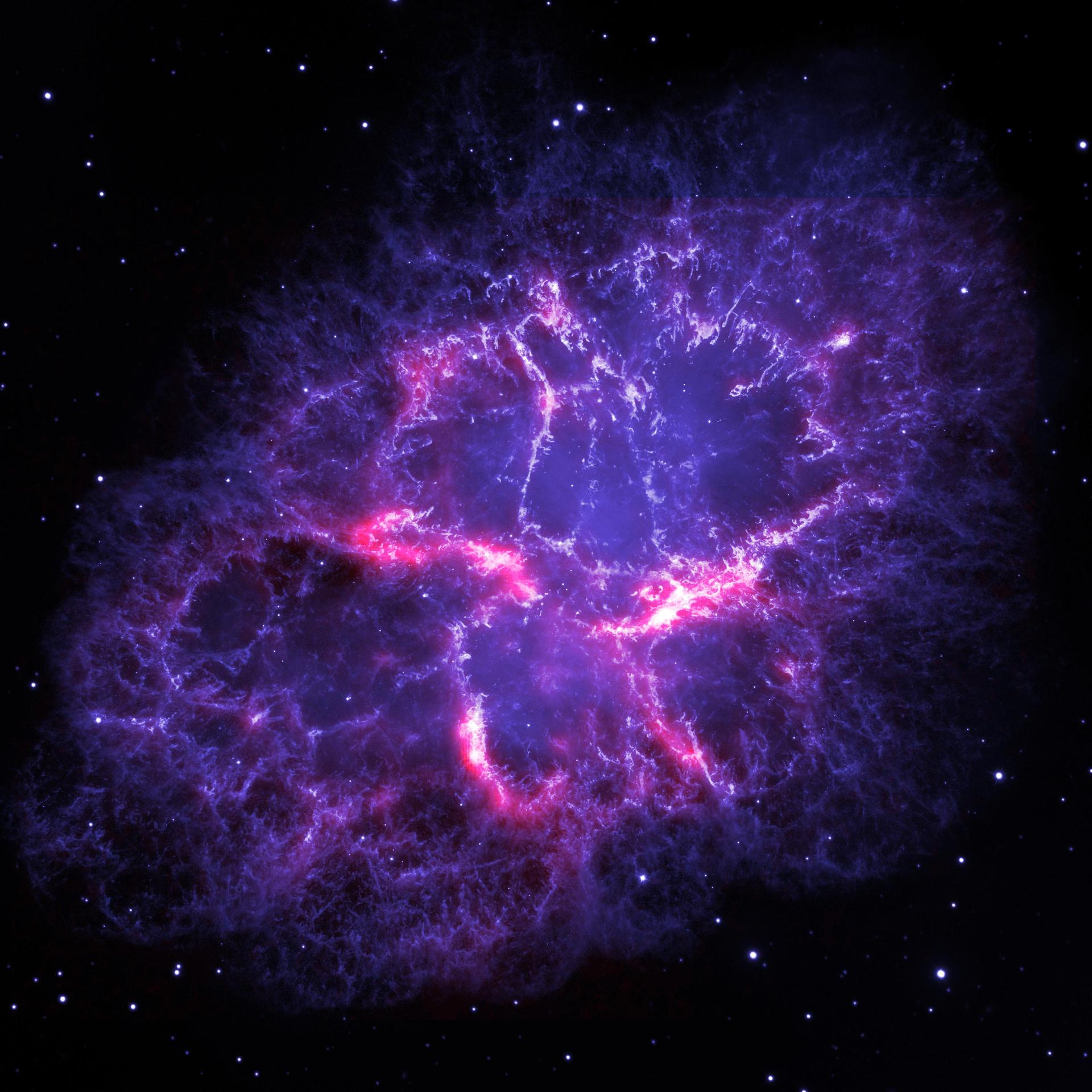

  • PHYSICS NOTE NO. 6

    PHYSICS NOTE NO. 6

    SUMMARY THEME OF PART VI OF THE PHYSICS OF CREATION

    Copyright © Harold Aspden, 2001

    THE AETHER AS AN ENERGY SOURCE

    This page and the connected items that will be the basis of Part VI of the book ‘The Physics of Creation’ will be compiled in due course after the main effort on Parts I to V is virtually complete. In the meantime interested readers may refer to the TECHNOLOGY section of the author’s web site www.energyscience.co.uk where this subject is also discussed.


    Press ‘The Physics of Creation’ to return to its index page.
    Press to return to the main site index.

  • Aether Science Papers (pp. 26-32)

    Aether Science Papers: Part I: The Creative Vacuum
    Pages 26-32

    Copyright © 1996 Harold Aspden


    AETHER POWER GENERATION


    If we can get energy from vacuous space, energy in excess of that we can store by setting up electric or magnetic fields, then that proves there is something in space that stands apart from matter. That ‘something’ is the aether.

    Anyone who has seen the television showing of the power of the tornado and the whirling funnel that provides a channel for a succession of lightning discharges must suspect that something abnormal is feeding energy into that funnel. Rotational wind speeds of 420km/hr are recorded in the cylindrical funnels which are said to be up to 180m in diameter. Of course, we do know that whirlwinds form by natural movement of air in the atmospheric activity, but something special happens when lightning occurs as it seems to add speed to the rotary motion and confine it into a narrow funnel, whereas increased rotational speed with diminished radius of motion should promote flow radially outwards by centrifugal action.

    Now, I pose a simple question. What can it be that determines the radius of that tornado funnel? Indeed, what can it be that determines the radius of the thunderball? Ignoring the problem of where the energy comes from and how there is a containment and a quasi-stable state, what is it that determines the radius of the cylindrical form we see in the tornado or the spherical form we see in the thunderball? I gave the answer in that 1983 lecture of mine at the Oxford conference mentioned above [29]. The limit is set by a ‘virtual’ electric field strength needing to be no greater than that prevailing at the Earth’s surface owing to the Earth’s rotation. By ‘virtual’ I mean the effective fields induced by aether spin. In the thunderball there are two aether spins, a spin of an aether sphere within the spin of a much larger aether sphere. These fields are cancelled by charge displacement in matter and we cannot sense them as fields unless the speed of rotation changes. Then we get ionization. Just as ionization was involved in setting up the spin state, so ionization occurs as the spin state decays. However, there is an energy gain in this cycle of events, as already indicated.

    When I gave my 1983 lecture I did not know that the tornado wind speed at the perimeter of the funnel was of the order of 420km/hr. I could have predicted a figure of the order of 500km/hr, for the simple reason that the wind speed at the funnel perimeter would be about half that of aether spin just inside the funnel, whereas the radial electric field at the surface of a cylinder of uniform electric charge density is 1.5 times that at the surface of a sphere of the same radius having the same uniform charge density. Given that the induced ‘virtual’ charge density is proportional to angular speed, the ‘virtual’ electric field intensity is the same for the aether cylinder and the aether sphere only if the actual speed at the cylinder surface is two-thirds that at the surface of the sphere. For the spherical Earth that speed is about three times 500km/hr and so is it really surprising that the tornado wind can reach a value of 420 km/hr?

    All speculation, you might say! However, as I indicated in the ‘Announcement’ at the beginning of this work, we can build on that speculation to extract energy from the aether for our future source of power.

    I know of several ways in which this ‘free energy’ scenario can be demonstrated. Indeed, it is the subject of my primary research interest at this time. However, I will take up the theme that follows from my 1983 paper [29]. It refers in its penultimate paragraph to Nobel Laureate Kapitza’s efforts to produce thunderballs for application in triggering fusion reactions [120]. Then, in the last sentence, I declared in my paper that:

    “It remains to devise and conduct experiments aimed at inducing this (vacuum) spin condition by using radial electric fields, so as to verify and perhaps apply the phenomenon to useful ends.”

    That was my outlook in 1983. I can now quote the research achievement of Dr. Kiril Chukanov. He reports [115]:

    “I first produced experimental proof that artificially created ball lightning could produce energy for practical needs in 1987 in Bulgaria.”

    After describing his experimental set-up, which involved an ionized gas discharge in a quartz tube, he wrote:

    “I experienced great difficulty in evaluating the amount of power produced by the quantum plasma macro-object, but my rough estimation was three to four times more power output than that being supplied by the (input of the high frequency signal-generating) lamp.”

    By 1990 he had taken his research project into Sunnivale, California and his onward reporting on his production of excess energy showed that he had measured heat generated in a water jacket enclosing the evacuated glow discharge chamber used in his tests. In his 1994 book Final Quantum Revelation he reports a 900 watt rate of excess energy generation using electrodes of some 3 cm separation. A vacuum developing aether spin in a filamentary discharge region having a volume of, say, 0.3 cc, drawing on ‘excess’ energy of density 109 J/m3, would take about 3 seconds to regenerate each action cycle to give the 900 watt excess output.

    Chukanov mentions a 3 second duration of the burst discharge before the discharge, in writhing like a snake, spread to the sides and touched the walls of the containing tube and caused overheating.

    Professor Chernetskii and his team of researchers in Russia have also produced excess energy at power levels in a self-sustaining plasma discharge device, claiming 4 to 5 times electrical power output compared with power input. This was reported in 1989 in a Novosti Press Agency Press Release [123].

    Dr. Wingate Lambertson at a conference in 1994 in Denver, Colorado reported similar levels of power gain from a circuit including a discharge tube and a device formed as a specially-fabricated thyristor [121].

    Recently reported Canadian research in 1995 by Dr. Paulo Correa and Alexandra Correa [116, 117, 118] has established a sustained excess power generation of 500 J per pulse in a cold-cathode discharge confined to an abnormal glow region, with a prospective 40 megawatt-hour electrode lifetime. The Correa technology delivers electrical d.c. output steadily at several hundred volts and a power gain that is also of the order of 5:1 over d.c. input at similar voltage level. The Correa technology will undoubtedly lead us forward on the quest to exploit energy sourced in the aether, especially as it is already well-patented in the USA. In the Correa apparatus successive pulses developed the 500 J in an abnormal glow discharge which is trapped between electrodes, close to the cathode, and probably confined to a volume of a fraction of 1 cc, which also corresponds to 109 J/m3 of energy density.

    Several other reports of excess energy production are now of record in the scientific and patent literature and one needs, therefore, to be prepared for the aether to reappear into our scientific philosophy, as being the only source that can supply that excess energy.

    Indeed it is appropriate to refer here to the excellent book The Secret of the Creative Vacuum by John Davidson [119]. This book had the sub-title ‘Man and the Energy Dance’ and, as readers might guess, it was this that inspired my choice of The Creative Vacuum as the title heading for Part 1 of this work. I refer readers to the chapter in Davidson’s book which discusses ‘Free Energy and the Real Space Age’ and the correspondence between Thomas Townsend Brown and Rolf Schaffranke concerning apparatus involving a dome-shaped aluminium canopy which was part of an electrode structure (see pp. 194-195 in Davidson’s book). Upon setting up a radial electric field inside that canopy it was found that the apparatus could lift itself into the air together with an attached load. Furthermore the apparatus was later shown to perform this lifting operation when tested within a high vacuum.

    Evidently, the reason for this breach of accepted scientific doctrine was not understood by the experimenters involved in those tests, but I see this as a manifestation of the vacuum spin action mentioned above. It taps energy from space to build a kind of aether whirlwind inside the canopy and the electric pressure set up inside that canopy by the energy in spin pushes obliquely against the underside of the canopy to drive it upwards. It becomes a material object powered against the gravity field by a thrust developed against the aether in spin and most of the energy in that spin is drawn from the free energy environment of enveloping space.

    How can it be that the scientific community of the world can stand aloof and pay no attention to such experimental anomalies which are only rarely discovered but which have such enormous implications for the future of mankind? How can it be that books such as that written by John Davidson have no direct impact on that scientific community by causing a redirection of research funding to probe the reported anomalies in a serious way?

    When the consequences of these developments and onward research on this new energy theme become generally known and accepted, the aether will eventually reclaim its rightful place in physical science and then acquire a stature which will dwarf its early role in history. Meanwhile, we need to be a little patient and watch events as the interest grows and conferences on the subject, as well as new journals devoted to these matters, escalate in numbers.

    In the light of these findings, I am bound to submit that science has lost its methodology. Technology has needed science to point the way forward towards new sources of energy that are non-polluting, but science has faltered. Sensible methodology would have been tolerant of retention of the aether as the foundation on which to build the material world. Even though it is academically interesting to see how far we can go without using a word meaning the ‘aether’, it was not at all wise for science to reject the concept totally and without reservation. Now, in the present circumstances, too many of the scientists who build their hopes on physical theory are committed to the denial that there is a universal timing mechanism governing everything. They deny the possibility that energy can be delivered to us by an aether, which, if recognized at all, is deemed wholly passive in its role. As a result, instead of leading our thought processes and guiding us forward into a new technological era, building on knowledge of the aether, the scientific philosophers of today have crippled the mental agility of younger generations and made progress so much more difficult.

    For my part, in writing this text, my main objective is to draw attention to the papers I have written in connection with aether theory. I say there is an aether and I use it throughout my research to explain much in physics that has otherwise remained unexplained. I have been obstructed in my efforts by the prejudice of orthodox belief and have had many more papers rejected than have been accepted, especially in my earlier years of endeavour, from 1955 to 1975.

    The future ahead now rests, not with reason and philosophy, but with the forces of new technology, because pursuit of reason and logic is claimed as the exclusive province of those who insist on inventing descriptive language alien to Nature’s own method of revelation. In physical science we are now destined to witness a slow reformation as technology leads the field and those amongst us who are wise enough to seek recovery of lost ground will hopefully do so by paying more respect to those who have pioneered a belief and not a disbelief in the aether. We need to pay homage to the memory of Ren‚ Descartes and, again quoting the words of philosopher Alfred North Whitehead, words he used by reference to Albert Einstein:

    “The worst homage we can pay to genius is to accept uncritically formulations of truths which we owe to it.”

    In my book Modern Aether Science [110] published in 1972, I have developed my theory on the basis of Descartes’ work, but as further advanced by that early-20th-century French astronomer, Alexandre Veronnet [123]. He quantized the aether particle motion in units of the Bohr magneton and partly anticipated what I was later to discover from my research as an analogy between aether and the ferromagnetic state. I go much further, however, even including the domain aspect of ferromagnetism. I came to picture each individual star nucleating within its own space domain as gravity appeared, akin to ferromagnetism appearing when a crystal inside iron cools through the Curie temperature. I came to picture each such star moving, in a sense driven by forces somewhat similar to those just suggested in connection with the anti-gravity aluminium canopy experiments, so as to transit into other space domains at intervals of 100,000 years or so. Imagine Earth, carried along by the solar system, at the known cosmic speed of the order of some 400 km/s, moving through a domain boundary region. For about one minute the Earth would sit astride the boundary. If there is a polarity reversal of electric charge as between the two adjacent space domains, where antiprotons replace protons and positrons replace electrons, is it any wonder then that the Earth’s magnetic field reverses in such events? Is it any wonder that gravity forces might become antigravity forces as between matter astride those two domains, for that brief period, to cause earthquakes on an unimaginable scale, sufficient to destroy whole species of life? May it not be, if we wish to worry about our future destruction, that we have a choice for our thoughts as between (a) our own self destruction by nuclear weapons and the like or (b) the random event of a comet or asteroid crashing into Earth or (c) the inevitable and possibly predictable event when our Earth next crosses a space domain boundary?

    Might it not be that the day will come when some potential survivors will need to climb into space vehicles propelled by future antigravity technology? They will board as we approach that space domain boundary so as to go through it ahead of the Earth but make the transit in a fraction of a millisecond, eventually returning to Earth only after the dust has settled. Believe it or not, our physics, when revised to take account of what is disclosed in the Aether Science Papers of this work, allows us to estimate the timing of the next space domain boundary transit, once we can be sure about the timing of the last one. Indeed, I have detailed the evidence for this quite extensively in chapter 16 of my 1972 book Modern Aether Science and in chapter 8 of my 1980 book Physics Unified and can hardly say more. All I can say is that the predictive power of my theory, as evidenced by the papers appended, seems now to be so far beyond dispute that the implied space domain structure cannot be cast aside as mere hypothesis. The planar boundaries are absolutely essential to assure the restoring force rate as universally applicable to displaced aether charge [34]. Those boundaries must exist and the pattern of geomagnetic reversal and catastrophic events over a range of cosmic time, when taken together with the speed measurements connected with anisotropy of cosmic background radiation, provide the data allowing us to chart our passage through the space domain boundaries.

    I will here remind the reader of my early comments concerning the ‘Big Bang’. There are two papers in the appended bibliography which warrant special attention by the ‘Big Bang’ enthusiast. There was, of course, no ‘Big Bang’. To escape from that dilemma one needs first to understand how the aether attenuates electromagnetic waves without suffering dispersion. The secret here is the same as that which explains gravity. It is ‘dynamic balance’. The aether has a dual displacement feature, whereas Maxwell allowed unbalanced lateral displacements which meant that waves travelled without exhibiting lateral inertia. The formal analysis of this is in reference [26]. To complete the story one needs to explain the Hubble constant without appealing to the expanding universe hypothesis and I did that in my paper reference [42]. See also the special note on page 10 which refers to that paper. Unquestionably, we inhabit a universe that is ‘steady-state’ apart from its bubbling equilibrium. It is as if we were minute observers sitting inside a solid piece of iron, experiencing the thermal agitation whilst being firmly rooted inside that iron, but subject to drifting as we share the Earth’s motion, just as if we were part of magnetic domain migrating through a crystal. Eventually, though we may suffer the `heat death’ or something similar if gravity is switched off, and lose the attractive power of magnetism as that iron goes through its Curie temperature, the iron (as well as the aether) will still be obedient to a physical system that does not need the notion of an `expanding universe’ or ‘dilating time’.

    As I revise this section of text, I happen to have just read an article at page 20 of the April 1996 issue of ‘Physics World’. It tells us that researchers are seeing more and more evidence of ‘proton radioactivity’. Atomic nuclei are shedding protons! The first such discovery is said to date from 1970, but, as the article explains, “Theorists predicted proton radioactivity long before it was observed by experiment for the first time in 1970.”

    Atomic nuclei are known to decay by shedding particles, particles and neutrons and atomic nuclei are said to comprise protons and neutrons, but not beta particles, otherwise known as electrons and positrons.

    What do you, the reader, believe? Before you reached your conclusion did you ask the ‘obvious’ question? How do physicists really know that there are neutrons inside an atomic nucleus and not just protons and electrons? Have they ever `seen’ a neutron inside the nucleus or are they simply guessing that, because neutrons `appear’ as a decay ‘product’, those neutrons were not ‘produced’ but had always existed inside the parent nucleus? If so, how is it that protons are durable, whereas neutrons decay with a mean lifetime of about one quarter of an hour?

    Maybe you have accepted what you were told and can see no reason for doubt. So, now you are being told that ‘proton radioactivity’ has been discovered, even for atoms with an atomic number greater than Z=82, a so-called ‘magic number’. Might that not suggest that the atomic nucleus can shed protons and negative beta particles in a highly energetic paired relationship and we have studied this as an unstable neutral entity and given it the name ‘neutron’?

    In 1929 there was a book published by Cambridge University Press under the title ‘The Universe Around Us’. Its author was Sir James Jeans. On page 144 one can read the words ‘the most abundant isotope of mercury, of atomic number 80 and atomic weight 200.016, is built up of 200 protons, 120 nuclear electrons and 80 orbital electrons’.

    I can see no reason to doubt this, it being well-accepted in 1929. How could it be that the phenomenon of the neutron as something observed outside an atomic nucleus could change opinion as to what was inside that nucleus? One curious reason I have been given dates back to the middle of the 19th century. It appears that the Reverend Samuel Earnshaw formulated a theory about the aether. He proved mathematically that charges of opposite polarity could not form collectively into a stable combination with each held in position solely by mutual electric field action. I was told that this destroyed any claim that there could be particles composed of protons and electrons closely bound together. Yet Earnshaw’s theorem, though unknown to most physicists, was fully explained in the fifth edition of the book The Mathematical Theory of Electricity and Magnetism, also published by Cambridge University Press and also written by Sir James Jeans. Now, I wonder, why would Sir James Jeans be declaring in 1929 that there are protons and electrons in a stable atomic nucleus, if a theorem with which he was very familiar denied the possibility?

    The simple truth is that so many physicists today are ignorant on matters of such fundamental importance. Even Earnshaw’s theorem, ostensibly rigorous mathematically, is flawed. It declares that:

    “A charged body placed in an electric field of force cannot rest in stable equilibrium under the influence of the electric force alone.”

    In fact, it can, because if a multitude of electric particles, all identical and all of the same polarity, are spinkled into a uniform sea of electric charge of uniform charge density and opposite polarity, then the mutual repulsion of those particles will cause them to take up lattice sites in an array, each such particle being located at a stable position. What Earnshaw and Jeans did not bargain for was that continuum of charge as an enivironmental background. They assumed as their premise that there was nothing in the space between the particles! Yet, in the aether, there is no empty space. It is a plenum! Jeans did say in his notes on Earnshaw’s theorem that “if a molecule is to be regarded as a cluster of electrons and positive charges, then the law of force must be somewhat different from that of the inverse square.” He was wrong on this, given that we have an aether that fills all space.

    I have raised this subject here for two reasons. You will understand one reason when you examine the first of the fourteen papers, where I discuss the constitution of the deuteron and also that of the neutron. Secondly, however, in following my interest in energy generation, I have become attentive to the claims made for what has come to be known as ‘cold fusion’. The scientific community went beserk upon hearing in 1989 the claims made by Professor Martin Fleischmann and Professor Stanley Pons that there was evidence of excess heat generation from experiments in which a palladium cathode was immersed in heavy water. The absence of neutron production was seen as clear evidence that no nuclear transmutation could possibly have occurred.

    Where is that scientific spirit which yearns to learn something new? How is it that physicists always see the world in black and white and are ready to ‘black’ what shines through as appearing ‘white’, without being tolerant of alternative opinion? They banished the electron from the atomic nucleus and substituted the neutron. That was their doing and not an act of Nature.

    In science there is always the need to be critical as, so often, revision of one’s ideas and formulations is necessary, but, progressively, so long as we keep the main uncertainties in science as our target, we will solve all problems. The need for the phase-lock on a universal scale has been my main target, because it brings together magnetism, gravitation and the quantum connection as encapsulated in the fine-structure constant and from that flows the photon and the problem of duality with electromagnetic wave theory. I leave it to my papers, as listed in the bibliography, to tell their own story and to prove that many of the secrets of the aether are now exposed.