Crab Nebula (M1) — supernova remnant imaged by Herschel and Hubble Space Telescopes

Category: Essays

Essays on energy science and physics

Crab Nebula (M1), supernova remnant · ESA/Herschel/PACS; NASA, ESA & A. Loll/J. Hester (Arizona State Univ.) · NASA Image Library ↗

  • ENERGY AND MATTER CREATION

    ENERGY AND MATTER CREATION

    The Vacuum Medium – Our Future Energy Source?


    This website www.aspden.org.uk has two purposes. One is to draw attention to a new book ‘Creation:The Physical Truth’, by Dr. Harold Aspden. The book describes the quantum underworld of space, a source of energy that we should be able to harness. It is important because it discloses how matter in the form of protons, the nuclei of hydrogen atoms, are created by the ongoing activity of that source of energy. The other purpose is to outline a possible technological method of exploiting that energy resource.

    The time has come when our scientific community needs to face up to reality by treading a path that avoids reliance on Einstein’s doctrine. Those in government concerned with funding energy research based on the belief that our Sun is powered by nuclear fusion need to ask a question. Why, given that the Sun comprises hydrogen atoms that radiate energy because they are ionized, it is that the mutual gravitational attraction of freed protons, the hydrogen nuclei, does not make the Sun’s interior sufficiently positively charged so as to resist the compaction pressure being any greater than applies in its radiating surface regions where the temperature is only 6,000 K? Vast sums of money are being spent to build reactors that aim at producing temperatures of 100,000,000 K to trigger a fusion reaction, all based on a false notion about the Sun’s energy source. There is surely risk in replicating conditions that relate more to hydrogen bomb technology than the power source that keeps our Earth warm.

    CREATION: THE PHYSICAL TRUTH (1-84624-050-6; Hardback, 201 pages, U.K. price £15.99) by Harold Aspden, published by THE BOOK GUILD LTD is available through all good booksellers or it can be ordered in U.K. with a credit/debit card by telephoning 01825 873133 or, if outside U.K., by telephoning +44 (0) 1825 873133.


    Copyright © Harold Aspden, 2006

  • SOLVING THE WORLD’S GREATEST PROBLEMS

    SOLVING THE WORLD’S GREATEST PROBLEMS

    Copyright © 2007, Harold Aspden


    In 2005 a book entitled The World’s 20 Greatest Unsolved Problems was published in USA by Prentice Hall Books (ISBN 1-800-382-3419). Its Editor John Vacca invited me to comment on what was said in its Chapters 19 and 20, concerning Free Energy and Nuclear Fusion, and I was pleased to see that my remarks were all duly published in those chapters in its Second Printing, a copy of which I was able to purchase in a bookstore in January 2005 on a visit to San Francisco. Since I have also an opinion to express on the subject of several other chapters in that book I now venture to record these here.

    Introduction

    The book The World’s 20 Greatest Unsolved Problems divides these problems between seven groups. These are: Part I: Astronomy and Cosmology, Part II: Physics and AstrophysicsPart III: Biology and Paleontology, Part IV: Neuroscience, Part V: Geology, Part VI: Chemistry and Part VII: Energy. The comments which follow only concern Part I and Part II.

    Of the 20 Unsolved Problems, each dealt with by a chapter of its own, three constitute Part I and six constitute Part II. Below, I offer comment on all but one of those nine chapters.

    My comments can be brief because it so happens that I decided in 2005 to author a book of my own, a final work, bearing in mind that I am now in my 80th year, and this was published in U.K. in September 2006 under the title Creation: The Physical Truth. It is identified as ISBN 1-84624-050-6 and was published by The Book Guild Ltd.

    Chapter 1: Astronomy: The Mystery of Dark Matter

    In its opening chapter on page 3 the Vacca book states that ‘about 80% of the mass of our galaxy (or all observable galaxies for that matter) consists of this mysterious material’ This follows introductory words which say: ‘Dark matter can best be described as areas in space (between stars and galaxies) composed of material that appears as “voids” or “nothingness”, but these voids can be measured due to their gravitational pull and interaction with surrounding stars and galaxies’. Later on page 13, before a statement that declares that, given acceptance of Einstein’s theory of relativity, there is no way of escaping the existence of dark matter, one is told that the concept of dark matter is pretty absurd, followed by the question: “Why?” Then comes the answer: “Because scientists in this field indicate that 96% of most galaxies (including our own) in the observable universe are made out of dark matter.

    I find all that confusing. Why give a figure of 80% on page 3 and 96% on page 13? If Einstein’s theory predicts the existence of dark matter, why is there a problem? I was not surprised therefore by the final sentence of that chapter on page 22, which was: “The truth is still out there!”

    That word ‘truth’, by coincidence, resonates a little in my mind, given the title of my book Creation: The Physical Truth. Also, by coincidence, it so happens that in presenting my account in that book of how stars are created I explained why the activity of the quantum underworld that pervades all space is trying everywhere to create matter, but succeeding only momentarily unless there is an adequate related amount of angular momentum shed that sustains existence in real matter form. When I wrote the book I had not seen how easy it was to link the amount of that transiently existing matter form with the real matter that formed a star. Yet I can look now at my book where, on page 135 I refer to such matter as ‘quasi-matter’ and show how to derive its mass density as that of 299 protons in each cubic metre of space. It is based on the statistical analysis of the chance of creating a proton from the combination of muons that are ever engaged in a process of creation and decay as they constitute the fundamental underworld of space, what we refer to as the ‘vacuum’. In the earlier pages of the book, I presented evidence of geomagnetic field reversals over millions of years as our Earth has moved through a space medium divided into cubic domains, the size of which, some 500 light years in scale, could be estimated from that data. Linked to angular momentum necessarily shed at the boundaries of such domains in their formation I found that only about 4% of that quasi-matter could be deployed into the creation of the star. Just divide the mass of the sun as a typical star by the volume of the space domain and compare that mass density with the mass density of that transient proton presence noted above.

    So what I am saying here is that if one studies what I have presented in my book one can see why ‘dark matter’ exists. It should no longer be classified as one of our a ‘greatest’ unsolved problems.

    Chapter 2: The Creation of the Universe

    Given the title of my book it should answer whatever problem is posed by this chapter in the Vacca book. On page 24 the problem is stated. There one confronts the question ‘What powered the Big Bang?’ What, indeed? On page 29 one is told that maybe the Big Bang did not require any energy because the energy needed was cancelled by negative gravitational potential energy and it was not true that Einstein’s equations led to the Big Bang. The chapter ends by further reference, however, to the theory of relativity and comment inferring that the whole universe is seen as rotating about each and every individual observer.

    How do I react to that and deal with the Big Bang problem? Well, the simple answer is to find the true physical explanation of what we measure in determining the Hubble constant. I have found the answer and explained it in my book, supporting that by actually deriving the value of the Hubble constant. There is no ongoing expansion of the universe at all. It is the effect that quasi-matter or dark matter has in reducing the frequency of electromagnetic radiation in its passage through that medium. See page 137 of my book. Keep in mind that when we consider electromagnetic waves travelling through the vacuum medium we are not dealing with their motion through ordinary matter with its dispersion effects. The propagation of an electromagnetic wave through the imagined nothingness of space involves lateral relative motion of two vacuum components of opposite charge polarity to account for electric displacement. By understanding the different mass properties of those vacuum components one can see how they operate collectively to reduce the frequency of an electromagnetic wave in its passage through that medium. The action is linked to physics which accounts for gravity, as my book explains. There was no Big Bang!

    Chapter 3: Theoretical Cosmology and Particle Physics: The Cosmological Constant

    The so-called ‘cosmological constant’ is not discussed in my book because I see it as a meaningless notion. This chapter in the Vacca book draws attention to the importance of the fine-structure constant as being approximately 1/137 or 0.0072992 and, indeed, the derivation of that constant from analysis of the structure of the physical underworld of space is a major contribution in my book (see its pages 99-111). Chapter 3 of Vacca’s book then debates the issue of ‘dark matter’, which I have referred to above in the context of chapter 1. So my verdict on this chapter 3 is that it is not a commentary on an unsolved problem that differs from the problems posed by the other chapters. The chapter ends with the conclusion that the cosmological constant together with dark matter ‘drives’ the expansion of the universe and the final statement: “It’s a weird, weird world after all!” Indeed it is, if one believes the fallacy that the universe is, in fact, expanding.

    Chapter 4: Gravity: The Construction of a Consistent Quantum Theory of Gravitation

    This chapter poses the question: “What is gravity?” and then immediately adds the question: “What is a black hole?” A black hole is said to form when a massive star dies and collapses under its own mass. Now the chapter title introduced the expression ‘Quantum Theory’ and we know from quantum theory that atoms contain electrons that have perpetual motion. When we humans die the atoms that form or bodies have a way of surviving as they, thanks to whatever governs quantum theory, sustain the motion of their electrons. So imagine a massive star in its death throes. How can it collapse if its atoms retain that electron motion? The electrons of atoms pulled closely together by gravity will crash into one another and cause ionization. The gravity force between the atomic nuclei will confront an enormous counter force, the electrostatic repulsion between two positive charges that far outweighs their gravitational interaction. The notion of the ‘black hole’ is therefore a myth. Whatever evidence supports the hypothesis must have other explanation.

    However, reverting to that question: “What is gravity?” and its origins in quantum theory, there is a wonderful and simple answer. It is attributable to the effect of matter in its dynamic interaction with the quantum underworld as linked to the gravitons which provide that dynamic balance. The gravitons displace a volume of electric charge constituting a continuum in which there are opposite polarity charges sharing the motion of matter. In its electrostatic self-repulsion that displaced charge will encourage those gravitons and the matter to which they are coupled to seek closer proximity, an action we experience as gravity. Proof requires derivation of the value of the constant of gravitation G in terms of the graviton mass quantum and the evidence determining graviton mass by relating it to the creation of other fundamental particle forms. This is fully dealt with in Part I of my book Creation: The Physical Truth. The Vacca chapter 4 title says the chapter is about the quantum theory of gravity, but all I can see discussed in that chapter is the notion that ‘Black Holes’ exist and the assurance that, when the Large Hadron Colliders become even larger, we will not suddenly die by being pulled into a ‘Black Hole’ because CERN physicists tell us that if that were a risk cosmic rays would have already made us extinct.

    Chapter 5: Particle Physics: The Mechanism That Makes Fundamental Mass

    The ‘standard model’ and its ‘God-Particle’ are the subject of this chapter, whereas the mechanism that creates the proton is of primary importance. My research which dates back for several decades has shown how the proton is created and how Mother Nature determines the proton/electron mass ratio as 1836.152 and that is of record in the library archives of universities. It is the subject of chapter 11 of my book Creation: The Physical Truth. It is the same physics that explains the creation and existence of ‘dark matter’ and it involves as energy source the muons that permeate the aether.

    I admit that I am somewhat concerned at the inference in chapter 5 of the Vacca book that solution of this ‘One of the World’s 20 Greatest Problems’ might stem from the findings of a CERN LHC (Large Hadronic Collider) experiment.

    It so happens that my theory of proton creation contemplates the merger of two ‘virtual’ muons, a form of muon that I see as pervading all space, to create what I call a ‘dimuon’ of mass a little greater than 412 times that of the electron. In turn, this dimuon becomes the smaller energy particle of a coupled charge union with the charge form that is embodied by the proton. My book explains why, based on the pre-Einstein teachings of J.J. Thomson concerning the physical size of a spherical electrical charge in terms of its energy or mass, one can derive a formulation:

    (3/2)1/2 – 1

    as being the ratio of the masses of a -e and +e charge pair when in touching contact at their charge surfaces. You can verify that the ratio is 0.22474487, which happens to be the ratio between 2(206.3329) and 1836.152.

    My concern is that the detection of a particle mass resonance at close to 115 GeV/c2 might be seen as the discovery the ‘God-Particle’, confirming the Higgs aspect of standard theory. The reason I say this is that my theory, in addressing the problem of warm superconductivity (see later discussion pertaining to chapter 9) predicted, very clearly, the existence of a supergraviton having a mass that is 95.18 GeV/c2 and I can see that (3/2) times this is close to that Higgs quantity.

    If, in such experiments, the supergraviton becomes associated with a charge e that adjusts its mass-energy to the minimal condition before being separated by impact of a colliding high energy proton, then the recombination of those charges will have an energy close to that assumed for the ‘God-Particle’.

    Accordingly, subject to what emerges from the eventual outcome of the CERN experiments, I can but hope that physicists will not get over-excited and go further adrift in their dream world that ignores the reality of the aether.

    Chapter 6: Particle Physics and Astrophysics: The Solar Neutrino Problem

    What are neutrinos? Here is the problem stated on the first page of this chapter. The last paragraph of that chapter includes the statement: “Finally, physicists are still trying to figure out the basic properties of neutrinos.” A central page in the chapter has a section headed: Do Neutrinos Have Mass? and another section headed: Neutrinos Do Have Mass. In my book Creation: The Physical Truth I did, on page 179, quote a comment that appeared in the June 2005 issue of Physics World, the member’s periodical of the U.K. Institute of Physics, which stated that “Neutrino mass is important in our understanding of the universe as a whole, and, furthermore neutrinos may have generated all the matter of which we are made.”

    It will take a little while before physicists accept the truth concerning the neutrino hypothesis. It is analogous with the problems posed by the hypothesis that there is an aether. When the figures governing the dynamic interaction between matter and the underworld of space revealed a related energy imbalance, those accountants (physicists) who track such situations ‘cooked the books’ by inventing the neutrino and dispensing with the aether. Yes, one day, if they accept the guidance of my book, they will come to see that the aether accounts for the energy from which the universe was created. There is a 2:1 energy ratio attributable to the dynamic interaction between gravitons and that part of the aether system that shares the quantized motion of matter. Concerning neutrinos there is the related problem of accounting for a one in three discrepancy evident from analysis of solar energy radiation, causing physicists to speak of neutrinos ‘changing flavour’ in transit from Sun to Earth. They point to muons and tau-leptons and their neutrino involvement. My book explains the fundamental and vital role of muons and tau-leptons in defining that aether and I see no need for neutrinos.

    Chapter 8: Theoretical High Energy Physics: The Unification of Basic Forces

    Unification is surely not a problem! I say this because my book Creation: The Physical Truth does show how gravity and the electrical underworld of particle physics can be unified. On page 197 of the Vacca book there is the claim that unification can be based on four particles: the photon for electromagnetic interactions, two charged W particles, and a neutral Z particle for weak interactions. Then one is introduced to ‘string theory’ and its effect in modifying the concept of the ‘space-time’ that Einstein developed.

    Who, I wonder, can find such notions of interest? I do not, in my theory, refer to something called ‘cosmic strings’, but I wonder if the electron-positron chains that I introduced in my theoretical analysis of atomic structure are links in the sense intended by ‘string theory’.

    Concerning this chapter of the Vacca book, since the W and Z particles have been mentioned, I just mention that my analysis of the fabric of space that led me to the supergraviton showed how charged particles of mass-energy 92.59 GeV and 82.03 GeV might feature in high energy research involving particle reactions. These, I saw as possibly identifying the Z and W particles and I duly remarked on this in my paper The Supergraviton and its Technological Connection of record in Speculations in Science and Technology, 12, 179-186 (1989). This paper is mentioned also in my comments in the next chapter and I there provide a website reference for those interested in seeing the case presented.

    As to that chapter 8 of the Vacca book it summarizes the subject of unification by quoting the comment “Time may have a fundamentally different nature from space” and going on to question Einstein’s notion that time is a fourth dimension of space. I can but agree with that, but cannot understand why we still tolerate Einstein philosophy. The aether is the reality and is not a problem and our only problem is that of accepting that fact by reference to my book Creation: The Physical Truth.

    Chapter 9: Solid State Physics: The Mechanism Behind High-Temperature Superconductors

    In reading this chapter I had to look for the ‘problem’. What was presented was an account of the development of warm superconductor technology and its potential importance in the industrial world. I may have missed it, but the only ‘problem’ I could see that had a specific reference was in the paragraph on page 245 which refers to the “travelling salesman” problem and something concerned with quantum computing that can be enhanced if superconductor technology makes it feasible.

    Now superconductor technology is not something discussed in my book Creation: The Physical Truth but in that book I do explain the role of the graviton in providing the essential dynamic balance for the motion of matter that accounts for its dependence upon quantum theory. Elsewhere in my published work I have given an account of the physics underlying warm superconductivity. See my website paper mentioned above The Supergraviton and its Technological Connection which has a publisher submission date of 1988.

    An electron moving through a conductor encounters collision with an atom. The mass of that atom is subject to quantum effects owing to its coupling with gravitons that provide dynamic balance. Generally this coupling is a shared activity involving several atoms and several gravitons collaborating to provide the needed dynamic balance. The more that action is spread amongst a number of such atoms, the greater the energy loss owing to those electron collisions. Ideally, if an electron can impact an atom that has a mass dynamically balanced by a graviton, then that impact transfers energy to the quantum motion of the graviton and, in being conserved momentarily, it can be transferred back to the atom as it then sheds an electron in a forward sense, so conserving current flow as part of the inductive action of the current circuit. The essential factor is graviton mass in relation to the mass of the atom and whether this can involve a kind of resonant property momentarily at the time of an electron collision.

    That paper just referenced explained how quantum dynamic balance as between gravitons and atomic nuclei or molecules of high atomic mass number would favour the existence of a supergraviton, one that could still function in determining G, the constant of gravitation, but in association with a meson presence. The supergraviton mass was calculated as being very slightly greater than 102 atomic mass units and that was clearly an integer factor of the masses of certain molecular forms that were proving to be high temperature superconductors.

    So I am saying that my theory of gravitation can lead to a solution to that ‘greatest’ problem that is the subject of Chapter 9 in the Vacca book. I note, incidentally, that on page 217 of the Vacca book it is said that by 1993 the critical temperature of the warmest superconductor had been coaxed above earlier levels by using a ‘thallium’ doping substance. The atomic mass of thallium is 204 amu, exactly twice the 102 factor that my 1988 paper had pointed to, meaning that two thallium atoms interacting dynamically with four supergravitons will collaborate in sustaining current by conserving electron collision energy otherwise lost as ohmic heating.

    A Problem of Galactic Dimensions

    Students of astrophysics may be interested in the following problem. It is one that I cannot solve. My book Creation: The Physical Truth shows how stars are created, based on evidence that shows why space is divided into domains, each commensurate with the creation of a star. The governing factor is that ongoing attempts to create matter by the quantum activity of the underworld of space only succeed if there is angular momentum available to allow the matter created to participate in the quantum dynamic system of that underworld. Otherwise the matter created has a transient existence as ‘dark matter’ or what my book describes as ‘quasi-matter’.

    I was able to explain that measure of angular momentum as being related to the electrical polarity transition state of the vacuum medium at the boundaries between those domains and so the area of those boundaries is a governing factor for the energy and angular momentum shed in creating a star, whereas the volume of those domains governs the net amount of ‘dark matter’.

    I can also show that the angular momentum of the quantum dynamic system that pervades all space is enormous in relation to that acquired by the creation of stars but, given that angular momentum needs to be balanced by oppositely directed angular momentum, here is a pointer to why galaxies form and develop their own state of spin about a remote axis at the centre of a galaxy.

    On page 81 of my book Creation: The Physical Truth, where I discuss the creation of the Sun, I note that the effective mass density of the aether, meaning that quantum dynamic system that pervades all space, is 288 gm per cubic cm., and from what is presented on pages 102-105, one can see that the quon-graviton system involved describes a minute radius of 1.93×10⁻¹¹ cm at half the speed of light from which one can deduce that each cc. of space has an angular momentum of about 83 gm-cm2/s.

    Applying this to the galaxy of which we are part, given that the Sun’s mass of approximately 2×1033 gm divided by the volume of a space domain of about 1062 cc, as is evident from that page 81of my book, one obtains 2×10-29 gm/cc. For angular momentum balance, our Sun must therefore, in its galactic orbit at creation have had a velocity moment in c.g.s units of 83/(2×10-29) or approximately 4×1030. Note then that this corresponds to motion in a circular orbit of radius 8×1022 cm at a speed of 500 km/s. The orbital period on that basis is of the order of 300 million years. This contrasts with a measured speed of 390 km/s for the motion of Earth through space using radiometers carried by U-2 aircraft (see page 82 of my book) and an estimated galactic orbital period of 274 million years based on the geophysical evidence of J. Steiner, Geology, p. 89 (1973).

    So I am fairly confident that such theory is reasonably well founded. However, what is the problem I cannot solve? Simply stated, it is that of the missing criterion, the physics that determines the factorial division of that angular velocity into its speed and radial distance components. I have explained gravitation in my book as a property confined to action over a range within a space domain, whereas there will be those who see gravity as operative over an unlimited range. To account for that galactic motion that assumption implies that far more solar mass quantities are needed at the centre of our galaxy than can be physically justified. Accordingly, I must leave this question open and hope that someone will one day enlighten us by finding a solution. Understanding galaxies and their formation is a formidable task, as I see from chapter 16: Galaxies in the book by Donald E. Scott entitled The Electric Sky (ISBN 0-9772851-1-1) published in 2006. Scott draws particular attention to a 1986 proposal by Hannes Alfven which attributes the form of a galaxy to a plasma phenomenon involving interaction of strong electrical currents. Maybe there is therefore some overriding electrical action that can cause a galaxy to exhibit electrical forces that can set up interaction forces between very remote stellar objects.

    One can but await future developments, but we must first address the more important issue of harnessing the energy of the quantum underworld of space to serve our energy needs. The study of galactic phenomena is not the primary problem.


    Dr. H. Aspden,
    Sabberton Research,
    P.O. Box 35, Chilworth, Southampton SO16 7RB,
    England

    July 7th 2007

  • The Sun’s Energy Source

    The Sun’s Energy Source

    © Harold Aspden, 2006

    Gravitation as between the sun’s hydrogen atoms causes their electrons to collide. This results in ionization and free protons, which, owing to their mutual gravitational interaction being so much stronger than that of electron
    interaction, become the dominant free charge form and give the sun a
    positive core charge, thereby causing the sun to have a uniform mass
    density. This is set by the balance of the free-proton electrostatic
    repulsion and the sun’s overall gravitational attraction. The sun has
    therefore a mass density of 1.41 gm/cc which is defined by dividing the
    mass of the hydrogen atom by the cube of the diameter of the Bohr orbit
    of the electron motion. What, however, determines the sun’s
    temperature? That is the subject discussed below.

    As you will see it is the temperature determined by the following equation:

    π(λ)2σ(T)4/8c = GM(4π/3)ρR

    By showing students how to derive this equation, which tells us the sun has a temperature of 5,695 K, in agreement with the heat radiation as measured, they will surely see why their basic knowledge of physics is so important. Our very existence depends upon the energy we receive from the sun. Students of today face a future during which oil reserves will diminish dramatically. The sun’s heat derives from energy tapped from the quantum underworld that keeps electrons in motion in their parent atoms. It does not come from nuclear fusion! So there is a major lesson to learn and those who teach physics today must heed the evidence here presented. Research students of today need to find a way of tapping the energy resource of the quantum underworld that permeates all space and the starting point for such research that I offer in my book Creation: The Physical Truth [1] is the explanation of how the sun acquired its spin by interaction with the medium constituting that quantum underworld.

    So, to proceed, what is the physical process that determines the temperature of the sun?

    The answer to this question depends upon the physical size of the electron, inasmuch
    as it is the electron in the hydrogen atom that provides virtually the whole of the
    atom’s reaction cross-section subjected to the sun’s radiation pressure. It is a curious
    fact, however, that a century and more has elapsed since J.J. Thomson discovered the
    electron and yet we are told, as by Cambridge Encyclopaedia (Cambridge University
    Press, 2000 Edition, page 908), that the electron “…(has) no known size, (is) assumed
    point-like, (with) no known substructure..” The wisdom of today’s physics
    community does not therefore allow us to see a way forward in our efforts to
    comprehend the sun’s energy source as being regulated by pressure balance with
    energy being tapped from the quantum activity of the underworld that pervades all
    space. We must therefore revert to the wisdom of the past.

    The size of the electron can be specified in two ways. Firstly, if we see the electron
    as a ball of electric charge, that charge has a certain radius. In pre-Einstein times
    (1904) physics textbook knowledge [2] gave the formula for charge radius a in terms
    of the electron mass m and the electron charge e:

    m = 2e2/3a

    where e is expressed in electromagnetic units, the formula becoming:

    mc2 = 2e2/3a

    where e is expressed in electrostatic units. No doubt this was derived by integrating
    the electromagnetic field energy external to radius a at a given electron speed v and
    equating this to mv2. Note that mc2 is mass-energy if 2e2/3a is regarded as comprising electric field energy summed over space outside that radius a and adding the electric energy within radius a found by assuming that the pressure or energy
    density within that radius is the same as applies at the charge surface of the electron.
    Secondly, however, if we see the electron as a ball of energy, rather than a ball of
    charge, and regard the sun’s radiation pressure at the sun’s surface, where energy is
    released explosively and has not at that stage become that of electromagnetic
    radiation, it is not the electron’s charge that absorbs that pressure. Instead it is the
    electron form defined by the mass-energy it exhibits in its quantum motion within the
    hydrogen atom. This mass-energy is slightly less than that applicable to a free
    electron in linear motion. We know this from the derivation of the gyromagnetic ratio
    factor in quantum electrodynamics. Suffice it here to note that the electron exhibits a
    radius that is approximately half the value of the Compton electron wavelength, as
    if there is a radial resonance effect propagating through the electron’s energy field at
    the speed of light c. The electron’s electric field energy that lies outside this radius is
    therefore not effective in determining its mass for motion within the hydrogen atom,
    but the main point of interest here is that the electron, when confronted with the sun’s
    radiation pressure, exhibits itself as a spherical ball of diameter approximately equal
    to the Compton wavelemgth λ. Therefore we can formulate an equation telling us what the temperature of the
    sun should be.

    The sun’s temperature T sets up a radiation pressure (T)4/c, where σ is the Stefan-Boltzmann constant. This is effectively halved when the radiation is
    intercepted by a spherical form owing to the variation of angle of incidence. For an
    obstructing spherical object of diameter λ , this implies a force that is:

    π(λ)2σ(T)4/8c

    acting against the gravitational force attracting the electron’s parent hydrogen atom
    towards the sun, which is:

    GM(4π/3)ρR

    G being the constant of gravitation, M being the mass of the hydrogen atom, ρ being
    the mass density of the sun and R being the sun’s radius. From the equality of these
    expressions and our knowledge of the physical values of all the terms except T we can
    then determine what the sun’s temperature should be assuming it be set by quantum
    theory factors rather than a nuclear fusion process. The sun’s energy is surely being
    supplied directly by the physical system in space that regulates the quantum behaviour
    of atoms. When two atoms are brought into contact in the sense that their electron
    orbits overlap then there can be ionization, release of energy, energy which the ions
    somehow recover from the ongoing quantum activity of the space medium, the aether.

    The relevant numerical data in S.I. units for the terms involved are:

    λ = 2.426×10⁻¹², σ = 5,670×10-8, c = 2.998×10⁸, G = 6.673×10⁻¹¹, M = 1.673×10⁻²⁷, R = 6.96×10⁸, and ρ = 1.41×10³, which is the mass M divided by the cube of twice
    5.291×10⁻¹¹, the Bohr radius applicable to the electron of the hydrogen atom. The
    temperature T is then evaluated as 5,695 Kelvin.

    The solar constant according to physics textbook data [3] as based on black-body
    radiation assumptions and use of the Stefan-Boltzmann constant is somewhat
    uncertain, but, as that reference states:

    “… the best available figure is 1.94 calories per sq. cm. per minute
    (equivalent to 0.135 watts per sq. cm.), giving a temperature of about
    5,800 K.”

    The educational value of this analysis is very considerable. Implicit in that pre-Einstein teaching is the physical basis of the formula E = Mc2, it being the result of
    the electron exhibiting an inertial property that assures it does not radiate its own
    electric field energy when accelerated. See Chapter 8 of ref. [1]. This underpins
    quantum theory. Physics is a school subject giving the foundation for a career
    concerned with technology, engineering, so why not invite the student to ask how
    Maxwell’s equations allow lateral charge displacement in the space medium with the
    passage of a wave if there is not something there to provide dynamic balance? That is
    the key giving the link between matter and something in space, gravitons, which
    provide that balance and, incidentally, account for gravitational action. See Part I of
    ref. [1]. Proton creation and the ongoing activity in space seeking to create more
    protons but failing for lack of the needed angular momentum combine to explain both
    the amount of matter in our universe and the amount of quasi-matter (dark matter) as
    explained in Part II of ref. [1]. The problem, of course, is the task of daring to teach
    physics which questions what Einstein has bequeathed to us, but we face a future of
    diminishing energy resource if we do not rise to that challenge and cannot afford to
    ignore what I claim to be the verifiable truth that governs the physics concerned with
    the creation of matter and the necessary energy source involved. Furthermore, given
    the dangers associated with nuclear energy, it is sensible to direct the student mind
    towards an alternative source of energy, one which allows the student to form a
    physical picture of the energy underworld and verify it by checking the mathematical
    analysis that underpins what I have presented.

    References

    [1] H. Aspden, Creation: The Physical Truth, Book Guild Publishing, Brighton,
    England (2006).
    [2] W. C. D. Whetham, The Recent Development of Physical Science, publisher: John
    Murray, p. 283 (1904). (Whetham was a Fellow of Trinity College, Cambridge).
    [3] S. G. Starling & A. J. Woodhall, Physics, publisher: Longmans Green & Co. Ltd.
    p. 361 (1958).

    P.S. As a final note, may I say that I just cannot understand how any physicist can
    have missed seeing the fact that, if the sun is composed of hydrogen atoms and is
    ionised, as must be so given its temperature, then the protons that are freed will be
    pulled together by gravity sufficiently to cause it to have a positively charged core.
    That prevents further gravitational compaction and precludes conditions within the
    sun that are deemed to sustain nuclear fusion. The Large Hadron Collider (LHC)
    under construction at CERN, in serving to bring protons into collision in spite of their
    mutual repulsion cannot possibly, therefore, tell us anything that relates to the natural
    phenomena evident in the stellar matter that constitutes our universe. As to non-stellar matter, such as is found in planetary matter, meaning heavy atoms or
    molecules, there is evidence of an associated heavy graviton form having a mass of 93
    GeV/c2 but LHC physicists are looking elsewhere and for a slightly heavier imaginary
    particle (the Higgs particle).

  • ESSAY NO. 1 (CONTINUATION)

    THE REALITY OF PERPETUAL MOTION (Continued)

    1989 was also a year in which a book entitled ‘The Secret of the Creative Vacuum’ by John Davidson was published. That book, now in its second printing and soon to appear in a German translation, was too early to refer to ‘cold fusion’, but it well reflects the status of the ‘free energy’ theme at that time. The caption under the title was ‘Man and the Energy Dance’ and that is very apt because, when we shed energy as waste heat and it is radiated away into space, the sub-quantum aetherial world is, in fact, engaged in a kind of rhythmic waltz and that spent energy is captured and obliged to join in the rhythm of the dance. Order comes from chaos and from the order energy can be packaged into proton-electron form or even released by
    ferromagnetism or gravitation, the forming being quantized by that quantum dance and the latter being ‘phase-locked’ to its rhythm.

    So, in 1989 I read pp. 245-259 in Davidson’s book which refer to the
    spiral-turbine experiments of Viktor Schauberger. I could not believe what I read:

    If water is rotated into a twisting form of oscillation a build up of energy results, which with immense power can cause levitation…

    I could believe what John Davidson wrote on page 255:

    Looking at things from first principles, we have to understand that motion is the essence of manifestation. Everything we perceive is an energy dance. At the physical level this subatomic dance is spun out of the energy of space or the vacuum state energy field. And the nature of the motion of these spinning, whirling energy vortices which we call subatomic particles is of the utmost importance, for it is a patter which gives rise to all the macroscopic forms we perceive with our senses and allied instrumentation.

    Now, a physicist or engineer not tuned in to the ‘free energy’ scenario will see this as mere words with no scientific logic. I was not fully ‘tuned-in’ in 1989, but was attentive. I can now see that by centrifuging water, which comprises positive hydronium ions H3O+ and negative hydroxyl ions OH–, one can separate the ions slightly and set up a radial electric field about a spin axis. You will presently see why this is relevant to the generation of ‘free energy’, though I am still thinking about the
    antigravity aspect.

    Reverting to the task of ‘converting’ the scientific community so that that barrier of ‘well-established physical law` does not unduly obstruct the scope for securing patent grant, I note that there are only three physical laws that we need to consider. The first law of thermodynamics, otherwise known as the law of conservation of energy, is well-established and cannot be breached. It was well-established at the time scientists believed in the existence of an aether. Energy is
    conserved in all exchanges between matter and the aether. Today there is a foolish sector of the scientific community that lives in an imaginary world of virtual reality and can see no aether in their 4-space picture. Their opinions can carry no weight in the evaluation of the physics of ‘free energy’. We conserve energy when it is transferred between aether and matter! One cannot ‘establish’ a physical law and then change its territorial jurisdiction without revising that law. Take away the aether and the law is no longer valid!

    I have heard it said that if the aether were to create energy on its own account it would go out of control and we would all be blown up. The simple answer is that it is already in equilibrium with matter but protons, believe it or not, decay to shed their energy which then feeds the aether with a surplus from which it recreates new protons. All we have to do is to stick our finger in the pie while this ongoing cycle of events takes place and capture energy that has climbed to a higher potential but do that before it gets back to the proton creation stage. See my above and later references to ‘phase locking’.

    Secondly, there is the second law of thermodynamics. This is well established and cannot be breached so long as one keeps within its limitations. It concerns heat engines, as such, by which is meant engines that run on heat as fuel. Heat goes in at one temperature and comes out at a lower temperature doing mechanical work en route. There are two temperatures. Gas molecules have a temperature according to
    their kinetic (mechanical) activity. What may I ask is the temperature of a photon? Indeed, what is the temperature of electricity? What is the temperature of magnetism? You see, if I can input heat at one temperature and it is transported through metal by electrons subjected to a magnetic field, I can divert those electrons off course and tap
    some of that heat to generate electricity. Now ask yourself a simple question. Is this a heat engine? Does the fuel (the heat) have a temperature? Yes it does, but does that fuel (all that heat) flow out as in a heat engine through the one exhaust at a low temperature? Well, no, because there is something different here, those electrons in
    the metal do not really all flow from the hot temperature input to the cold temperature output. If they did they would carry current along with the heat flowing through a metal conductor and we do not see such a flow of electricity. The metal subjected to that magnetic field has a way of developing the electric power output transverse to the
    heat flow, without demanding any net electric current flow along the heat path. So, I say I know how to build a device for converting heat into energy without it being a heat engine within the scope of the second law of thermodynamics. It is bound by the first law only. I know this because I am a co-inventor of a device which generates
    electricity from melting ice placed on its top heat sink surface and then freezes water on that same surface when fed with a.c. electrical power input.

    I note that if one can build two devices, one which defies the second law of thermodynamics and can convert heat into electricity with an efficiency much greater than the Carnot level set by that second law and couple that with a conventional heat pump complying with that law then, in their back-to-back operation, one has, not only a free energy generator, but refrigeration as well. The aether is not involved in this technology, which requires little more than a laminated assembly of thin films of nickel interleaved with a suitable dielectric material.

    The third law considered is not the third law of thermodynamics, which relates to the impossibility of cooling matter down to absolute zero of temperature in one action cycle. That law is connected with the name Nernst and textbooks on thermo electricity term the effect described above as the Nernst effect. It needs a little ingenuity to apply the Nernst effect to practical technology, but such technology is in sight.

    No, the third law I mention is the law of electrodynamics, which I see as the basis for Newton’s third law of motion, but if I delve into that then this article will become too long and I must now curtail my commentary somewhat.

    Before I conclude I want to refer to the cover article of the March-April 1996 No. 7 issue of ‘Infinite Energy’, the article on the Correa technology and to introduce a book I have just published entitled ‘Aether Science Papers’.

    In publishing a work under this title I am redeeming a promise I made to myself when I stated on the back cover of my book ‘Modern Aether Science’:

    A mathematical extension of the new ideas presented in this work will be published separately under the title of ‘Aether Science Papers’ and will be available from the same publishers.

    That promise is redeemed after 24 years. The reason for this delay is the fact that that 1972 book was branded ‘Physics in Fairyland’ by a key reviewer. That ‘fairyland’ world is now our ‘free energy’ world.

    It was on page 67 that I quoted Dirac as declaring that the universe may contain as many negative protons as positive protons and as many negative electrons as positive electrons, it being all a question of which stellar domain regions were considered. We happen to belong to a region with positive protons and negative electrons. On pages 44-45 I quoted a French cosmologist Alexandre Veronnet as presenting a vision of the aether which warranted attention owing to its connection
    with magnetism and in particular the unit we term the Bohr magneton which gave the aether a quantum feature and provided the link with ferromagnetism that I exploited. This was no ‘fairyland’ but it was a world of energy filling space and I was explaining how the universe was created from that energy.

    More important, at the end of my book I urged that attention should be paid to an experiment performed by H.A. Wilson which bears upon our ‘free energy’ interest.

    It had been suggested that a body in rotation might develop a magnetic field as a gravitational phenomenon. It had come to be known as the Schuster-Wilson hypothesis. If the mass of a body is multiplied by the square root of the constant of gravity and the result is assumed to be the measure of electric charge, that body in rotation should develop a magnetic field. This idea worked qualitatively and quantitatively using data for the two bodies, our earth and the sun. So Wilson set
    about experimenting. He found magnetic fields induced in this way in iron and could not get rid of them, suggesting therefore that here was something very fundamental.

    That dates from 1923, but eventually in 1947, the year before he won his Nobel Prize, Blackett drew attention to the fact that the Schuster-Wilson hypothesis applied equally well to a star some ten billion times more massive than the earth. He then set about trying to test the hypothesis in a laboratory, this time by contriving to use a very
    large gold cylinder which was located in a shed in a remote location. He sought to measure the magnetism seated in this gold cylinder as induced solely by its rotation with the earth. This required an enormously sensitive magnetometer, but the tests proved negative and so the Schuster-Wilson hypothesis stood rejected.

    Now, when my aether theory showed me how rotating aether sets up a
    magnetic field I found that, if one assumed aether coextensive with the earth was rotating with it, then I found it gave the correct value for the geomagnetic moment. I knew then why the Blackett experiment had not worked. He had used an object which concentrates mass but not one that concentrates aether. In short, as the aether must extend to ionospheric altitudes and so pervade our atmosphere above ground, the gold cylinder would reveal no change of magnetic field by its presence or absence at the test location.

    The aether was, however, seen by that critic who reviewed my book as
    something one could only relate to ‘fairyland’. So, I will now come directly to the point of all this by declaring that the aether is ‘phase locked’, which means that if we try to rotate a sphere of aether there will be constraints asserted upon that spherical form the enveloping aether owing to that ‘phase locking’. Analysis shows that this will develop a radial electric field centred on the spin axis. Conversely, if we can set up a radial electric field about an axis of spin then the aether coextensive with the range of that field will develop a spin. Since this comes about by a constraint asserted from the enveloping aether environment, the latter must contribute the energy needed to keep that ‘phase lock’ condition. So, for every joule put in as electric field energy to set up the spin, the aether delivers one additional joule as kinetic energy. That is the source of the ‘free energy’ I see at work in the Correa technology.

    Can you now see why I referred above to the findings of Viktor Schauberger? By setting up that centrifugal separation of positive and negative ions in water he was setting up a radial electric field about the spin axis. There would be an inflow of free energy and if pockets of air in the pipework he used could make that flow pulsate in
    some way, setting up oscillatory effects, then that ‘free energy’ could be replenished over and over again.

    As to how stars get their magnetic field the answer is that there was a cooling down of aether activity which allowed the aether to crystallize into a form that introduced gravitation. As in a ferromagnet when cooled through the Curie temperature, domains form as magnetism appears. The corresponding phenomenon in the aether is what we term gravitation. The protons that existed could then coalesce under gravity and, owing to their mutual gravitational attraction giving an acceleration 1836 times that set up between electrons, the initial state of stars thus nucleated would have a positive charge. This set up the radial electric field as powered by gravitational energy. The radial electric field in turn induced the spin condition of the aether, further poered directly by aether energy, which eventually transfers to the matter in the star, but which also sets up the star’s magnetic field.

    In my book `Modern Aether Science’ I related this to the creation of thunderballs by lightning discharges, because a discharge that concentrates positive ions (as in the Correa technology or in the discharges of Rowe’s experiments) must develop radial electric fields. We get inflow of ‘free energy’ supplied by the aether. That materializes either in a useful form or, as in the thunderball (or even the tornado), in a form that can be quite destructive. Yet all this is said to be ‘Physics in Fairyland’.

    In the case of the homopolar machine with a permanent magnet rotating to induce EMFs in a cylindrical disk we have exactly the same scenario. The ‘free energy’ potential is there but we have to know how to extract the energy, as by setting up pulsations. In a practical ‘free energy’ device one needs to recover the priming energy of 1 joule for every ‘free energy’ joule delivered by the aether as a dividend. The
    energy capital invested has to be deposited and withdrawn repeatedly because the pay-off is a one-shot response which doubles the investment each time the radial field is reestablished.

    This applies to the ‘aether spin’ method of tapping that ‘free energy’, as in the Correa apparatus where capacitative components have a feedback role, a 5:1 power gain in the device itself then being feasible. Once external storage and feedback is provided with this technology to close the loop a power gain factor of this kind will
    not be of overall relevance. It will simply be a question of the amount of start-up power input needed and its limited duration to set the system in operation and then the performance will be judged by the specification of its continuous power output.

    As already indicated, the aether can shed energy by creating protons, but whether this may have practical consequences remains a matter for speculation. In the meantime, the ‘cold fusion’ theme is of primary interest. Aether theory concerns also the creation of neutrons and deuterons and can help to explain the absence of neutrons in the fusion reaction.

    It seems, furthermore, that the aether will shed energy in responding to electrodynamic action by an action quite distinct from that associated with a radial electric field. The latter transfers angular momentum and related energy from the aether, but the electrodynamic reaction induces the precisely opposite response. In responding to electrodynamic interaction between two charges in motion, the aether
    will not develop an out-of-balance reaction as a couple or turning moment. It can, however, develop an out-of-balance linear force, which means a breach of Newton’s third law of motion, coupled with the delivery of ‘free energy’ from the aether. This accounts for the anomalous cold-cathode reaction forces found in the researches of
    Correa and others, but these forces do useful work in compressing positive ions into a plasma ball which then can set up the radial electric fields which tap the primary input of energy from the aether.

    Then there is the still undeveloped physics of magnetic actions in metals which offers enormous promise for the ‘free energy’ theme. There are ways of setting up non-linear electric field gradients inside a metal, given the trigger of an initial temperature gradient. Such a gradient means that sources of electric charge originate inside the metal. In other words a surplus of negative charge can exist and yet not be detected. A surplus of electron charge in a metal and sitting amongst free protons or deuterons which are free to migrate inside the cathode, owing to the anomalous electrodynamic forces accounting for cold-cathode reactions as just mentioned, can draw on aether energy. Such forces are accentuated and escalate in strength if the mass of the interacting charges differ, which is the case once we consider migrant
    protons or deuterons. That can trigger the merger of two deuterons, because the electrons are in surplus and an unexpected energy fluctuation is at hand. We may then see the makings of a fusion reaction resulting in excess heat.

    In deliberating on this scenario, I have also to consider the involvement of the supergraviton’. My theory explains gravitation but requires the presence of a dynamically reacting ‘graviton’ system. The supergraviton has a mass slightly greater than 102 atomic mass units but is only present in dense matter. A palladium cathode constitutes dense matter, because its atomic nuclei are of mass commensurate with the supergraviton. Deuterons entering the cathode in the cold fusion cell are associated with a retinue of normal gravitons of much lower mass. The aether sorts this out by converting gravitons into supergravitons and that process sheds some energy as heat. This is another factor to consider because that heat energy will be concentrated as motion imparted to deuterons in amounts sufficient to trigger fusion.

    If the reader wonders what I mean by ‘supergraviton’, then take note that a typical warm superconductor perovskite La2CuO4 has a molecular mass of 407 atomic
    mass units, based on copper isotope 65. This means that it is highly tuned to dynamic resonance with the supergraviton, being close to four units of 102 atomic mass units. Such dynamic resonance means that electron collision with the molecules of such a material will not shed much energy as heat. It is as if the impact is transferred to the
    dynamic mass centre so that the energy is stored conservatively by a spin about that centre, only to be shed by being returned to electrons driven out of the molecules as the system reacts to conserve angular momentum.

    The ‘supergraviton’ plays a key role in my interpretation of the warm
    superconductivity phenomenon. It cooperates with the energy stored by magnetic induction to sustain that electron current flow, even though that means slowing down the thermal motion of those molecules. In other words, there is superconductivity because heat of molecules is converted into electrical power. That means that scientists who discovered warm superconductivity also discovered a regenerative
    energy process which defies the second law of thermodynamics. It becomes a matter for technological development to harness that discovery to serve a ‘free energy’ purpose in generating electrical power from ambient heat, before the aether gets to work and packages that energy into protons and, of course, accompanying electrons!

    The ‘supergraviton’ is a catalyst that can do the work of the Maxwell demon, but before you learn about ‘supergravitons’ you need to understand something about ‘gravitons’.

    I therefore invite readers to refer to my new book ‘Aether Science Papers’, which will be the forerunner of my writings on the detailed operation of the specifics of the new energy technology in which I am interested. In that ongoing effort I will be referring to ‘Aether Science Papers’ as the full explanation of the energy source being tapped. Essentially, apart from a 62 page commentary which relates the subject to the new energy field, the book comprises copies of fourteen published papers plus bibliographic references to many of my other published work, including the one in which the supergraviton mass is derived.

    See the following summary as published on its back cover.

    ****
    Before adding that ‘summary’ to complete the article as published by ‘Infinite Energy’, I wish to mention that I have deferred adding this Essay No. 1 to my Web pages until I had completed ten Tutorial Notes and made these available as background briefing. If you work through that tutorial course of ten lessons you will see how gravitons are created on one side of a dynamic aether balance and protons are created on the matter side of that same aether balance. Once you see how you can yourself calculate G, the constant of gravitation, in terms of the electron charge/mass ratio and in precise accord with its observed value, you will understand the ‘graviton’. I will, in Essay No. 3, show you how the same ‘graviton’ theory leads to the ‘supergraviton’ and that will take us into the technological realm of ‘warm superconductivity’, which itself is a regenerative energy process as heat dissipated by ohmic resistance is deployed into generating the EMFs which sustain current flow.
    *****

    AETHER SCIENCE PAPERS

    BY HAROLD ASPDEN

    The author has, for some 40 years now, sought to interest the world of science in his discoveries concerning the nature of the force of gravitation. His contribution has not been heeded because the research findings have not developed from the conventional theoretical stream. Yet, from his Ph.D. research at Cambridge on anomalous energy activity in ferromagnetism, Dr. Aspden could see so clearly where the mathematical philosophers had erred drastically in replacing the aether by mathematical symbols before they had fully understood how it stores energy. The aether plays a creative role, besides constituting a universal energy bank, giving us the means to deposit and withdraw energy. Left to its own devices it even absorbs the energy we shed as waste and which we write off under the heading `entropy’ but it does something our textbooks say is impossible. It thrives on that energy and regenerates it in a material form by creating the particles we know as protons and electrons. However, scientists have become blind and cannot ‘see’ such an aether in their vision of things. They look only at how created matter evolves and see no creative source. So they devise computer programs to test their imagination of a universe in a notional Big Bang scenario, with scant regard to the simple problem of how the energy of electromagnetic induction is actually stored in ’empty’ space in our laboratories here and now on earth. In so doing they create obstacles in science where none exist, imposing their will on Nature’s province and missing key issues which should be obvious to any mechanic. They use equations to represent electrodynamics, say energy has mass, introduce a quantum jitter which makes the position and momentum of that mass uncertain, and then forget to look for whatever it is that accounts for dynamic mass balance and so keeps their jittering wave mechanical universe from tearing itself into pieces. They try to understand gravity as a property of matter and cannot see that it is a property of the aether by which it responds to the presence of matter to keep it in dynamic balance. They complicate gravitation by declaring it to be a distortion of ‘space-time’ by matter but still cannot reach their objective of field unification. In adopting Einstein’s theory mathematicians have confounded our understanding of physics, without realizing that there is a better way forward by which to solve the mystery of unification of gravitation and electrodynamics. Although this unification is of clear record in the scientific literature, one needs a guide map to find a way to the relevant clearing in the jungle of periodicals which line university library shelves. This book provides that guidance and goes further in presenting the full text of fourteen of the basic papers. The reader will see from these papers how easy it is to derive the constant of gravity in terms of the electron charge-mass ratio and determine by simple theory the precise value of the proton-electron mass ratio. Given this unifying connection between gravitation and matter creation, one can see a way forward by which to tap some further energy from the same source as that which fed the creation of the universe. We are now on the brink of a technological revolution that will deliver us energy in abundance with no risk of pollution, but we need to understand its source, that real medium, the aether, that so many think of as a mere vacuum.

    ISBN 0 85056 015 2
    Sabberton Publications, P.O. Box 35, Southampton SO16 7RB, England

  • ESSAY NO. 05 Continuation

    ENERGY SCIENCE ESSAY NO. 5: CONTINUATION

    ‘WARM SUPERCONDUCTIVITY'(CONTINUATION)

    Copyright, Harold Aspden, 1997

    THE PEROVSKITE COMPOSITION

    It is noted that some of the substances listed in TABLE II are of perovskite composition and that it is of record in the science literature (Jonker and Van Staten, Physica, v. 16, pp. 337 and 599, 1950) that compounds of the form (La1-xAx)MnO3 have a perovskite composition centred around the lanthanum atom or its substitute denoted by the symbol A, which here represents calcium, strontium or barium. It was reported that this substance had good electrical conductivity for values of x between 0.2 and 0.4 and that in this range the substances were also ferromagnetic.

    Note that the manganese atoms form a simple cubic structure and that Mn stands next to Fe, Ni and Co in the periodic table of elements. The latter are ferromagnetic.

    What is of interest here is that this particular substance comes close in composition to the first amongst the list of 11 in TABLE II above. Important also is the fact that manganese has a 100% abundant isotopic form of atomic mass number 55.

    The compounds covered by this generic formula can be made up in what, hopefully, might be very close to a homogeneous mass-distributed system. This is provided calcium is selected as the substitute variable. Calcium 40 is a 97% dominant isotopic form, which means that a fairly definite mass value applies whether the particular atom has the calcium or lanthanum composition. For the lanthanum-centred structure the unit mass number is 242 and for calcium-centred structure it is 143. Assuming that the aim is to have a molecular grouping which is a multiple of 102, one needs to imagine the molecules responding in clusters of 5. Thus 5 calcium centred molecules has a total mass of 715 units which is 7 times 102.14. In fact, since the calcium and the manganese isotopes have actual masses slightly below the integer values, the combination of 5 such molecules gives a result even closer to the 102 norm.

    The latter condition takes the substance outside the bounds of the 40% A-component of the generic formula specified by Jonker and Van Staten and one is therefore left to wonder whether the simple calcium trioxymanganate would be a conductor. Since the 0% A-component version lanthanum trioxymanganate is included in the above reference list of 39 but is stated only to be a semiconductor, one must, however, assume that the 20% to 40% range specified is a constraining condition.

    It is possibly of significance that a cluster of 5 molecules is needed to establish the dynamic matching under discussion. Given such a cluster one can see how one or two molecules in the 5 can have the calcium-centred form. The different cluster versions have, respectively, masses that are 11 units of 101 and 10 units of 101.2. This might suggest that, in spreading its action over several molecules, the supergraviton has an effective mass value that is closer to 101 atomic units than to 102 such units.

    WARM SUPERCONDUCTIVITY

    In proceeding from this point, the reader should take note of the fact that the evidence discussed above all dates from data of record before 1984, which is before the Nobel prizewinning breakthrough on ‘warm superconductivity’ was reported. This is a reference to the discovery of perovskite properties of superconductivity at temperatures exceeding that of liquid nitrogen.

    There were several compositions that then became the centre of interest, one of which is amongst the above list of 11. This is La2CuO4 which has a molecular weight of 405.35 units on the C-12 scale. Note that this is very nearly 4 times 101. Another high Tc superconductor reported was Sr2CuO4 which has a molecular weight of 302.78 which is very nearly 3 times 101. Note that one gives a value marginally above 101 and the other a value marginally below 101 and that the discrepancy is a very small fraction of one per cent in each case.

    This again urges one to the conclusion that there is something special about the quantum of 101 mass units and that, for these molecular clusters involving many atoms, we mean 101 and not 100 or 102.

    As an aside here, however, one must conjure a picture of a group of atoms forming molecules which, in turn, form groups or clusters which tend to have their own dedicated supergraviton system, with the supergraviton form jumping around to spread its favours amongst all the group components in acting as a dynamic balancing agent. Perhaps, if the supergravitons have only to range over a few atoms in a metal crystal (as for the U238 situation), their effective mass is higher at the 102 value. If they have to share their effects in ranging over 7 atoms, as in the two superconductor substances just mentioned, or 25 atoms, as in the manganese perovskite, then some of their reacting capacity is wasted in a component of disordered motion in migrating over the necessary range. They would then lose some effectiveness and this could be why the 101 value comes into evidence in these substances.

    EVEN MORE EMPIRICAL DATA

    The reader may think that the emphasis being placed on the optimum mass number of 102 is just a ‘play on numbers’ that has no physical meaning. It is tempting to suggest that if what I am saying is true one should be able to contrive the artificial creation of molecules from isotopes which fit the mass match condition and thereby produce new superconductors. Hopefully this could take us into the realm of the warm superconductor at ambient temperatures.

    Well, the author here admits that the idea did present itself so strongly that patent protection was sought for this very proposition, though the U.S. Patent Examiner was not amenable to the granting of a patent in the absence of a proven and demonstrable showing of the working invention. The U.K. Patent Office was more obliging and GB Patent No. 2,210,870 dating from an application filed on October 12, 1987 was duly granted on this subject.

    In the event, however, the author later came to realize that the workers in this new and specialist field tend to be intent on developing their own ideas. They do not listen to theories offered by intruders. In the absence of demonstrable proof of a working invention, the commercial value of the patent, which was a mere speculative venture, is therefore minimal. Also, it was only after that patent was granted, that the research by Jonker and Van Santen at the Philips Eindhoven-Netherlands Laboratories reported above and dating from as long ago as 1950 came to the author’s attention. As explained above, it concerns perovskites having compositions which could be deemed relevant to the territory covered by the author’s patent. On the other hand, that 1950 research presumably did not probe the high conductivity phenomenon discovery with superconductivity and the magical 102 atomic mass number in mind. An extension of that research on manganese compounds could well be warranted.

    To add just a little to show that we are not here talking about mere numbers, but rather something physical, it is interesting to consider how the properties of a superconductor can be affected by very slight adjustment of the molecular mass. The way this can be done experimentally is to consider metals which form hydrides by absorbing hydrogen or deuterium.

    An extensive review of research on this very subject appeared in 1978 in a report by Stritzker and Wuhl [Sadly, in the lapse of time, some five years, between writing this text in a draft form and preparing it for these Web pages, I have lost the specific reference data.]. On page 246 et seq of the referenced text they explain how for some substances the addition of H or D causes the critical superconductor temperature to increase whereas for other substances the addition causes a critical temperature decrease.

    The standard argument adopted to explain these effects is that impurities can influence superconductivity, but that really is a vague design criterion if one seeks to fabricate the perfect superconductor.

    The data discussed includes mention of the effect of adding H to niobium alloys. These were chosen because Nb was the superconducting element with the highest Tc value of 9.2 K. The alloys investigated were Nb-Pd, Nb-Pd-Mo, Nb-Pd-W and Nb-Ru.

    Now, before we consider the findings, note the atomic weights involved. These are Nb=92.91, Pd=106.4, Mo=95.94, W=183.85 and Ru=101.07.

    Taking a pairing of an atom of Nb and Pd the combined mass number is 199.31, very slightly below twice the value we said was optimum. Therefore, if we add one or two atoms of H or D we should bring the relevant mass quantity closer to the optimum dynamic condition and should increase Tc.

    Taking Nb-Pd-Mo we can see also that the Pd and Mo atoms might pair together to give a mass number of 202.34. Simply add two H or one D atom to this pair to form what is effectively a hydride molecule and the optimum match at twice 102 is expected for these components of the alloy. Tc should be increased for this alloy when absorbing hydrogen.

    Taking Nb-Pd-W much depends upon the amount of Pd in the alloy but if W were to combine with two Pd atoms to give a combined mass number of 396.65 we would again need to add just a few hydrogen atoms to bring this closer to being a multiple of the 101 or 102 quantity which our analysis says should increase Tc.

    Finally, Nb-Ru is interesting because we know that Nb as a non-alloyed element has the Tc value of 9.2 K. If we add one atom of Ru of mass number 101.07 plus one hydrogen atom as well, we are adding the optimum 102 mass value. The value of Tc must therefore increase.

    For these reasons, all four alloys should show improved superconductor performance when hydrogen is added. In the event, quoting the source text:

    Nb based alloys were chosen because Nb is the superconductive element with the highest Tc (9.2 K) and dissolves large amounts of H. The transition temperatures of the alloys investigated varied between 0.4 and 3 K. A remarkable Tc increase of about 2 to 4 K is observed in these alloys after addition of H.

    If the reader thinks that this comes about merely from the addition of hydrogen and has nothing to do with the 102 mass resonance, then let the following further evidence from the Stritzker and Wuhl review come under consideration.

    They refer to the alloy HfV2 which has a Tc value of 9.7 K and point out that when the composition became HfV2H the value of Tc dropped to 4.9 K, but further, when deuterium was added instead of hydrogen to bring the composition to HfV2D the value of Tc became 2.8 K.

    Now, looking solely at the pair formed by the two vanadium atoms, which incidentally has a 99.76% isotope of mass number 51, these have a combined mass number of 102, which is the value we are prescribing for near resonance and good superconductivity. If we now add a single H atom, the mass value moves away from optimum and so Tc should decrease. If, instead, we add a single D atom, then Tc should decrease even further. This is exactly what is reported.

    Quite clearly, we are not dealing here with something that is merely fortuitous ‘number play’.

    To confirm what is said even further, consider the simple metal elements vanadium, niobium and tantalum and add hydrogen. The reported review notes that vanadium has a Tc value of 5.3 K. As just observed above we recognize that two V atoms have a combined mass number 102. Similarly Nb has a Tc value of 9.2 K and 11 Nb atoms have a combined mass number of 10x(102.20). Tantalum has a 99.99% isotopic form of mass number 181 and 5 Ta atoms therefore have a combined mass number of 9x(100.56). Its Tc value is rather lower at 4.4 K.

    Now read further from the quoted review article:

    Satterwaite and Peterson searched in vain for superconductivity above 1.2 K in the compounds VH2, NbH2 and TaH.

    Evidently the added hydrogen took the first two metal hydrides off their resonant mass values, but in the case of tantalum, here, admittedly, we do see a departure from the theme we are advancing. Is it speculation, however, to wonder whether the dynamic resonance adapts to a larger cluster of atoms if there is a closer fit to the 102 condition for a somewhat larger grouping? Thus, for tantalum, it is noted that the 181 mass number really corresponds to 180.948 atomic mass units and 13 such units combine as a mass of 23x(102.27). In this circumstance it becomes understandable why the addition of hydrogen does reduce the Tc value of TaH so markedly.

    Following this theme one can now examine the corresponding effect of varying the composition of a warm superconductor perovskite by addition of oxygen.

    F. Devaux, A. Manthiram and J. B. Goodenough (Physical Review B, 41, 8723-8732 [1990] have presented data showing the progressive increase of Tc from zero to near 100K as x changes from 0.4 to 1.0 in YBa2Cu3O6+x and the progressive decrease of Tc from near 100K to zero as y changes from 0.1 to 0.4 in Nd1+yBa2-yCu3O6+x, where x=0.94+0.5y.

    These two results provide a way of testing the ‘102-theory’ and determining its the optimum resonance mass and the width of the resonance.

    For the Y-based composition we find that with Y=88.90, Ba=137.34, Cu=63.54 and O=16.00, the molecular unit has a mass number 650.2+16x. Therefore we expect two such molecules to define a resonant group, making the mass 1300.4+32x units dynamically reacting with 13 supergravitons.

    The authors state that the value of Tc is at a plateau maximum when x is between 0.90 and 0.98, which implies a supergraviton mass having a value between 102.246 and 102.443. When x is 0.4 Tc is zero so a lower limit on the graviton mass is 101.015, which is a little just over 1% below the resonant condition.

    For the Nd-based composition, we see that Nd=144.24 replaces Y=88.9, meaning that, when y=0, which is when x=0.94, we have an extra mass quantity of 55.34 to add to the 650.2+16x value above. In this case the result of 720.58 represents a molecule which stands alone as a resonant unit interacting with 7 supergravitons. With y=0 to y=0.1, the value of Tc is at its plateau and this corresponds to a superconductivity induced by partial resonance at a supergraviton value between 102.94 and 102.89, which seems high from our foregoing analysis. However, as y in increases to 0.4, taking x up to 0.96, this adds 0.32 in oxygen mass and 2.76 in Nd-Ba mass to the y = 0 value, making the loss of superconductivity occur for a system of mass 7(103.38), which is 723.66. The mass quantity of 103.38 fixes an upper limit on the bounds of the supergraviton resonance.

    From this one can see that the evidence points to a resonant effect centred on a supergraviton state having 102.3 atomic mass
    units, with 1% either way, for the small molecular cluster being enough to destroy resonance and so the superconductive state.

    Note that it was suggested earlier that if many individual atomic structures were sharing in the group reaction, the effective mass value could be effectively reduced to 101. However, where one or two molecules constitute a dynamically reacting group, the supergraviton value of about 102 is governing. Where three individual atoms, as with U238, form a group, the 102 value holds.

    It is submitted that very strong evidence has been presented to show that something special affecting superconductivity centres on a mass quantum of 102 atomic mass units.

    A full explanation of how this can be justified in terms of physical theory is, as already mentioned, of reference elsewhere [1989a].

    However, to end this empirical account of the 102 phenomenon, let us just bring the endeavour up to date by noting that the author is writing this text in July 1992 and referring to the review given in the July 1992 issue of Physics World. On page 37 under the title ‘Superconductors’ Ken-Ichi Sato describes a substance identified as 2223-BSCCO which has a Tc value of 110 K and a composition (Bi,Pb)2Sr2Ca2Cu3O10.

    Inevitably, the author applies the ‘102 test’ to find the following:-

    	Pb:207.19	2xPb:414.38		
    	Bi:208.98			  2xBi:417.96
    	Sr: 87.62	2xSr:175.24	  2xSr:175.24
    	Ca: 40.08	2xCa: 80.16	  2xCa: 80.16
    	Cu: 63.54	3xCu:190.62	  3xCu:190.62
    	 O: 16.00	10xO:160.00	  10xO:160.00
    	(SUM):		    1020.40       1023.98
    

    Quite clearly, there are 10 dynamic reacting supergraviton mass quanta involved but a single molecular compsition, and, depending upon the relative composition content of lead and bismuth the mass quantum indicated ranges from 102.04 atomic mass units to 102.39 atomic mass units.

    Compare this with the findings deduced above from the 1978 review of superconductive hydride compositions.

    CONCLUSIONS

    What has been attempted in this Essay is an explanation of the phenomenon of superconductivity in a way which leads us to a reacting mass quantum in the vacuum field. It would be foolish to ignore the very strong evidence which the above empirical argument provides. There is a strong case for suspecting that the supergraviton, which is the name we assign to the reacting mass quantum, has a mass value of the order of 102 atomic mass units, which might in some cases reduce to 101 units in certain large molecular systems.

    More important, from an energy science viewpoint, is the guidance which the above research should offer in helping researchers to find superconductive substances which have even higher critical temperatures. Such research should focus on the need for that homogeneity of mass distribution which can interact efficiently with that supergraviton mass quantum.

    The chemistry of warm superconductivity can, it seems, help to tell us something about the reaction properties of the vacuum field, which is the primary topic of the author’s work.

    Nothing has been said about the BCS theory of superconductivity but that is understandable, having regard to the fact that the author’s theoretical objective has been to connect this remarkable phenomenon with the quantum features of gravitation. It is the author’s thesis that the ability of electricity to flow as current, meaning transported electrical charge, by travelling through material substances without apparently encountering resistance depends simply upon a dynamic balance and reaction processes inherent to the vacuum field. This is the realm which governs not only the action of gravitation (hence our choice of the name ‘graviton’ above) but the quantum of action we know as Planck’s constant, which is a universal regulator sourced in the vacuum field.

    From an energy science point of view the graviton is a catalyst which assists in the thermodynamic actions between a flow of electrons and the quasi-rigid crystalline structure, not only of matter but also that of the aether. Superconductivity is a clear manifestation of the ability of the vacuum medium to assert action which causes a reversal of the degenerative process we associate with the second law of thermodynamics.

    FOOTNOTE

    Warm superconductivity was a topic that hit the media headlines in 1987. At that time superconductivity was, so far as this author was concerned, a low temperature phenomenon with little future except as applied to the magnetizing coils of powerful electromagnets. One application which had, however, been a subject of some personal attention was the possibility of building superconductive field windings into the alternators used in association with turbine prime movers to generate electrical power. To operate such machines with their innermost core system cooled to liquid helium or liquid hydrogen temperatures has its problems.

    The author had, by association with co-inventor Frank Mumford of Southampton University in England, before he joined GEC’s Engineering Research Centre at Stafford, contributed to the idea of a new form of electrical generator which has its main field windings on the stator structure. This became the subject of granted U.K. Patent No. 2,183,102. The need to convey current across brushgear and sliprings to feed a powerful magnetic field set up by a superconductive circuit was thereby avoided. The patent application was filed before the news of the breakthrough discovery of perovskites which are superconductive at liquid nitrogen temperature 77K. This was seen as a step which could benefit the ‘Inside-out’ design of the machine we had patented. It had special promise, because whereas the new superconductors were of a brittle composition in comparison with metals and alloys, this weakness as a design property is less important for applications in a stator structure compared with use in a high speed rotor.

    A curious circumstance was drawn to the author’s attention at the time ‘warm superconductivity’ was ‘hot news’. This was in respect of a substance that was said to be superconductive at room temperature and had led to the grant of a U.S. Patent. (Again, sadly, the author has misplaced the reference data and so cannot quote it in these Web pages.) This described the invention as comprising a series of very thin bismuth filaments embedded in a matrix composition.

    Bismuth has an atomic mass number of 209 and so it is not a good candidate for the multiple-of-102 classification explored above. One may, however, wonder whether something akin to the molecular mass number effect in the perovskites could develop by surface oxidation along these bismuth filaments. For example, bismuth oxide Bi2O3 has an molecular atomic mass number of 466 and two such molecules form a group that is slightly greater than 9 times 102. The difference is too great to meet the criteria suggested above, but maybe the constraints enforced by the filamentary path feature can relax the criteria just a little. Also, one should keep in mind that what a physicist regards as ‘superconductive’ need not necessarily be essential in fabricating some types of electrical power equipment. If loss is the primary criterion, the a superconductor having sporadic but short-lived interludes of normal conductivity can still have scope for commercial application.

    When one considers electrical conductivity in very thin films or wires, where the thickness is less than the mean free path of the charge carriers, it could well be that a very substantial enhancement occurs over the bulk conductivity. Perhaps the constraint of guiding the electron motion to be in-line with the flow path so far as possible, with less chance of random divergence by collision, can regiment the energy exchanges so that ohmic losses actually fall below the cooling effect resulting from collisions which cause the slowing down of the counter moving opposite-polarity ionic lattice structure.

    If the claim to have achieved room temperature superconductivity in bismuth filaments is unwarranted, then our speculation here on that topic serves little purpose. However, as already stated, one needs to be cautious about what is meant by ‘superconductivity’. It has come to mean zero resistivity, but from a technological viewpoint a very substantial reduction of resistivity well below that of a normal metal for the same temperature may well suffice as a ‘superconductive’ condition.

    According to ‘Superconductor Week’ Vol. 6, No. 26 for August 24, 1992, there is now a school of thought which argues that there are ‘radical differences’ when comparing certain characteristics of high Tc and low Tc compounds. The alternative argument is that both are similar and that the phenomena are explicable in terms of conventional BCS pairing via electron-phonon interaction and a special Fermi surface feature called the “van Hove singularity (vHs)”. However, the developing opinion is that one needs to pay attention to the fact that a magnetic field applied to a high Tc superconductor develops a gradual electron-pairing because of the strong thermal fluctuations. For a low Tc superconductor excess magnetic field leads to an abrupt step function in the resistivity transition.

    This suggests that there is still much to learn about the effects of a magnetic field upon electrical current flow through conductors and the thermodynamic interactions associated with those effects, particularly in thin films and filaments. Hopefully, the vast amount of effort going into research on superconductivity research will bring its reward, but a different aspect of electrical conductivity began to capture this author’s attention early in 1988.

    The author’s research had been attentive to experimental anomalies in electrodynamics and the underlying theory where current is carried not just by electrons, but also by heavy ions, as in plasma discharges using cold cathodes. The current breaks up into filaments when such discharges reach certain critical levels of current. The author had long thought that here was a process where the discharge involved avalanche process of an in-line organized filamentary flow of charge carriers, one behind the other, in short transitory bursts. Transiently, this means that current flows without collision and so without loss, for those momentary periods before the filament collapses and a new one is regenerated to sustain the discharge.

    The latter was deemed by this author to occur also in bulk metal, and the only pointers, it seemed, to such a phenomenon were the implications to be drawn from certain electrodynamic force anomalies in the cold cathode arc discharges, a phenomenon which had ceased to command interest in mainstream physics.

    This situation, so far as this author was concerned, changed in a dramatic way in 1988, when it came to attention that something unusual could happen to the thermoelectric EMF generated by the Seebeck Effect in a thermocouple subjected to a magnetic field. Tests to verify this were performed by John Scott Strachan, a research scientist in Edinburgh, Scotland and it was realized that this could imply that oscillations were occurring in the current flow across the bimetallic junctions. Here was a clue to that suspected filamentary surge process in current conduction through metals.

    The consequence of this was a first meeting between the author and Strachan on the occasion of a conference held in Canada in July 1988. Peripheral to that event, and before leaving Canada to return home, a plan for building a test device for converting heat into energy, incorporating a magnetic and thermoelectric structure, was agreed.

    This venture promises the means for the conversion of heat to electrical energy and vice versa at a level of efficiency which surpasses prior art techniques by an enormous margin of performance.

    That project can be linked in a way with the subject of this Essay by reference to the filamentary flow of electrons through ‘superconductive’ channels. One has only to consider a concentrated flow of filamentary current across a Peltier cooled junction interface between two metals. It is then realized that cooling at a spot in the junction interface will enhance the conductivity and possibly cause the regenerated current filaments to take the path of least resistance, always through that same spot. The result is that the conventional thermocouple chokes itself by reducing the effective temperature at the Peltier cooled interface to a value far below that of the external heat input. The spot temperature falls and could go down to the superconductity threshold Tc, were it not for the fact that the Peltier current flow would cease if the temperature fell to that of the Peltier heated junction interface. This action devastates the efficiency of the conventional bimetallic thermocouple.

    *****

    Since the above Essay was written, in 1992, that thermoelectric project ran into problems, owing to what this author now regards as a progressive magnetic saturation of the device in a curious manner connected with the start-up and switch-off heat cycle arising from repeated demonstrations. In 1997 the topic became the subject of Energy Science Report No. 3 of record in these Web pages.


  • ESSAY NO. 6B CONTINUATION

    ENERGY SCIENCE ESSAY NO. 6B (Continuation)

    FERROMAGNETISM: Part II

    Copyright, Harold Aspden, 1997

    The quotation from Chapter 3 of ‘Physics without Einstein’ continues and Fig. 3.2 of the Part I of this Essay No. 6B is reproduced here to facilitate reference.

    Fig. 3.2

    DISCUSSION OF NEW THEORY

    Theoretically, ignoring the error factor in the under-estimation of the strain energy, the curves show that a simple cubic crystal of oxygen (Z=8), if it could exist and if its Young’s Modulus were 2×10¹² or higher, would be ferromagnetic. For n=1, the prospect of a ferromagnetic state has to be ruled out for other atoms, except possibly carbon. Diamond has an extremely high Young’s Modulus, some five times that assumed for the comparison curve. However, with Z=6, carbon, to be ferromagnetic, would have to sustain very high internal stresses and these probably preclude ferromagnetism. For n=2, iron, nickel and cobalt have to be given favoured consideration. They all have a relatively high Young’s Modulus, some 50% higher than for copper, for example. They are all strong enough to sustain stresses accompanying the ferromagnetic state. Note that for Fe, Co, Ni and Cu, Z is 26, 27, 28 and 29 respectively. The broken curve in Fig. 3.2 has to be placed 20% or so higher for Fe, Ni and Co and the same amount lower for Cu. Fig. 3.2, therefore, explains why iron is ferromagnetic and copper non-ferromagnetic. Of course, in applying the curves in Fig. 3.2, it should be noted that the analysis has only been approximate. Perhaps, also, it was wrong to ignore the screening action for some of the electrons in inner shells or perhaps this, and an accurate evaluation of the strain energy allowing for surrounding atomic interaction, will shift the minima of the curves very slightly to the right. This would better relate the minima to the susceptibility data and permit a higher error factor in the strain energy evaluation. Note that if the strain energy is underestimated by much in Fig. 3.2, nickel is only marginally ferromagnetic. With n=3 and n=4, the screening action of electrons will assume more importance and the evident prediction of a theoretical state of ferromagnetism in several substances shows some qualification of the actions to be necessary. It is significant that Gd with Z of 64, located near the minimum of the n=4 curve, is ferromagnetic. It may well be that the higher n and the higher Z, the more electrons there are in the shell which can be ferromagnetic. Then the less likely it is for the synchronous action to remain as a preferred energy state. The interference from the effects of other electrons could well suppress this condition in the larger atoms. [A footnote here indicated that in Physical Review Letters, v. 22, p. 1260, June 1969, E. Bucher et al. report the discovery that Pr and Nd, of atomic numbers Z=59 and Z=60, respectively, are ferromagnetic in their face centred cubic phases.]

    The understanding of ferromagnetism by its relation to stress properties may prove of interest in that it may be that under the very high pressures prevailing inside the earth, even materials which are not ferromagnetic at the surface may become ferromagnetic. Young’s Modulus may then be of no importance and a compression modulus may be the factor which is deciding the state of balance between stress energy and magnetic energy.

    SUMMARY
    In this chapter, it has been shown how the nature of ferromagnetism can be explained without recourse to wave mechanics, The law of electrodynamics developed in Chapter 2 and the principles of negative magnetic energy are applied successfully in the analysis. In the next chapter we will explain how the theory is reconciled with wave-mechanics. It will be shown that an electron can spend some time in a Bohr orbit and some time in its wave mechanical state. Thus, a factor has to be applied to lower the magnetic energy curves in Fig. 3.2, so limiting the elements in the ferromagnetic state still further.

    *****

    The text of Chapter 4 in ‘Physics without Einstein’ ended here, but I shall now update the discussion.

    ONWARD DISCUSSION
    The main contribution I had made in developing the above theory of ferromagnetism is summarized in Fig. 3.2. The threshold condition for ferromagnetism was determined by internal mechanical stress and the ferromagnetism was quite definitely seated in the orbital motion of electrons and not in that notion of ‘electron spin’.

    I was gratified that the theory seemed to work for a single orbital electron in the 3d state, which had that orbital component matching the n=2 quantum level of the Bohr atom theory. The measured quantization in Bohr magnetons per atom in iron was 2.221, which seemed close enough. However, that small difference worried me. It needed explanation. Note also that I had to reconcile in my mind the reasons why the mutually attractive electrodynamic forces between atoms in an extended structure were not over-dominant. I wanted the synchronous orbital motion of electric charge, as a quantized state, to play a role in gravitation, which seems unbounded in its range of action, but yet there had to be something limiting the range of action of those corresponding electron interactions in the ferromagnet. Otherwise the iron crystal would surely crush itself to the point where ferromagnetism collapses.

    Looking back, I expect that is why I laboured with the problems of propagation delay in determining phase shifts in the synchrony of the electron motion in adjacent atoms. I saw, however, that that meant there was inconsistency between my account of ferromagnetism and the account I gave in that book for gravitation, even though I had shown how to calculate the precise value of G, the constant of gravitation, from first principles.

    My hope, however, in publishing my theory was to stimulate interest which could lead others to contribute improvement and clarification, but, some 30 years on, that was obviously mere wishful thinking as I have seen no such response. I attribute it to the fact that physicists in general were satisfied with Einstein’s doctrines and had less interest in understanding ferromagnetism in spite of its direct association with the machine technology which powers the world. Even nuclear power, which many see as arising somehow from the work of Einstein, depends upon electrical machines, which all depend upon ferromagnetism. Then there is the technology of the aerospace industry which depends upon striving to conquer gravitation, which many see as a subject also vindicating Einstein’s theory, even though Einstein never did discover the Holy Grail which hid the unifying link between electromagnetism and gravitation.

    [I cannot resist here noting that the caption on the cover of my book immediately below the title ‘Physics without Einstein’ reads ‘A confrontation with the anomalies of electromagnetism which reveals a unified explanation for the physical phenomena of the universe’].

    In the years which followed publication of that book I did solve that problem of reconciling 2.221 and 2 as the atomic quantization of iron atoms in their ferromagnetic saturation state. The secret, as will be fully explained, comes, in the first instance, from the realization that there might be two electrons in each atom contributing to set up that 2.221 Bohr magneton state. Basing this on electrons in orbital motion corresponding to two Bohr magnetons, to reach the 2.221 figure, all one has to do is to say that the magnetic field produced by charge in motion is really twice as strong as we think it is but that there is a reaction in the enveloping space medium which halves its average effect. If the field were produced by current in a solenoid then twice what is expected, halved, is what is expected, but what is involved in this game of ‘action and reaction’ is a thermodynamic activity of motion charge in the reacting field and energy transfer by thermodynamic processes can involve time delays which are hidden by the retardation inherent in magnetic inductance.

    Two electrons in an atom, each quantized in 2 Bohr units, will develop a field action that is, not 2 Bohr magnetons in strength, but 8 Bohr magnetons. However, the ferromagnetic state could flip sequentially between the three mutually orthogonal x, y, z axes of the body-centred cubic iron crystal to spend equal times in each of the directions +y, -y, +z, -z, +x, +x, where x is the direction of polarization. This means that the primary effect of the Bohr magneton quantization is 8/3 or 2.667, but this is offset by half of this amount being effective for equal times in those same six directions. The offset in the x direction is then one sixth of 2.667, which is 0.444, so that the overal quantization observed is 2.222, less a very small amount to allow for the time of transition in the reorientation process. So, 2.221, as measured, fits quite well and we have here the clue we need to advance the theory.

    I was, of course, not just seeking to explain a number. That numerical factor was a clue but there had to be more support for the physics involved. This support came from the consideration of strain anisotropy and anomalies connected with volume magnetostriction effects, notably in the transition between ferromagnetic and non-ferromagnetic states.

    However, I then ran into a problem. I had to picture how two electrons in orbit in the same atom can contribute to magnetic polarization in the same direction, whilst retaining much the same result for the mechanical stress analysis. If those electrons were moving in juxtaposition about the atomic nucleus their interaction, electrostatically and electrodynamically with counterpart electrons in other atoms has a compensating effect which substantially reduces the stress levels already estimated. Yet I knew that there was clear evidence of the existence of very high mechanical stress in iron and nickel, attributable to the ferromagnetic condition.

    It took a while, but I eventually came to a choice between two alternative explanations. I have presented one of these in the latter part Essay No. 6, where I contemplated a statistical migration of electrons in orbits that were mutually orthogonal, the two electrons jumping from position to position in their respective orbits but, in the main, not making those jumps at the same time. However, keeping that possibility in mind, I will not be satisfied on this matter until I have made a thorough analysis of the following alternative possibility. I would welcome initiatives by any reader who leads the way on the analysis involved, because I shall not get around to that for quite a while.

    The alternative is this. I see the electrodynamic interaction forces between the contributing electrons in each atom as arising from their mutually parallel motion. These forces are attractive, sufficiently so as to offset the repulsive electrostatic forces set up by the synchrony of these electrons and keep the overall mechanical stress within the stress limits of the crystals forming the ferromagnet. Now, this electrodynamic effect implies a negative energy potential condition which could make it easier for the two electrons of a given atom to adopt positions in their common orbits that are not those giving the dynamic balance. You see, in the normal dynamic balance condition, they always move in opposite directions and that means that, in setting up interactions with their counterparts in adjacent atoms, they will have an attraction force as between those that are nearest and a repulsion force between those that are more separated. The question then is whether the energy potentials involved would favour a relative phase shift of the electrons in their orbits, albeit thereby affecting the dynamic balance (a state applicable anyway to an atom of odd Z). By this is meant one which has the two electrons chasing one another around in orbit with a 90 degree phase shift so that their electrodynamic current vectors are at right-angles to each other. This would eliminate the repulsive electrodynamic action as between the electrons in adjacent atoms. It should, therefore, be a state of minimal potential energy.

    On such an assumption those two electrons in common orbit at any instant in an atom would satisfy the analysis above leading to that 2.222 Bohr magneton quantization.

    It is doubtful, however, that the condition just described could ever be detected by experiment, since the electrons are too close to the atomic nucleus in the ferromagnet crystal. However, there is scope for rigorous calculation of states of stress and strain and the study of the effects of stress on magnetic properties might indicate ceertain threshold levels which affect such measurements.

    Although I now suspect that the ferromagnetic condition in iron really stems from two orbital electrons in the n=2 shell, it has sufficed to accept the traditional picture and regard two 3d electrons as contributing in each atom and dividing their contributions to magnetism along one of the x, y, z axes, in the following way, the 2 symbolizing that there are two electrons contributing to that state of magnetism in each of the following alternative states:

    		period	x	y	z
    		(a)	+2	 0	 0
    		(b)	 0	+2	 0
    		(c)	 0	 0	+2
    		(d)	+2	 0	 0
    		(e)	 0	-2	 0
    		(f)	 0	 0	-2
    

    occurring for equal times, not necessarily in the order listed.

    You can then see that, on average, the primary polarization effect in the x direction is 1/3 times the contribution of the two electrons, whereas there is no net polarization along the y and z axes. However, in mechanical stress terms, given that stress, whether compressive or tensile, is proportional to the square of force, we see that each axis has an equal share of the stress state. The action overall produces isotropic strain, which fits well with what is observed having regard to the known levels of high strain locked into the ferromagnetic condition.

    We can now proceed with our analysis on the basis that two 3d electrons in the n=2 orbital condition will contribute 4g Bohr magnetons, where g is the gyromagnetic ratio which scales up the effective magnetic moment by a factor of 2. This gives 8 Bohr magnetons for each atom or 8/3 per atom effective along the x axis of magnetic polarization.

    Note that the reaction field which operates, instant by instant, to halve this primary polarization will be directed against the instantaneous polarization vector, each of unit strength. This means that the 4/3 reaction will be asserted against the 8/3 amount for only one third of the time, giving 2.666 minus 0.444 or 2.222 Bohr magnetons as the theoretical net polarization per atom, not allowing for retardation in the transitional activity.

    The task of reconciling the observed Bohr magneton polarization in iron at saturation is therefore accomplished and we have preserved the basis of the mechanical stress calculation as developed by the author in ‘Physics without Einstein’.

    On the strength of this we can revisit the formulation quoted in Part I of this Essay from ‘Physics without Einstein’:

    Z4/n6 = 3rH2/a2d2 or 4,000 approximately

    This applied if d were set at 2×10⁻⁸ cm. Now that we can take n=2 as the definitive value, we can advance the analysis using the more representative value of 2.8×10⁻⁸ cm for d applicable in iron. This alters that 4,000 figure to 2,000 and, with n=2, results in Z having the effective value of 19. However, we have altered the geometry of the relative positions of the electrons and so the basic calculations need to be reworked. Also one needs to perform the calculations by computer and extend the range of computation over many atoms.

    The analysis has value, apart from testing the interest in ferromagnetism, because it should allow the verification of a proposition used elsewhere in developing aether theory. The synchrony of electrons in orbit should imply electrodynamic interaction forces to be calculated without concern for retardation effects. This is based on the assumption that if energy is not changing then the forces cannot be retarded. I well know that, in the 1969 Chapter 3 text of my book ‘Physics withour Einstein, I was following convention when I referred to the restrictive effect of retardation effects on the analysis, but I am now holding to my no-retardation position, given no energy change. Somewhat similar, and indeed even stronger considerations, apply to the electrostatic force interaction, but that is a subject I do not wish to develop here. See [1988a]. Suffice it to say that one needs to perform the rigorous computer calculation needed to explore the overall value of that 4,000 approximation factor. The interaction calculations should be extended to cover a whole section of the atomic lattice of the body-centred cubic structure, making due allowance also for the fact that such a structure intermeshes two simple cubic atomic lattice arrays.

    I have not hitherto performed such calculations, but I may do that eventually and, in that case, will extend this Essay to present the findings. Meanwhile, I will be attentive to feedback should any reader undertake this task. I end this Essay by drawing attention to the case I have put elsewhere in a published paper referenced in these Web pages for the ‘half-field reaction’ theory as applied also to nickel and cobalt. See [1987c]

    As to the conflict in what I have just described and what I wrote in the latter part of the Essay on the Exclusion Principle which introduced this ferromagnetic topic. I have argued two separate reasons for the 2.221 Bohr quantization. One is a kind of quantum-electrodynamic effect and the other is a more classical kind of electrodynamic interaction. Both give the same result, but I would prefer to know which interpretation is correct. That issue is something that will, I trust, be resolved by performing those computations I have just mentioned.

    Priority attention has, however, to be given to the experimental projects which aim to exploit this knowledge of the quantum-orbital state of ferromagnetism as powered by reaction involving the vacuum medium which I call the ‘aether’.

    Readers may find it interesting, therefore, to move on from here to Lecture No. 7 which discusses the ‘free energy’ technology demonstrated by Hans Coler.


    To go to Lecture No. 7 press:

    *

  • OUR ENERGY FUTURE: A Message of Vital Importance

    OUR ENERGY FUTURE

    A Message of Vital Importance

    Copyright © 2006, Harold Aspden


    This website presents a deliberately concise summary account of something of vital importance to the future of mankind. The world needs a new source of energy, one that is not an exhaustible commodity subject to powerplay as between nations.
    Yes, one can dream and then awake to say this is impossible, but I urge those with the necessary skills to heed what I have to say in my three messages below.


    First, however, let me introduce myself. My name is Dr. Harold Aspden. I am retired and elderly but have had a lifelong scientific interest in fundamental physics relevant to the energy theme. My 6-year university education in U.K. was at Manchester University and Cambridge University (Trinity College). My 33-year working career in U.K. comprised 9 years with English Electric and 24 years with IBM. Though having high technical qualifications (see below), being interested in the specialized field of protecting inventions pertaining to electrical engineering, I became a Chartered Patent Agent and later a European Patent Attorney. My last 19 years with IBM were spent as Director of IBM’s European Patent Operations. This was followed, in my early retirement, by 9 years as a Visiting Senior Research Fellow at Southampton University and thereafter my scientific interest has been a private pursuit evidenced by my writings as on this and my related websites. My formal qualifications are:
    B.Sc., Ph.D., C.Eng., F.I.E.E., F.I.Mech.E., C.Phys., M. Inst.P., C. Sci., Wh.Sc.


    Message No. 1: Physicists have come to recognize that there exists a quantum underworld alive with energy and permeating all space. However, their related research aims merely at probing experimentally the spectrum of elementary particles that have a transient existence as a product of that energy activity. The reward they seek is recognition should new particles be discovered and, by their properties, reveal connections with other particles that help in formulating a new theory or verifying an existing theory. Sadly, they do not see that quantum underworld as a potential source of energy that we can harness. Nor have they understood how most of the energy shed in creating matter formed the elementary particle which bears the name proton and which, together with the electron, constitutes the hydrogen atom.

    There is also a secret they have yet to fathom. It is the effect of creating a radial electric field centred on electrical charge around which that quantum underworld can develop a state of spin that causes it to shed energy. In the presence of a radial electric field set up by an electrically charge body, whatever constitutes that quantum underworld that permeates all space shares a motion like that of sequence dancers who keep in step with one another as they move around the dance floor, a synchronous motion, which, in the presence of that radial electric field can only be held if a secondary motion develops around an axis centred in that radial field.

    How else could the Sun spinning about its own axis have come into existence? Here we have gravity attracting hydrogen atoms and pulling them so closely together that ionization occurs, meaning freeing some electrons from their proton bonding, and so, because the mass of a proton is very much greater than that of the electron, creating a Sun having a body that is positively charged sitting within an outer shell of negative electron charge. Two free protons experience a mutual rate of gravitational acceleration that is 1836 times that experienced by the interaction of two electrons. The body of the Sun, therefore, has a uniform mass density and a uniform positive charge density enclosed within a compensating negative charge at its surface. This is because gravitational compaction forces balance the expansion forces attributable to electrostatic repulsion. It further means the presence of a radial electric field within the body of the Sun and, in turn, owing to the effect of this field on the space medium of the quantum underworld, this induces a state of spin accompanied by release of energy from that medium to feed the kinetic energy of that spin.

    In depth analysis of the physics involved, meaning the effect of the resulting radial electric field on that quantum underworld, then allows one to calculate the resulting rate of spin and thereby understand how the solar system was created.

    So, if the reader is a physicist, here is the way forward and full guidance on this is to be found on my parallel website www.aspden.org or in a new book of mine entitled Creation – The Physical Truth, that will be published in the near future. However, if the reader is not a physicist but has the technological aptitudes of the university-trained electrical engineer then it is Message No. 2 below that warrants attention.


    Message No. 2: If it were possible to generate electrical energy by tapping an omnipresent medium it is surely to be expected that the occasional natural phenomenon might already have hinted at this possibility. Consider, therefore, the thunderball, a glowing spherical object sometimes seen, especially following a lightning storm. It appears aethereal in the sense that it can move unimpeded through matter, yet remains an enigma, an unsolved mystery of record in the annals of science. Lightning strokes are high current discharges which, as electrical engineers well know, can develop a ‘pinch effect’ squeezing the electron-carried current into a filamentary flow within a cylindrical channel of positively charged air. That implies a radial electric field, a pulsating radial electrical field if the discharge surges, a sure recipe for something to happen that could form a miniature Sun, the thunderball. So when we look at a thunderball we are looking at a natural phenomenon that has drawn energy from that quantum underworld of space, energy which is then dissipated, but energy shed by a process we can surely harness, once we understand the physics involved.

    Scientists lacking the necessary imagination do not seek to understand how the thunderball is created and so they seldom write about it. So here we have something to think about. It is Nature’s message telling us: “Produce a radial electric field, one that pulsates, and you can develop a spin that taps energy from the quantum underworld of space.” As engineers, however, we need to be practical and, if possible, we should avoid trying to replicate a phenomenon that involves powerful electric discharges, if there are better ways in which to proceed.

    So now I come to my primary theme in this Message No. 2. It is a brief survey of a few of the claims of record that have declared a mysterious energy gain and have features which I see as relevant to what has been said above. In particular I draw attention to the research findings of four different pioneers in what has come to be termed ‘The Search for Free Energy’, this being the title of a really excellent book by Keith Tutt, published by Simon & Schuster in 2001. Three of these are described in considerable detail in that work. I now ask you to keep in mind my reference to a radial electric field as I mention each of them below and do realize that electrical structures of cylindrical form are a key feature.

    Nikola Tesla is famous for his research concerning electromagnetic induction and high voltage solenoidal transformer apparatus (Tesla coils) and he is said to have demonstrated an automobile which derived its power by tapping energy from space. He did not disclose its design details and died leaving us with a mystery. Tesla coils comprise large solenoidal windings concentrically mounted and operate with high voltage pulsations between their cylindrical forms which must produce a pulsating radial electric field between those windings. So, although electromagnetic induction effects are the primary focus of attention, there is here scope for the electrical action described in Message No. 1 above. Tesla may well have stumbled experimentally upon a way of tapping energy from space, but without understanding the true underlying physical process.

    Dr. Henry Moray, a pioneer of the 1920-1930 era, demonstrated something which merely needed a kind of antenna, a wire connected from tree tops to earth via electrical apparatus in the boot (trunk) of his automobile. It is said that the latter included several capacitors and that a kilowatt level of power was generated. In this case the automobile merely carried the test apparatus for demonstration at a location remote from a built-up area and any electrical power line interference. No doubt Moray was seeking to follow in Tesla’s footsteps by drawing energy from the Earth’s electric field, known to be measured in hundreds of volts per metre. It is likely that those capacitors were of Leyden jar type configuration, that is cylindrical in structural form, and that the wire linked to tree tops tapped charge at a kilovolt voltage level. However, the output power claimed could surely not have come from that source. Therefore one must assume that Moray used that treetop voltage input merely to prime the voltage across his capacitor electrodes, whilst incorporating some special feature in the operation of his electrical circuit that gave access to the energy of the quantum underworld. Capacitors having concentric electrodes of cylindrical form will, when charged electrically, have a radial electric field in the space between the electrodes. Several capacitors coupled together could give rise to oscillations of charge as between the capacitors and so lead to a pulsating radial electric field. Yet though demonstrating as possible something that should not be possible, a mysterious inflow of energy able to illuminate several light bulbs, Moray could surely not have understood the true physical process that was feeding energy into his apparatus. Again I see this as relevant to what is stated in Message No. 1.

    Stan Meyer demonstrated apparatus that included sets of concentric tubular electrodes enclosed in a cylindrical container filled with water, the electrodes being fed by high voltage (5kV) pulses. Combustible gas was generated, a mixture of hydrogen and oxygen, the burning of which generated far more heat than could be accounted for by the electrical energy input. Energy was being tapped as if from nowhere unless the source was the ambient medium of space itself. Here there was a pulsating radial electric field and electric charge oscillating between different components in Meyer’s apparatus. Meyer did not offer any useful explanation as to the physical process underlying what he could demonstrate but persisted in conveying the message that the invention was wonderful and talking about a multiplicity of applications such as powering automobiles, ships etc. This is the project not mentioned in Keith Tutt’s book. As for the Tesla and Moray projects Meyer’s research was a U.S. based activity. It did, however, attract the interest of a British Admiral, Admiral Tony Griffin who was concerned with the impact of new technology upon the marine industries. Griffin witnessed Meyer’s demonstrations and was interested in its development. Indeed an article on the subject mentioning Admiral Griffin and entitled ‘Free Energy for Ever’ was published in the January 1991 issue of the U.K. magazine Wireless World. The importance of the article was evident from the fact that the Editor of that magazine was the author.

    Paul Baumann, a member of a Christian community in a isolated valley high in the Swiss Alps has constructed working free energy devices which have been demonstrated to visitors. The first working prototype was relatively small and included a pair of glass Leyden jars, concentric capacitors. Keith Tutt in his book devotes 30 pages to this subject. The high voltage needed to prime the capacitor operation was generated by a Wimshurst machine driven by the electric power generated. The community has, however, kept design details secret. In spite of such information as is available the underlying physical process governing its operation remains a mystery. Yet I can but feel confident that what I say in my Message No. 1 provides the answer.


    Message No. 3: My Message No. 1 has drawn attention to the physical process by which the vast amount of energy needed to create the Sun was extracted from the quantum underworld that permeates all space. My Message No. 2 has drawn attention to the reported efforts of just some of the several energy research pioneers who actually demonstrated apparatus that, contrary to accepted scientific principles, drew energy from a mystery source. My Message No. 3, based on recognizing the common physical feature can but be the suggestion that technology for generating our power needs from the hidden underworld of space has to be possible. Accordingly, I will now outline what I see as the basis on which to build the ultimate power generating device that harnesses the physical principles presented in Message No. 1.

    Being 78 years of age and no longer having access to university research laboratory facilities, I can but leave it to others to take note and, hopefully, prove me right. If proved right then the world will benefit and the impending energy crisis will be avoided. Hopefully also, the scientific community might then be willing to accept my claim as to how the quantum underworld deploys its energy into proton creation and is active in producing the phenomenon of gravitation. I know of no other theory that has been able to derive theoretically the value 1836.152 of the proton/electron mass ratio. I would like to see that recognized as my contribution to man’s knowledge.

    Consider a capacitor formed by a pair of concentric cyindrical electrodes, something many of us remember from the school physics laboratory, the Leyden jar. However, the capacitor structure I have in mind is very much larger and has to be operated at a quite high voltage. When that voltage is applied between the electrodes electric charge is displaced in the underlying vacuum medium located between those electrodes. A commensurate amount of electric charge is thereby held in place on those electrodes, a negative polarity charge on one and a positive polarity charge on the other. Given my claim that this is accompanied by ‘vacuum spin’, aether rotation, which has imported an equal amount of energy owing to a quantum phase-lock as between the charge of the vacuum medium, we have the energy gain we seek to exploit.

    The problem, however, is that, with this simple capacitor configuration, the only control parameter available is the reduction of the voltage between the electrodes. This will shed energy within the circuit of the apparatus used, the outflow of electric charge at the voltage difference merely delivering energy equal to that originally supplied by our voltage source. The added energy imported from space is merely dispersed by the ‘vacuum spin’ slowing down but expanding beyond the bounds of the capacitor electrodes as it conserves its angular momentum. The energy imported from the quantum underworld of space has no way of enhancing the energy output of the capacitor circuit and so is left to dissipate itself and eventually be reabsorbed by that quantum underworld that pervades all space.

    However, now consider a concentric electrode capacitor having a third cylindrical electrode intermediate the inner and outer electrodes. Here we have a control parameter other than the voltage between the outermost and innermost electrodes, because we can wonder about the voltage of the central electrode whilst retaining the other voltage difference at a constant high level. In fact, by keeping the latter voltage difference constant but varying the voltage of the intermediate electrode we can decrease the capacitor energy of one half of the overall capacitor as that of the other half decreases. The imported energy shed by one half of the overall capacitor can then contribute to the action that energizes the other half and thereby induce oscillations from which energy can be extracted and deployed as a power source.

    One needs two such capacitors having their central electrodes coupled through a load circuit in order to capture the ‘free energy’ inflow and get it to do useful work rather than being dissipated. An inductance in the coupling circuit can determine the oscillation frequency and, since the energy inflow increases with frequency, this should no doubt be well into the kilocycle region. The figure below is a simple schematic diagram of the electrical apparatus that I have in mind.

    So my Message No. 3 is what I may describe as a ‘thought experiment’, one that I cannot verify myself, owing to my age and lack of facilities. I therefore can but record my thoughts and hope that others will prove me right and not wrong.

    The capacitors depicted in the figure should have their electrodes spaced so that the capacitance C as between their central and outermost electrodes is the same as the capacitance C between their central and innermost electrodes. Suppose that the outermost electrodes are maintained at a voltage of 20,000V relative to the innermost electrodes. This means that the two central electrodes will be at an intermediate voltage which we expect to be 10,000V in the absence of oscillations.
    However, as with any ever-active electrical system, there will be minor voltage fluctuations affecting the central electrodes. So we may ask what happens if the voltage of the central electrode of capacitor A decreases owing to electric charge being shed by the inner capacitance C but gained by the outer capacitance C. Think about that for a moment. You will see that it implies reciprocal action in the opposite sense by capacitor B, as current flows from A to B via the central inductor coupling. Yet no net current flows from the 20,000V power source.

    Now, of course, common sense backed by our scientific training assures us that this system can but keep its equilibrium without those minor voltage fluctuations building up in some way. Yet, if we heed Message No. 1 and keep in mind Message No. 2, there is a question we must ask. If current does flow through that central link between A and B, one half of A and one half of B both shed energy and so release the imported ‘vacuum spin’ energy, if such is present. This occurs as other halves of A and B have to gain energy and as angular momentum of the imported ‘spin energy’ spreads into the other sections of the capacitors. The question then is: “Does that imported energy escape, as it does for the two-electrode capacitor configuration, or might it be retained and so augment the action?”

    I submit the answer can only be provided by actual experiment. If the energy does escape then there is nothing further to discusss. However, if some of that energy is captured then we can expect an escalation of oscillations in that inductive link and so can then say that a new source of energy has been discovered. Those oscillations will be a function of the capacitance C and the inductance of the load circuit. Given a high frequency and a high voltage a significant level of power per unit volume of capacitor structure will be produced. If power output at a level commensurate with the claims of Tesla, Moray, Meyer and Baumann results the world’s energy future is then assured. A pollution-free energy resource powered by the quantum underworld of space will be at hand wherever we are on body Earth.

    A 2007 Update to this Message has now been entered on this website. See:


    Harold Aspden, 19th March 2006

  • OUR ENERGY FUTURE: 2007 UPDATE

    OUR ENERGY FUTURE: 2007 UPDATE

    Feedback and Suggestions

    Copyright © 2007, Harold Aspden


    On this and the following web pages I plan to report on feedback I have received concerning the concentric capacitor proposals which I see as a possible future source of energy tapped from the quantum underworld activity everywhere in space. Also I will outline suggestions which I hope will help those who engage in such research.
    My book CREATION: The Physical Truth was published in the latter part of 2006 and its Part III section concerns Energy and our Future. I did not, in that book, discuss the capacitor device that I see as warrantng research investigation. I did, however, present the physics involved, physics that explains how the sun acquired its spin energy, that energy being sourced in a phase-lock operative between the quons that define the electromagnetic frame of reference in space, energy which is tapped from the quantum activity of space when subjected to an electric field directed radially from a spin axis.

    I implied in the foregoing 2006 introductory page OUR ENERGY FUTURE that the free-energy devices of record, namely those of Nicola Tesla, Henry Moray, Stan Meyer and Paul Baumann were relevant to the concentric capacitor theme that interests me. However, I now wish to give particular attention to the subject of U.S. Patent No. 119,825 granted long ago, back in the year 1871, to its inventor Daniel McFarland Cook. This antedates by many years the research of Tesla, who was only 14 years of age in 1871. It might not seem at first sight that the device which Daniel McFarland Cook claimed as generating electrical power output without any priming power input is a capacitor device but, given deeper consideration, I can see that it is. I did not realise that when I included reference to Cook’s patent in speaking about free-energy generation at a conference in Berlin in 2002. See Lecture 27 on this website. I there presented Fig. 2 of that patent:

    If one regards the concentric wound coils on the two iron cores and take account of their separation from one another and those cores by insulation that is a dielectric medium, one can see that here we have a capacitor configuration similar but not identical to that presented on the foregoing webpage. Presented below, it is only a rough illustration of two three-electrode concentric capacitor structures with the middle electrodes connected through an inductor which, though not shown, can be coupled inductively to a secondary winding which draws the power output.

    We confront therefore the almost incredible fact that as long ago as 1871, 136 years ago as I write these words, an inventor in Ohio, USA, claimed that he had found a way of generating electrical power with no input power source. That was even before our homes and industrial plant were served by electrical power generated by burning coal. Are we therefore to believe what he claimed? Just imagine his problem, given the reality of such a discovery. How could he convince those not accustomed to harnessing electric power that they have need for such an invention? How does one convince a skeptical scientific mind that power can be supplied on demand as if from nowhere? Was Daniel McFarland Cook a crazy individual? Surely he would not have gone to the expense of filing a patent application unless he had good reason.

    Yet here I am, in 2007, when we all rely on electric power, saying that I can see such invention as our salvation on the energy issue if only we build concentric capacitor devices, basing this on a scientific insight as to what our twentieth century science has taught us. We can, I believe, tap into the energy underworld of space itself, as did the sun when created and the sun just sits there as the shining example of such a process. Yes, we can hope that solar panels will help to keep us warm, but that is secondary usage of energy tapped from space and we need a primary source if we are to power our industries and our transport vehicles. I was born 58 years after that U.S. Patent was issued and I am now asking myself why the wise men of science have ignored that invention in their struggle for power. Might the world of politics, infuenced as it is by the spread of underground oil resources in different nations, have developed in a different way had that invention been exploited? Might the religious doctrines of the world that profess to understand what we refer to as Creation and the implication of a Creator have developed in a happier way, had that Ohio invention been taken seriously and duly exploited and it then having been seen that the energy of the underworld of space is the all-powerful factor that governs our existence?

    Who am I and what authority do I have for judging the merit of Cook’s invention by reference to the creation of our universe? I am just someone who happens (a) to be well-trained in energy technology, having graduated with 1st class honours in Electrical Engineering at Manchester University in England and as a Ph.D. from Cambridge University for research on energy anomalies, and (b) who happened to pursue a career in the patent field that concerns invention in the ‘high-tech’ world. So after a lifetime of watching developments in the energy field, I am here giving vent to my feelings on this subject. I am saying that, in the interests of all humanity, government research funding must be deployed rapidly into verifying whether Cook was right and, indeed, whether I am right in claiming that the concentric construction of a capacitative electrical device can tap energy from the underworld of space, from the quantum activity of the aether. Yet I am myself not looking for active involvement in such a project. That is for those young enough and skilled in the relevant technology either to suffer the consequences as the energy resources now relied upon fizzle out or succeed as they experience the Eureka moment of triumph that brings energy salvation for the future.

    I am writing these words today, on the 25th of June, 2007, having just read a headline commentary in the English newspaper The Times, which tells us that: the Chief Executuve of Royal Dutch Shell, Jeroen van der Veer, is warning us that we are headed for real trouble on the energy front. By reference to that Times article, Carl Mortished, the newspaper’s International Business Editor, tells us: “The world is blinding itself to the reality of its energy problems, ignoring the scale of growth in demand from developing countries and placing too much faith in renewable sources of power.” That Times article by Jeroen van der Veer ends with the words: “The world’s energy system is entering a turbulent phase, and the only question is: how turbulent? A cooperative world will respond more effectively than a fragmented one. Provided governments create the right rules and incentives, and don’t throw up barriers, the global market will direct money and brain power to the best solutions. The alternative is global market failure, and future generations would pay the price.”

    Now, concerning feedback and interest shown in what I am proposing, I can say that I have already had enquiries from those interested in the concentric electrode capacitor subject and so I will now outline a few suggestions as to what to construct, assuming assembly of a test device that can be demonstrated in operation on a laboratory test bench..

    Design Proposals

    A factor of prime importance is that the energy technology proposed has no moving parts and does not comprise heavy components such as one finds in the alternator rotors of electrical power generating plant. Nor does it involve chemical or thermal processes. The air cored capacitors have very little weight and the only real problem in operation is that posed by the danger of high voltages needed to prime the charge of the capacitors, but that danger is no greater than that confronted in today’s electrical power industry.

    Guided by those two figures above, and basing the design of a test unit on a three-electrode structure for each of the two capacitors, I suggest that they should not be disposed adjacent one another in a parallel orientation but should share the same axis by being spaced on a common supporting rod. Between them, in the central section of that rod and sharing the same central axis, there should be an inductor formed by a single layer solenoid of high gauge wire, its diameter being about the same as that of the central cylindrical electrode. It is important that the three cylindrical electrodes of each capacitor should not be closed cylinders, meaning that there should be a small longitudinal gap, the purpose being to avoid induction of circuital eddy currents arising from magnetic field oscillations set up by the solenoid. The rod on which the capacitors are mounted should be supported at one end by the top of a short vertical pillar and supported at the other end by a prop structure that can allow the axis of the device to be tilted from the vertical in different orientations around that pillar. A secondary solenoidal coil should be mounted within the single layer solenoid, this being the means for extracting a.c. electrical power output or supplying input power as necessary to initiate operation. The operation frequency will be well into the kilocycle region. No dielectric spacing material should be used apart from small blocks of a suitable insulating material to serve as spacers and held in place by an adhesive.

    Note that there is no iron core within the solenoids, as there is in the Cook device. However, as tests proceed, there is scope, if required, to see how performance might be affected by inserting a ferrite rod or a few ferrite rods along the central axis of the solenoid to increase the inductance or, for the same inductance, allow fewer winding turns and so higher gauge wire to be used with a smaller ohmic loss rate. Note here that we cannot be sure how the energy inflow we are seeking to generate may react to a magnetic field. My reasoning as to operation is as follows. The objective is to set up a pulsating electric field radial from the central axis as between the middle concentric electrode and the inner and outer concentric electrodes with the voltage between outer and innermost electrodes held constant. Consider then an oscillation of current through the inductor as, in each of the two capacitor sectors, the radial electric field in one half increases as the electric field in the other half decreases. As the field increases it imports energy from the quantum activity of the space medium and this energy is shed when the field decreases. The energy is that of a cylindrical volume of aether that spins, an aetheral form that will float away and disperse unless it can be attracted into a sector of the capacitor device where it assists during the phase of increasing that radial electric field. Now because aether spin and a radial electric field go together and, as my theory shows, this sets up a magnetic field, we must expect that floating aether to be pulled one way or the other by a magnetic field. So that solenoid can be important. My suggestion is that we seek to override its magnetic effect by placing a ferrite magnet on the central axis in each of the capacitor sectors with the object of keeping the floating aether spin within the sector where it is created, hoping that it will expand or contract in radius as necessary to assist energy inflow the concentric electrode space that is subject to increasing radial field strength.

    Note that those magnets must be orientated one way or the other so that they attract the aether in spin rather than repel it. This will depend upon the spin direction of the aether induced by the radial electric field and rather than change the polarity of the connections providing that field it might be easier to turn the magnets around, according to the test results obtained. Also, I note here, for readers who might be skeptical about what I mean by ‘aether spin’, that the evidence for the reality of such a phenomenon is provided by the thunderball. Lightning discharges involve high electron currents that are subject to what we refer to as the ‘pinch effect’ and this centres the electrons in the discharge along an axis within an enveloping channel of positive ions that are relatively inert compared with those electrons, meaning that here we have set up a radial electric field. That causes aether spin and when the discharge subsides that spinning aether can contract into spherical form and as it dissipates by shedding its energy it can on occasion be seen as a glowing sphere that floats about, an object we refer to as the ‘thunderball’. The phenomenon has been recognized for centuries but our physics textbooks are silent when it comes to offering a plausible explanation. As to evidence of them having a magnetic field I have seen an account of record that remarks on a thunderball being attracted to and adhering to the iron body of a cannon as it dispersed.

    Bear in mind that, if the two halves of each capacitor sector have the same capacitance, a voltage V applied between the innermost and outermost electrodes will set up a voltage V/2 in each of those halves. The source voltage will have supplied energy that is only half that applicable had the central electrode been at the same voltage as either of the outer electrodes. That is why the extra energy attributable to aether spin, if deployed to increase the energy of one half of the same capacitor sector as the energy of the other half decreases with fluctuation of voltage, can become that which sustains an oscillatory current flow as between the two capacitor sectors. One can hope, therefore, that such an oscillation will develop naturally, as in the Cook device, or need very little stimulus to trigger action developing output power that taps the aether resource.

    Once that action is in evidence then there will be the need to optimize the effect by adjusting the orientation of the capacitor axis to bring it parallel with the spin axis of the solar system, assuming that is the spin axis governing motion of the charges in the aether. Otherwise the performance of the device should be a function of time of day. Indeed, a variation with time of day would be proof positive that the aether is the power source involved.

    For a laboratory bench type test using a priming voltage of 20 kV d.c. it is reasonable to contemplate a capacitor structure for which each of the four segments has a capacitance of about 0.1 microfarad with an inductor having an inductance of, say, 1 millihenry. Given an oscillation frequency of, say, 50 kHz this means that, potentially, the inflow of aether energy could be tens of kilowatts.


    Harold Aspden, 26th June 2007

  • THE DEPLORABLE STATE OF PARTICLE PHYSICS

    THE DEPLORABLE STATE OF PARTICLE PHYSICS

    A Message for Physics Students

    Copyright © 2007, Harold Aspden


    Acting on the advice of scientists interested in particle physics some quite large sums of money are being spent by government agencies in collaborating internationally to build large energy-consuming particle reactors to probe the space medium in search of new particle forms. The only purpose of this effort is human satisfaction at discovering something new which scientists can then ponder over as they are duly recognized academically for their achievement. For example, suppose a new short-lived particle having 135 times the mass of the proton were to be created by such a high energy experiment and so ‘discovered’, why would that be important? How could it affect our existence? Surely it would be just another numerical entry in the particle catalogue. If it were of significance in a material sense it would surely have revealed itself already in performing whatever function Nature had assigned to its existence. If it is merely the by-product of a high-energy experiment and has no natural existence, then it does not warrant the waste of time devoted to its creation.

    So, if the reader of these words is a young would-be physicist, he or she would be wise not to get involved with particle physics. Just go into a university library and look at the periodicals on the book shelves devoted to publishing papers on particle physics. They are numerous and are nothing but page upon page of mathematical formulations of no interest to anyone but the author and the journal referees.

    That said, however, it must be emphasized that it is extremely important that we know about and understand the few primary particles that do dominate our physical existence, namely the proton, the deuteron and the electron along with just a very few particles having a ghost-like existence in the underworld of space, which are the muon, the tau-particle, the graviton and the particle form of lowest energy, the quon. The latter particle is the one that does warrant experimental effort to prove its existence as it is likely to hold the key to our ability to tap the energy resource that powers the quantum underworld of the space medium, and so is our future provider of non-nuclear energy when our oil, gas and coal reserves have been exhausted. However, it is at the low end of the particle spectrum and particle physicists are looking only at the high energy spectrum.

    In this pursuit, and bearing in mind that the proton has revealed its existence as the nucleus of the hydrogen atom, I will here first seek to enlighten you as to how the proton is created. We begin by a lesson in mathematics, an exercise to test your skill in dealing with a mathematical formulation. The question I ask is ‘Can you evaluate the numerical factor N in the following equation?’

    2[(3/2)1/2 – 1]-1 = N + 2(1 – [(3/2)1/2 – 1]2)

    Well, of course you can, whether by algebraic analysis or by use of a hand-held calculator, but you will, I trust, be somewhat surprised at the answer. Certainly I was surprised by the value of N proving to be an integer, the odd integer 7.

    How, you may now ask, does that mathematical relationship relate to the question of proton creation?

    Well, let me explain how I came to formulate the above equation. In my early study of physics, going back to when I was 17 years of age, having won the school’s physics prize in that year 1945, and then becoming a university undergraduate, I bought a book entitled Modern Physics authored by H. A. Wilson. In this book there was a section headed Relation of the Mass of an Electron to its Charge. It was explained that if the charge e of the electron was merely assumed to be uniformly distributed over the surface of a sphere of radius a, then its electrical energy when at rest is e2/2a (here using cgs units) but that, assuming something counteracted the electrostatic repulsion to ensure that the energy density within that radius a was the same as at the charge surface, that would add energy of e2/6a and so the mass-energy of the electron could be formulated as:

    E = 2e2/3a

    Now here I think it relevant to say that my later Ph.D. research years were spent at Trinity College, Cambridge and so I was influenced by that book by H. A. Wilson who had been a Fellow of Trinity College, Cambridge. That may explain why, in browsing through an second hand section of a bookshop I decided to buy a book also by a Fellow of Trinity College, named W. C. D. Whetham entitled The Recent Development of Physical Science. That book was dated 1904, the pre-Einstein era, and there on page 283 was the formula:

    2e2/3a

    said to be the electric inertia, the mass property, of the electron. So here we have the situation where that charge e of the electron can be expressed in electromagnetic units to give the inertial mass of the electron or electrostatic units to account for the formula in the book by Wilson. We need to be mindful that the ratio of electrostatic units and electromagnetic units is that velocity parameter c.

    Accordingly, the notion that E = Mc2 is implicit in this analysis and we may as well forget Einstein as the discoverer of that formula, given that it was evident from pre-1904 research.

    My contribution to the onward development of particle physics, based on such foundation, is simply that of saying that the above formulation as the energy of an electric particle of charge e applies to the muon, the so-called heavy electron, and even to the proton, given that the charge radius has to be adjusted accordingly.

    Now, as to the muon, the mu-meson, physicists see this as the ‘heavy electron’. Pairs of muons of opposite charge can annihilate one another and the energy is deemed to vanish into space, pending reincarnation of such a particle-antiparticle charge pair somewhere else. But how can it make any sense for electric charge just to vanish to leave energy having no electrical form or character in a medium that is deemed to be the nothingness of space devoid of matter? Those who teach physics refuse to revive belief in a real aether medium and expect their students to believe in nothing. Only a very few such students stay with the subject long enough to become even more confused by their eventual introduction to ‘something’, Einstein’s concept of four-space as wrapped up in mathematical mumbo-jumbo but offering a mystical basis for the formulation E = Mc2. They are not even told that that formulation coupled with its account of why an electron’s mass increases with speed was textbook knowledge at Cambridge as long ago as 1904 and before anyone had heard of Einstein’s theory. Indeed, one must wonder if that fact is known to the modern era of professors and lecturers who teach physics today.

    That school physics prize of mine mentioned above was a book by S. G. Starling and it contains an Appendix B on its final page 618 headed ‘see p. 508′ together with Mesons or Mesotrons. That page 508 introduced cosmic rays and stated: ‘There is little doubt that the cosmic rays are in part photons and in part electric particles.’ It is explained that the photons involved must have about 100 times the penetrating power of electrons and that, whereas such high energy had been found in other experiments, it was vastly greater than that required by the electrons having velocities observed. Then comes the statement: ‘electric particles (electrons or positrons) must be present to account for the latitude effect and the East-West effect, which were both due to the magnetic field of the earth’. Reverting then to that Appendix, it was there stated that the cosmic ray problem had been solved ‘by considering the hard component to consist of particles intermediate in mass between the electron and the proton.’ ‘By measurement of the curvature in the magnetic field … it is concluded that the mass lies somewhere between 110 and 350 times the mass of an electron.’ Then followed the words: ‘The meson is very unstable, having a life of the order of 2×10⁻⁶ seconds. ..’ So here I had, in 1945, the basic evidence that the muon, a charged particle having a mass intermediate the electron and the proton, existed in the background of the space medium.

    It was not until about ten years later, around 1955, that it occurred to me to confine the notion of the photon to energy states commensurate with the rest-mass of the electron. The neutral energy quantum of much higher energy had to be that of a merger of two oppositely-charged particles such as a meson pair. Consider then that formula 2e2/3a as applying generally to those mesons, with the radius a being reduced in inverse proportion to mass. Instead of annihilating one another to leave an energy quantum with no physical character, a ‘little Bang’ in the nothingness of space that is a mere void, I imagined the two charges coming into contact and retaining their individual charge form but with one contracting just enough to conserve their overall energy. The close interaction of a positive and negative charge implies a negative quantity of electric field energy, just enough to balance the increase of energy of the contracted particle form. Mathematically, with a of one charge replaced by a/2 of the other charge, the total energy becomes:

    2e2/3a + 4e2/3a – 2e2/3a

    which is double the energy of a single charge. The interaction energy component arises from a charge centre spacing of a plus a/2. Note that the interaction term is e2/(a + a/2), which is 2e2/3a.

    So, you now see that a particle-antiparticle pair can appear to vanish in an electrical sense whilst conserving their energy in an electrically-neutral two-body unit, one that could easily be mistaken for that hard component of cosmic radiation that led to the discovery of the mu-meson.

    Eventually, with this picture in mind I asked myself what would happen if the particle of smaller radius retained its form whilst the other then expanded until the particle pair reached a minimal energy state. Rewrite the above expression with b replacing a/2 of the particle of smaller radius:

    2e2/3a + 2e2/3b – e2/(a+b)

    and differentiate this with respect to a. The result is:

    – 2e2/3a2 + e2/(a+b)2

    which, if zero, should tell us the ratio of a and b for minimum energy. So you can see that:

    a + b = (3/2)1/2a

    which gives, for the minimal energy charge combination, the formulation:

    (2e2/3b)[1 + b/a – (3/2)b/(a+b)]

    which, given the relationship between a and b, becomes:

    (2e2/3b)[1 + (3/2)1/2 – 1 – 3/2 + (3/2)1/2]

    which is (2e2/3b) times 0.949489742.

    Now, bearing in mind that (2e2/3b) is 2(2e2/3a), this means that the minimal energy neutral combination formed from two muons has a mass that is 1.898979484 times that of the muon.

    So just imagine the situation if we live in a space medium which is alive with the energy activity of such a basic particle form that has the rest-mass energy Eo and that this energy quantum is that of a particle of electric charge e or the anti-particle version -e. I have assumed this energy quantum to be that of what I refer to as the ‘virtual muon’, because, as explained below, its value is slightly less than that of the muon form that is of record in the particle listing. A little consideration will show that the existence of such particles in close proximity with one another can have a degree of stability if their combined charge volume is conserved, meaning that if one expands a little the other can contract with energy exchange from one to the other. This implies an oscillation frequency for the radius dimension of the charge and in any group, independent of the charge polarity, one half of the particles must be expanding as the other half contract in charge radius. Furthermore, should such a positive and a negative charge become so close that their negative interaction energy overwhelms the equilibrium of this energy exchange process, then they can either be deemed to annihilate one another and shed energy devoid of electric charge into surrounding space or by coming into contact with one contracting to half its original radius whereby they could form an electrically neutral combination with no loss of energy, as the first formulation above shows. However, that would reduce the volume of space occupied by the combination of the two charges by an amount equal to the volume of 7/8 of that of the basic charge form. The occurrence of 16 such reactions would make room for the creation of 7 of the basic positive positive charge forms together with 7 of the basic negative charge forms, thereby deploying energy already shed by charge pair annihilation into the creation of 7 new particle pairs.

    By such hypothesis or speculation one can picture a space medium alive with activity in the creation and decay of particle-antiparticle pairs, such as is in evidence experimentally as the phenomenon exhibited by leptons, whether electrons and positrons or mu-meson forms. Implicit in this scenario of particle activity is the recognition that matter in electrical particle form together with the electrical charge forms that populate the underworld of space itself give basis for quantum theory that conforms in its transmutations with three conservation principles, conservation of electric charge, conservation of energy and conservation of the volume of space occupied by electric charge in its fundamental particle form.

    What has become evident in recent years, but was certainly not included in the physics books I read as a student, is the fact that electric charge can exist in three different states, the particle forms we sense as real matter, the underlying electrical constituents of space itself, meaning the aether, and, thirdly, what is now termed ‘dark matter’. Dark matter is dispersed in space and it is said that it can amount to about 30 times that of the ordinary matter that constitutes stars, planets and our body forms. I see ‘dark matter’ as Nature’s attempts to create real matter, an ongoing activity that fails owing to very short-lived creation of protons and antiprotons, the failure being attributable to lack of an adequate source of angular momentum that would allow such created particles to join in the quantum rhythmic motion of the physical underworld that permeates all space. The reader may see this as just an expression of one’s imagination, but I invite such a sceptic to then look up my book Creation: The Physical Truth, (ISBN 1 84624 050 6) available from The Book Guild Ltd, Pavilion View, 19 New Road, Brighton BN1 1UF, England. I there derive the mass density of that ‘dark matter’ form, referred to in the book as ‘quasi-matter’, and show on page 135 how it arises from the mu-meson, muon, activity of the space medium and then, on page 137, how it accounts for the attenuation of the frequency of electromagnetic waves in passage through that medium. The result that emerges is the evaluation of what has come to be known as the Hubble constant, but by theory that does not require acceptance that we are part of an ever-expanding universe with its so-called ‘Big Bang’ birth as vast amounts of energy suddenly appear from nowhere.

    As to the problem of how the proton is created, given the muon activity of the underworld of space, just consider the merger of two muons of opposite charge, combining first, as energy is conserved, by one contracting to halve its radius, and then the other shedding energy until the combination has a minimal energy state. This latter charge component will then have an enlarged radius that makes its volume 11 times that of the basic muon form. That can be verified from the above formulations and so here is the target for the 7 muons, 4 of positive charge and three of negative charge, as needed to transform that neutral two-muon combination into a proton.

    Proton creation results from the addition of 7 muon mass-energy units to that minimal energy combination of two muons, the latter having, as we have seen, 1.898979484 units of mass Eo. This means that the proton has a mass 8.898979484 times the mass of the virtual muon. In terms of the electron mass my theory, the subject of my book Creation: The Physical Truth, does show on page 111 how the mass of the virtual muon is related to electron mass by a factor that is 206.3329 and so the proton/electron mass ratio is 1836.152.

    Such analysis poses the question as to why the factor 7 governs the creation of a proton. Why not the factor 5 or 11, say? Also, of course, there is the question as to why the real muon observed experimentally differs in mass from the virtual muon as used to derive the proton/electron mass ratio. Is there something special about that factor 7, apart from that link with volume reduction of charge in contracting to half its radius, and thereby freeing a volume of space that could occupy a further 7 of such contracted charge forms? The answer is affirmative, as I will explain below.

    First, it is appropriate to comment on the mass of the real muon as opposed to that of the virtual muon. When physicists perform experiments aimed at measuring particle properties they impose certain constraints on the particle form under test. These may involve accelerating the particle and subjecting it to a strong magnetic field that deflects its motion. Should the particle be a component of a combination of three charge forms, it may respond under such circumstances as if it is freed from that union with other charges. The result would be slight discrepancies as between physical quantities applicable at the truly fundamental level and such physical quantities in a test situation activated by a background of energized particles. To explain what I mean here I refer the reader to the section of my 1980 book Physics Unified which is of record in the book section of my website www.aspden.org in the section leading to page 136. I there show how ongoing reaction effects involving the virtual muon form in a proton creation environment can account for the mass of the real muon and, indeed, the pion. The theoretical value of the real muon/electron mass ratio deduced is 206.7688, which is there compared with the 1977 measurement of this quantity as being 206.76859(29).

    Now, let us look again at that problem concerning that numerical factor 7 in accounting for the mass of the proton. I am writing this account under a heading worded The Deplorable State of Particle Physics. Why is it ‘deplorable’? Well, it is deplorable because the kind of physics that I am discussing concerning the creation of the proton is not in tune with the notions of those who play on the stage of modern particle physics. They are just not interested in the simple creative picture of the particle underworld of the space medium that I have presented. They remain silent and do not refer to what I have published, presumably because they would need to abandon some of the notions on which they have founded their own insight into particle physics.

    So why am I writing this summary account? Well, it is my reaction to the recent rejection of something I offered for publication in Physics Letters. I had decided to show the scientific community how my above analysis of proton creation could be developed without building on the classical assumption implicit in that J. J. Thomson formulation 2e2/3a for the energy or mass of the electron, according to whether e is in electrostatic units or electromagnetic units, their ratio being the factor c.

    The case I presented is that here documented under the title The Proton as a Unique Product of Muon Combination. See text appended below. I merely build on the theme that Nature has a way of determining the mass-energy ratio applicable to the creation of the proton in an active muon environment. All I rely on is the assumption that charge has a spherical form of radius related inversely to its energy and probing the energy spectrum above and below the level of the muon. It was in that way that I arrived at that rather unusual relationship presented above following the question: ‘Can you evaluate the numerical factor N in the following equation?’ The result was that N had to be 7 and, as you can verify, that equation gives the proton/muon mass ratio that we have derived above using the Thomson basic formula. However, what is so impressive about the alternative derivation in the paper offered to Physics Letters is the proof that N has to be 7 if there can only be one particle form differing from the muon emerging from the reactions. That explains why the proton is unique as the dominant component of matter.

    Yet the paper was rejected on May 17, 2007 by J. P. Blaizot, Editor of Physics Letters with the words: ‘Your paper has been examined. Unfortunately I have to inform you that it does not meet the scientific standards of novelty and broad interest that characterize publications in Physics Letters B. It cannot therefore be considered for publication.’

    I find this deplorable. The scientific world is not, it seems, interested in knowing how the primary particle of all matter, the proton, is created! I can say no more.

    Harold Aspden, 26th June 2007


    Appendix:
    The proton as a unique product of muon combination
    Harold Aspden
    Sabberton Research, P.O. Box 35, Southampton SO16 7RB, England

    A two-particle combination formed by the merger of an odd number of muons, is formulated by an equation having two solutions from which a unique particle form, identified as the proton, emerges.

    More than 30 years have passed since a paper (1) sourced in the CSIRO National Measurement Laboratory in Australia suggested that a quantum of energy Qo that was approximately that of a pair of muons could account for the creation of matter in the form of protons. A footnote in that paper implied that such an energy quantum in each unit volume of space (there described as a lattice cell) could account for a pressure that kept a fundamental form of electrical charge e in such a cell from disintegrating. Based on such hypothesis and what was disclosed in an earlier paper (2) also sourced in the CSIRO National Measurement Laboratory, it was there shown how a proton mass equal to 1836.152 times that of the electron could be derived by simple physical theory.

    Understandably, given the curious way in which particle physics has evolved in the 20th century, what was proposed in those two papers has not captured the attention of pioneer researchers in the relevant field. Therefore, as coauthor on each of those papers, I am here drawing attention to a simple connected proposition, the result of which will surely not be ignored.

    The assumption is that there is a physical process in Nature that determines the mass-energy ratio R of associated charge pairs (e+ and e–) and that a fundamental charge form of mass-energy µ is involved in the creation of a fundamental particle of mass-energy P that is unique in the sense that the particular process involved has no dual solution resulting in particle creation other than in the P and µ forms.

    Consider then the merger of µ+ and µ– to form a neutral combination in which a µ particle is paired with a particle of mass-energy Q of opposite charge, the combination being denoted (Q:µ).

    Now suppose that, with Q retaining that mass-energy, the µ particle sheds energy by partial decay to a value for which the energy of the charge combination is a minimum. It can do this by its charge expanding somewhat, its energy being inversely proportional to the radius of that charge, assuming it to be spherical in form. This will mean that the magnitude of the negative interaction energy within that combination is greater than the energy of the expanded version of µ, the latter now being denoted K). The energy shed is denoted E, and so we have the process:

    µ+ + µ– = (Q:µ) = (Q:K)MIN + E ……………….. (1)

    Evidently, assuming that the energy E, is dissipated, the (Q:K)MIN combination becomes a stable entity that is a target for other µ charges which can combine in producing a particle of greater mass-energy P. Our interest is then in wondering how N µ charges can combine with (Q:K)MIN to form an associated charge-pair combination, with Q retaining its mass energy, as before, and K being expelled to leave the newly created particle form P arising from the µ charge input in a minimized energy combination which then recombines with K to produce a proton. N must be an odd integer. The process is:

    (Nµ)+ + (Q:K)MIN = (P:Q)MIN + K+ = P+ …………………. (2)

    In summary, we have here formulated relationships between particle energy quantities assuming that states of minimum energy are involved as charged particles µ seek to combine in forming an ultimate particle P, N being the unknown and governing parameter.

    That particle energy ratio R as determined by the physical structure of those charge combinations can now be equated to the ratios P/Q, Q/K and K/E, which is the assumption on which this analysis is based, so that we find that:

    E = K/R + Q/R2 = P/R3 …………………. (3)

    Note then that the combination of equations (1) and (2) shows that:

    (N + 2)µ = P + E ………………………….. (4)

    or:

    (N + 2)µ = P + P/R3 …………………………. (5)

    To proceed, bearing in mind that P/Q is R, we now need to relate Q and µ. So we equate Q to kµ, where k is a ratio that we have to determine, and develop from (5) the equation:

    N + 2 = kR + k/R2 ………………………….. (6)

    If we now say that, given a value of N, there are two solutions for R but one solution requires that kR and k/R2 are both integers, and given that Nature would favour the case for which one such integer has the least possible value, then kR is unity and k/R2 is 1/R3 with R equal to 0.5, which means that k is 2 and 1/R3 is 8. That then requires that N should be 7 and so the other solution for R is that for which:

    9/2 = R + 1/R2 …………………………… (7)

    This is now becoming interesting, because we are focussing on a situation where 9 µ particles can merge in some way to create a particle form P but before rushing to a conclusion let us just develop the general case on the assumption that k has that value 2.

    The relevant equation is then:

    N + 2 = 2R + 2/R2 ……………………… (8)

    and we can then tabulate the values of R satisfying this equation with N = 3, 5, 7, 9, 11 etc to see why the one for N equal to 7 is the only possible solution for proton creation from a muon source.

    Since R must have a positive value there can be no solution for N = 1 because, for R variable, the minimum value of expression (8) is 3.78. The values of R for higher N are then:

    N = 3 ……….. R = 0.758 ……….. R = 2.313
    N = 5 ……….. R = 0.586 ……….. R = 3.414
    N = 7 ……….. R = 0.500 …. R = 4.4494897
    N = 9 ……….. R = 0.444 ……….. R = 5.467
    N = 11 ………. R = 0.405 ……….. R = 6.477

    Here the solutions for N = 7 are presented to a higher degree of precision because this is the only case for which there is no dual solution resulting in particle creation other than P or µ. This is because the R = 0.5 value in equation (8), with P = QR = 2µR would require that P is equal to µ.

    Evidently, therefore, the only possibility in respect of the creation of a particle of mass-energy P greater than µ by the process under consideration is for the particle to have a mass that is 2(4.4494897)µ. Note then that, this being the mass of the proton as 1836 electron mass units, the theory suggests that µ has a value a little greater than 206 electron mass units which identifies µ as the muon. This is quite remarkable because, contrary to the method used in deriving the proton mass in the referenced 1975 paper (1) no hypothesis as to the structure of the electric charge, whether muon or proton, has been postulated as the basis for analysis.

    That 4.4494897 factor has been deduced as the solution to equation (8) above in merely requiring that factor N to be an odd integer, thereby implying a unique relationship affecting particle creation and so the stability of the created particles. The factor has not been specified in a formulated expression basic to the underlying physical theory. Yet it can be verified that the factor R is simply:

    R = [(3/2)1/2 – 1]-1 …………………… (9)

    and this formulation is of record in the published abstract of reference (1) as a factor in the proton/electron mass ratio as there derived by hypothesis basing the mass-energy of the charge on a formulation dating from the pre-Einstein era.

    What is disclosed here in this independent but supporting account is of vital importance to our understanding of the physics that governs our universe. It supplements what was disclosed in the 1975 paper (1). There can be no doubt that there is an energy source in space that involves muons in a dominant and fundamental state, a source from which protons are created.

    References

    (1) H. Aspden and D. M. Eagles, Il Nuovo Cimento, 30A, 235 (1975).

    (2) H. Aspden and D. M. Eagles, Physics Letters, 41A, 423 (1972).


    The Physics Lettters rejection of this paper based on lack of novelty and readership interest was dated 17 May, 2007.
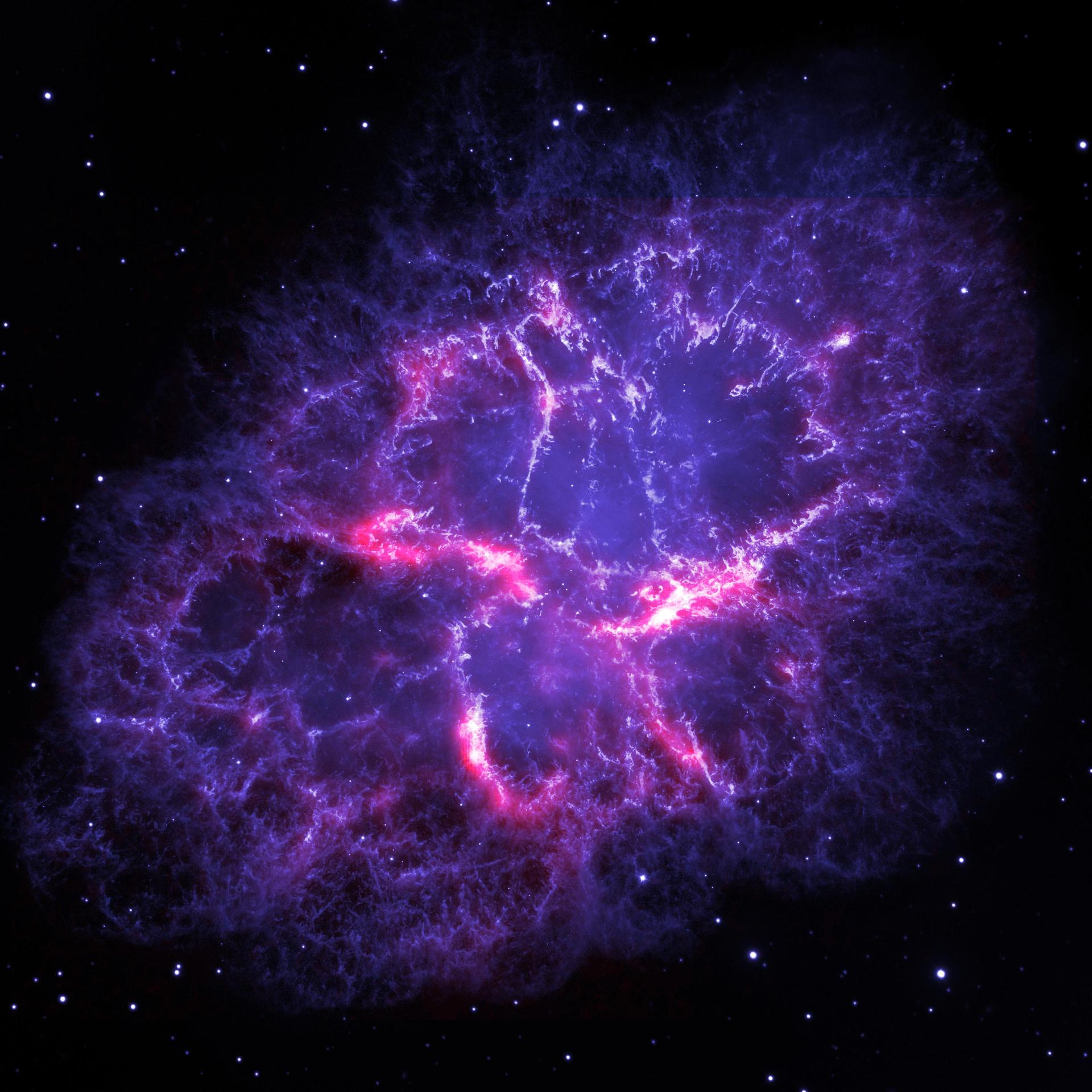
  • ENERGY SCIENCE ESSAYS

    ENERGY SCIENCE ESSAYS

    These are science essays on the energy theme which features throughout these Web pages, whether directed at cosmological issues or technological topics. The intention is that, apart from a few Essays in the initial stages, the Essays will have more content of interest to the academic community and so will tend to be addressed to a more technical audience, one familiar with following an argument presented in mathematical terms. The Lectures to be added henceforth will aim at the more general audience, but the subjects addressed will always concern ENERGY and the AETHER SCIENCE on which the important phenomena and processes discussed most assuredly depend. Inevitably, I shall need to direct criticism at some scientific beliefs which dominate certain disciplines in science. Where those beliefs stand in the way of developing new energy technology there is no time to be lost. We must sweep such obstruction out of the way. I cannot do it alone, but what I can do is to describe what I see in the rotting foundations which underpin some aspects of thermodynamics and electrical science.


    ESSAY NO. 1

    THE REALITY OF PERPETUAL MOTION

    ESSAY NO. 2

    GEOMAGNETIC FIELD REVERSAL PERIODICITY

    ESSAY NO. 3

    “WHAT IS A “SUPERGRAVITON”?

    ESSAY NO. 4

    PHOTONS, BOSONS AND THE WEINBERG ANGLE

    ESSAY NO. 5

    WARM SUPERCONDUCTIVITY

    ESSAY NO. 6

    THE EXCLUSION PRINCIPLE

    ESSAY NO. 7

    G AND PEER REVIEW?

    ESSAY NO. 8

    COLD FUSION: MY STORY: PART I

    ESSAY NO. 8A

    COLD FUSION: MY STORY: PART II

    ESSAY NO. 9

    COLD FUSION APPEARS IN A U.S PATENT

    ESSAY NO. 9A

    A BREAKTHROUGH: U.S. PATENT NO. 5,734,122

    ESSAY NO. 10

    PROTONS, DEUTERONS AND NEUTRONS

    ESSAY NO. 11

    THE MAXWELL DEMON: A 21ST CENTURY PROSPECT

    ESSAY NO. 12

    A NEW RESEARCH THEME: ARE YOU SEEKING A THESIS TOPIC?

    ESSAY NO. 13

    THE CRYSTALLINE VACUUM

    ESSAY NO. 14

    FUSION BY THUNDER

    ESSAY NO. 15

    THE CHAIN STRUCTURE OF THE NUCLEUS

    ESSAY NO. 16

    A FUTURE ENERGY OPTION

    ESSAY NO. 17

    SOLID-STATE THERMOELECTRIC REFRIGERATION
    ******

    Quotation from the 1897 English translation of Flammarion’s book

    ‘POPULAR ASTRONOMY’:

    The sun is but a star; he will meet with the fate of his sisters; suns, like worlds, are born to die. … May we conclude, then, that in these successive endings the universe will one day become an immense dark tomb? No: otherwise it would have already have become so during a past eternity. There is in nature something else besides blind matter; an intellectual law of progress governs the whole creation; the forces which rule the universe cannot remain inactive. The stars will rise from their ashes. The collision of ancient wrecks causes new flames to burst forth, and the transformation of motion into heat creates nebulae and worlds. Universal death shall never reign.

    *