Crab Nebula (M1) — supernova remnant imaged by Herschel and Hubble Space Telescopes

Category: Tutorial Notes

Tutorial and lesson notes

Crab Nebula (M1), supernova remnant · ESA/Herschel/PACS; NASA, ESA & A. Loll/J. Hester (Arizona State Univ.) · NASA Image Library ↗

  • TUTORIAL NOTE 20

    TUTORIAL NOTE 20

    Welcome to the Second ‘Semester’ of Ten Tutorial Notes, which teach the mathematical basis of Aether Science theory.

    TAKING STOCK: A CONCLUDING DISCUSSION

    © Harold Aspden, 1999

    I propose to conclude this second set of ten tutorial notes with a discussion of something that I have thought about, on and off, for some time, but which needed a flash of inspiration before I said anything about it.

    It is whether I dared to indulge in speculation of a kind that some might call mere ‘numerology’, ‘playing with numbers’.

    I remind you of the theoretical formula which my theory delivered for the value of G, the constant of gravitation:

    G = (4π)2(e/me)2/(108π)6(g)8 …………. (1)

    where e/me is the electron charge/mass ratio in electrostatic cgs units and g is the graviton/electron mass ratio.

    As should be self-evident, I did not come to formulate that equation by merely speculating about numerical relationships, though there will be those in the scientific community who suspect that I somehow contrived things to come to a numerical value for g that assured the long-sought relationship between G and e/me.

    For the record, the above formula and its full derivation, including the primary step of discovering the theoretical derivation of the value of g, was first published by me in 1966 in the second edition of my book The Theory of Gravitation. The above equation (1) appears on page 80 of that work, with g given as 5062.75. The derivation of the formula is also presented in these web pages in Tutorial No. 6.

    Looking back to pages 78 and 79 of that work I see that I do not discuss how the graviton is created, but rather, in my quest to assess its mass, I discuss its process of decay, concluding that it involves an energy quantum which, in units of the electron’s rest-mass energy, is the integer 5063, a result backed by the statement at the top of page 79:

    “This must be an integer because it is the number of electrons and positrons formed in a reaction.”

    The onward analysis, which showed how this energy quantum, adjusted very slightly for reasons there stated, became part of a formula leading to equation (1). Hence that g value of 5062.75.

    That was back in the year 1966. That same analysis was based on a theoretical computation of a factor relating the volume of the quon to that of the electron. The quon is the charge form comprising the main lattice structure of the aether and defining the E-frame (electromagnetic reference frame). The factor was found to be 1842.85 and this same factor was a function of r/d. The ratio of electron mass to the quon mass me/m had been shown to be given by:

    me/m = (9/4)(d/r)2 ……….(2)

    where r/d was the ratio of the quantum jitter orbit radius of the quon to the lattice spacing of the simple cubic structure of the quon system.

    The theory, simply stated, was a development from a topic discussed in the earlier 1960 Edition of that book mentioned above, in that both books explained how the fine-structure constant of atomic physics could be derived as the formula:

    hc/2πe2 = 144π(r/d) ………….(3)

    Now, in those early days of my research efforts, I was working from a knowledge of measurements of this formulation of the fine-structure constant as being 137.038 and my theory pointed directly at this particular value, based on r/d having been derived theoretically as being 0.302920. That meant, from equation (2) above, that 2me/m was 12.26017, the cube of this being that 1842.85 factor.

    Later, in 1969, when I published another book Physics without Einstein including this analysis, I found that a scientist working at the National Physical Laboratory in U.K., the British government facility responsible for standard units and the precision measurement of physical constants, reviewed the work, stressing the fact that the theory did not hold true because the latest measurements at the time were showing that fine-structure constant formulation as being 137.036.

    My theoretical value was in error by 1 part in 70,000!

    Then, when the detailed computations of my theory were checked in 1972 by scientists working at the National Measurement Laboratory in Australia and this raised the question again I found myself looking once more at the fundamental argument I had used to determine the numerical value which my theory for that constant had predicted.

    I then saw the light, as it were. All my analysis had been founded on the assumption that the aether lattice charges, those quons, were all moving in synchrony in their quantum orbits along paths of zero electric potential. I had used six-figure logarithmic tables for my calculation of that factor r/d of 0.302920. Later, in 1972, it was found, by precise computer analysis, to have the value 0.302875, (see the result of the computer program I presented in Tutorial No. 7), and that changed that 1842.85 value to 1844.49. I then realized that there was a case to argue which imagined that the quon and an electron plus an entourage of electron-positron pairs could transmute one into the other, given an appropriate energy balance. That brought back into mind that above-referenced quotation from my 1966 book:

    “This must be an integer because it is the number of electrons and positrons formed in a reaction.”

    and I saw immediately that the 1842.85 factor had to be decreased to its nearest odd integer value, namely 1843.

    That solved the problem and was a real breakthrough which resulted in the publication in Physics Letters of my first refereed scientific paper [1972a] that brought the aether back into prominence as an essential player on the physics stage.

    My theoretical determination of the value of the fine-structure constant was now in perfect accord with observation at the part per million level of precision!

    Furthermore, the reduction of the value of that factor to 1843 implied an increase in the value of r, meaning that the aether contains energy potential just in excess of its zero potential value. Had things worked the other way around then my theory would really have been in trouble, but, in the event, I was, some 25 years on from that time, to discover from the research findings of Tifft that cosmology reveals to us distant galactic regions that may contain so much extra aether energy that r notches upwards to give lower values 1841, 1839, etc of that factor, as revealed by its effect on the fine-structure constant, Planck’s constant and the redshift observed. See Tutorial No. 10 and Lecture No. 6.

    Now, in its turn, this minor correction of the analysis in my theory back in 1972 has a modifying effect on the theoretical evaluation of that mass of the graviton, the calculation of g first discussed above. Working through the 1966 analysis using the corrected r/d factor of 0.302875 one finds that g, as there formulated, has a value close to 5062. Now, the actual value of g is crucial to the determination of G, the constant of gravitation, using equation (1), so we really do need to take stock of what my theory says.

    I did not discuss in my 1966 book how, in fact, gravitons are created. All I could do at that time was to estimate their mass from inferences concerning their decay. The time has now come in these Tutorials where I feel I must offer an explanation of how gravitons are created.

    Remember here that the aether has a G-frame, an I-frame and an E-frame. The G-frame is the seat of the dynamic action which balances the centrifugal effects of the E-frame and matter seated in this E-frame, this frame being the electromagnetic frame of reference. The I-frame is the inertial frame central to the E-frame and the G-frame. The virtual muons populate the I-frame. The positive and negative electric charges that constitute matter are, as we well know, disposed in an overall electrically neutral system and our task is that of explaining how these interact in a gravitational sense. My answer to that is that they do not interact gravitationally in a direct sense. Their mass and its dynamic properties act to induce the presence of gravitons in the G-frame and it is these that interact amongst themselves owing to their motion relative to the electromagnetic reference frame and so set up the gravitational attraction that exists between regions of matter.

    Now, given that gravitons exist in positive and negative forms, and that they all share a harmonious ever-parallel motion at speed c relative to the E-frame, you can perhaps then understand that the electrostatic forces acting between graviton charge is exactly cancelled by the electrodynamic forces. The only residual force arising in the G-frame is that attributable to the space occupied by the gravitons which displaces charge from the diffuse background continuum that exists as the back cloth of the quon aether lattice.

    So gravitation, as we experience it, is the mutual electrodynamic attraction of these graviton spaces that are void of charge owing to their motion at speed c relative to the E-frame. That story is dealt with elsewhere in my writings and in these web pages. Our concern here is the value of that mass ratio g and how the gravitons are created.

    The answer to this is now self-evident. Any loose particle form that exists in the G-frame will be attracted to all other such forms. Energy seated in such particles will tend to merge all the charges together to form charges that grow and grow in size (mass) until they provide the needed dynamic balance to cater for whatever is seated in the E-frame. The mass of those gravitons will be distributed in space according to the local concentration of mass in matter. It will, however, be deployed into forms which assure the universality of G. The volume to mass ratio of these graviton systems must conform with this requirement and this allows us to deduce the particle form assumed by the graviton system in which the value of g is a controlling factor. I have in mind here the virtual tau particles that I regard as associated with the basic graviton and also the ‘supergraviton’, the subject of a paper inspired by the discovery of warm superconductivity and what has come to be known as ‘cold fusion’ [1989a]. I cannot delve into the details of that in these Tutorial Notes and so will come now to the topic which gave me the inspiration for writing this particular Tutorial No. 20.

    In the last few days of December 1998, the Institute of Physics in U.K. of which I am a member issued a news item to members via Internet telling us that G had been measured to even greater precision than hitherto. The National Bureau of Standards in USA had reported their finding that G had the value 6.6873 to within 0.14%. Now, as I have said above, the factor g as used in equation (1) was indicated as having a value close to 5063 in the initial version of my theory.

    Accordingly, it may be of interest to tabulate the value of G given by equation (1) above for different values of that factor g:

    Gravitation Constant
    g G Nm2kg-2
    5600 6.6967×10⁻¹¹
    5601 6.6861×10⁻¹¹
    5602 6.6755×10⁻¹¹
    5603 6.6650×10⁻¹¹
    observed 6.6873×10⁻¹¹

    To verify the calculation of G note that e/me in cgs esu is 5.27281x(10)17 to a degree of precision well within the 0.14% estimate of the precision of the observed value of G reported above. This implies that g has to be very close to 5601, which happens to be the nearest odd integer below the value predicted from the theory, just as that 1843 factor was the nearest odd integer below the value of that factor derived from the theory for the fine-structure constant.

    I see this as worth noting, but hesitate to say more, because it seems that the measured value of G has been raised slightly after many years of believing it to be more in accord with the value in the above table corresponding to g being 5063.

    Taking stock of this result in the light of some 45 years of effort since the ‘aether’ first favoured me be shedding some of its secrets I still struggle from time to time in interpreting what I have discovered. I can say, for example, that the theory allows me to calculate the masses of the fundamental particles that we sense as matter, such as the heavy leptons, the muon and the taon, but this is by reference to their properties as sensed in the E-frame. Their counterparts which exist in the aether underworld, in the I-frame and the G-frame, respectively, have rest-mass energies which differ very slightly from their equivalent in the matter form. Such a result is, of course, rather perplexing to a reader who has not witnessed how the theory evolved over those years. I understand that, but that is how it is and my analysis of the factors involved is presented in the relevant papers in my published work.

    Another example of such a problem is posed by the question of the so-called ‘relativistic mass’ of a particle. I say that those gravitons, as particles moving with the G-frame in dynamic balance with material particles in the E-frame, move at speed c relative to that E-frame, which is the electromagnetic reference frame. You might still wonder how a graviton moving at that speed c, the speed of light in vacuo, has no added mass attributable to that motion. Apart from c being speed relative to the E-frame, whereas c/2 is the speed relative to the I-frame, the inertial frame, the answer to that resides in the fact that those graviton particles are not moving freely. They move under the constraint of a system of quons, aether charges sharing the motion of the E-frame, which forces them to stay in synchrony moving in anti-phase with that quon system. They keep in step at the jitter frequency of the aether because they are part of a simple harmonic system, just like a pendulum keeps to time even though its bob may move a little faster because its amplitude of swing might increase a little. So the normal laws of physics we apply to problems of matter moving freely through space are not always strictly applicable to the quantum activity of particles seated in the aether.

    To advance your knowledge of fundamental physics and embrace the nature of gravitation, the creation of protons and the true nature of what underlies Planck’s constant of action, requires one to decipher the evidence, evidence provided by the precision measurement of the fundamental dimensionless constants. That is what I have done in developing this aether theory. My theory can only be judged by its results and I may say that at this time I see no rival theory of record that offers comparable answers to this deciphering problem.

    On such a note I end this second series of Tutorial Notes and express my hope that what has been discussed has proved interesting.


    Harold Aspden
    December 28, 1998

    *
  • TUTORIAL NOTE 19

    TUTORIAL NOTE 19

    Welcome to the Second ‘Semester’ of Ten Tutorial Notes, which teach the mathematical basis of Aether Science theory.

    THE FOURTH DIMENSION

    © Harold Aspden, 1999

    The subject of Physics is about relationships, the properties possessed by something having physical form as explained or described in relation to the properties of something else having physical form. The ultimate objective of theoretical physics is, in a sense, the explanation of everything embraced by physics in terms of three basic units of measurement. The question I address here is: “Why three? What about the Fourth dimension?”

    Now if you are thinking that space has four dimensions, because that is what Einstein has told us, then you are on the wrong track. As these web pages have shown, I believe that we exist in an aetherial world with space filled by that unseen medium which history records refer to as the ‘aether’. I am thinking here in terms of the physical dimensions of the aether and the forms born from that aether, namely what we do see around us as matter.

    Looking then at how we describe the physical properties of the matter form, tables of physical constants include entries such as:

    speed of light in a vacuum 2.99792458×10⁸m.s-1
    permeability of a vacuum: 4π-7H.m-1
    permittivity of a vacuum: 8.854187817×10⁻¹²F.m-l
    elementary charge of proton: 1.60217733(49)x10-19C
    rest mass of electron: 9.1093897(54)x10-31kg
    Planck constant: 6.62607555(40)x10-34J.s

    Here you will see that physicists of our modern times describe the fundamental physical constants in terms of units, the unit of distance m, the unit of time s, the unit of magnetic inductance H, the unit of capacitance F, the unit of electric charge C, the unit of weight kg and the unit of energy J.

    Now the task I have addressed in my search for that Holy Grail, the unified field theory or, as some physicists now see it, the ‘theory of everything’, aims at reducing the number of these basic units of reference from the seven just mentioned to a lower value, the ultimate being three.

    In fact, physicists have known for a very long time that they only need four dimensions, but they persist in using more, usually five, these being mass M, length L, time T electrical permittivity of the vacuum k (often referred to as the dielectric constant) and magnetic permeability of the vacuum μ. These afford a little versatility because it is useful to work in electrical units or magnetic units according to the nature of the task in hand, but μ and k are connected in terms of the speed of light c, which combines dimensions L and T so that:

    (μk)2 has the dimension L/T.

    The numerical quantities listed above introduce other complications by scaling things so as to be larger units having more practical application and by introducing 4π to make things easier in formulating electric and magnetic field energy densities and other electromagnetic expressions. However, basically there are four physical dimensions when there should only be three, if we discover how to solve the riddle that links the world of electricity and that of mass and inertia.

    Now here I want you to consider what physicists have done in making their world of units easier for their efforts in applied physics. When I was taught physics the governing system of units was that in which k and μ were both unity, according to whether one was working in electrostatic units or electromagnetic units in what is known as the cgs system, based on centimetres, grammes and seconds. So, I am able to quote from a physics book in my possession which gives a little background to this choice of units, based on a discussion of the dimensions of the unit of electric charge q and the fact that:

    [q2/k] = ML3T-2]

    The quotation is:

    “Neither q nor k is known without the other. Either q or k may have a chosen value to begin with and that of the other then follows. There is little doubt that if the choice could be made now (1950), it is q that would be chosen, and its value that of the electron. But at the time that choice was made, it seemed that there was nothing particularly constant about an electric charge, while the properties of empty space were quite fixed. It was therefore k which was assumed to have unit value for empty space, which then caused the unit charge to be one which, situated one centimetre from an equal charge, in empty space, repels or attracts it with a force of one dyne. It is always dangerous to put a quantity equal to unity in an equation as it is apt to be lost sight of. In fact this happened in the case of electric quantities, which were assumed, for a long time, to have quite erroneous dimensions.”

    Now I have drawn attention to this because most physicists now believe that there is no aether and that space is truly empty, an assumption which I see as justifying regarding it as having unity as a dimension governing its capacity to store electric energy. However, driven by practical considerations, physics have assigned empty space some very curious dimensions as we see from the involvement of 4π, H and F in the above listing. If there is nothing there then this assignment of dimensional properties seems to me to be ridiculous, so I rely on my intuition which says that there is something in what we think is empty space. The word ’empty’ can only mean ‘devoid of the matter form’ and there simply has to be something there that exhibits electrical properties just as does matter, even though it is electrical neutral overall and elusive in its behaviour.

    The aether therefore holds the secret of how we can come to terms with whether or not there really is a fourth physical dimension, meaning one that is independent of the other three that are essential.

    How would you express electric charge in terms of mass, length and time? My answer to this is first to question why mass has to be one of the three fundamental dimensions. I can see that length is a dimension that stands alone, as does time, but suppose I can explain the phenomenon we call ‘mass’ in terms of something more fundamental. One needs to explain inertia and the gravitational property to see what we mean by the word ‘mass’ and I have done exactly that in these web pages in Tutorial No. 12 and Tutorial No. 6. Mass is best explained in relation to the conservation of energy and I would therefore regard energy E as a fundamental physical dimension rather than mass and then proceed from there in trying to explain electric charge and electromagnetic action.

    The question then reduces to one of understanding the fabric of the aether so as to understand how it can store energy, and then explaining something about elerctric charge that is not discussed in physics books when dealing with physical dimensions, namely charge polarity. Yes, I can, to my way of thinking, assume that k is unity for the vacuum state, by definition, and if I can then explain how an electric charge involves E, L and T, the dimensions of energy, length and time, in determining the unit of charge, going on one step further from there to explain charge polarity using the same dimensions, I am in sight of the truth.

    Put k equal to unity in the above equation and you have the dimensions of charge q expressed in terms of M, L, T and then replace M by EL-2T2 and you have the link. Go further and just say that the aether has a rhythmic motion at a universal frequency (units T-1) and that those charges cooperate in seeking to conserve their energy and you will conclude that they oscillate in size (L3) in antiphase at that rhythmic frequency so as to keep their overall volume the same. What then is a positive and a negative charge? Well, there is no difference except that half of the charge population is expanding at instants when the other half is contracting and vice versa. The ‘positive’ and ‘negative’ attributes merely classify the charge according as to its phase of oscillation amongst a system of identical energy quanta each encapsulated in the same volume of space for the particular particle family, with half oscillating in antiphase with the other half.

    One concludes that there is no Fourth Dimension in a system of physivcs that has deciphered the secrets of the aether and discovered the ultimate truth.

    I hope the above commentary will serve as a guide as one tries to make sense of things by deciphering what physics has to tell us at the fundamental level. Take away the aether and reject that unity k=1 factor and you are left with vacuum
    permeability as 4πx10-7H.m-1 and vacuum permittivity as 8.854187817×10⁻¹²F.m-l and now try explaining why ‘nothing’ needs such numbers for its physical description.

    You must accept that there is a real aether!


    Harold Aspden

    To progress to the next Tutorial press:

    *
  • TUTORIAL NOTE 18

    TUTORIAL NOTE 18

    Welcome to the Second ‘Semester’ of Ten Tutorial Notes, which teach the mathematical basis of Aether Science theory.

    MICHELSON-MORLEY REVISITED

    © Harold Aspden, 1999

    At this stage in these Tutorials I propose to review an aspect of aether theory from the viewpoint of the null result of the Michelson-Morley Experiment. Most physicists put this on a par with their belief in Einstein’s theory in their blind acceptance that the aether, as something in space that regulates the speed of light, simply cannot exist.

    In a sense, therefore, this Tutorial No. 18 could be the most important in claiming the attention of the teaching sector of the physics community. Relativity and the Michelson-Morley Experiment are not of much interest to those involved in applied physics nor does what one learns at university about those subjects have any bearing upon the daily pursuits of most physicists. However, that omnipresent aether is ever active in regulating the physical forces which are harnessed by the physics community and, inevitably, the failure to see what is there has its price in retarding progress.

    I will begin by quoting a section from page 67 of my book Physics Unified [1980e]:

    “Such rigidity (a reference to the aether having a kind of crystal structure) might then permit us to make an analogy with solid materials by imparting to the vacuum medium a pressure modulus or energy density modulus P, which relates to the propagation speed c1 by the formula:

    c1 = (P/ρ)1/2 …………(59)

    where ρ is the mass density of the lattice. Here c1 is referenced on the universal frame.

    In undisturbed space remote from matter c1 will equal c, but, where we have a body of the lattice in linear motion at velocity v, some of the lattice substance will be shed to establish the counterflow at velocity u and ρ in (59) will thereby be reduced, making c1 larger than c. Write:

    n = c/c1 ……………(60)

    where n is the refractive index in this region. Then, from (59) and (60) we see that n2 is proportional to the mass density of the lattice.

    We expect linear momentum of the vacuum medium to be zero and this means that if the proportion k of the lattice is shed to provide the balancing flow the following relation holds:

    uk + v(1-k) = 0 ………….(61)

    Also:

    n2 = 1 – k ………….(62)

    Combining (61) and (62), we have:

    u(1 – 1/n2) = v ……………(63)

    If you consider this then you will understand that I am suggesting that 19th century physics offers a explanation as to why the Michelson-Morley Experiment failed to detect motion of the Earth through the aether. The experiment was merely one aimed to advance our knowledge of physics by testing the standard assumption that there exist an aether which offers a single absolute frame of reference relative to which the speed of light in vacuo is constant. It was not a test to prove the existence or not of a real aether! It was a test to verify or disprove an assumption made by the physics community.

    A little consideration should tell you that if one can measure motion relative to the unseen aether then that aether has a subtle way of communicating momentum. A little further consideration, having regard to a later experiment performed by Michelson, one which did detect rotation using the same optical techniques as those of the Michelson-Morley Experiment, should tell you that the aether can absorb (or shed) angular momentum in its interaction with matter.

    These are clues as to the real nature of the aether which are provided by experiments.

    So you may now understand how equation (61) as quoted above was formulated. It was a statement that the aether when disturbed by being dragged along by body Earth reacts to keep its net linear momentum zero. As to the angular momentum aspect and rotation of body Earth or of the sun, do keep in mind that cosmological phenomena pose anomalies such as ‘why is it that the solar system as a whole has a very substantial net angular momentum?’

    Now, as this point, I ask you to consider whether what I have quoted above amounts to a theoretical explanation of the Michelson-Morley experiment based on aether theory. I submit that it does if we can be satisfied by importing the standard pre-Einstein physics of the material world into the aether scene.

    However, though the Fresnel drag coefficient derived as equation (63) has been verified by experiment, its traditional theoretical derivation is, I believe, partly dependent upon empirical evidence. It has the merit, however, of being firmly of record in accepted physics in the 19th century and so, if we can explain the Michelson-Morley Experiment based on Fresnel drag and aether theory, then Einstein’s Principle of Relativity, with its time warp problems, does not merit consideration.

    Our task, however, is to justify what we observe as general phenomena in physics by developing a viable theory giving account of those phenomena. We find that the speed of light in passage through matter varies slightly with frequency. This we know has a theoretical explanation owing to the fact that the oscillations set up in the dielectric system have to contend with the natural frequencies, the resonant modes, of the atomic structure of that matter form.

    Using the cgs system of units the standard theory by which the speed of propagation of electromagnetic waves in matter is explained indicates that the refractive index n, the ratio of the speed of light in vacuo to that in matter, is given by a formula:

    n2 = 1 + D

    where D is a summation of terms representing an oscillating system each component of D having a different natural oscillation mode and being also a function of the wave frequency.

    When there is no matter present n2 reduces to that value of unity but, hidden in the meaning of that unity term, is the oscillating system of the aether itself.

    We can formulate a simple harmonic oscillatory state by equating the restoring force of an electric displacement with an inertial reaction and, assigning the Compton electron frequency as the natural frequency of this oscillation. The standard electromagnetic wave theory then tells us that the unity dielectric constant of the vacuum (the aether) is implied by such an equation, namely the aether has a mode of oscillation that is at the Compton electron frequency. Indeed, this is why the vacuum can shed energy by creating electrons and positrons, a feature of the theory of quantum electrodynamics.

    With that in mind let us come back to that phenomenon by which light in passage through matter travels at different speeds as a function of frequency, the phenomenon of frequency dispersion. This is seen by many physicists as a reason which precludes acceptance of theory which likens the aether to the matter form.

    Light suffers no frequency dispersion in its passage through the vacuum. Note, however, that by ‘dispersion’, I mean change of speed as a function of frequency. I do not intend this to mean that the frequency of an electromagnetic wave in transit through the vacuum has to be constant as well as the speed of propagation being constant.

    Indeed, the challenge we face is that of justifying an aetherial property by which electromagnetic waves travel at constant speed and yet are progressively attenuated in frequency in linear proportion to the distance travelled, such a situation not involving frequency dispersion.

    A discerning reader may see that I am intent here on revealing an aether property by which, not only the null result of the Michelson-Morley Experiment can be explained, but also the cosmological redshift, currently interpreted as signifying the expansion of our universe.

    Look again at that quotation above from my book Physics Unified. Ignore the derivation of equation (63), the Fresnel drag term, but keep in mind equations (60), (61) and (62). We know that the speed of light in matter involves a refractive index n that exceeds unity. However, in the vacuum there is no matter present, but we can have aether in motion if some of that aether is in counter-motion to assure balance of its linear momentum as prescribed by equation (61). Equation (62) conforms with the theoretical derivation of the refractive index of the matter form in terms of its electrical properties in relation to the mass properties of the electric charges involved in their oscillations in responding to electromagnetic waves in transit. As applied to the aether, we have that factor k in equation (62) providing the link.

    Now we know that that factor n tells us something about the speed of light. We also know from the way in which equation (62) is derived by standard theory that it is n, and not n2, that emerges in the linear relationship between the velocity of light c and the velocity c1. They are related by an expression that is the square root of a physical quantity. They have direction and so are vectors, a property lost from sight once we square the relationship to obtain equation (62). Note the difference between an electric field and electric field energy density. One is a vector and one is a scalar quantity. We well know the difference in using the electric field concept in advancing our ideas in physics. So let us not confuse the issue in dealing with the speed of light issue. Our interest is in n, not n2. So we will take note that c/n is the speed of light in matter having n as a refractive index, but now apply this formula to the velocity of light in the aether, given that the aether moves bodily at velocity v as a structure whilst a component shed by it moves rapidly in reverse a velocity u to hold net linear momentum at the zero value. That is the condition implied by equation (61).

    So, what is c/n? Can we combine equations (60), (61) and (62) to determine c/n? To explore this we may use a little algebra to show that, ignoring second-order terms owing to v being small relative to c:

    1/n = 1 + k/2

    and:

    k = -v/u

    It then follows that:

    c/n = c – vc/2u

    This may seem a little confusing, given that we need to know the value of u to proceed, but here I draw your attention to what was discussed in Tutorial No. 8 where it was argued that the aether comprises a structured system of aether particles, quons, which were all moving collectively in circular orbits at that Compton electron frequency and had a quantum of angular motion which corresponds to their motion in orbit at a speed c/2 so as to move at a speed c relative to the gravitons that moved in counter-balancing orbits.

    What then happens when those aether particles come out of orbit and adopt a migrant form to move linearly through the residual aether structure to provide that balance of linear momentum? Whatever their form they must keep the mass balance and the momentum balance and that means that they travel at the speed c/2, meaning that u has the value c/2. So, with 2u replaced by -c, consider the equation we have just derived.

    You can see that it tells us that the speed of light in a region of aether sharing the motion at velocity v is c+v in the direction of that motion, that is simply c relative to the moving system. Given that this is a vector expression and not a scalar quantity we may also say that the speed of light is c relative to that moving system, even though its motion is not in the same direction as the light. Therefore we have deduced by aether theory the condition observed in the Michelson-Morley Experiment.

    Now, although I am writing this for publication in 1999, I wish to point out that I discovered this aspect of my theory 24 years ago and reported it in a slightly different way at pages 11-12 in my 1975 book Gravitation. So this is not a new thought. It was published in that work alongside two other topics as part of a trio of references to the ‘unfortunate errors of omission in nineteenth century physics’ (Abstract of chapter 1 at page 1 of the book).

    I next address the other topic concerning light passage through the aether, that of the frequency attenuation with no dispersion.

    Note that equation (61) above really declares that the aether reacts to linear motion effects to set up displacement of two components in opposite directions, conserving dynamic balance and avoiding momentum unbalance. Instead of probing this property in terms of mass deployment we can look at it from another angle, especially so far as concerns its disturbance by the passage of those electromagnetic waves. Maxwell’s theory tells us about the undulating lateral displacement of charge accompanying the passage of a wave. He overlooked the need for a secondary wave action which provides the dynamic balance.

    We can have dynamic balance in an inertial sense. We do not have the balance of the electric field action, but we must have two components in that electric wave. I have discussed this in a publication in Wireless World [1982a] and formulated it in formal physical terms in a scientific paper of record [1984e]. Equations (3) and (4) of the latter paper define this:

    E = E1 – E2
    dE/dt = (E1 – E2)F(E1/E2)

    where t is time and F is a function of the ratio of E1 and E2.

    The rate of change of the amplitude of an electromagnetic wave can be codified in this way in terms of the strengths of two electric field components, E1 and E2, at a point in space under consideration. To explain what this means in physical terms, first take note that the aether, owing to its adaptable fluid crystal type properties, comprises basically a system of charges, quons, which share a universal jitter motion. This is a quantum oscillation in two dimensions, a condition needed to assure dynamic balance with the graviton system. Superimposed on this motion there is, when an electromagnetic wave is being propagated, a lateral oscillation of those quon charges. Now whereas the quon lattice structure is adaptable in sharing the motion of matter present, as we see from our account of the null result of the Michelson-Morley Experiment, the quons also are compliant in a dynamically balanced sense in adopting a component of motion having the frequency of oscillation of that electromagnetic wave.

    This latter component of motion is represented by the composition of two lateral displacements indicated by the electric field E1 and E2. They act in opposition to give the net field effect that we sense as the electric field of the wave. They are seated in different systems of charge, because the quons exist in a background of heavier aether charges, virtual muons as well as gravitons, and there is on-going transmutation of form as energy is conserved in their quantum-electrodynamic interplay.

    The overall result, however, is the dynamic balance of the two components of the electromagnetic wave in its transit through aether. In contrast with its motion through matter it cannot call upon the substance of that matter acted upon by the presence of the electric field oscillations to provide the inertial reaction. This difference is vital when we come to judge why it is that light suffers frequency dispersion in passage through matter but not in passage through the structure constituting the aether.

    Hence we find that an electromagnetic wave in transit through the aether is represented by those two field equations presented above.

    The function F is the key to our understanding of electromagnetic wave phenomena in the vacuum medium. Ask yourself why it is that waves coming from opposite directions can crash into one another and emerge seemingly unscathed. They involve energy and energy is a scalar quantity which can be pooled with other energy so as to be conserved. However, why is it that the energy of the two waves, in being deployed between them, does not cause some change affecting those waves?

    At a point P in space the local passage of a wave can only be sensed by what occurs at that point. Whatever controls the physical action at P cannot look with human eyes to see what electrical signal is coming next at P or what has been there and is now receding from P. So logic says that Nature must codify the essential data concerning that electromagnetic wave in a dual form active at P. This means the value of E, its strength and direction, plus its instantaneous rate of change dE/dt. Hence the two equations. However, as can be seen by dividing E into dE/dt, the physical information at P includes also the value of F(E1/E2). F is a function of the amplitudes of E1 and E2.

    The aether determines the function F by adapting itself so as to be always responsive in its reaction to the superimposed lateral motion occasioned by the passage of the wave in just such a way as to keep in tune with the frequency of that wave. It adapts its resonance mode by allowing the electric field E of the wave to separate it into two opposed displacement states, corresponding to E1 and E2, respectively.

    Thus, expressing the wave frequency f in terms of the Compton electron frequency fo, we can determine K as:

    K = (f/fo)2

    where K is equal to E/E1, which is 1 – E2/E1. This gives E2 = 0 when f equals fo.

    E1 becomes progressively larger relative to E as the frequency is reduced and, indeed, E2 also becomes progressively larger, but that ratio which determines k will keep the aether in tune with the frequency. This means that there is no frequency dispersion. One has, in effect, a near analogy with a result achieved artificially in electrical telegraphy by Oliver Heaviside who devised the distortionless telegraph line. He made the properties of the line, the combination of inductance, capacitance, leakance and resistance, such that the signal in transit did not suffer the normal distortion.

    For a sinusoidal planar wave the amplitude of dE/dt is 2fE or 2(fo)k1/2(E1 – E2), which is the second of the above equations, because k is a function of (E1/E2).

    This insight into the process by which the aether transmits electromagnetic waves without dispersion occurring as between the different frequencies involved offers a surprise, because the dual displacement feature gives scope for a differential effect if there is some pseudo-matter present in space that can absorb energy from the wave. It seems likely that almost all of the energy loss will come from the E2 component so that, with E1 constant, E1/E2 will change if the waves are obstructed in some way in their passage through very tenuous space containing no structured matter form. For example, if the aether of outer space devoid of matter is trying to create bare particles such as electrons and protons and these exist sporadically, then that can be sufficient to alter that ratio E1/E2.

    Now, as can be seen, if the electric fields E1 and E2 arise from charges of opposite polarity moving in opposite directions, then E2 is a negative quantity and this means that a reduction of the displacement will mean an increase in E2 and that implies a decrease in E. The energy density of the wave is proportional to E2 or (KE1)2, which means that (1/W)dW can be written as (2/K)dK and with fo constant this tells us that (2/fo)df is (1/K)dK. Taken together, these relationships allow us to write:

    (1/f)df/dx = (1/4W)dW/dx

    where x is distance travelled by the wave.

    In short, we have the remarkable situation where our dual displacement feature has explained the zero frequency dispersion property of the aether whilst at the same time telling us that there will be a progressive reduction of wave frequency with distance travelled if energy is absorbed from the wave by non-structured particles, the odd electron and proton, that might be distributed throughout space.

    From this it is a small step to see that if the aether is trying to create protons and electrons which come into being sporadically but decay back into the energy sea of the aether, the condition for aether-matter equilibrium having been reached, then we can predict something that has mistakenly been interpreted as evidence of a doppler effect occasioned by an assumed ongoing expansion of the universe. More than this, however, if we can estimate the rate at which those obstructing particles are being produced, then we can estimate the value of the Hubble Constant.

    This is indeed possible and it is the subject of that paper [1984e]. It is a topic already introduced in these web pages. See Lecture No. 11.

    However, our task in this Tutorial No. 18 has been to show why the Michelson-Morley Experiment did not prove the non-existence of the aether, as so many physicists believe. If you, the reader, still wish to hold faith in a belief that the universe is expanding and doing so in accordance with Einstein’s philosophy by which time is distorted as a kind of fourth space dimension, then my words have fallen on deaf ears and I leave you to your destiny. Otherwise, please do take note of what I have been saying in these Tutorials and pay due attention to my other commentary in these web pages.

    I shall now move on to the next Tutorial No. 19, where we shall discuss the mystery of ‘the fourth dimension’.


    To progress to the next Tutorial press:

    *
  • TUTORIAL NOTE 17

    TUTORIAL NOTE 17

    Welcome to the Second ‘Semester’ of Ten Tutorial Notes, which teach the mathematical basis of Aether Science theory.

    PARTICLES GALORE: HOW THEY ARE CREATED

    © Harold Aspden, 1999

    I deferred the preparation of this Tutorial No. 17 until last by moving ahead to complete Tutorials No. 18, 19 and 20. My plan, as stated at the end of Tutorial No. 16, was to go into the details of how a myriad of fundamental particles are created based on principles already introduced elsewhere in these web pages. The essential key is reliance on a combination of conservation principles, including especially the notion that the actual volume of space occupied by the electric charges belonging to a transmuting system of fundamental particles is conserved. I have, however, decided to abbreviate this discourse and leave you, the reader, to glean that information from my published work elsewhere, notably in two papers included in my book Aether Science Papers, of periodical record also in university libraries which stock the Hadronic Journal [1986e] and [1986j]. Here, in Tutorial No. 17, I will only pursue the theme in a summary way.

    Once it is understood that the vacuum medium is alive with activity as Nature tries to deploy its energy into the creation of a myriad of particle forms amongst which the proton and the electrons are the survivors, there are few secrets left that warrant our attention. To understand the creation of the proton is to understand its meson source, rooted as it is in the muon activity of the aether itself and with that comes the system of dynamic balance, the elusive background of gravitons which mediate in setting up the force of gravity. All this has already been discussed in our Tutorials and elsewhere in these web pages and the fundamental particle spectrum that we explore by our research into high energy particle physics is simply a product of the merger of gravitons, muons, protons and the like.

    Here I will just remind you that J J Thomson’s formula 2e2/3a is governing in defining the energy of a particle of charge e encapsulated in a sphere of radius a. The volume of space involved is proportional to a3 and the energy involved is proportional to 1/a, given that e is a universal unit of electric charge. So if you take a pair of particles of positive and negative charge polarity and say that they transmute into two pairs of particles (radii b and c) with overall charge volume conserved then energy is released and we have the condition that:

    a3 = b3 + c3 …… (1)

    On the other hand, if the transmutation is one involving constant energy, rather than conservation of charge volume, then we can have action according to the following relationship:

    2/3a = 2/3b – 1/(b+c) + 2/3c ……. (2)

    where two electric charges of opposite polarity, one of radius b and one of radius c, are in surface contact owing to their mutual electrostatic attraction. Of special interest is the case where a equals b, in which case we can have a particle and its antiparticle form changing, with no added energy or loss of energy, so as to remain intact in form whilst giving birth to a charged particle pair for which the charge radius c is double b.

    A basic particle form can, therefore, given a little extra space, give birth to a secondary particle form having half the energy of the basic form. This comes together in a scenario where the vacuum, or aether, is alive with mu-meson forms which merge to become dimuon energy forms which in turn can shed those half-energy forms as muons. The proton comes into the picture once we examine how a proton can live in company with a dimuon. Just differentiate the right hand side of equation (2) with respect to c to establish the ratio between b and c when the overall energy has become mimimal with b constant. You will find that:

    1/[b+c]2 = 2/3c2 ……. (3)

    and deduce that b is 0.22474c and this says that the heavier particle is 4.4496 times the lighter particle. If the latter is a dimuon of twice the energy of the muon, the latter being a little larger than 206 electron mass units, then can see how a proton emerges with a mass of 1836 electron units.

    Having said that, I am now looking at equation (1) with a simple question in mind. The question is whether, just as there is a universal unit of electric charge e, there is a universal unit of space volume that that charge could occupy. This brings into mind the possibility that, since a will be a quite small radius, much smaller than the radius of the electron, there is a corresponding unit of energy, albeit one that is really enormous. The idea of a ‘unit’ is then not one to be seen as a building block but rather as a massive chunk of energy that might exist naturally and need to be chopped up to form particles of real matter.

    My interest in this was aroused when I saw the connection with the problem of Fermat’s Last Theorem. If there were a solution to equation (1) with a, b and c all integers, then I would have been encouraged to probe this subject further. However, given that no such solution exists, I see no point in that onward pursuit. I can say, however, that the notion of particles giving birth to other particles is implicit in a form of equation having multivalued solutions, even if they are not in integer form.

    With equation (1) in mind imagine a pair of particles having the same charge radius a to be transmuted into two particle pairs of radius b and c, respectively. Now let b equal c and determine b in relation to a. It will be smaller. We are saying that therefore that two particles of the same energy, confined to a given overall volume of space, can transmute into a two pairs of charges of higher energy, given input of energy. You can see that b is smaller than a in the ratio of the cube root of one half, which means that the particle of radius b has a mass that is greater than that of radius a by the factor of the cube root of 2, that is some 26% heavier.

    However, things are not that simple, at least for the normal hyperons in the proton to two-proton mass range, as we shall now see. One is of course tempted to ask if Nature obliges us by generating particles, albeit short-lived, that support the above proposition and its variants, given that different combinations of charge forms can be involved. The answer is affirmative and that is what I was referring to in introducing this Web page. I will end by quoting the examples listed in TABLE II of the second of those papers referenced above:

    The Table has the form:

    and the supporting description on p. 156 of the paper reads:

    “A collective particle transformation is of special interest, where a three-particle cluster (e.g. two positive charges and one negative charge of like mass) involves pair annihilation with energy transfer elsewhere, followed by local adjustments with numerous other such clusters to conserve both energy and charge volume. The energy/volume ratio is then one-third that of the original particle form. From the Thomson formula this implies that the charge radius (inversely proportional to energy) has decreased by the factor fourth root of three. Such a process can occur in reverse as energy is forced into a particle system. there is an analogous process where pair annihilation occurs in the presence of other similar pairs, which then share the additional space. The factor involved is the fourth root of 2. this process, like the previous one, appears reversible. Indeed, the examples to be given relate only to the reverse process, because one of the particles is the proton and we have only evidence of synthesis of more massive particle forms.

    These appear in the first two examples in Table II. The remainder of the data in the table shows how the simple transformation of a three-particle cluster to or from a single particle at constant volume builds the several hyperons listed. The delta hyperon (1235) forms the tau (1782), and this has lepton characteristics and can combine with the Q(211) quantum, the energy of two virtual muons, to form a state from which there is decay to the hyperon forms listed. As with the data in Table I, the dimuon unit seems to be a dominant feature.”

    To conclude, I have decided to rest my case concerning the production of the numerous high energy particle forms that are generated in the collisions occurring in particle accelerators. It suffices to let my published papers serve their role by sitting quietly on university library shelves and patiently awaiting any interest that may be shown by those who seek enlightenment.


    Harold Aspden

    To progress to the next Tutorial press:

    *
  • TUTORIAL NOTE 16

    TUTORIAL NOTE 16

    Welcome to the Second ‘Semester’ of Ten Tutorial Notes, which teach the mathematical basis of Aether Science theory.

    PHYSICS AND THE CHARMING GIPSY

    © Harold Aspden, 1999

    One of the most bizarre features of physics is the use of expressions such as charm, beauty, colour, up and down, and so forth to distinguish between the imaginary components that go into the make up of fundamental particles.

    Some 25 years ago, back in 1974, there was great excitement amongst the fraternity of particle physicists owing to the discovery of the ‘gipsy particle’. Consequent upon this discovery and subsequent events:

    “The first agony of charm had abated, but fresh worries set in. One reason was that the charm/anti-charm theory of the gipsy was not exclusive or definitive. Interpretations having nothing to do with charm could not be ruled out.”

    These words are quoted from Nigel Calder’s book: The Key to the Universe a 1977 publication by the British Broadcasting Corporation.

    At the Stanford Linear Accelerator Center (SLAC), there was a great three-kilometre electron machine, a ring accelerator called SPEAR in which electrons accelerated one way were brought into collision with positrons accelerated in the opposite direction. It had begun operations in 1973. The expectation was that electrons and positrons coming together with a combined energy of a few billion electron volts would concentrate sufficient energy to give birth to any of the known elementary particles. If the energy of the collision was just right and fitted a ‘resonance’ at which a high energy particle state could materialize then that event would occur.

    A team from Berkeley and Stanford found in 1974 that something was happening in the energy range between 3000 and 3200 MeV and, when they looked repeatedly at 3100 MeV energy collisions they sometimes noticed that unusually intense bursts of particles were appearing in their detectors.

    Independently, at the Brookhaven National Laboratory, at the same time, late October 1974, attention was also focused on that same energy threshold of 3100 MeV, because Samuel Ting had discovered a particle he called the ‘J’ particle. Then, into November 1974, with improved accuracy and a more straightforward version of the experiment than Ting’s, the SPEAR accelerator at Stanford revealed a strong resonance at 3105 MeV to which Burton Richter assigned the term ‘psi’ particle.

    On December 2, 1974 the journal Physical Review Letters published three short papers, one by Ting and his colleagues, another by Richter and his colleagues and a third from Frascati in Italy by Giorgio Belletini’s group in the ADONE laboratory, where the existence of that particle, whether termed J or psi, was confirmed within two days of hearing the news from USA by tuning their machine to that energy range close to 3000 MeV.

    The champagne had been poured to celebrate the birth of a new particle. It was duly baptised by the inebriated particle community and given the name ‘gipsy’, the phonetic equivalent of J/psi, and almost immediately, just a few days after they had found the ‘gipsy’, there was to be more joy when SPEAR gave birth to another such particle at 3695 MeV. The electron-positron collider experiments were showing us how particles of matter in the heavy range can be created from the most elementary form of matter, electrons and positrons, which we know can emerge spontaneously from the background medium which I call the ‘aether’, but which orthodox scientists refer to as the seat of a quantum-electrodynamic process involving vacuum energy fluctuations, without conceding that they are simply referring to the aether.

    Now, why, you may wonder, am I telling you all this about that 1974 discovery of the ‘gipsy’ particle? My reason is that here was an event in physics that seems now to have lost its significance as those machines seeking to create heavier and heavier particles have gone about their task in that ongoing quest to replicate in some small measure the events of Creation and the Big Bang. Maybe the world of particle physics has also begun to lose some of its ‘colour’ and ‘charm’, and perhaps also its ‘beauty’ as theoretical features of the presumed quark composition of those particles. However, as far as I am concerned, the discovery of the J/psi particle and its heavier relative marks an important step in the the development of the the unified field theory, owing to the relevance of these particular particles in confirming something about the theory of gravitation.

    I had, in 1966, published my discovery that gravitation, including the precise value of G, the constant of gravitation, could be explained if a virtual particle of mass-energy 2587 MeV existed hidden in the aether underworld. I had, already in 1966, in the 2nd Edition of my book The Theory of Gravitation published the data you can see in the Table below.

    Hadron Energy Product of Graviton Decay
    No. of particles

    Energy in electron units
    gravitons muons 1843 leptons (L) gravitons (G) hadrons (G-L)
    1 2 0 412+0 5064 2(2326)
    1 2 2 412+3686 5064 966
    1 4 2 824+3686 5062

    2(276)
    2 2 2 412+7372 2(5063) 2342
    2 4 4 824+7372 2(5064) 2(966)

    The graviton referred to is the hypothetical particle predicted by my theory that gives also the constant of gravitation G, by mediating in the gravitational interaction between matter. By first-principle analysis my theory deduces its value as being 5063 electron mass units (2587 MeV) and by this Table I was bringing to attention some empirical evidence to show that such a graviton does reveal itself in high energy particle interactions. See Tutorial No. 6 for details concerning that theoretical derivation of G.

    As you can imagine I was, in 1966, very anxious to see experimental evidence emerge which strengthened my beliefs. My theory also indicated that a resonance in which an electron-positron cluster of 1843 electron units of energy could feature in certain particle reactions, particularly where decay of the graviton was involved. Also the theory said that pairs of muons, a muon having a mass of the order of 206 electron units, would be involved as part of the decay products. I recognized the emergence of four different hadrons, all known to exist, as particle by-products of graviton decay, given that graviton mass of 5063 electron mass units or 2587 MeV. Hence the data as presented in the Table. I could say no more at the time I wrote the book, 1966, and so had to await events.

    But yet it was in that very year, 1966, that a paper was to appear in Physical Review Letters, v. 16, p. 709 (1966), authored by A D Krisch et al., which declared:

    “We believe that this is firm evidence for the existence of a nucleon resonance with mass 3245 +/- 10 MeV …… It seems remarkable that such a massive particle should be so stable.”

    The paper reported that if protons are driven with that energy into an environment in which pions are present then there is such a resonance. I found opportunity to refer to this later in 1969 when I published my book Physics without Einstein, again presenting the data in the above Table, but further stressing that this proton-pion situation gave further support to my graviton theory.

    Now, as I explained in Tutorial No. 15, where the energy formula 2e2/3x was used to relate the radius of a charge e with its energy, the transient creation of such a particle in the near presence of others in this same family will mean that it is quasi-stable. The reason is that an energy fluctuation by which small amounts of energy are pooled between members of the same family is a process in which energy is conserved rather than dissipated. The reason is conservation of space because diminution of the volume of one such particle matched by expansion in volume of another such particle by the same amount involves the release by the expanding particle of the same amount of energy as is absorbed by the other. A little differential analysis of that energy formula with respect to x will show you that that is the case for small changes of x.

    What this means is that particle collisions in high energy particle accelerators can create artificially particle forms that correspond with those virtual particles present but hidden in the aether background, such as gravitons, muons and taons. I could see that a proton brought to rest in a sea of pions might shed its kinetic energy to form a quasi-graviton of mass-energy 2587 MeV. Added to the proton mass-energy of 938 MeV this amounts to 3525 MeV, but if this amount of energy were to shed the energy needed to form a pair of pions, namely 279 Mev, owing to that pion environment, then the net energy released would be 3246 MeV. In effect, the proton would have been converted into a charged particle having this mass-energy, and, as you can see this could well be the particle reported by Krisch et al in that 1966 Physics Review Letters paper.

    Given that I was looking for evidence to support the existence of my predicted 2587 MeV graviton and thereby find endorsement for my theory of gravity you will understand why I took interest in this matter and commented on it in my 1969 book Physics without Einstein.

    It was five years after that that the sensation of the discovery of the J/psi particles was reported. These were far better candidates for interpreting a connection with my graviton, because they were produced by the collision of very high energy electrons and positrons, which meant that virtually all of the energy involved in the collision was available to create the new particle form. I was also mindful of the fact, evident from the Table presented above, that my theory was telling me that the decay of a graviton-sized particle would shed dimuon energy quanta. These were very important and appreciating their importance had caused me to look away from the role which pions played in the bonding of nucleons together in the atomic nucleus. If you were to refer to my book Physics without Einstein you would see on pages 149-151, where I introduce the section on the pion in the Chapter ‘Nuclear Theory’, that I saw the close association of the proton and the pion, both represented by that Thomson energy formula, as accounting by its negative Coulomb interaction potential for a surplus residual energy. This energy was just sufficient to form a string-like electron-positron chain bonding of that proton to an adjacent lattice site in the nucleus, seen as having a geometric conformity with the corresponding lattice structure of the aether model that I had used to build my account of the photon from which I derived the fine-structure constant.

    Soon thereafter I woke up to the fact that the dimuon energy quantum of 211 MeV was a better candidate than the pion for marrying up with the proton to shed that residual energy needed to form the nuclear bonds. The reason for this was that it gave me the inspiration from which I could see how Nature creates protons from the sea of virtual muons populating the sea of background energy in the aether. All I had to do was use the same theoretical argument as I had used in deriving equation (7.9) in my book Physics without Einstein, an argument repeated time and again in explaining the particle masses discovered by high energy physicists.

    If you take a pair of virtual muons, bare charges e of opposite polarity, each having the rest-mass energy of 206 electrons, giving 412 units, put them in close contact, and suppose that the negative muon transfers energy to the positive muon until it becomes an electron, you will find that you have a positive dimuon of self-energy greater than 412 units in contact with that electron of single unit energy. Curiously the negative energy potential of the charge interaction is about 1.5 units and so the individual energies of the two components can exceed that of their combination.

    This is the ‘stuff’ from which elementary particles are built in high energy reactions. Now, if you imagine that more and more virtual muons are created in the above dimuon-electron form, feeding energy into the electron while the dimuon (denoted Q) keeps its energy intact owing to an external regulating ‘family’ influence and its longer lifetime, then you create a mystery particle of energy P as a substitute for that electron. I am going now to assume that the antiparticle version of this system can be formed just as easily and that at the end of this process we have two charges +e and -e complying with the Thomson formula, the charges having energies P and Q respectively and being in touching surface contact. The total energy E of such as combination is:

    E = P + Q – 3(PQ)/2(P+Q)

    as you may verify, if necessary, by reference to the analysis presented in Tutorial No. 9.

    The negative term in this energy equation is the negative potential energy of the charge interaction. It reduces the total energy below the combined energy values of P and Q. However, there is a specific value of Q in relation to P at which the energy E is precisely equal to P. More important, however, is the fact that there is a value of P in relation to Q at which E is a minimum, given that P is stable and so constant.

    Work this out by differentiating E with respect to Q to find the minimum and you will see that it occurs when Q/P has the value of the square root of 3/2 less 1, which is 0.2247. Now if we know the value of Q, that dimuon energy, we know P and vice versa. I saw this as telling me something about how protons are created, their energy being determined by the virtual muons in the sea of aether energy which fills space. A proton mass-energy P of approximately 1836 electron units would correspond to a dimuon mass-energy Q of approximately 412.5 electron units. I said “Eureka” to myself and began to look for data concerning experiments in which dimuon energy quanta are seen besides reports of reactions producing particles that would help my case in support of the 2587 MeV graviton.

    In the period from 1969 to 1975 I found time to produce two more books, Modern Aether Science [1972] and Gravitation [1975] and began to break through the publication barrier by seeing, first, the publication of a paper in the Journal of the Franklin Institute [1969a] on the law of electrodynamics needed to accommodate gravity, second, the publication of my Physics Letters paper [1972a] on the role played by the aether in determining Planck’s constant and, third, the paper published in Il Nuovo Cimento [1975a] on the proton theory with its aether foundations. Just to get such papers accepted by the peer review process was a landmark victory in my work, given the hostility shown universally towards aether-based theory and its anti-Einstein implications! It will not surprise you to note that I reported my discovery of the theoretical evaluation of the proton/electron mass ratio also in that 1975 book Gravitation, the value deduced being 1836.152, which, incidentally, proved to be in closer accord with today’s measured value than did the then-known measured value.

    Shortly thereafter I took special note of some analysis of experimental particle data reported by J M Lo Secco in Physical Review Letters, v. 36, p. 336, 1976, which indicated the discovery in 1975 of dimuon events in high energy neutrino scattering. Lo Secco demonstrated that these could be caused by the three-particle decay of a source particle in the mass-energy region of 2500 MeV. Was this a pointer to my 2.587 MeV graviton?

    Certainly I took heart that here was a discovery that at least helped my reliance on the dimuon aspect of proton creation. However, the graviton was my primary concern as the real task I confronted was urging forward my theory of gravitation, where I was running into my main challenge of overcoming the resentment of the court followers of Einstein.

    However, once into 1975, that ‘gipsy’ particle topic was very much on my mind and I soon saw how it all made sense in the light of my theory of particle creation based on intevention by the graviton, the g(2587) particle, as I shall now refer to it. My opportunity to get my thoughts on this published in a refereed journal came when I was invited to join the Editorial Board of a new scientific journal entitled ‘Speculations in Science and Technology’, published at that time from an academic institution in Western Australia (WAIT).

    So it was twenty years ago, early in 1978, in volume No. 1 of that journal at pp. 59-63 [1978b] that I wrote under the title: ‘Energy Correlation Formula Applied to PSI Particles’.

    My topics were ‘Charge Pair Interaction’, introducing that P:Q formula above, ‘Charge Interaction Stability’ together with ‘Pair Creation Stability’, explaining how the interaction of charge according to that energy formula 2e2/3x can account for their quasi-stability, and ‘The Psi Particles’, deriving the psi particle mass-energies from the g(2587) graviton interaction.

    In that paper I argued that a very energetic environment containing a poulation of particles of energy Ex will, very probably, mean that some particles of energy (2)1/3Ex are present as well. My reason is that if we are talking about leptons, as such, then pair creation can occur as part of the quantum electrodynamic activity in which the aether participates as a catalyst in energy reactions. I had every reason to believe that space is conserved as between material particle forms involved in such reactions and so I reasoned that two Ex particles might have to share their charge volume with an energy quantum surplus to ‘requirements’, meaning that four new particles would be created, each having half the volume of the Ex particle, would emerge from the two host particles.

    Hence the cube root of 2 becomes a scaling factor by which the charge radius is reduced, and by the Thomson formula this means that the energy of the particle is scaled up in inverse proportion, so giving that (2)1/3Ex value.

    So the scenario I described was one in which, given that energy is released in those high-energy collisions between electrons and positrons, then there must be the Ex and the (2)1/3Ex particles present in considerable numbers.

    I will use that formula above for E in terms of the energies P and Q, but here I will replace P by g(2587) and Q by g*(3259). You can verify that I have assumed that Ex is the graviton energy 2587 MeV and so (2)1/3Ex becomes 3259 MeV. From the formula work out the value of E using these values for the energies P and Q and you will find that E is 3683 MeV. So here I could again say “Eureka”, because I was looking at the mass-energy value of the heavier of the two ‘gipsy’ particles. Above, I gave its mass as 3695 MeV, that being its first-reported value but later higher-precision determination reduced it to the value I was seeing from my analysis. The lower energy J/psi particle was also revised downwards to 3095 MeV, as one can see by reference to the Scientific American article by S D Drell, in v. 232 at page 50 (1975).

    So now you may ask how my theory explains that 3095 MeV ‘gipsy’ particle. Well, can you not guess the answer? It is the more stable of the two and so it could develop from the same P:Q combination, where the smaller energy component sheds energy whilst the higher energy 3259 MeV component holds onto its energy, as the combination reduces to a minimal energy state. Work that out using that same energy minimization condition as I used above for the proton-dimuon situation, but this time we are interested in the combined energy value of that minimal state. It takes a little algebra to show that the minimal energy of the resulting charge combination is given by multiplying the energy 3259 MeV by the square root of 6 from which one has subtracted 3/2. The answer is in accord with that 3095 MeV value. If you shirk at doing the algebra then calculate the value of that P form in the minimal energy combination to find that it is 0.2247 times 3259 or 732 MeV and use this as the Q value, with P as 3259 MeV in the above P:Q equation for E to confirm that E is the energy of that lighter ‘gipsy’.

    So you see, whilst those interested in high energy particle physics have moved on to the world of even higher energy in their ‘Tower of Babel’ attempts to probe into the mysteries of Creation, with their superstring theories and their quark picture of a world full of charm, beauty and the like, one can, by mere plodding through the fruits of aether theory, assemble a comprehensive picture of the physical processes they are discovering. Yet, the physics community chooses to ignore all this, as they search for their own kind of glory.

    Again I emphasize that if you, the reader, happen to be young and a student of physics, the future before you can be more rewarding if you face up to the fact that the aether exists and that it has something to tell you concerning energy. The alternative is to gaze out into space to see if you can glimpse a sight of what happened out there billions of years ago or to work on those giant accelerators trying to analyse data which might indicate that some new particles have been created that you may name but not understand.

    Rest assured that my theory puts you on the right track. I have found that, as it developed, it yielded the more important information first, almost in the sequence in which the phenomena involved were discovered. I refer to the properties of light, the photon quantum, and gravitation, here explained as being of electrodynamic nature. My first refereed paper accepted on my theory [1969a] concerned that electrodynamic law as needed to account for gravity. My second paper concerned the photon and Planck’s constant [1972a] and my third concerned the proton [1975a]. The interpretation of the electron, with the applicability of that J J Thomson formula, sometimes called the Abraham formula, and the explanation of inertia were all basic to that effort. However, the onward development of the theory followed in some respects a step by step sequence in delivering explanations for muons, pions, kaons etc, much in the same sequence as their chronological discovery.

    I shall now move on to the next Tutorial No. 17, where we shall see how a myriad of other particle forms all fit into place using the principles presented above. The governing conservation laws are those pertaining to charge parity and energy, plus, and this is a vital step, the conservation of space, vital because it has special meaning when we consider the nature of gravitation and what determines G.


    To progress to the next Tutorial press:

    *
  • TUTORIAL NOTE 15

    TUTORIAL NOTE 15

    Welcome to the Second ‘Semester’ of Ten Tutorial Notes, which teach the mathematical basis of Aether Science theory.

    ABOUT TIME: HOW LONG IS A LIFETIME?

    © Harold Aspden, 1999

    It is said that Einstein once asserted that “God does not play with dice.” That remark implied his scepticism concerning the probability involved in Quantum Theory. In this I would submit that Einstein was wrong because, in some respects, life is a game of chance and, in particle physics, there is life and death, just as there is creation and birth.

    It seems more appropriate to say that God would not have put actors on Nature’s stage unless everyone of those actors had a part to play, even though the audience, we humans, might not as yet have developed the faculty of being able to see the performance in its full glory.

    The principal actors, the stars of every performance, are those with the following names:

    1. The protons
    2. The electrons

    and their antiparticles, backed by a supporting cast comprising:

    1. The supergravitons
    2. The gravitons
    3. The virtual taons
    4. The virtual muons
    5. The quons
    6. The background continuum

    You will recognize that all matter in the universe is nothing other than those principal actors in their various guises, the neutron being nothing other than a composite form of electrons and positrons with a proton or antiproton.

    However, that supporting cast may seem perplexing, simply because the members of that cast form, collectively, what one understands by the name ‘aether’. The supergravitons, gravitons and the virtual taons are responsible for performing the act we call ‘gravity’. The virtual muons are the ‘hit men’ responsible for the violence that is associated with particle decay but they have a creative influence as well. In contrast, the quons are responsible for the forces of law and order and communication, in that they feature in regulating photon events by which energy transactions involving the aether are quantized as they form electromagnetic waves or absorb those waves. Finally, the background continuum is, in a sense, the stage itself, a kind of revolving stage without which the performance would be impossible.

    Such is the theatre of Aether Science, but the task of this Tutorial No. 15 will be to describe just one of the great events which occur in that theatre, namely “The Demise of the Muon.” As to the myriad of other events performed on that stage of the Aether Science Theatre these web pages aim to give a fairly complete account, but here our task is restricted to a single theme, the story of the muon lifetime.

    The muon or mu-meson, as it is otherwise called, has a mean lifetime of approximately 2.2 microseconds if it is moving quite slowly, but this lifetime will increase progressively as a function of speed for the reasons already explained in Tutorial No. 14. To complete that story we need to explain what determines that 2.2 microsecond lifetime in the rest state.

    Now here I well know that theoretical physicists versed in the intricacies of what is known as ‘Gauge Field Theory’, with its Feynman diagrams and its prediction of the yet-to-be-discovered Higgs particle, claim to know the answer to this question. Here too, in their ‘electroweak theory’ they can bring to bear experimental data concerning the fine structure constant and the masses of the electron, the muon and the taon, plus the energies of the W and Z bosons, to argue a case for deriving the muon lifetime theoretically. On pages 232-236 of the book by D Bailin and A Love Introduction to Gauge Field Theory (1986), published by Adam-Hilger, the publishing house of the U.K. Institute of Physics, that calculation is shown to give a value of:

    2.90 +/- 2.61 microseconds

    which contrasts with the experimental value they mention as being:

    2.197138 +/- 0.000065 microseconds

    Such a result, having regard to the extreme complication of the mathematical preamble needed, is hardly reassuring. The uncertainty involved is greater than the quantity they are seeking to explain! So I will now show you how easy it is to get a very much better result using aether theory.

    In Tutorial No. 14 I explained how the chance of a ‘hit’ causing muon decay depends upon the speed at which the muon travels. We must now calculate the chance of a ‘hit’ in the ‘rest’ state, but what do I mean by a ‘hit’? The answer is those ‘virtual muons’ I mentioned above as being the ‘hit men’ of the aether.

    All this means is that if you divide all space into cubic cells, there is a virtual muon pair in each cell, active in an ongoing scenario of mutual decay and recreation as a kind of random process as to the points at which the energy fluctuation converts back into muon form, the positive and negative virtual muons appearing as point charges in a spaced relationship commensurate with the cell dimension. This cycle of events recurs at the universal space frequency which is that of the Compton electron, namely 1.235×10²⁰ per second. It suffices to imagine that, in each cycle, the positive and negative muons appear as point charges, perhaps in alternate sequence, as one charge expands while the other contracts in form, decay meaning their degenerate intermediate state. For our purpose here it suffices to know that we can say, considering either polarity of virtual muon, the point charge appears somewhere in that cubic cell of space and at a new position in a rapid succession indicated by that Compton electron frequency.

    All we then need to do is to calculate the chance of a ‘hit’, meaning the chance of that point charge appearing within the charge form of a real muon belonging to the matter state but sufficiently well inside to destroy that real muon, and we have calculated the lifetime of that real muon.

    Note that the virtual muon is short-lived, but its very existence in the background aether in so prevalent a form means that the matter state can form quasi-stable charges which mimic the virtual muon. This arises because energy can be exchanged between charge forms that belong to the same family species in an energy conserving mode, at least for a period before onset of decay. The muon, as it appears in the matter form, is a misfit having a transient existence, but it acquires a little extra stability by pairing with a couple of electrons or positrons and this makes its mass-energy slightly different from that of the virtual muon.

    This is all explained in my published scientific papers in which I show how aether theory allows the calculation of the precise mass of the muon. See [1983e] and [1983h].

    Here, however, to ease our calculation, we will assume that the virtual muon has the same mass-energy as the real muon, seen as a discrete charge, rather than a composite system. We will still get a lifetime value that is far superior to that afforded by electroweak theory.

    A more elaborate calculation, giving a value closer, indeed close enough to the experimental value to amount to confirmation, is presented at page 146 in my book Physics Unified [1980e].

    The argument I use is to consider the real muon, say a positive muon, as sitting in its own cubic cell of space, each such cell of which is subject to a recurrent ‘hit’ by a positive virtual muon at the rate defined by the Compton electron frequency. If, in one of those ‘hits’, that virtual muon is born deep enough inside the real muon, then that muon will decay. There are only two questions to consider, namely how deep that penetration has to be and what is the physical size of that cubic cell of space measured in terms of the volume of the muon.

    Well, I have shown elsewhere in these Tutorial Notes (Tutorial No. 8) that the cubic cell of the aether, based on one quon per cell, has a side dimension that is 108π times the radius of the electron, this radius being that according to the J J Thomson formula, which is two-thirds of the textbook radius of the so-called ‘classical electron’. See also my paper in Physics Letters, [1972a].

    The muon charge will have a radius that is smaller than this electron radius in the ratio of electron mass to muon mass. So if the muon has a mass that is assumed to be 206 times that of the electron, there will be (206)3 muon volumes inside the volume taken up by an electron. So now, for this value of muon mass, you can calculate the chance of that virtual muon hit striking its target inside the muon charge. In every period at the Compton electron frequency there will be a one in N chance of a muon hit, where N has the value given by:

    (4π/3)N = (108π)3(206)3

    Now we need to adjust this to cater for the ‘hit’ being deep enough inside the muon to assure its decay. This involves us in a little electrostatic theory to work out where that point charge virtual muon needs to strike to make muon survival impossible. The ‘impossible’ situation is one of negative energy. Our muon charge conforms with the J J Thomson formula relating its mass, its energy and its radius. I will begin by quoting from the analysis on page 145 of my book Physics Unified [1980e]:

    The line intensity within any charge sphere is uniform. This allows us to calculate the total energy. A charge e of radius x has a field line intensity at its surface of e/x2. This applies throughout its volume 4πx3/3. It corresponds to an energy term e2/6x, which, when added to the energy outside the radius x of e2/2x, gives 2e2/3x.

    If a point charge e of opposite polarity appears within x at a radius y then the energy becomes:

    E + e2y/x2 – 4e2/3x … (1)

    where E is the energy of the point charge.

    That analysis then explained how this formula can be verified and went on to suggest that if this energy fell below a certain threshold corresponding to the particle form of the decay products then the muon would decay. Here, however, after verifying the above formula, we pursue an approximation by saying that if the net energy indicated by the above formula is zero or negative then the muon will decay. Our task is to find threshold value of y in terms of x for that condition to apply.

    Note that the charge of the muon within a radius y is e(y/x)2 and so the elemental charge de in a concentric spherical shell is given by:

    de = (2ey/x2)dy

    Now if we put a point charge -e at the centre of the muon charge this will interact with de to set up a negative potential given by the integral of:

    – e(2ey/x2)/y

    with respect to y over the range from 0 to x.

    The result of this integration is -2e2/x. Now we know the energy of the muon on its own so we can add this to find an energy quantity equal to the last term in expression (1) above. Next, we must make an adjustment to cater for the point charge being displaced from that central position. In being displaced it is subject to that uniform field and so a restoring force proportional to y. This means that in taking up a position at radius y it involves additional energy of an amount given by the middle term in expression (1). Note that this energy is positive because work has been done in displacing the negative point charge within its positive host muon charge. Overall, therefore, if y falls below a value which makes the expression (1) negative, then the muon will decay.

    With E put equal to the muon energy 2e2/3x, this condition arises when y is less than two-thirds of x. So now we can estimate that the chance of decay is reduced by the factor (2/3)3 compared with the mere hit anywhere inside the muon charge. In other words, we must calculate the muon lifetime as being 3.375 times greater than the value suggested by our estimate of N above.

    You can now work out the theoretical muon lifetime by assuming different values of the muon/electron mass ratio, given that the Compton electron frequency is 1.235×10²⁰ Hz. You will find that the data tabulated below applies, assuming that no finite energy threshold is demanded in order to preserve some residual decay product of electron or positron form. However, as I have intimated above I have shown in my book Physics Unified how you can allow even for that residual amount of energy to get a result better than you see in the Table below.

    Muon Decay Lifetime
    muon mass lifetime (s)
    205 2.194×10⁻⁶
    206 2.226×10⁻⁶
    207 2.259×10⁻⁶
    observed 2.197×10⁻⁶

    We have, by this extremely simple electrostatic analysis with its aether foundations, therefore obtained a lifetime for the muon which is a very good approximation to its measured lifetime. The simplicity of this result, bearing in mind that it is based on a theory of published record in Physics Letters [1972a]) that has already provided a theoretical value for the fine structure constant to part per million precision, has to command interest. The rival ‘electroweak theory’ is, indeed, weak in the extreme in comparison with this aether theory result.

    Of course, you may say, that there are many particles and one needs to show that aether theory can explain more of their decay lifetimes than this one. That is true, and I have done that elsewhere [1981b], [1982d] and [1984a], but I point out that in 348 pages of ‘Gauge Field Theory’, Bailin and Love, in that book I referenced above, did not venture to derive any lifetime for any other particle using their ‘electroweak theory’. I will, however, go further now in these Tutorial Notes to take you deeper into the realm of high energy particle physics in order to enhance the prowess of this aether theory.

    I have dealt with its role in gravitation (Tutorial No. 6) and have shown how protons are created (Tutorial No. 9). Now I will move on to the story of how this aether theory developed in response to the challenges posed by the discovery of the fundamental particles which physicists create in their high energy accelerator experiments.

    The aether is not a mere onlooker as particles take a pounding by being driven into one another with enormous energy. Not surprisingly the aether involves itself in the act, and has more to say on the subject than ‘Gauge Field Theory’, as you will see by referring now to Tutorial No. 16.


    To progress to the next Tutorial press:

    *
  • TUTORIAL NOTE 14

    TUTORIAL NOTE 14

    Welcome to the Second ‘Semester’ of Ten Tutorial Notes, which teach the mathematical basis of Aether Science theory.

    ABOUT TIME: MY CHALLENGE OF EINSTEIN’S THEORY

    © Harold Aspden, 1999

    There was a time when people worshipped the Sun. Their reasons must have had some scientific foundation, just as today’s astronomers and cosmologists seek a deeper wisdom by gazing into the heavens. However, in their wisdom, the modern priesthood of science is dedicated to the worship of what has come to be called four-space, in the version according to the Gospel of Einstein. About Time is the name of a book authored by Paul Davies, an ardent believer in the Einstein myth. Paul Davies was a critic who in the 1972 period reviewed my book Modern Aether Science (1972) by saying it was “Physics of Fairyland”. He may perhaps have been less scathing had he been called upon to review the book The Einstein Myth and the Ives Papers – subtitle: ‘A Counter-Revolution in Physics’, (Editors: Dean Turner and Richard Hazelett), published in 1979 by the Devin-Adair Company, Old Greenwich, Connecticut. I quote from page 33 of that work:

    “To make complete sense out of the existence and behavior of matter and energy in space, we need to be able to understand not only how the ethereal laws work, but why they work.”

    I can only suppose that the very mention of the word ‘aether’ has, on Paul Davies, much the same effect as waving a red flag at a bull. He has, in his 1995 book About Time, captioned ‘Einstein’s Unfinished Revolution’, at least mentioned the aether by waving it “Goodbye” on page 49 of that work. He relies on the popular belief that the Michelson-Morley experiment proved the non-existence of an aether, even though Einstein’s picture of ‘space-time’ is a picture of an aether seen through spectacles having distorted lenses.

    Having got that introduction off my mind I will now focus on my task of teaching you why it is that certain particles have longer lifetimes, the faster they travel. I have chosen this topic for two reasons. The theme of ‘time dilation’ is the science fiction idea that Paul Davies exploits in applying Einstein’s theory to build an imaginary picture of past and future cosmic events. It is also intimately related to the primary point which I see mentioned as support for Einstein’s theory in a book Imagination and the Growth of Science, which its author, Professor A M. Taylor, presented to me many years ago. Professor Taylor, now deceased, was a social acquaintance, both of us living in Chilworth, on the outskirts of Southampton in England, a mile of so from the University of Southampton. The book was dated February, 1966 and was a record of the Tallman Lectures of 1964-65 which he had delivered at Bowdoin College, New Brunswick, Maine, U.S.A.

    Had you attended those lectures you would have heard Professor Taylor’s praise for Einstein’s theory, punctuated with a few cautionary remarks, but I will here direct my attention first to the topic stressed as the most important. Professor Taylor states:

    The most convincing of all experimental support for the special theory of relativity are the facts of nuclear fission and fusion. From the theory it follows that the energy E associated with any mass m is mc2, and as c (the velocity of light) is very large, the energy released when mass, even a very small mass, is annihilated is very great.

    Taylor then goes on to explain how, in 1939, a group of scientists in Germany discovered the fission of uranium and how, in the light of that knowledge, Einstein felt it his duty to warn President Roosevelt that the atomic bomb was a possibility.

    That, however, is history, history which can be set alongside the 1904 assertions by J H Jeans in the journal Nature telling the world that the energy which powered stars came from the transmutation of mass into energy, the annihilation of protons, though in those days Jeans referred to the proton as a ‘positive electron’. The proton had yet to be discovered. Indeed, in 1904 Einstein had yet to be ‘discovered’!

    Certainly I do not share the awe which E=Mc2 has earned for Einstein’s memory, simply because it is the obvious product of classical electron theory, as I have discussed in considerable detail in Tutorial No. 12. So let us turn to the ‘time dilation’ issue, which is not a feature of classical electron theory.

    Professor Taylor writes at some length about the ‘space traveller’ problem and relativistic time dilation. He explains how there is often discussion of a paradox concerning two twins, one who travels and one who stays at home, leading to the belief that if Einstein’s theory is correct then those twins must be seen as having different ages when reunited. He declares this to be an erroneous conclusion because the predictions of Einstein’s Special Theory of Relativity do not apply to circumstances where there is acceleration and that twin who travels away for a while only to return eventually cannot do that without accelerating a decelerating at some stage in his travels. It seems that the travelling twin winds his clock backwards when accelerating and forwards when decelerating so as to keep the right time when he comes back down to earth. If this leaves you reeling mentally, then share the feeling. I can only express my sorrow for professors of physics who have to explain their subject in such a confusing way. To be sure I feel that no professor of physics can say, with honesty, that time dilation has a logical explanation, except for it nurturing flights of fancy into the dream world of virtual images of space-time.

    However, Professor Taylor presents the evidence. On pp. 34-35 of his book he writes:

    For one-way travellers the relativistic time dilation has been confirmed by observations on cosmic rays. When they enter the atmosphere of our earth these rays from outer space may, on colliding with molecules of air, produce short-lived particles called mesons. These travel towards the surface of the earth with a speed nearly that of light. However, they decay rapidly and the duration of their brief existence is accurately known. Because we know where they are formed, and because we know their speed, the time required for their journey from their place of origin to our recording instruments on the surface of the earth can be calculated. This turns out to be fifteen times longer than their life! Yet they most certainly live long enough to reach the earth and there operate the recorder. The paradox is solved if the Lorentz transformations be applied to the problem. The mesons are travelling fast, and the consequent time dilation of their time-scale is great enough to expand their life sufficiently for them to survive the journey. … This indeed is an Alice-in-Wonderland state of affairs and you may think that scientific imagination has got the better of sanity. Maybe! It is just one example out of many others that the behaviour of small high-speed particles must not be judged by the rules of everyday human life.

    Well I do accept that the fact that Einstein can sustain stable motion on his bicycle, the better, the faster he goes, is not the kind of everyday experience one can connect with high energy particle behaviour. Equally, however, I cannot see how a ‘Lorentz transformation’ explains anything concerning particle stability. I can concur that what is described as ‘time dilation’ is an ‘Alice-in-Wonderland’ state of affairs and that means that Einstein’s theory is the ‘Physics of Fairyland’, rather than my interpretation of the physics in terms of an aether.

    So I shall present my explanation of so-called ‘time dilation’ or rather longer particle lifetime in terms of aether theory. I picture an aether as being the seat of quantum-electrodynamic action, meaning energy fluctuations and electric charge pair-creation and annihilation, all ongoing unseen in the background of the space we inhabit.

    Along comes a meson travelling at high speed. It has a physical form. It is not a point charge, but a real ‘something’ that presents a target for a hit in the shooting range where energy fluctuations occur sporadically, like shells doing their killing work by bursting on a battlefield destroying antiparticle pairs of charges, only to find that Nature has its methods of reincarnation as those antiparticle pairs are created anew. If the meson were at rest in that sea of activity, meaning relatively at rest, given that whatever that background consists of it must have its own frame of reference, then suppose the chance of a hit is such that the meson has a lifetime To. However, the meson is moving. Suppose that in reality it ‘jumps’ suddenly, as from A to B in steps, or, as an equivalent scenario, it vanishes at A to reappear at B a little while later, so as to seem to be in constant motion as viewed statistically. Owing to its motion it possesses, say, E/Eo times as much energy as the rest-mass energy Eo of the meson.

    I now have in mind the possibility of vacuum fluctuations concerning charge pair creation and annihilation, space conservation, meaning the space taken up by the electric charge of the particles and charge parity conservation. I see this as meaning that in any period T the meson has to flip between three different states. Our problem has to be formulated in terms of three simultaneous equations.

    The states are deemed to be one in which the meson sits alone at rest for a period t1, one for a period t2 where it exists in its rest state and has an entourage of meson pairs created from the vacuum energy fluctuations, and one where the meson sits alone but has compacted into its contracted form all of the energy E this being for time t3 in that period T.

    Now during the periods t1 and t2 the meson is subject to its normal chance of experiencing a hit and so a hit confined to these periods means a decay lifetime Tv of:

    Tv = ToT/(t1 + t2) ……. (2)

    During the period t2 if any of the virtual mesons in the entourage is hit this merely initiates pair annihilation and time t2 shortens as the meson adopts one of its other states.

    The three relevant equations are, first, the time apportionment equation:

    t1 + t2 + t3 = T …….. (3)

    Next, the space volume equation:

    t1 + (2N+1)t2 + (Eo/E)3t3 = T …….. (4)

    and then the energy equation:

    t1Eo + (2N+1)t2Eo + t3E = TE …….. (5)

    This assumes that N virtual meson charge pairs feature in the quantum electrodynamic scenario of that t2 period.

    Note that the J J Thomson formula for the energy of a electric charge tells us that its radius is inversely proportional to its energy, which means that its volume, is inversely proportional to its energy, thereby explaining that:

    (Eo/E)3t3

    term in equation (4).

    Now assuming that the energy E is large compared with the rest mass energy, say that 15 times larger mentioned by Professor Taylor, then that volume is quite negligible so far as its contribution to equation (5) is concerned. One can then expect the meson to escape decay in the time t3 period and this allows us to deduce from equations (2), (3), (4) and (5) that:

    Tv = (E/Eo)To ……… (6)

    which tells us that the meson moving at high speed will survive for a longer period than its normal lifetime, that period being greater by a factor equal to the energy increase factor.

    To verify this for the high speed condition note that equation (4) reduces to:

    t1 + (2N+1)t2 = T …….. (7)

    and equation (5) becomes:

    t1 + (2N+1)t2 = (T – t3)E/Eo = (t1 + t2)E/Eo …….. (8)

    This equations (7) and (8) are equal and so they tell us that T/(t1+t2) is E/Eo. Now, if the muon moving at speed escapes decay for the period t3 in time T its lifetime is increased with speed in proportion to the expression we have just derived, so confirming equation (6).

    Now, without using Einstein’s theory, we have shown in Tutorial No. 12 that E = Mc2 and on this basis the momentum of such a particle moving at velocity v is given by:

    momentum = Ev/c2

    so the kinetic energy of the particle is this energy E minus the rest mass energy Eo and this tells us that the kinetic energy is given by:

    (M – Mo)c2

    If a force F acts on such a particle in the direction in which it is moving, then assuming no loss of energy by radiation or otherwise, we have:

    vF.dt = dE = d(Mc2) = v.d(momentum)

    so that:

    v.d(momentum) = c2.dM

    which means that, since:

    momentum = Mv
    (momentum)d(momentum) = c2M.dM

    Integrating this gives:

    (momentum)2 = c2M2 + constant

    and from this, since the momentum is zero when M is equal to the rest mass Mo:

    (momentum)2 = c2(M2 – Mo2) = M2v2

    This gives:

    M = Mo/[1 – (v/c)]1/2

    and so:

    E = Eo/[1 – (v/c)]1/2 ……. (9)

    From equations (6) and (9) we see that the lifetime of our meson moving at speed v is given by:

    Tv = To/[1 – (v/c)]1/2

    in compliance with the formula for time dilation, even though there is no time dilation involved.

    I find it hard to belief that anyone could still believe in Einstein’s theory after working through this argument, bearing in mind that it relies on quantum electrodynamic principles and quantum electrodynamics has an indisputable claim to much of the territory concerning the physics of the vacuum state. However, if you need further argument to convince you then I urge you to consider that approximation I made in neglecting that chance of meson decay during time t3. It will have the effect of reducing the lifetime of the meson slightly below the ‘relativistic’ value, but particularly over the range close to the speed at which lifetime is doubled.

    My analysis of this says that there should be a reduction of as much as 6.25 per cent over this critical range. However, when I scan the reports of measurements of meson lifetimes I find that those reporting such measurements avoid reporting data over that range. They prefer the high energy scenario where the results obtained come closer to the relativistic value. Even so, at such high energy levels, there is always a discrepancy, one sometimes obscured by the stated precision of the measurement, but a discrepancy nevertheless.

    So, if you wish to read what I have published on that subject, you should first look up my paper at pages 307 to 311 in Lett. Nuovo Cimento, v. 37 (1983) [1983f] and then the later paper [1983g] at pp. 206-210 in volume 38 of that same periodical. The latter paper was entitled Meson Lifetime Dilation as a Test for Special Relativity.

    As you will gather, Special Relativity fails that test! Time dilation, as such, is complete nonsense! What sense, I ask you, can there be in applying Einstein’s theory to the task of explaining why mesons have longer lifetime, the faster the travel, owing to the notion of time dilating, when physicists making such assertions do not know what it is that determines the lifetime of a meson which they see as being at rest? How can they know that the state of motion and the added energy does not affect the stability of that meson?

    If they argue the meson is at rest as seen in its own frame which moves with it then does it have any added energy that is seen in that moving frame? If not, then where does the energy added in getting the meson to move faster actually go? Is that added energy something imagined by the observer in the frame initially occupied by that meson?

    I leave you to ponder that and to search for your own answers, but it may help if I now, in my next tutorial, Tutorial No. 15, show you how to derive theoretically the lifetime of the mu-meson at rest. I have not published this derivation in any of my peer reviewed scientific papers, but I did include it in my 1980 book Physics Unified. It warrants an airing in these web pages and I hope you will find it interesting.


    Harold Aspden

    To progress to the next Tutorial press:

    *
  • TUTORIAL NOTE 13

    TUTORIAL NOTE 13

    Welcome to the Second ‘Semester’ of Ten Tutorial Notes, which teach the mathematical basis of Aether Science theory.

    ACTION AND REACTION: DO THEY BALANCE?

    © Harold Aspden, 1999

    If you have heard of Newton’s Third Law you will know that any physical action is always balanced by an equal reaction. Put another way, if you build a machine and put in in an enclosure, the forces it generates by pushing on itself inside that box and pushing against the inside walls of that box can never cause that box to take off and fly into space. You can, of course, design the machine so that the box wobbles about, merely because you cause the centre of mass of the machine in the box to move one way while the centre of mass of the box moves the other way, but you will inevitably, according to Newton’s Third Law, find that there will be no sustained lateral motion of the system however you operate the machine inside that box.

    Such is the folklore of physics but I shall now resume a theme I began in Tutorial No. 3 concerning the law of electrodynamics, the law which governs how an electric charge e in motion at velocity v acts on an electric charge e’ in motion at velocity v’ and at a vector distance r from e. The physical factor here is the unseen ‘something’ that sits in the background as the frame of reference for those velocities v and v’. That ‘something’ is not a box, but it could be something one can push against, if only to set up that wobble, or jitter, perhaps the jitter motion that causes physicists to talk in terms of the Heisenberg Uncertainty Principle, a feature of quantum mechanics.

    Now the empirical facts of electrodynamics, restricted as they are to measurements involving reactions on closed circuital electron currents, leave us in some doubt concerning the true law of electrodynamics. There are three alternative versions of the law that can be deduced by rigorous analysis combined with a chosen one of three assumptions. The assumptions are:

    (a) That the two charges assert forces on one another that are completely balanced so as to set up no linear out-of-balance force and no turning couple.
    (b) That the action between the two charges does not set up any linear out-of-balance force, but permits an out-of-balance as a couple that can turn the system as a whole.
    (c) That the system will not permit a turning action solely owing to the interaction of the two charges but may develop an out-of-balance linear force.

    Intuition may tell you to express favour for the first of these laws, which is the one formulated long ago by Ampere. However, that law is never used by physicists in their advancement of physical theory. Nor, indeed, is the second law, though it finds more favour in historical works than does the third of these possible laws, the latter being a version that has not been mentioned in scientific writings, except in the writings of this author, my goodself. So you will understand that I am now going to set about convincing you that this ‘third law of electrodynamics’, albeit one that defies Newton’s Third Law, is the true law.

    You may have heard of the Lorentz law, a law found acceptable by enthusiastic followers of Einstein’s theory, but that is not a law that can be used to define action between two discrete charges in motion. If you apply it in that way you will soon see that it defies Newton’s Third Law of Motion and on that basis I defy you to make it fit as a potential way forward for unifying the theory of gravitation and electrodynamics.

    The Lorentz law, so far as it concerns electrodynamic interaction, is otherwise known as the Biot-Savart Law. Textbook authority on this subject is that of R A R Tricker ‘Early Electrodynamics: the First Law of Circulation’, published by Pergamon Press in 1965. On page 44 he writes concerning this law:

    Newton’s law of action and reaction is, thus, not obeyed between the elements, and it is to this that many elementary difficulties in using the Biot-Savart formula are due.

    Gravitation does satisfy the law that action balances reaction. So what we really need is a law which, regardless of the relative disposition in space of two interacting electric charges in motion, can account for a balanced force acting directly between them, even if one has to impose constraints on the direction of those charge motion vectors v and v’, as by saying that they are always mutually parallel for the case where they relate to gravity.

    The first law, Ampere’s law, does not work because the force between the charges varies according to their spatial orientation and is not strictly one reducing to the inverse square of separation distance form.

    The second law, has a form proportional to:

    (v’.r)v + (v.r)v’ – (v.v’)r ………..(1)

    where the notation (v.r) is a scalar product of the two vectors, meaning that it is the product of the modulus or amplitude of v and of r as multiplied by the cosine of their angular separation. The expression has to be multiplied by the product of the two charges involved, divided by the speed of light squared to convert them into currents in a free space environment of unit dielectric constant, and further divided by the cube of the separation distance corresponding to the vector r. This law will always satisfy the condition for linear force balance. The reason is that interchange of v and v’ and reversal of the vector r will give a force equal and opposite to that represented by (1).

    However, if you consider this, you will see that in this case there is normally an out of balance couple tending to turn the two-charge system.

    The third law, on the other hand, has the form:

    (v’.r)v – (v.r)v’ – (v.v’)r ………..(2)

    Here, if you interchange v and v’ and reverse r, you will see that, as before, the last term does not produce any out-of-balance force but yet, in the general case there is a net linear force acting on the system as a whole. However, no turning couple is developed because that net force is:

    2[(v’.r)v – (v.r)v’] ………..(3)

    This is a linear out-of-balance force but it produces no turning action because each charge experiences half of that force of the form defined in equation (3) plus one acting between them through their centre of gravity, assuming they both have the same mass. In this latter statement resides a fascinating research issue, but it is one that does not affect our extension of these ideas to the problem of gravity, but has certain technological implications affecting plasma discharges involving heavy ions and electron interaction.

    The key point of interest with the gravity issue in mind is that the expression in equation (3) reduces to zero if the interacting charges move parallel and v is equal to v’. There is no such case or equation (1) and (2) given that the separation vector r can have any direction. We then find that our third law of electrodynamics is ideally suited to delivering an explanation of the force of gravity as an electrodynamic interaction. We must look to gravitation being an effect as between charges having a mutually parallel component of motion.

    That is my case in support of that third law, my law of electrodynamics, and I can bring to bear supporting evidence from plasma discharge research.

    I will now just extend this analysis to show you how to interpret the law of electrodynamics when it is applied to an interaction where at least one of the interacting elements is a closed current circuit. It is then a question of integrating the force. This may sound complicated but it is really quite a simple task. That circuit will have two segments between the same distance radii r and r+dr drawn from a point at which a charge e’ in the other interacting element is located. Owing to the current in those segments that charge will be acted upon by two force components. The current element in one of those segments is the scalar product (i.dr) and in the other element it is also (i.dr) with dr reversed, meaning that the two cancel one another. Note that the current i times an elemental distance measured along the circuit path s is equivalent to (ev/c) times ds, but ds resolved in that radial direction from the point where e’ is located is dr and so we can justify this simple result, namely that the integration will tell us that the closed current circuit interaction will cancel that middle term in equations (1) and (2).

    This leaves in both cases a scalar product vector notation corresponding to the contracted vector product version that defines the Lorentz force law. So what I am saying here is that the Lorentz force law works for the electron current situation in which at least one of the interacting components is a closed circuit flow of current. The Lorentz force is meaningless if applied to the problem of the interaction of two discrete moving charge elements.

    The physics community has been very stupid in not waking up to this situation long ago and I say that unashamedly. I am quite appalled at the ignorance that has been displayed in this matter, given that the form of law stated in equation (1) is in Clerk Maxwell’s treatise and is reproduced in the above vector notation in E T Whittaker’s History of the Theories of Aether and Electricity, which is where I first saw it in the 1950s when I began to develop my own aether theory.

    Surely those who opted to support Einstein’s theory should have realised its failings on the issue of electrodynamics, especially as they could not go forward on their quest of field unification aimed at linking gravitation and electrodyamics. They were committed to follow the Lorentz flag and so their battleground became little more that an imagined sea of windmills as they became the Don Quixote’s of the future history of physics.

    There is nothing wrong with a law of electrodynamics that tolerates an out-of-balance linear force, if Nature uses that law in its special mode where action does balance reaction, as for the gravitational action arising from the interplay of graviton charges all moving in regular parallel motion. The out-of-balance linear force in the more general case tells us that the aether can, as appropriate and when called upon, assert forces on matter. This is something it must do in absorbing energy, the energy we shed into space as entropy, and in disgorging energy to create electrons, positrons, protons etc.

    Students of physics must come to see this as the right way forward. We face enormous problems ahead on the energy front and we cannot afford to remain trapped in the space-time web woven by Albert Einstein. I have, in Tutorial No. 12, explained why we do not need Einstein’s theory to adhere to the E=Mc2 formula. The transmutation of matter and energy was discussed as the energy source of stars in the journal Nature in 1904, before anyone had heard of Einstein. You cannot transmute energy and mass without bringing into the equation the square of a speed. J J Thomson knew that the only speed that limited the mass of the electron was the speed of light. So, where, I ask, did Einstein make a contribution to energy science? I know the history of the subject, but I remain bewildered and I want to see the world put to rights on this question of electrodynamics, its role in gravitation and the prospects we face in anticipating a new energy revolution.

    I end this Tutorial Note by saying:

    “The time has come to ‘react’ and then ‘act’. The time has come to reverse the course of events in physics and put ‘reaction’ before ‘action’, keeping in mind that they are not always of equal strength. React against Einstein’s theory and act to take new energy science forward. The time has come to open your minds on the prospect of tapping energy from the aether, by first learning how the aether regulates energy deployment in the physical world, be it via ferromagnetism, aether spin or by anomalous forces asserted by non-electron plasma discharges. That law of electrodynamics with its implications and pointer to an environment populated by electric charges moving in ever parallel harmonious motion is the launch platform and the point from which to begin you journey. I wish you well and will be pleased if I see that you overtake me in this venture.”


    Harold Aspden

    To progress to the next Tutorial press:

    *
  • TUTORIAL NOTE 12

    TUTORIAL NOTE 12

    Welcome to the Second ‘Semester’ of Ten Tutorial Notes, which teach the mathematical basis of Aether Science theory.

    INERTIA AND ITS IMPLICATIONS

    © Harold Aspden, 1999

    Here we will enter into the formal analysis of one of the most basic features of physics, the relationship between inertia and instantaneous action-at-a-distance.

    Take an electric charge e, assume that it is accelerated under the influence of other electric charge and examine the physics of what happens. I ask you to accept as your starting point two hypotheses:
    (i) that the electric charge will not under any circumstances radiate any of its energy and (ii) that its electrical action at a distance, meaning its electrostatic field external to its body of charge, will only experience change as effects which propagate at infinite speed, that is virtually instantaneously.

    If you have any formal training in physics, beyond high school standard that is, then you will know that both of these hypotheses are quite unacceptable to the orthodox professionally qualified physicist. I am therefore asking you to follow an argument of heresy just to see where it leads. You will be surprised at the result.

    To ease your concern about what has just been suggested I refer to a remark which J S Bell, a recognized authority on quantum theory, made in speaking to a distinguished audience on the subject of action-at-a-distance in quantum mechanics. He said that Lorentz invariance has “become very problematic” and that “an ether would be the cheapest solution”. [See the text of his lecture at p. 269 of v. 10 of Speculations in Science and Technology (1987)].

    The unitary charge e is that we assign to the electron, but it could apply to any particle comprising such a unitary charge, whether of positive or negative polarity.

    If we depict that charge in a figure, what will you draw? Will it be a point or perhaps a sphere or, as was once suggested to me by a Professor of Physics, a vector diagram denoting something called ‘spin’?

    Before we get into the detail of that, it is appropriate to summarize some background information, that of my background. As a university student back in 1946 I invested in the purchase of an academic textbook entitled Modern Physics. It was by H A Wilson, the Wilson involved in the ‘Schuster-Wilson Hypothesis’ (see LECTURE NO. 4). Professor Wilson had academic qualifications from Leeds, Cambridge and London Universities in England but was Professor of Physics at Rice Institute in Houston, Texas at the time he wrote that book. He was also a Former Fellow of Trinity College, Cambridge, the venue of Isaac Newton and the physicist who discovered the electron, J J Thomson.

    So, as my funds were scarce, when I say I ‘invested’ in that book, I meant it. I expected it to be of benefit to me.

    Now at the time, being 18 years of age, I was not the least bit interested in Einstein’s theory, but I was interested in electricity. That book meant a great deal to me when I made my way forward on the electrical front. It clarified the physics which in turn helped me in my more practical study of electrical technology. I may note here that the book had, indeed has, 432 pages, but, although entitled Modern Physics it was not until page 245 that there was any reference to Einstein’s Theory of Relativity and that was a terse statement: “According to Einstein, energy has mass, and the mass of energy E is equal to E/c2, where c is the velocity of light.” One then had to turn to page 345 before encountering a discussion of the Michelson-Morley experiment and “the idea adopted by Einstein as the basis of his theory of relativity.” A little further on the book took aboard the full thrust of Einstein’s Special and General Theories of Relativity, giving a detailed account of the tensor theory involved and working systematically through the complications of the General Theory to show how, for example, the anomalous perihelion motion of planet Mercury was explained in its full detail.

    I read all that and understood it, but it was of no immediate interest and it certainly had no utility so far as my career interests in electrical technology were concerned. However, in later years I came to realise that Einstein’s theory had blocked the scope for initiatives aimed at advancing the technology that depended upon knowledge concerning the way in which the aether stores energy. In other words Einstein’s theory was obstructing technological advance.

    Of course, you will say that E = Mc2 was a triumphal achievement dependent upon Einstein’s theory and its role in the field of atomic energy contradicts the statement I have just made. However, if you say that, then you need to know a little of what was described in the early pages of Professor Wilson’s book. It was on page 8 that Wilson discussed Poynting’s theorem and by page 9 he had covered electromagnetic momentum, which led, by page 10 to a formulation of energy E as having a mass that is effectively E/c2. Still on page 10, and with no hint that Einstein had any hand in the work of building such a theory, we see how easy it is to derive a formula which says that energy and so mass escalates to infinite value as the object having that energy and mass approaches the speed of light. On page 10 we see what would later be referred to by physicists as Einstein’s ‘relativistic mass equation’, but yet there has been no reference to Einstein or his methods in deriving that formula.

    The reason, in simple terms, is that the facts of electron theory, of energy and the increase of energy and mass with speed were known from experiments performed in the late 19th century and before Einstein appeared on the scene.

    This brings me then to page 15 in Wilson’s book, where he reproduces a method devised by J J Thomson for explaining the Larmor radiation formula for the energy radiated by an accelerated electric charge. I shall in this Tutorial Note be working through the analysis involved, but I want you to know what Wilson stated on page 16 as he ended that analysis. It reads:

    “Electromagnetic radiation is obtained in practice from electrical oscillations produced by the discharge of a condenser through a wire. In such cases, in which enormous numbers of electrons are involved the radiation obtained agrees with that calculated by electromagnetic theory. Radiation from single electrons has not been observed, and according to the Quantum Theory the electrons in atoms do not radiate when they are moving around orbits and so have an acceleration. The success of quantum theory makes it possible that the expression just obtained for the radiation of an electron is erroneous, and in fact that the equations of the electron theory are probably only true when the density of electricity us taken to be the average density over a large volume containing a large number of electrons and atomic nuclei.”

    So you see, here, by page 15 in a 432 page textbook directed at the serious student of physics as a precursor to research specialization in a particular field, Professor Wilson has revealed something that is surely extremely important and warrants very careful consideration. Why is it that the analysis by that J J Thomson method works for electricity in bulk, but not for the isolated electron? Surely physicists cannot hide behind the magic principles of Quantum Theory! Yet that is exactly what the full might of the academic physics establishment has done for most of this 20th century. They have ignored that problem which was assuredly presented in the 1937 edition of Professor Wilson’s book, if not expressly stated in his first, 1928, edition.

    Now when I came to focus on this particular problem, which I certainly did once I had my own Ph.D. as a qualification, I saw so clearly that the J J Thomson derivation of the energy radiated by the accelerated electron had not taken any account of the necessary electrical field producing that acceleration. It had just been assumed that somehow the electron was accelerated as if the statement “Let there be acceleration” was akin to God’s biblical utterance: &quotLet there be light”. Accordingly I set about incorporating the field that produces the acceleration to see how that affects the analysis. I had, incidentally, by the time I embarked on this task in 1954, convinced myself that there is an aether, a real aether, so I was beginning to rebel against the influence of Einstein’s theory and was ready to challenge virtually anything that lacked true substance and a ring of truth.

    We will first see the derivation of the radiation formula assuming no accelerating field is active and then correct the analysis by rectifying the assumptions involved.

    The J J Thomson Method

    We will use the cgs system of units to simplify presentation.

    Referring to Figure 1, consider an electron moving along a straight line AO with constant velocity v. At and near to O suppose the velocity changes abruptly to a constant velocity v’ along OB. While the electron is moving along AO its electric field moves with it. At O where v changes it will begin to excite the electric field corresponding to velocity v’ along OB, and at the time interval t later this new electric field will fill a sphere of radius ct. Here c is the assumed speed at which the change of field propagates radially from that point O. Outside the sphere the field will still be that due to the electron moving with velocity v along AO. The two fields will be separated by a layer of thickness c.dt containing the field excited by the electron during the short interval dt in which its velocity changed from v to v’. The layer moves out with the velocity c and it contains the wave produced by the change from v to v’.

    The lines of force in the field outside the sphere of radius ct will radiate from the point O’ on an extension of the line AO, where OO’ is vt and the lines of force inside the sphere radiate from a point P on OB such that OP is v’t. If we consider a line of force starting from P and making an angle θ with O’P, it will be displaced relatively to the parallel line outside the sphere by a distance (O’P)sinθ, and we may suppose these two lines are joined into a single line by a part lying in the layer of thickness c.dt. This requires a field component in the layer, in the plane containing O’P and parallel to the surface of the sphere, equal to:

    (e/r2)(O’Psinθ)/c.dt

    where r = ct, because the radial component in the layer is equal to e/r2. When t is zero the line of force considered is all outside the sphere of radius c.dt, and as t increases the relative displacement (O’P)sinθ increases proportionally to t. Thus a line inside the sphere corresponds to a parallel line outside.

    At this stage we can introduce an acceleration term denoted (v”)/dt. This is the rate of acceleration f of the electron, v” being the vector difference betrween v’ and v. Note that O’P is (v”)t, so that the tangential field in the layer under consideration is:

    efsinθ/rc2

    Note that by ‘tangential’ field is meant the field component directed at right angles to the direct radial field lines emanating from O.

    The electric energy density in the wave region defined by that tangential field component in that field layer is 1/8π times the square of this field component and, based on Maxwell’s theory, we suppose that there is an equal amount of magnetic field energy, so we can formulate the energy in the whole wave as:

    This is the energy radiated in time dt while the velocity of the electron changed from v to v’ and so the rate of radiation of energy is:

    2e2f2/3c3

    This brings us to the formal classical derivation of the rate of energy radiation by an electron owing to its acceleration. However, we are going to question this result, because somehow electrons can be accelerated in an ongoing everlasting life within their abode inside an atom and there is no energy radiated unless the atom is excited by some quite dramatic external influence so as to drive the electron to an energy level by which it is forced into an unstable state.

    Experiment says that electrons suffering the enormous rates of acceleration they experience within atoms do not radiate energy in a continuous emission process such as that implied by the above analysis.

    Now, there are several points that we can make at this stage. Firstly, if the electric field could adjust to the electron’s change of velocity instantaneously, as if c were infinite, then there would be no energy radiation and the problem would disappear. Secondly, there is an implicit assumption in the analysis based on c being finite, which is that the electric field can adjust instantaneously to the electron’s change of position (as opposed to velocity). How else can we justify the assumption that the field lines all move bodily as a unit sharing the velocity of the electron? They ought otherwise to bend, the faster the electron, meaning that they should be distorted as a function of speed even though that speed is constant. So this second point actually obliges us to adopt the argument that c is infinite so far as the electrical action is concerned and that means no energy radiation.

    Our third point arises if we now ask how the electron can be accelerated. Presumably the electric field interaction of another charge or group of charges in the environment of the electron is at work promoting that acceleration. That field must have a field intensity F which is equal to mf/e, where m is here the mass of the electron. This field acts in the direction of acceleration but will not affect the energy radiated except for its component in a direction common with that of the above-mentioned tangential field. In fact it will have such a component Fsinθ that is negative, because the tangential field lines emanating from the charge are stepped backwards in relation to the forward acceleration field direction.

    Now, in the above calculation, we have squared the electric field intensity and we have not taken account of this field F. Let us do that. You will then find that there is a condition for which the resulting electric field energy density in the radiated wave is zero. In working this out we must only consider the components of energy density that amount to a wave disturbance, because we cannot suppose that any of the normal energy of that field F is radiated. The relevant factor in the energy calculation is:

    [ef/rc2 – mf/e]2

    subject to our exclusion of (mf/e)2. This gives a factor proportional to:

    (ef/rc) – 2mf/e

    and this tells us the condition for which there is no radiation of energy for c finite.

    The condition is that:

    e2/2r = mc2

    Now we have argued that there really can be no continuous radiation of energy by that discrete charge when accelerated, as we well know from quantum theory, so we know that this equation has to be valid. Yet if we put c as infinite to cater for that instantaneous action which assures that no energy is radiated through regions well remote from the sphere of influence of the accelerating field F, then that energy expression mc2 becomes infinite. To make sense of this we need to say that the charge e is a point charge, so that r is zero and that just cannot be. I well know that quantum physicists like to think that the electron is a point charge, but it does have a finite mass and so a finite rest-mass energy.

    What, therefore, the above equation does tell us is that the electron has a finite form, a spherical form containing the charge e, but that the finite speed c applies within that charge sphere, whereas the propagation speed outside the body of charge becomes infinite. We can then interpret the equation in the following way. Note that if we denote the radius of the electron charge as a, it says that where r is equal to a at that charge boundary the energy quantity e2/2a, now denoted E, is equal to mc2, always provided the electron conserves its energy to avoid loss by radiation.

    In other words E = mc2 for the very reason that the desire of that electron not to shed that energy by radiation, its desire to conserve its energy, has caused it to react to that applied field F in just such a way that it acquires the property we have come to know as ‘inertia’. Furthermore the measure of its inertial mass is determined by its intrinsic electric energy E by a derived formula which says that mass is equal to E divided by the square of propagation speed of disturbances set up within the body of charge.

    So the situation you now confront is an electron that tells you that E= Mc2 without there being any appeal to Einstein’s theory, a theory which, incidentally does not explain the nature of inertia, but merely declares the equivalence of inertial mass and gravitational mass.

    You will no doubt have many questions to raise in your effort to cast doubt upon my conclusion here, so I will raise some of those questions myself.

    Firstly, where is that electric energy located. It amounts in fact to the electric field energy disposed outside that radius a. What does this mean? It means that the task confronting that field F is to accelerate the mass of the electron as seated outside its body of charge. So now you put the question as to whether there is electric field energy inside that body of charge. The answer to this is affirmative, because the energy density inside the charge, where c is the uniform finite speed of disturbance propagation, is itself uniformly distributed and, to avoid discontinuity at a is equal to that at a, meaning that it is 1/8π times (e/a2)2. Multiply this by the volume of the electron charge sphere and you will find that the extra energy of the electron attributable to this is:

    (1/6)(e2/a)

    which makes the total mass-energy of the electron equal to:

    (2/3)(e2/a)

    precisely the value derived by J J Thomson by an alternative method involving magnetic field theory!

    Your next question then could be: “What about the wave radiation conveying energy through the body of that charge? How does that affect the above calculation?”

    The answer to this is that it has all been worked out and is of published record on pages 82 and 83 of my book Physics Unified (1980). The added mass of the electric field being accelerated adjusts exactly to satisfy the condition that no energy is radiated and the energy/mass formula of the electron applies to that Thomson energy value. The analysis is simple and straightforward. Test your mathematical skills and see if you can verify that yourself.

    So now we have understood that the electron and, indeed, any discrete particle of unitary charge will exhibit the property of inertia and a mass equal to E/c2 and will not radiate energy. The next question to raise is the perplexing issue of c being constant and finite within a body of electric charge. Does c really have the same value within such charge forms of different physical size? How can it be that c is infinite in empty space, space devoid of those discrete forms of charge e, and yet finite inside the body of such charge? What have I to say about magnetic fields and the fact that electromagnetic waves travel at the finite speed of light c through space devoid of matter?

    Let me remind you of that comment by J S Bell. He was concerned with action-at-a-distance in quantum theory and felt that the answer, the ‘cheapest solution’ in the expenditure of scientific brainpower, was to revert to a belief in the aether.

    We have introduced action-at-a-distance in saying that c could be infinite where c is the speed at which electric field action propagates in free space, meaning in space between discrete electric charge forms. So now we must face that question concerning magnetic fields.

    First, however, we need to dispose of the minor question concerning c being the same in charges of different size. Here I can but appeal to an analogy with the known properties of gas. Compress a given quantity of gas into spheres of different size. The pressure will increase inversely as the volume decreases and the mass density will increase with the pressure, but the square of the speed of propagation of sound in those gases is proportional to the pressure divided by the density. It is the same whatever the volume taken up by that standard amount of gas. I do not see this as proof for the corresponding case of the electric charge, but it is suggestive that there could be some common factors governing the physical circumstances involved. Certainly, if the argument is restricted to conserved mass and energy, and volume is varied, energy density divided by mass density is independent of volume and we can infer from the physics of dimensional analysis that the speed parameter is independent of volume.

    The question of magnetic field raises with it the question of what happens when groups of electrons are accelerated in unison. This is the situation in a radio antenna and we do know that energy is radiated, or rather shed, by such an antenna, radiation being a questionable term because it implies that the energy shed actually travels at the speed of light and there is nothing to confirm that that is the case. The answer to our magnetic field problem is found in the fundamental roots of the physics of electrodynamics.

    Now already I have introduced you to this subject in Tutorial No. 3. If you seek further enlightenment then I refer you to my published paper ‘Instantaneous Electrodynamic Potential with Retarded Energy Transfer’ [1988a]. You need to work out the Neumann Potential starting from the Coulomb electric interaction as being an instantaneous interaction, but involving two electric charges that are in motion relative to one another. Once you have derived the Neumann Potential you can deduce the law of electrodynamics and from that you can go on to derive the familiar theory of the magnetic field.

    That step of going from the Neumann Potential to the law of electrodynamics involves recognition of a role played by the aether, meaning charges in the aether reacting to disturbance.

    So, ignoring now that electrical field F introduced in the above analysis, suppose, because we have two charges that are interacting, that you work out the energy radiation formula at a distance well removed from the source and replace e by 2e. You will get the propagating field energy density as being proportional to (2e)2 and wonder if one can deduct the twice the single e component or 2e2 to get a net radiation of energy in the Coulomb electrostatic field gauge. For a million such charges e oscillating together the difference escalates to make that standard Larmor rate of energy radiation derived by the J J Thomson method seem acceptable. However, that infinite value of c for the action-at-a-distance in that Coulomb gauge is still effective in reducing the net rate of energy radiation to zero. Much as we have tended in the past to accept the Larmor radiation formula when adapted to the multiple charge oscillation, we must come to terms with that zero-radiation result and accept the inevitable conclusion that it does not apply to the acceleration of an isolated electron.

    It means that electromagnetic waves are set up by the oscillation of electric current and its effect in setting up magnetic fields which disturb the aether and, being ‘magnetic’, they represent energy in transit from a photon source to a region of photon absorption, energy which is pooled with the energy sea of the aether. Yes, those oscillations of aether energy imply aether charge displacement and waves which are local oscillations as between electric displacement energy and kinetic (magnetic) energy. The action complies with Maxwell’s theory but only if that theory is modified to put the electric and magnetic field oscillations into quadrature time phase, meaning that as one rises to its maximum the other falls to its zero state. That way, the energy is conserved and does not travel at the finite speed c, which is the wave velocity.

    The standard teaching concerning electromagnetic waves requires you to believe that the electric and magnetic fields, though in space quadrature, meaning one oscillates from right to left as the other oscillates up and down, both reaching their maxima and minima together. That forces energy dissipation. It is a feature governing the operation of most radio antennae, but, though its effect is to shed energy quite effectively, it is not the best way of exciting electromagnetic waves that have to travel long distances. I can but refer here to the Gieskieng antenna experiments, the subject of the Appendix to Lecture No. 10 in these web pages.

    Note that if you discharge a capacitor through a straight wire the surge of current will develop an induced back-EMF as the energy is absorbed into the magnetic field, where it is stored. However, the current involved surges through the resistance of the wire causing some loss and, further, because that current is not in time-phase quadrature with the EMF applied by that capacitor it forces a condition in which the aether finds itself at odds with itself because it wants to sustain a natural oscillation as between the electric and magnetic disturbance. Accordingly it takes on board energy which it then finds a way of rejecting as heat adding to its entropy. There is a phase angle between the antenna EMF and the current and this is dealt with in theory by asserting that it accounts for radiation resistance, the theoretical assumption being that all the energy injected into the oscillations of those electromagnetic waves is carried away at the speed of light.

    All this means that we have theory which scientists are happy with, theory which says that electromagnetic waves radiate energy but yet that requires photons to convey that energy, theory which denies action-at-a-distance, but yet conflicts with what experimental evidence concerning quantum theory tells us by implying what amounts to superluminal speed of communication. So my argument is that if one really looks deeply into the case put by H A Wilson concerning the radiation of energy by the accelerated electron, one can see scope for correcting errors implanted in that theory. I suggest that there is no such thing as energy radiation at the speed of light, given that what travels at the speed of light, if tangible in energy terms, must have infinite mass, so posing an impossible scenario. I suggest instead that waves, as travelling disturbances of energy already in the aether, will involve the forward and backward low speed displacement of aether energy, while the wave itself, meaning the surface envelope of that aether energy travels at that high but finite speed c.

    I further suggest that, whereas in that J J Thomson method of deriving the Larmor energy radiation formula, Wilson added magnetic field energy in amounts equal to the electric field energy, basing his argument on the assumption that electric field energy is forcibly propagated and that it develops Maxwell-type waves, the fact is that current oscillations in an antenna set up a propagating magnetic wave oscillation which deploys aether energy, as from a standing reserve of energy in the space through which the wave travels, but into a compliant local electrical field oscillation in time-phase quadrature.

    The aether is essential and action-at-a-distance in the Coulomb gauge is equally essential. The consequences technologically could be that we have already been missing opportunities in exploiting new types of antenna for radio communication, if not opportunities to tap energy from the sea of aether energy that is omnipresent. I note that the latter was deemed feasible long ago by Tesla, but will not enlarge on that theme. I see the Gieskieng research as warranting scrutiny and have stated my case on that in that above-referenced Appendix to Lecture No. 10.

    There will be many who happen to read this Tutorial Note who will stand ready to defend what they have been taught about radio communication. They know that an antenna has a radiation resistance and see the calculation of that resistance in their textbooks. They are well aware that so much is already known about radio communication that it seems foolhardy to suggest that there is a startling gap in that spectrum of knowledge. However, all they really know for certain is that they inject energy into an antenna to excite its current oscillations and that somehow the signals generated are detected by radio antennae elsewhere. The electromagnetic waves are real and they suffer attenuation with distance travelled much as is expected from the theory taught in those textbooks, though when physicists get into the act and start talking about photons carrying the energy then the picture gets a little hazy. So where have things gone wrong?

    The answer is found in an analogy with message communication using a homing pigeon. You can send messages from A to B by writing notes and having them carried by the homing pigeon. There are two ways of doing this. You can put the pigeon in a cage and ship the cage by regular transport so as to convey that pigeon with its message from A to B or you can release the pigeon at A and give it an initial ‘nudge’ to let it fly free and naturally in finding its way by flying from from A to B. The situation with radio waves is only slightly different. Our forebears designed a transit route which effectively puts your message in what I will term a ‘Maxwell cage’ and forces the transportation of that cage from A to B. Their research caused them to misinterpret that initial ‘nudge’ as being something that had to be sustained during the whole transmission from A to B.

    Nature has a natural way of conveying those messages, but the scientist seeks to force his will on that process by insisting that the ‘cage’ travels as well. It is just a question of whether the energy needed to initiate the wave has to travel at the speed of the wave or whether it cannot keep up and so is dispersed in the early stages of the journey.

    Clerk Maxwell introduced us to displacement currents and devised what my Cambridge University Professor, E. B. Moullin, described as ‘Maxwell’s Hypothesis’, namely the notion that electric currents can only flow in closed circuits and those displacement currents in the aether duly keep faith with that requirement.

    Once an electromagnetic wave is well clear of its transmitting source it relies solely on those displacement currents as we know from the four equations defining Maxwell’s proposition:

    (K/c)dE/dt = curl H
    -(μ/c)dH/dt = curl E
    div E = 0
    div B = 0

    The significance of the symbols used in these equations is well known so I shall not define each such term. These equations literally ‘force’ the message to convey energy with it at the speed of light, but that is mere ‘hypothesis’. Had the equations been formulated in a symmetrical form, symmetry being a theme blessed by many a physicist, then they would have the form:

    -j(K/c)dE/dt = curl H
    -j(μ/c)dH/dt = curl E
    div E = 0
    div B = 0

    where j is a familiar symbol signifying a quadrature phase shift or, in a mathematical sense, the square root of minus one, it being a turn through 90o, so as to be a vector reversal when squared. If I say this second set of equations represents ‘Aspden’s hypothesis’, and use this instead of the Maxwell version, then I will still get those electromagnetic waves propagating from A to B at the speed of light. They will convey no energy from A to B but they will convey that message, thanks to the auspices of the aether ruffled by those waves. That initial ‘nudge’ is a price paid in powering the conventional antenna in forcing an in-phase initial condition of the electric and magnetic field vectors when their natural ‘free-flight’ aptitude is to fall into phase quadrature.

    Remember here that the whole concept of of magnetic field H is only notional. H is something invented to provide a link between two systems that convey electric charge and so involve currents acting on currents. The -1 connection that applies to real currents in the real inductive circuits of the matter form is no warranty that the displacement current at a point in free space has to partner another current to define that -1 term. Physically, if what is meant by E2 and H2 as energy quantities can be energy drawn from the matter state, when we talk about actions in circuits on our laboratory bench, but energy borrowed from the aether when we are well into free space, then E2 plus H2 might apply to the matter state and E2 minus H2 might apply to the free space aether proper. That two-step j phase shift converting +1 into -1 really does need to be considered seriously.

    So if you adhere to the conventional philosophy concerning radio waves then you are probably living in a state of ignorance, not knowing how energy really travels at the speed of light or what happens to that energy when waves crash into each other as they move in opposite directions. You are not destined then to research the problem of how two such waves crashing into each other sustain their frequency characteristic as they emerge, nor will you be able to discover how a very sparse population of pseudo-matter, Nature’s ongoing attempts to shed energy in free space to create protons and electrons, will progressively reduce the wave frequency as a function of distance travelled. So you will not then see how this explains the cosmical phenomenon called the ‘redshift’ and you will be destined to think that the universe is expanding from a point in the seat of a lengendary ‘Big Bang’. In short, bearing in mind that very nearly everything we know about outer space depends upon the interpretation of the physics of electromagnetic radio waves, your defective knowledge on that subject has aided and abetted in the distortion of the true physical picture of our universe.

    Take note, if you are an old ‘student’, that this is all because you were misled into thinking that an accelerated electron radiates its energy! If you are a young student then take heart and learn more from these Tutorial Notes so that you can help me in my ongoing quest to discover the truths of these issues. Remember, some physicists are still struggling to solve a problem they have with the electron, namely the ‘fact’, as they see it, that the electron appears to have mass but no volume. They say that more money is needed to build bigger and better particle accelerators so that they can solve such problems, but I suggest that reading a few old textbooks, such as that by H. A. Wilson, reading them in a questioning way, might provide answers that can ease much of that pressure to justify more and more research expenditure.

    My primary object in this Tutorial No. 12 has been to introduce you to the fact that E=Mc2 is a consequence of energy conservation by electric charge in avoiding radiation of energy and the further fact that its inertia as such is the phenomenon that it exhibits in that effort of conservation.

    I urge you not to be impressed by Einstein’s theory, simply because you think that the physics of E=Mc2 proves Einstein right. Theoretical physics has no future if those involved cannot wake up and focus on the inconsistencies prevalent in their orthodox interpretation of photons, electrons, the wave versus particle in radiation, and such like. Technological development is held back so long as this state of affairs persists. It is necessary to rethink some of the basic problems, not forgetting action-at-a-distance, and I hope this Tutorial No. 12 will help in that regard but I will say more on this theme in Tutorial no. 18.


    To progress to the next Tutorial press:

    *
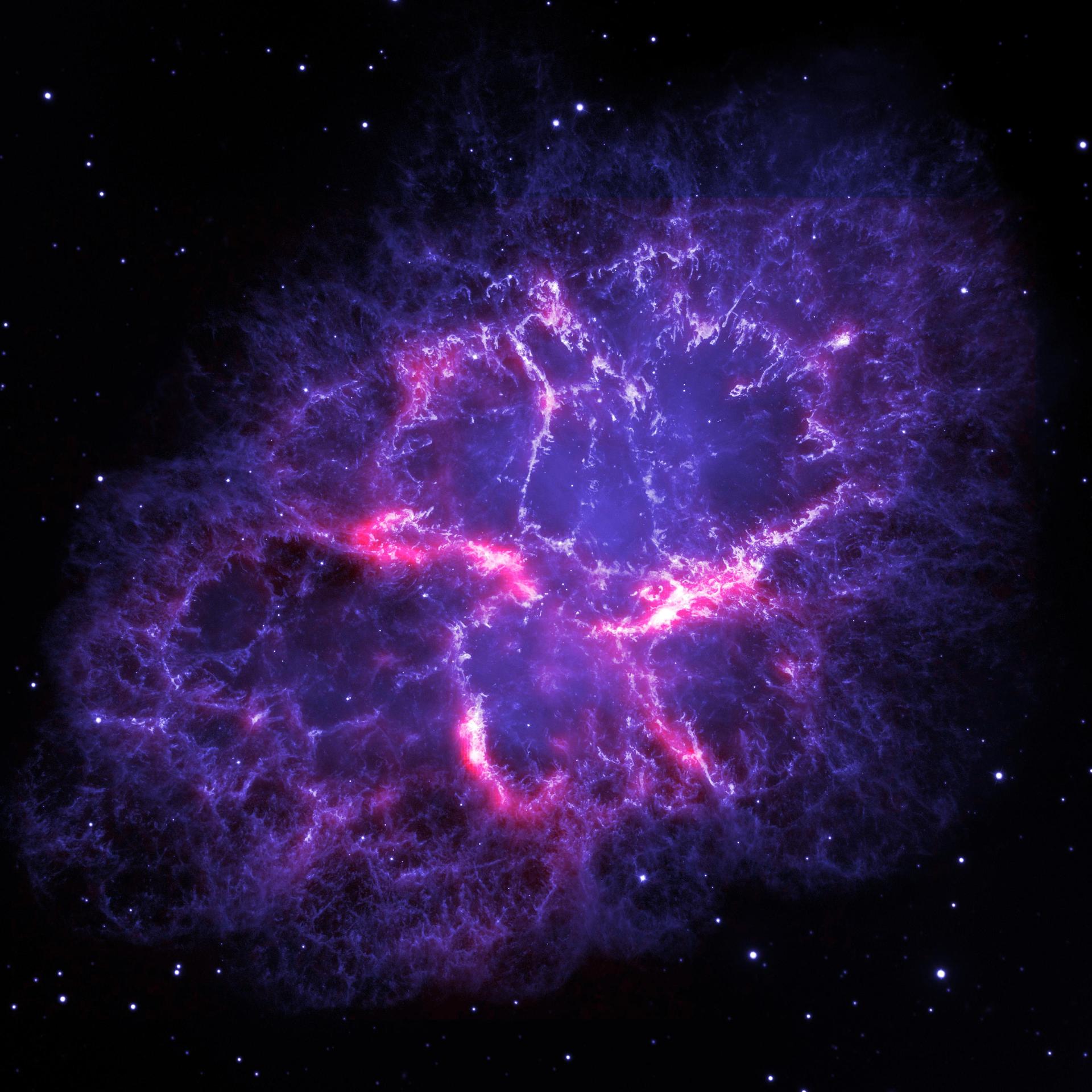
  • TUTORIAL NOTE 11

    TUTORIAL NOTE 11

    Welcome to the Second ‘Semester’ of Ten Tutorial Notes, which teach the mathematical basis of Aether Science theory.

    A MYSTERY OF PARTICLE PHYSICS?

    © Harold Aspden, 1999

    To introduce this second set of Tutorial notes, I will invite you to consider a puzzling problem that drew my attention only in October, 1998 when I was considering revising and expanding these Internet web pages.

    I have in my possession a book entitled The Nature of Physics, by Peter J Brancazio. The book, published in New York by MacMillan Publishing Co. Inc., dates from 1975. Now I pride myself on having discovered the secret of quantum gravitation as will have been seen from Tutorial No. 6. Key to understanding the nature of gravitation is the step of unification of the ‘field’ theory linking electrodynamics and the inertial properties of mass, taken together with the ‘graviton’.

    My theory of gravitation dates from the late 1950s period so far as that field unification step is concerned and from about 1964 so far as the ‘graviton’ quantum is concerned. You will have seen that the graviton, or g-particle, was shown in Tutorial No. 6 to have 5063 times the mass of the electron, a rest-mass energy of 2.587 GeV.

    Now I bought that book by Brancazio some 12 or so years after publishing the second edition of my book The Theory of Gravitation in 1966 and I bought it because it was the first student textbook that I had seen to make reference to the ‘graviton’. This is what it said on page 695 about the graviton:

    “When the known particles of physics are arranged in order of increasing mass, they are found to fall neatly into four groups, or ‘families’. At the bottom of the list we find two massless bosons. One of them is the familiar photon. The second is a hypothetical particle, the graviton, which has never been observed. Its existence has been postulated on the assumption that gravitational fields are quantized. The graviton is the quantum that transmits the gravitational force. Because of the extreme weakness of the gravitational interaction, the graviton should be considerably more difficult to detect than even the neutrino. At the present time there is no experimental evidence that gravitons exist, but at the same time their existence cannot be ruled out.”

    This can be read in two ways, either by accepting what is said, recognizing it as an authoritative statement, and not being too discerning about its implications, or by being somewhat critical.

    First of all you are introduced to the ‘familiar photon’ as if you know all about it as being something you can ‘see’. Yet what you see is the effect of a photon in producing waves in the aether. On pages 145-146 Brancazio explains how Isaac Newton accepted that the aether is ‘an invisible, weightless, and highly rarified substance that pervades all space’ but that ‘around the beginning of the twentieth century, a number of experiments were performed that cast serious doubt as to the existence of the aether’. So the ‘familiar photon’ is seen but it is not a manifestation of an aether phenomenon. It has no mass but it has energy, so one wonders what has happened to that formula E=Mc2, which says that energy has mass.

    Are you puzzled? Indeed you should be!

    Surely you must entertain the suspicion that the photon, the graviton and, indeed, the neutrino, are phenomena rooted in the fabric of the aether, whatever those experiments might imply. So let us take stock. In that quoted statement Brancazio tells you that ‘the photon is the quantum that transmits the electromagnetic force’. To my way of thinking it is the movement of electric charge causing oscillations or waves that disturb the aether and ripple along until they are intercepted by matter, before they assert the force which we say is ‘electromagnetic’. Take away the aether and you are left mentally stranded in having to say that the photon is an energy quantum which travels at the speed of light but which has no mass. It has no rest mass according to Einstein’s theory, because otherwise, since mass escalates by a factor of infinity when travelling at the speed of light, according to the relativistic formula, its energy would be infinite and its mass would become infinite. Zero times infinity is, it seems, finite, but …. well, I for one say that physics has taken leave of common sense if what we are told about this in textbooks of physics has to be accepted in order for you to pass your academic examinations.

    Better by far to say that the aether has properties which are elusive and which are part of a jig saw that we call ‘physics’ and are striving to piece together stage by stage, only to complete the work when that theory of quantum gravity and its interplay with the world of particle physics has emerged in its full glory.

    So what about that ‘graviton’? Well, some 35 years ago, I came to the conclusion that the graviton had a mass that was some 5063 times that of the electron. That was indicated as being the value that would allow G, the constant of gravitation, to be explained in terms of the known charge/mass ratio of the electron. Obviously, there would be no point in trying to publish such a result if that ‘graviton’ had, using Brancazio’s words, ‘never been observed’. Note that the photon, as such, has in that sense never been observed either. All we ‘observe’ is an electromagnetic wave frequency and an energy transition where the wave is created or absorbed. I would not have considered publishing the graviton theory that features in my 1966 book The Theory of Gravitation unless I could point to experimental evidence that in its turn pointed, at least indirectly, to the real existence of that graviton. One needs two or more clues which combine to tell you it exists, just as a frequency and an energy transition tell you that the photon exists.

    So what was my evidence? You can track it from that 1966 book to find that it has the form tabulated in Tutorial No. 6, namely:

    Hadron Energy Product of Graviton Decay
    No. of particles

    Energy in electron units
    gravitons muons 1843 leptons (L) gravitons (G) hadrons (G-L)
    1 2 0 412+0 5064 2(2326)
    1

    2 2

    412+3686 5064 966
    1 4

    2

    824+3686

    5062

    2(276)
    2 2

    2

    412+7372

    2(5063)

    2342
    2 4

    4

    824+7372

    2(5064)

    2(966)

    This table presents data aimed at showing that if a graviton having a mass 5063 times the electron does exist then it might get involved in high energy particle events and disclose its energy quantum in the energy balance applicable as spin-off particles are created.

    My theory had already before 1966 told me that the aether contained a particle form that could be called a ‘sub-electron’ in that its intrinsic energy quantum was about 0.0816 of the electron rest mass energy. This meant that its physical form was much greater than that of the electron, its radius being 12.26 times larger and its volume being some 1843 times larger. It made sense to presume that in high energy particle reactions an energy package of 1843 electron mass units might be squeezed into the volume of space taken up by those sub-electron aether particle forms. This had appeal owing to 1843 being larger but of the same order as the 1836 factor of the proton-electron mass ratio.

    More than this, however, when the energy density of that aethereal sub-electron was calculated it was found to be such that a unit cubic cell of the aether (one sub-electron per cell) would, with the same energy density, amount to the rest mass energy of a pair of mu-mesons or muons, that being some 412 or so times the rest mass-energy of a single electron. However, even more on this theme, there emerged the equation (5.19) on page 78 of the 1966 edition of my book The Theory of Gravitation, which was:

    [E – 2mμc2]/[mec2 – mc2] = 5063

    where mc2 here signifies the energy of that sub-electron form. Here E signifies the mass-energy of the graviton and mμ is the mass of the muon.

    I am saying, therefore, that, back in that 1966 period, I had a theory which gave a precise value of G in terms of the electron charge-mass ratio in full accord with its measured value and that was without reliance on an empirical determination of the graviton mass as being 5063 electron mass units. However, contrary to the Brancazio assertion, I was able to show that the high energy particle data, as pertaining to the Σ baryons, did provide experimental evidence pointing to the real existence of those gravitons. That is what we see from the above table.

    You will find on inspection of that data that I sought only to get a primary energy balance without concern for conservation of charge parity. I just could not be so specific as to say exactly how the particle activity was occurring and my object was to get support for that 5063 quantum. To me, four graviton decays, all pointing to the graviton energy was quite impressive in supporting my theory of gravitation. Note that the second and fifth decays listed in the table amount to much the same process and have the same result.

    I cannot recall the data source used as my base reference for the masses of the hadrons indicated in the table. I see however that Brancazio in his 1975 book presents Table 21-1 as a summary of ‘Properties of known sub-nuclear particles (1959)’ and this includes three Σ baryons, the negative, neutral and positive forms having masses 2343, 2338 and 2328, respectively, in electron units. Now, of course, data for the precise mass values of such particles often changes a little as experiments improve over time and I will not therefore try to be too precise in reviewing the energy balance indicated by the data in the table. Certainly the third listed item, which points to the charged pion mass, has altered in value from its 276 level of earlier days and come down to 273. The 966 entry which identifies the charged kaon has withstood the test of time. This leaves the Σ particles and here, the step which has motivated me to write this Tutorial Note, follows my recent reaction to reading of Brancazio’s remarks on his pages 698-699. Here he mentions anomalies in the ‘baryon conservation principle’ as applied to particle reactions involving kaons and Σ particles.

    He explains how, typically, the high energy collision of a negative pion and a proton can produce a negative sigma particle plus a positive kaon, in accord with the accepted conservation principle, but that the principle does not account for all ‘forbidden’ reactions, because the emergence of a positive Σ particle and a negative kaon is never seen from such pion-proton collisions. Here then is the ‘Mystery’ introduced by the title of this Tutorial Note. What might account for that anomaly in producing a negative Σ but not a positive Σ?

    This caused me to inspect the above table in my book. It tells me that the Σ particle produced by one graviton decay mode can have a mass that is 2326 times the electron mass and that a different graviton decay mode produces a sigma particle that is 2343 times the electron mass. The question then is whether I can interpret something from this in terms of the polarity of the resulting Σ particles produced by the different reactions, something which might explain that conservation anomaly noted by Brancazio.

    Let us suppose that the Σ particle, unlike the kaon, is always produced by a particle reaction that triggers graviton decay. The kaon, incidentally, can be shown to be produced, as is the proton, by the activity of muons, given a high energy source seeking to place the energy released. See my paper ‘Conservative hadron interactions exemplified by the creation of the kaon’, [1989d] referenced elsewhere in these web pages. The kaon can have positive and negative forms of equal rest-mass energy.

    Now, looking at the fourth listed graviton decay in the table presented above, we see that two gravitons shed much of their energy into forming the 1843 forms, which means that, for each 1843 unit, they absorb an aetherial sub-electron of charge -e. The muon pairs produced involve a net charge that is neutral overall and so we have two gravitons each of charge +e decaying by merger with four units of charge -e to leave an energy quantum absorbed by a residual charge of -2e, which implies the production of an electron and a negative sigma particle. Thus we expect that the negative sigma particle will have a mass-energy that is close to being 2342 times that of the electron.

    As to the first graviton decay listed in the table, here a single graviton of charge +e, is deployed to shed a muon pair (electrically neutral overall) and leave the residual energy to produce an electron (-e) and then split in forming two positive sigma particles, each having a mass-energy that is close to being 2326 times that of an electron.

    This suggests that the high energy collision of pions and protons can trigger graviton decay and lead to the emergence of either positive or negative sigma particles depending on whether the decay involved one or two gravitons. However, according to Brancazio, at least at the time when he wrote his 1975 book, the pion-proton reaction producing the negative kaon cum positive sigma particle has never been seen, so one could infer that the single graviton decay does not occur in such circumstances. However, here we must take note that the 1843 factor is not present, whereas it is present in the case where the negative sigma particle is produced. That 1843 factor really means that there is a target the size of that sub-electron form for the energy action stimulating particle formation to take root. That same size of target is involved when muons bombard that ‘sub-electron’ aether particle to create the proton, as I describe in Tutorial No. 9, so my proposal here is quite feasible. Possibly this explains why the positive Σ particle is not produced but the negative Σ particle is produced in the pion-proton high energy collisions.

    The question then is whether I am justified in saying that the gravitons involved have positive charge polarity. In fact, gravitons come in equal numbers in both charge polarities, but if the graviton decay occurs essentially because the positive graviton engages that sub-electron aether particle, which is of negative polarity, it is more likely to be absorbed into a decay mode, whereas a positive graviton would be rejected or repelled. I tend therefore to see the process as always involving positively charged gravitons and I see the single graviton decay as being one that is rare owing to the target encounter then being a normal electron having 1/1843 of the volume of that sub-electron.

    At this stage, if you, the reader, are already well informed on the subject of high energy particle physics, you will suspect that I have not heard of what has come to be termed ‘strangeness’. On this subject I can say that it would be strange indeed for a physicist to write a textbook for students in which it is admitted that something is amiss with the principles and laws of physics offered for study. That problem of the predicted but unobserved particle reactions was presented by Brancazio only to introduce the reader to ‘strangeness’.

    Brancazio on his page 699 tells us that the discovery in 1953 of a new conservation principle called ‘strangeness’ was made independently by American physicist Murray Gell-Mann and Kazuhiko Nishijima of Japan. A strangeness number 0, 1, -1 or -2 has to be assigned to relevant particles so that the scheme of reactions satisfies the rules devised by physicists. Further on in the Brancazio text we read:

    “The principle of strangeness does not have the universallity of the other conservation principles, however, for there is a whole group of reactions in which strangeness is not conserved.”

    So, as I see it, the principle of devising new principles to explain anything and everything is like digging oneself into a hole that gets deeper and deeper, as one looks for easy solutions. The simple fact has to be that it is all a question of probability as to whether some particle reactions are more prevalent than others, plus the fact that the charges in the aether may or may not get into the act and so account for what has been termed ‘strangeness’. I would rather interpret strangeness as an aether involvement which I can picture in my mind’s eye than as just pure ‘strangeness’, a word which could embrace anything include the participation of ghosts!

    The hole that particle physicists then dug themselves into went deeper than the level of strangeness. It made a quantum leap into the realm of ingenuity and fiction by introducing the idea of fractional charge, such as e/3 or 2e/3, where e is the electron charge. The electron charge stands in its own right as a universal constant at the bedrock of the real physical world, but, just as Einstein contrived to interfere with the notion of time, so there emerged in particle physics the notion of the so-called ‘quark’.

    This subject brings me back to the proton and its creation, a topic dealt with in Tutorial No. 9, but one I shall deal with further as we proceed. In the meantime, however, I just wish to say that the quark picture can be replaced by a pattern of unitary charges, based on interpreting ‘strangeness’ as the interplay of a unit e of charge involving the aether. If you are interested in that then read Energy Science Essay No. 15, which is entitled ‘The Chain-Structure of the Nucleus’, a paper which I published in 1974.

    The message of this Tutorial Note is simply that if you choose to ignore the aether then you live in a world where you will have to seek enlightenment in ‘strangeness’ without ever understanding what causes gravity and how particles are created. If you are ready to advance your knowledge of aether theory, then read on in this second set of Tutorial Notes.


    To progress to the next Tutorial press:

    *