APPENDIX TO LECTURE NO. 3
CONCERNING PULSARS
Copyright Harold Aspden, 1997
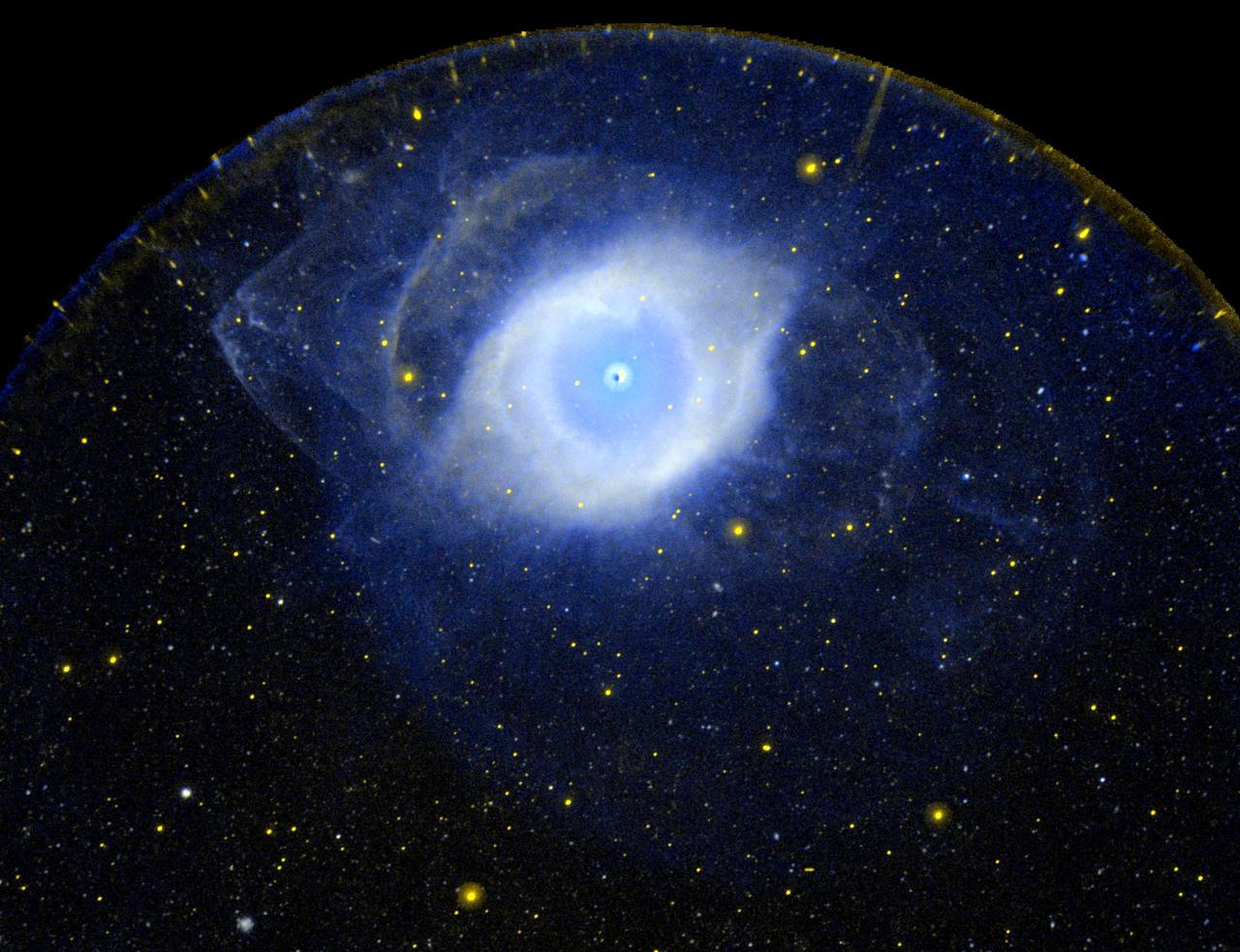
I know that cosmologists will argue that Neutron Stars exist because they can think
of no other way by which to give account of the rapid pulsation of the radiation we receive
from some stellar objects. They believe that the radiating source is rotating at a frequency
which can be of the order of only one revolution per second. A star the size of the Sun would
have a peripheral surface speed exceeding the speed of light, if rotating that fast. It would
be subject to enormous centrifugal forces which would far exceed the gravitational action
holding it together and so it would explode long before it could reach such a fast speed of
rotation.
However, it is a bold leap to infer the existence of Neutron Stars based solely on the
fast pulsation of some mystery sources.
I suggest, therefore, that the true nature of a pulsar is still an open question. It could
be a phenomenon involving the periodic discharge in a stellar plasma drawing on energy
which accumulates in the capacitative system of the star. Just as a star must have an electric
potential owing to that charge density already mentioned, so the storage of that energy
means it has capacitance. There could then be radial oscillations at a frequency of the order
of the speed of light divided by the radius of the star. Indeed, thinking along these lines I do
wonder if the research reported on the Correa invention [Energy Science Report No. 8 listed
in the Book and Report section in these Web pages] may have some bearing on this
cosmological issue.
To enlarge just a little on that theme, I am now going to delve into history. I will then
ask a question and give you my answer. It will surprise you, but I defy you to find fault with
what I say.
First, I wish it to be understood that, unlike most scientists of this modern age, I
believe we need to revive belief in the aether as a real medium.
Recently, I was asked by someone who had discovered my writings if I could
recommend a textbook on aether theory. That person, Mike Dawson by name, said he was
already familiar with Sir Edmund Whittaker’s authoritative ‘History of the Theories of Aether
and Electricity’ [1951 edition, published in U.K. by Thomas Nelson and Sons. My answer to
that enquiry drew attention to Max Born’s book ‘Einstein’s Theory of Relativity’, my copy
being the revised edition published in 1965 by Dover Publications Inc.
I refer here to the section in this work dealing with Faraday’s lines of force and quote
below from pages 170-171 of volume 1.
“According to the theory of action at a distance, the effect of the dielectric is an
indirect one. The field in the vacuum is only an abstraction. It signifies the geometrical
distribution of the force that is exerted on an electric test body carrying a unit charge. But the
field in the dielectric represents a real physical change of the substance consisting of the
molecular displacement of the two kinds of electricity.
Faraday’s theory of contiguous action knows no such difference between the field in
the ether and in insulating matter. Both are dielectrics. For the ether the dielectric constant
equals 1, for other insulators it differs from 1. If the graphical picture of electric displacement
is correct for matter, it must also hold for the ether. This idea plays a great part in the theory
of Maxwell, which is essentially the translation of Faraday’s ideas of lines of force into the
exact language of mathematics. Maxwell assumes that in the ether, too, the production of an
electric or a magnetic field is accompanied by ‘displacements’ of the fluids. It is not
necessary for this purpose to imagine the ether to have an atomic structure, yet Maxwell’s
idea comes out most clearly if we imagine ether molecules which become dipoles just like
material molecules in the field. The field is not, however, the cause of the polarization, but it
is the displacement which is the essence of the state of tension that we call an electric field.
The chains of ether molecules are the lines of force, and the charges at the surface of the
conductors are nothing but the end charges of these chains. If there are material molecules
present besides the ether particles, the polarization becomes strengthened and the charges
at the ends become greater.”
Now, with this historical background in mind, the question I now ask is how energy is
stored in such an aether when subjected to an electric field. The statement that it is by some
kind of tension is not sufficient. If our ultimate task is to unify the force of gravitation with
electromagnetic theory, then we must be consistent. It seems improbable that one could
ever explain gravitation in terms of the mechanical properties of matter. Our unification
quest is more likely to succeed if we aim to explain everything in terms of electrical
fundamentals. Therefore, if the aether can store electrical energy by ‘tension’, that ‘tension’
must itself arise solely from electrical force.
It really suffices to note that if two planar layers of uniformly distributed electric
charge, one of positive and one of negative polarity, are spaced apart slightly in a mutually
parallel relationship then there is a mutual attraction between those charge layers. Energy is
stored in the intervening space owing to their mutual electric potential. Now, if those layers
are the two plates of a parallel plate capacitor separated by a vacuum, the aether in that
vacuum can be regarded as the seat of a multiplicity of pairs of charge layers that are pulled
apart when the capacitor is charged. Each such layer has the same distributed charge as
that on one of those plates. The energy density in the intervening spaces is the same,
however numerous those pairs of charge layers.
So, one could adopt conventional practice and merely regard the vacuum as a void
between the two electrically-charged plates and formulate the energy accordingly, or get the
same result by imagining that a real aether medium exists between those plates and still get
the same energy formulation. However, the charge displacement concept, as an aether
property, serves another purpose. Owing to its analogy with the dielectric properties of a real
solid medium, it gives a basis for understanding electromagnetic wave propagation at a finite
speed that is a function of the properties of that medium.
When I first considered the physical form that the aether might have I opted for it
being a plenum, containing no voids and comprising a uniform continuum of charge of one
polarity in which there is a distribution of identical aether particles having the polarity
opposite to that of the background continuum. My reason for this was simple logic. If I had
regarded the aether as being a void containing electric discrete charges of both polarities and
assumed that there would be no mutual annihilation of charge pairs, then I would be unable
to justify an equilibrium state in which the charges take up sites in a lattice having the
structure needed to characterize a solid. You see, I knew that Maxwell’s equations demand a
solid-like structure to sustain the lateral oscillations associated with wave propagation. I also
knew that I had to set up a model in which the aether particles could take up sites from which
they could be displaced to become subject to a restoring force proportional to the
displacement. I knew that the continuum model would meet that requirement and I
suspected that I was the first to conceive an aether with an in-built asymmetry of this
kind.
I found that the structure of the aether would be simple cubic, meaning that those
aether charges will be located at corner sites in a cubic array. This implies planar layers of
charges and planar boundaries. The aether model was simple and easy to analyze in
mathematical terms. I was well satisfied with the fruits of that analysis. Nature’s aether is
not the least bit complicated. It has structure, but its structure is not close-packed-hexagonal
or body-centred cubic or face-centred cubic, as were the ferromagnetic substances I knew of
from my main subject of research.
I pictured the aether as having the properties of a fluid crystal. Where present the
local energy fields set up by matter affects the aether and promote its local crystallization
nucleated on that matter.
Reverting now to that cosmological theme, I saw a star as having a spherically-bound structured aether, capable of sustaining the propagation of waves at a finite speed
determined by the structural properties of that aether model. I went further and studied how
energy could be stored in that aether by displacing each of those aether particles from its
neutral position. I saw each such particle as having a quantized orbital motion about that
neutral position. That gave me the link I needed to relate the aether to quantum theory and
Planck’s constant. More than this, I imagined what would happen if the system I had just
envisaged were to spin as a whole, sharing the rotation of a star. That led me to see how
there was electric charge displacement relative to the spin axis, resulting in a distributed core
charge and a compensating charge at the spherical boundary of the whole system. I saw the
coextensive matter content of the star as being ionized and so compensating the aether
charge electrically but not compensating it magnetically or gravitationally. My reason was
that, if the aether lattice structure is the frame of reference for electromagnetic wave
propagation, the frame’s distortion or motion cannot set up gravitational or electromagnetic
fields.
For the purpose of this general introduction I can summarize the situation in the
following way. Inside any astronomical body there is a kind of ‘ghost’ form, a crystal-like
structure that is aetherial. It comprises electric charges set in an oppositely charged
background continuum. This structure cannot withstand linear forces because it will yield as
a fluid with a counterflow which compensates and nullifies its overall linear momentum. A
spherical body of that structure can, however, rotate about an axis through the centre of the
sphere and the aether in this mode can store angular momentum. Similarly such a spherical
structure can exhibit some elasticity in resisting radial compression or expansion. In short
the solid aspect of the aether within a star will serve to prevent the star from collapsing under
gravity, even though its own distributed charge induced by rotation cancels the free proton
charge that accompanies ionization.
The star, as a gaseous plasma, would, if there were no aether, compact to a form in
which its internal gravitational interactions just balance the charge interactions of the protons
released by the ionizing contact of the hydrogen atoms. However, with the aether present
and rotating to set up a charge displacement which neutralizes the proton charge in the star,
the electrical repulsive forces within that stellar gas are no longer present but the
gravitational compression is transferred to the lattice structure of the aether. This prevents
the compaction of the star beyond the ionizing limit already determined before the aether in
the star acquired its spin.
The physical sequence of events by which this process can be formulated involves
firstly the stellar material being a finely dispersed ‘dust’ comprising hydrogen in its fully
ionized form. Then something on a grand cosmic scale occurred, such as the condensation
of the aether to form its lattice-like structure. By analogy with the ferromagnetic state which
requires crystal order and further cooling before magnetism appears, so eventually the
phenomenon of gravitation appeared on the physical scene. This then caused the protons to
accelerate rapidly to some focal point, together with the hydrogen atoms that had been
formed by ion recombination, and the primordial stellar form then appears with its positive
core charge. The size of this stellar object is limited by the contact of the K-electron shells of
adjacent hydrogen atoms. There will be more ionization arrested, as already described, by
the balance of the gravitational and electrical forces. But along with these events, that charge
of the newly formed star will promote radial displacement in the coextensive body of aether
and that is a recipe for that body of aether to begin to spin. Indeed, as the electric field
cancels to shed the electric potential energy, which came from the release of gravitational
potential, so the aether spin absorbs that energy as kinetic energy needed owing to its
angular momentum property.
It will be seen from this that we have a whole new scenario to explore, thanks to the
aether being recognized as a real medium. The thought that the aether within a star can
display elastic properties in response to radial compression and expansion means that it can
oscillate radially. If it does that in a background of charge associated with the matter
constituting the charge, where a distributed core charge of positive polarity exists balanced
by a cancelling electron charge in the ionospheric boundaries of the star, then some
fascinating possibilities emerge.
The spherical boundary charge of the aether sphere could be subject to a rhythmic
oscillation which penetrates sequentially outwards and inwards through the electron
ionosphere at a frequency of the order of one cycle every second. Pulsating bursts of
radiation must then occur. Hence we see scope for understanding the pulsar without
assuming that it rotates at what, in stellar terms, is an inconceivably high rate. Stars rotate
with periods measured in days, not seconds!
The enigma of the pulsar warrants a review of the orthodox belief that is linked to the
Neutron Star theme and the Black Hole. It may be difficult for some readers to accept the
revival of an aetherial basis for physical reality, but this makes far more sense than
imagining the existence of Black Holes and Neutron Stars. Note that I shall have much to
say later on the subject of the apparently enormous concentrations of energy radiation
detected in radio astronomical observations. What follows will prove to be so comprehensive
that it will pay to read on rather than halting and assuming that these ideas stand in isolation.
What has been said about the equilibrium of the core charge in a star held in position by
gravitation can be put to the test, because its initial cancellation by charge induced by aether
spin has some fascinating implications. When the star sheds some of its angular momentum
and breaks up to create planets or form a binary system, the ultimate state of aether spin is
at a much lower speed. There is then only partial cancellation of the gravitationally induced
electric charge.
For a star, the ionization prevails and if the star sheds, say 98% of its initial spin
angular momentum in creating planets, as is the case for the Sun, then the resulting
magnetic moment of the star will be 98% of the value we expect from the assumption that its
charge density (in esu) is equal to its mass density times the square root of the constant of
gravitation (in cgs units).
For an astronomical body such as Earth, which no doubt formed as an ionized object
before solidifying, the ultimate state is one where there is no residual core charge held in
place by gravitation. The gravitational forces are then absorbed by the compaction of the
atomic substance and its resistance to compression. In this case the only source of a
geomagnetic field is the aether spin associated with body Earth as sustained by inertia, after
it has shed the Moon. However, that spin condition induces charge displacement in the
aether and the Earth’s substance responds to set up a cancelling displacement of electrons.
The result is a geomagnetic field having a magnetic moment determined, not by G, the
constant of gravitation, but by the properties of the aether and the rate of spin which it shares
with body Earth.
It is then somewhat fortuitous that the formula involving G happens to be in
reasonable accord with what is observed for body Earth, but there is an associated
misfortune in the history of the subject, because scientists tried to confirm the validity of the
formula from detailed tests on body Earth, not realizing that its true validity was restricted to
the plasma systems of the stars.
The next Lecture in these Web pages summarizes that history. I told the story in the
1966 edition of my book entitled ‘The Theory of Gravitation’ and, some 31 years on from that
time, I reproduce the text unamended, except for the use of the notation (x)1/2
so signify the square root of x, so that the square root of G is written as G1/2.
Also the Greek symbols used are replaced by words in brackets, such as (beta) and (pi).