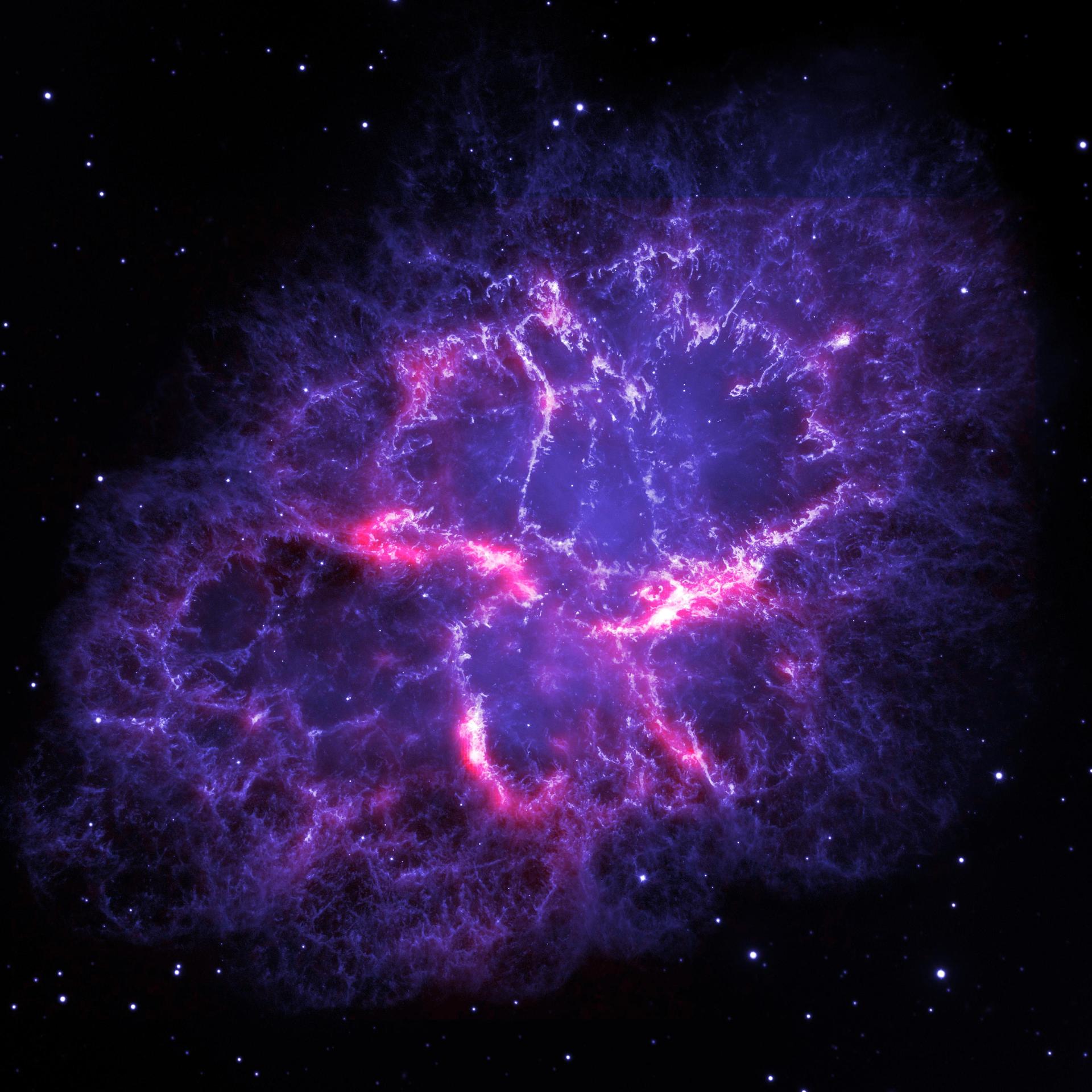
Crab Nebula (M1) — supernova remnant imaged by Herschel and Hubble Space Telescopes

Category: Papers & Publications

Peer-reviewed papers and publications by Harold Aspden

Crab Nebula (M1), supernova remnant · ESA/Herschel/PACS; NASA, ESA & A. Loll/J. Hester (Arizona State Univ.) · NASA Image Library ↗

  • 1986b

    1986b

    The following is a paper by H. Aspden published in IEEE Transactions on Plasma Science, v. PS-14, pp. 282-285 (1986).

    ANOMALOUS ELECTRODYNAMIC EXPLOSIONS IN LIQUIDS

    Abstract: The recently reported Graneau experiment on electrodynamic explosions in liquids, which reveal anomalous longitudinal electrodynamc forces of the order of 104 times greater than expected, verify the need for a term in the law of electrodynamics that corresponds to the ion/electron mass ratio. this confirms an earlier theoretical interpretation of the anomalous cathode reaction forces found in the vacuum arc.


  • 1986a

    1986a

    The following is a paper by H. Aspden published in Speculations in Science and Technology, v. 9, pp. 315-323 (1986).

    FUNDAMENTAL CONSTANTS DERIVED FROM TWO-DIMENSIONAL HARMONIC OSCILLATIONS IN AN ELECTRICALLY STRUCTURED VACUUM

    Abstract: Based on a 1972 analysis of two-dimensionless harmonic oscillations in an electrically structured vacuum, the fine-structure constant, magnetic moment of the proton and the g-factor of the electron are all derived theoretically and found to have values in perfect accord with measurement data. The analysis is based on newly discovered resonant interaction.

    Commentary: The author had been impressed by the fact that Von Klitzing had earned the Nobel physics prize in 1985 for work closely connected with quantum Hall phenomena as applied to the measurement of the fine-structure constant. This was research which, in effect, replicated the orderly orbital motion of the aether lattice charge in a two-dimensional electron gas. Bearing in mind that the author’s theory of the vacuum medium has vacuum charge in a two-dimensional motion, which gives the fundamental foundation for the fine-structure constant, this work of Von Klitzing was clear
    vindication of the author’s methods. The subject paper was essentially a review paper to which was added the new discovery of a resonant standing wave model for the proton magnetic moment. The
    theoretical value is the same as the measured value to the part per million precision of six significant digits.


    To see the full text of this paper as presented in pdf format press: [1986a]

  • 1985j

    1985j

    The following is a paper by H. Aspden published in JOURNAL OF METEOROLOGY, v. 10, pp. 376-380 (1985).

    ELECTRICAL ASPECTS OF TORNADO THEORY

    Abstract: This paper discusses some rather speculative aspects of possible electrical phenomena that might be present in tornadoes formed in thunder conditions. Particular reference is made to arc discharge phenomena in which unusually high forces and rotation about the discharge axis are in evidence.

    Commentary: The author argues that the aether in a state of spin inside the tornado funnel is the primary actor in the accounting for the energy and power behind the tornado. This is discussed at some length, but scientists are not persuaded by such argument because they have been taught not to believe in the existence of the aether. It was for this reason that the last few lines of this article quoted the words of a report of a tornado storm:

    “The unusual direction of tornado motion, compared with the ‘normal’ eastward movement of storms, as well as with individual storm movements on the day, would hardly fit the expectations of a trained radar operator. As one of the eyewitnesses
    said, ‘the storm went East, while the tornado cloud went West’.”

    If the energy and power driving the tornado was traveling West and the air involved in the storm was traveling East, then that energy was clearly concentrated in a medium that could move through the air. The aether is the only known medium recognized in science history having such a property!


  • 1985i

    1985i

    The following is a paper by H. Aspden published in Lettere al Nuovo Cimento, v. 44, pp. 705-709 (1985).

    THE PARADOX OF CONSTANT PLANETARY MASS AS EVIDENCE OF A LEPTONIC LATTICE-STRUCTURED VACUUM STATE

    Abstract: The constancy of velocity moment h in the equations of planetary motion has been well verified by their accuracy in accounting for perihelion advance. There is, however, an implicit paradox, because the conservation of angular momentum requires constancy of planetary mass, even though speed in orbit varies. One way of resolving this paradox appears in the conformable properties of a lattice-structured vacuum state of recent record, which provides also a quantum connection, in having given account for Planck’s radiation law and a theoretical evaluation of the fine-structure constant in precise accord with its measured value.

    Commentary: This paper aims to highlight a conflict between Einstein’s special theory of relativity and his general theory of relativity, whilst drawing attention to the author’s derivation of the law of gravitation.

    At this stage, the author feels it appropriate to quote a paragraph from a book ‘The Einstein Decade (1905-1915)’ written by Cornelius Lanczos, Professor Emeritus at the Dublin Institute of Advanced Studies:

    “The last 32 years of Einstein’s life were spent in Princeton, in relative isolation. He continued his studies, which were by that time almost exclusively devoted to a possible extension of his earlier gravitational theory. He aimed at a ‘unified field theory’, which would allow the concepts of gravitation, electricity and the quantum phenomena, as emanations of a unique logical structure. After many unsuccessful attempts he arrived at a scheme which
    was a formal generalization of his gravitational equations, under the assumption of a non-symmetrical metrical tensor. His contemporaries, however, lost interest in speculative schemes and continued to work in the well established manner of inventing mathematical models which fitted a certain group of phenomena, no matter how rational or irrational such models might turn out to be. The gulf between Einstein and the younger generation of theoretical physicists widened and in the end they spoke two entirely different languages, which prevented communication, in marked contrast to his years in Berlin, when he was the acknowledged master of physical thinking.”

    Einstein died in 1955. In 1958. This author published his very first
    contribution trespassing onto Einstein’s territory [1958a]. This concerned the true meaning of E=Mc2 and was the first hint of record in the scientific literature to show that this author would
    one day build a theory that would take us ever forward in the understanding of the physics of the universe, including the conquest of the unified field.


    To see the full text of this paper as presented in pdf format press: [1985i]
  • 1985h

    1985h

    The following is a paper by H. Aspden published in Lettere al Nuovo Cimento, v. 44, pp. 689-693 (1985).

    UNIFICATION OF GRAVITATIONAL AND ELECTRODYNAMIC POTENTIAL BASED ON ACTION-AT-A-DISTANCE THEORY

    Abstract: By taking account of the different field distributions of electric and magnetic field energy and assuming that their collective potential asserts action-at-a-distance forces, the
    equations of motion governing the electrodynamic action (Lorentz force) and the gravitational action (planetary perihelion advance) are deduced from the common and unifying equation of field potential.

    Commentary: This paper is very important in summarizing the field unification of the author’s theory. It was here that the author felt that the struggle against Einstein’s theory had to end and it is curious, that this paper and the next related paper, were published together as the last papers at the very end of the last volume of Lettere al Nuovo Cimento which the Italian Institute of Physics published. The author had first submitted a paper to Lettere al Nuovo Cimento in 1979 and had had an escalating run of success thereafter in having his papers reviewed favorably. Fortunately, concerning onward development of the aether theory, as one door closed, another was to open, in the form of the Hadronic Journal, published by an organization, not wedded to Einstein’s theory, located on the Cambridge Campus in Boston,
    USA.


    To see the full text of this paper as presented in pdf format press: [1985h]

  • 1985g

    1985g

    The following is a paper by H. Aspden published in Speculations in Science and Technology v. 8, pp. 283-289 (1985).

    THE MAXWELL-FECHNER HYPOTHESIS AS AN ALTERNATIVE TO EINSTEIN’S THEORY

    Abstract: Einstein’s theory of relativity is challenged on the basis of Fechner’s hypothesis, as discussed in Maxwell’s treatise in connection with the Neumann Potential. The hypothesis is shown to be rooted in quantum-electrodynamics and is correlated with E=Mc2 and the increase in mass and lifetime with speed. The null result of the Michelson-Morley experiment is similarly explained in terms of charge pair creation and annihilation in the
    vacuum itself. An analogy is demonstrated between the electrodynamic interaction and gravitation and the primary results of Einstein’s General Theory are shown to be amenable to alternative explanation.

    Commentary: By 1984 the author, then at the University of Southampton, had conducted an experiment which had shown that it was essential to distinguish between electrons and nucleons in respect of their electrodynamic interaction. The author realized that electrons were leptons, and so were active in charge pair creation and annihilation processes, whereas nucleons, apart from isolated hydrogen nuclei, were part of a shell-structured system that could behave differently owing to the coupling with the aether lattice.

    From this it was seen that the Fechner hypothesis warranted attention. It was a route to the Neumann potential, the derivation of which was still eluding the author. However, the merits of the Fechner hypothesis warranted study owing to the classical
    relativistic argument implicit in the hypothesis. This was exploited by the author in the struggle to revive interest in challenging Newton’s third law of motion, the key to energy transfer as between the vacuum and matter and, of course, as concerned the author’s law of electrodynamics, as discussed in earlier work.


  • 1985f

    1985f

    The following is a paper by H. Aspden published in Speculations in Science and Technology, v. 8, pp. 235-239 (1985).

    THE NATURE OF THE PION

    Abstract: A neutral aggregation of Thomson-sized charges is shown to have alternative forms with the same energy. Taking the proton and electron as constituent charges in a four-charge system, it is found that the other charges have an energy approximately 273 times that of the electron. The system is then shown to be conducive to a remarkable wave resonance condition, yielding a free pion state with a mass of 273.127 electron units, exactly in accord with the measured value.

    Commentary: This paper is one that is truly remarkable. Although the author had been delighted with the discovery of the pion creation process reported in his 1980 book ‘Physics Unified’, the new contribution made by the subject paper added enormously to that satisfaction. The reader will not appreciate this without working through the paper. Nature, it seems, is always trying to create particles and the ones we see are the ones which win through in the contest for survival. Although the electron and the proton are the ultimate winners because they are the first derivative form from which other particles build their existence, there are a number of unstable particles that survive long enough to tell us how the creation system works. Whereas the virtual muon and the tau lepton are natural denizens of the aether, the pion is a spin-off creation from the general particle energy activity. The pion is the particle which seems to have dual chance of existing in an energy exchange mode involving a core particle that could be a nucleon. In fact, as the subject paper shows, the two actions may contribute to determining, not only the mass of the pion, but also that of a nucleon unit of mass that is 1833 times that of the electron. Much
    depends on whether the pion really exists as a stable particle as part of the chain-structured binding energy of an atomic nucleus, as discussed in chapter 7 of the author’s 1969 ‘Physics without Einstein’.


  • 1985e

    1985e

    The following is a paper by H. Aspden published in Physics Letters, v. 111A, pp. 22-24 (1985).

    A NEW PERSPECTIVE ON THE LAW OF ELECTRODYNAMICS

    Abstract: Recent experiments have highlighted anomalous electrodynamic forces in arc discharges in liquids, making it necessary to re-evaluate the fundamental principles governing the electrodynamic interaction. This letter shows that a solution is to be found in a classical quantum-electrodynamic and relativistic proposal outlined by Maxwell in his famous treatise.

    Commentary: It is observed that Maxwell introduced the Fechner hypothesis by which electric current was seen as the flow of counter-moving charges of opposite polarity. Then, by adopting a mutual electromagnetic energy potential based on relative charge
    velocities, Maxwell deduced the Neumann potential.


  • 1985d

    1985d

    The following is a paper by H. Aspden published in Physics Letters, v. 110A, pp. 113-115 (1985).

    THEORETICAL EVALUATION OF THE FINE STRUCTURE CONSTANT

    Abstract: A minimal energy requirement of a neutral electrical lattice is that it is permeated by virtual muon pairs and electron-positron pairs. Photon radiation arises from sub-lattice
    spin. The theory gives a theoretical value for the fine-structure constant in precise accord with its experimental value.

    Commentary: For the first time, since developing the formula for the fine-structure constant in any of his published work, that is since the presentation of the 1959 text of ‘The Theory of Gravitation’, the author here publishes the direct equation linking the fine-structure constant α with the virtual muon/electron mass ratio mmu/me. The equation is:

    α-1 = hc/2πe2 = [3(144)5π6(3/2)3mmu/me]l/8

    The author had deduced from the [1972a] derivation that mmu/me has the value 206.3329. The subject paper discussed the possibility that this mass ratio might be 206.3333 by virtue of one third of the virtual muon pairs being of integer electron value 207 and two thirds being of value 205. This gives α-1 as 137.035950, which compared with a referenced 1982 measurement of 137.035965(12).


  • 1985c

    1985c

    The following is a paper by H. Aspden published in Physics Letters, v. 107A, pp. 238-240 (1985).

    THE EXPLODING WIRE PHENOMENON

    Abstract: Graneau’s recent interpretation of the exploding wire phenomenon as an electrodynamic effect verifying Ampere’s classical formulation is questioned. Instead it is shown that the rupturing force arising from the imbalance of the self-induced electromotive force and the ohmic potential during an explosive current surge will account for the wire breaking into several segments, as is observed.