Crab Nebula (M1) — supernova remnant imaged by Herschel and Hubble Space Telescopes

Category: Lectures

Lecture series on aether physics

Crab Nebula (M1), supernova remnant · ESA/Herschel/PACS; NASA, ESA & A. Loll/J. Hester (Arizona State Univ.) · NASA Image Library ↗

  • LECTURE NO. 3

    LECTURE NO. 3

    COSMOLOGY UNDER SCRUTINY

    Copyright Harold Aspden, 1997

    INTRODUCTION

    Much of cosmology is founded upon our understanding of
    gravitation and the interpretation of the radiation spectrum of
    the stars and the galaxies to which they belong. The physics
    applicable in our laboratories here on Earth is relied upon by
    cosmologists as they extrapolate well beyond the limits of the
    empirical data on which our knowledge of physics is really based.
    This leads to ideas such as Black Holes, the Big Bang, the
    Expanding Universe, the Neutron Star and even Worm Holes in
    Space-Time through which it is supposed astronauts may travel to
    enter into other universes and other cosmological time zones.

    Seldom do we hear the voice of dissent on these matters from
    within the closed world of the astrophysicist. There are
    unanswered questions to be sure, but funding which supports the
    search for those answers is used for ever-onward extrapolation.
    When, I wonder, will there be academic funding for someone
    who has the good sense to say “something is wrong” and is willing
    to track back to survey the faults in the path already followed?

    COSMOLOGICAL QUESTIONS

    We know that stars like the Sun are composed mainly of
    hydrogen and that they radiate heat and light because they are
    hot enough to be ionized. This means that the hydrogen is
    monatomic and that some of the atoms have shed an electron. It
    means that there are free electrons and free protons being
    jostled around at the Sun’s surface, because the hydrogen atom
    is nothing other than a proton with a satellite electron and
    ionization means their separation.
    Were it not for the effect of gravity, the deployment of
    charge in the resulting body of stellar plasma would find
    equilibrium with virtually zero electric potential appropriate
    to an electrically neutral charge distribution. However, we know
    that gravitation acts between two bodies with a force
    proportional to the product of their masses. Therefore the mutual
    gravitational acceleration between protons, which have 1836 times
    the mass of electrons, must distort this charge distribution.

    It means that the Sun must have a positive electric
    potential, just as it has a negative gravitational potential.
    Matter, when free to move under the influence of gravitational
    forces, seeks a state of lower potential, but in the stellar
    plasma that means a commensurate increase in electric potential.
    How does Nature cope with this dilemma?
    The answer can be worked out as a simple mathematical
    exercise which any high school physics student should be able to
    perform. Nature allows gravity to bring just enough hydrogen
    atoms into close ionizing encounters to free enough protons to
    account for a positive electric charge density equal to the mass
    density of the hydrogen gas multiplied by the square root of G,
    the constant of gravitation. [The detailed analysis is in
    Appendix I of my book ‘Physics Unified’ ISBN 0 85056 009 8].

    In other words, the maximum mass density of a hydrogen star
    can be little different from that calculable from compacting
    rigid spheres, each having the mass of the hydrogen atom and the
    radius of the electron’s K-shell orbit around its proton nucleus.
    Furthermore, there will be a distributed uniform positive charge
    density throughout the body of the star, neutralized by an
    enclosing ionospheric surface sphere formed by an electron gas.

    The high school physics student who has been introduced to
    Bohr’s theory of the hydrogen atom will know that the relevant
    radius is 5.29 billionths of centimetre. Standard physics data
    sources show that it takes 0.67×1024 hydrogen atoms to sum to one gram.
    From these data, that physics student, if reasonably astute is estimating how small spheres
    pack together to fill a space cube, can work out the mass density of that star.

    The cosmological question this poses is “How does that
    theoretical mass density compare with the known mean mass
    density, 1.41 gm/cc of the Sun?”
    When you work out the answer to this question you will see
    reason for asking why what has just been described is not
    mentioned in textbooks on astronomy. You may further wonder what
    governs the temperature of the Sun and you should be puzzled by
    the following questions.

    “If the Sun has a uniform mass density throughout its whole
    body, owing to the perfect balance of gravitational pressure and
    electrostatic repulsion, then its pressure is uniform throughout
    its whole body as contained within the bounding ionospherical
    electron shell. Is this statement true or false?” “If true,
    then is it not likely that the interior of the Sun has a
    temperature little different from that at its surface?” “In that
    case, how can we ever even begin to believe that the energy
    source which sustains the sun is of nuclear origin, unless we
    accept the possibility of cold fusion?” “If the statement is
    untrue then where is the flaw in the argument developed above?”
    “Ought we not to see this question discussed in textbooks on
    astrophysics?”

    Now, let us digress to mention the so-called Neutron Star.
    The neutron has no electric charge. Hypothetically, therefore,
    if one could capture enough neutrons within a confined space,
    with no other matter present, then gravity could act unrestrained
    by electric potential and the neutrons would cluster into a very
    compact form having a mass density enormously greater than the
    1.41 gm/cc of the sun.
    However, we have used that word ‘if’ and quite glibly
    presumed that the neutrons will not behave as we know they do in
    our experiments. We know from those experiments that they are
    unstable and have a mean lifetime of a few minutes, decaying to
    become a proton and shedding an electron. Question: “Would not
    that return us to the scenario of the hydrogen star already
    discussed?” “Does not that mean that a neutron star is simply a
    figment of imagination?”

    Surely, there is something wrong with astrophysics if this
    kind of question is not properly addressed in the scientific
    literature. Now, I am not an astrophysicist but I found that my
    early writings, which concerned the electrodynamic nature of
    gravitation, were judged defective because they conflicted with
    certain cosmological assumptions. I was building my account of
    gravitation on the electromagnetic principles to which I had been
    led by my experimental research in magnetism on the laboratory
    test bench.
    I found that the mere suggestion that gravitation can be
    explained without building the argument on the doctrinaire
    principles of Einstein’s theory of relativity was a sufficient
    basis for rejection. Yet the theory which emerged from my
    research even allowed the derivation of the value of the constant
    of gravitation G in terms of the electron’s charge/mass ratio.
    [You will find the formula for G on page 115 of my book ‘Physics
    Unified’
    ].

    It is really for this reason that I have, in these lectures,
    decided to attack the establishment position, rather than defend
    my own theory, though I would have been delighted if I had ever
    needed to defend what I have proposed. It has never been
    attacked. Astrophysicists and particle physicists have simply
    chosen to ignore my writings, even though I provide the bridging
    link between particle physics and cosmology by the unifying role
    played by the force of gravity.

    Before I advance too far from what I have said above I must
    mention that, as we proceed, I shall be explaining why Einstein’s
    theory of relativity, whether in its special or general form, is
    wrong. It is wrong on every count, but in Part II of my Web page
    on that subject I will direct these particular comments at the
    cosmologists who have chosen to ignore the observations of two
    astronomers of Villanova University in Pennsylvania. Edward
    Guinan and Frank Maloney proved Einstein wrong by drawing
    attention to the measured the rate of perihelion motion of the
    two stars forming the double star system DI Herculis.
    Einstein’s theory required that their anomalous rate of
    advance of perihelion should be some 196 times faster than it is
    for planet Mercury. It was found to be only one seventh of the
    predicted amount for the classical and relativistic effects
    combined! Einstein’s theory has, therefore, to be wrong!
    A small additional component was also required from
    Newtonian gravitational theory, owing to the astrophysicist’s
    assumption that the gaseous plasma constituting a star can be
    dragged by gravitational action of the other star in a binary
    pair.

    In the event, it was found that the observed rate of
    perihelion advance was so small as to rule out any prospect of
    Einstein’s theory being of any relevance, but, surprisingly, the
    plasma drag was not in evidence either. Now, what might that
    prove? Well, if you have understood what I have described above
    concerning electric and gravitational potentials in stars being
    in balance, you will understand that the action between matter
    in two stars in a binary system will conform with the same
    principle. In other words, there can be no gravitational drag
    effect adding to the perihelion advance. You see, there can be
    no gravitational ‘tide’ effects if the star has a uniform mass
    density. In that context it reacts as if it were a homogeneous
    solid.

    The Guinan and Maloney observations, as reported on p. 23
    of the August 29, 1985 issue of New Scientist, therefore serve
    the dual purpose of proving Einstein’s theory is wrong and also
    verifying my proposition that the mass density within a star is
    not concentrated into a non-uniform distribution by the force of
    gravitation.
    The importance of this to cosmological science cannot be
    overestimated. It bears upon that question of how a nuclear
    fusion reaction can be initiated to feed the star’s energy
    output. It obliges one to consider the prospect of a cold fusion
    process or to look for other explanations for the stellar energy
    source.
    It should raise questions but where are those questions
    discussed in the science literature? Why do cosmologists waste
    time theorizing about Black Holes when they do not have the
    answers to the issues I am raising here?

    ENERGY RADIATION?

    As we proceed on this cosmological theme I shall explore
    three fundamental aspects of physics which need particular
    scrutiny. These are (i) the interpretation of the spectral red
    shift as a Doppler Effect, (ii) the validity of Maxwell’s
    equations and (iii) the radiation of energy.
    These three subjects are intermeshed in a way that has
    seemingly eluded the physicists of our modern age. There is so
    much wrong with what has come to be accepted and so much that I have to say on this matter, that I can but proceed a step at a time
    in the hope that the reader will bear with me, even though it may
    seem unbelievable that there is such scope for challenging
    physics that has come to be accepted.

    To most physicists Maxwell’s equations stand supreme because
    they withstood the onslaught of the revolution introduced by
    Einstein’s theory. They are compliant to Lorentz transformation.
    Yet they lack an essential symmetry, a failing which was
    deceptive, in that it caused scientists to think about the
    so-called ‘magnetic monopole’, something that is also an illusion
    with no real foundation.

    At this preliminary stage I will not use mathematics to show
    how the equations should be revised. It suffices to keep in mind
    what we can all witness as we watch waves ripple over the surface
    of water and the fact that electromagnetic waves are really no
    different so far as the energy factor is concerned.
    In an electromagnetic wave there are two energy forms. One
    is the electric potential energy, which rises and falls as the
    wave ripples along through empty space. The other is the energy
    of lateral motion we associate with those waves, namely the
    magnetic energy, which is really the electrodynamic component
    associated with that rise and fall of electric potential energy.
    Now, in the water analogy, the wave on the surface of water
    involves the rise and fall of water, which involves corresponding
    changes in the gravitational potential of that water. This is
    equivalent to the electric potential of the electromagnetic wave.
    The motion of the water, meaning the kinetic energy associated
    with that up and down movement, is equivalent to magnetic energy
    of the electromagnetic wave.

    The obvious conclusion to draw from this is that it is
    Nature’s way to provide that the propagation of waves in a real
    medium involves the harmonious exchange of energy as between the
    static and dynamic potential states. Throw a stone into a pool
    of water and the water displaced will mean a slight rise of the
    equilibrium level of water in the pool, but it will also set up
    a propagating wave or ripple which does not transfer water in the
    propagation direction, save for an oscillation over the range of
    half a wavelength.
    The way in which Maxwell’s equations have been formulated
    implies, however, that the propagation of an electromagnetic wave
    requires, not the exchange of energy between the electric
    potential and electrodynamic states, but rather their increase
    and decrease together in time phase. This forces the energy to
    travel with the wave at its propagation velocity and leads to
    some rather bewildering problems when we consider wave
    interference. In short, Maxwell’s equations do not represent a
    natural wave situation.

    You may then say that this merely indicates that the vacuum
    as a medium which transports electromagnetic waves is not a real
    medium and that we can only base our theories on empirical
    evidence. If that evidence indicates the radiation of energy by
    a radio antenna, then the radio wave has to convey energy,
    notwithstanding what one might expect from the ripple on water
    analogy.
    However, bear with me as I pose a further question. How do
    we know that the electromagnetic waves we receive from remote
    galaxies really do transport the energy shed by the source stars
    and convey it towards us at the speed of light for thousands and,
    indeed, millions of years, without shedding any of that energy
    on route?

    Could it not be that, just as we see when we throw a bucket
    of water into a pool, the initial effect is the deployment of
    that water as it spreads from its point of entry, but that the
    onward ripple, as an up and down oscillation of water already
    there in the pool, merely spreads to remote parts of the pool as
    a natural wave? The wave zone near the source is, on this basis,
    a forced wave having the form analogous to that of Maxwell’s
    equations. May it not be that the electromagnetic wave initiated
    as a forced wave sheds its energy over an initial range and then
    travels on as a natural wave conveying a virtually negligible
    amount of the energy shed by the source?

    Maxwell’s equations need only slight revision, the mere
    inclusion of a mathematical operator j which signifies quadrature
    time phasing, and they would then comply with the natural wave
    mode as well as still satisfying the Lorentz transformations.
    However, we would then have scope for understanding how a
    star can radiate energy to set up electromagnetic waves which
    propagate over distances measured in light years, whilst the bulk
    of the energy shed to set up those waves is dispersed to become
    matter whilst still within the grasp of the star’s gravity field.
    It would thereby return to the star and sustain its mass-energy
    content. Such a possibility would surely ease the cosmologist’s
    problems of understanding how a star’s energy radiation is
    sustained.

    Of course, as ever, I expect the astrophysicist to view this
    as mere speculation and so reject what I propose, but for those
    interested in the prospect of regeneration of energy and the
    theory of radio communication I invite close scrutiny of the
    experimental research I shall be reporting in these Web pages.
    This concerns the findings of Dave Gieskieng of Arvada, Colorado
    using special antennae specially designed to transmit and receive
    natural electromagnetic waves.

    To continue this lecture press:

  • APPENDIX TO LECTURE No. 2

    APPENDIX TO LECTURE No. 2

    This is a continuation of Lecture No. 2

    It is the continued text of the 1986 paper on ‘The Mystery of Mercury’s Perihelion’.

    […..It was as if the formula for the 43 arc seconds per century
    advance was not already known from the prior work of others, which
    Einstein presumably chose not to acknowledge.]

    In this regard, it should be understood that, before Einstein
    appeared on the scene, the physics of the 19th century had offered
    explanations for the precise advance of Mercury’s perihelion. The
    speed parameter c had appeared in electrodynamic equations and
    efforts were made to formulate analogous gravitational equations.
    These led to advance of perihelion. Suppose gravitation propagates
    at a finite speed c. This means that the radial perturbations of the
    planetary orbit will be retarded in relation to the orbital period.
    In each successive orbit it will take a little longer for the planet
    to come to perihelion and this means that the orbit will advance
    progressively. The only question was that of determining the rate of
    advance numerically. Physically, the advance was inevitable within
    the accepted framework of 19th century physics.

    The 19th century analysis of this proceeded on the assumption
    that gravitation propagates at the speed of light and culminated in a
    paper by Paul Gerber published in a leading German journal in 1898
    [Zeitschrift Math. Phys., v. 43, p. 93 (1898)]. It was entitled: ‘The Space and Time Propagation of Gravitation’ and, by analysis using retarded potential theory, Gerber arrived at the identical formula for the rate of advance of Mercury’s perihelion that later was used in Einstein’s 1916 paper on general relativity, which appeared in Annalen der Physik. (Note: If Einstein did not know
    Gerber’s 1898 paper, is it not curious that he presented the formula
    for the rate of perihelion advance in an identical form, even in the
    use of the same upper and lower case forms of the same typographical
    symbols?)

    As we read Whittaker’s historical account [E.T. Whittaker, ‘A
    History of Theories of Aether and Electricity: The Classical
    Theories)’
    , Nelson, London, p. 208 (1951)], Weber’s earlier ideas on electrodynamics led Tisserand in 1872 to work out that, if
    gravitation propagated at the speed of light, the perihelion of
    Mercury would advance 14 arc seconds per century. At that time the
    estimated anomaly was 38 arc seconds per century, but by 1898
    Gerber’s analysis gave a value three times that of Tisserand, namely
    43 arc seconds, in full accord with the value adopted by Einstein in
    1916.

    It was only when Einstein’s paper appeared that a revised and
    updated version of the Gerber paper was sent to Annalen der Physik
    [P. Gerber, Ann. Phys., Lpz., v. 52, p. 415 (1917)]. It was published in January 1917. Gerber was deceased at the time his paper appeared in print and so he could not defend it against Seelinger’s attack [H. Seelinger, Ann. Phys., Lpz., v. 53, p. 31 (1917)]. It was claimed that Gerber’s analysis was flawed. However, Oppenheim [S. Oppenheim, Ann. Phys., Lpz., v. 53, p. 163 (1917)] took up the challenge, stressing that the issue of finite propagation speed of gravitation was still open as a basis for explaining the perihelion anomaly. This led Seelinger into a response holding firm to his position [Ann. Phys., Lpz., v.54, p. 38 (1917)]. Thus it was that Gerber’s work was committed to oblivion. However, it was mentioned in the 1921 review of the literature by Pauli and emerged in translated form in the 1958 book by Pauli entitled ‘Theory of Relativity’. The following text appears on p. 169:

    ‘Recently, an earlier attempt by P. Gerber has been discussed which tries to explain the perihelion advance of Mercury with the help of the finite velocity of propagation of gravitation, but which must be considered completely unsuccessful from a theoretical point of view. For while it leads admittedly to the correct formula – though on the basis of false deduction – it must be stressed that, even so, only the numerical factor was new.’

    The footnote acknowledges Gerber’s 1898 paper and states that
    the 1917 paper appearing in Annalen der Physik was a reprint of a
    paper appearing in a rather obscure journal dated 1902. It may well,
    therefore, have been submitted to Annalen der Physik after his
    decease and by a colleague (Gerber was a school teacher) seeking to
    relate what Gerber had proposed long before with the new result
    claimed by Einstein.

    Gerber had obtained the correct formula 18 years before
    Einstein, but by a ‘false’ method. So, can it also be that Einstein
    has obtained the correct formula as well, but also by the wrong
    method? In saying this it is well to remember the preface note
    attributed to Heaviside in 1893 and quoted at the front of
    Brillouin’s book (as referenced above):

    ‘To form any notion at all of the flux of gravitational energy, we must first localize the energy’.

    This was five years before Gerber published his first paper.
    The message is clear. How can one think of calculating the delay
    effects of finite propagation of gravitation unless we know the route
    travelled by the energy and the seat of the source? Gerber and his
    predecessors assumed that it would travel along a straight line from
    Sun to planet, a very direct line of transit. In fact, the energy is
    likely to be spread over the field enveloping the Sun and planet. It
    must travel along numerous lines of flux all of which will imply a
    longer route than was used by Gerber. So if he did get it wrong and
    underestimate the rate of advance, may not a correct analysis put
    things right? This has been the author’s own challenge! The
    computations have been performed and, in fact, Gerber’s original
    formula can be sustained by heeding Heaviside’s advice, supported by
    Brillouin, and really coming to grips with the calculation.

    The author’s paper was published in 1980 by the Institute of
    Physics in U.K. [H. Aspden, Jour. Phys., A: Math. Gen., v. 13, p.
    3649 (1980)]. Predictably, however, it has aroused no interest,
    because relativity remains sacrosanct; its doctrines cannot be
    supplanted. The author has also developed the same theory and its
    extensions in his book ‘Physics Unified’ published in the same year 1980.

    The perihelion of the planet Mercury has become synonymous with
    the name of Einstein, but, quoting again and finally some words of
    Heaviside which were used to open Chapter 11 of this author’s book
    ‘Modern Aether Science’:

    ‘The Einstein enthusiasts are very patronizing about the
    ‘classical electromagnetics and its ether’, which they have
    abolished. But they will come back to it by and by. Though it leaves
    gravity out in the cold, as I remarked about 1901 (I think), gravity
    may be brought in by changes in the circuital laws, of practically no
    significance save in some very minute effects of doubtful
    interpretation (so far). But you must work fairly with the Ether and
    Forces and Momentum, etc. They are realities, without Einstein’s
    distorted nothingness.’
    …………….(Unpublished notes of Heaviside, March 1920)

    Apart from the commentary on Mercury’s perihelion, much of what
    has been said above will be reminiscent of views expressed by N.
    Rudakov in the beginning of his book ‘Fiction Stranger than Truth’ [Rudakov, P.O. Box 723, Geelong, Victoria 3220, Australia (1981)]. This excellent study of the metaphysical labyrinth of relativity was the first revelation to this author that his (my) non-mathematical book ‘Modern Aether Science’ was, in 1973, branded by a reviewer as the work of a crackpot. The work did receive two critical reviews, one in Nature, and both naming the same reviewer, a strong and now well placed member of the relativistic aristocracy. This reviewer was no crank in the eyes of the Establishment; he had just had a book of his own published showing how relativity was consistent with the universe erupting from a pin point, expanding and then, as time reversed, contracting back into its initial singularity! Such is the arena in the modern struggle between we Davids and the relativistic Goliaths.

    This paper in The Toth-Maatian Review ended with a footnote
    which the Editor, Harold Milnes, had added as an ‘Editorial Comment’:

    ‘We, too, have been very favourably impressed by Rudakov’s excellent work. His criticisms of the relativity theory aredefinitive; after them, there is nothing left to that theory that may be seriously considered further by intelligent men of science. It is a pity that this person (Rudakov) seems to have departed from the scene of action, intimidated, we are given to understand, by a fear of controversy and the usual muck raking by the third line
    relativists.’

    *

    MORE ON THE PERIHELION ANOMALY

    The above paper dates from July 1986 but my own story
    concerning the perihelion of Mercury dates back more than 25 years
    before that.
    I had been developing my own account of energy storage in the
    vacuum by electromagnetic induction and my research was based on
    experimental anomalies that I encountered in my academic research. I
    came to believe that the aether was the essential foundation and was
    told that I was living in the past and should study Einstein’s
    theory.

    Well I had studied Einstein’s theory already, at least to the
    point where I understood its scope and how its mathematics evolved
    the result formulating the perihelion advance of a planet in orbit
    around the Sun. Faced with my own interpretation of the role the
    aether plays in the process of electromagnetic induction and
    Einstein’s theory, which offered no solution to the induction
    problem, I went my own way and I was rewarded almost immediately.

    My aether could not have linear momentum, but it could have
    angular momentum. When I pictured body Earth in orbit around the Sun
    as enveloped in a coextensive sphere of aether rotating with it about
    its axis, I knew I was looking at what was effectively a pendulum bob
    in motion about a distant axis.
    By this I mean that I was looking at two components, one being
    the normal picture we see of a rotating sphere of matter describing
    an orbit around a remote axis and the other being an aether
    component. The latter itself has two parts. One is a spherical hole,
    which I thought would be coextensive with the space occupied by the
    planet. The other was the aether displaced by the motion of that hole
    with the planet around the Sun. Now, I knew that the electric
    particles which give the aether its mass property move at a high
    speed associated with their quantum jitter (Zitterbewegung).
    Therefore, I did not assume that I was dealing with a fluid medium
    displaced by matter, which would mean that the fluid pushed ahead of
    the planet by translational forward motion of its substance would
    simply flow backwards around the planet. Instead, I took the view
    that, once those particles came free from their organized motion
    sharing that quantum jitter, they would simply deploy their existing
    kinetic energy to travel at their full speed and rectilinearly across
    the region of space within that ‘hole’. Here was the point of
    mentioning that ‘pendulum bob’. The angular momentum of the aether
    hole plus its content of aether particles in reverse flow would not
    be zero. It would be that of a sphere of the aether’s mass density
    rotating at the angular velocity of the planet’s motion around the
    Sun.

    This may need a little thought, based on the reader’s
    familiarity with Newtonian mechanics, but here, to be sure, was a
    feature that could bring in the aether’s angular momentum properties
    into the discussion of solar system dynamics.
    Believe it or not, the aether does have a mass density and it
    is of the order predicted from classical studies of electromagnetic
    wave properties. 19th century physicists deemed it to be of the order
    of 100 gm/cc. There is also need for rigidity to sustain the lateral
    vibrations as they propagate at the speed of light, but it is a
    quasi-rigidity governed by those aether particles (or sub-electrons,
    to use the terminology of one of these lecture topics) forming a
    structure which can dissolve at its boundaries.

    So far as Mercury’s anomalous perihelion motion is concerned,
    you, the reader, can now work out the rate of advance of perihelion
    yourself. You need simply to know, firstly, the effective mass
    density of the aether in its spin condition. There is a zero
    momentum, or rather a cancelling momentum, for rectilinear motion.
    Then you need to know that aether mass density and the radius of the
    ‘hole’, which should be a little larger than that of planet. By
    factoring the variation of aether angular momentum into your equation
    of motion for the planet about the Sun, the resulting anomalous
    progression of perihelion is derived.

    This was how I first tackled the problem of the perihelion
    anomaly in the 1950s, having already calculated that aether mass
    density in deriving the value of Planck’s quantum of action from
    basic theoretical analysis.
    For the record I mention that in the book I wrote towards the
    end of 1959, which I published myself early in 1960 under the title ‘The Theory of Gravitation’, the chapter on perihelion motion showed that the above method gave the following data:

    * For Earth: Observed value: 4.6 arc sec/century
    * For Earth: Relativity value: 3.83 arc sec/century
    * For Earth: Aether value: 5.2 arc sec/century
    * For Mercury: Observed value: 42.56 arc sec/century
    * For Mercury: Relativity value: 43.03 arc sec/century
    * For Mercury: Aether value: 44.3 arc sec/century

    Now, in doing my theoretical research, I had not set out to
    enter any contest with Einstein’s theory. I simply wanted to get my
    point across about the nature of magnetic induction and how the
    aether stores energy in a way that allows its recovery in our
    electrical machines. To be told I was wrong because there was no
    aether was extremely frustrating and it was that made me alert
    to the need to look for what Einstein had missed. Already, in
    developing my theory from day one, I had been lucky enough to be led
    from my study of ferromagnetism to see how electrodynamic force
    interactions can give a force that is needed for unification with
    gravitation. My target therefore was not the problems which concerned
    Einstein, but rather deducing G, the constant of gravitation, in
    terms of e/m, the charge/mass ratio of the electron.

    My pre-1960 efforts on that, as summarized in Chapter 4 of that
    book, show that I was on track. Indeed, equation (24) in that work
    gave the formula for G in terms of e/m, m/M and the dimensionless
    fine structure constant (1/137). Here, M was a mass also derived
    theoretically, but of value virtually equal to that of the neutron,
    that is very slightly larger than the mass of the proton. G was
    evaluated as within one part per thousand accord with its observed
    value.

    I therefore knew that aether theory of this kind could bear
    fruit, but these were early days, and my story here concerns that
    perihelion motion of the planets.

    For many years following this early work, I was struggling with
    the problem that, in regarding the advance of perihelion as a
    function of a planet’s aether radius, I had introduced a variable
    that I could not check with observation. I knew that, for body
    Earth, the upper ionosphere was the appropriate radius to put in the
    equation. For Mercury, the orbit of which has a high eccentricity,
    my equation had to allow for the aether radius being staged in having
    an inner and outer spherical boundary, as a function of that
    eccentricity. I was, therefore, more satisfied with the result for
    the Earth than for Mercury. I also recall that Venus could pose a
    problem, depending upon the true value of the observed advance of
    perihelion. This was certainly not known, with anything like the
    certainty that applied to Mercury. I noted that the radius of the
    aether might need to be less that the radius of the planet in some
    cases.

    It was for this reason that I concentrated my onward efforts on
    developing the theory as it applied to interpreting the basis of the
    dimensionless physical constants, because these are known to very
    high precision. This led me more towards particle physics and the
    underlying quantum features rather than cosmology, whereas Einstein’s
    theory had been seized upon by those who champion cosmological
    topics.

    It was therefore not until 1976 that I really began to look for
    other ways of addressing the perihelion problem. Then, starting from
    scratch, as it were, I made the bold step of seeing if I could begin
    with Kepler’s third law of planetary motion and simply allow for the
    retardation of energy transfer in a radial perturbation.
    I adopted the following hypothesis: If a particle of relatively
    small mass m is acted upon by a particle of relatively large mass M
    so as to be accelerated towards M at a rate f, then the force which M
    exerts on m is that applicable when m is a distance s further away
    from M, s being the distance ft2/2 corresponding to acceleration
    f in the time t, where t is the time taken for energy to travel from
    m to M and back to m.

    When I allowed for the differential effect of this upon the
    radial and orbital periods of cyclic oscillation in the formulation
    of Kepler’s law, what emerged immediately in a few lines of school-level mathematics was the formula for perihelion advance derived by
    Paul Gerber and later adopted by Einstein.

    I needed a little time to weigh what this meant to my aether
    theory, but I thought I had to at least try to get this derivation
    published. It was in no way dependent upon an argument which required
    mention of the aether. I was having very great difficulty getting my
    papers accepted by scientific journals at that time and I even
    wondered if I might succeed in this quest if by using an alias. That
    I did, as a test of the journal referee system, and, to my great
    surprise, the very short two-page paper I then wrote on this Kepler-based derivation of the perihelion formula was accepted. The alias I
    used was J. N. Kidman, using the maiden surname of my mother-in-law,
    thinking this was apt name for use as an alias in this instance.

    Teachers of Newtonian mechanics who wish to introduce anomalous
    planetary perihelion motion in their teaching syllabus will find it
    of interest to look up that paper. Its title is ‘Quantum Gravitation and the Perihelion Anomaly’ [Lettere al Nuovo Cimento, v. 18, pp. 181-182 (1977)]. No longer published, this was, at the time, an English-text scientific periodical offering rapid publication, the publishers and referee structure being the Italian Institute of Physics. As a side comment, it is interesting to note that Einstein turned to this journal for publication of his later papers when he too found it difficult to satisfy U.S. journal referees.

    From then on, dating from that 1977 period, I was on the look
    out for ways in which to give a more formal basis to this method of
    solving the perihelion problem and by 1980 I had discovered the
    correct way forward.
    However, the fact remains that I wondered how I had been misled
    by the earlier pre-1960 analysis of Mercury’s perihelion anomaly
    based on aether theory. It is only now (1997) that I am ready to
    commit to a position on this dual theory proposition. I have come to
    believe that the energy retardation theory explains the actual
    perihelion motion, but that what I have said above about compliance
    with aether angular momentum applies as well. What this means is
    that the unknown variable, the radius of the aether sphere rotating
    with the planet, is not determined necessarily by the physical extent
    of the planetary body. Instead, in order for the aether angular
    momentum to adjust in compliance with the planet’s orbital motion, so
    as not to interfere with the motion of the matter system, that
    variable parameter must adopt the right value. In short, the aether
    spin radius of the planet is determined as a secondary consequence of
    the Newtonian dynamics of the solar system, as adjusted to bring in
    the energy retardation in radial Sun-planet orbital perturbations.

    For those who are interested in technological issues but have
    read this far, there is much that I will have to say on the vacuum
    spin theme as it applies to laboratory tests on a new kind of
    electrical machine. However, at this point, I bring this particular
    lecture to an end, but note again that there will be a Part II
    discourse to follow on ‘Why Einstein was Wrong’, where I address the subject from a different perspective.

    *
  • LECTURE NO. 2

    LECTURE NO. 2

    WHY EINSTEIN WAS WRONG: PART I

    Copyright Harold Aspden, 1997

    In these Web pages I plan to summarize my case for proving that
    Einstein’s theory, whether it be his Special or General Theory of
    Relativity has no merit whatsoever.
    As can be seen from the above heading, there will be two Parts
    to my attack on Einstein territory.
    This Part I is my incursion based on a little brain-washing by
    propaganda or common sense, whichever viewpoint you choose to adopt.
    It should be enough to convince most scientifically-minded
    readers, but scientists can be stubborn, as history shows. Part II is
    a completely separate account, written without assuming knowledge of
    this Part I material, and intended to convince the experimentally-minded physicist that Einstein’s theory is just plain wrong.
    Experiments prove it to be wrong! I will refer to experiments that
    were performed in accredited laboratories or observatories, the
    results of which the scientific world have brushed under the carpet
    to avoid the issues they raise.

    If the reader is a cosmologist or a professor who teaches the
    mathematics of Einstein’s theory then there may be an unshakable
    conviction that I cannot penetrate. That person, if willing to
    browse through what I have to say, may find that Part II is best read
    first, but Part I must not be forgotten. What I am saying will not
    go away. It has to be faced and I have to be proved wrong, point by
    point, before it can be taken for granted that I am launching myself
    as a misguided weapon on the Internet scene.

    I will now begin my Part I discourse.

    There used to be a saying in England which applied to someone
    who attempted to force something to fit where common sense should
    tells us that it is impossible. ‘You cannot squeeze a pint into a
    half-pint pot!’
    Yet scientists who dominate thought in the academic community
    concerned with cosmology and theoretical physics believe
    wholeheartedly that Einstein did achieve the impossible. He managed
    to convince the academic theoreticians that it was possible for
    different observers to see space as having different forms, simply
    because he wanted to keep the speed of light constant relative to
    each and every observer, wherever that observer may be located.

    Now, of course, that community take strength from one another,
    trusting that, if they see flaws, someone in their flock really
    understands Einstein’s theory better than they do themselves. They
    do not want to reveal their own inability to comprehend that which
    their peers understand so clearly! They are semi-blind, led by the
    semi-blind and they lead the semi-blind! Ask yourself why, if four-space has any meaning, all the experiments which are said to present
    data supporting such theory present those results in the familiar
    units of three-space with time as a separate dimension.

    The logic of the steps involved can be listed as follows:
    (i) Objective: We want to put a pint in a half-pint pot.
    (ii) Stage 1: Devise a mathematical way in which to transform a half-pint pot into one that appears larger on a computer screen.
    (iii) Stage 2: Write a computer program which shows a graphic picture
    of your half-pint of liquid being poured into that pot.
    (iv) Stage 3: Run the program to enjoy the illusion and then save the
    recorded images in your computer.
    (v) Stage 4: Invite others to see your program running so they can
    witness the pint being poured into the half-pint pot.
    (vi) Stage 5: Produce a print-out summarizing what has been seen and
    authenticated, in a readable version of text now using the standard
    language of three-space.
    (vii) Stage 6: Publish your findings as ‘physics’ and declare
    ‘Eureka’.

    If you really believe Einstein’s theory then please tell me
    when we will have optical instruments and electrical measuring
    equipment that are calibrated to register directly as four-space
    measurements. Otherwise, read the following article and then tell me
    what, in that article, you cannot accept! It was written and
    published in 1986. I still await reaction and comment. Now that I am
    putting it on Internet, I urge you to give it your serious attention
    and ask yourself why the points I make are not discussed with
    students as part of the standard relativistic teaching. Remember
    that Einstein’s theory is not something that has ever been proved by
    experiment. It is a philosophical viewpoint, a matter of opinion,
    just as was the hypothesis that the Earth was flat, before it was
    circumnavigated. However, what I am saying is not philosophy. It is
    the kind of science that an engineer can understand, meaning of the
    kind that delivers results and not just a string of mathematical
    symbols, but also provides design data that checks qualitatively as
    well as quantitatively with what is actually measured.

    THE MYSTERY OF MERCURY’S PERIHELION

    The following is the text of an article I wrote that appeared
    in the July 1986, v. 5, No. 2 issue, of ‘The Toth-Maatian Review’ on
    pp. 2475-2481. The editor of this periodical is, I believe, a
    disillusioned physicist who, in his retirement years, decided to run
    his own publishing house to give attention to opinions which were not
    in favour with editors of the more orthodox publications.

    Note that the orbit of a planet around the Sun is elliptical in
    form, but the orientation of the major axis of the orbit, as judged
    by reference to the background of distant stars, can be seen to
    change very gradually. It may take tens of thousands of orbital
    revolutions before the major axis turns through 360 degrees, but turn
    it will, owing to energy transfer involved in gravitational effects
    within the multi-body solar system. That slow turning motion, or
    rather a small anomalous component thereof, is what we have in mind
    when referring to the anomalous perihelion advance of a planet.

    The title of this 1986 article, which now follows, is:

    ‘The Mystery of Mercury’s Perihelion’

    Anyone interested in Einstein’s theory of relativity usually
    acquires that interest by first learning that, because our Earth is
    moving at high speed through space and because our measurements in
    the laboratory seem immune from that motion, our viewpoint of
    physical phenomena must be specially favoured. What we see and
    measure seems, relative to us, to be rather special and Einstein’s
    special theory of relativity exploits that feeling.

    The problems begin when we encounter the abstraction of a four-dimensional space interwoven with a time which ‘dilates’ as we move
    faster and faster. We are sceptical, and rightly so, but we have
    respect for those who lead us along the path of truth. When we ask
    how 19th century physics coped with this basic problem we then find
    that Newtonian mechanics has a built-in relativistic mechanism. It
    gives the answer quite well by the down-to-earth physics governing
    our daily lives, because Newton’s laws hold up if referenced on any
    frame of reference in steady motion. We are then guided into the
    problem of deciding between the action-at-a-distance effects implicit
    in Newton’s theory and the problems of the finite propagation speed
    of light. The latter suggest retarded actions in an aether, but we
    are assured that nobody has found a way of measuring our motion in
    the laboratory by tests referenced on this medium and that, if we
    turn to Einstein for enlightenment and forget Newton, then we can
    forget the aether too. Our future in physics lies, we are told, not
    in action-at-a-distance, but in Einstein’s field theory and its
    distorted space-time metric.

    Should we still drag our feet, and perhaps the aether along
    with us, then we are dealt the ‘coup de grace’ to put us out of our
    misery. Einstein’s theory predicted something that lies outside
    Newton’s world. Einstein obtained an equation that not only explains
    why light bends in acknowledging the stars it might be passing, but
    it also gives us reason to expect that the perihelion of planet
    Mercury must advance anomalously at a rate of about 43 arc seconds
    per century. The bending of light (refraction) was a subject that
    interested Newton too, as was the perturbing effect of astronomical
    bodies on the motion of other such bodies. Indeed, most of the
    actual perihelion motion of a planet is fully explained by Newtonian
    theory when applied to multi-body systems. It is the small amount of
    43 arc seconds per century that needs explanation in the light of the
    fact that Newton relied on action-at-a-distance, the instantaneous
    action of force in regulating the motion of planets.

    General relativity, once added to the base of special
    relativity, stands as an impregnable fortress in the eyes of those
    who speak on these issues. Relativity becomes the all-pervading
    regulator of our physical science. It has been sanctified and is
    beyond challenge and we are now no longer allowed to question its
    doctrines.
    However, whatever the ordinary-minded individual might think at
    heart, there is something unsettling when eminent authorities on
    relativity can suddenly see new light and then become so hostile to
    the subject and its flaws that they turn to attack it.

    The reader may have little concern about Einstein’s theory and
    the strength it derives from Mercury’s perihelion, which helps to
    hold in place a misguided belief in dogma that can obstruct
    technological progress to the benefit of mankind. There are those
    amongst us, however, who must pay due attention and be concerned.

    Herbert Dingle, as emeritus professor in the University of
    London in England, had written two books on relativity in his early
    years, ‘Relativity for All’ and ‘The Special Theory of Relativity’.
    Later he found that he could prove it was false, but no one was
    prepared to give him much of a hearing, so he eventually wrote
    ‘Science at the Crossroads’, published in 1972 in London by Martin, Brian and O’Keefe. It is a damning account beginning with the assertion that it is supposed to be so abstruse that only a select body of specialists can be expected to understand it, but that in fact most leaders in science, particularly experimentalists, regard the theory as nonsense but accept it because a few mathematical specialists in the subject say they should.

    Another scientist, whose main activity was the measurement of
    frequency and time during the 44 years he spent at the National
    Physical Laboratory in England, realized the error in Einstein’s
    theory early in his career. He became a Fellow of the Royal Society
    and earned distinction for his measurements of the velocity of light
    by a cavity resonator, besides building the first caesium clock in
    1955. When he retired he published a paper explaining why relativity
    was in error. The reasons are perhaps less telling than some of the
    side remarks he makes in this inspiring article: ‘Relativity and Time Signals’ in Wireless World of October 1978, published in U.K. These include:

    ‘The theory is so rigidly held that young scientists dare not openly express their views’.
    ‘I was warned that if I persisted (in refuting Einstein’s
    theory) I was likely to spoil my career prospects’.
    ‘The general public is misled into believing that science is a
    mysterious subject which can be understood by only a few
    exceptionally gifted mathematicians’.
    ‘Students are told that the theory must be accepted although
    they cannot expect to understand it. They are encouraged right at the
    beginning of their careers to forsake science in favour of dogma’.
    ‘…the continued acceptance and teaching of relativity hinders
    the development of a rational extension of electromagnetic theory’.

    Dr. Essen argued the absurdity of Einstein’s theory by
    reference to its paradoxical effects on time but ended with comments
    under the heading ‘A Hope for the Future?’ in which he wrote:

    ‘There are fortunately a few writers who are breaking with
    tradition and developing new ideas which may be fruitful. In this
    country (England) there are two small volumes by H. Aspden ….’

    It was here that Dr. Essen drew attention to this writer’s
    books ‘Physics without Einstein’ and ‘Modern Aether Science’, published in 1969 and 1972, respectively.

    Outside the realm of the relativistic specialists, who would of
    course be asked to review any book challenging relativity, the first
    of these works was well reviewed by Aslib Book List in U.K.: ‘An
    extremely well-written and challenging book which should be read by
    all physicists’
    and by ‘Geophysics’ in the USA: ‘The reviewer
    welcomes this new and stimulating challenge of the orthodox views of
    modern physics … well-written … a bargain’
    . However, in spite of this, the will to believe in relativity is strong and the chances are that very few readers of this paper have even heard of Dr. Essen or these books by this author.

    Amongst the eminent who have philosophized on these scientific
    matters is Alfred North Whitehead. He wrote a work [‘The Principle of Relativity with Applications to Physical Science’. See his ‘An Anthology’, Cambridge University Press, U.K. p. 356 (1953).] He set out to provide an alternative rendering of the theory of relativity, yielding as best he could to Einstein’s methods, but trying to keep what he calls ‘the old division between physics and geometry’. He acknowledges Einstein as a genius for assimilating space and time but declares ‘the worst homage we can pay to a genius is to accept uncritically formulations of truths which we owe to it’. He levies quite serious criticism against the theory, but makes concessions which leave things in the air, as it were. So here is the philosopher who is also puzzled but is carried along by the common acclaim for the Emperor’s invisible suit of clothes. [At this point in this paper, Harold Milnes, the Editor of The Toth-Maatian Review interjected the following footnote: ‘Hans Christian Anderson never recounted the rest of the story:- how, after the small child exposed the Emperor’s nudity, the crowd became ashamed and then how everyone took off his clothes too, in reverent support of his Majesty’s majesty.’]

    Whitehead makes his point as follows:

    ‘The effects of rotation are among the most widespread of the apparent world, exemplified in the most gigantic nebulae and in the minutest molecules. The most obvious facts about rotational effects are their apparent disconnections from outlying phenomena. Rotation is the stronghold of those who believe that in some sense there is an absolute space to provide the framework of dynamical axes. Newton cited it in support of his doctrine. The Einstein theory in explaining gravitation has made rotation an entire mystery.’

    From this summary of attitudes by those who have studied
    relativity in depth, we should, it seems, not be too impressed by
    those in authority in this field; relativity could be plain wrong.
    So let us look at just one of its claims to fame, the background to
    Einstein’s work on the anomalous perihelion motion of the planet
    Mercury.

    At the outset of this discussion the author emphasized that it
    is presumed that the measured value of this anomalous rate of advance
    is 43 arc seconds per century, a value which fits the formula derived
    by Einstein. It remains debatable whether Einstein should have
    allowed a factor for solar oblateness. This could destroy his theory,
    but Establishment science prefers to look the other way on this
    point, hoping the issue will die a natural death.

    There is also room for debate on whether Einstein’s theory
    contains a major flaw. This is where its abstruse nature tends to
    hide its blemishes. The basic paradox in the eyes of this author
    arises because the governing equations of motion under gravity are
    worked out in the four-dimensional metric to a point where the
    resulting equation has, of necessity, to be interpreted in a three
    dimensional space in order to have any relation to what is measured.
    However, the equation that emerges is not one specifying the position
    of the planet at a given time or in relation to planetary velocity.
    It is a quadratic equation which is solved in linear form in order to
    give the measured quantities. The solution involves a mathematical
    process which owes nothing to relativistic method; it is strictly
    analysis of the dynamical equation in three-dimensional space, a
    mathematical exercise which the non-relativist can understand. The
    equation to be solved involves an angular momentum term h, which is
    interpreted as the velocity moment of the planetary motion about the
    Sun. The equation is solved on the assumption that h is constant, as
    it would be in Newtonian theory because angular momentum is conserved
    and mass does not vary with speed. The solution gives the equation
    for 43 arc seconds advance, so all seems well. However, what has
    happened to the observation that mass increases with speed? How can
    this result of special relativity be suddenly ignored because we have
    arrived at a partial result using general relativity and made the
    last step by reliance on Newtonian assumption?

    Unless someone can explain why the mass of a planet in orbit
    is constant in spite of change of speed, the real solution would be
    way off Einstein’s 43 arc second figure. It is submitted that this is
    a direct contradiction in Einstein’s analysis; it is not consistent
    with relativistic method. Somehow general relativity can forget that
    mass increases with speed and adopt a constant h factor in line with
    Newtonian theory, merely by moving the analysis into four space-time
    dimensions. However, the nonsense involved in this seems to show up
    when the analysis stops short of answers that can be compared
    directly with observations in the real world and makes the last leg
    of the journey in a language that does have real meaning. This
    paradox has not, so far as the author is aware, been dealt with in
    the science literature. The author’s views on it have just appeared
    in a science periodical [H. Aspden, Lett. Nuovo Cimento, v. 44, p.
    705 (1985)], but its readers will assume that someone more familiar
    with relativity will be able to dispose of the problem.

    On this latter point we can already see the escape route
    forming by a few words in a paper by Phipps:

    ‘The tendency of modern authorities is to dismiss ‘mass
    variation with velocity’ as an artifact of the possibly misguided
    attempt to express momentum in a celestial way.’

    Phipps has just published this paper in the American Journal of
    Physics, v. 54, pp. 245-247 (1986), showing how Mercury’s perihelion
    advance can be explained according to special relativity. He uses
    planetary mass variation of the planet, as did the famous American
    physicist H.E. Ives, to achieve this result. [H.E. Ives, Jour.
    Optical Soc. Am., v. 38, p. 413 (1948)]. In such analysis very much
    depends upon whether translation from energy equations to force
    equations requires angular momentum or planetary velocity moment to
    be constant. What some writers such as Surdin [M. Surdin, Proc.
    Camb. Phil. Soc., v.58, p. 550 (1962)] regard as a 7 arc second
    contribution to perihelion from the special relativity formula can
    become a 21 arc second contribution if the proper translation into
    the relativity formula is made in solving equations. This is doubled
    by the techniques used by Ives and Phipps to give the 42 arc second
    or 43 arc second result.

    So, even today, the question of whether Einstein’s general
    theory of relativity can hold up as an explanation of Mercury’s
    perihelion progression is in a state of turmoil.
    But, whatever we might say, surely (you might argue) we owe
    some tribute to Einstein for having first presented us with the
    formula that seems to fit the facts. This must bias us in his favour.
    Indeed, Leon Brillouin in his critical attack on Einstein’s theory of
    general relativity ‘Relativity Reexamined’ [published by Academic Press, N.Y. (1970)] conceded something in Einstein’s favour in writing:

    ‘The advance of the perihelion of Mercury (43 arc seconds per century) was hailed as a wonderful check.’

    It was as if the formula for the 43 arc seconds per century
    advance was not already known from the prior work of others, which
    Einstein presumably chose not to acknowledge.

    To continue this lecture press:

    *
  • APPENDIX TO LECTURE NO. 1

    APPENDIX TO LECTURE NO. 1

    Copyright Harold Aspden, 1987

    THE CASE FOR THE SUB-ELECTRON

    This is an article by H. Aspden which appeared in The Toth-Maatian
    Review, v. 5, No. 4, January 1987 at pp. 2827-2833.

    Abstract: One of the most basic questions in physics is whether
    there is a degenerate form of the electron, a charge of smaller mass
    than that of the electron. If there is then it is likely to be a
    primary constituent of the background field medium we recognize as
    sustaining electric displacement, namely the aether. This paper
    discusses the evidence indicative of the existence of such a
    particle, a sub-electron, having an effective mass 1/24.52 that of
    the electron.

    INTRODUCTION

    If there is a charged particle of smaller mass than the
    electron why has it not been discovered? Can it be that it exists,
    but is only evidenced indirectly? We believe that an aether exists,
    but cannot grasp hold of it. Its existence is inferred by indirect
    evidence, such as the need to explain electric displacement current
    and energy storage in a vacuum field. Perhaps the aether is elusive
    because it is composed of something equally elusive. The sub-electron may be the primary constituent of the medium permeating all
    space, set in a lattice array in a continuum charge of opposite
    electric polarity so as to constitute a medium neutral overall. If
    this is so, then what are the properties to be looked for in order to
    confirm this hypothesis?

    Firstly, one must expect the space metric to have a structure
    and determine, by its geometry, the value of the dimensionless fine-structure constant 2(pi)e2/hc. Here e is the electric charge of the sub-electron and c is the speed of light, a property accepted as set by the vacuum medium. Logically, therefore, the constant h, Planck’s constant, which combines with e and c to give a
    dimensionless quantity, becomes a likely candidate for interpretation
    in terms of vacuum structure indicative of the existence of the sub-electron.

    Secondly, if the electron can become degenerate and transform
    into a sub-electron, the reverse process should be possible.
    Therefore, we should be open to the possibility that an electron
    might exchange its energy with that of the sub-electron, so that, in
    effect, they change places spontaneously. This is a process which
    conserves energy and involves no electrodynamic disturbance, but
    their centre of mass is changed so there is an inertial effect. If
    the sub-electron is a hidden particle in the vacuum metric then this
    action would constitute a vacuum fluctuation and the process would
    soon be repeated in the reverse sense to preserve equilibrium.

    All this is hypothetical until we can build some
    substance into the argument and show, for example, that several
    different phenomena can all be explained by appeal to the sub-electron and that the quantitative features of these phenomena all
    indicate the same mass property for the sub-electron. It will be
    seen that the sub-electron can be justified by diverse physical
    argument and that the evidence supports it having an effective mass
    1/24.52 times that of the electron. Its mass mo is, therefore,
    0.0408m, where m is electron mass.

    HYDRODYNAMIC CONSIDERATIONS

    When a spherical particle is in an incompressible medium of
    fluid form and has exactly the same mass density as that medium, its
    motion through the medium involves a kinetic energy corresponding to
    it having an effective mass of half its intrinsic mass. This is
    standard hydrodynamics. One cannot expect the vacuum to comply with
    hydrodynamic theory in every respect, but it is a guide to a possible
    property of the sub-electron. If this sub-electron is degenerate in
    form it will be in equilibrium with the surrounding medium, meaning
    that its pressure developed by repulsion of its charge will be
    uniform both inside the charge body of the sub-electron and in the
    surrounding space. Our expectation is that, unlike normal matter
    particles, the sub-electron will exhibit only half the mass derived
    from the E=Mc2 formula. In terms of its effective mass mo, this
    allows us to write E=2moc2 for the sub-electron, because its
    mass in a non-pressurized medium or true vacuum would be 2mo.

    The argument just presented warrants investigation to see if
    the anomalous factor of 2 governing the gyromagnetic ratio of certain
    fundamental particles in spin is attributable to a similar process
    set up by a local equilibrium in the self-radiation field of the
    particle. In a sense ‘spin’ may mean a confined motion of the charge
    centre in relation to a standing wave energy set up in the local
    field, with the result that translational motion exhibiting mass M
    may correspond to a spin motion of effective mass M/2. The magnetic
    moment developed by a given spin angular momentum will be double that
    exhibited by a motion of the full mass M. The anomalous gyromagnetic
    ratio of 2 need not be quite so mysterious as we are led to believe
    from conventional Dirac theory based on relativistic formalism.

    Readers interested in taking these thoughts further may find it
    useful to refer to Honig’s recent discussion of the fluid model
    electron [W.M. Honig, ‘The Quantum and Beyond’, Philosophical
    Library, N.Y., pp. 87-93; 1986] or the electromagnetic reaction
    theory for the factor 2 proposed by Aspden [‘Electromagnetic Reaction Paradox’, Lett. Nuovo Cimento, v. 39, pp. 247-51; 1984] and further supported by analysis of the first principles of charge interaction in a later work [H. Aspden, ‘Unification of Gravitational and Electrodynamic Potential Based on Classical Action-at-a-Distance Theory’, Lett. Nuovo Cimento, v. 44, pp. 689-693; 1985].

    PLANCK’S CONSTANT

    The more direct evidence of the sub-electron mass property
    comes from the derivation of the relationship:

    hc/2πe2 = 216π(mo/m)1/2 ……….(1),

    where:

    (m/2mo)3 = 1843 ………..(2),

    From this hc/2πe2 is found to be 137.0359 and mo/m is 0.04078.

    A recent derivation of equation (1) was presented by Aspden
    [‘Boson Creation in a Sub-Quantum Lattice’, Lett. Nuovo Cimento, v. 40, pp. 53-57 (1984)] and the earlier computations proving equation (2) were reported by Aspden and Eagles [‘Aether Theory and the Fine Structure Constant’, Physics Letters A, v. 41, pp. 423-424 (1972)]. Essentially, equation (2) arises from a recognition that the space occupied by a sub-electron must be an odd multiple of that occupied by the electron. The mass of the electron is inversely proportional to its charge radius and the corresponding 2mo term for the sub-electron is similarly proportional to charge radius. For a suitable transformation in which the volume displaced by charge is conserved it takes 1843 electrons and positrons to fill the volume of one sub-electron, meaning that electron-positron creation demanding the energy quantum of the order of that of the proton mass is needed to achieve such a resonant transformation.

    The 1843 number is the nearest odd integer that assures a non-negative potential in the dynamic state of the structured vacuum
    medium. This is the subject of the paper by Aspden and Eagles just
    referenced. So far as equation (1) is concerned this is easily
    derived. The outline method involves taking the Planck radiation
    formula E=hf as a contracted statement of two equations. One
    equation says that, because the vacuum has the properties of a two-dimensional linear oscillator and stores energy E in proportion to
    angular momentum, there has to be something spinning to balance this
    angular momentum. The other equation relates this angular momentum to
    the moment of inertia of the spinning unit of the structured lattice
    and says that waves are set up as the unit rotates, the waves having
    the frequency f, which is indirectly proportional to energy E. The
    natural oscillation frequency of the vacuum medium is that at which
    electrons and positrons materialize, namely mc2/h. The
    derivation of equation (1) comes from determining the form of the
    spinning unit as the smallest symmetrical three-dimensional unit of a
    cubic lattice, with a sub-electron at its lattice sites and at its
    centre.

    The author’s theory of the photon is of long standing, but it
    is not well known. It is inappropriate to dwell upon it here, in
    view of the referenced publications, but it is mentioned that it was
    presented to a recent NATO Advanced Research Workshop on Quantum
    Theory [H. Aspden, ‘The Theoretical Nature of the Photon in a Lattice Vacuum’, NATO Advanced Research Workshop on Quantum Mechanics, Proceedings of Conference at Bridgeport, Connecticut, June 23-27, 1986, published in NATO ASI Series B: Physics Vol. 62 by Plenum (1987) at pp. 345-360] and the fact that the theory gives a
    theoretical value for hc/2πe2 to one part per million
    precision accord with its measured value was the subject of a recent
    comment in a review by Petley [B. W. Petley, ‘The Fundamental
    Physical Constants and the Frontier of Measurement’
    , Adam Hilger,
    Boston, pp. 161-163 (1985)]. The theory forms the basis of the
    statement that the mass of the sub-electron is 0.04078 times that of
    the electron. This paper now addresses other evidence of the sub-
    electron mass.

    THE SUN’S TEMPERATURE

    The energy needed to remove the electron from the lowest K
    orbit in the hydrogen atom is well known from physics texts to be
    equal to its kinetic energy E in a Bohr orbit, which is:

    E = α2mc2/2 ………. (3),

    where α is the fine structure constant (1/137), the reciprocal of the expression formulated in equation (1) above. This energy is 2.18×10⁻¹¹ ergs, equivalent to a temperature T found by dividing by Boltzmann’s constant, 1.38×10⁻¹⁶, to be 158,000 K.

    If, however, we admit that the natural collision processes
    which occur in hydrogen under intense pressure and high temperature
    reduce this temperature threshold, then the Sun’s temperature of
    about 6,000 K becomes explicable. This is somewhat hypothetical. It
    is, however, quite interesting to imagine the process discussed
    above, where it is suggested that an electron and a sub-electron
    might exchange places transiently. Putting mo into equation (3) instead of m, reduces T by the factor 24.52, from 158,000 K to 6,400
    K, a quite representative value of the Sun’s temperature.
    Accordingly, indirectly, we have evidence here that the sub-electron
    might exist and could play a very fundamental role in stellar
    properties.

    THE WESSON CONSTANT

    To support what has just been said we will now consider an
    unexplained but curious fact of astrophysics. Wesson [P. S. Wesson,
    ‘Clue to the Unification of Gravitation and Particle Physics’
    ,
    Physical Review D23 (8), pp. 1730-1734 (1981)] has established
    empirically that astronomical bodies obey the formula relating
    angular momentum J and their mass M and given by:

    J = pM2 ………… (4),

    where p is a constant of approximately 8×10-16 in
    cgs units. Strictly, this expression seems to apply where two similar
    bodies form together as a kind of binary pair.

    To test the sub-electron theory we take the temperature T of
    6,400 K as giving the mean energy (3/2)kT of the free electron, k
    being Boltzmann’s constant. Then we argue that at the moment when two
    spherical bodies of mass M and radius r separate, their distance
    between centres is 2R. Therefore, the balance between gravitational
    attraction GM2/(2R)2 and centrifugal force MV2/R gives
    GM4 as equal to 4(MVR)2(M/R), so that:

    J = MVR = pM2 …………(5),

    where:

    p2 = G/4(M/R) …………(6).

    To find M/R we note that free electrons, like molecules in a
    gas, have three degrees of freedom and that their mean energy is
    (3/2)kT. In relation to the excitation energy of the hydrogen atom
    we used kT because there are only two degrees of freedom and because
    hf, as the energy quantum, is found empirically to relate to kT in
    the exponential distribution formulated by Planck.

    Provided an astronomical body composed of hydrogen has a
    temperature less than T=6,400 K, there should be no free electrons to
    be driven off by their thermal agitation. Above this temperature the
    energy (3/2)kT of the electrons can overcome the gravitational
    potential GMm/R, where m is electron mass, and move well away from
    the body, leaving it with a positive charge. This prevents the
    escalation of this process but it also arrests the build-up of the
    body to larger size, because protons in the surrounding plasma are
    repelled by the charge and the effect overcomes gravitational
    attraction. We see, therefore, that M/R is fixed as (3/2)kT/Gm and
    put this into equation (6) to find Wesson’s constant p.
    Thus:

    p = G(m/6kT)1/2 ……….. (7)

    To calculate p, we now put G=6.67×10⁻⁸, m=9×10-28,
    k=1.38×10⁻¹⁶ and T=6,400. The resulting value of p is
    8.7×10⁻¹⁶, which is virtually the empirical value discovered by
    Wesson, thereby confirming our theory.

    The theory has the further merit of explaining why the two
    bodies separate. As a binary star system they may heat very slightly
    above the critical temperature and acquire strong mutual repulsion
    owing to their positive charge and electron emission. The effects of
    gravitational attraction are weakened by this and the system acquires
    a kind of stability, but the mass and angular momentum of each body
    is unaffected.

    However, our objective of deriving some evidence for the
    properties of the sub-electron is met, even in these remote
    cosmological systems. Our attention now turns to the microcosmic
    world of elementary particles.

    THE MYSTERY OF THE NEUTRAL PION

    To the author the neutral pion is somewhat of an enigma. The
    author has developed a theoretical basis for the muon, the pion, the
    kaon and other mesons, explaining their mass ratios in terms of
    electron mass. Also the proton, neutron and deuteron have yielded to
    the theory, but the neutral pion, which is 264.1 times as massive as
    the electron has been a mystery. Relevant references are [H. Aspden,
    ‘The Mass of the Muon’, Lett. Nuovo Cimento, v. 38, pp. 342-344
    (1983)], [‘The Nature of the Pion’, Spec. Science and Tech., v. 8,
    pp. 235-239 (1985)]. [H. Aspden, ‘The Theoretical Nature of the
    Neutron and the Deuteron’
    , Hadronic Journal, v. 9, pp. 129-136
    (1986)] and [H. Aspden, ‘Meson Production based on the Thomson Energy Correlation’, Hadronic Journal, v. 9, pp. 137-140 (1986)].

    It is therefore interesting to find that the neutral pion has
    revealed itself in the following theoretical analysis. The argument
    begins by considering the interchange of energy and so, state,
    between the electron and the sub-electron and looking for a standing
    wave resonance mode that develops between the two particle forms.
    Then we specify that a pair of oppositely charged particles can have
    a quasi-stable but short-lived interaction with the electron and the
    sub-electron. Together they form a neutral entity, which we shall
    find we can identify as the neutral pion.

    As mentioned already, the earlier theory indicated that the
    spherical volume of the sub-electron charge was 1843 times that of
    the electron. This means that its radius is (1843)1/3 times that of the electron. Now, from independent theory concerned with wave
    resonance effects [see, for example, H. Aspden, ‘The Muon g-factor by Cavity Resonance Theory’, Lett. Nuovo Cimento, v. 39, pp. 271-275 (1984)], there is reason to suspect that standing wave conditions can be set up around the charge periphery and develop resonance as
    between charges connected with disturbances propagating around the
    charge at the speed of light.

    The task, therefore, was to find the likely resonance as
    between the electron and the sub-electron. The method adopted is to
    suppose that there are X standing wave nodes on the electron charge
    taken around a circle centred on the charge. Then, in traveling
    through N wave nodes around the electron, a disturbance will take N/X
    units of time. The resonance requires this to equal the time required
    by a disturbance traveling through Y wave nodes around the sub-electron, which has N standing wave nodes.

    Thus: XY becomes NZ(1843)-1/3. Note that XY has to be less than NZ in the ratio of the radius of the electron charge to that of the sub-electron.
    X, Y, Z and N are all integers and, in order to assure a
    definitive resonance state not conducive to setting up harmonics, it
    is stipulated that at least three of these numbers must be prime.
    The author has searched for the best combination of numbers giving
    close equality in the above equation and discovered that the best
    combination, without going to excessively high values, is X=19,
    Y=139, Z=1619 and N=20. This has the advantage also that, in the
    transition from electron to sub-electron, the number of standing wave
    nodes only changes by one.

    It may be verified that this combination satisfies the equation
    to about 4 parts in a billion. The numbers 19, 139 and 1619 are all
    prime and 19 differs from 20 by unity. These resonance criteria
    will, therefore, be the most likely to prevail as between the two
    most fundamental particles in nature.

    We now look for a particle that can exchange state transiently
    with the sub-electron so as to have ideally the same number N of
    standing wave nodes but which resonates with both the electron and
    the sub-electron in traversing XY wave nodes. This means that its
    radius (or the inverse of its mass) must be 1/Z times that of the
    sub-electron or N/XY times that of the electron. In other words, its
    mass must be XY/N times that of the electron mass m. This is
    (19)(139)/(20) or 132.05 units of m.

    This state of affairs can be interpreted by saying that a
    charge pair of combined mass (264.1)m can exist and that it may
    transiently cycle between the two states as one member of the pair
    assumes the sub-electron form and the other member absorbs the
    balance of the energy. The result is a neutral entity of total mass
    (264.1)m, which happens to be exactly the mass of the neutral pion.
    Hence the theory is well supported.

    Should the reader be sceptical, then we go a step further and
    explain the other property of the neutral pion using the same theory.
    Its lifetime is 8×10-17 seconds. The theory tells us that,
    because the neutral pion oscillates between two states, it presents,
    as a main target for decay, a volume some 1843 times that of the
    electron, the volume of the sub-electron charge, for half of any
    period of time, because it spends equal time in each state. Thus its
    lifetime will be 921 times shorter than that of the electron. Now,
    the electron is not believed to have a finite lifetime, but it does
    have one. It decays in 0.75×10⁻¹³ seconds. The lifetime has
    been rigorously calculated [H. Aspden, ‘The Finite Lifetime of the Electron’ , Spec. Science and Tech., v. 7, pp. 3-6 (1984)] using the same theoretical method as that involved in deducing equations (1) and (2) and found to be 0.75×10⁻¹³ seconds. It follows, therefore, that the same theory leads to a lifetime for the neutral pion of (2/1843) times this or 8×10-17 seconds, in full accord with observation.

    DISCUSSION

    The case for the sub-electron has been presented by showing how
    a number of phenomena lacking explanation in conventional physical
    theory, all become explicable with precise results on the basis of
    its assumed existence. It has an effective mass 0.04078 times that
    of the electron.

    It is debatable whether the effective mass of positive holes in
    semi-conductors may in some way reflect the transitional states of
    electrons and sub-electrons. The latter belong to the unseen aether
    lattice and removal of a sub-electron might be manifested as a
    positive hole. Experiments on p-type germanium crystals have given
    effective masses m* of positive holes as m*/m=0.04 and m*/m=0.3, whereas n-type germanium was found to sustain values of m*/m=0.11 [W.
    Ehrenberg, ‘Electric Conduction in Semiconductors and Metals’,
    Clarendon Press, Oxford, pp. 145-146 (1958)]. In a sense, the semi-
    conductor lacks the simplicity of the isolated particle in the
    structured vacuum medium, so analysis of such data by the author’s
    theory is unprofitable. Being unconventional in its technique it
    rests on the successful theoretical determination of precise values
    of measured quantities, some with part per million precision.
    Therefore, it has seemed best to seek out the indirect evidence of
    the existence of the sub-electron.

    One question that the author has faced up to is why electrons
    exist all, if the sub-electron is the natural degenerate form. The
    answer to this is believed to be dependent upon the proton and the
    derivative atomic nucleus. Just enough electrons exist to keep a
    neutral overall balance with the positive charge in the proton form
    and atomic nuclei. The surplus energy that has not found a fully
    dissipated destiny in the vacuum lattice, the world of the sub-electron and the neutralizing vacuum background continuum,
    materializes as protons. Larger particle forms cannot be stable
    because they would soon encounter the sub-electron and they would
    have enough energy to generate 1843 electrons and positrons from the
    sub-electron. The ongoing annihilation of electrons and positrons
    causes the energy to start again in its effort to create protons,
    which are stable because their mass is 1836 times that of the
    electron, that is, below the threshold set by the 1843 factor.

    Clearly, the theory outlined involves speculation and it gives
    plenty of scope for one’s imagination. For this reason, and so as to
    follow a path which is meaningful and not fanciful, the author has
    taken it to be essential also for any idea to have more than one such
    outcome. This has been demonstrated above in discussing the Wesson
    constant, and in deducing the neutral pion mass and its lifetime. It
    is hoped that the reader will find interest in the case for the sub-
    electron and be stimulated to probe other secrets of Nature that
    might bear out the views offered in this paper.

    *
  • LECTURE NO. 1

    LECTURE NO. 1

    2020 VISION

    Copyright Harold Aspden, 1997

    INTRODUCTION

    Much of what I describe in these Internet Web pages will
    interest anyone who has tried to follow the developments in cosmology
    and physical science during the course of the 20th century. This has
    been ‘Einstein’s century’ in the sense that physicists have flocked
    like sheep to follow the thought paths of one man, Albert Einstein.
    He took us into an imaginary world of so-called ‘four-space’ or
    ‘space-time’. This is a world which has to be seen as virtual
    reality, in which time is intermeshed with the three dimensions of
    space in a make-belief vision that has become a drug to which the
    modern physicist has become addicted.

    At this time of writing, 1997, there are signs that Einstein’s
    Theories of Special and General Relativity are about to go out-of-
    fashion. They have led us nowhere beyond the point reached by
    Einstein in 1916 on a trail which became a dead end at that time.
    There were then so many unsolved mysteries in the realm of
    gravitation and the electrodynamics of interacting electrical
    particles, the field explored by Einstein, but they have not been
    solved by his methods. Einstein never did understand the unifying
    link by which the force of gravitation can be explained in terms of
    electromagnetism.

    If you, the reader, are a student of physics, then I ask you to
    look through your physics textbooks, meaning those recommended as
    part of your orthodox curriculum. Can you find anything which tells
    you how to calculate the value of the Constant of Gravitation G in
    terms of the physical constants we associate with the electrical
    properties of matter? If you can, please draw it to my attention.

    Possibly you may also find that Einstein’s theory is not
    discussed in your textbooks, because it is deemed too advanced for
    your range of study. You will, however, know, as common knowledge,
    that you are expected to regard Einstein as a genius by recognizing
    the formula E=Mc2. Please do not think I am saying that this formula has no
    validity. Instead, do appreciate that there is history in science
    and that what I am saying is that the equivalence of mass and energy,
    as represented by the equation, was not discovered by Einstein. The
    conversion of the Sun’s mass into energy which could be radiated into
    space was a theoretical proposition mooted by British scientists in
    the journal ‘Nature’ and in at least one textbook before the Einstein
    decade (1905-1916) even began. J.J. Thomson discovered the electron
    and he went on to develop electron theory, arguing that the
    electromagnetic momentum augmented the mass-energy of the electron so
    as to preclude the electron from ever exceeding the speed of light.
    That was still in the 19th century.

    No, all I am saying in attacking Einstein’s theory is that
    there is a viable alternative and that Einstein’s theory is erroneous
    in its very foundations. It requires the time dimension to be merged
    into the dimensions of space to create a distorted mathematical
    illusion of reality. That is an absurd notion. We move in space
    that is three-dimensional and it is the passage of time that allows
    us to reposition ourselves in that three-dimensional world. This
    involves four dimensions, but not four ‘space-time’ dimensions as
    those who teach physics today would have you believe.

    It could well take another 20 years or so before the
    alternative physical theory will eventually come to replace
    Einstein’s doctrines. That alternative theory does exist. It was
    developed during the years 1955-1975, with gravitation succumbing to
    final solution midway through this period. The new theory is all-embracing. It extends into the quantum world and it does include that
    derivation G I have just mentioned. So my vision for the year 2020
    is that teachers will by then realize that all of the long-standing
    mystery of gravitation has been put right in the world of physics.
    Cosmological science will also have been revolutionized by
    eradicating the Big Bang hypothesis of creation. The universe will no
    longer be seen as expanding at close to the speed of light and enough
    will be understood about gravitation to declare unambiguously that
    Black Holes are an impossibility.

    If you think these are empty words and are impatient about
    reading on without some assurance that there is substance in what I
    say, then note the following reference and look up the paper at a
    university library. It is paper authored by Dr.D.M. Eagles entitled:‘A Comparison of Results of Various Theories for Four Fundamental Constants of Physics’ and it was published in the International Journal of Theoretical Physics, v. 15, pp. 265-270 (1976). Dr. Eagles was engaged on research at the Australian Government’s CSIRO National Measurement Laboratory at the time he wrote that paper.

    The abstract of this paper reads: ‘A comparison is made of
    theoretical values of various authors for the fine-structure
    constant, for the proton-electron and muon-electron mass ratios, and
    for the gravitational constant. It is shown that a lattice ether
    theory developed by Aspden gives the best overall agreement with
    experiment.’

    As the originator of this alternative theory, what I have to
    say in these pages is my own personal record. It is a series of
    lectures, that could form the basis of what can be taught in
    universities to students of physics in lieu of Einstein’s theory.
    As I am 69 years of age in this year 1997, you will understand
    why I have headed this introduction ‘2020 VISION’. In my remaining
    years there is little more that I can do to arouse the awareness of
    the scientific community on this matter. The theory in its full
    detail does exist. It exists in spite of the unwillingness, indeed
    the intolerance, of editors and referees of scientific journals, when
    confronted with the suggestion that Einstein’s way is not the path
    which mother Nature follows. I can but hope that common sense will
    prevail in the end, as I try to present to you my vision of things to
    come by the year 2020.

    Should you wonder why I am writing this at all, then my excuse
    is that I earned my living, not as a teacher nor as a researcher but
    rather in the corporate world centred on technological development,
    but that did not preclude me from being inspired by my early training
    in physics. I spent most of my working career with IBM at a time when
    the company motto THINK intruded upon our peace of mind. I took it to
    heart. I have always enjoyed the intellectual challenges posed by
    physical science. It has become my hobby and my obsession. I have
    been fortunate in my discoveries, my methods always being to heed
    reports of experimental anomalies that lay as obstacles on my chosen
    path. I searched for error of interpretation in what others had come
    to accept without question. My reward has been the fascinating
    findings that I will report again in the pages which now follow. I
    say ‘again’ because, here and there, in a piecemeal fashion, the
    substantive scientific elements of my discourse are all of record
    somewhere in the science literature. This Internet account aims to
    bring everything into perspective so as to facilitate the efforts of
    anyone seeking to collate my recorded research findings.

    If you, the reader, can find interest in what I say and if,
    perchance, you are likely eventually to become one of those who teach
    physics in the year 2020, then I urge you to make your own copy of
    what I shall be writing in these lectures and keep it for future
    reference. Perhaps you will be able to incorporate my findings into
    your own teaching and build further on what I say to become one of
    those who lead the physics revolution of the 21st century.

    If you are a student then what I say in these pages might even
    inspire you to put certain questions to your tutors now. How they
    respond should tell you how good they are at their job, which, do
    remember, is to equip you to face a future amidst a forum of ever-evolving science. You must not end your studies believing that, had
    you paid more attention, you, like your tutors, would know all the
    answers. No, you must end your studies knowing enough to be able to
    find your own way in a jungle where there are discoveries yet to be
    made. If your teacher can point you towards unexplored territory or
    poorly-mapped territory that has only supposedly been explored, then
    that teacher warrants respect. If your teacher tells you that you
    must not venture into certain territory, because it is forbidden,
    then beware of false doctrine and, secretly if necessary, do have the
    courage to resolve to explore some part of that territory very
    carefully yourself.

    To conclude this introductory section I will indulge in a
    little anecdotal history that you will see as relevant to what I have
    just said.
    In the early days, following publication of my 1966 book ‘The Theory of Gravitation’, I was visited in my home by a young student
    named Paul Wesson. He was interested in tectonic plates and the
    evolution of the Earth, which meant that cosmology, gravitation and
    geomagnetism were very much on his mind. Furthermore, he had in some
    way impressed the Astronomer Royal of the time, which I suspect may
    have helped him in later years to secure publication of a very
    extensive dissertation in the Quarterly Journal of the Royal
    Astronomical Society even though he was still in an early phase of
    his academic education.

    The article was entitled: ‘The Implications for Geophysics of Modern Cosmologies in which G is Variable’ and it was published in v. 14 of that journal between pp. 9-64 in 1973. It was a very long scientific paper. If you, the reader, are interested in cosmological questions and you are approaching the subject more as a student with an open mind then I suggest you also look up that paper in your university library.

    Early in that paper you will see mention of my name and I quote
    below the few words that Wesson wrote about my work:

    ‘The origin of geomagnetism as a cosmological problem is in a confused state, the only really connected account being that of
    Aspden (1966), whose theory of gravitation suffers from serious
    conceptual defects as viewed by present-day standards: the theory as
    a whole and hence the magnetic field aspect of it lacks adherents.’

    Paul Wesson was impressed by what I had to say about my theory
    at that meeting in my home, so much so that he included the above
    words in his formal up-to-date review of cosmology as it stood in
    1973. Note that he inferred that the conceptual defects of my theory
    were not such that they would have troubled a 19th century scientist.
    They are conceptual difficulties arising only because the 20th
    century cosmologist has decided there is no aether and so any theory
    that has aether as its foundation is deemed defective, by definition,
    whatever its merits!

    This reference to Paul Wesson’s 1973 account should show that
    my theory, even as it stood in its published form in 1966, was not
    hidden from view. The fact that it has been ignored by cosmologists
    who really do still seek to understand geomagnetism and gravitation
    must therefore be regarded as deliberate and wilful. An intelligent
    academic society should, I submit, have been prepared to put on
    record their evaluation of what I had to say about geomagnetism and
    gravitation, rather than simply ignoring the case I had to offer. If
    something that is new in theoretical physics is presented for
    consideration but is deemed to be wrong, then, particularly if it has
    survived peer review scrutiny to reach publication in a recognized
    scientific journal, the scientific community should point to the
    errors.

    I can say, incidentally, that when I did one day falter in
    making a proposal for an optical experiment, it was only a matter of
    months before I saw that someone had published a paper pointing out
    the flaw. It was a flaw that was easily rectified and I was glad to
    be corrected.
    Concerning my theory of gravitation, however, I have never been
    challenged. My theory ‘lacks adherents’, meaning that it still lies
    in no-man’s land, waiting for the aether wind to blow one way or the
    other in an arena in which four-space cosmologists see themselves as
    the only gladiators.

    However, concerning Paul Wesson, these latter comments are not
    why I mention his name here. Shortly after his visit to see me he
    told me that he would be going to Cambridge and that he had requested
    that his Ph.D. research subject would be the in-depth study of the
    theory of gravitation that I was advocating. His feedback to me was
    that his tutor-to-be had declared point blank that under no
    circumstances could he indulge in research specifically related to my
    work.

    Inevitably, of course, Paul Wesson, had to conform and become
    merged into the conventional academic community. I see that he became
    a Professor at a Canadian university and I wonder if he remembers
    much of what I had to say about gravitation and the aether. However,
    I can say that I was very interested when something he published in
    Physical Review. D23 (8), pp. 1703-1704 (1981) came to my attention.
    The paper was entitled: ‘Clue to the Unification of Gravitation and Particle Physics’.
    He had discovered a new constant in astrophysics, one which
    could stand alongside the Hubble constant for its importance. Ask
    yourself, have you heard of the Wesson constant? If not, perhaps his
    discovery is also destined to be lost in the archives, just as my
    discoveries have been buried in the no-man’s land of science. For my
    part, I was not prepared to sit by and watch and so I wrote the paper
    on the sub-electron which I shall reproduce shortly in these Web
    pages. I have had to dig it out from its grave, but you ought to find
    it interesting.

    Incidentally, the ‘sub-electron’ is a name I used to describe
    the most degenerate form that an aether charge can assume. Note that
    all fundamental charged particles of matter have a charge equal in
    magnitude to that of the electron, so is it not logical that discrete
    charge components of the aether should be a degenerate state of the
    electron?
    Before coming to that paper I wrote on the Wesson constant, I
    want next to introduce an item of mine that was published in the
    journal ‘Nature’, to reveal a little of the flavour of what my theory
    has to offer.


    The following text by H. Aspden is an item of Correspondence
    published in Nature, v. 319, 2nd January 1986 at p. 8.

    EARNSHAW’S THEOREM

    This theorem is not often mentioned in scientific journals. It denies
    the possibility that an electric charge can be held stable solely under
    the electrostatic influence of other electric charge. It was used in a
    recent letter [Nature v. 317, p. 208; 1985] to refute a case put earlier
    by Berezin [Nature, v. 315, p.104; 1985]. It is as well to keep in
    mind that the Reverend Samuel Earnshaw developed his theorem
    with an eye to the constitution of the aether as a medium comprising
    a structured system of electric charges, separated by what,
    presumably, would be regarded as a truly void state of the vacuum.
    The theorem fails if the charges permeate a charge plenum or
    continuum having a charge density, because displacement can then
    be subject to a linear restoring force rate, owing to interaction with
    this continuum.

    We have now come to accept that the vacuum medium
    does have some rather special characteristics and a possible structure,
    so it is not unlikely that it comprises electric charges permeating a
    charge plenum, notwithstanding the Earnshaw theorem.
    If this is the case, then the theorem cannot even be applied
    without some reservation when considering the mutual stability of
    charge in matter. The support for the structured vacuum is
    enhanced by the theoretical derivation of the fine-structure constant
    in terms of the geometrical features of an electrical charge system
    neutralized by a charge continuum. A value of the fine-structure
    constant in matching accord with its measurement at the level of one
    part in ten million has recently been reported from such analysis
    [Phys. Lett., 110A, 113; 1985].

    • I have introduced the above note concerning Earnshaw’s Theorem to show that my interest in the aether and its lattice structure of negative charges seated at lattice sites in a background continuum of positive charge has at least penetrated into the pages of that exclusive journal ‘Nature’. Those negative charges are the sub-electrons that will be the subject on my paper dealing with the Wesson constant. However, that comes as a kind of Appendix presented between this Lecture No. 1 and Lecture No. 2, but only after I have added a little light-hearted comment directed at … well, just read it and see!

    SCIENTIFIC REINCARNATION

    To bring a little light relief into these lectures I should
    like, at the outset, to refer to something I read recently in a book
    I purchased at an airport bookstore when traveling on vacation.
    It was a Bantam Books 1995 edition of Stephen Hawking’s ‘A
    Brief History of Time’
    which had the sub-title ‘From the Big Bang to Black Holes’. The book was billed on its own cover as ‘The record-breaking bestseller now in paperback’.

    Now, notwithstanding the fact that Stephen Hawking was said to
    hold Newton’s chair as Lucasian Professor of Mathematics at Cambridge
    and to be ‘widely considered to be the greatest scientific thinker
    since Newton and Einstein’, I hold my ground in declaring that it is
    nonsense to believe in the Big Bang and the existence of Black Holes.
    I will give my reasons presently when I come to discuss how
    gravitation affects the formation of stars.
    What struck me with some force, when I read the text I have
    quoted in the paragraph above, was the opening sentence that
    introduced the bibliographic note about Stephen Hawking on page 221
    of his book. It read: ‘Stephen Hawking was born in Oxford in 1942,
    exactly 300 years after the death of Galileo’.

    Was this a suggestion that the spirit of Galileo has been
    reincarnated in the body of Stephen Hawking? Am I supposed to
    believe from this that Stephen Hawking was destined from birth to be
    a scientist ranking with Galileo, Newton and Einstein owing to some
    divine intervention?
    No doubt some readers may believe there may be something in
    such a claim, especially if they happen to read elsewhere that
    Einstein was born in 1876, the very year in which the famous
    scientist Clerk Maxwell died.

    Students of physics or mature philosophers alike should then
    ponder on how it is that the time lapse involved in such
    reincarnation is measured in centuries. The Earth makes 100
    revolutions in a century. If the reincarnation is an act of God, why
    is it that God counts, as we have done, in the decimal system, rather
    than the binary logic as now used in computers, and refers to a
    ‘clock’ which takes it time from but one planet of a star amongst
    countless billions of stars in God’s universe?

    No, this 300 year time lapse between Galileo’s death and
    Hawking’s birth, is mere journalistic nonsense. It is exploitation by
    enterprise aimed at striking awe in a public ready to believe
    anything that is branded as science. I simply find it amusing and say
    that one really must judge a scientist on his merits and not on such
    notions about time of birth.
    However, just in case there are those who do want to believe in
    the reincarnation of scientific spirit with gaps measured in
    centuries, then I do not want to miss out in commanding attention
    myself. As author of these lectures, I should be accorded special
    attention, because I was born in 1927, whereas Isaac Newton died in
    1727. Moreover, I first felt my inspiration concerning my theory of
    gravitation when I spent my three years of Ph.D. work as a Research
    Student at Trinity College, Cambridge. Trinity must surely have been
    haunted by Newton’s spirit, because that was his college!

    Of course, it may be that the word ‘exactly’ in the quoted
    reference to the 300 year connection between Galileo and Hawking
    meant the very day and month as well as the tricentennial year. In
    that case I can offer no matching competition, save to say that, if I
    were in charge of reincarnating a spirit, I would make the date of
    conception the anniversary date, because the biological separation of
    mother and child should follow without spiritual intervention after
    the clock has been set running by that act of conception.

    In the latter case, then I can even make a better claim to
    spiritual reincarnation than can Stephen Hawking, because Newton died
    on March 20th and I was born on December 12th, 200 years, eight
    months and three weeks after Newton died. March 20th also features
    in my case history, in being the date in the year in which I was
    married in Cambridge and the date on which I received my Cambridge
    Ph.D. degree.

    That said, I really think that if Newton’s spirit played any
    role at all in inspiring me towards scientific achievement, it was a
    role he played with all the other students at Trinity College. Apart
    from his statue in the College Chapel, there was his penetrating
    stare as he looked down upon us from his portrait during the three or
    so years of taking our meals in the College Hall.

    I therefore end these remarks by reserving the right we can all
    share of being able to criticize Stephen Hawking’s authority on the
    subject of gravitation and as an advocate of Black Holes and their
    effect on electrons and positrons in space.


    To continue this lecture press:

    *
  • THE PROPAGATION MEDIUM AND MAXWELL ANTENNA

    A MESSAGE FROM DAVE GIESKIENG

    I was sent this text by Dave Gieskieng in December 1998 coupled with a message which included the words: &quotI am counting on you to put the enclosed paper on Internet http:\\www.energyscience.co.uk” and I am here complying with that request as a token of respect for Dave, who has just reached his 80th birthday and is not in good health. I wish him well in this last year of the Millennium.

    Harold Aspden

    Dave is now deceased but his memory lives on, this webpage having been transferred to this website www.energyscience.org.uk which now replaces the www.energyscience.co.uk website.


    THE PROPAGATION MEDIUM AND MAXWELL ANTENNA

    Copyright, D. H. Gieskieng, 1999

    Logic suggests that there must be a propagation medium as a Maxwell carrier of radio waves, photons and other rays, and the make-up of electrons and other particles. The universality of such a medium and the long ranging of gravitational fields may indicate that anomalies in this medium, as caused by partial exclusion of it in the space occupied by particles or clumps or bodies of them, tend to gravitate or draw together. The familiar experiment of iron filings on a paper on a magnet does not illustrate a field that the magnet is exuding, but rather a strain that the magnet places on the adjacent medium. strain of the medium can also be caused by flow of electrons in a conductor, permitting rapid magnetic polarity reversal, inductors, transformers, and resonent antenna excitation. James Clerk Maxwell (1831-79) predicted radio waves having equal electric and magnetic components, or an impedance of 1 ohm.

    It is well known that the center of a resonant half wave dipole antenna has maximum current and little or no voltage, whereas as a condition of resonance the ends experience maximum voltage and little or no current. The fact that this high current or magnetic middle has been very successfully used in countless inverted-vee antennas by placing that portion of them as high as possible on a single mast and draping the ends, suggests that the propagation medium is a universally large neutral magnetic field. In such antennas it makes little difference that the high voltage ends are nearer the ground where increased absorption is probable, since the electric fields radiated from there are rather quickly lost anyway, being in excess of the long ranging Maxwellian radio wave requirement.

    The so called Maxwell antenna keeps the dipole center portion straight for a length corresponding to an average impedance of one ohm, or matching the impedance of waves in space that Maxwell predicted, and the two ends of the remaining half wave length required for resonance are brought away at right angles and parallel to each other, which in the manner of open transmission lines prevents radiation from the higher impedance portion of the excitation. Containing this excess portion prevents its waste in the amount of half the power, making it available to help drive the middle, or shorting bar, as well as significantly affecting the pattern of radiation, making it somewhat spherical.

    Within a distance of about 15 miles, most of the excess electric fields of a conventional dipole antenna or beams consisting of them are dissipated, but their closer presence has apparently led to an averaging of 377 ohms wave impedance, which is grossly greater than Maxwell’s prediction. As of 1994, authoritarian references on far out wave impedance is non-existent. Perhaps that a half wave dipole can be center fed with a 75 ohm line led to some mistrust of any concept that it could be as low as 1 ohm, but it must be remembered that a conventional dipole is also involved with excess electric field.

    The presence of the excess electric fields below a conventional dipole antenna greatly affects wave reflection and the lobe angle of the radiation, whereas this is absent with the Maxwell antenna. The conventional dipole antenna has very pronounced end-nulls because the high electric fields there are refractory to the passage of the Maxwellian waves. By keeping these electric fields out of the way the Maxwell antenna is omnidirectional in both the horizontal and vertical modes. It was its horizontal omnidirectivity that first aroused my interest. Many field tests with differently proportioned Maxwell antennas indicates that the radiation impedance of the shorting bar rises to 1 ohm from its center to its ends, regardless of a variety of transmission line spacings or conductor diameters.

    Fluorescent bulb surveys about the Maxwell antenna indicate that the electric fields swirl cylindrically around each leg of the transmission line portion, with the like charge repulsion effect keeping the swirls from touching, expanding and radiating. The indicated field at the open end of the line stops there very abruptly, and at the other end the 90o bends cause a distinction between the line and shorting bar fields. There is an electric null at the very center of the shorting bar, corresponding to the alternating current change of polarity, or that the field there is purely magnetic or zero impedance. The two antenna halves seem to image each other. If the shorting bar is vertical the radiated wave is vertically polarized, and if horizontal it is horizontally polarized. When the horizontal and vertical monitor antennas on Squaw Mountain were averaged the Maxwell antenna was omndirectionally one or two db stronger than the favored direction of six Denver area beams when plotted to the same height and distance.

    Photons, or elements of light, are generated by the orbit change of electrons in an atom, giving off a single electric pulse amounting to only a partial wavelength. It would seem that it inherits its initial speed of light velocity from the spin of the electron, and maintains it by electromagnetic oscillation with the propagation medium. Photons are thus both an electromagnetic wave and particle, and subject to gravitational pull, as Einstein discovered in the early 1900’s during an eclipse of the sun by variation of the normal star pattern near the sun.

    Also, within about the last decade, mechanical navigational gyros have been superseded by laser driven optical fiberglass coils, thus utilizing photon inertia. Since photons can escape from an electron, or be absorbed into it, it seems that an electron may be made up of a circular chain of photons. This means that an electron losing a photon would have a smaller more energetic circle, somewhat moderating its energy change characteristics. It also means that parts of an electron are dependent on some propagation medium about them to participate in their spinning, and that stable condition relates to the Compton Effect, providing a spatial distribution of electrons.

    Dr. Harold Aspden has calculated that there are 1760 such spatial charges per cubic meter. It appears that these hold themselves at bay equidistantly with some strength, and there arises the question if the excess electric fields from conventional dipole antennas result in wave straining of that spatial pattern, which close in is powerful, but dissipates within about 15 miles, as distinguished from the Maxwellian propagation medium wave, which like photons continues indefinitely.

    Michelson and Morley were disappointed in their experiments to try to Doppler photons by the motion of the earth through space, yet they might have been successful in finding that photons don’t Doppler, unlike continuous wave train whistles which deal with air having significant mass. The propagation medium is massless, with the exception of the spatial electron lattice, gravitational and magnetic strains, and in a traveling transition magnetically reacts with the electric component of the photon. This means that a photon leaving a distant celestial body will assume its free spectra and velocity as it leaves the influence of that body, and we should look for an explanation of the red-shift other than a Doppler causing Big Bang. Dr. Aspden has calculated that while a photon maintains its speed of light velocity, the tired light causing effect of the spatial electron lattice absorbs enough energy to explain it in terms of frequency decay with distance.

    NASA’s fairly recent experience with a tethered satellite provides an additional insight to spatial electrons. A small satellite was connected to an insulated wire, which was payed out from a shuttle for a distance of nearly 20 miles, when a defect in the insulation permitted an arc from the wire to the shuttle, severing the wire. It is suggested that like a person walking in dry slippers on a carpet causing sparks, that the small satellite picked up fewer spatial electrons than the much larger shuttle, and that the arc was an electron flow to equalize that disparity.

    Similarly both the earth and moon have swept up very sizeable electron charges, and the like charge repulsion effect keeps the moon from crashing into the earth, while the gravitational effect keeps it from sailing out into space. A notch effect, probably otherwise exhibited in planetary ring material. The original publication on the new antenna was in the Colorado School of Mines Alumnai Magazine, January 1981. In this it was surmized that its radiation was essentially magnetic, however, further testing revealed that as above there is an electric component making the wave impedance 1 ohm, or that its name is more than justified as being “Maxwell Antenna”. The antenna began as a need for a station device, but gradually its value as an evaluating tool became evident. Dr. Aspden has collected much of my test work and made it available on Internet at http:\\www.energyscience.co.uk\le\le10app.htm and I would appreciate his rewriting it using the name Maxwell Antenna instead of Gieskieng antenna, and as much of the foregoing as he sees fit. Since it treads some new ground, perhaps he should ask Nature’s think tank to carefully review it because of its potential importance. Its long ranging power economy is an integrated solid 3db, or 50%, and has given interesting initial beam results for further gain. I have just reached the age of 80 years, and must leave it to others.

    Postscript No. 1: In Einstein’s admirable work on the theory of relativity the matter of the propagation medium at his time would have been mostly a unity factor, and may have been left out to conserve space in his equations. However, as above, its inclusion is necessary to enable the Maxwellian electromagnetic cooperation required in the composition of photons and other rays, elements, radio waves, and gravity – including black hole anomalies.

    Postscript No. 2: Colorado School of Mines Professor John Klein, even while suffering from terminal colon cancer, favored me with a two hour meeting in which he assured me that Maxwell’s work was sacrosanct. While he was obviously in physical discomfort, he was still lucid and glad for the opportunity to share his knowledge.

    D. H. Gieskieng, W0FK (1st amateur license 1935. CSM EM ’41)
    9653 Rensselaer Dr.,
    Arvada, Colorado 80004,
    USA
    December 1, 1998


    The background to the above is the subject of LECTURE NO. 10: APPENDIX in these web pages, but see also ANTENNA FEEDBACK FROM DAVE GIESKIENG where the antenna form discussed above is illustrated.

    Harold Aspden
    January 1, 1999

  • COLD FUSION INDEX

    COLD FUSION INDEX

    Cold Fusion Items in These Web Pages

    Copyright © 1998 Harold Aspden

    The following is a contents list affording access to the Lectures and Essays in these Web pages that pertain to what is now known as ‘Cold Fusion’.

    LECTURE NO. 9 Supergravitons and Cold Fusion
    LECTURE NO. 13 What is Nuclear Fusion?
    LECTURE NO. 14 Cold Fusion: A War Story
    LECTURE NO. 15 The Opinion of a Patent Attorney
    ESSAY NO. 8 Cold Fusion: My Story: Part I
    ESSAY NO. 8A Cold Fusion: My Story: Part II
    ESSAY NO. 9 Cold Fusion appears in a U.S. Patent
    ESSAY NO. 9A A Breakthrough: U.S. Patent No. 5,734,122
    ESSAY NO. 10 Protons, Deuterons and Neutrons


    Harold Aspden
  • LECTURE NO. 32

    LECTURE NO. 32

    PIONEER 10/11 GRAVITATIONAL ANOMALY

    Copyright © Harold Aspden, 2002


    INTRODUCTION

    Towards the end of the previous Lecture No. 31 reference was made to the anomalous gravitational acceleration of the space craft Pioneer 10 and Pioneer 11. Having written about the theory of gravitation in several of my published works and claimed for many years to have an insight into the true nature of the force of gravity in terms of electrodynamic theory, I was inevitably interested in that discovery. Within days of first reading about it at pp. 28-32 of the 20 July 2002 issue of the U.K. weekly periodical New Scientist, (article by Marcus Brown entitled ‘Strange Attraction’), I could see how this discovery gave support to my theory of published record and, on 15 August 2002, I duly sent a brief paper on the subject to the Editor of Physics Letters B who deals with cosmological topics, hoping that it might be accepted for peer review publication. His answer, dated 27 August, was simple and gave no substantive reason for rejection. The only words were:

    “I’m afraid I cannot accept your manuscript for publication in Physics Letters B.”

    This is an example of the attitude of those who judge the earnest efforts of an individual, efforts aimed solely at helping the scientific establishment to make sense of Nature’s mysteries and so improve our knowledge and, indirectly, lead to enhancement of our technological resources. Such is my introduction to this Lecture which I will now begin by presenting the full text of the paper I submitted.

    *************

    A NEW INSIGHT INTO THE PIONEER 10/11 GRAVITATION ANOMALY

    Harold Aspden

    Energy Science Ltd
    P.O. Box 35, Southampton SO16 7RB, England
    h.aspden@physics.org
    Keywords: Pioneer 10/11, gravitation, anomalous acceleration, general relativity

    ABSTRACT

    The mysterious component of gravitational acceleration of 8.7 x 10⁻⁸ cm/s2 towards the sun experienced by Pioneer 10 and Pioneer 11 is here explained as an effect attributable to retarded energy deployment in the gravitational field. The physical principles involved are well documented with regard to the gravitational interaction of Sun and planet but an essential modification seems to have been overlooked for the case of a space craft moving steadily away from the Sun.

    R. Foot and R.R. Volkas [1] have drawn attention to the anomalous acceleration of Pioneer 10 and 11 experienced in their outward travel away from the Sun. They have suggested that this may be due to the presence of ‘mirror matter’ in the solar system which would need of have a density of about 4×10-19 g/cm3. Such a suggestion seems rather speculative and is not mentioned in the detailed report of the anomaly recently presented by J.D. Anderson et al [2], where the conclusion is that: “The effect is clearly significant and remains to be explained”.

    It is noted that the latter report affirms that Pioneer 11 was at a distance of some 22 AU from the Sun on 1st January 1987 and the data relied upon was that from 5 January 1987 to 1st October 1990, but that the last communication from Pioneer 11 was received in November 1995 when it was approximately 40 AU from the Sun. It is said now to be moving off into outer space towards the constellation Sagittarius at a velocity of 11.6 km/s. However, the key factor of interest is the anomalous acceleration directed towards the Sun of (8.74 +/- 1.33)x10-8 cm/s2 that was measured and that poses the problem.

    This anomaly is quite small, being referenced on the expected gravitational pull of the Sun, which is presumably based on the GM/R2 factor as measured at a distance R of 1 AU from our knowledge of the Earth’s angular speed in orbit and our knowledge of that distance. Here G is the constant of gravitation and M is the mass of the Sun. Indeed, at 22 AU, this would mean an expected retardation acting on the space craft of 1.225×10⁻³ cm/s2. Though only discrepant by one part in 14,000, one does here face a mystery that has to be resolved, owing to its potential significance to our understanding of the nature of gravitation.

    The explanation may be found by heeding an assertion by Heaviside which dates from 1893: “To form any notion at all of the flux of gravitational energy, we must first localise the energy. Whether the notion will turn out to be a useful one is a matter for subsequent discovery”. This opinion was further endorsed by Brillouin [3] in his book ‘Relativity Reexamined’, which included this quotation as an intial preface to the work. The point is that, if it takes time for gravitational field energy to adjust to change of relative position of two interacting bodies, then, as a function of their motion, one might find that G, in effect, has a slightly different value in governing that motion. Note here that there is, indeed, a difference between the motion of our Earth in near circular orbit around the Sun and the motion of a spacecraft moving radially away from the Sun.

    The mention in the above abstract that the background to this is ‘well documented’ is a reference, for example, to a paper entitled ‘The inverse-square law of force and its spatial energy distribution’ [4], where it is shown that G as it applies between two masses M and m has a higher value given by GMm/R2 times the increment of R if there were no gravity force for the retardation period involved.

    For a planet in orbit around the Sun this is found to modify Newton’s law of gravitation and bring it into conformity with Einstein’s law of gravitation by which the anomalous perihelion motion of planet Mercury is explained, provided the effective speed at which energy traverses the distance R is 0.707 times the speed of light. The retardation time T is such that:

    T2 = 2(R/c)2 ………. (1)

    It was the subject of that paper to show how, in acting on Heaviside’s suggestion, this equation (1) is derived, it being self-evident that any energy transfer at the speed of light can hardly be confined to a narrow pathway drawn between the Sun and the planet. The analysis had regard to the deployment of gravitational potential energy in the whole of the field affected by the interaction and indicated that the mean route for energy travel between Sun and planet via the field had to be longer by the factor (2)1/2 than their separation distance. The implicit assumption was that adjustment of gravitational energy occurs by energy quanta moving at the same speed as the photon, the speed c of light.

    Thus one finds that the relevant increment of R is fT2/2, f being the acceleration v2/R, and this gives a change of gravitational energy potential by the factor (v/c)2 in the case of Sun and planet interaction, v being the speed of the planet in its orbit.

    For the case under consideration, a spacecraft moving away from the Sun at a relative speed v, this energy retardation factor has the effect of increasing the gravitational potential by the factor vT/R or (2)1/2(v/c). Being a linear term instead of one of second order, this is far more significant than the term in (v/c)2 that applies to the planetary case.

    Note that a speed of Pioneer 11 of 15 km/s would then be needed to imply an enhanced pull of gravity amounting to 7.07×10-5 times 1.225×10-3 at 22 AU, which is 8.7×10⁻⁸ gm/s2, the median value measured. Although the relevant speed may have then been a little lower than 15 km/s, the loss of energy in escaping from the Sun’s gravitational field is in reasonable accord with that reduction to onward travel through space at 11.6 km/s and the argument here does point to the fact that observed anomaly is in some substantial measure explained by the energy retardation effect under discussion.

    It is submitted that in considering anomalies such as that posed by the Pioneer 10/11 observations, cosmologists, in applying the theory of gravity, should put more emphasis on the analysis of energy deployment and not just concentrate attention on the gravitation as a law of force defined by the standard formulation. The Appendix below, which summarizes in a reversed order the analysis of record in reference [4], warrants attention in this regard.

    APPENDIX

    Given Einstein’s law of gravitation:

    d2u/dφ2 + u = GM/h2 + 3GM(u/c)2 …… (2)

    which is an equation expressed in polar co-ordinates (u,φ), where u is 1/R and h is vR, we will deduce how the latter term, which is the addition to the corresponding formulation of Newton’s law of gravitation, relates to an energy factor.

    Note that h is constant, since angular momentum of unit mass acted upon in accordance with this law is conserved. It becomes a force equation if we multiply throughout by v2, the force being on unit mass.

    Writing u as 1/R that latter term is seen to be:

    3(GM/h2)(v/c)2 …………… (3)

    which implies that the force acting on unit mass is greater than Newton’s instantaneous action-at-a-distance law by the small factor 3(v/c)2.

    Now we are interested in the significance of this in energy terms and so we must integrate force with respect to R. This means multiplying by v2 and then replacing v by h/R before integrating 3(GM/h2)(1/R)4(h/c)2 to obtain an energy quantity per unit mass of magnitude GM/R times (v/c)2. Thus (v/c)2 is the factor by which the magnitude of the effective gravitational energy potential is increased owing to the retardation associated with the flow of gravitational field energy associated with the motion of a planet around the Sun.

    REFERENCES

    [1] R. Foot & R.R. Volkes, Physics Letters B, 517, 13-17 (2001).
    [2] J.D. Anderson, P.A. Laing, E.L. Lau, A.S.Liu, M.M. Nieto & S.G.Turyshev, Physical Review D, 65, 082004-39 (2002).
    [3] L. Brillouin, Relativity Reexamined (New York: Academic Press) 1970.
    [4] H. Aspden, J. Phys. A:Math. Gen, 13, 3649-3655 (1980).

    ********

    DISCUSSION

    Now, of course, one cannot argue with an Editor under these circumstances. One might, however, wonder why one’s submission is rejected in such an off-hand way and think that it could not be owing to the paper being too long or lacking in professional style and content. Nor can one really believe it was sent to the wrong periodical, bearing in mind that its first reference dated 2001 was a speculative contribution on the same subject that appeared in Physics Letters B. Accordingly, one inevitably tends to the view that the paper does not convey confidence owing to the author not declaring an appropriate affiliation as implied by a university address or an address of a laboratory of repute primarily concerning with space projects.

    Therefore, it is natural to suspect that the system which now governs progress on matters scientific is less democratic than those in government who fund scientific research on space probes and the like and research projects in the realm of cosmology might assume. Hopefully, however, the truths that underlie our scientific principles will surface in due course and, meanwhile, in spite of vast wastage of our resources, those of us who try to enhance the state of knowledge will just have to soldier on and accept the facts of life as they really are on the frontiers of science.

    I intend in this Lecture to delve rather deeply into the physics which governs the phenomenon of gravitation and its link with electromagnetism but I will argue from a new starting point on the basis that unification of ‘field’ theory can evolve from any part of the spectrum covered by that theory.

    Whereas, in my previous writings, I have sought to build my case without reliance on any of Einstein’s doctrinaire teaching but have begun from a standpoint that accepts the existence of the aether, I will instead begin here from the standpoint of an astronomical observation of recognized significance. This is the anomalous component of the perihelion precession of the planet Mercury, which is known to be 43 seconds of arc per century and cannot be explained by strict adherence to Newton’s basic law of gravitation.

    This gravitational anomaly was recognized in the latter part of the 19th century long before Einstein emerged on the scene and was attributed to a retardation of gravitational action by a German school teacher, Paul Gerber, who formulated the orbital motion of planet Mercury and showed how that 43 second of arc per century measured emerged from that formulation. [P. Gerber, Zeitschrift f. Math. u. Phys., 43, 93 (1898)].

    Now, calculation of field retardation effects, however rigorous the mathematics and however impressive the analysis might appear, seldom seem to give answers that fit what is actually observed and so, by 1916 when Einstein’s general theory of relativity did confront that perihelion anomaly, it is not surprising that fault was found with Gerber’s theory. Gerber was no longer alive to defend his work. However, both Gerber and Einstein relied on the facts of observation, that 43 second of arc per century anomaly, and, rather than beginning by taking sides as between the Gerber or Einstein methods, I will begin here by accepting as an empirical starting point the equation of planetary motion that matches that anomalous advance of perihelion.

    The relevant equation is equation (2) above. Note that it is a simple equation expressed in two space dimensions defined by the orbital plane of the planet about the Sun. It is not a four-space formulation, but one that portrays what can be seen through an astronomical telescope and by plotting the motion of the planet. It is, as noted above, an equation that merely relates to position and motion, albeit becoming a force equation once multiplied by velocity squared, the action of gravity usually being considered as a force rather than an action that concerns deployment of energy.

    Now, at this stage one cannot say much about the nature and origin of that force without looking into the question of how energy gets into the act. As seen above, it needs a mathematical step of integration to assess the energy factors involved. The conclusion is simple. The anomaly evidenced by the planet Mercury, noticed owing to its extremely elliptical orbit, is simply attributable to its gravitational potential being affected by a factor (v/c)2, where v is its velocity and c is the speed of light. That, therefore, is a fact of observation in no way affected by the choice of one’s underlying theoretical assumptions. So far we need not chose between the Gerber or Einstein hypotheses, namely ‘retardation’ versus ‘curvature of space by four-dimensional criteria’.

    The factor c comes into play in both of these hypothetical situations. For Gerber there is his assumption that energy needed to cater for the change of speed of the planet travels between Sun and planet at the speed of light along a path drawn directly between the two bodies. For Einstein the factor c creeps into the analysis by invoking a fourth space dimension where distance is expressed as ct, t being ‘time’.

    The way forward then is for those who accept Einstein’s theory of gravitation to see how best they can explain the new gravitational anomaly problem posed by Pioneer 10/11, which is quite a formidable task, and, for those who favour the retardation theme, to see where that leads. Alternatively, short of imagining the existence of gravitating matter dispersed in what we deem to be empty space, one cannot see much scope for solving the mystery, though that factor c might seem to apply if radiation pressure is involved. That radiation would, however, have to act towards the Sun, rather than be directed away from the Sun. Accordingly, I favour the retardation theme.

    In discussing the effect of retardation I am going to assume that one must focus on the amount of energy that is in transit as part of the gravitational interaction. I am guided in this by insight into the processes at work that account for the electromagnetic interaction between moving electric charges, a subject I shall discuss later in this Lecture. In a sense, I see the force of gravity as depending upon energy transfer akin to that involved in electromagnetic radiation with its attendant reaction forces, a process which brings into play that speed factor c.

    The transit energy involved in the gravitational energy flows either from an interacting body or to an interacting body and the amount of transit energy is a governing quantity. Being a depletion of gravitational energy potential, itself a negative quantity, its presence must be accompanied by a corresponding increase in the magnitude of that potential. This enhances the value of G, the constant of gravitation, in corresponding proportion.

    One may then reason that, if the action of gravity were to become instantaneous, that transit energy would become zero and G would have a slightly smaller value. This would allow the interacting bodies, if Sun and planet, to separate as the planet moves to an orbit of larger radius. The work done in so separating will, therefore, be equal to the transit energy released.

    With R now being the radius of the planet’s orbit and so approximating the separation distance between Sun and planet, the standard basic equation of planetary motion tells us that GR is constant, given that the planet’s velocity moment is conserved as is its angular momentum in orbit. If GR is constant a proportional increase of G by a small factor δ will be matched by a corresponding decrease of R and vice versa. The energy change for G so increased is then given by:

    -2δGMm/R + 2δ(mv2/2) ….. (4)

    because v2 is inversely proportional to R2 owing to that conservation of velocity moment. So a decrease in R by the factor δ will become a two-fold increase in v2, by the factor 2δ, whereas G/R will also increase by the factor 2δ.

    Since GMm/R2 is equal to mv2/R, the change of energy is, therefore, a reduction by the amount (GMm/R)δ. Accordingly, this is the amount of energy that is shed and transferred into transit energy upon G increasing by that factor δ. Conversely, the decrease of G, if retardation action ceased and instantaneous gravitational action resumed, implies an increment of R by that same factor, which would absorb that amount of energy by transferring it from its transit state to expand the planet’s orbit against the opposition of the gravity force.

    In effect, retardation causes the planet to fall into a lower orbit. In so falling it is in free fall for a period T under the gravitational force GMm/R2 which we write as mf. Accordingly, it will fall through a distance fT2/2, which is δR, f being GM/R2 or v2/R. One therefore can write the equation:

    δ = (vT/R)2/2 …… (5)

    Now, as was shown above from empirical evidence of planetary motion, the factor δ is simply (v/c)2 and so one finds from equation (5) that T has a value given by:

    T2 = 2(R/c)2 …… (6)

    The paper above concerning Pioneer 10/11 applied this same retardation time factor to the gravitational anomaly observed, the δ factor applicable there being related to the distance of the space craft from the Sun, according to distance travelled at the speed of the space craft in the retardation time T indicated by equation (6). The result does confirm the retardation theory here presented. However, the point of interest now to be addressed concerns the physics which determines that time factor T, as this tells us a great deal about the nature of the force of gravity and particularly about its connection with electromagnetism.

    Here I stress the point that in justifying the formulation of equation (6) by physics not dependent upon the empirical evidence of the anomalous advancing motion of the planet’s perihelion, I offer an explanation for that phenomenon which in no way depends upon Einstein’s theory of general relativity. Of itself that may not impress a scientific community content to rely on the Einstein interpretation. However, unless Einstein’s theory can somehow embrace the problem of the Pioneer 10/11 anomaly, in a way which matches the success of the above method, that scientific community is left wandering in the wilderness on this gravitational issue. Furthermore, such wanderers still await the coming of Unified Field Theory and enlightenment on how electromagnetism can account for the force of gravity.

    With that objective in mind I will now address the problem of retardation in the context of the electromagnetic interaction.

    ANOMALY IN ELECTRODYNAMICS

    The most incredible anomaly of all in physics is one which persists in the field of electrodynamics. It is ignored by the theoretical physicist simply because everyone seems to think that the basics of electrical science are so well established that there is nothing that can now be questioned. It is no wonder, therefore, that the unifying link between gravitation and electromagnetism remains a mystery.

    Every physicist well knows that the key law of electrodynamic action is that bearing the name of Lorentz. It simply has to be correct because it conforms with Einstein’s theory! Yet all it tells you is that the magnetic force acting on a moving electric charge is directed at right angles to that motion. We calculate the strength of the magnetic field and know that it acts on moving charge, electric current in a conductor for example, and merely pushes it in a direction lateral to that motion.

    Every physicist also knows that there is another law bearing the name of Lenz. This states that when a conductor moves with respect to a magnetic field, the currents induced in the conductor are in such a direction that the reaction between them and the magnetic field opposes the motion. So somehow, the secret being hidden in the meaning of that word ‘induced’, that magnetic field can push on the current in such a way that it causes the current to increase or decrease, meaning that forces act on it in its direction of motion, hardly something one might expect, given the unquestioned validity of the Lorentz force law.

    However, laws are laws and facts are facts and physics is based on emprical evidence, so we find a way of choosing which laws we apply, according to the nature of the problem at hand, and we get by, in testimony of which one can point to the remarkable success of our technology concerning matters electrical.

    Still, the problem of understanding the force of gravity remains and so I will now be more specific in pointing to the anomaly in question.

    It concerns the seat of magnetic field energy and the deployment of that energy given relative motion between two interacting electric charges that move in what we refer to as the electromagnetic reference frame.

    I am aiming to account for gravitation in terms of electromagnetic action and, guided by that empirical retardation equation (6) above, I intend to see how magnetic field energy distributes itself in the space enveloping two interacting electric charges in motion. We know the formula for the strength and direction of a magnetic field set up by charge in motion and so can work out how two superimposed fields will combine and from that, looking solely at the interaction components, we can determine the magnetic field energy density at all points in space. That is a logical thing to do and no new physics is involved. It is an extremely easy undertaking for the very simple case of two such charges moving along a common straight line, spaced apart, one behind the other. It could be a student task, a mere mathematical exercise, and surely one that many a physicist has already undertaken. But one really must wonder, given the result which emerges, and the fact that no one has screamed at those who teach electrical science, pointing to the result which refutes what is taught.

    Based on Fig. 1, which depicts two charges separated by a distance z and deemed to move in the same direction and so in a mutually parallel sense along a straight line drawn between them, we will now calculate the magnetic energy of their mutual interaction.

    At the point P the combined magnetic fields of both charges is:

    qvsinθ/x2 + q’v’sinφ/y2 ….. (7)

    and, if we square this and divide by 8π, considering only the interacting components, we obtain an field energy density at P for the interaction of:

    (qq’vv’/4π)sinθsinφ/x2y2 ……. (8)

    To integrate this over a region of space we need to define an elemental volume. This we take as the volume bounded by rotating the area defined by the sectors dθ and dφ around the axis of z, which is:

    (2πxsinθ)(xdθ)(ydφ)/sin(θ+φ) …. (9)

    This simplifies by using the trigonometrical relationship:

    ysin(θ+φ) = zsinθ ……. (10)

    to become:

    2π(xy)2dθdφ/z …….. (11)

    Upon multiplying (8) and (11) one finds the elemental energy term to be integrated. It is:

    (qq’vv’/2z)sinθsinφdθdφ ……. (12)

    Integrating over all space, first with respect to φ from 0 to π-θ, and then with respect to θ from 0 to π, one obtains:

    qq’vv’/z …….. (13)

    This is the total magnetic field energy associated with the interaction of the two electric charges moving, one behind the other, along a straight line, given their spacing z. The magnetic field of one acts on the moving charge of the other and vice versa but, by the Lorentz force law, there is no electromagnetic force component acting on either along that common line. So one should be able to have a change of z without there being any force resisting that change, other than that of their electrostatic interaction, which for flow of electron charge as current along a wire is cancelled out by the presence of positive charge which does not move inside the wire.

    Keep in mind that standard theory tells you that there is no magnetic field at any point along the z axis and so a rate of change of magnetic field cannot be said to induce an EMF which applies a force on the charges.

    So, our hypothetical student, has then every right to ask his teacher how equation (13) can avoid implying the existence of forces acting on the charges in their line of motion, given that the associated energy must change with change of z. Clearly, there is conflict in what we have been taught at school and university concerning electromagnetic action. This is a serious anomaly and one which is surely bewildering in its magnitude, surviving as it has for many generations of those seeking to find that Holy Grail of physics, the Unified Field Theory.

    THE WAY FORWARD

    Let us now ask how that interaction component of magnetic field energy in the example just considered is deployed in space. How much of it exists, for example, within a range z of either moving charge? In this case the range of integration for φ is from 0 to π/2-θ/2. The first integration stage gives the expression:

    – (qq’vv’/2z)sinθ[sin(θ/2) – 1]dθ

    which can be written in the form:

    – (qq’vv’/2z)[2sin(θ/2)cos(θ/2)][sin(θ/2) – 1]dθ

    or:

    (qq’vv’/2z)[4][sin2(θ/2) – sin(θ/2)]dsin(θ/2]

    whereupon the second integration stage gives:

    (qq’vv’/2z)[4][1/3 – 1/2]

    which is a final result for the magnetic interaction energy within the range z of either charge of:

    qq’vv’/3z ……….. (14)

    I have presented this analysis to show the reader that, at least for one specific type of interaction between two electric charges in motion, the magnetic field energy is deployed in such a way as to involve forces between the two charges that are contrary to what is specified by the Lorentz force law. Furthermore, of the total magnetic energy involved in that interaction, one third exists within a range of either charge equal to their separation distance. One has therefore to wonder how this energy deployment in space affects forces as a function of retardation effects attributable to energy taking time to distribute itself in the field when the charges change position.

    Our empirical analysis of the gravity problems, Pioneer 10/11 and the anomalous perihelion motion of planet Mercury, suggest a retardation by a mean time factor formulated in equation (6). The question we now face is whether what we have just investigated concerning deployment of magnetic field energy has anything in common with that gravitational problem.

    To proceed within the framework of standard physics one can seek to plot the distribution of that field energy in terms of distance from either charge, assuming different component actions which can be combined for any situation. The components are (i) the case where v, v’ and z are all mutually parallel, the case just considered, (ii) the case where v and z are mutually parallel but v’ is orthogonal to both and (iii) the case where v and v’ are mutually parallel but z is orthogonal to both. This involves tedious calculation which will not be pursued here. The interested reader can refer to the published paper on the subject. It was entitled:

    ‘The Spatial Distribution of the interaction Contribution to the Magnetic-Field Energy associated with Two Moving Charges’

    and appeared in Acta Physica Polonica Vol. A 57 pp. 473-482 (1980). Although I am a co-author, the main effort involved in performing the necessary calculations was that of Dr. D. M. Eagles of the National Measurement Laboratory, CSIRO, Sydney, Australia, as assisted on computer programming by P. Lalousis of that laboratory. The analysis reported is formal and rooted in accepted physics and so is beyond debate as to its validity.

    For the three component situations, each indicated that beyond a radius z drawn from either interacting charge, the interaction component of magnetic energy diminished as a function of distance in inverse square proportion but the relationship was linear within the range to z. For the specific case of our above example the energy distribution was as shown in Fig. 2. However, for the other two cases, the linear section was negative, meaning that there was a discontinuity at radius z, a very curious circumstance indeed.

    Fig. 2

    For my part, I was led to conclude that the energy distribution of Fig. 2, for which one can verify that one third of the total energy lies within the range z, has a ring of truth about it, whereas the other two cases seem illogical, in spite of being rigorously founded in our standard teaching concerning magnetic field theory. One must suspect that all is not well with our understanding of electromagnetic theory and that glaring example posed by the anomaly discussed above tells us just that!

    Nevertheless, looking solely at that Fig. 2 energy distribution, I invite the reader to examine what it implies concerning the retardation theme.

    Keep in mind that inertial, as opposed to frictional, retardation involves actions that tend to be governed by the square of the time involved. This means that, in working out a mean retardation time for the action by which energy change occurs in that range up to the separation distance z, we must evaluate the root mean square of the elemental time components. So, given that all the action occurs over that limited range z, if the energy distribution within that range is linear, being proportional to x at radius x, with x as the distance to travel from charge to field, the root mean square of the integral of x3dx divided by the square root of the integral of xdx over the range 0 to x gives the effective distance of travel. Upon evaluation, this is r/(2)1/2. The retardation time then could be the time taken to travel this distance from one charge to the field at speed c plus the time to make a similar return journey between the field and the other charge. This gives a retardation time T for which:

    T2 = 2 (r/c)2

    exactly, as we found empirically for the gravitational action in derving equation (6).

    An alternative giving the same result is for the action to involve one-way energy transit as between the field and either of the interacting elements, in which case the transit energy speed would be c/2. This could well be possible, for two reasons which I shall discuss in the next Lecture.

    We can therefore conclude from this that we have here a link connecting gravitation and electromagnetism, one that has experimental foundation, if we can classify the Pioneer 10/11 measurements and the Mercury perihelion observations as experimental.

    The way forward, in delving into the problem of gravitation and its unification with electromagnetic theory, now depends on our coming to terms with the problems inherent in our standard teaching concerning electrodynamics. Physicists do not have a clear insight into the way in which two electric charges in motion interact electrodynamically. All their experiments giving empricial foundation for their physical laws on the subject concern actions based on situations where at least one component of the interaction is an electric current carried around a closed circuit.

    Accordingly, in the next Lecture No. 33, I shall deal with the question of how energy is actually fed into a magnetic field, something that is not discussed in our textbooks on physics. Yes, I do know that if one has a coil of wire linked by an alternating magnetic field and forming a closed circuit through a resistor, then energy will transfer into the activation of current flow in that coil of wire and that resistor, the circuit controlling that alternating field supplying that energy. The question, however, is not: “What happens?” but: “How does it happen?” How can a magnetic force which always acts at right angles to the motion of electric charge impart momentum that drives that charge at a higher speed? How can our concept of rate of magnetic flux change linking a closed loop circuit, as a means for inducing an EMF in that circuit, be relevant to action on an isolated moving electric charge?

    I submit that until we know enough about electrodynamic action to answer such questions we have no hope of discovering how to embrace the gravitational action and electromagnetic action within one unified field theory. We must probe deeper into the basic foundations of electrical science. Indeed, having shown elsewhere how one can derive the constant of gravitation G in terms of the charge-mass ratio of the electron, it may seem that I have lost confidence in my methods, but that is not so. It is just that, in retracing my steps, I can occasionally see in retrospect a better way in which to clarify what is involved, whilst pointing the finger at the cracks in standard theory that physicists have glossed over or ignored. Rather than saying: “Eureka, I have discovered something”, I am now saying: “See where you have gone wrong and listen to a voice which can help you out of your dilemma.”

    This Lecture should make you wonder about the notion that space is curved and cause you to accept instead the effects of retardation, not of so-called vector potentials but of energy flow, given that energy is moving and that it cannot move faster than the speed of light. Yet, to be sure, there is a feature of the fabric of space that does imply instantaneous action at a distance in electric field theory, but that does not mean action involving energy transfer at infinite speed. It means instead that Nature has a way of keeping in step, holding to a strict (universal) time schedule, even where the separation distance is enormous, because it would need a too great a change of energy to alter the state of things.

    ******************

    H. Aspden
    August 30, 2002
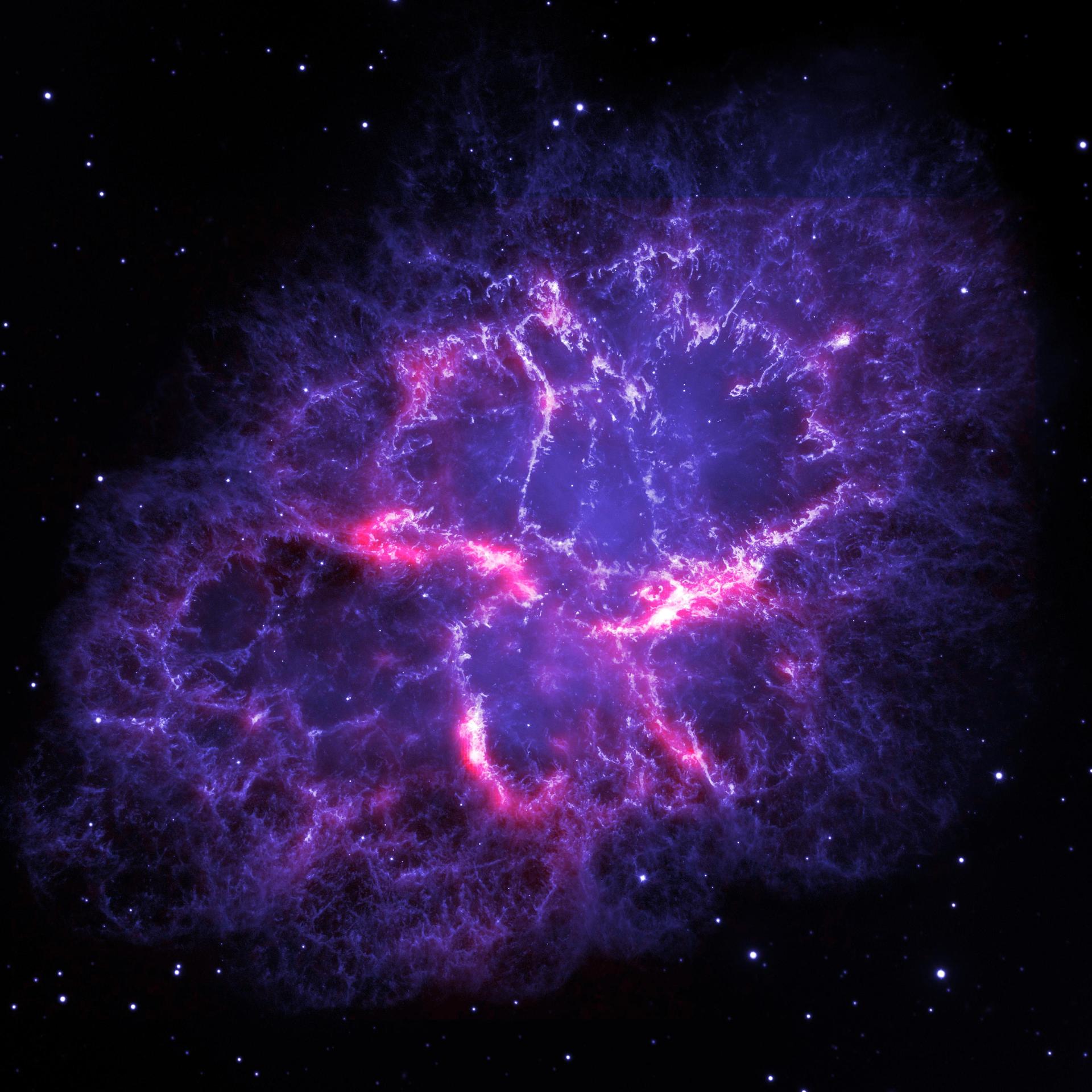

  • Www Energyscience Org Uk Le Le31 Perpetual

    LECTURE No. 31

    THE ENGINEER’S ANATHEMA: PERPETUAL MOTION
    © H. Aspden, 2002

    Professional engineers well know that there is no such thing as ‘perpetual motion’, but we do,
    from time to time, even in this 21st century, hear of those who claim to be able to produce
    motive power as if from nowhere, seemingly in defiance of the Principle of Energy
    Conservation. It surely implies a lack of education in physics and Newton’s laws which
    govern mechanics. Even so, the professional engineer cannot rely too much on physics,
    especially the kind of physics that has evolved from Einstein’s efforts, because there are those
    who see that as pointing a way forward to the day when we can travel through time by
    tunnelling through ‘worm holes’ in the fabric of ‘space-time’ having more than the three space
    dimensions one sees in the engineer’s field of view.

    When Newton devised his laws of mechanics his field of view looking across the surface of
    body Earth may have included the occasional windmill, something that could be seen as
    perpetual motion if one were secluded in a room with a window and had never been outside
    and sensed the power of moving air. One needs to understand the source of the energy input
    to avoid being deceived by the semblance of a device that runs with no power input.

    One may then wonder if we have moved far enough on from Newton’s time, given that we are
    now led to understand that those windmills are seen as our hope for salvation. It is stated on
    page 40 of the July 2002 issue of Physics World, the monthly journal of the Institute of
    Physics, that:

    “The total wind-power resources available offshore are vast – easily enough to
    supply all of Europe’s electricity. Several studies have shown that wind power
    could supply at least one-fifth of our electricity needs by 2010.”

    2010 is not that far into the future, bearing in mind that on February 4th,1923 J.B.S. Haldane
    read a paper to the Society of Heretics in Cambridge which included the passage:

    “Personally, I think that 400 years hence the power question in England may be
    resolved somewhat as follows: The country will be covered by rows of metallic
    windmills working electric motors which in their turn supply current at very
    high voltage to great electric mains. At suitable distances, there will be great
    power stations where, during windy weather, huge reservoirs of liquified gases
    will enable wind energy to be stored, so that it can be expended for industry,
    transportation, heating and lighting, as desired … no smoke or ash will be
    produced.”

    Now, it is not intended here to decry the future prospect of meeting our energy needs by
    harnessing wind-power, nor is it intended to support the bland notion of ‘perpetual motion’,
    but there is something that we engineers should understand concerning Newton’s Laws of
    Motion. There are three such laws, the third law being the one which assures us that Action
    and Reaction are equal and opposite, meaning that there is no way of generating a propulsive
    force without having something external to push against, be it the exhaust gas of a jet engine
    or whatever. There is, however, also a fourth consideration which we know as ‘Newton’s
    Rule’. It is a proposition proved by derivation based on that third law plus the Principle of
    Conservation of Energy. That ‘rule’ asserts that two colliding bodies will separate with a
    relative velocity that has the same magnitude as the relative velocity upon collision but has its
    direction reversed. What this means is that if one squares the relative velocities the result is
    the same before and after impact, meaning that something that is a function of the relative
    velocity squared is itself conserved upon impact. That ‘something’ is energy, but energy of a
    form that was not known in physics in Newton’s time.

    A little consideration will then show that, had Newton asserted his ‘rule’ as a law, then by
    appealing to the Principle of Conservation of Energy he could have deduced instead the ‘rule’
    that action equals reaction. The point one can now make is that Newton’s Third Law need
    not be sacrosanct and can be broken if one has a situation where energy can be deployed, not
    at the moment of collision and immediate separation, but by an interaction across space
    separating the two bodies. This puts us in the realm of electrodynamics, where one
    encounter’s the Neumann Potential and can trace its association to a 19th century proposition
    known as Fechner’s Hypothesis by which one can derive the energy potential of two
    interacting electric charges in motion as being a function of the square of their relative
    velocities. Furthermore, electrodynamics involves so-called ‘field energy’ which is energy
    seated in whatever it is that we refer to as the ‘vacuum’, but which used to be called the
    ‘aether’. Can one ever hope to find a way of pushing against that aether and, in so doing,
    tapping some of its energy?

    The mechanical engineer has, therefore, to yield a little ground to the electrical engineer who
    should struggle to understand the blatant breach of Newton’s Third Law evident from the
    daily use of the Lorentz force law, a law of electrodynamics that tells you that the
    electromagnetic force acting on a moving charge is always directed at right angles to the
    charge motion. You have only to consider two charges spaced apart laterally but moving along
    sharing a mutually parallel motion at the same speed, but one being somewhat ahead of the
    other, and you will see that action cannot equal reaction. There will be a turning couple set up
    by the interaction of the two charges.

    The electrical engineer is not aware of this because he deals with current flow in closed
    circuits where this anomaly has a way of cancelling itself out and the physicist has avoided all
    debate on this issue, which puts the Lorentz force law in question, because the Lorentz
    formulation is supported by Einstein’s theory. However, might one not begin to wonder about
    purported claims concerning ‘perpetual motion’ if they concern apparatus which has unusual
    electrodynamic features? Might one not wonder, just a little, given the search for that Holy
    Grail, the theoretical physicist’s desire to unify the theory of gravitation and the theory of
    electrodynamics, whether there can be anomalies akin to ‘perpetual motion’ claims that
    concern levitation and unorthodox methods of propulsion?

    Accordingly, much as ‘perpetual motion’ can be seen by the professional engineer as
    warranting ridicule, an accursed thing and so an anathema, there is the glimmer of a possibility
    that we may have missed something. Whether our future will come to depend upon windmills
    or whether it will offer us travel forward and back through time as we penetrate those ‘worm
    holes’ in the warps of Einstein’s space-time metric remains to be seen, as may the advent of
    machines which run on a supply of energy drawn from the aether.

    So let us take stock and just listen to the voices that speak of ‘free energy’ or, if that does not
    appeal to the reader, let us simply drift along and be satisfied by what we read in the monthly
    magazines sent to us by our professional institutions. These words are written in August
    2002, the month in which ‘Professional Engineering’ told us on page 3 that various articles in
    that issue “confirm what most people know, but few people want to talk about, that Britain,
    like may other nations, is facing long-term energy crisis …. but, despite the enormity of this
    issue, there seems to be little intelligent debate as to how we will replace these energy sources
    … so it is easier to let the issue drift for another day.”

    An illustration of three windmills was adjacent those words, as was the following statement:
    “Only last month plans to build some of Britain’s biggest wind farms were halted after a court
    upheld Ministry of Defence objections that the turbines affected radar systems. As a result, up
    to two-thirds of the country and vast areas of the sea could be off limits to what is seen as one
    of the most hopeful sources of renewable energy.” So you see, Haldane’s 1923 vision of
    windmill power as the ultimate answer has been thwarted by our need to preserve the later
    discovery of wave power, electromagnetic wave power, that gave us the power to look ahead
    just a few minutes into the future to the see approach of a hostile intruder.

    The alternative scenario, the theme of ‘free energy’ has its own history, dating back to the
    days of Nikola Tesla early in the 20th century, when he tried to convince those in authority in
    USA concerned with power generation that we should tap energy from the aether by setting
    up towers used for electromagnetic wave transmission, meaning real power and not just
    enough for radio communication. Later he was reputed as having demonstrated a car, his
    ‘Pierce Arrow’ car project of 1931 which ran, allegedly, on energy supplied via the aether,
    though history has not bequeathed to us the secret of the technology as to how he did this,
    except that he may have incorporated some electronic components to generate a high voltage.

    Dating from that time there are the well documented records of demonstrations by Dr Henry
    Moray who showed, quite convincingly, that his electric apparatus, as transported by
    automobile to a remote desert location well removed from power lines, could, with the help of
    an antenna mounted a few metres above ground draw enough electric power to illuminate
    many light bulbs and even operate an electric iron. Again, notwithstanding his openness in
    making many such demonstrations, we have not inherited the detail that underlies that
    technology.

    Accordingly, there are amongst us those who, even as qualified engineers, dabble in this area
    of research, seeking for clues that can open the flood gates on a new energy source. The task
    is a daunting one, partly because it is a field which attracts interest only from those who do not
    earn their living as experts on power technology. To put it bluntly, given that anyone who
    might even pay attention to, or give voice to, the idea that one can get a sustainable source of
    energy from the aether or our ambient surroundings, is deemed a crackpot lacking education
    on the basic principles of physics and so would be seen as an outcast by his peers, there is no
    hope. No one in authority will listen to such ideas and be willing to fund research in this field.
    Given also that investors who are themselves scientifically unqualified need proof of viability,
    as endorsed by experts who in turn need to sustain their reputation and credibility, one cannot
    look in that direction for funding nor is it proper for this important but ill-defined research
    field to be left at the mercy of ad hoc ventures of this kind.

    However, so far as our United Kingdom interests are concerned, it is not money and
    investment that afford the means for moving ahead. There is, instead, as Lee Hibbert states on
    that page 3 of the August 2002 issue of ‘Professional Engineering’, simply a need to
    “provoke some serious, wider debate on the issue of Britain’s future energy supplies” but “at
    the centre of that debate must be engineers – the only people capable of delivering the
    solutions.” The proviso, however, must also be that, in widening the debate, provision is
    made for the voices of those who are professionally qualified engineers but happen to have
    views on ‘unconventional’ alternative sources of energy, as guided by the influence of factors
    not embraced by the strict rule of law that dominates our formal indoctrination concerning
    energy.

    That reference above to Newton’s rule and Newton’s Third Law of Motion is an example of
    the kind of nuance in the background to our formal training that could be important. It has a
    counterpart in electrodynamics, as already mentioned, but which emerges technologically as
    the anomaly observed by electric discharges in ionized gas, where there is an unaccountable
    back-reaction force on the cathode of the cold arc discharge – the technology of the mercury
    arc rectifier of the early years of the 20th century. One needs therefore to be attentive to those
    who claim excess power generation from electrical apparatus that incorporates discharge tubes
    containing gas at quite low pressure. Two such devices, one claimed by an inventor in U.K.
    [1] and one by inventors in Canada [2], have been demonstrated and been granted U.S.
    patents, but the world has yet to benefit from their onward development, seemingly suppressed
    by lack of interest in the right quarters. At least the debate should welcome those with
    technical opinions on the factors at work in such devices.

    There is also of record an example of a case involving thermodynamic principles, one
    demonstrated here in U.K., in Edinburgh, Scotland, some 12 years ago, but now buried in
    history [3]. It was something discovered as spin-off from some piezoelectric research
    concerned with a device helpful in a clinical application. The slightest heat input made an
    electrical circuit unexpectedly responsive. Eventually, what emerged from a little ingenuity in
    probing that phenomenon was a component little greater in size than a stack of three 50p coins
    mounted on a heat sink base, which, when a small ice cube was placed on it, delivered from
    that component a small amount of electric power, but an amount sufficient to run an electric
    model motor driving a model aircraft propellor. The ice melted much more quickly than for
    the case where the motor was disconnected, but for several minutes, and here the small
    temperature difference of 20o C was converting the latent heat of ice into electrical power.
    Research effort on this was abandoned owing to lack of investment interest and, after several
    months of testing, the evident deterioration of the component, the reason for the latter never
    being resolved.

    However, one had to wonder how the laws of thermodynamics could explain
    what was observed. The energy input was heat energy drawn into the ice from the heat sink
    and so the room temperature environment, much of that heat energy being merely conducted
    through the component, but some of which was converted into electrical energy as a low
    voltage direct current. Here, however, one had an example of something involving energy
    conversion that seemed to break the rules governing thermodynamics. There had to be loss owing to thermal conduction through the electrically non-conductive interface between the metal surfaces used as electrodes and the component as well as electrical ohmic resistance losses in what was a self-oscillating a.c. current device and the rectifier components used to convert the generated current into d.c. output. Yet these were ignored in judging overall performance. Certainly, one suspected that here there was energy conversion with a higher efficiency than theory implied.

    On the same subject, though not recognized when the research was performed in the 1950 era,
    several university projects have addressed the problem of the anomalous power loss in electrical
    steels as used in power transformers. Eddy-current losses can be several times greater than
    they should be according to established theory. What no one at the time even contemplated
    was that the heat generated and conducted away through the steel laminations could, en route,
    be, in some measure, converted back into electrical form, thereby inducing EMFs which could
    enhance the circulating eddy-currents and so cause the loss to escalate. An anomaly factor of
    6 was measured in one research project [4] and a loss factor of 10 later reported for a specific
    situation [5], though a factor of 1.5 was the norm in standard situations. An expert in
    thermodynamic theory should ponder on the question of how, in a power transformer where
    the temperature differential between sections of the core can be no greater than, say, 40o C, it
    is possible for heat to be regenerated as electricity on the scale required to explain the
    phenomenon observed. Indeed, unless the second law of thermodynamics with its Carnot
    limitations is contravened, that eddy-current anomaly phenomenon remains an unsolved
    mystery facing future generations of would-be power engineers.

    One should wonder why what is known as the ‘Nernst Effect’ or the ‘Nernst-Ettinghausen
    Effect’ has been shelved as history, rather that explored further in the context of
    thermodynamics. It concerns heat flow in metal subjected to the action of a transverse
    magnetic field and the generation of an EMF in the mutually orthogonal direction as a
    function, not of absolute temperature, but of temperature gradient. That gradient is a measure
    of rate of heat flow and that EMF arises from some of that heat converting into electricity but
    so converting without being governed by the actual temperature locally, as applies where
    Carnot principles hold. There can therefore be 100% efficient energy conversion between heat
    and electricity under certain circumstances, simply because any energy not so converted can
    only revert to heat but certainly not at a lower temperature. This occurs at one position
    without the sting in the entropy tail, as it were, of having to pay the price for a round trip
    where, confined within the converter itself, that electricity has to traverse a junction at a
    different temperature. The latter scenario is the one where the second law of thermodynamics
    prevails. Note that the phenomenon of the Nernst-Ettinghausen Effect is particularly strong in nickel and that much of the heat conducted through Strachan’s device was through nickel, a ferromagnetic material in which there are domains within its crystal composition that are intrinsically fully magnetized.

    Imagine then a future where, guided by debate and a good measure of effort and ingenuity, we
    can one day combine standard heat pump technology to convert electricity into heat with a
    coefficient of performance of 5, say, and then deploy that heat back into electricity with, say, a
    75% conversion efficiency using apparatus in which nickel or steel is fabricated into an
    assembly specifically designed to exploit the Nernst Effect. That would amount to a kind of
    perpetual motion device by which we could generate electricity as if from nowhere, but really
    by tapping the ambient heat energy of our environment and cooling that in the process. Such a
    dream seems impossible, something bordering on the absurd, but can we really be sure? Are
    our laws of thermodynamics sacrosanct?

    Indeed, are our laws of mechanics and our laws of electrodynamics also sacrosanct? If so,
    then why do we encounter the occasional anomaly and, unable to spot the mistake if such
    there is, allow it to pass by as a nine-day wonder? Surely, we need to address the subject, not
    as judges awaiting the presentation of clear evidence by contending parties, but rather as
    humble, albeit professional, engineers, fully mindful of the established facts of physics, fearful
    of a destiny that deprives us of our energy needs and open to genuine debate in a constructive
    atmosphere, giving those few who do have the necessary ideas and inspiration a fair chance to
    get their message across. That debate can only begin when those who have been active in the
    forum of ‘free energy’ are identified and duly invited to contribute to the research agenda, the
    emphasis being, not on lecturing, but on opening and pursuing meaningful discussion amongst
    workshop groups of limited size.

    Remember the point that if one can develop an out-of-balance thrust force in contravention of
    Newton’s Third Law of Motion then one is on the doorstep giving access to a new source of
    energy drawn from the aether itself. We are told it is impossible. If that is the case then why
    is it that we now read about the anomalous acceleration force experienced by spacecraft
    Pioneer 10 and Pioneer 11? It is as if the G, the constant of gravitation, has changed its value
    during the flight. Of even more significance is the fact that NASA scientists are able to claim
    the discovery that the use of a capacitor of asymmetrical structure charged to a high voltage
    develops linear thrust force that (quoting from Patent 6,317,310 recently granted to United
    States of America by its own Patent and Trademark Office) features in:

    “A linear accelerator which can be used to launch payloads or other similar
    applications.”

    Unfortunately, there is no reference to experimental proof of this in the specification of that U.S. Patent and so one suspects that it is based more on wishful thinking that fact.

    Evens so, if it were to be possible, to use a capacitor and a high voltage priming source, the latter not delivering energy except
    as a one-off initial priming charge, to generate a propulsive force asserted on the vacuum
    medium (the aether), then that implies energy transfer to or from that aether, a continuous flow of
    energy. The secret of the ‘free energy’ power generation by Dr. Henry Moray, whose
    apparatus was known to involve, essentially, large capacitors, is surely linked to drawing that
    capacitor priming charge from atmospheric electricity via that antenna he used, but there was also something special about those capacitors that allowed them to interact force-wise with the
    vacuum medium to tap its energy resource and so deliver power continuously. This is a subject which the author has discussed in detail elsewhere [6].

    Should we therefore wait for those windmills or can one hope that the Institution of
    Mechanical Engineers and also the Institution of Electrical Engineers, if not the Institute of
    Physics, will initiate action to bring the these fringe elements of the unorthodox energy
    spectrum into the ongoing debate concerning sustainable energy in our future.

    REFERENCES

    [1] G. M. Spence, US Patent No. 4,772,816, ‘Energy Conversion System’, 1986.

    [2] P. N. Correa and A. N. Correa, US Patent No. 5,416,391,‘Electromechanical
    Transduction of Plasma Pulses’
    , 1995.

    [3] H. Aspden and J. S. Strachan, Electricity without Magnetism, Electronics + Wireless World, vol. 98, pp. 540-542 (July 1992).

    [4] H. Aspden, Proc. I.E.E., vol. 103C, pp. 279-285 (1956) and vol. 104C, pp. 2-7 (1957).

    [5] F. Brailsford, ‘The Principles of Magnetism’, D. Van Nostrand, London, Fig. 10.11(c), p.
    239 (1966).

    [6] H. Aspden, Conference Paper: Our Future Energy Source – The Vacuum!, 2nd Berlin Congress for Innovative Energy Technologies, Binnotec e.V., Berlin, June 13-15, 2002. LECTURE 27.

    ***************

    H. Aspden
    August 28, 2002

  • LECTURE NO. 30

    LECTURE NO. 30

    The Aspden Effect

    Copyright © Harold Aspden, 2002


    The basis of this Lecture is the text quoted below of an item published in February 1995 in New Energy News, which was followed by a commentary by the Editor who stressed its significance and assigned it the name ‘ASPDEN EFFECT‘. he followed his remarks by an item headed ‘A CHALLENGE TO OUR READERS’ in which he stated “Many of you have asked for something that you could replicate. Here is a good one. …..” He ended by saying: “We also ask any of you theorists …. to give us some help to begin to understand the Aspden Effect.” After the passage of more than seven years, I have decided here to return to this topic and see how far I can go in clarifying the issues raised.

    INTRODUCTION

    I have seen the need for this after receiving an E-Mail enquiry in June 2002 from someone who had heard mention of the ‘Aspden Effect’ but was in search of the information source as he had in mind seeking to replicate the experiment involved. Also, it was on June 15th, 2002, after delivering my presentation at a conference in BERLIN in the presence of Dr. Hal Fox, the Editor of New Energy News, that during the question session he said I had not mentioned the Aspden Effect. The subject of my talk in Berlin did have a related underlying theme and I will explain that in what I have to say below. First, however, one needs to read what follows next as the item I wrote for that February 1995 issue of New Energy News.

    DISCOVERY OF ‘VIRTUAL INERTIA’

    I report an anomalous energy phenomenon found in my motor experiments.

    Imagine an electric machine having no electrical input itself and which, when started on no load by a drive motor and brought up to speed (3250 rpm), thereafter runs steadily at that speed with the motor drawing a little extra input power with a time delay rate of about two minutes. The machine rotor has a mass of 800 gm and at that speed its kinetic energy together with that of the drive motor is no more than 15 joules, contrasting with the excess energy of 300 joules needed to satisfy the anomalous power surge [to spin up from rest].

    Imagine further that when the motor, after running five minutes or more, is switched off and the machine is stopped, you can restart it in the same or opposite direction and find that it now has a memory in the sense that it will not now ask for that 300 joules of excess input. 30 joules will suffice provided that the time lapse between starting and restarting is no more than a minute or so.

    This is not a transient heating phenomenon. At all times the bearing housings feel cool and any heating in the drive motor would imply an increase of resistance and a build-up of power to a higher steady state condition.

    The experimental evidence is that there is something spinning of an ethereal nature coextensive with the machine rotor. That ‘something’ has an effective mass density 20 times that of the rotor, but it is something that can spin independently and take several minutes to decay, whereas the motor comes to rest in a few seconds.

    Two machines of different rotor size and composition reveal the phenomenon and tests indicate variations with time of day and compass orientation of the spin axis. One machine, the one incorporating weaker magnets, showed evidence of gaining strength magnetically, as the test were repeated over several days.

    I will soon be reporting in detail on these findings, after further work and evaluation of the implications. The phenomenon was something I should have been prepared for, having regard to my years of theorizing, but this discovery was unexpected as it has crept in loud and clear in a project aimed at testing a motor principle totally unrelated to ‘vacuum spin’. It has appeared obtrusively and I do not yet know whether, in adapting to its presence, it can serve in improving machine performance or become detrimental.

    Readers who are curious about my more general research endeavors may find interest in the specification of U.S. Patent No. 5,376,184 granted to me on December 27th 1994. In connection with the subject of this particular communication I quote from lines 3 to 28 of column 21 of that patent:

    “Now, in a practical device, one can similarly set up electric fields in a metal rotor by displacing those charge carriers, either by inertial action or the action of a magnetic field directed along the spin axis. However, even here physicists have problems understanding the phenomena they observe, as one may see from the scientific paper by James F. Woodward: Electrogravitational Induction and Rotation, Foundations of Physics, 12, pp. 467-478 (1982). On page 472 one reads, after a statement that machine operation produced induced charge in evidence from a voltage:

    Plainly, an effect of some sort is present. Since a negative charge appears during spindown, we may infer either that (1) an initially present positive charge disappears during spindown, or (2) some process drives the sample case to negative potentials during spin-down. The genuine disappearance of charge from the sample/sample-case assembly would be, of course, prima facia evidence for the existence of electrogravitational reduction.

    What this means is that electric charge can be held displaced within a metal to set up electric field gradients in that metal. Woodward did this by inertial spin action, possibly affected by the earth’s field, but a similar result can be obtained by building a series-connected capacitor stack.”


    BACKGROUND OF THE PROJECT

    The research giving the above spin-off was a project funded by the Department of Trade and Industry of the U.K. owing to my having competed successfully in 1994 for what was termed a ‘SMART’ award, a ‘Small Firms Merit Award for Research and Technology’. It provided funding for one year to engage in preliminary research on the subject offered for the competition, which was, in my case, a motor project involving magnets mounted to spin about their axes of magnetization. I was fully retired (being already 66 years of age) and no longer had use of the laboratory facilities where I had spent 9 years as a Visiting Senior Research Fellow after retiring early from my career employment with IBM.

    Since I was building the motors myself and was anxious to progress as rapidly as possible, I had to shelve, as it were, the fascinating side-line research avenue that opened up with the above discovery, owing to the time pressure and the limited period of funding for the objective that had been set. I may also say that I encountered another phenomenon that still baffles me concerning a later motor built as part of that effort. That motor was a d.c. motor able to run in either of its two directions, but, if set running in a clockwise sense, it would run for two or three minutes drawing its necessary drive power from the supply, but then it would start to slow down and come to rest just transiently as it switched itself over to anti-clockwise rotation, before rapidly gaining speed in that preferred sense. This did not make sense, given that it had started to run well in the clockwise direction and had received no impulse giving it an initial inertial motion in that direction.

    The early background relevant to the topic here discussed is that, at the time when I left IBM, where I had for many years held a senior position as Director of IBM European Patent Operations, to revert to my academic scientific interests, and with IBM’s generosity had secured university facilities for my research, I had then engaged in one experiment aimed at testing my ideas concerning ‘vacuum spin’. The idea behind this is that if one can set up a radial electric field, meaning one emanating from a spin axis, and that axis happens to be in-line with an axis in the vacuum medium about which there is the quantum jitter of a very high speed circular motion of very small radius shared by all matter, then that radial electric field might induce spin by that vacuum medium itself. That quantum jitter, by the way, is the so-called ‘Zitterbewegung’ that underlies Heisenberg’s Principle of Uncertainty in quantum theory, by which neither position nor momentum are certain, but multiply the two together and you get a definite quantum of angular momentum h/2π, where h is Planck’s constant of action. I have good reason to believe that matter acquires that jitter property by sharing it with a universal activity in the aether itself, or the ‘vacuum medium’ should the word ‘aether’ seem inappopriate terminology to a physicist who may read this.

    Unfortunately, at the time (the 1985 period), I used a non-conductive rotor which I subjected to a voltage gradient of 12,000 V/cm between the spin axis and an copper cylinder, in my efforts to sense a possible inertial anomaly evident from spin-up and spin-down tests. This assumes a possible modest exchange of angular momentum between the vacuum medium and the rotor. Although some spurious effects were noticed that effort was somewhat futile. It was only some eight or so years later that I came to realize that I ought to have used an electrically conductive rotor subjected to an axially–directed magnetic field, the so-called homopolar construction or Faraday disk construction, looking, not for power output by drawing current through the disk, but rather the inertial anomaly I had sought earlier in my experiments.

    Having by that time heard of certain ‘over-unity’ energy claims based on electric motors incorporating magnets spinning about their axes of magnetization, I could but then wonder if my interest in the ‘vacuum spin’ concept as aroused by my theoretical physics research could advance by engaging myself in motor experimentation. Hence, my application for that ‘SMART’ award.

    However, in pursuing that research, my prime object was that goal of ‘over-unity’ performance and this may account for much of what I have reported on separately in my ‘ENERGY SCIENCE REPORTS’. Now, however, I face the facts, the passage of time and the unfulfilled resolve, as stated in that New Energy News item above, that I would later be reporting in detail on the findings there outlined. The question at issue also is: “How does a reader of that account know what to build to replicate the findings, given that no details are provided?”

    Well, I intend here to remedy this as this preliminary draft of this Lecture develops. I can say that the main motor that revealed the anomaly mentioned in the New Energy News account is the one illustrated and described in my ENERGY SCIENCE REPORT No. 9, which I will soon be making available on this website. Meanwhile, I am putting this partial draft on record now, owing to having just included that New Energy News item in the bibliographic reference collection that appears now on my separate website www.aspden.org in the ‘papers’ section.


    H. Aspden
    21 July, 2002