Crab Nebula (M1) — supernova remnant imaged by Herschel and Hubble Space Telescopes

Category: Books

Book excerpts and book-length works

Crab Nebula (M1), supernova remnant · ESA/Herschel/PACS; NASA, ESA & A. Loll/J. Hester (Arizona State Univ.) · NASA Image Library ↗

  • Aether Science Papers (p. 69)

    AETHER SCIENCE PAPERS

    An insight into the creative vacuum
    and its hidden source of power,
    the scientific foundation for
    21st century energy technology

    BY

    HAROLD ASPDEN

    ******

    Copyright © Harold Aspden, 1996

    All rights reserved

    ISBN 0 85056 015 2

    First published July 1996

    The scientific papers which constitute Part 2 of this text are the subject of copyright protection by the publishers of the Hadronic Journal and Physics Essays. The author expresses his appreciation to the respective Editors of those periodicals, Dr. R. M. Santilli of the Hadronic Press, Inc., Palm Harbor, Florida, USA and Dr. E. Panarella of Advanced Laser and Fusion Technology, Inc., Hull, Quebec, Canada for their kindness in permitting reproduction of his papers in this work.


    Aether Science Papers: Part II

    THE APPENDED PAPERS

    This is a list of the fourteen papers which form the 96 page Appendix added to the text of Part I. The papers are of published record in the scientific periodicals referenced as well as in the consolidated publication Aether Science Papers, copies of which are still in print and so may be purchased from booksellers. These 14 papers are also now reproduced in these web pages.


    [1] …. ‘The Theoretical Nature of the Neutron and the Deuteron’

    Hadronic Journal, 9 129-136 (1986) 1986d.pdf

    [2] …. ‘Meson Production based on Thomson Energy Correlation’

    Hadronic Journal, 9 137-140 (1986) 1986e.pdf

    [3] …. ‘An Empirical Approach to Meson Energy Correlation’

    Hadronic Journal, 9 153-157 (1986) 1986j.pdf

    [4] …. ‘The Physics of the Missing Atoms: Technetium and Promethium’

    Hadronic Journal, 10 167-172 (1987) 1987a.pdf

    [5] …. ‘Synchronous Lattice Electrodynamics as an Alternative to Time Dilation’

    Hadronic Journal, 10 185-192 (1987) 1987b.pdf

    [6] …. ‘Instantaneous Electrodynamic Potential with Retarded Energy Transfer’

    Hadronic Journal, 11 307-313 (1988) 1988a.pdf

    [7] …. ‘The Theory of the Proton Constants’

    Hadronic Journal, 11 169-176 (1988) 1988b.pdf

    [8] …. ‘Conservative Hadron Interactions Exemplified by the Creation of the Kaon’

    Hadronic Journal, 12 101-108 (1989) 1989d.pdf

    [9] …. ‘A Theory of Proton Creation’

    Physics Essays, 1 72-76 (1988) 1988c.pdf

    [10] … ‘The Theory of the Gravitation Constant’

    Physics Essays, 2 173-179 (1989) 1989b.pdf

    [11] … ‘A Theory of Pion Creation’

    Physics Essays, 2 360-367 (1989) 1989c.pdf

    [12] … ‘Standing Wave Interferometry’

    Physics Essays, 3 39-45 (1990) 1990a.pdf

    [13] … ‘The Theory of Antigravity’

    Physics Essays, 4 13-19 (1991) 1991a.pdf

    [14] … ‘Retardation in the Coulomb Potential’

    Physics Essays, 8 19-28 (1995) 1995e.pdf


  • LECTURE NO. IIIa

    LECTURE NO. IIIa

    WHY EINSTEIN WAS WRONG: PART I

    Copyright © Harold Aspden, 1997

    In these Web pages I plan to summarize my case for proving that
    Einstein’s theory, whether it be his Special or General Theory of
    Relativity has no merit whatsoever.
    As can be seen from the above heading, there will be two Parts
    to my attack on Einstein territory.
    This Part I is my incursion based on a little brain-washing by
    propaganda or common sense, whichever viewpoint you choose to adopt.
    It should be enough to convince most scientifically-minded
    readers, but scientists can be stubborn, as history shows. Part II, now included in these web pages as LECTURE IIIb is a completely separate account, written without assuming knowledge of
    this Part I material, and intended to convince the experimentally-minded physicist that Einstein’s theory is just plain wrong.
    Experiments prove it to be wrong! I will refer to experiments that
    were performed in accredited laboratories or observatories, the
    results of which the scientific world have brushed under the carpet
    to avoid the issues they raise.

    If the reader is a cosmologist or a professor who teaches the
    mathematics of Einstein’s theory then there may be an unshakable
    conviction that I cannot penetrate. That person, if willing to
    browse through what I have to say, may find that Part II is best read
    first, but Part I must not be forgotten. What I am saying will not
    go away. It has to be faced and I have to be proved wrong, point by
    point, before it can be taken for granted that I am launching myself
    as a misguided weapon on the Internet scene.

    I will now begin my Part I discourse.

    There used to be a saying in England which applied to someone
    who attempted to force something to fit where common sense should
    tell us that it is impossible. ‘You cannot squeeze a pint into a
    half-pint pot!’
    Yet scientists who dominate thought in the academic community
    concerned with cosmology and theoretical physics believe
    wholeheartedly that Einstein did achieve the impossible. He managed
    to convince the academic theoreticians that it was possible for
    different observers to see space as having different forms, simply
    because he wanted to keep the speed of light constant relative to
    each and every observer, wherever that observer may be located.

    Now, of course, members of that community take strength from one another, trusting that, if they have doubts, someone in their flock really understands Einstein’s theory better than they do themselves. They do not want to reveal their own inability to comprehend that which
    their peers understand so clearly! They are semi-blind, led by the
    semi-blind and they lead the semi-blind! Ask yourself why, if four-space has any meaning, all the experiments which are said to present
    data supporting such theory present those results in the familiar
    units of three-space with time as a separate dimension.

    The logic of the steps involved can be listed as follows:
    (i) Objective: We want to put a pint in a half-pint pot.
    (ii) Stage 1: Devise a mathematical way in which to transform a half-pint pot into one that appears larger on a computer screen.
    (iii) Stage 2: Write a computer program which shows a graphic picture
    of your half-pint of liquid being poured into that pot.
    (iv) Stage 3: Run the program to enjoy the illusion and then save the
    recorded images in your computer.
    (v) Stage 4: Invite others to see your program running so they can
    witness the pint being poured into the half-pint pot.
    (vi) Stage 5: Produce a print-out summarizing what has been seen and
    authenticated, in a readable version of text now using the standard
    language of three-space.
    (vii) Stage 6: Publish your findings as ‘physics’ and declare
    ‘Eureka’.

    If you really believe Einstein’s theory then please tell me
    when we will have optical instruments and electrical measuring
    equipment that are calibrated to register directly as four-space
    measurements. Otherwise, read the following article and then tell me
    what, in that article, you cannot accept! It was written and
    published in 1986. I still await reaction and comment. Now that I am
    putting it on Internet, I urge you to give it your serious attention
    and ask yourself why the points I make are not discussed with
    students as part of the standard relativistic teaching. Remember
    that Einstein’s theory is not something that has ever been proved by
    experiment. It is a philosophical viewpoint, a matter of opinion,
    just as was the hypothesis that the Earth was flat, before it was
    circumnavigated. However, what I am saying is not philosophy. It is
    the kind of science that an engineer can understand, meaning of the
    kind that delivers results and not just a string of mathematical
    symbols, but also provides design data that checks qualitatively as
    well as quantitatively with what is actually measured.

    THE MYSTERY OF MERCURY’S PERIHELION

    The following is the text of an article I wrote that appeared
    in the July 1986, v. 5, No. 2 issue, of ‘The Toth-Maatian Review’ on
    pp. 2475-2481. The editor of this periodical is, I believe, a
    disillusioned physicist who, in his retirement years, decided to run
    his own publishing house to give attention to opinions which were not
    in favour with editors of the more orthodox publications.

    Note that the orbit of a planet around the Sun is elliptical in
    form, but the orientation of the major axis of the orbit, as judged
    by reference to the background of distant stars, can be seen to
    change very gradually. It may take tens of thousands of orbital
    revolutions before the major axis turns through 360 degrees, but turn
    it will, owing to energy transfer involved in gravitational effects
    within the multi-body solar system. That slow turning motion, or
    rather a small anomalous component thereof, is what we have in mind
    when referring to the anomalous perihelion advance of a planet.

    The title of this 1986 article, which now follows, is:

    ‘The Mystery of Mercury’s Perihelion’

    Anyone interested in Einstein’s theory of relativity usually
    acquires that interest by first learning that, because our Earth is
    moving at high speed through space and because our measurements in
    the laboratory seem immune from that motion, our viewpoint of
    physical phenomena must be specially favoured. What we see and
    measure seems, relative to us, to be rather special and Einstein’s
    special theory of relativity exploits that feeling.

    The problems begin when we encounter the abstraction of a four-dimensional space interwoven with a time which ‘dilates’ as we move
    faster and faster. We are sceptical, and rightly so, but we have
    respect for those who lead us along the path of truth. When we ask
    how 19th century physics coped with this basic problem we then find
    that Newtonian mechanics has a built-in relativistic mechanism. It
    gives the answer quite well by the down-to-earth physics governing
    our daily lives, because Newton’s laws hold up if referenced on any
    frame of reference in steady motion. We are then guided into the
    problem of deciding between the action-at-a-distance effects implicit
    in Newton’s theory and the problems of the finite propagation speed
    of light. The latter suggest retarded actions in an aether, but we
    are assured that nobody has found a way of measuring our motion in
    the laboratory by tests referenced on this medium and that, if we
    turn to Einstein for enlightenment and forget Newton, then we can
    forget the aether too. Our future in physics lies, we are told, not
    in action-at-a-distance, but in Einstein’s field theory and its
    distorted space-time metric.

    Should we still drag our feet, and perhaps the aether along
    with us, then we are dealt the ‘coup de grace’ to put us out of our
    misery. Einstein’s theory predicted something that lies outside
    Newton’s world. Einstein obtained an equation that not only explains
    why light bends in acknowledging the stars it might be passing, but
    it also gives us reason to expect that the perihelion of planet
    Mercury must advance anomalously at a rate of about 43 arc seconds
    per century. The bending of light (refraction) was a subject that
    interested Newton too, as was the perturbing effect of astronomical
    bodies on the motion of other such bodies. Indeed, most of the
    actual perihelion motion of a planet is fully explained by Newtonian
    theory when applied to multi-body systems. It is the small amount of
    43 arc seconds per century that needs explanation in the light of the
    fact that Newton relied on action-at-a-distance, the instantaneous
    action of force in regulating the motion of planets.

    General relativity, once added to the base of special
    relativity, stands as an impregnable fortress in the eyes of those
    who speak on these issues. Relativity becomes the all-pervading
    regulator of our physical science. It has been sanctified and is
    beyond challenge and we are now no longer allowed to question its
    doctrines.
    However, whatever the ordinary-minded individual might think at
    heart, there is something unsettling when eminent authorities on
    relativity can suddenly see new light and then become so hostile to
    the subject and its flaws that they turn to attack it.

    The reader may have little concern about Einstein’s theory and
    the strength it derives from Mercury’s perihelion, which helps to
    hold in place a misguided belief in dogma that can obstruct
    technological progress to the benefit of mankind. There are those
    amongst us, however, who must pay due attention and be concerned.

    Herbert Dingle, as emeritus professor in the University of
    London in England, had written two books on relativity in his early
    years, ‘Relativity for All’ and ‘The Special Theory of Relativity’.
    Later he found that he could prove it was false, but no one was
    prepared to give him much of a hearing, so he eventually wrote
    ‘Science at the Crossroads’, published in 1972 in London by Martin, Brian and O’Keefe. It is a damning account beginning with the assertion that it is supposed to be so abstruse that only a select body of specialists can be expected to understand it, but that in fact most leaders in science, particularly experimentalists, regard the theory as nonsense but accept it because a few mathematical specialists in the subject say they should.

    Another scientist, whose main activity was the measurement of
    frequency and time during the 44 years he spent at the National
    Physical Laboratory in England, realized the error in Einstein’s
    theory early in his career. He became a Fellow of the Royal Society
    and earned distinction for his measurements of the velocity of light
    by a cavity resonator, besides building the first caesium clock in
    1955. When he retired he published a paper explaining why relativity
    was in error. The reasons are perhaps less telling than some of the
    side remarks he makes in this inspiring article: ‘Relativity and Time Signals’ in Wireless World of October 1978, published in U.K. These include:

    ‘The theory is so rigidly held that young scientists dare not openly express their views’.
    ‘I was warned that if I persisted (in refuting Einstein’s
    theory) I was likely to spoil my career prospects’.
    ‘The general public is misled into believing that science is a
    mysterious subject which can be understood by only a few
    exceptionally gifted mathematicians’.
    ‘Students are told that the theory must be accepted although
    they cannot expect to understand it. They are encouraged right at the
    beginning of their careers to forsake science in favour of dogma’.
    ‘…the continued acceptance and teaching of relativity hinders
    the development of a rational extension of electromagnetic theory’.

    Dr. Essen argued the absurdity of Einstein’s theory by
    reference to its paradoxical effects on time but ended with comments
    under the heading ‘A Hope for the Future?’ in which he wrote:

    ‘There are fortunately a few writers who are breaking with
    tradition and developing new ideas which may be fruitful. In this
    country (England) there are two small volumes by H. Aspden ….’

    It was here that Dr. Essen drew attention to this writer’s
    books ‘Physics without Einstein’ and ‘Modern Aether Science’, published in 1969 and 1972, respectively.

    Outside the realm of the relativistic specialists, who would of
    course be asked to review any book challenging relativity, the first
    of these works was well reviewed by Aslib Book List in U.K.: ‘An
    extremely well-written and challenging book which should be read by
    all physicists’
    and by ‘Geophysics’ in the USA: ‘The reviewer
    welcomes this new and stimulating challenge of the orthodox views of
    modern physics … well-written … a bargain’
    . However, in spite of this, the will to believe in relativity is strong and the chances are that very few readers of this paper have even heard of Dr. Essen or these books by this author.

    Amongst the eminent who have philosophized on these scientific
    matters is Alfred North Whitehead. He wrote a work [‘The Principle of Relativity with Applications to Physical Science’. See his ‘An Anthology’, Cambridge University Press, U.K. p. 356 (1953).] He set out to provide an alternative rendering of the theory of relativity, yielding as best he could to Einstein’s methods, but trying to keep what he calls ‘the old division between physics and geometry’. He acknowledges Einstein as a genius for assimilating space and time but declares ‘the worst homage we can pay to a genius is to accept uncritically formulations of truths which we owe to it’. He levies quite serious criticism against the theory, but makes concessions which leave things in the air, as it were. So here is the philosopher who is also puzzled but is carried along by the common acclaim for the Emperor’s invisible suit of clothes. [At this point in this paper, Harold Milnes, the Editor of The Toth-Maatian Review interjected the following footnote: ‘Hans Christian Anderson never recounted the rest of the story:- how, after the small child exposed the Emperor’s nudity, the crowd became ashamed and then how everyone took off his clothes too, in reverent support of his Majesty’s majesty.’]

    Whitehead makes his point as follows:

    ‘The effects of rotation are among the most widespread of the apparent world, exemplified in the most gigantic nebulae and in the minutest molecules. The most obvious facts about rotational effects are their apparent disconnections from outlying phenomena. Rotation is the stronghold of those who believe that in some sense there is an absolute space to provide the framework of dynamical axes. Newton cited it in support of his doctrine. The Einstein theory in explaining gravitation has made rotation an entire mystery.’

    From this summary of attitudes by those who have studied
    relativity in depth, we should, it seems, not be too impressed by
    those in authority in this field; relativity could be plain wrong.
    So let us look at just one of its claims to fame, the background to
    Einstein’s work on the anomalous perihelion motion of the planet
    Mercury.

    At the outset of this discussion the author emphasized that it
    is presumed that the measured value of this anomalous rate of advance
    is 43 arc seconds per century, a value which fits the formula derived
    by Einstein. It remains debatable whether Einstein should have
    allowed a factor for solar oblateness. This could destroy his theory,
    but Establishment science prefers to look the other way on this
    point, hoping the issue will die a natural death.

    There is also room for debate on whether Einstein’s theory
    contains a major flaw. This is where its abstruse nature tends to
    hide its blemishes. The basic paradox in the eyes of this author
    arises because the governing equations of motion under gravity are
    worked out in the four-dimensional metric to a point where the
    resulting equation has, of necessity, to be interpreted in a three
    dimensional space in order to have any relation to what is measured.
    However, the equation that emerges is not one specifying the position
    of the planet at a given time or in relation to planetary velocity.
    It is a quadratic equation which is solved in linear form in order to
    give the measured quantities. The solution involves a mathematical
    process which owes nothing to relativistic method; it is strictly
    analysis of the dynamical equation in three-dimensional space, a
    mathematical exercise which the non-relativist can understand. The
    equation to be solved involves an angular momentum term h, which is
    interpreted as the velocity moment of the planetary motion about the
    Sun. The equation is solved on the assumption that h is constant, as
    it would be in Newtonian theory because angular momentum is conserved
    and mass does not vary with speed. The solution gives the equation
    for 43 arc seconds advance, so all seems well. However, what has
    happened to the observation that mass increases with speed? How can
    this result of special relativity be suddenly ignored because we have
    arrived at a partial result using general relativity and made the
    last step by reliance on Newtonian assumption?

    Unless someone can explain why the mass of a planet in orbit
    is constant in spite of change of speed, the real solution would be
    way off Einstein’s 43 arc second figure. It is submitted that this is
    a direct contradiction in Einstein’s analysis; it is not consistent
    with relativistic method. Somehow general relativity can forget that
    mass increases with speed and adopt a constant h factor in line with
    Newtonian theory, merely by moving the analysis into four space-time
    dimensions. However, the nonsense involved in this seems to show up
    when the analysis stops short of answers that can be compared
    directly with observations in the real world and makes the last leg
    of the journey in a language that does have real meaning. This
    paradox has not, so far as the author is aware, been dealt with in
    the science literature. The author’s views on it have just appeared
    in a science periodical [H. Aspden, Lett. Nuovo Cimento, v. 44, p.
    705 (1985)], but its readers will assume that someone more familiar
    with relativity will be able to dispose of the problem.

    On this latter point we can already see the escape route
    forming by a few words in a paper by Phipps:

    ‘The tendency of modern authorities is to dismiss ‘mass
    variation with velocity’ as an artifact of the possibly misguided
    attempt to express momentum in a celestial way.’

    Phipps has just published this paper in the American Journal of
    Physics, v. 54, pp. 245-247 (1986), showing how Mercury’s perihelion
    advance can be explained according to special relativity. He uses
    planetary mass variation of the planet, as did the famous American
    physicist H.E. Ives, to achieve this result. [H.E. Ives, Jour.
    Optical Soc. Am., v. 38, p. 413 (1948)]. In such analysis very much
    depends upon whether translation from energy equations to force
    equations requires angular momentum or planetary velocity moment to
    be constant. What some writers such as Surdin [M. Surdin, Proc.
    Camb. Phil. Soc., v.58, p. 550 (1962)] regard as a 7 arc second
    contribution to perihelion from the special relativity formula can
    become a 21 arc second contribution if the proper translation into
    the relativity formula is made in solving equations. This is doubled
    by the techniques used by Ives and Phipps to give the 42 arc second
    or 43 arc second result.

    So, even today, the question of whether Einstein’s general
    theory of relativity can hold up as an explanation of Mercury’s
    perihelion progression is in a state of turmoil.
    But, whatever we might say, surely (you might argue) we owe
    some tribute to Einstein for having first presented us with the
    formula that seems to fit the facts. This must bias us in his favour.
    Indeed, Leon Brillouin in his critical attack on Einstein’s theory of
    general relativity ‘Relativity Reexamined’ [published by Academic Press, N.Y. (1970)] conceded something in Einstein’s favour in writing:

    ‘The advance of the perihelion of Mercury (43 arc seconds per century) was hailed as a wonderful check.’

    It was as if the formula for the 43 arc seconds per century
    advance was not already known from the prior work of others, which
    Einstein presumably chose not to acknowledge.

    In this regard, it should be understood that, before Einstein
    appeared on the scene, the physics of the 19th century had offered
    explanations for the precise advance of Mercury’s perihelion. The
    speed parameter c had appeared in electrodynamic equations and
    efforts were made to formulate analogous gravitational equations.
    These led to advance of perihelion. Suppose gravitation propagates
    at a finite speed c. This means that the radial perturbations of the
    planetary orbit will be retarded in relation to the orbital period.
    In each successive orbit it will take a little longer for the planet
    to come to perihelion and this means that the orbit will advance
    progressively. The only question was that of determining the rate of
    advance numerically. Physically, the advance was inevitable within
    the accepted framework of 19th century physics.
    The 19th century analysis of this proceeded on the assumption
    that gravitation propagates at the speed of light and culminated in a
    paper by Paul Gerber published in a leading German journal in 1898
    [Zeitschrift Math. Phys., v. 43, p. 93 (1898)]. It was entitled: ‘The Space and Time Propagation of Gravitation’ and, by analysis using retarded potential theory, Gerber arrived at the identical formula for the rate of advance of Mercury’s perihelion that later was used in Einstein’s 1916 paper on general relativity, which appeared in Annalen der Physik. (Note: If Einstein did not know
    Gerber’s 1898 paper, is it not curious that he presented the formula
    for the rate of perihelion advance in an identical form, even in the
    use of the same upper and lower case forms of the same typographical
    symbols?)

    As we read Whittaker’s historical account [E.T. Whittaker, ‘A
    History of Theories of Aether and Electricity: The Classical
    Theories)’
    , Nelson, London, p. 208 (1951)], Weber’s earlier ideas on electrodynamics led Tisserand in 1872 to work out that, if
    gravitation propagated at the speed of light, the perihelion of
    Mercury would advance 14 arc seconds per century. At that time the
    estimated anomaly was 38 arc seconds per century, but by 1898
    Gerber’s analysis gave a value three times that of Tisserand, namely
    43 arc seconds, in full accord with the value adopted by Einstein in
    1916.

    It was only when Einstein’s paper appeared that a revised and
    updated version of the Gerber paper was sent to Annalen der Physik
    [P. Gerber, Ann. Phys., Lpz., v. 52, p. 415 (1917)]. It was published in January 1917. Gerber was deceased at the time his paper appeared in print and so he could not defend it against Seelinger’s attack [H. Seelinger, Ann. Phys., Lpz., v. 53, p. 31 (1917)]. It was claimed that Gerber’s analysis was flawed. However, Oppenheim [S. Oppenheim, Ann. Phys., Lpz., v. 53, p. 163 (1917)] took up the challenge, stressing that the issue of finite propagation speed of gravitation was still open as a basis for explaining the perihelion anomaly. This led Seelinger into a response holding firm to his position [Ann. Phys., Lpz., v.54, p. 38 (1917)]. Thus it was that Gerber’s work was committed to oblivion. However, it was mentioned in the 1921 review of the literature by Pauli and emerged in translated form in the 1958 book by Pauli entitled ‘Theory of Relativity’. The following text appears on p. 169:

    ‘Recently, an earlier attempt by P. Gerber has been discussed which tries to explain the perihelion advance of Mercury with the help of the finite velocity of propagation of gravitation, but which must be considered completely unsuccessful from a theoretical point of view. For while it leads admittedly to the correct formula – though on the basis of false deduction – it must be stressed that, even so, only the numerical factor was new.’

    The footnote acknowledges Gerber’s 1898 paper and states that
    the 1917 paper appearing in Annalen der Physik was a reprint of a
    paper appearing in a rather obscure journal dated 1902. It may well,
    therefore, have been submitted to Annalen der Physik after his
    decease and by a colleague (Gerber was a school teacher) seeking to
    relate what Gerber had proposed long before with the new result
    claimed by Einstein.

    Gerber had obtained the correct formula 18 years before
    Einstein, but by a ‘false’ method. So, can it also be that Einstein
    has obtained the correct formula as well, but also by the wrong
    method? In saying this it is well to remember the preface note
    attributed to Heaviside in 1893 and quoted at the front of
    Brillouin’s book (as referenced above):

    ‘To form any notion at all of the flux of gravitational energy, we must first localize the energy’.

    This was five years before Gerber published his first paper.
    The message is clear. How can one think of calculating the delay
    effects of finite propagation of gravitation unless we know the route
    travelled by the energy and the seat of the source? Gerber and his
    predecessors assumed that it would travel along a straight line from
    Sun to planet, a very direct line of transit. In fact, the energy is
    likely to be spread over the field enveloping the Sun and planet. It
    must travel along numerous lines of flux all of which will imply a
    longer route than was used by Gerber. So if he did get it wrong and
    underestimate the rate of advance, may not a correct analysis put
    things right? This has been the author’s own challenge! The
    computations have been performed and, in fact, Gerber’s original
    formula can be sustained by heeding Heaviside’s advice, supported by
    Brillouin, and really coming to grips with the calculation.

    The author’s paper was published in 1980 by the Institute of
    Physics in U.K. [H. Aspden, Jour. Phys., A: Math. Gen., v. 13, p.
    3649 (1980)]. Predictably, however, it has aroused no interest,
    because relativity remains sacrosanct; its doctrines cannot be
    supplanted. The author has also developed the same theory and its
    extensions in his book ‘Physics Unified’ published in the same year 1980.

    The perihelion of the planet Mercury has become synonymous with
    the name of Einstein, but, quoting again and finally some words of
    Heaviside which were used to open Chapter 11 of this author’s book
    ‘Modern Aether Science’:

    ‘The Einstein enthusiasts are very patronizing about the
    ‘classical electromagnetics and its ether’, which they have
    abolished. But they will come back to it by and by. Though it leaves
    gravity out in the cold, as I remarked about 1901 (I think), gravity
    may be brought in by changes in the circuital laws, of practically no
    significance save in some very minute effects of doubtful
    interpretation (so far). But you must work fairly with the Ether and
    Forces and Momentum, etc. They are realities, without Einstein’s
    distorted nothingness.’
    …………….(Unpublished notes of Heaviside, March 1920)

    Apart from the commentary on Mercury’s perihelion, much of what
    has been said above will be reminiscent of views expressed by N.
    Rudakov in the beginning of his book ‘Fiction Stranger than Truth’ [Rudakov, P.O. Box 723, Geelong, Victoria 3220, Australia (1981)]. This excellent study of the metaphysical labyrinth of relativity was the first revelation to this author that his (my) non-mathematical book ‘Modern Aether Science’ was, in 1973, branded by a reviewer as the work of a crackpot. The work did receive two critical reviews, one in Nature, and both naming the same reviewer, a strong and now well placed member of the relativistic aristocracy. This reviewer was no crank in the eyes of the Establishment; he had just had a book of his own published showing how relativity was consistent with the universe erupting from a pin point, expanding and then, as time reversed, contracting back into its initial singularity! Such is the arena in the modern struggle between we Davids and the relativistic Goliaths.

    This paper in The Toth-Maatian Review ended with a footnote
    which the Editor, Harold Milnes, had added as an ‘Editorial Comment’:

    ‘We, too, have been very favourably impressed by Rudakov’s excellent work. His criticisms of the relativity theory are definitive; after them, there is nothing left to that theory that may be seriously considered further by intelligent men of science. It is a pity that this person (Rudakov) seems to have departed from the scene of action, intimidated, we are given to understand, by a fear of controversy and the usual muck raking by the third line
    relativists.’

    *

    MORE ON THE PERIHELION ANOMALY

    The above paper dates from July 1986 but my own story
    concerning the perihelion of Mercury dates back more than 25 years
    before that.
    I had been developing my own account of energy storage in the
    vacuum by electromagnetic induction and my research was based on
    experimental anomalies that I encountered in my academic research. I
    came to believe that the aether was the essential foundation and was
    told that I was living in the past and should study Einstein’s
    theory.

    Well I had studied Einstein’s theory already, at least to the
    point where I understood its scope and how its mathematics evolved
    the result formulating the perihelion advance of a planet in orbit
    around the Sun. Faced with my own interpretation of the role the
    aether plays in the process of electromagnetic induction and
    Einstein’s theory, which offered no solution to the induction
    problem, I went my own way and I was rewarded almost immediately.

    My aether could not have linear momentum, but it could have
    angular momentum. When I pictured body Earth in orbit around the Sun
    as enveloped in a coextensive sphere of aether rotating with it about
    its axis, I knew I was looking at what was effectively a pendulum bob
    in motion about a distant axis.
    By this I mean that I was looking at two components, one being
    the normal picture we see of a rotating sphere of matter describing
    an orbit around a remote axis and the other being an aether
    component. The latter itself has two parts. One is a spherical hole,
    which I thought would be coextensive with the space occupied by the
    planet. The other was the aether displaced by the motion of that hole
    with the planet around the Sun. Now, I knew that the electric
    particles which give the aether its mass property move at a high
    speed associated with their quantum jitter (Zitterbewegung).
    Therefore, I did not assume that I was dealing with a fluid medium
    displaced by matter, which would mean that the fluid pushed ahead of
    the planet by translational forward motion of its substance would
    simply flow backwards around the planet. Instead, I took the view
    that, once those particles came free from their organized motion
    sharing that quantum jitter, they would simply deploy their existing
    kinetic energy to travel at their full speed and rectilinearly across
    the region of space within that ‘hole’. Here was the point of
    mentioning that ‘pendulum bob’. The angular momentum of the aether
    hole plus its content of aether particles in reverse flow would not
    be zero. It would be that of a sphere of the aether’s mass density
    rotating at the angular velocity of the planet’s motion around the
    Sun.

    This may need a little thought, based on the reader’s
    familiarity with Newtonian mechanics, but here, to be sure, was a
    feature that could bring in the aether’s angular momentum properties
    into the discussion of solar system dynamics.
    Believe it or not, the aether does have a mass density and it
    is of the order predicted from classical studies of electromagnetic
    wave properties. 19th century physicists deemed it to be of the order
    of 100 gm/cc. There is also need for rigidity to sustain the lateral
    vibrations as they propagate at the speed of light, but it is a
    quasi-rigidity governed by those aether particles (or sub-electrons,
    to use the terminology of one of these lecture topics) forming a
    structure which can dissolve at its boundaries.

    So far as Mercury’s anomalous perihelion motion is concerned,
    you, the reader, can now work out the rate of advance of perihelion
    yourself. You need simply to know, firstly, the effective mass
    density of the aether in its spin condition. There is a zero
    momentum, or rather a cancelling momentum, for rectilinear motion.
    Then you need to know that aether mass density and the radius of the
    ‘hole’, which should be a little larger than that of planet. By
    factoring the variation of aether angular momentum into your equation
    of motion for the planet about the Sun, the resulting anomalous
    progression of perihelion is derived.

    This was how I first tackled the problem of the perihelion
    anomaly in the 1950s, having already calculated that aether mass
    density in deriving the value of Planck’s quantum of action from
    basic theoretical analysis.
    For the record I mention that in the book I wrote towards the
    end of 1959, which I published myself early in 1960 under the title ‘The Theory of Gravitation’, the chapter on perihelion motion showed that the above method gave the following data:

    * For Earth: Observed value: 4.6 arc sec/century
    * For Earth: Relativity value: 3.83 arc sec/century
    * For Earth: Aether value: 5.2 arc sec/century
    * For Mercury: Observed value: 42.56 arc sec/century
    * For Mercury: Relativity value: 43.03 arc sec/century
    * For Mercury: Aether value: 44.3 arc sec/century

    Now, in doing my theoretical research, I had not set out to
    enter any contest with Einstein’s theory. I simply wanted to get my
    point across about the nature of magnetic induction and how the
    aether stores energy in a way that allows its recovery in our
    electrical machines. To be told I was wrong because there was no
    aether was extremely frustrating and it was that made me alert
    to the need to look for what Einstein had missed. Already, in
    developing my theory from day one, I had been lucky enough to be led
    from my study of ferromagnetism to see how electrodynamic force
    interactions can give a force that is needed for unification with
    gravitation. My target therefore was not the problems which concerned
    Einstein, but rather deducing G, the constant of gravitation, in
    terms of e/m, the charge/mass ratio of the electron.

    My pre-1960 efforts on that, as summarized in Chapter 4 of that
    book, show that I was on track. Indeed, equation (24) in that work
    gave the formula for G in terms of e/m, m/M and the dimensionless
    fine structure constant (1/137). Here, M was a mass also derived
    theoretically, but of value virtually equal to that of the neutron,
    that is very slightly larger than the mass of the proton. G was
    evaluated as within one part per thousand accord with its observed
    value.

    I therefore knew that aether theory of this kind could bear
    fruit, but these were early days, and my story here concerns that
    perihelion motion of the planets.

    For many years following this early work, I was struggling with
    the problem that, in regarding the advance of perihelion as a
    function of a planet’s aether radius, I had introduced a variable
    that I could not check with observation. I knew that, for body
    Earth, the upper ionosphere was the appropriate radius to put in the
    equation. For Mercury, the orbit of which has a high eccentricity,
    my equation had to allow for the aether radius being staged in having
    an inner and outer spherical boundary, as a function of that
    eccentricity. I was, therefore, more satisfied with the result for
    the Earth than for Mercury. I also recall that Venus could pose a
    problem, depending upon the true value of the observed advance of
    perihelion. This was certainly not known, with anything like the
    certainty that applied to Mercury. I noted that the radius of the
    aether might need to be less that the radius of the planet in some
    cases.

    It was for this reason that I concentrated my onward efforts on
    developing the theory as it applied to interpreting the basis of the
    dimensionless physical constants, because these are known to very
    high precision. This led me more towards particle physics and the
    underlying quantum features rather than cosmology, whereas Einstein’s
    theory had been seized upon by those who champion cosmological
    topics.

    It was therefore not until 1976 that I really began to look for
    other ways of addressing the perihelion problem. Then, starting from
    scratch, as it were, I made the bold step of seeing if I could begin
    with Kepler’s third law of planetary motion and simply allow for the
    retardation of energy transfer in a radial perturbation.
    I adopted the following hypothesis: If a particle of relatively
    small mass m is acted upon by a particle of relatively large mass M
    so as to be accelerated towards M at a rate f, then the force which M
    exerts on m is that applicable when m is a distance s further away
    from M, s being the distance ft2/2 corresponding to acceleration
    f in the time t, where t is the time taken for energy to travel from
    m to M and back to m.

    When I allowed for the differential effect of this upon the
    radial and orbital periods of cyclic oscillation in the formulation
    of Kepler’s law, what emerged immediately in a few lines of school-level mathematics was the formula for perihelion advance derived by
    Paul Gerber and later adopted by Einstein.

    I needed a little time to weigh what this meant to my aether
    theory, but I thought I had to at least try to get this derivation
    published. It was in no way dependent upon an argument which required
    mention of the aether. I was having very great difficulty getting my
    papers accepted by scientific journals at that time and I even
    wondered if I might succeed in this quest by using an alias. That
    I did, as a test of the journal referee system, and, to my great
    surprise, the very short two-page paper I then wrote on this Kepler-based derivation of the perihelion formula was accepted. The alias I
    used was J. N. Kidman, using the maiden surname of my mother-in-law,
    thinking this was apt name for use as an alias in this instance.

    Teachers of Newtonian mechanics who wish to introduce anomalous
    planetary perihelion motion in their teaching syllabus will find it
    of interest to look up that paper. Its title is ‘Quantum Gravitation and the Perihelion Anomaly’ [Lettere al Nuovo Cimento, v. 18, pp. 181-182 (1977)]. No longer published, this was, at the time, an English-text scientific periodical offering rapid publication, the publishers and referee structure being the Italian Institute of Physics. As a side comment, it is interesting to note that Einstein turned to this journal for publication of his later papers when he too found it difficult to satisfy U.S. journal referees.

    From then on, dating from that 1977 period, I was on the look
    out for ways in which to give a more formal basis to this method of
    solving the perihelion problem and by 1980 I had discovered the
    correct way forward.
    However, the fact remains that I wondered how I had been misled
    by the earlier pre-1960 analysis of Mercury’s perihelion anomaly
    based on aether theory. It is only now (1997) that I am ready to
    commit to a position on this dual theory proposition. I have come to
    believe that the energy retardation theory explains the actual
    perihelion motion, but that what I have said above about compliance
    with aether angular momentum applies as well. What this means is
    that the unknown variable, the radius of the aether sphere rotating
    with the planet, is not determined necessarily by the physical extent
    of the planetary body. Instead, in order for the aether angular
    momentum to adjust in compliance with the planet’s orbital motion, so
    as not to interfere with the motion of the matter system, that
    variable parameter must adopt the right value. In short, the aether
    spin radius of the planet is determined as a secondary consequence of
    the Newtonian dynamics of the solar system, as adjusted to bring in
    the energy retardation in radial Sun-planet orbital perturbations.

    For those who are interested in technological issues but have
    read this far, there is much that I will have to say on the vacuum
    spin theme as it applies to laboratory tests on a new kind of
    electrical machine. However, at this point, I bring this particular
    lecture to an end, but note again that there is now a Part II
    discourse to follow on ‘Why Einstein was Wrong’, where I address the subject from a different perspective. See LECTURE No. IIIb.

    *

    Press ‘The Physics of Creation’ to return to its index page.
    Press to return to the main site index.
  • The Physics of Perpetual Motion (2004)


    Converted from the text of the PDF above; superscripts, italics and the author’s layout are kept, figures and tables are cut from its pages. [p. N] marks where each PDF page begins.

    [p. 1]

    THE PHYSICS OF PERPETUAL MOTION

    © HAROLD ASPDEN, 2004

    HAROLD ASPDEN

    Energy Science Ltd P.O. Box 35 Southampton SO16 7RB England

    INTRODUCTION

    Although scientists in general regard the notion of perpetual motion as being too absurd to contemplate, if we exercise a little common sense based on what those same scientists teach, then perpetual motion is a reality. Once the science student learns that atoms consist of an electrically charged nucleus about which electrons are kept in sustained motion thanks to their interplay with the quantum underworld, that which determines their orbital distance from the nucleus and the angular momentum of their motion, he or she has been introduced to perpetual motion. Every atom whether in us or in surrounding matter embodies the proof that perpetual motion is a reality and stands as evidence showing that if those electrons shed energy as by radiation then somehow that enveloping quantum underworld that we used to call the aether has a way of feeding in energy as needed to sustain that motion. The aether is therefore an energy source and the challenge we face is how to tap into that source before we become wholly dependent upon rain and wind, the sources that provide hydroelectric power and power from windmills.

    AN INVENTION

    An historical feature of patent law denies the grant of patents for what are seen by the Patent Examiner to be perpetual motion machines. Wheels that turn for no apparent reason are outlawed. Thus I was not surprised upon reading a short account of the Borman Permanent Magnet Motor that appeared at pp. 22-23 of the December 2003 issue of Space Energy Journal. It explains how, in 1954, an Electrical Engineer named Carl C. Lienau on a visit to California witnessed Lee Borman’s motor in operation and was duly impressed. No electric power was supplied to drive the assembly, a set of 8 Alnico magnets mounted on a central rotor disc coupled by a non-slip pulley drive to two smaller rotor discs, each carrying four Alnico magnets, rotating at twice the speed in the opposite direction. The axes of the cylindrical magnets were parallel to the rotor axes and the arrangement was such that, at diametrically opposite positions near the rim of the central rotor disc, pairs of magnets would have a passing face-to-face encounter 8 times per revolution. This means that the powerful magnetic flux of the overlapping magnets would experience a substantial pulsation and, Alnico being a metal alloy that has the high conductivity property of metal, the spin of the magnets at their rotor frequency means that a radial EMF is induced in each magnet, thereby, owing to conduction, displacing a substantial measure of electric charge from the core of the magnet to its cylindrical surface. Then, because that flux pulsation implies pulsating charge deployment, this can be seen as a recipe for importing energy steadily from the aether, as I will explain below after quoting a few words from that account in Space Energy Journal:

    “The machine continued to rotate for 15 minutes before Bowman terminated the operation and inspection by Mr. Lienau, who was much impressed and unable to account for the phenomenon. It is understood that Bowman had applied to patent the device, but was refused because the Patent Office considered it ‘an unpatentable perpetual motion machine’. ….. At the time of the demonstration Bowman was 75 years old. He decided, according to one report to have his

    [p. 2]

    device taken apart and after his death to have the parts buried in different locations in California.”

    This was a sad ending, bearing in mind that the Patent Office exists to aid the advance of technology for the benefit of mankind.

    AN OBSERVATION

    On the question of energy being fed to us from the aether, one must wonder why scientists have missed something that is so obvious once it is pointed out. Again it is thanks to our discovering that the hydrogen atom has a heavy positively charged nucleus around which a negatively charged electron has motion sustained by a quantum interplay with something hidden in space that we have insight into one of the great mysteries of Nature – the Sun’s energy source.

    Just because we discovered that the fusion of hydrogen atoms triggered, one assumes, by temperatures in excess of 100,000,000 degrees can release vast amounts of energy in forming heavier atoms, that does not mean that the Sun is a nuclear furnace. Surely, we should learn something from the teachings of quantum theory dating back some 97 years when Neils Bohr led us to accept that those electrons in hydrogen move in orbit at a radius of 5.29×10⁻¹¹ cm about the proton nucleus. From this we know for sure that when gravity compacts hydrogen atoms tightly together to reach a mass density of 1.41 gm/cc, based on one atom per cube of side distance equal to the diameter of those orbits, then electrons of adjacent atoms will collide and there will be ionization and so energy radiation. That happens to be the average mass density of the Sun, a telling point! What it really tells us is that, because two free protons are pulled together by gravity at an acceleration rate that is 1836 (the proton/electron mass ratio) times the corresponding action between two electrons then so there will be more protons than electrons inside the body of the Sun, enough to set up a positive core charge and assure equilibrium and uniformity by balance of gravitation attraction and electrostatic repulsion within the body of the Sun.

    So you see, we look at a Sun that radiates energy owing to those electrons colliding and sustaining its capacity to radiate thanks to the quantum underworld of space, the aether, replenishing the energy to get those electrons back into their Bohr quantized state of motion once they are recaptured by a free proton to reform the hydrogen atom. Really, before we pretend that the Sun owes its energy source to it being a ‘fusion reactor’, somehow controlled and not being an unstable hydrogen bomb, we should explain why it does not conform, as explained above in the introduction, with the same physics that governs the atoms that make up our body form.

    Also, and bearing in mind that the Sun exhibits a magnetic moment as if it were itself a magnet, and further, owing to its ionization, is an electrically conductive medium, do we not see something in common as between the Borman perpetual motion machine and the Sun itself, namely the mystery of their sustained source of energy?

    ANOTHER INVENTION

    This brings me to the main message of this contribution. Being professionally skilled in securing the grant of patents in the electro-technological field, I well know how to navigate a patent application to avoid confrontation such as posed by the ‘perpetual motion machine objection’. One merely describes what one builds or aims to build and avoid assertion as to how it performs. Even with the Borman machine, set running by an initial manually applied torque, if given enough push to overcome the cogging action of the magnets, plus some, it can be

    [p. 3]

    expected to run under its own inertia for a few moments. It could be argued that it demonstrates something useful, if only as an education tool in the realm of magnetism, and, being a machine and something one can manufacture, it is, if new and not obvious, proper subject matter for a patent. Once the patent is granted it surely could not then be invalidated on the basis that what it covers really is a machine that surprises us by running without power input. At least it would be a fascinating law case for an infringer who sells a workable perpetual motion machine to then challenge the validity of the patent on the basis that it should never have been granted because the law says perpetual motion is impossible.

    Meanwhile, however, one must avoid the words ‘perpetual motion’ in making patent applications, but I have to admit failure in dealing with the U.S. Patent Office in a patent application of my own, one concerned with ‘cold fusion’. I can but say that I erred in not realizing that the Patent Examiner involved would, in a sense, adopt his own version of the relevant law in regarding ‘cold fusion’ as synonymous with ‘perpetual motion’ and so ‘unpatentable’. I should not have used the expression ‘cold fusion’ at a time when so much publicity and vested interest was involved in that realm of invention or, as I later found in securing grant of U.S. Patent No. …. , I should have avoided the problem by writing the specification as if it were directed at a applying technology concerned with thermoelectric power, rather than nuclear power so as to guide it into a different examining sector of the Patent Office.

    In spite of all this I am currently seeking the grant of a patent in U.K. which is more open in declaring its technical foundation in spite of its objective aimed at tapping energy from the aether and, as the specification has now been published prior to it being subjected to what in U.K. we call ‘substantive examination’, I present below the relevant sections of its text. I refer to Patent Application GB 2390941 A as published on January 21st 2004, its initial filing date being March 9th 2002, some three months before I was due to speak on the subject at an Energy Symposium held in Berlin in June of that year.

    As to the details of the invention claimed they can be inspected on the public record via ……….. , my purpose here being to present the case by which I hope to justify the prospects for tapping energy from the aether as a matter of physics. Essentially, the apparatus involved is a combination of two capacitors having concentric cylindrical electrodes such as one finds in Leyden jars. The two inner electrodes are connected together and to a high voltage d.c. source, whereas the two outer electrodes are connected through a primary winding of a high frequency transformer, the winding being earthed at its centre and the secondary winding of the transformer delivering power output. The aim of the circuit design is to set up oscillations of electric charge as between the two capacitors so as to exploit the effect of the aether in enhancing capacitance upon capacitor discharge in comparison with the regular capacitance that applies during the charging stage, whereby excess energy tapped from the aether is delivered as output. The underlying physical principle involved is the same as that exploited, unknowingly one assumes, by the above-mentioned Lee Borman but, knowingly of course, by Mother Nature in creating the Sun and other stars. You must judge for yourself how likely this is, but after reading the remainder of this section which is now quoted verbatim from the Patent Specification:

    This invention relates to a new and non-conventional means for the generation of electrical power. The energy source is the quantum underworld of space, the aether medium of the vacuum state, long recognized for its ability to allow the storage of electric field energy by reacting as its intrinsic charge is displaced, a process understood by physicists by reference to the research findings of Clerk Maxwell.

    The current state of the art of electrical power generation does not recognize the possibility of ultimately tapping energy from the aether. Physics is taught on the basis that energy cannot be created or destroyed, inasmuch as it is conserved in all physical processes,

    [p. 4]

    though it can be degraded in its usefulness, as by burning of hydrocarbons and conversion into heat which dissipates as by radiation into outer space. The aether as a source or as an absorber of energy is not deemed to serve any specific role in the physics of energy deployment, it having been dismissed from consideration by invoking the notion of ‘field energy’ without admitting the specific physical reality of something in space that accounts for the properties involved.

    Theoretical physicists have, however, come to suspect that space devoid of matter is nevertheless a seething sea of activity subject to sporadic energy fluctuations which can create electron-positron pairs that exist momentarily before decaying back into their quantum underworld. Yet those same physicists deny all possibility that this energy resource of space itself can be exploited to provide useful power on a scale large enough to rival the role played by atomic power plants and fossil fuel generating installations.

    Curiously, they do subscribe to the belief that one day they may be able to generate power on a viable commercial scale from fusion reactors by processes replicating what they believe sustains the Sun’s heat output as hydrogen is transmuted into different atomic forms. In contrast with this rather elusive objective, it having proved beyond reach even after half a century of effort, this invention is based on success in generating power by replicating, not the Sun’s onward energy decay, but rather a process akin to that by which the Sun itself was created from energy drawn from the enveloping aether medium.

    The invention to be described below has emerged from an in-depth theoretical investigation into the properties of the aether and quite independently of any of the well known claims of published record which feature at the fringe of mainstream scientific literature. A recent and very well presented account of what amounts to a century of relevant energy history is the book ‘The Search for Free Energy’ by Keith Tutt, published in 2001 by Simon & Schuster (ISBN 0-684-86660-9). Here in this book is a comprehensive background of information concerning the energy devices of several researchers but the references to Nikola Tesla and T. Henry Moray are particularly pertinent to the subject of this invention and, though imposing a limitation on what can be legitimately claimed by this patent application, they serve also as a basis for a very important lesson to those engaging in this field of invention.

    The lesson is that it is not sufficient to build and demonstrate something that works, if you do not fully understand why what you have devised actually does work. This is especially the case here where one is claiming a source of energy hitherto unknown. The invention to be described below will, in its broadest sense, appear to be quite similar to what Henry Moray is said to have demonstrated in showing that substantial electrical power could seemingly be drawn from the aether using a simple wire antenna strung between two poles. However, as will be seen, the antenna is not needed and the reason is that the energy source is not the radiant emission by some process involving radio wave propagation through the aether, but rather what can best be described as a phase-lock that couples the apparatus with the quantized motion of electric aether charge. There is a technique, to be described below, by which it is possible to exploit this phase-lock condition by setting up an energy oscillation involving an apparatus component and its enveloping aether, the result being that energy in an immediately useful electrical form is imported into the apparatus from that aether.

    The invention draws energy from the aether. To understand why the invention works one needs to understand the process by which the aether stores energy when an electric field is set up across the dielectric separating two capacitor plates. Moreover, one needs to understand the means by which the aether determines the quantum of action, specifically in the form of the Bohr magneton and the unit of angular momentum linked to Planck’s constant.

    It is not sufficient to imagine that electric charge in the aether is displaced from a rest position in a background continuum of opposite charge polarity to which it is attracted by a restoring force. Indeed, one must consider such action to be superimposed on a system of charge

    [p. 5]

    that has an underlying jitter motion, a quantum theory theme associated with the German physicist Heisenberg (Zitter-bewegung, which has the dictionary meaning ‘Circular fluctuation movement, of spin’). When these two factors are combined, and the constraint added of there being a phase-lock which keeps that jitter motion in synchronism as between the charges, one finds that the physical theory involved has some very interesting consequences.

    One of these consequences is that a spherical or cylindrical volume of aether, if spinning bodily about a central axis, will acquire a magnetic moment and set up an electric field inside that sphere or cylinder that is directed radially with respect to the spin axis. A summary analysis is presented in the Appendix to this specification, being in part a quotation from pages 31-33 of a booklet entitled ‘The Theory of Gravitation’ which the Applicant of this invention, Dr. Harold Aspden, authored in 1959 and duly published early in 1960.

    The induction of electric charge by ‘aether spin’ was there shown to give a physical basis, both qualitative and quantitative, for the geomagnetic moment, the property of body Earth of setting up a magnetic field which created magnetic North and South poles at latitudes offset from the geographic poles, with the geomagnetic polar axis precessing slowly around the Earth’s spin axis at a rate of several hundred years per revolution. By identifying its source as a rotation of a sphere of aether coextensive with body Earth, a volume of aether relative to which the Earth could have a component of motion even though the aether spin frequency is equal to that of the Earth, this axial tilt of some 17 degrees has a physical explanation. However, that aspect of the aether’s role was not seen at the time as offering anything of promise technologically. The physics involved is nevertheless very relevant and directly pertinent to the experiments on which this invention is based, the findings of which would otherwise be quite baffling scientifically.

    The applicant has, over the 40 or so years since the theory was first published, given a great deal of consideration to the theoretical implication that, just as aether spin can set up electric charge displacement inside coextensive matter, so the setting up of an electric field directed radially with respect to an axis can induce aether spin about that axis and with it develop angular momentum. Indeed, in the author’s onward publications on this subject, as, for example, ‘Physics Unified’ published in 1980 by Sabberton Publications, P.O. Box 35, Southampton, England (ISBN 0 85056 0098), it is shown how the onset of the force of gravitation when a disordered aether consolidated into an orderly structured form caused protons to accrete more rapidly that electrons, owing to their higher mutual rate of gravitational acceleration. This created stars with an initial positive charge and the associated aether spin resulted in the stars acquiring their spin states and shedding matter which consolidated into planets which share the angular momentum so generated. The aether with its property of spin as related by its electric charge density according to the formula presented in the Appendix is therefore the key factor if we attempt to account for the creation of the stars which populate our universe.

    That same formula, however, is equally valid if applied to the circumstance where a radial electric field is set up between the concentric cylindrical electrodes of a capacitor formed around a hollow dielectric cylinder. It tells us how fast the aether within that dielectric will spin. The related theoretical analysis shows that the quantum phase-lock feature of the aether imports from the external aether world an amount of energy equal to that supplied in setting up aether charge displacement, this imported energy being the dynamic energy corresponding to the acquired aether angular momentum. Guided by the argument concerning stellar creation one can see that this aether angular momentum can be transferred to matter and this process also has its energy transfer implications.

    However, one can wonder what happens if, after setting up a radial electric field in that capacitor having concentric electrodes, the applied voltage is reduced, thereby withdrawing electric field energy from the capacitor. The imported energy present in kinetic energy form as a cylindrical shell of aether spins about the central axis of the capacitor will tend to sustain

    [p. 6]

    electric charge displacement. To conserve energy, since the aether phase-lock cannot force the expulsion of energy by obliging the enveloping aether universe to keep in step, this energy can only be shed by augmenting that released electrostatically. In other words the net result is that an up and down fluctuation of the electric charge condition of the capacitor must give rise to an electric energy output that is, for the lowest dielectric constant (the permittivity of the vacuum), double the input in each cycle of change. One can then envisage an oscillation escalating in energy content powered almost wholly by aether input before one taps into that source of power to draw off energy at a rate consistent with stable operation.

    This is, of course, a bewildering prediction that no physicist could imagine as being at all possible and yet, given the relevance of the theoretical argument involved, as applied to the phenomenon of geomagnetism and stellar creation, which are supported by strong evidence in that book ‘Physics Unified’, once such a notion is conceived it surely has to be put to the test by experiment.

    This then, after decades of effort before this realization has dawned, is the basis on which the Applicant has only now come to appreciate the amazing technological possibilities that lie before us and is asserting by this patent specification that energy can in fact be tapped from the aether on a commercially viable scale.

    Given that aether theory indicates that the special form of capacitor described above will, if subject to an oscillatory charge condition, generate an excess of energy, a question to consider is why such a phenomenon has not manifested itself in bench-type experiments performed in numerous electrical laboratories over the past one hundred years. Ostensibly the implication is that the capacitor will exhibit a negative resistance if used with an inductor as a component in what would become a self-resonating circuit. The answer to this may be that if such a phenomenon has occurred it has passed unnoticed or been regarded as spurious or noise-related, being something connected with radio interference etc. Alternatively, and as a function of the size and scale of the apparatus, the effect may have lacked an exciting trigger needed to overcome an energy threshold set by such factors as circuit contact resistance or contact potentials as well as the basic resistance of the inductors which, with the capacitors, form the resonant circuit.

    Note that, even for a capacitor of quite large physical dimensions, having regard to its accommodation on top of a laboratory bench, the actual capacitance is necessarily quite small, being of the order of a billionth of a farad. This means that a capacitor charge fluctuation of the order of a volt would only imply energy fluctuations that are of the order of a billionth of a joule per cycle. The situation is quite different if, perchance a d.c. bias voltage of, say, 5,000 volts is applied to the capacitor. Then a small superimposed voltage fluctuation makes the related energy fluctuations very much larger with much greater prospect of an escalating self-resonance being triggered.

    With this in mind the applicant perceived a possible prior art link with the experimental claims reported by Dr. Moray who, in 1929 is said (see pages 46-50 of the above-referenced recently-published book by Keith Tutt) to have powered six 100 watt light bulbs plus a standard 575 watt electric flat iron, merely by providing an earth connection and coupling an input lead to an overhead wire antenna. The apparatus involved had no other source of input power but included a special arrangement of capacitors and presumably some kind of high frequency inductor/transformer unit.

    In spite of the attention given to the Moray demonstrations it seems that the secrets involved in the design and construction of the apparatus remain unknown and so cannot feature in the prior art of published record. Nor, indeed, can the anecdotal evidence of Moray’s efforts serve to show that the subject invention has been put to prior use. The technology as to how to replicate the Moray device, always assuming it did perform as claimed, has therefore to be

    [p. 7]

    rediscovered and, indeed, given that there is reference to his detectors incorporating some special substance which was referred to as ‘Swedish stone’, possibly the dielectric he used in his capacitor construction, there is a considerable mystery to unravel. More to the point, however, one is led to believe that Moray was implying that the energy he was tapping was radiant energy drawn from the aether, with that antenna featuring prominently because, without it being connected, the energy output fell to zero. However, as he surely may well himself have known, one just cannot draw power on such a scale from a simple overhead wire strung between two poles and so, without know how, he would have suspected that the energy inflow was coming into his capacitors via the action of that mystery substance he called ‘Swedish Stone’.

    The applicant here suggests that, based on an insight into the quantum workings of the aether medium as outlined above, the curious discovery demonstrated decades ago by Dr. Moray may have been attributable to setting up an oscillation in a resonant circuit including a concentric cylindrical electrode capacitor which had a voltage bias of the order of a thousand and more volts fed from a connection to that overhead antenna but drawing no significant current from that antenna other than enough to prime his capacitor with charge and stimulate a high frequency fluctuation which could initiate an escalating circuit oscillation tapping aether energy from the aether spin induced in the capacitor dielectric.

    This is speculation, but it is sufficient to justify the Applicant’s interest in constructing a capacitor and seeking to verify the assumptions just made.

    Notwithstanding the reference above to Dr. Moray and the note below concerning Nikola Tesla, what it leads to is new invention by virtue of full disclosure of details of operation and manufacture of something hitherto unknown, the actual means by which to harness a source of energy latent in the aether medium and deemed by those familiar with state of the art knowledge to be beyond man’s reach. Furthermore, there are supplementary inventive features of a special nature because of the way the subject invention exchanges energy between two capacitors and also because the optimization of aether power output from the capacitors is found to be a function of the orientation of the capacitor axes relative to the cosmic background owing to the Earth’s rotation.

    It seems here appropriate to mention something described by Nikola Tesla in his U.S. Patent No. 685,958. This was filed on 21 March 1901 and granted on 5 November 1901. It was entitled: ‘Apparatus for the Utilization of Radiant Energy’. By installing two metal plates, one high above the ground and the other at ground level, with wires connecting the plates to separate electrodes of a capacitor, it was stated that the capacitor became charged to a very high potential, the energy input being that radiated to Earth from outer space. This may well have motivated the efforts of Henry Moray, but, so far as this Applicant’s invention is concerned, no such input from overhead components is necessary as a quite different energy source is at work, namely the zero-point vacuum energy activity of our quantum underworld.

    APPENDIX Extract from pp. 30-31 of ‘The Theory of Gravitation’, 1960 printed publication by the Applicant. Note that the earlier pages explained that the aether comprises a system of electric particles in a cubic crystal-like distribution set in a uniform background continuum of opposite charge polarity, the particle system and the continuum both sharing a common circular orbital motion of radius r and the relative velocity between the particles and continuum being the speed of light.

    The Effect of Aether Rotation

    Consider what happens when a large volume of the aether is rotating bodily. The continuum and particle system rotate together. There will be no resultant magnetic moment

    [p. 8]

    unless the particle distribution is disturbed. An evident disturbance is the centrifugal effect arising from aether rotation, but for the angular velocities of magnitude found in the solar system this effect is of negligible consequence. A much more important effect arises from the synchronizing interaction between particles in the rotating volume. This requires that the particles shall move about their neutral points at the same angular velocity. Thus if a particle is to have a velocity component V directed in the plane of its orbit, whilst retaining a mean velocity c/2, its speed along its orbit must be of the form c/2+Vcosθ, where θ is the angle subtended by a line joining the particle and the centre of its orbit relative to a fixed reference datum in the inertial frame. To satisfy the above requirement the cntre of the orbit cannot be the neutral point. Evidently the particle is distant from this neutral point by r+(2Vr/c)cosθ. As V is much less than c the effect of this is that the particle is moving around a circular orbit whose centre has been displaced a distance 2Vr/c perpendicular to V in the plane of the orbit. If V is much less than jxcosA, where j is the angular velocity at which the aether rotates, x is the distance of the aether particle from the axis of rotation, and A is the angle of tilt of the axis to the common axial direction of the aether particle system, this displacement distance is 2(jxr/c)cosA. Consider a disc-like section of the rotating aether of radius x and unit thickness. Then, the effective charge displacement arising from the effective physical displacement of the particles is 2πxσ(2ωxr/c)cosA. The disc has acquired a uniform charge density of 4(ωrσ/c)cosA esu/cc. The polarity of this charge depends upon the direction of rotation of the aether.

    When evaluated from the aether data already presented the charge density is found to be:

    4.781 ωcosA esu/cc. This charge density represents a charge component which rotates with the aether.

    Calculation of the Geomagnetic Moment

    For Earth, ω is 7.26 10-5 rad/sec and A is 23.5o. Thus the earth’s charge density is, from the above expression, 0.000319 esu/cc. The rotation of this charge gives rise to a magnetic moment of:

    (0.000319)(4π/15)ωR5/c where R is here the radius of the earth’s aether. If R is greater than the earth radius (6.378 108

    cm) by a small factor k, the earth’s theoretical magnetic moment becomes (1 + 5k)6.8 1025

    emu. This may be compared with the measured value of the earth’s magnetic moment of 8.06 1025 emu.

    An upper limit of 0.035 is imposed on k, suggesting the earth’s aether terminates at a mean height of about 140 miles above the earth’s surface. This suggests that the ionosphere may be a phenomenon arising at the aether boundary.

    [End of quotation]

    Footnote: The term σ used in the above Appendix denotes charge density of the positive charge continuum which provides the background medium of the aether, this being neutralized overall by the discrete charge forms which define the structure assuring the synchronized state of motion that characterizes the aether’s role as a regulator in quantum physics.

    FIFTY YEARS ON

    Fifty years on from now it seems possible, as I see it, for the capacitor technology discussed above to be the world’s primary source of electrical power. Each cubic foot of space in what I may describe as the Capacitor Power House could account for the generation of 10 kw of power delivered as 50,000 V d.c. output, based a charge oscillation frequency of the order of 100,000 Hz.

    [p. 9]

    This, however, assumes that history will not repeat itself, bearing in mind that the year 2004 is fifty years on from that 1954 demonstration of Lee Borman’s machine, which is now dead and buried and virtually forgotten, not to mention the ghost stories, for such they may seem, that keep our interest in Tesla and Moray alive.

    For my part, I can only speak from my experience, based on the fifty years I have lived since being awarded my Ph.D. in that year 1954 for research on magnetism in connection with an energy loss anomaly that affects power transformers. By my research I discovered that I could trace factors affecting the anomaly and enhancing it so that as much as a factor of 6 represented the ratio of the actual loss to the value which electrical theory predicted as eddy-current loss. I could not really fathom the true cause at the time, because, in proper scientific spirit I had been well educated into believing that perpetual motion is impossible and accepting the laws of thermodynamics. It did not occur to me that much of the heat I was generating in the iron cores I was using could actually be regenerating electricity in a way which defied the Carnot criterion. I now know that heat in its passage outwards through the magnetic field in a transformer core lamination was inducing an EMF which caused current to flow that was effective in augmenting the applied magnetizing field. In effect, under the specific control conditions I was using, this elevated the effective magnetic permeability of the core almost to the point of instability, making it so large that the eddy-currents induced were governed by an enormous amount of so-called ‘skin effect’, the flux density being greatly distorted across the core cross-section. This means excess loss – all because heat energy has a way of converting back into electricity, in defiance of the second law of thermodynamics.

    30 years on from my early university research years I retired from my professional vocation in industry and resumed my academic research, having in those years been ever active on my hobby interest in theoretical physics, though lacking enlightenment as to what has now come to be known as ‘free energy’.

    However, I then engaged on certain experimental projects and found, with time, that I was drawn into the ‘free energy’ fray, magnetism being the route I was exploring, but by initial contact with others I was diverted into a thermodynamic project and distracted by the advent of cold fusion all about the same time 1988-1989, not to mention warm superconductivity, which I saw as another story of heat energy regenerating electricity and reaching a breakthrough threshold in enhancing current flow. It was that thermodynamic diversion that gave me the answer I needed to satisfy the hangover problem from my Ph.D. research, whereas the magnetic theme led me on to motor research, including a homopolar type of motor, the latter revealing an anomaly that has bearing upon something I wish to tell you that bears upon the capacitor power generation theme.

    Now, much but not all of these efforts have been reported in a series of Energy Science Reports that I published. They all may be read by accessing my website www.aspden.org in which I plan to concentrate records of my work. There is even one such Report, No. 10 in the series, that may seem a misfit in the collection. It is entitled ‘Cyclotron Resonance in Human Body Cells’. It bears upon the claims that overhead power lines can affect the health of those who live nearby, a theme which has now diverted into concern about the use of mobile phones. I mention it here because scientists find it hard to accept that 50Hz or 60 Hz electromagnetic radiation can be harmful, whereas they are open minded on high frequency radiation. The overhead power line concern can be met by increasing the use of d.c. transmission, seen anyway as more economic for high voltage transmission. So if, as I believe, the ultimate in power generation is the capacitor technology discussed above, then power houses operating with well-spaced power lines at a 100,000 Hz frequency might arouse concern for those who live nearby, whereas its d.c. conversion for transmission would overcome the more general concern.

    [p. 10]

    In summary, therefore, there is much that I have to relate in my onward account of the topic raised here, essentially the details of two experiments that help to confirm what I have proposed, and I shall report on these in the near future.

    *********

  • PHYSICS WITHOUT EINSTEIN

    PHYSICS WITHOUT EINSTEIN

    Author’s Commentary


    © Harold Aspden, 2006

    Introduction

    It is now some 37 years since my book Physics without Einstein was
    published [1] and by year end 2006 my new book Creation: The Physical Truth
    will have been published [2].

    In writing these and other works my object has been to convince the reader
    that our understanding of the fundamental scientific basis of the factors governing
    the energy activity of the quantum underworld is thwarted by too much reliance
    on Einstein doctrine. The aether must be seen as having an active rather than a
    passive role, active in the sense that it abounds in energy and can shed that energy
    to create matter.

    We need to devise ways in which to tap that energy resource and Einstein’s
    theory hinders technological progress in that direction. As shown on page 167 of
    my book Physics without Einstein the action of a radial electric field set up by a
    concentrated body of electric charge will, in its reaction with the underlying
    aether, induce rotation of the aether medium in that body, a state of spin that is
    powered by energy inflow owing to a phase-lock as between the quantum jitter
    motion of aether within and aether external to that body. See also the further
    explanation of this phenomenon at pages 162-163 of my 1980 book Physics
    Unified
    [3]. Aether rotation as applied to the Sun and the Earth is shown to
    explain their rate of spin when created.

    Since I wrote those books I have become aware of claims made by a
    secluded community at Methernitha in Switzerland [4] that could well be relevant,
    their apparatus having a Wimshurst machine as a pulsating input voltage generator
    connected to a configuration of capacitors having concentric electrodes. Those
    claims, attributed to the research efforts of Paul Baumann, are that electrical
    energy is being generated in excess of that needed to operate the Wimshurst
    machine, meaning that the system is self-powered and is somehow tapping energy
    from the environment.

    Such claims are classified under the heading of ‘perpetual motion’ and so
    tend to be ridiculed by those involved in university physics research. Where, one
    wonders, given our urgent need to discover a new source of energy to power our
    industries, is there a university research team looking to the aether as our future
    supplier of energy? Is the word ‘aether’ ever mentioned by those we rely on to
    develop future energy technology? Can it be that Einstein has become a ghost that
    frightens anyone from even thinking of venturing on that path to a new source of
    energy?

    So, as my contribution, I offer insight into the reality of the aether medium
    that is our physical underworld and, recently, I have even filed a U.K. patent
    application that describes something that a university research team could build
    in probing such a possibility [5].

    I mention this to put emphasis on the importance of resolving the ‘aether’
    issue by down-sizing the relevance of Einstein’s theory and showing how the
    aether offers a physical explanation for much of the mystery that pervades the
    physics teaching curriculum.

    Such a suggestion may surprise orthodox physicists who concur with
    commentary such as that by Lord Rees, Master of Trinity College, Cambridge on
    page 149 of his book Our Final Century [6]. There, in three consecutive
    paragraphs, he highlights briefly three aspects of developments in physics.

    Firstly, he quotes a statement by Stephen Hawking that, “It is a tribute to
    how far we have come in theoretical physics that it now takes enormous machines
    and a great deal of money to perform an experiment [on subatomic particles]
    whose result we cannot predict.” Surely that is a statement that also conveys the
    message that physicists are lacking in ideas as to how to progress on the theoretical
    front and so they suggest bombarding whatever exists in space violently in the
    mere hope of discovering something interesting. That means making a convincing
    case to justify government funding of particle collider experiments and,
    incidentally, the need to suppress the competitive spirit within the physics
    community, such as might arise from an interest in aether energy, by urging
    unison in order to get such funding. The ‘tribute’ implied by the scale of
    government funding is, I suggest, no more than governmental awareness of the fact
    that the atomic bomb emerged from such research and, if there are to be further
    such dramatic discoveries, then those at the forefront of funding such effort are
    likely to have a winning advantage.

    Secondly, Rees pays appropriate tribute to quantum theory, as vindicated by
    technological devices that rely on the use of lasers. Surely, therefore, this should
    tell us that developments based on quantum theory and not Einstein’s differing
    picture of our universe should provide the solid foundation on which our
    understanding of physics can develop. Quantum theory is the obvious signature
    of the aetherial nature of the space medium.

    Thirdly, however, Rees then seemingly contradicts this in the third
    paragraph by stressing the importance of what he describes as ‘A new paradigm
    of twentieth-century science – another astonishing intellectual leap – Albert
    Einstein’. Rees tells us that Einstein’s theory ‘might have seemed arcane, but it is
    vindicated every time a truck or plane fixes its position via the global positioning
    satellite (GPS) system.’

    So we are told that Einstein’s theory stands supreme, but where, I ask, is the
    physics theory that tells us what determines the basic quantum of action in
    quantum theory and connects this with an account of the physics determining the
    value of G, the constant of gravitation, and governs also the mass of the
    basic matter form, the proton? As my book Creation: The Physical Truth explains,
    that can only come from physics that probes the structure of the aether, the
    quantum underworld of space, and brushes aside Einstein’s doctrinaire principles.
    Hopefully, there will be those who will now read my new book Creation:
    The Physical Truth
    with these thoughts in mind.

    Should the reader need to be first convinced that Einstein’s theory can be
    challenged I now raise the topic of the speed of propagation of gravitational action.

    A Dilemma confronting Einstein’s Theory

    When I wrote my 1969 book Physics without Einstein my object was to
    show that the aether determined Planck’s constant and regulated gravity, rather
    than a questionable set of equations devised by Albert Einstein. Einstein seems
    to have derived great credit for his explanation of the anomalous component of
    motion of the perihelion of planet Mercury. This was even though that had been
    explained by Levy [7] in terms of Riemann’s electrodynamic law as long ago as
    1890, some 25 years before Einstein introduced his theory of general relativity.

    In discussing this subject at pages 83-87 in my book Physics without
    Einstein
    I presented a different explanation for the anomaly, one based on the
    intrusion of a fluctuating aether-related angular momentum term owing to the non-circular orbital motion of the planet. This did not depend upon gravitation being
    a force subject to retardation owing to speed of light limitations, as did the 1890
    explanation by Levy or that suggested by Einstein. Keep in mind that the
    anomalous advance of the perihelion of the planet Mercury was explained in terms
    of the gravitation force between two bodies in motion being related in some way
    to electrodynamic interaction, the formulations of which introduced the factor c,
    the speed of light. The later efforts of Einstein did not explain what it is that
    generates the force of gravity. He merely supposed that space is distorted by the
    presence of matter and wove the speed of light factor c into his space-time
    formulation of that distortion. Whittaker [8] on page 208 of his book tells us that
    Tisserand’s adoption of Weber’s law of electrodynamics, based on the speed of
    light retardation factor, would account for a 14″ perihelion advance per century for
    planet Mercury. This was only about one third of the anomalous excess measured
    but, as Whittaker then states, much of this excess could be explained by replacing
    Weber’s law with Riemann’s electrodynamic law and a suitable combination of
    both laws could give an exact result.

    I was influenced by all this when I came to write my 1980 book Physics
    Unified
    . I had seen that planetary motion at speed v introduces a factor (v/c)2 in
    the energy term formulation and G, the constant of gravitation as it applies in
    Newton’s law of Gravitation, is enhanced by this factor. However, I also saw that,
    owing to conservation of angular momentum, this made the related formulation
    involving r, the orbital radius, inversely proportional to r3, and, in turn, this meant
    that differentiation of the energy equation to obtain a force expression would
    increase that anomalous perihelion term by the needed factor 3. So all that was
    needed was to correct Tisserand’s analysis by appropriate insight into the
    dynamics of the planetary system, given the effect of conservation of angular
    momentum upon the retardation term. So in Physics Unified I opted for this as
    the basis of Mercury’s perihelion anomaly.

    I was wrong and should have realized that the latter account could not be
    justified so long as the former explanation, the one I had presented in Physics
    without Einstein
    , was not refuted.

    I now know the answer to this dilemma. That (v/c) term becomes negligible
    if c, in denoting speed as a factor involved in gravitational retardation, is far
    greater than the speed of light. Gravitational interaction is virtually instantaneous
    as is electric, as opposed to electromagnetic interaction, in the context of quantum
    theory. That denies scope for gravitational retardation as a factor regulating
    planetary motion. On that basis Einstein’s modification of the equations governing
    the motion of planets fails. One needs an alternative explanation for the perihelion
    motion of planet Mercury and I have presented that in my book Physics without
    Einstein.

    The realization of this has caused me to pay attention to what Tom Van
    Flandern has to say in the 1993 edition of his book Dark Matter, Missing Planets
    and New Comets
    [9]. He makes it very clear that the speed of propagation of
    gravity is at least of the order of 1010 times the speed of light. Indeed, he gives
    eight reasons to justify this between pages 43 and 52 of his book.

    So, given that Einstein is deemed to be a genius for giving us a special
    insight into what governs where gravity is concerned, and given that his theory
    relies so much on retardation by speed of light propagation of the gravity force, but
    tells us nothing that enables us to account for what determines G, the constant of
    gravity, or to link gravitation with quantum theory, the time has surely come for
    rejecting Einstein doctrine.

    So this commentary supplements what I have proposed in my book
    Creation: The Physical Truth, but there is another item I must mention. It is one
    that pleases me for the simple reason that, in developing new theory one is ever
    struggling with the testing and rejection of ideas, until a result emerges with the
    ring of truth. Yet, here, as a mere afterthought following the reading of the proofs
    of my new book Creation: The Physical Truth was an idea that, as it were, spoke
    for itself.

    Dark Matter: What is it?

    Whether it was the title of Tom Van Flandern’s book or reading Chapter 1
    of the book by John Vacca, The World’s 20 Greatest Unsolved Problems, [10] that
    stirred my interest in ‘dark matter’, I do not know. It may have been the fact that
    I do not have a way of checking the statement on page 13 of the Vacca book that
    ‘scientists in this field [dark matter] indicate that 96% of most galaxies (including
    our own) in the observable universe are made out of dark matter.’ Or it may have
    been on June 26th 2006, when I read a report by Mark Henderson, Science Editor
    of The Times newspaper in U.K. [11], that very soon now highly sensitive
    detectors in U.S. and Germany will be able to sense gravity waves arising from
    events such as supernovas and collisions between black holes in far-off space. He
    states:

    “The first step towards gravitational wave astronomy has been taken,
    at last allowing us to observe the 96 percent of our universe hidden
    to us up to now. We are opening a wholly new chapter in the long
    history of astronomy with the direct observation of the ‘dark side’ of
    our universe – black holes, dark matter and the reverberations of the
    Big Bang.”

    It was that 96 per cent factor that aroused my curiosity. I had written a book
    purporting to explain how the universe was created and had not discussed the dark
    matter issue. Is it really important? That book entitled The World’s 20 Greatest
    Unsolved Problems
    was published by Prentice Hall in USA in 2005. Its 669 pages
    concerned the major problems that now confront scientists in the fields of
    astronomy, cosmology, physics, astrophysics, biology, paleontology, neuroscience,
    geology, chemistry and energy.

    Of these problems, it is the energy topic, the last item listed on its book
    cover, that is surely the one of greatest importance, given our rapidly-diminishing
    oil reserves and the impact this will have on our methods of transportation in the
    years ahead. The key scientific question is whether we can find a way of tapping
    energy from the quantum underworld of space that governs scientific phenomena
    at a fundamental level. That was the topic of the 19th of those ‘unsolved
    problems’, whereas the first problem, in contrast, was somewhat academic and
    seemingly removed from reality. It was raised on page 13 under the heading: The
    Invisible Universe: How Important is it?

    Then followed the statement that ‘scientists in this field indicate that 96%
    of most galaxies (including our own) in the observable universe are made out of
    dark matter’ and the question: ‘How do you know for sure that dark matter is out
    there?’

    So we are told that there is scientific evidence pointing to the existence of
    much more energy in space than we can see as constituting the stars which form
    those galaxies.

    Sadly, however, the scientists who reach these conclusions from the study
    of far-off galactic space are not the scientists who confront our energy needs on the
    home front and there is need for an understanding of how energy is shed by the
    underworld of space in creating stars and the protons which account for most of
    the matter in those stars. Such is my contribution as I record in my new book
    Creation: The Physical Truth.

    The key message that has to be accepted is that our quantum underworld of
    space is constantly, and everywhere, trying to create matter as protons, but it only
    succeeds to the extent that there is energy surplus to its equilibrium condition,
    energy drawn from space domain boundaries along with angular momentum. To
    the extent that it fails in such effort there exists throughout space a quasi-matter
    form of proton that can be identified as dark matter. In the book just mentioned
    I did show on page 135 why the mass density of such quasi-matter is 5×10-28 gm/cc
    and, by deriving the volume of a space domain having a size equal to the cube of side dimension
    4.86×1020 cm, corresponding to it being the seat of creation of a star having the
    sun’s mass 2×1033 gm, it can be seen that the mean mass density of stellar matter
    is 1.74×10⁻²⁹ gm/cc. This is only 0.0336 times the combined mass density of stellar
    matter plus quasi-matter and so here is the answer to that first of The World’s 20
    Greatest Unsolved Problems
    . More than 96% of the matter in our universe is
    ‘dark matter’, protons devoid of electrons not having become atomic nuclei able
    to radiate energy by merger into stellar form. When I discovered what it was that
    determined the existence of quasi-matter in space and so derived that 5×10-28 gm/cc
    mass density value, it was only with the object of then showing how this quasi-matter was effective in attenuating the frequency of electromagnetic waves
    according to distance travelled. My book shows then how this determines the
    Hubble constant and thereby disproves the notion of an expanding universe with
    its Big Bang creation feature.

    Accordingly, even I am surprised that so soon after the final editing stage
    of my new book I can point to something there disclosed that explains that 96%
    dark matter mass anomaly that was the first of those ‘unsolved problems’. I had
    explained that mystery without knowing it existed! I would certainly have
    included in my book what has just been disclosed above had I seen this numerical
    link earlier.

    As to the second of The World’s 20 Greatest Unsolved Problems, this was
    How did the Universe Begin?, the issue of creation. Well, my new book having
    ‘Creation’ in its title, surely should answer that question. However, having just
    mentioned that the universe could not have begun in a so-called Big Bang, I can
    further assure the reader that it did not originate in the scenario suggested on page
    41 of that work, namely: ‘by creation from the collision of two three-dimensional
    worlds moving along a hidden extra dimension’. No, we just cannot ever know
    how the vastness of space and its energy in electrical form originated, and all we
    can do is decipher how optimization and deployment of its energy gave basis for
    a structured medium comprising large space domains that shed a commensurate
    amount of matter and angular momentum as needed to create the stars. We surely
    live in a three-dimensional space medium having time regulated by the quantum
    underworld. Stars are what we see and it is their creation that can be fully
    explained, once we understand also how protons and electrons come into
    existence.

    What I did not see in that book The World’s 20 Greatest Unsolved Problems
    was reference to the three most important problems in physics, namely what it is
    that determines the precise value of the fine-structure constant, the proton-electron
    mass ratio and the constant of gravitation. These should have been recognized as
    the greatest unsolved problems in physical science as it is still taught at school and
    university, but hopefully, upon reading my new book Creation: The Physical Truth there will be enlightenment on this subject. It is important because the
    physics involved explains how stars acquired their rotation and that is a pointer to
    a route for tapping energy from the space medium. That surely is our greatest
    challenge in the future of science. It is a subject on which you will find a
    commentary of mine in the 19th Chapter of that book The World’s 20 Greatest
    Unsolved Problems
    but it depends upon the physics disclosed in my book
    Creation: The Physical Truth.

    As to that dark matter issue, one can but wonder how cosmologists have
    already derived that figure of 96% if, as Mark Henderson says, it is not based on
    something already observed. However, one must not question the wisdom of those
    who guide us in these matters and so I am left to wonder how my new book, which
    is bold enough to clarify how matter is created as protons having 1836.152 times
    the mass of their electron partners might be received.

    As just stated, the spin-off from such research is an indication of how space
    releases energy to cause stars to spin, as if deriving their angular momentum from
    nowhere, nowhere being the space medium itself. That is a pointer to a way in
    which we can tap energy from space itself but how, one wonders, are we to
    convince those skilled in matters scientific who are content to look only into the
    darkness for evidence of energy release in far-off space?

    The Electrodynamic Dilemma

    It may seem that the way I have attacked belief in Einstein’s theory by
    dismissing the notion that gravitation is not subject to speed of light retardation
    and by challenging the link between gravitation and electrodynamic law is too far-
    reaching. To meet such criticism I need to enlarge on the account I present
    concerning gravity in my book Creation: The Physical Truth. Electrodynamic
    action does have a role to play, a very interesting role, where gravity is concerned
    but not in the way one expects and I believe what I outline below will interest
    research students who seek deeper understanding of the subject.

    My Ph.D. research (1950-53) at Trinity College, Cambridge, being
    concerned with magnetism, meant that I was familiar with teaching pertaining to
    the law of electrodynamic interaction. I therefore knew that two electrons, for
    example, moving along parallel paths in side-by-side relationship would
    experience a mutual force of attraction owing to electrodynamic interaction. It is
    a force that acts directly along the line joining the two electrons and one which
    varies with inverse-square of separation distance, as does electrostatic interaction
    force, and so the attraction would offset the mutual repulsion attributable to that
    electrostatic interaction. However, the electrodynamic interaction force applicable
    in the general case, given an arbitrary relative position of the two moving charges
    does not act directly between the charges, as does electrostatic interaction or
    gravitational interaction.

    In formulating the electrodynamic action applicable between two moving
    charges, physicists invariably ignore any possible out-of-balance force that might
    be asserted by interaction with electric charge that is part of the aether background.
    The aether is ignored and yet the formula used by physicists for such interaction
    implies force imbalance in the general case.

    It is a fact glaring at whoever reads the accepted formulated expression for
    the electrodynamic interaction force between two moving electric charges that the
    force is not one that acts directly between the charges. We are led to believe that
    the electrodynamic forces acting on moving charges are directed at right angles to
    their motion. Picture two charges moving with the same velocity, but one being
    slightly ahead of the other, and ask yourself how forces at right angles to charge
    motion can be in balance. You will see that the accepted theory tells you that
    something is asserting a turning couple on the system of matter defined by those
    two charges.

    If you ignore the aether then, by your belief in standard physics teaching,
    you have forces exerted without there being something to account for that action
    and that is nonsense. So, does the aether really exert electrodynamic forces that
    cause matter to spin?

    My approach was to examine how physicists have managed to live with this
    problem for so long, well over a century. I then discovered that they were quite
    content to accept a law of electrodynamics that gave the right answer when the
    force action was averaged for the case where one of the interacting charges
    described a closed circuital path. So, in practice, confining attention to what is
    measured by experiments, the problem is overcome by assuming integration of
    charge motion around a closed loop and so having a formula that works in
    situations where one considers that the force acting on a charge is subject to a
    magnetic field that is generated by cyclical motion of charge. This is the usual
    feature of technology dependent upon electromagnetic force action. Our world of
    electrical engineering is not concerned with moving charges that interact in
    isolation. It deals instead in terms of current flow around circuital paths and
    magnetic fields developed by the numerous electrons that carry such current flow.
    So to that limited extent theory does explain what is observed.

    Accordingly our electrical engineers live in a world that ignores the aether,
    all because of an empirical short-cut that relied on charge interaction always
    involving at least one of the charges moving around a closed circuit. With a little
    enlightenment, not heeding that short-cut, the electrical engineers of the future
    could well find that their world offers access to a new energy resource that does
    not ignore the aether.

    For the two-charge interaction in the general case it is an inescapable fact
    that the aether must contribute to the force action in some way. Thankfully, I
    became aware of certain experimental anomalies that crept into electrodynamic
    interaction as between moving charges that had different mass, as evidenced by
    the anomalous cathode reaction forces that appear where electron flow in the
    external part of the circuit loop is complemented by current carried by heavy ions
    in a discharge path between anode and cathode.

    In solving this problem I developed a law of electrodynamics that had
    general applicability to this case where the mass-ratio of interacting charge became
    a factor [12]. This settled the choice as between two alternative versions of the
    law. Though not needing the mass ratio factor to be other than unity, I then used
    this chosen law in explaining the force of gravity in my book Physics without
    Einstein
    where my primary task was that of building a picture of the aether that
    would allow the theoretical determination of G, the constant of gravitation. The
    point of interest is that the formulation of the law of electrodynamics involves
    three terms, one of which cancels to zero for interaction as between two charges
    of the same mass if the force is averaged by one of the charges describing a closed
    circuit. So, in the empirical formulation of the interaction, being based solely on
    normal circuital current experimental foundation, it was arbitrary whether that
    particular term existed at all or had before it a plus or a minus sign. I note that I
    needed that minus sign to allow two of the three terms to cancel one another,
    thereby leaving the third term to account a balanced interaction force with no
    associated couple.

    Such is the state of confusion that pervades the electrodynamic foundations
    of physics as we know it today. This has no connection with Einstein doctrine. It
    is merely a pointer to the fact that the Lorentz force law has its uses in the teaching
    of electrical engineering if we are content to harness technology that ignores the
    aether. However, if we seek to exploit what the aether offers as an explanation of
    the mystery of gravitation or as a potential energy source, there is purpose in
    recognizing that the true law of electrodynamics is not the one that asserts an out-of-balance couple owing to the aether being involved in the charge interaction.

    Remember the point that the out-of-balance couple that accounts for aether
    spin and the related rotation of astronomical bodies such as the Sun and Earth, is
    attributable to the electrostatic interaction of a concentrated electric charge in
    setting up a radial electric field. This is not an electrodynamic interaction. A
    coupling with the aether that causes stars to spin is not the same as the force action
    that we classify as electrodynamics.

    Readers of that 1969 book Physics without Einstein, who might compare the
    explanation of gravity with what is now stated in the 2006 book Creation: The
    Physical Truth,
    will therefore be puzzled to find that, in spite of this extensive
    interest in electrodynamics, I have now adopted the notion that gravity, as such,
    is really an electrostatic force arising from reaction to a repulsion force set up in
    the enveloping aether charge. Being based on the same graviton concept, the
    theory gives the exactly the same G value in terms of graviton mass but,
    seemingly, the electrodynamic effect is excluded. I must explain why I made this
    change.

    To summarize, the Lorentz electrodynamic force law, though normally
    presented as a single vector product expression has a two-term equivalent version
    when in scalar product form. It needs a third such scalar product term, the one that
    integrates to zero for interaction averaged around a closed circuit, to represent the
    true electrodynamic interaction. This was the subject of my 1969 paper [12].

    Now, though developing my theory for three decades from 1955 on the basis
    that electrodynamic interaction is the primary agent in setting up gravitational
    forces, I encountered a problem when I later discovered how to derive that
    electrodynamic formula from really basic first-principles rather than as a
    combination of empirical plus aether considerations [13]. The electrokinetic
    energy of two moving charges is proportional to the square of their relative
    velocity. According to Whittaker [8], at page 206 of his book, this became known
    from the lectures of Riemann dating from 1861. However, it still needs something
    equivalent to Fechner’s hypothesis, the assumption that electric charge in motion
    can be constituted by two counter-moving charges of opposite polarity, to derive
    an electrodynamic interaction force on such physical foundation. Though
    presuming that the aether might have the necessary inherent properties, given the
    success of my theory in accounting for gravitation, I have seen reason to for exploring this theme a little further and have now opted for what is surely the correct physical description of the
    relevant aether properties.

    The system of matter is subject to a quantum jitter motion that is
    dynamically balanced by gravitons, a high energy lepton form, that shares the
    motion of the charge continuum of charge density σ esu/cc which features in my
    theory. There is no relative motion between those gravitons. By their presence
    they displace charge that has a repulsive interaction with charge enveloping other
    gravitons and, in thereby causing the electrostatic energy potential of that charge
    interaction to reduce, energy is shed commensurate with there being a force of
    mutual attraction as between the gravitons. So the force of gravity becomes a
    reaction to a repulsive electrostatic force set up within electric charge that constitutes the
    space medium, the aether.

    This revision of what was disclosed in the earlier version of my theory gives
    the same numerical results for the formulation of G, the constant of gravitation,
    because the quantum jitter motion required matter dynamically balanced by the
    gravitons to move at a relative speed c, the ratio of emu to esu units of charge. So
    the revised theory that is the subject of my new book Creation: The Physical
    Truth
    , in linking gravitation with an electrostatic force, seemingly avoids the
    electrodynamic involvement. This, however, is not the case, because of the rather
    obvious question that a critic will raise, namely the question of why, if the
    presence of gravitons in that charge continuum can account for a gravitational
    attraction force, the presence of matter, which sits also in that charge continuum,
    does not further augment that gravitational attraction.

    There is an interesting answer. It is because there is in this case motion of
    that matter at speed c relative to that charge medium, bearing in mind that the
    quantum jitter motion, whether that of the gravitons or matter, is motion at speed
    c/2 in circular orbit in the inertial frame of reference. The graviton system and
    matter move in juxtaposition in those orbits and so have a relative velocity that is
    twice c/2. This means that whatever constitutes the charge system that shares
    the motion of the gravitons has, when experiencing the transit of an element of
    matter, to be displaced laterally to make a pathway for whatever constitutes the
    matter form. Since matter is a composition of spherical charges it is as if spherical
    volumes of charge density are split apart by being pushed sideways and then
    returning sideways along a reverse path. These lateral displacements will, however, by their symmetry cancel so far as any electrodynamic effect as between two spaced elements of matter is concerned. This then leaves us with the interaction of two moving charges, corresponding to the space taken up by the two elements of matter, but both charges necessarily moving at the same velocity c relative to the elements of matter and so relative to the electromagnetic reference frame applicable to that matter. Accordingly, always provided the charge continuum medium itself has leptonic properties, in the sense that it electrodynamic action can be attributed to countermoving charge pairs of opposite charge polarity, as applies for normal electrodynamic interaction as between moving electrons, there will be an attractive interaction force set up within that charge continuum that exactly balances the repulsion that otherwise accounts for what would be gravitational attraction. In other words, the reaction to repulsive effects as between graviton-occupied voids in the continuum charge that accounts for gravitation is, so far as voids occupied by the presence of matter as such, itself fully balanced by the reaction to electrodynamic attractive effects as between the matter-occupied voids, so leaving the gravitons as the sole providers of the force of gravitation.

    There is no net interaction force related to the volume the
    charged particles that constitute matter and gravitational action can only arise from
    the dynamic linkage with the associated gravitons that provide dynamic balance
    as a function of the mass involved. To understand the fundamental aspects of such electrodynamic action one needs to know how the Neumann potential is determined, meaning the physical process involved. This is fully explained in my paper entitled: Instantaneous Electrodynamic Potential with Retarded Energy Transfer that was published in Hadronic Journal, 11 pp. 307-313 (1988), which is of full record on my website www.aspden.org as a paper also included in my 1996 book Aether Science Papers.

    The Electric Charge Dilemma.

    Since I have not in my writings discussed in any detail the fundamental
    nature of the form of that charge continuum of charge density σ esu/cc, it is
    appropriate here to comment on this subject.

    I can but say that in forming a picture of the aether I presumed it to comprise
    electric charge and knew that I would be wasting my time if I just speculated that
    it was a kind of gas consisting of electric charges in random motion. There had to
    be order if the aether could determine the values of what we describe as physical
    constants. Electric charge being the essential composition it then seemed logical
    to regard one charge polarity as that of a background continuum with the other
    being that of charges of identical size. I could picture a cubic array owing to the
    latter charges repelling one another but sitting in a charge medium that neutralized
    the overall effect. Then a little analysis indicated that to be in stable positions
    those charges would need to be at rest in that background charge continuum but,
    overall, the aether would then need to have a negative electrostatic interaction
    energy. This seemed possible, given that the charges had energy in their own right
    but, if they were all at rest the aether would be a static system devoid of motion
    and motion is needed if we are to account for the physics underlying quantum
    theory.

    So I decided to explore the condition for which that negative electrostatic
    interaction potential could be avoided by requiring those charges to be displaced
    just enough to assure a zero state of interaction energy. What then resulted was the
    vision of the quantum aether, the dynamical motion of which allowed me to
    explain the physics leading to the evaluation of the fine structure constant.
    Quantum theory became an aether phenomenon, but I had assumed that the
    background charge, the continuum to which I had assigned a charge density σ
    esu/cc was a uniformly charged medium.

    That was just an assumption, but one that gave the right answers. I know
    that in considering charge distribution within an enclosing sphere, as for the
    electron, I found that the charge was not deployed in a uniform density form but
    rather a distribution that assured a uniform pressure within the bounding sphere.
    Accordingly, one can wonder why the charge distribution in the medium that
    constitutes the background continuum is deemed to be uniform rather than subject
    to the constraint of pressure.

    I do not know how to answer this and all I can say is that the assumption that it is uniform gives answers that fit what we observe. Nor, indeed, can I or anyone
    else ever explain why electric charge can assert an action-at-a-distance force on
    another electric charge. We just happen to know that physics supports such a
    proposition.

    As to the make-up of σ, I have wondered about its mass density and whether
    it accounts for the dynamic balance of the related quon charge and could speculate
    that it comprises a multiplicity of charged particles that are minute fractions of the
    unit proton charge e. However, I prefer not to indulge in such speculation. For
    some reason σ is uniform throughout a space domain and, though it may pose a
    dilemma, I can but say that it gives the right answers and so must be a correct
    interpretation of the physical underworld.

    As a final comment on this subject I note that the mass density of the charge continuum
    could be very small indeed, which means that a graviton presence is then needed
    even in the absence of matter. Such are the questions we face in taking this theory
    forward, especially having regard to the explanation of the 2.7 K cosmic
    background radiation offered in my book Creation: The Physical Truth.

    The Sun’s Temperature

    The above was written and placed on this website several months ago but in the intervening period there is one further, quite major advance, that needs to be put on record. This is the theoretical explanation of the temperature value of the Sun. It is so important that it warrants a separate web page

    References

    [1] H. Aspden, Physics without Einstein, Sabberton, ISBN 0 85056 001 2, www.aspden.org (1969).

    [2] H. Aspden, Creation: The Physical Truth, Book Guild Publishing, ISBN 1 84624 050 6, (2006).

    [3] H. Aspden, Physics Unified, Sabberton, ISBN 0 85056 010 1, www.aspden.org (1980),

    [4] K. Tutt, The Search for Free Energy, Simon-Schuster, ISBN 0 684 86660 9,
    Chapter 5, (2001).

    [5] H. Aspden, U.K. Patent Application No. GB0523690.6 see figure in web message
    (2006).

    [6] M. Rees, Our Final Century, Arrow Books, ISBN 0 099 43686 8, p. 144
    (2004).

    [7] M. Levy, Comptes Rendus, cx, p. 545 (1890).

    [8] E. Whittaker, A History of Theories of Aether and Electricity: The Classical
    Theories
    , Nelson (1951).

    [9] T. Van Flandern, Dark Matter, Missing Planets and New Comets, North
    Atlantic Books, ISBN 1 55643 268 2 (1993).

    [10] J. Vacca, The World’s 20 Greatest Unsolved Problems, Prentice Hall, ISBN
    0 13 142643 5 (2005).

    [11] M. Henderson, Astronomers reach out to find Einstein’s waves, The Times,
    U.K., p. 26 (June 26th, 2006).

    [12] H. Aspden, Journal of the Franklin Institute, 287, pp. 179-183 (1969).

    [13] H. Aspden, Hadronic Journal, 11, pp. 307-313 (1988).

    H. Aspden

    20th July 2006

  • Aether Science Papers (Back Cover)

    Aether Science Papers: Commentary on Back Cover

    AETHER SCIENCE PAPERS

    BY HAROLD ASPDEN

    The author has, for some 40 years now, sought to interest the world of science in his discoveries concerning the nature of the force of gravitation. His contribution has not been heeded because the research findings have not developed from the conventional theoretical stream. Yet, from his Ph.D. research at Cambridge on anomalous energy activity in ferromagnetism, Dr. Aspden could see so clearly where the mathematical philosophers had erred drastically in replacing the aether by mathematical symbols before they had fully understood how it stores energy. The aether plays a creative role, besides constituting a universal energy bank, giving us the means to deposit and withdraw energy. Left to its own devices it even absorbs the energy we shed as waste and which we write off under the heading ‘entropy’ but it does something our textbooks say is impossible. It thrives on that energy and regenerates it in a material form by creating the particles we know as protons and electrons. However, scientists have become blind and cannot ‘see’ such an aether in their vision of things. They look only at how created matter evolves and see no creative source. So they devise computer programs to test their imagination of a universe in a notional Big Bang scenario, with scant regard to the simple problem of how the energy of electromagnetic induction is actually stored in ’empty’ space in our laboratories here and now on earth. In so doing they create obstacles in science where none exist, imposing their will on Nature’s province and missing key issues which should be obvious to any mechanic. They use equations to represent electrodynamics, say energy has mass, introduce a quantum jitter which makes the position and momentum of that mass uncertain, and then forget to look for whatever it is that accounts for dynamic mass balance and so keeps their jittering wave mechanical universe from tearing itself into pieces. They try to understand gravity as a property of matter and cannot see that it is a property of the aether by which it responds to the presence of matter to keep it in dynamic balance. They complicate gravitation by declaring it to be a distortion of ‘space-time’ by matter but still cannot reach their objective of field unification. In adopting Einstein’s theory mathematicians have confounded our understanding of physics, without realising that there is a better way forward by which to solve the mystery of unification of gravitation and electrodynamics. Although this unification is of clear record in the scientific literature, one needs a guide map to find a way to the relevant clearing in the jungle of periodicals which line university library shelves. This book provides that guidance and goes further in presenting the full text of fourteen of the basic papers. The reader will see from these papers how easy it is to derive the constant of gravity in terms of the electron charge-mass ratio and determine by simple theory the precise value of the proton-electron mass ratio. Given this unifying connection between gravitation and matter creation, one can see a way forward by which to tap some further energy from the same source as that which fed the creation of the universe. We are now on the brink of a technological revolution that will deliver us energy in abundance with no risk of pollution, but we need to understand its source, that real medium, the aether, that so many think of as a mere vacuum.

    ISBN 0 85056 015 2
    Sabberton Publications, P.O. Box 35, Southampton SO16 7RB, England

  • LECTURE NO. IIIb

    LECTURE NO. IIIb

    A CRITICAL OPINION ON EINSTEIN’S THEORY

    Copyright © Harold Aspden, 2001

    INTRODUCTION

    Almost all of the text of this LECTURE was written in 1993, it being intended for inclusion in a draft of a second edition of the author’s book ‘Physics without Einstein’, published in 1969. The project was then shelved as the author became distracted by the prospect of engaging in an experimental pursuit connected with a revival of aspects of energy science that had been repressed many decades ago as the philosophy of Albert Einstein took root. The style and content of this 1993 draft has been left unchanged and been subject to only minor editing but a short concluding note written in 2001 and duly identified has been added at the end.

    INTRODUCTION

    Einstein was wrong because he relied upon the hypothesis that
    the velocity of light as measured within an enclosure cannot reveal
    the non-rotary motion of that enclosure. We are part of a system that rotates through one revolution once every day and it is now possible to measure our West-East speed by experiment performed wholly within a laboratory.

    This destroys Einstein’s theory of special relativity. His general
    theory, which concerns gravitational effects, has also been proved to be invalid by observations on two bodies of near-equal mass moving under the exclusive influence of their gravitational interaction.

    There is no possible way for Einstein’s theory to recover from
    this situation. However, physicists and cosmologists are too busy
    building on Einstein’s foundations to stand back and, from a survey,
    realize their need to shift to new ground.

    ‘Physics without Einstein’ appeared in its original edition in 1969,
    before the above killing evidence, all of which is of U.S. origin, was
    of record. This author, from a U.K. academic research
    background, had very good reasons for advocating an alternative
    theory stemming from the study of magnetic reaction phenomena.
    From that effort, albeit confronting a hostile audience with a theory
    that was evolving rapidly, emerged that 224 page work which the
    author knew offered the key to gravitation, linking it with the
    quantum action and fundamentals of hadron physics.

    The book was ignored, but, rather curiously, several years
    after its publication, the Italian Institute of Physics decided to
    publish an unsolicited review. It appeared, in Italian, at p. 505 in Il Nuovo Cimento, 28B, and included the following text:

    “From a close analysis of the grounds of this theory new
    concepts arise having great theoretical potential…..The book
    represents undoubtedly only a first step in the development
    of the theory and does not claim to give a complete
    description…..Undoubtedly also for Aspden’s book it can be
    noted the lack of that formal polish which is characteristic of
    general relativity and which makes it so attractive. In fact,
    however, since the attempts to unify gravitational and
    electromagnetic phenomena led to incomplete results and
    since the physics of particles is unable to match with a
    satisfactory theory the multiplicity of experimental
    discoveries, it seems appropriate to wonder whether we
    should take into serious consideration also possible
    alternatives to relativity. After all, it would be better to do
    it now that no experimental discovery has unquestionably
    contradicted the theory of relativity rather than in the
    future when, in front of the collapse (unlikely in the short
    term, but not impossible) of all the relativistic structure, it
    would be hard and slow to trace a new path out of the dust
    and ruins.”

    Unfortunately, the scientific community has chosen to bury their
    heads in the sand and so that collapse has occurred.
    The author has, accordingly, now decided to produce this book entitled ‘The Physics of Creation’ as, in a sense,
    second edition of ‘Physics without Einstein’ with the object of making
    one last and final attempt to defeat the Einstein doctrine whilst
    providing in one work a co-ordinated data base referring to the
    author’s many published papers on the subject.

    Readers will find that Einstein’s theory will only be discussed in
    Part III of this work, as by this, the preceding LECTURE IIIa and the following LECTURE No. IIIc, though some references to the research of others on matters already discussed in Part I will be mentioned again here. This book is concerned with the way forward and not with a philosophy that has, for most of the 20th century, been so detrimental to the development of energy science.

    This LECTURE alone, even without the help of LECTURE IIIa, will suffice to show ‘Why Einstein was wrong’.

    HISTORICAL NOTE

    It may surprise the reader to know that before Einstein appeared
    on the scene in 1905 a schoolmaster in Germany, named Paul Gerber,
    had already in 1898 published a paper [1] in a major German science
    periodical entitled: ‘The space and time propagation of gravitation’,
    which paper gave the precise formula that Einstein [2] published in
    1916 as part of his offering on general relativity.

    It may surprise the reader to know also that in 1904 a Cambridge
    scientist in U.K. (Jeans) suggested in the journal Nature [3] that
    the energy of stars could be produced by the transmutation of
    matter into energy. This was not some out-of-the-way suggestion by
    a crank. It was of such recognized consequence that it was reported
    in an important science textbook [4] published in that same year
    1904.

    The fact that J. J. Thomson had recognized that a charge owed
    its mass property to the electromagnetic energy accompanying its
    motion and so its increasing inertia would prevent it from ever
    moving at a speed greater than light is also discussed in that same
    1904 textbook.

    Although Einstein [5] did not admit to knowing about Lorentz’s
    1904 paper [6] at the time he launched special relativity in 1905,
    physicists following the developments in electromagnetism could see
    that Lorentz had reacted to defend his law of electrodynamics
    against the findings of the 1903 Trouton-Noble experiment.

    That experiment would, by its design principle, have detected
    our motion through space electrodynamically, if the Lorentz force
    law held up for action between two discrete electrical charges in
    motion. It gave a null and, before physicists could react to say that
    the Lorentz force law was wrong, when applied to discrete charge
    interactions, Lorentz had jumped into the arena in 1904 to declare
    that we needed to transform our concepts of space and time to get
    the scientific bookkeeping to balance!

    Einstein then appeared on the scene with his 1905 paper ‘On the
    Electrodynamics of Moving Bodies’ [5] and, in reading it, one would
    think that he knew of none of these prior events but was merely
    preoccupied by Maxwell’s work and the problem of relative motion
    involving magnets.

    This author here points to the fact that, in not (a) seeing that
    Lorentz was wrong in defending his force law and (b) in choosing to
    follow a similar distorted space-time route, Einstein missed the entry
    point that would have led to something that was to elude him for the
    rest of his life, the unifying link between electrodynamics and
    gravitation.

    Now, of course, modern physicists have no concern with these
    historic developments. What counts today is what works and can be
    verified by experiment. So, let us address the matter of experiment
    directly and show why Einstein has now been proved wrong.

    THE PERIHELION MOTION OF PLANET MERCURY

    Einstein’s general theory of relativity owes much of its support
    to astronomical observations. Strictly, these hardly qualify as
    ‘experiments’, but, just as such ‘observations’ provide the ‘proof’
    on which relativity has been accepted, so they can equally be taken
    as evidence of ‘disproof’.

    The reader does not need to understand the mathematics of
    Einstein’s theory to appreciate the point we now make. It suffices
    to remember that Einstein’s theory concerning gravitation requires
    that space is ‘curved’ by the presence of heavy bodies such as the
    sun. Therefore a planet moving around the sun in the manner
    prescribed by Newton’s law of gravitation is supposedly subject to
    a constraint that arises from the ‘curvature’ of what is often
    referred to as ‘four-space’.

    Einstein derived the formula for the advance of perihelion of
    planet Mercury by assuming that the central attracting body, the
    sun, has a very large mass compared with the orbiting planet.

    It may be noted that Einstein did, in his 1916 paper [2], discuss
    the conservation of momentum and energy in relation to his ‘four-space’ analysis of gravitation. His analysis purported to show that
    energy could transfer between the motion of matter and the
    ‘gravitational field’ but there is no mention of ‘gravitational waves’
    or of another energy form that could be in transit between the field
    and matter nor were any retardation effects ascribed to such energy
    in transit.

    On the contrary, Einstein is so intent on conserving the
    mathematical balance that he imposes the:

    ‘requirement that the energy of the gravitational field shall
    act gravitatively in the same way as any other kind of
    energy.’

    It is important, therefore, to recognize a point which some
    authors have made about Einstein’s theory, which is that, by adding
    the fourth space dimension and imposing the mathematical tensor
    constraints of general relativity, Einstein has converted Newton’s
    action-at-a-distance theory to one involving ‘action-at-no-distance’.

    This means that the planet in orbit around the sun exchanges
    energy locally with the gravitational field and has a motion
    determined by the local curvature of that field.

    If now the body in orbit is a star attracted to another star so
    that both form a binary system, each star will, according to
    Einstein’s theory, move under similar curved field constraints.

    In contrast, if one were to justify the anomalous perihelion
    motion as being attributable to the retardation effects resulting from
    energy transfer between the two bodies, the mass centres of each
    being deemed as the focal points through which energy must pass,
    then different circumstances apply to that binary star system. For
    two such bodies of identical mass moving around each other in
    elliptical orbits, the very symmetry of this action tells us that there
    is no energy in transit between them.

    Consequently, a binary star system, in which the two stars have
    equal mass, will not exhibit any perihelion motion on the latter
    theory but it will exhibit such motion on Einstein’s theory.

    THE DOUBLE-STAR DI HERCULIS

    DI Herculis lies about 2,000 light years from the Sun. It consists
    of two stars of 4.5 and 5.2 solar masses, respectively. They orbit
    one another with a period of 10.55 days and their orbit has an
    eccentricity of 0.489. We happen to see the orbit almost edge-on and
    so, as each star passes in front of the other and so eclipses it, the
    combined light from the pair dips twice per orbit. Astronomers can,
    therefore, measure the times of eclipse accurately and study the
    gradual migration away from predicted times owing to the apsidal
    motion of the stars.

    In 1985 such observational data on DI Herculis had been
    accumulated for 84 years (nearly 3000 orbits) and this enabled a
    very reliable determination of the rate of apsidal motion.

    Now, in contrast with the planet Mercury, for which the tests for
    relativity were based on an anomalous advance of perihelion of 43 arc-sec per century, the corresponding relativistic calculations for DI
    Herculis predict an advance of 2.34 degree per century. This
    dominates the additional 1.93 degree per century predicted from
    classical effects of the tidal gas movement on both stars, to give an
    overall expected perihelion motion of 4.27 degree per century.

    In the case of planet Mercury, the classical ‘tidal’ effect is there
    replaced by overwhelming effects of other planets, so that the
    anomaly we recognize is minute in comparison with the result
    measured. Therefore, the DI Herculis observations should be an even
    better test of relativity than the data for planet Mercury.

    Note, that on the assumption of retarded energy transfer as an
    explanation of anomaly, but with equal masses of the two bodies,
    even the tidal effects would be subject to symmetry and so would
    not, in theory, lead to any perihelion motion.

    The DI Herculis data was reported in 1985 by Guinan and
    Maloney of the Villanova University of Pennsylvania [7]. They found
    that the actual apsidal motion, which corresponds to the perihelion
    motion, was only 0.64 degrees per century, that is one-seventh of
    the value expected.

    This clearly invalidates the General Theory of Relativity. On the
    other hand, since the difference in masses of the two stars is 0.7
    solar masses, which is 0.167 of the mass of the lighter star and 0.135
    of the mass of the heavier star, the mean effect on the common
    perihelion advance will be 0.151 of the value predicted by Guinan
    and Maloney, as based on relativity. Note then that the observed
    0.64 degrees per century divided by the theoretical 4.27 degrees
    per century is 0.l50.

    This clearly supports the theory based on retarded energy
    transfer.

    Bear in mind here the authoritative academic source of this paper, its publication in the Astrophysical Journal and its title ‘The apsidal motion of the eccentric eclipsing binary DI Herculis – an apparent discrepancy with general relativity’. This was a clear message that Einstein’s theory had been invalidated.

    Considering that it was in 1985 that these observations on DI
    Herculis were reported and interpreted as defying Einstein’s theory
    and bearing in mind that cosmologists still show no signs of responding to this situation, one must assume that the scientific community is reluctant to admit they have been wrong.

    In these circumstances, perhaps the reader will understand why
    the author interrupts comment on the anti-relativity experimental
    evidence to include the next section.

    RELATIVITY – JOKE OR SWINDLE?

    This was the title of an article which appeared in 1988,
    authored by Dr. L. Essen FRS.

    Dr. Essen’s main activity during 44 years with the National
    Physical Laboratory in England was the measurement of frequency
    and time. He built the first caesium clock in 1955, later used with
    the U.S. Naval Observatory to define the atomic second. One of his
    early sideline research projects was a determination of the velocity
    of light by cavity resonator which showed Michelson’s value to be 17
    km/s too low.

    Essen, always interested in relativity, repeated the Michelson-Morley experiment in 1937 and with radio waves in 1955, when he
    first pointed out the basic error in the theory. Although Essen
    stressed that:

    “No one has attempted to refute my arguments.”

    He also said:

    “I was warned that if I persisted I was likely to spoil my
    career prospects”.

    Once retired he was able to express views such as:

    “The theory is so rigidly held that young scientists dare not openly express their doubts.”
    “…the continued acceptance and teaching of relativity
    hinders the development of a rational extension of
    electromagnetic theory.”
    “A hope for the future? There are fortunately a few writers
    who are breaking with tradition and developing new ideas
    that may be fruitful. In this country there are two small
    volumes by H. Aspden …”

    These are quotations from Essen’s earlier October 1978 article in Wireless World, at pp. 44-45, entitled “Relativity and time signals” in which he draws attention to the internal inconsistencies in the theory of relativity. The references to the ‘two small volumes’ by this author were to my books ‘Physics without Einstein’ and ‘Modern Aether Science’.

    As an expert of time measurement and atomic clocks Essen surely was in a position to question with authority and his findings are not to be ignored.

    It was at the end of his article that he referred to this author but
    this was in the context of the damage which Einstein’s theory was
    doing in impeding energy research aimed at gaining access to the
    vast energy resource hidden in a field that Einstein would have us
    replace by a meaningless four-space equation.

    It was in August 1987 that this author [8] drew attention in the
    same magazine to an experiment by E. W. Silvertooth [9] which had
    been reported as successful in detecting motion through space by a
    light-speed anisotropy test confined to the laboratory.

    This caused Dr. Essen in 1988 to write an article [10] bearing the
    title ‘Relativity – joke or swindle?’ which bore a caption saying that
    he was re-stating his view that Einstein’s theory of relativity
    contains basic and fatal flaws.

    He contended in this article that this author’s reference to new
    experimental work was not required to disprove the theory, though
    it might confirm that Einstein’s assumptions were wrong. He added:

    “This is not to suggest that experimental results are not important but they should be considered as steps in the
    development of new theories.”

    The sad fact, however, is that the scientific community has
    adopted Einstein’s beliefs and there is a determination to hold on to
    those beliefs until the bitter end, because they have gone past the
    point of no return. Only irrefutable experimental evidence, coupled
    with consequences that impact a technological world happy to
    survive by enjoying energy from a source forbidden by Einstein’s
    doctrines, can bring the needed change of heart. There is little
    future for experts on the theory of relativity, because they have
    drowned themselves in an ocean of space-time devoid of the energy
    they need for survival.

    Concerning Einstein’s theory, Dr. Essen noted:

    “There have always been its critics. Rutherford treated it as a joke; Soddy called it a swindle; Bertrand Russell
    suggested it was all contained in the Lorentz transformation
    equations; and many scientists commented on its
    contradictions.”

    Given thiat as background, we will next address the experiment which disproves the theory
    of relativity.

    SPEED OF LIGHT MEASUREMENT

    Relativists assume that the speed of light in vacuo is constant,
    taking the observer as the reference. Pre-Einstein beliefs held that
    the constant speed of light in vacuo takes its reference on the
    elusive but ever-present ‘aether’ medium.

    This author believes that the ‘aether’ has a structure akin to a
    liquid crystal, which can adapt to electric field influence and adopt
    structure compliant with, and sharing the motion of, the electrode
    source that produces that field. This is ‘belief’ and ‘hypothesis’ but it serves to justify the concept of ‘aether drag’ without requiring a kind of ‘aether wind’ such as might be imagined as counterflow around a moving object.

    The structure ‘dissolves’, in part, when it is transported by
    attachment to material bodies, including atomic molecules, and the
    dissolved medium merges with the virtual lepton background that one
    associates with the quantum-electrodynamic field environment. The
    latter is the hidden energy sea which pervades the universe and this
    fluid-like field system can have a counterflow through the ‘aether’
    lattice which serves to preserve a uniform and universal equilibrium
    of vacuum energy density.

    It was in this general way that the author became reconciled with
    the Michelson-Morley experimental result that failed to sense the
    Earth’s motion through space. However, whereas Lorentz and
    Einstein were to alter our notions of distance and time to make sense
    of that experiment, this author was attentive to the electrodynamic
    actions and the weaknesses of the Lorentz force law. The aether was
    essential as a reacting medium needed to explain certain magnetic
    reaction anomalies, including the phenomenon of electromagnetic
    induction, and so it seemed totally absurd to let a new mathematical
    philosophy intrude into the physics underlying these phenomena.

    The 1969 edition of ‘Physics without Einstein’ does not, therefore,
    dwell upon the measurement of the speed of light, much as this was
    the prime concern of Dr. Einstein and, in common with most of those
    who disbelieve relativity, his later antagonist Dr. Essen. Indeed,
    at the time that book was written, this author had no knowledge of
    Dr. Essen, whose attack on Einstein was launched in 1971 by an
    Oxford Science Research Paper No. 5 entitled ‘The Special Theory of Relativity – A critical Analysis’, published by the Clarendon Press in Oxford, followed in 1972 by a paper by Essen entitled ‘Einstein’s Special Theory of Relativity’, published in Proceedings of the Royal Institution, London, 45, p.141.

    There seemed to be no purpose in questioning the research
    findings of those who had measured the speed of light and had opted
    to support Einstein.

    ‘Physics without Einstein’ gave account of a vacuum structure
    which, by its geometry in energy quantization and its harmonious
    action in providing juxtaposed dynamic balance between local matter
    and a ‘graviton’ system, afforded quantitative and qualitative
    explanations for the nature of gravitation and the quantum
    properties of atoms. It further provided the foundations from which
    the inner secrets of the proton and the deuteron were to unfold as
    their creation from the background lepton energy sea was probed.

    The author did, however, in that 1969 book ‘Physics without Einstein’,
    suggest that one day we might be able to sense our motion through
    space from tests confined within an enclosed laboratory. On page
    190 it was said that the mass of the graviton might be very slightly
    dependent upon our translational motion through cosmic space. The
    effective value of the constant of gravitation G, as it applies between
    stars and planets, might vary in a way which implies that reconciliation of inertial and gravitational interactions require very slight mass discrepancies evidencing the cosmic motion.

    As the reader will find, though the latter gravitational theme is
    not developed in this new text, much will be said about the
    derivation of the values of fundamental physical constants and,
    there is one open question concerning the fine-structure constant
    which retains the doubt as to whether that constant depends very
    slightly on cosmic motion.

    However, when the author found, in writing his later 1980 work
    ‘Physics Unified’, that he had to address the speed of light
    experiments, the following conclusion emerged:

    “Light in vacuum is propagated at a speed which is
    independent of direction when measured relative to an
    inertial reference frame.”

    This is not the same as the prescription one could write
    according to the Principle of Relativity:

    “Light in vacuum is propagated at a speed which is
    independent of direction when measured relative to an
    inertial reference frame and is the same for all inertial
    reference frames.”

    To understand this distinction, suppose that we have an
    enclosed test apparatus sitting on a laboratory bench. That bench
    at a latitude of, say, 36oN, moves in an easterly direction at some 370 m/s owing to Earth rotation and it has a rotation period of once
    per day. It also moves about the sun at a speed of 30 km/s subject
    to a rotation rate of once per year and it moves in a galactic-cum-
    cosmic sense at some 400 km/s with a rotation rate measured in time
    periods of the order of one hundred million years.

    By mounting the bench in a gimbal support system its rotation
    can be eliminated, but to replicate true inertial frame conditions, the
    displacement needed during the transit time of light over an optical
    test range is so small as not to warrant correction. The test apparatus is, for practical purpose, one which defines its own non-rotating inertial frame of reference.

    Einstein’s theory requires that the eastward speed of light
    is the same as the westward speed, so if we can sense that 370 m/s
    motion of the Earth then we have disproved Einstein’s theory. Note that the object is not to sense Earth rotation. That was done by Michelson and Gale [11] using an interferometer which involved transmitting light rays in opposite directions around a rectangular path and that rotation was sensed.

    For some reason, which the reader might be able to justify to his
    or her own satisfaction, the detection of rotation by optical sensing
    of motion through the light reference frame is not deemed to
    invalidate Einstein’s theory.

    Here it is noted that in 1921 Einstein delivered a course of
    lectures at Princeton University which was later to be the basis of
    his book ‘The Meaning of Relativity’. In this book he did refer
    specifically to the Michelson-Morley experiment, of which he said:

    “All experiments have shown that electro-magnetic and
    optical phenomena, relatively to the Earth as the body of
    reference, are not influenced by the translational velocity of
    the Earth. The most important of these experiments are
    known as those of Michelson and Morley, which I shall
    assume are known. The validity of special relativity also
    with regard to electro-magnetic phenomena can therefore
    hardly be doubted.”

    Einstein did not comment on, or show any sign of even
    knowing about the 1913 Sagnac experiment [12] by which rotation of
    a test apparatus was detected by optical interferometry within the
    rotating test cavity. He was, however, very careful in specifying
    ‘translational velocity’ in the above-quoted text, though one may
    wonder why he chose to impose this limitation when his theory of
    general relativity had already been published.

    Einstein’s own statement of ‘the fundamental idea of the general principle of relativity’ is:

    “All Gaussian co-ordinate systems are essentially equivalent for the formulation of the general laws of nature”.

    This had extended his theory from the restrictions of the Galilean
    inertial and non-rotating frames of reference which were the
    exclusive province of his special theory.

    Now, Einstein may not have known about the Sagnac experiment.
    If he did, then he chose to ignore it by that translational velocity
    restriction, but he surely would have come to know about the
    Michelson-Gale experiment when he came to write updated editions
    of the books just referenced. The 1954 fifth edition update of ‘The
    Meaning of Relativity’ did not include any reference to Sagnac or the
    Michelson-Gale experiment. Nor did the 1952 fifteenth edition of his
    book ‘Relativity’. Therefore, he ought to have addressed the
    consequences of the detection of rotation, inasmuch as that rotation
    was detected by optical sensing of the speed of light as referenced
    on a non-rotating inertial frame of reference.

    How can it be that the laws governing the speed of light in a
    rotating system do not adapt to preclude the sensing of the rotation
    of the Gaussian system defined by the Sagnac or Michelson-Morley
    experiment, as required by general relativity?

    If one must ignore rotating systems in testing the special theory
    of relativity then, bearing in mind that our Earth is a rotating
    system, how is it that Einstein’s theory has any relevance to the real
    world?

    In these circumstances it is inevitable that, eventually, someone
    will penetrate the clouds which hang over the Einstein doctrine and
    show that it is one great myth! However, before referring to the
    principal experiment which this author regards as the ‘killer’ of
    special relativity, it is of interest to see how relativity can mislead
    researchers on the U.S. space projects.

    THE VESSOT AND LEVINE EXPERIMENT

    This author well remembers receiving in 1986 a rejection of a
    paper submitted to Physical Review Letters. The editor enlightened
    the author by drawing attention to a prior publication by Vessot
    and Levine [13] of the Center for Astrophysics, Harvard College Observatory and Smithsonian Astrophysical Observatory which very clearly demonstrated that the speed of light as measured over a journey of 10,000 km between Earth and a space probe was the same on the outward journey as it was on the inward journey. The experiment was so precise that this equality over the whole trajectory had been verified to find that δc/c was appreciably less than one part in 100 million. See Table I in their paper.

    Einstein’s theory which puts the Earth station in the privileged ‘observer’ position of being the reference frame for light in transit through outer space was clearly confirmed. It was irrefutable and the U.S. space program could rely on relativistic computations for their navigation. Vessot and Levine were awarded a prize for this remarkable
    achievement.

    The author, and hopefully now the reader, was duly concerned
    by this authoritative rejection by the premier learned scientific
    authority in the United States and the backing it had from a
    U.S. government funded research program. The whole of this
    author’s work on which he had been crossing swords with those who
    believe in Einstein’s theory was therefore in issue.

    However, within moments of reading the Vessot paper, the
    author discovered what should, to any discerning mathematically-minded physicist, be seen as an unforgivable error.

    It is so obvious that the author will not waste text here to review
    its details. The reader is left to look up the paper and trace the
    error as a test of his or her own skills. One clue is given and this
    is that if, when in developing an argument, one has recourse to
    making approximations by eliminating small high-order terms in a
    progressive mathematical series, one should discount similar terms
    of that same order that creep back into the onward analysis. Vessot
    and Levine had not kept faith with that principle and had, sadly,
    developed a totally erroneous formula which they then used as the
    basis of assessment of a speed of light discrepancy that should
    appear in the project test data. Their incorrect mathematical analysis meant that their experimental data implied the near-perfect constancy of light speed over the test range in outer space.

    On this finding, the author tried to get the Editor of Physical
    Review Letters to withdraw the rejection and reconsider the
    submitted paper. However, editorial prudence prevailed and, with
    so much at stake that mattered to the scientific community, it was
    better to ignore the truth and avoid embarrassing problems, so the
    author’s paper stood rejected. One can, of course, recognize that
    editors often make decisions on a casual and cursory basis as part
    of a filtering process and, as they think it unlikely that anyone will
    topple Einstein, so they can feel justified in ignoring those who try.

    The author did not see this as something that was merely of
    academic interest and so advised those administering the U.S. NASA-funded project. After inspecting the author’s submission as to why Vessot and Levine were wrong, those authorities duly took the matter
    seriously and the author was advised by return telex message that
    the point at issue was well taken and would be investigated. They
    commissioned a university project to respond to and hopefully
    recover the situation, which led to effort spread over several months,
    all aimed at defending the Einstein’s theory but by standing on other
    grounds.

    In the end, as might be expected, and with this author forgotten
    and deemed to be subdued, those who enjoy the Einstein scenario
    continue to thrive in the influence they exert on the government
    funded space programs. But, they are merely digging for
    themselves a deeper grave in which they must eventually put their
    champion to rest and, I trust, share some of the shame for
    misleading the world at large.

    From this author’s viewpoint, there was, however, some
    gratification to see that, if not the Editor of Physical Review
    Letters, at least those involved in government-funded projects soon
    became cautious about the claims made in the Vessot and Levine
    experiment.

    Indeed, the author’s point is clearly registered in the Physical
    Review A paper by Gagnon, Torr, Kolen and Chang [14] which, after
    referring to the Vessot and Levine paper, includes the sentence:

    “It can be shown, however, that transport of the space-borne clock produces an effect that cancels any possible
    direction-dependent variation of the measured speed of
    light.”

    This paper is the subject of further discussion below.

    ONE-WAY SPEED OF LIGHT MEASUREMENT

    Readers who refer to the author’s 1980 book ‘Physics Unified’ will
    see on pages 57-58 a reference to E.W. Silvertooth. Having
    embarked on the task of writing a text concerning the author’s
    aether theory of gravitation and having decided to include a section
    on light speed anisotropy tests, the author had become attentive to
    Silvertooth’s experimental efforts.

    At the time, the author had some concern because Silvertooth
    seemed to be on the verge of proving that one could sense our cosmic
    motion by optical techniques and so achieve the primary objective
    that had confronted Michelson and Morley.

    Nevertheless, after visiting Silvertooth, the author in
    consolidating his opinions on the subject of testing for light speed
    anisotropy, settled for the view that we should aim to sense the
    eastward linear motion in our efforts to secure the clear experimental
    disproof of Einstein’s theory.

    ‘Physics Unified’ was written with that assumption, and, partly
    owing to the fact that the author was fully engaged in corporate
    employment on duties well removed from events concerning tests of
    Einstein’s theory, the author was not then aware of the 1979 Vessot
    and Levine report [13] above or the 1979 report by Brillet and Hall
    [15]. The latter experiment, which will be mentioned below, has
    become the authoritative experiment quoted in support of Einstein’s
    theory as basic to the general teaching of the theory of relativity.

    It was in June 1981 that the author attended the National Bureau
    of Standards conference on ‘Precision Measurement and Fundamental
    Constants II’ and came to hear about an experiment by Torr and
    Kolen [16] of Utah State University by which the one-way speed of
    light had been measured.

    Note that the normal requirement is that light has to be reflected
    back on itself to complete a measurement over a set distance and this
    obscures any anisotropy effect by making it a second-order test of
    v/c. Here v is the speed of the test apparatus in moving through
    the light reference frame and c is the speed of light. The Michelson-Morley experiment requires precision able to sense (v/c)2, whereas, if a one-way test were possible, that would be first-order and involve sensing v/c.

    By propagating a signal between two synchronized rubidium
    vapor frequency standards over a 500 m separation distance they
    claimed that, although the mean round-trip velocity remained
    constant to within 0.001% of the speed c, the one-way components
    could be some 0.1% or more different from the reference speed c.

    This report of the Torr and Kolen experiment did not help in the
    author’s onward quest to establish the invalidity of Einstein’s theory
    of relativity, but it made the author receptive when, in 1986 Silvertooth claimed in the journal ‘Nature’ to have measured the 400 km/s cosmic motion by what was a quite interesting technique [9]. Indeed, the author, though not having witnessed Silvertooth’s tests, assisted by drawing attention to Silvertooth’s work [17, 18] and then began the patient wait for his findings to be confirmed.

    Details of Silvertooth’s experiment were described by Wesley in a paper in his book ‘Progress in Space-Time Physics 1987’ [19] on the basis of his discussions with Silvertooth and material he left with Wesley. Wesley noted that Silvertooth’s experiment was sponsored in part by US Air Force Systems, Rome Development Center, Griffith Air Force Base and Defense Advanced Research Agency.

    The experiment was a first-order one-way speed-of-light test in the sense that he caused a one-way component of a laser beam to interfere with a standing wave set up by the same laser and scanned a sensor through the standing wave to see how the nodes were shifted as a function of spatial orientation of his apparatus.

    Eventually, Silvertooth (now deceased) pursuaded Gagnon at the U.S. Naval Weapons Center at China Lake, California to repeat the experiment
    using one of Silvertooth’s standing wave sensors, but no positive
    confirmation (or denial) of Silvertooth’s finding was reported.
    Accordingly, the Silvertooth experiment cannot, at the time this text
    is written, be regarded as confirmed. Its acceptance would have
    sounded the death knell for Einstein’s theory but death can come in
    many ways and we must here turn attention to another experiment
    which, in my opinion, does deal its own death blow.

    It is relevant to note that this eventual one-way speed-of-light
    experiment that disproves Einstein’s theory is authored by Gagnon,
    as well as by Torr and Kolen plus another researcher Chang [14], but it used a novel and totally different technique from the prior
    proposals. It comprised a test based on the cut-off frequency of a
    wave guide.

    It gave a clear null result for a hypothesis in which ‘anisotropy
    of cosmic radiation is used to define a preferred frame of reference’
    by which is meant the dependence upon the cosmic component of
    Earth motion as opposed to the ever-eastward motion of the
    laboratory in the Earth’s inertial frame. Although the authors are
    careful to stress that their results ‘have not yielded a measurable
    direction-dependent variation of the one-way speed of light’, their
    experimental data clearly indicate a signal of about 0.5 μV
    representing eastward motion. This is read in conjunction with a
    conversion factor of 60 μV per degree of phase shift measured,
    where 19o would correspond to the peak to peak shift expected on the reversal of the 400 km/s motion direction through space.

    This corresponds to 800 km/s divided by 19×120 as a measure of
    the eastward speed of motion attributable to the Earth’s daily rotation, which is 350 m/s. The authors noted that the apparatus was turning in a laboratory located at a latitude of 36o N and this experimental result, reported in 1988, therefore means that it is possible to sense the speed of a test device using optical speed-of-light sensing wholly confined within the enclosure housing the apparatus.

    This very definitely disproves Einstein’s principle of special
    relativity!

    However, it no doubt was helpful in gaining acceptance for their paper by ‘Physical Review’, that the authors included the following summary in the abstract of that paper:

    “Our results have not yielded a measurable direction-dependent variation of the one-way speed of light. A clear null is obtained for a hypothesis in which anisotropy of the cosmic background radiation is used to define a preferred frame of reference.”

    What this ‘null’ result means is that they could not sense the 400 km/s motion through space implied by the anisotropy of the measurements of cosmic background radiation of record that had inspired their initiative in undertaking their experiment on the ‘Guided-wave measurement of the one-way speed of light’.

    One must assume that, just as Dr. Essen had to be careful not to
    upset the authorities at the National Physical Laboratory in England
    by overtly challenging Einstein’s theory, so Gagnon, Torr, Kolen
    and Chang, reporting in ‘Physical Review’ on a project funded by the
    Research Department of U.S. Naval Weapons Center, Michelson
    Laboratory at China Lake felt it appropriate to avoid drawing attention to the detection of that West-East component of motion relative to the Earth’s spin axis which itself evidences the clear anti-relativity significance of their findings.

    RELATIVITY AND ROTATION

    ‘Relativity and Rotation’ was the title of a short item of
    correspondence by this author, which was written in November 1981
    and published in a scientific periodical Speculations in Science and Technology (SST) [20] in 1983.

    The following text is taken, word for word from that text in
    order to show what this author was saying several years before the
    Gagnon et al experiment:

    “In a review of my book ‘Physics Unified’, Allen D. Allen (SST 4, 579; 1981) says that it is not clear how the
    variability of the speed of light in rotating media argues
    against the theory of relativity. This lack of clarity may well
    be due to the fact that my primary argument in Chapter 3 of
    the book was directed to showing that the vacuum might have
    structure and that, if this structure rotated with the Earth
    or with other rotating objects, motion referenced on a non-rotating frame might well be detected optically. I did say
    that if speed, as opposed to angular velocity, could be
    detected optically by reference to a non-rotating frame, the
    optical sensing being confined to the vacuum enclosed by the
    apparatus, then this would have dire consequences for the
    theory of relativity. I explain why below.

    Relativity does account for the optical sensing of relative
    motion in an inertial frame of parts of a rotating object and
    so the angular speed of that object. Thus, there was the
    Michelson-Gale experiment which evidenced Earth rotation in
    the interference patterns of light rays sent in opposite
    directions around a closed circuit. Also, there is the Sagnac
    experiment and the modern ring laser gyro, both of which
    show that light propagation can betray the rotation of the
    test apparatus. However, these concern angular speed
    measurement. The measurement of linear speed relative to
    a reference remote from and external to test apparatus is
    quite another matter.

    If the West-East speed of a laboratory, owing to its rotation about the Earth’s axis (some 350 m/s at 40oN), shows
    up in speed-of-light anisotropy measurements confined
    within the laboratory, then it is submitted that this result
    would clearly refute Einstein’s theory. Given such an
    experimental result, test apparatus otherwise fixed to the
    Earth and so constrained to share its acceleration, could, in
    principle, be replaced by similar apparatus caused to rotate
    once a day in the opposite sense and subjected to vertical
    acceleration of approximately 3 cm/s2 for test periods
    commensurate with the small time it takes for light to
    traverse an optical test circuit. Such an applied motion will
    ensure that the system is compensated to satisfy the zero
    acceleration requirement of Einstein’s hypothesis. Now,
    there is no logical way in which one can argue that the 350
    m/s detection can be eliminated owing to these acceleration
    effects. On the contrary, the logic of relativity argues that
    the 350 m/s speed cannot be detected in either situation.
    The laws of physics and the speed-of-light measurements
    have to be the same for systems in relative non-accelerated
    motion. If 350 m/s difference in light speed is sensed and
    this cannot be connected with centrifugal acceleration at the
    Earth’s surface or the Earth’s centrifugal acceleration
    without dependence upon Earth radius, then Einstein’s
    theory stands disproved.

    All this can, of course, be dismissed as wishful thinking
    were it not for the fact that researchers persevere in
    experimental efforts to measure the cosmic speed anisotropy
    of light of several hundred km/s related to the sidereal frame
    and may well be stumbling over a detected anisotropy of a
    few hundred m/s in the Earth’s inertial frame. The latter
    should be the focus of attention.

    The author mentions the experiments of Townes [21] in his
    book, but more relevant today is an experiment reported by
    Brillet and Hall [15]. In a paper published in 1979 they
    claimed a null result which was 4,000 times more sensitive
    than the best previous measurement of light-speed
    anisotropy in space. Yet, consider what they say. A
    genuine spatial anisotropy would be evidenced by a laser- frequency shift as a vector amplitude at twice the rotation
    frequency of the table on which the test laser was mounted.
    The experiment gave a relevant signal of 17 Hz (2×10-13 times the laser frequency) with approximately constant phase in
    the laboratory frame. For this reason it was classified as
    spurious and persistent but ignored because, when shifted
    by analysis over 12 and 24 hour periods, it gave no genuine
    indication of motion in the sidereal frame. The expected
    signal would indicate (v/c)2/2, where v is the speed of 190 m/s in the Earth frame, clearly an important result from the
    viewpoint of the comments above. It is noted that the author
    regards the Brillet and Hall experiment as needing
    interpretation to allow for anisotropy effects upon the angle
    of deflection at mirror surfaces moving relative to the light
    reference frame. These make the 190 m/s indication subject
    to adjustment and so leave the issue inconclusive.*
    However, the experiment to verify that the 350 m/s motion of
    a laboratory can be detected seems viable. It is crucial to
    Einstein’s theory.
    _______________________________________________________________

    * The author did later undertake a detailed analysis to calculate the
    actual anisotropy effect indicated. It is fully reported in a paper
    published in 1982 under the title ‘Mirror Reflection Effects in Light Speed Anisotropy Tests’ [22]. It was shown that there is scope for misinterpreting measurement data if one does not take account of the effect of light-speed anisotropy on reflections from the curved mirror surfaces used in the Fabry-Perot etalon. It is found that the (0.5)(v/c)2 factor derived from plane mirror reflection theory is not applicable, inasmuch as the mirror curvature can reduce that 0.5 factor substantially, thereby increasing the value v as measured. It was shown that the 17 Hz signal measured by Brillet and Hall could be consistent with a speed v of the order of 350 m/s.

    _______________________________________________________________

    Note that one is seeking to verify an anisotropy in light
    speed of the order of 10-6 the speed of light. Such a
    discrepancy between the speed of light, as measured East-West versus West-East, is of the same order as discrepancies
    now showing up in experiments comparing the speed of
    ultra-high energy photons and electrons. According to
    Einstein’s mass formula for high speed electrons, an 11 Gev
    electron should move at a speed within 2 parts in 109 that of
    light. Yet, as Brown et al [23] found, 7 Gev photons and
    11 Gev electrons are both discrepant in this respect. The
    relative velocity difference compared with visible light is of
    the order of one part in a million, being, for the 11 Gev
    electrons, -1.3 +/- 2.7 times 10-6 that of light.

    It is submitted that if the electron speed is referenced on a
    non-rotating frame centred on the Earth’s axis, then such
    discrepancies are to be expected. Yet, if a speed difference
    of 350 m/s shows up in such experiments, Einstein’s theory
    is surely in trouble. (Note that 350 m/s is approximately 1.3 parts in a million of the 300,000 km/s speed of light.)

    From this it would be correct to conclude that the author
    has come firmly to the position that, notwithstanding all the
    apparent successes of Einstein’s theory when tested against
    its key experimental criteria, it will fail once it is accepted
    that the Earth’s eastward speed can be measured by optical
    speed-of-light tests. The author further believes that the
    evidence is before us but that we are so entranced by
    relativity that it is being overlooked and not probed in depth
    for its true significance. For example, suppose the Brillet
    and Hall experiment were performed at the North pole. Would
    the persistent and spurious signal then be non-existent?
    One may alternatively wonder how a signal can be both
    spurious and persistent, unless it is regarded as spurious
    because there is no explanation for it consistent with
    Einstein’s theory.

    The Brillet and Hall experiment may be the forerunner of
    a conclusive test refuting Einstein’s theory. It was reported
    in 1979. If it is verified by further experiment that the
    linear speed of a laboratory can be sensed by enclosed
    optical measurement relative to the Earth’s inertial frame of
    reference, then Einstein’s theory stands refuted. Two
    experiments would then help in the quest to support aether
    theory. Firstly, the optical test apparatus by which to
    sense light speed anisotropy should be flown along a line of
    latitude of say 40oN to see if the speed of flight affects the basic 350 m/s indication. Secondly, the apparatus should
    be conveyed vertically (as by space shuttle) to see how the
    350 m/s measurement changes with altitude. In particular,
    it would be interesting to see whether it increases over an
    initial altitude of say 100 km and then decreases suddenly to
    zero outside a zone of Earth influence corresponding to a
    region of aether drag.”

    THE VACUUM STRUCTURE HYPOTHESIS

    At this stage it would help the reader to know the basis of the
    author’s hypothesis by which the speed of light is insensitive to
    linear motion but, if measured relative to a rotating system, is
    affected by that rotation.

    The following is taken from page 67 of ‘Physics Unified’.

    The vacuum state has a fluid-crystal-like form which develops
    as quasi-rigid lattice structure and permits an analogy with solid
    materials by imparting to the vacuum a pressure modulus or energy
    density modulus P, which relates to the propagation speed c’ by the
    formula:

    c’ = (P/ρ)1/2 …………… (1)

    where ρ is the mass density of the lattice. Here c’ is referenced on
    the universal inertial frame, which may be taken as that in which the
    cosmic background radiation is isotropic.

    In undisturbed space remote from matter c’ will be equal to the
    speed of light c that we measure in our material Earth frame, but,
    where we have a body of the lattice in linear motion at velocity v,
    some of the lattice substance will be shed to establish a counterflow
    at velocity u and ρ in (1) will thereby be reduced, making c’
    larger than c. Write:

    n = c/c’ ………………. (2)

    where n is the refractive index in this region. Then, from (1) and
    (2) we see that n2 is proportional to the mass density of the
    lattice.

    We expect linear momentum of the vacuum medium to be zero and
    this means that, if the proportion k of the lattice is shed to provide
    the balancing flow, the following relation holds:

    uk + v(1-k) = 0 …………….. (3)

    Also:

    n2 = 1 – k …………….. (4)

    Combining (3) and (4), we have:

    u(1 – 1/n2) = v …………….. (5)

    Now, the expression given by (5) is the Fresnel drag
    coefficient and, as applied to the vacuum medium, it tells us that the
    speed of light c within a linearly-moving lattice is augmented by the
    velocity v, that is, by the velocity of the lattice. In other words,
    relative to the moving lattice (our Earth frame) the speed of light
    has the same value c in all directions, which we know is the case
    from the Michelson-Morley experiment.

    This applies, however, to the translational motion of body Earth
    at velocity v and we now need to consider rotation. For rotation, as
    by an eastward speed in the laboratory, there is no corresponding
    counterflow motion because the symmetry of the spinning lattice
    system does not require any extra lattice displacement. A sphere
    can rotate in a perfect fluid without displacing the fluid.

    It follows, therefore, that the propagation speed that is
    represented by equation (1) and which applies in the non-rotating
    inertial frame will be unaffected by Earth rotation. In other words,
    the eastward motion will need to be deducted from the velocity of
    light as measured within a laboratory rotating with the Earth. This means that the 350 m/s at 40oN latitude will be present as a speed of light anisotropy in our experiments.

    However, the Michelson-Morley experiment which is insensitive
    to such small anisotropy effects and experiments which are, on the
    other hand, sufficiently sensitive, but which are programmed to
    exclude all but cosmic motion anisotropy, will all be bound to signal
    null results.

    Scientists have buried their heads in the sands and not seen why
    they should focus on sensing linear motion that occurs within a
    rotating system. They have built their theories as if they live in a
    world that does not rotate and tried to measure something that is affected by Earth rotation.

    Physically Nature does not have a mind of its own or a philosophy
    that Einstein has imagined. It has physical form and, whether the
    reader likes the idea of a lattice aether or not, the proposal for a
    vacuum state of the kind just outlined does fit the experimental
    facts.

    The reader may feel it wrong to revive the aether concept as if
    that is stepping back in time through a whole century of science, but
    we have no choice. It is better to be guided by the intuition of our
    forebears on the aether question than for us to scramble into the
    unknown and try to reconcoct some new form of abstract physics to
    replace the vacuum vacated by Einstein.

    The author urges the reader to take to heart at what is here
    offered. Much of what is said elsewhere in this work will show the enormous amount of support which obliges belief in the structured vacuum, but first we need to add a little more to the arsenal available in the struggle to defeat the Einstein system.

    THE FORGOTTEN EXPERIMENT

    All physicists have heard of the Michelson-Morley experiment
    which dates back to the late 19th century. Very few physicists can
    recall any knowledge of the 1903 experiment performed by Trouton
    and Noble [24]. Yet the latter experiment was an electrical test
    analogous in objective, as important, and contemporary with, the
    optical test performed by Michelson and Morley.

    In his early writings concerning the law of electrodynamics this
    author drew attention to the Trouton-Noble experiment, notably in
    a 1969 paper published in the Journal of the Franklin Institute [25]
    and in ‘Physics without Einstein’ published in the same year.

    Later, in 1983, when the author left corporate employment and,
    in early retirement, became a Visiting Senior Research Fellow at the
    University of Southampton in England, his first experimental project
    was a specially modified form of Trouton-Noble experiment.

    More is said about this elsewhere in this work,
    but it is of immediate interest here to draw attention to a report
    which appeared in a leading English newspaper, the Sunday
    Telegraph of 20th January 1991. Undoubtedly there would have
    been more such media publicity at the time in U.S.A.

    The article was titled: ‘Einstein’s flaws could be relative’. In
    reporting on this, the Science Correspondent explained how
    evidence that Einstein’s theory of relativity may be flawed was
    emerging from an experiment in America. This was followed by an
    introductory account of what Einstein had proposed by his principle
    of relativity and how Einstein’s pronouncements had been held as
    having ‘incontrovertible backing from an ingenious experiment
    carried out in the 1880s by two American scientists named Michelson
    and Morley’.

    The article explains how common sense should dictate the
    possibility of sensing our motion through space by speed-of-light
    anisotropy measurements and how astonishing it was that the
    Michelson-Morley experiment had shown otherwise. He goes on to
    say:

    “Their experiment thus confirms Einstein’s view that the
    speed of light – indeed, all the laws of physics – are the same
    no matter how the observer moves”

    This is a curious twist of words, bearing in mind that Einstein’s
    views did not come onto the scientific scene until 1905 and the
    Michelson-Morley experiment dates from the 1880s. One would think
    that here was Einstein predicting something which happily Michelson
    and Morley were later able to confirm! It is so easy for the public at
    large to get the wrong impression when they read reports presented
    in such enthusiastic style.

    However, reverting to the newspaper article, it then reads:

    Professor Howard Hayden at the University of
    Connecticut is one of the physicists who now claim there is
    a flaw in the interpretation of Michelson and Morley’s
    results. He has revived an old British relativity experiment
    to test Einstein’s theory – and is finding discrepancies.”

    Though Trouton and Noble are not mentioned, this was, in fact,
    a reference to their 1903 experiment. The article then reads:

    “In Professor Hayden’s experiment, two capacitors –
    which store electric charge – are suspended from a thread
    just one-tenth the thickness of a human hair in a vessel
    pumped free of air. Electric charge is then put into the
    capacitors.

    If Einstein is right, nothing interesting should happen.
    But if he is wrong, then the charged capacitors will
    sometimes twist around on their thread. This will show that
    preferred frames of reference do, in fact, exist.

    The reason is that in one direction the charge in the
    capacitors will be moving with the Earth’s west-east rotation.
    The moving charge will create a feeble magnetic field, and in
    trying to minimize this field the capacitors will twist into a
    north-south direction. This will show that the capacitors
    have a preferred frame of reference.

    The effect will be tiny. Professor Hayden expects a laser
    beam bounced off mirrors on the thread to move by less than
    one-tenth of an inch over a distance of 21 feet. The
    experiment has also been plagued by mysterious movements
    of the capacitors even when they are uncharged.

    However, glimmerings of a defeat for Einstein are
    emerging. “I have seen movements of the capacitors
    consistent with a preferred frame of reference,” says
    Professor Hayden. “I’m encouraged by the results, but I’m
    still some way short of being able to publish anything yet.”

    He admits that confirmation of his preliminary results
    would be highly controversial, given the status of Einstein:

    “If I had a graduate student working on this, he’d probably
    never get a job unless the results agreed with relativity.”

    The reader may find it interesting to note the suggestion
    Professor Hayden makes concerning detection of the West-East
    motion. The original Trouton-Noble experiment was an effort to
    measure the Earth’s 30 km/s motion around the sun. There is a
    fundamental difference between these two objectives, inasmuch as
    one involves a speed measurement on a spherical solid body rotating
    about a central axis of spin, whereas the other concerns the sensing
    of translational motion of that body through space.

    We have already seen why, in terms of aether theory, there is a
    very significant physical difference between these two projects.

    Einstein has preached the doctrine of the ‘impossible’ by relying
    on experiments which are of one category, whereas researchers more
    open to the ‘possible’ are getting positive results from experiments
    of a different category. Yet Einstein makes no exceptions by
    prescribing his ‘doctrine of the impossible’ and, if physics is to move
    forward as we enter the new energy age, we cannot afford to turn
    our backs on the ‘possible’. That is too great a tribute to Einstein’s
    memory as it converts relativity into a religion and technology is not
    based on religion.

    The importance of reworking the Trouton-Noble experiment lies
    in the need for a better understanding of electrodynamic action.
    Optical experiments are not of primary interest in our search for new
    energy conversion technology, but electrodynamic interactions are
    very much of concern.

    Indeed, by intruding in the field of electrodynamics in 1905 and
    prescribing rules of field transformation which purport to dominate
    the electrodynamic action, Einstein has done an enormous amount of
    damage in setting electrical science and power technology back more
    than half a century. The author makes this assertion in the knowledge that, just as there is mounting evidence to show the invalidity of Einstein’s theory, there is mounting evidence to show that electrodynamic
    interactions, of a kind ruled out by Einstein’s theory, as between
    heavy ion currents and electron currents can give access to a new
    energy source.

    ‘The Physics of Creation’ is not intended to be a book which
    discusses energy technology. The author intends to confine this
    work to pure physics and aether science, whilst including a final
    section which opens the debate on the scope for tapping aether
    energy as a practical spin-off.

    However, the Trouton-Noble experiment and its implications are
    at the very heart of the physics needed to understand electrical
    energy processes and gravitation as indeed will have been seen from Part I of this work.

    CONCLUDING DISCUSSION

    In this LECTURE we have pointed to evidence that
    destroys Einstein’s theory. The theory is invalid. Readers might
    say: “But what about time dilation and the experimental fact that
    mu-mesons live longer the faster they travel?” The answer to this
    is: “So, mu-mesons live longer, the faster they travel, and they
    happen to have more energy, the faster they travel. If they have
    more energy, is it surprising that they can withstand decay for a
    longer period? Would not Einstein himself be more likely to stay on
    his bicycle longer, if travelling at speed, than if he tried to pedal
    very slowly?”

    In fact, one can progress step by step through every supposed
    piece of evidence that Einstein supporters can quote and one can
    show that there is no need for the relativistic doctrinaire
    explanation.

    From the intellectual point of view, Einstein’s theory may have
    a so-called elegance and formal mathematical quality, but they are
    hardly appreciated by physicists in general, who are not adept at
    mathematical wizardry. Even when those who are skilled in the manipulation of four-space equations, with their geodesics, Christoffel symbols and contracted Riemann tensors, put their bottom line formulations to the test, as by reference to planetary motion, they invariably come down
    to formulae written in a space of three dimensions. Astronomers do
    not use telescopes with four-space coordinate positioning.

    It is as if to prove that what should be 3 equals 4 one needs a
    pair of ‘four-space’ spectacles that make 3 look like 4 and then one
    puts on a normal pair of spectacles to write down 4 and make one’s
    experiments to then show that 4 is the quantity observed. Once the
    books are ‘seen’ to balance, that gives satisfaction at those ‘magic’
    spectacles, but a wise man can see that they really obscure the
    truth!

    Such comment may seem out of place in this scientific text, but
    it is hoped the reader will understand the strength of feeling which
    the author has developed over 45 years in witnessing the scientific
    world adhere to a doctrine that, as Dr. Essen reminds us, is either
    a ‘joke or swindle’.

    As part of this discussion to conclude this Part III, since the remainder of this work aims to present the author’s theory without any new references made to Einstein, it is worthwhile restating the author’s position on electromagnetic frames of reference.

    (a) In a space region where ‘aether’ lattice structure is
    transported in linear translational motion for which there is an
    associated counterflow shed from that structure to assure linear
    momentum balance, then, apart from the effect of a minute oscillatory quantum jitter motion, the electromagnetic reference frame shifts
    from the absolute space frame to the inertial frame defined by that
    moving structure.

    (b) Where a sphere of ‘aether’ lattice structure can rotate then,
    provided that spherical lattice form is homogeneous in sharing the
    rotation, rather than being broken into independent lattice elements
    which may move through non-rotating structure within the sphere,
    the electromagnetic reference frame will still, apart from the relative motion defined by that quantum jitter, be the inertial frame centred on the sphere.

    (c) In a space region where ‘aether’ lattice structure is broken
    into independent lattice elements which have linear translational
    motion that has no associated counterflow, then the electromagnetic
    reference frame will be, in effect, an absolute frame of reference.

    Considering linear momentum and angular momentum, as well as
    energy needed to sustain the internal kinetic energy of the vacuum
    system, the following circumstances apply.

    For (a) above, there will be no evident linear momentum effects
    when the moving ‘aether’ lattice system is accelerated. However,
    energy will need to be transferred to correspond to the internal
    kinetic energy changes.

    For (b) above, there will be an evident angular momentum
    change if the speed of rotation of the ‘aether’ lattice sphere changes
    and there will be a corresponding energy requirement.

    For (c) above, there will be no evident linear momentum or
    energy effects in the ‘aether’ lattice filling the space between the
    independent lattice elements.

    Now, all this might seem to be a very complicated scenario which
    Einstein avoided by rejecting the idea of an ‘aether’, but the reader
    will see that the ‘aether’ picture has given us a wealth of connections
    related to energy and momentum effects. The latter are important
    if we are to make sense of anomalous energy experiments and the
    connection with different electromagnetic reference frames affords
    additional information by which to interpret experiments.

    If the reader has heard that Einstein did on the odd occasion
    speak favorably of the aether then it is relevant to refer to
    Einstein’s 1952 own discussion of the subject in his fifteenth edition
    to his book ‘Relativity’. Quoting from his argument:

    “Science has taken over, from pre-scientific thought, the
    concepts space, time and material object .. and has modified
    them and rendered them more precise. Its first significant
    accomplishment was the development of Euclidean geometry,
    whose axiomatic formulation must not be allowed to blind us
    to its empirical origin. …. On particular, the three-dimensional nature of space as well as its Euclidean character
    are of empirical origin (it can be wholly filled by like
    constituted “cubes”). … The second role of space and time
    was that of being an “inertial system”. From all conceivable
    systems of reference, inertial systems were considered to be
    advantageous in that, with respect to them, the law of
    inertia claimed validity. … If matter were to disappear,
    space and time alone would remain behind (as a kind of stage
    for physical happening). … In the framework of classical
    physics, the concept of field appeared as an auxiliary
    concept, in cases in which matter was treated as a
    continuum. … In accordance with the historical development
    of the field concept, where no matter was available there
    could exist no field. But in the first quarter of the
    nineteenth century it was shown that the phenomena of the
    interference and motion of light could be explained with
    astonishing clearness when light is regarded as a wave-field.
    … It was thus felt necessary to introduce a field that could
    also exist in “empty space” in the absence of ponderable
    matter. … One thus felt compelled , even in space which
    hitherto had been regarded as empty, to assume everywhere
    the existence of a form of matter, which was called “aether”.
    …. it was first taken for granted that electromagnetic fields
    had to be interpreted as states of the aether… The aether
    theory brought with it the question: How does the aether
    behave from a mechanical point of view with respect to
    ponderable bodies? Does it take part in the motions of the
    bodies, or do its parts remain at rest relatively to each other?
    Many ingenious experiments were undertaken to decide this
    question. … The results of all these experiments, except
    for one, the Michelson-Morley experiment, were explained by
    H. A. Lorentz on the assumption that the aether does not
    take part in the motions of ponderable bodies, and that the
    parts of the aether have no relative motions at all with
    respect to each other. Thus the aether appeared, as it
    were, as the embodiment of space absolutely at rest. … But
    …. Lorentz accomplished still more. … Concerning the
    experiment of Michelson and Morley, H. A. Lorentz showed
    that the result obtained at least does not contradict the
    theory of an aether at rest. … In spite of all these beautiful
    successes the state of the theory was not yet wholly
    satisfactory, and for the following reasons. Classical
    mechanics, of which it could not be doubted that it holds
    with a close degree of approximation, teaches the
    equivalence of all inertial systems or inertial “spaces” for the
    formulation of natural laws… Electro-magnetic experiments
    and optical experiments taught the same thing with
    considerable accuracy. But the foundation of
    electromagnetic theory taught that a particular inertial
    system must be given preference, namely that of the
    luminiferous aether at rest. This view of the theoretical
    foundation was much too unsatisfactory. … The answer to
    this question is the special theory of relativity.”

    If the reader can make sense of all that, he or she might conclude that this position taken by Einstein is too dogmatic. Admittedly, he
    does not say that there is no aether. Indeed, he says that Lorentz
    found a way of reconciling experiment with the fixed aether concept.
    However, he makes it very clear that the aether theory was, what he
    terms, ‘unsatisfactory’, because mechanics gave flexibility in the
    choice of inertial frames, whereas electromagnetic theory did not.

    This argument makes no allowance for the fact that mechanics
    concerns substance comprising electrical particles and the principles
    of mechanics must derive from electromagnetic interactions. Nature
    does not allow us to choose at will a particular inertial frame as the frame governing physical interactions. In fact, the inertial frame of any particle system, including the aether charge present, is that unique frame centred by the collective interaction of all the electrical charges present.

    Einstein seems to have assumed that the aether was provided for our benefit, as observers, to make, in our imagination, some sense of electromagnetic interactions. Then, since our preconceived notion about the aether poses problems, he ignores it or does away with it and substitutes a new ‘viewing’ principle.

    One must realize that Nature fixes the applicable inertial frame
    assigned to any discrete electrical particle and that our task in
    physics is to understand how such particles interact at a distance,
    bearing in mind that numerous other electrical particles exist,
    whether or not we regard them as material or aethereal.

    Any other explanation is unsatisfactory. The issue is not
    whether there is an aether, but, given that electric effects can be
    induced in what we perceive as empty space, how that medium,
    which is termed ‘aether’ for want of any better expression,
    participates in particle interactions. This is a research question and
    not one of weighing pros and cons to see what offers the best
    aesthetic qualities. In particular, we must not be deceived by
    Einstein’s salesmanship in pointing to weakness in our knowledge of
    Nature’s inner secrets. Our weakness in this does not impart
    strength to Einstein’s own position, merely because he has become
    a critic.

    If there were no aether there would be nothing to define the
    dimensions of space or time and the task in this work is to
    show why this is so.

    If there were no aether there would be no territory, as yet uncharted, for us to explore in search of a new scientific solution to our impending energy crisis. Here I find it appropriate to quote a paragraph from the paper I wrote concerning the Silvertooth experiment [18]:

    Relativistic doctrine has suppressed activity in this field , but the occasional glimmer of light sometimes gets through. Lanczos [26] suggests that the vacuum might be something tremendously agitated, in a state of constant vibration at extremely high frequencies. His book includes Einstein’s original papers in synopsis form and reports on discussions with Einstein. He tells us how fortunate Einstein was to have Planck as the original editor of the journal in which all the important Einstein papers were published and says “Today none of these papers would see the light of day. They go so strongly against the establishment that any sober referee would vote against their publication.”

    It is also appropriate to note that in my August 1987 Letter to the Editor of ‘Electronics and Wireless World’ [8], already mentioned, I drew attention to Dr. Essen’s statement in his October 1978 article [27] that:

    “Space contains an unlimited amount of high frequency energy which could possibly be extracted and used with safety and efficiency.”

    So, you see, the game one plays in contesting Einstein’s doctrines involves high stakes. The loser is the contestant who suffers ridicule or is simply ignored. The winner is the public at large, given that prospect of tapping energy from the aether. In a sense, therefore, this book ‘The Physics of Creation’ is the rule book by which to play this game and it remains to be seen if it rallies support from those budding scientists who will confront the energy issues of the future.

    So far as Einstein’s theory is concerned, this LECTURE has said
    all that need be said. His theory is irrelevant and invalid and we
    must now face up to the fact that experiment and observation have,
    as we have seen, shown that this is so! Nevertheless, given that
    theoretical physicists have become so committed to the relativistic
    doctrine, I doubt if what is said above will have much impact. One
    is therefore tempted to let Einstein’s own account of his theory, as
    written for a readership having no more than a High School
    education, provide what purports to be a clear account of his
    theory. I summarize that account as a separate LECTURE No. IIIc, leaving the reader to weigh that against my message in Parts I, II, IV and V of this work and then judge on the merits of including Einstein’s
    doctrines in the curriculum of a physics education.

    REFERENCES

    [1] P. Gerber, Zeitschrift f. Math. u. Phys., 43 93 (1898).
    [2] A. Einstein, Annalen der Physik, 49 769 (1916).
    [3] J. H. Jeans, Nature 70 101 (June 1904).
    [4] W. C. D. Whetham, “The Recent Development of Physical Science”, John Murray, London, p. 290, 1904.
    [5] A. Einstein, Annalen der Physik, 17 891-921 (1905).
    [6] H. A. Lorentz, Proc. Acad. Sc. Amsterdam, 6 809 (1904).
    [7] E. F. Guinan and F. P. Maloney, Astrophysical Journal 90 1519-28 (1985).
    [8] H. Aspden, Electronics and Wireless World, p. 786 (1987).
    [9] E. W. Silvertooth, Nature, 322 590 (1986).
    [10] L. Essen, Electronics and Wireless World, 94 126-127 (1988).
    [11] A. A. Michelson, H. G. Gale and F. Pearson, Astrophysical Journal, 61 140 (1925)
    [12] G. Sagnac, Comptes Rendus, 157, pp. 708 and 1410 (1913).
    [13] R. F. C. Vessor and M. W. Levine, General Relativity and Gravitation, 10 181-204 (1979).
    [14] D. R. Gagnon, D. G. Torr, P. T. Kolen and T. Chang, Physical Review A, 38 1767-1772 (1988).
    [15] A. Brillet and J. L. Hall, Physical Review Letters, 42 549 (1979).
    [16] D. G. Torr and P. Kolen, ‘Precision Measurement and Fundamental Constants II’, B. N. Taylor and W. D. Phillips, Eds., Natl. Bur. Stand. (U.S.), Spec. Publ. 617, 675-679 (1984).
    [17] E. W. Silvertooth, Speculations in Science and Technology, 10 3 (1987).
    [18] H. Aspden, Speculations in Science and Technlogy, 10 9-12 (1987).
    [19] J. P. Wesley, ‘Progess in Space-Time Physics 1987’, Benjamin Wesley, 7712 Blumberg, Germany, pp. 11-15 (1987).
    [20] H. Aspden, Speculations in Science and Technology, <6>, 199-202 (1983).
    [21] H. Aspden, ‘Physics Unified’, Sabberton, P.O. Box 35, Southampton, England, p. 54 (1980). [Reference to J. P. Cedarholm, G. F. Bland and C. H. Townes, Physical Review Letters, 1 342 (1958).
    [22] H. Aspden, Speculations in Science and Technology, 5 421-431 (1982).
    [23] B. C. Brown, C. E. Masek, T. Maung, E. S. Miller and W. Vernon, Physical Review Letters, 30 763 (1973).
    [24] F. T. Trouton and R. H. Noble, Proc. Royal Soc., 72 132 (1903).
    [25] H. Aspden, Jour. Franklin Inst., 287 179 (1969).
    [26] C. Lanczos, ‘The Einstein Decade (1905-19150’, pp. xiii and 34 , Elek Science, London (1974).
    [27] L. Essen, Wireless World, 83 44-45 (October, 1978)


    Press LECTURE IIIa to revert to that Lecture if it was not read earlier.

    Press ‘The Physics of Creation’ to return to its index page.
    Press to return to the main site index.
  • Physics Without Einstein: A Centenary Review (2005)


    Converted from the text of the PDF above; superscripts, italics and the author’s layout are kept, figures and tables are cut from its pages. [p. N] marks where each PDF page begins.

    [p. 1]

    PHYSICS WITHOUT EINSTEIN

    A Centenary Review

    by

    Harold Aspden

    © Harold Aspden, 2005

    [p. 2]

    Chapter I

    A Century Introduction

    The Electron

    In the 19th century, the pre-Einstein era, physics progressed in leaps and bounds, particularly in the field of electrodynamics, culminating in 1897with J. J. Thomson’s discovery of the electron and then, in 1901, Kaufmann’s discovery that its mass increased with speed.

    He measured how the charge/mass ratio of the electron varied with increase of speed, speeds as high as 95% of the speed of light.

    As a student of physics in 1945 I read about this in a book entitled Electricity and Magnetism by S. G. Starling that was presented to me as the School Physics Prize for that year. The data of Kaufmann’s experiment were tabulated and his paper referenced as Phys. Zeitschr., 4, No. 1b (1902) and I mention this because the same data was quoted in several other books I later acquired, one of which quoted the earlier reference of Gottingen Nach., 2, 143 (1901).

    In the second edition of a student textbook Physics by S. G. Starling and A. J. Woodall dated 1957 one reads on p. 1212 by reference to the same Kaufmann data the words:

    ‘Considering the difficulty of experiment these results may be considered to confirm the results obtained on the theory of relativity.’ Now I do believe that a student might be deceived by such wording, given that Einstein’s theory did not exist at the time of Kaufmann’s experiments and that it is for experiment to confirm pre-existing theory since experimental findings can only be confirmed by further experiment. I am, you see, aiming to be critical here because students of physics must not be misled and should be encouraged to question what they are taught as they themselves may have a future in scientific research. Pre-Einstein theory, the electron theory advanced by J. J. Thomson and others had already provided the necessary explanation.

    The fact that the mass-variation of an electron with speed is consistent with the formula E = Mc2 does not mean that we must accept the doctrines preached by those who believe in Einstein’s philosophical concepts of ‘four-

    [p. 3]

    space’. Physics in the years before Einstein was on-track and building on fact rather than conjecture, and we should not ignore what is on record in the pre-Einstein years of the 20th century (1900-1904). We shall return to this topic in chapter II of this work.

    So let us now look at another 19th century problem.

    Gravitation

    Newton’s law of gravitation had come under scrutiny owing to effects attributable to retardation, the thought being that gravitation propagates at the speed of light rather than at infinite speed associated with Newton’s concept of instantaneous action-at-a-distance. The object was to explain the observed anomalous advance of the perihelion of the orbit of planet Mercury. Whereas Newton’s theory does explain an orbital perihelion advance owing to gravitational interaction between the planets, observation of the orbit of the planet nearest to the sun revealed a small and puzzling discrepancy.

    Several researchers attempted to solve this mystery and, still in the 19th

    century, but only just, a German schoolteacher named Paul Gerber in 1898 presented in Zeitschrift f. Math. u. Phys. 43 p. 93 a theoretical result giving the precise value of the anomalous advance of Mercury’s perihelion as now measured by astronomical observation. He had assumed that the action of gravity propagates at the speed of light.

    Physicists well know that Einstein, some 17 years later, claimed this result as a consequence of his General Theory of Relativity, so we will return to this theme in Chapter III of this work.

    The Aether

    Meanwhile, still considering the physics of the 19th century, let us now examine another problem related to the speed of light. The universally-accepted belief of the scientific community was that the speed of light c was regulated by the action of an omnipresent aether which provides a universal frame of reference relative to which the speed of light is constant. On that basis experiment should have allowed detection of the Earth’s motion through enveloping space, but in 1887 when an experiment to test this was performed by Michelson and Morley no such motion was indicated. It was then evident that physicists had made a false assumption. The properties of the aether were not fully understood.

    On this subject, dating back to Clerk Maxwell’s research of 1861-1864 period, the concept of electric charge displacement as a property of the aether related to its ability to store electrostatic field energy and its electromagnetic wave propagation properties had underpinned faith in the reality of the aether.

    [p. 4]

    The dilemma confronting physicists on this aether issue was rooted in an unresolved question as to whether the aether, though invisible, was a fluid medium or a rather subtle solid medium in that it exhibited properties that implied a measure of rigidity. The problem had, in fact, been complicated by the theoretical findings in 1839 of Samuel Earnshaw as reported in Transactions of the Cambridge Philosophical Society 7, pp. 97-114 (1842). It was logical for the aether to be regarded as a system of electric charges of overall-neutral composition, an aether that defied detection except by its ability to store energy and regulate the speed at which light propagates through space.

    Note that a century before, in 1733, the Frenchman du Fay had introduced the concept that electricity was capable of flowing, as a fluid, this fluid then being deemed to be of two kinds as if in particle form, with like pairs repelling and unlike pairs attracting.

    Earnshaw had, it seems, recognized the need for the aether, if composed of electric charges, positive and negative, in equal numbers, to define a kind of crystal structure as a frame of reference for light propagation. However, by his famous theorem of 1839 Earnshaw proved by rigorous mathematical analysis that such a stable aether structure was impossible given our understanding of the law of force known to be operative between discrete electrical charge forms. If the aether existed, chaos had to prevail, there being no orderly form that could be possible.

    Sadly, just as there had been error in physicists merely assuming that the speed of light is constant and referenced on a universal frame defined by the aether, so Earnshaw had erred in his assumption that the aether is merely composed of electrically charged particles sitting in a void. There is an alternative he had not considered, but enlightenment on this all-important topic did not emerge in the pre-Einstein era.

    Also, although there had been a major advance of knowledge on the subject of electrodynamics during the 19th century, that field of physics, founded as it is on experiments measuring interaction between electric current in closed circuits and electric charge in motion, lacked specific experimental proof for electrodynamic interaction between two discrete electric charges in motion. Here was a field of physics intimately dependent upon the aether in interpreting the action between electric charge in motion that offered scope for measuring the earth’s motion through space. Yet, when an experiment involving a charged capacitor, and so two discrete spaced-apart charges deemed to share the Earth’s motion through space, failed to detect that motion, it was immediately inferred that here again was proof consistent with the finding of the Michelson-Morley experiment that challenged belief in the

    [p. 5]

    aether. The experiment was that performed in 1903 by Trouton and Noble in Proceedings of the Royal Society, 72, 132 (1903).

    So the scene was set giving Einstein in 1905 his reason and opportunity for advancing the notion embraced by his Theory of Relativity, the notion that what we observe in physics takes as its true frame of reference the frame defined by the observer, even though that observer is moving through enveloping space.

    Now, if the reader well understands and, having checked every step in the mathematics involved, really believes what Einstein has presented by his Special and General Theory of Relativity, it is unlikely that he or she will be swayed by what is disclosed in the pages which follow.

    However, if the reader admits to doubt and to being just a little mystified by Einstein’s teaching, there should be interest in asking oneself, in this centenary year of 2005, how physics might have developed if we had never heard of Einstein or his theory.

    To be sure, given, as we shall see, that E = Mc2 was self-evident from J. J. Thomson’s research and given the needed modification of Newton’s law of planetary motion in the light of the prior efforts of Gerber and others, all that was needed to exclude Einstein doctrine was to reinforce the work of Clerk Maxwell on the question of the aether by correcting for Samuel Earnshaw’s error. That error should have been so obvious, given that the aether had been seen more as a fluid than as a mere system of particles.

    Now I well know that few physicists are likely to be familiar with Earnshaw’s Theorem. I had never heard of it until, many years ago, a paper I had written was rejected on the strength of that theorem. I then traced Earnshaw’s original work in the records at Cambridge University and saw that what I had been working on myself had a feature that made the theorem irrelevant. Soon thereafter, in 1966 and because it included an account of Earnshaw’s Theorem, I purchased a textbook entitled The Mathematical Theory of Electricity and Magnetism published by Cambridge University Press in its fifth edition, its author being Sir James Jeans. On page 167 one finds that Earnshaw’s Theorem is:

    A charged body placed in an electric field of force cannot rest in stable equilibrium under the influence of the electric forces alone. The proof is then given, but I knew when I read this that there was a flaw somewhere in the argument, one which I could see depends upon use of Laplace’s equation. The proof depends upon whether an energy term in the analysis can have a true maximum or minimum and Jeans argues that this is impossible from use of the Laplace equation by reference to preceding

    [p. 6]

    argument on page 43 of his book. This made reference to another theorem headed ‘Deduction from Law of Inverse Square’, the theorem being:

    The potential cannot have a maximum or a minimum value at any point in space which is not occupied by an electric charge. Jeans had missed seeing that Earnshaw’s Theorem is only valid for interaction between discrete electric charges that exist within a void. Here was the flaw in Earnshaw’s Theorem. We can contemplate an aether comprising a continuum of uniform electric charge density permeated by discrete charges of both polarities but with a surplus of those of charge polarity opposite to that of the continuum so as to render the aether electrically neutral overall. If the aether has such a form then one can have stable equilibrium between an array of charges such as might define a frame of reference.

    Furthermore one can contemplate such frame-structured segments of aether latching on to a material body such as an atom or larger object and sharing the motion of that body with charges breaking away at collision boundaries between such moving segments of aether only to find their way to separation boundary regions and reform as part of the frame structure.

    On page 168 of his book Jeans states: One physical application of Earnshaw’s Theorem is of extreme importance. The theorem shows that an electron cannot rest in stable equilibrium under the forces of attraction and repulsion from other charges, so long as these forces are supposed to obey the law of the inverse square of the distance. Thus, if a molecule is to be regarded as a cluster of electrons and positive charges, then the law of force must be something different from that of the inverse square. Here the case then put by Jeans imposed limitations on the structure of matter as close-clustered compositions of elementary charge, all by appeal to Earnshaw’s Theorem. The advancement of particle theory as well as aether theory has accordingly been badly affected by this adherence to a theorem that has erroneous foundation.

    Indeed, as I stated at p. 88 in my book Modern Aether Science published in 1972:

    The search for quarks seems to be an effort mounted in ignorance or defiance of the great work of the Reverend Samuel Earnshaw. The modern notion that a proton comprises a stable union of three quarks seems to be forbidden by the teachings of Jeans based on Earnshaw’s Theorem.

    [p. 7]

    The reader might now well ask why it has taken the 166 years that has elapsed so far since Earnshaw announced his theorem but yet physicists are ignoring his error and not reviving interest in the aether. All I can say is that I have done my best to draw attention to this issue but the physics community does not listen. I am, however, not the first to discover the error, because I found that W.T. Scott wrote a paper entitled Who was Earnshaw? It appeared in the American Journal of Physics 27, p. 418 in 1959. Later, in 1966, Scott wrote a book entitled The Physics of Electricity and Magnetism published by Wiley and one finds that at p. 41 he too records his discovery that there is a flaw in the derivation of Earnshaw’s Theorem He writes:

    In a region of continuous charge distribution, a maximum or minimum could exist, but a continuous distribution is an idealization. We have to consider each electron or proton as an isolated charge, so that pure electrostatic equilibrium is impossible. Whereas physicists in general have applied Earnshaw’s theorem to deny that the aether can exist in a form containing a structured array of electric charges and so give us insight into the aether properties pertaining to electromagnetic wave propagation, Scott, aware of the flaw in that theorem was content with his assumption that charge can exist only if pervading a true void so excluding the possibility that charge, being self-repulsive, cannot spread to fill that void!

    Surely we cannot just drift along by relying on our assumptions and, especially in this Einstein centenary year 2005, accepting a theory of relativity that is of no help in finding our way forward in the quest to discover a Unified Field Theory linking gravitation with our electrical underworld. The aether has to be revived, its structure formulated and the geometry of that three-dimensional structure deciphered so as to evaluate theoretically the one fundamental constant that is governed by the quantum underworld, meaning the aether. That constant, known as the fine-structure constant, which links electron charge, speed of light and Planck’s constant as a mere numerical quantity, is the very signature of the aether. It has been measured with high precision but where, in accepted physics, is its theoretical explanation? It cannot be explained without probing the very structure of the aether.

    That has been my personal quest, one which seemingly has now become that of leap-frogging 100 years, the Einstein Centenary (1905-2005), albeit taking notice of the evolution of quantum theory and discoveries in particle physics. Accordingly, this account becomes a two-fold introduction. Firstly, it introduces the reader to the state of physics of the pre-Einstein era, meaning the physics which Einstein claimed as his territory but which really had been discovered by others in earlier years. Secondly, it introduces the reader to this

    [p. 8]

    author’s work ‘The Physics of Creation’ which does provide the long-sought Unified Field Theory that eluded those adhering to Einstein’s philosophy.

    Apart from one final comment, this therefore concludes the introductory Chapter I of this work. Chapter II will be brief in showing how E = Mc2 and the related increase in mass of an electron with speed, the torch bearer of The Theory of Special Relativity, featured in pre-Einstein thinking. Chapter III will show how pre-Einstein thinking can resolve the mystery posed by the anomalous perihelion advance of planet Mercury, the jewel in the crown that glorifies the General Theory of Relativity. This leaves the concluding Chapter IV to herald the way forward to the discovery of the Unified Field Theory that eluded Einstein.

    Thereafter it is for the reader to decide whether he or she can contribute to the onward progress of physics, if only by teaching students to question and resolve doubt as they tread, step by step, along the thorny path that leads to the ultimate truth concerning the natural phenomena of our universe. The path has to lie in the real world and not the world of imagination described by Professor Paul Davies in his book The Last Three Minutes published in 1994. It was a book aimed at the educated but non-specialist reader and required no prior knowledge of science or mathematics. On page 20 of that work one is told that:

    Einstein’s General Theory of Relativity proposes that gravity is actually a manifestation of curvature, or distortion, of space (strictly space-time). In a sense space is elastic, and can bend or stretch in a manner that depends on the gravitational properties of the matter in it. So there you have a picture of space according to Einstein, but do you understand what that means? Three pages later on page 23 Davies has introduced the notion that the universe is expanding and this is somehow illustrated in a figure which shows a curve relating ‘size’ with ‘time’, followed by the question “Are we justified in extrapolating the curve all the way back to the beginning?” You are left to answer this yourself, guided by his statement:

    Remember that the expansion being graphed here is that of space itself, so zero volume does not mean merely that matter is squashed to an infinite density. It means that space is compressed to nothing. He goes on then to say that ‘the same basic idea applies to time’ but I am sure the reader will share my view that this is all mere nonsense, even though addressed to the reader who has no command of mathematics. It is as if matter exists and space, whatever that is, is expanding and changing form around it. I have an adequate knowledge of mathematics to say with equal

    [p. 9]

    force that the mathematics that one sees in Einstein’s General Theory of Relativity as portraying space-time in four dimensions does not convey any real understanding of the nature of space or the action of gravity. Why, one must ask, is it necessary to formulate physics in a four-dimensional metric that one cannot visualize only then to transform its predictions back into the three-dimensional world in order to compare its results with what we measure? That is merely telling us to wear a pair of spectacles of special formulation in order to distort what we see naturally in the hope that it will clarify our vision of things.

    Those who believe what they see by wearing those ‘relativistic’ spectacles ought to cast them aside and, with natural eyesight, read, after Chapter II, what I have to say in Chapter III.

    [p. 10]

    Chapter II

    E = Mc2 : Pre-Einstein

    Was the formula E = Mc2 part of physics in the pre-Einstein era, i.e. before 1905? If so, why does the world regard E = Mc2 as the symbol of Einstein’s genius? Was the related notion that energy released by the destruction of matter and so reduction of mass of record before 1905?

    I will not attempt to answer the second of these questions. Concerning the first and third questions, I merely refer to and quote from the book The Recent Development of Physical Science by W. C. D. Whetham published in 1904. Whetham was a Fellow of Trinity College, Cambridge, the venue of J. J. Thomson. Remember, as was stated in Chapter I, that J. J. Thomson discovered the electron in 1897and then, in 1901, Kaufmann discovered that its mass increased with speed.

    On page 283-284 of Whetham’s book:

    The property of mass is explained by electron theory as an effect of electricity in motion. The quantitative value of the effect has been calculated by Thomson, Heaviside, and Searle. Definite experimental evidence has been given by Kaufmann, who finds that the ratio e/m of the charge to the mass for the corpuscles ejected by radium diminishes as their velocity increases. The charge is almost certainly constant, and thus the mass must increase with the velocity. Theory shows that, for a slowly moving corpuscle, the electric inertia outside a small sphere of radius a, surrounding the electrified particle, does not depend on the velocity and is measured as 2e2/3a where e is the electric charge on the particle. But when the velocity of light is approached, this electric mass grows very rapidly; and, on the assumption that the whole of the mass is electrical, Thomson has calculated the ratio of the mass of a slowly moving corpuscle, and compared these values with the results of Kaufmann’s experiments.

    In this remarkable manner has it been possible to obtain experimental confirmation of the theory that mass is an electrical or aethereal phenomenon. Included here in the space between these paragraphs was a tabulation showing Kaufmann’s measurements of speed and the ratio mass at speed to mass if slowly moving, the data ranging up to 95% of the speed of light. As

    [p. 11]

    part of the tabulation Thomson’s calculated mass ratios were presented side-by-side to show the agreement.

    On page 280 of Whetham’s 1904 book, following an earlier reference to Thomson’s ideas concerning radio-activity, one reads:

    A more fundamental suggestion has been made by J. H. Jeans, who imagines that radio-activity may result from the coalescence of positive and negative electrons. On this idea, the energy of radio-active atoms is supplied by the actual destruction of matter. So you see, if visions of the atomic bomb and nuclear power arise as commendation in support of Einstein’s greatness as encapsulated by the formula E = Mc2, then just ask yourself why Jeans was not given credit for his 1904 idea. It was published in the journal Nature on June 2, 1904 at page 101 of volume 70.

    Jeans himself was quite modest in expressing an opinion as to who should be given credit for recognizing mass-energy transmutability. In his 1929 book EOS or the Wider Aspects of Cosmogony he states at page 36:

    More than twenty years ago I directed attention to the enormous store of energy made available by annihilation of matter, by positively and negatively charged protons and electrons falling into and annihilating one another, thus setting free the whole of their intrinsic radiation. On this scheme neither energy nor matter had any permanent existence, but only a sort of sum of the two; each was, theoretically at least, convertible into the other. When I put forward this hypothesis, I thought I was advocating something entirely revolutionary and unheard-of, but I have since found that Newton had anticipated something very similar exactly two centuries earlier. In his ‘Optics’ (1704) we find: ‘Query 30. Are not gross bodies and light convertible into one another; and may not bodies receive much of their activity from the particles of light which enter into their composition? The changing of bodies into light, and light into bodies, is very conformable with the course of Nature, which seems delighted with transmutations. Now, as to the formula E = Mc2, a discerning reader having a modest background knowledge of physics based on the electrical system of units familiar to scientists of the late 19th century can easily show that an electric charge e contained within a sphere of radius a will have an external electric field energy of e2/2a. Yet J. J. Thomson had reason to believe that the energy E of the electron was 2e2/3a and that this energy accounted for its mass M. No doubt he arrived at this result by assuming that the magnetic field energy

    [p. 12]

    owing to the motion of e at speed v is (e/c)2v2/3a and regarding this as the kinetic energy Mv2/2. Do the calculation yourself. It is a very easy task for any physics student who has been introduced to the theory of electromagnetism. The speed parameter c has come into the act owing to electrostatic units being related to electromagnetic units by the ratio c.

    From the equality:

    Mv2/2 = (e/c)2v2/3a such a physics student will see that:

    Mc2 = 2e2/3a which is the energy E that J. J. Thomson recognized as that of an electron of charge radius a.

    So, although the specific formulated prescription E = Mc2 does not appear in the 1904 text by Whetham concerning the then-recent development of physical science, the physics it represents was there and had been well presented in mathematical terms.

    Indeed, should the reader be puzzled as to the physics implied by the energy 2e2/3a for an electron at rest, just accept that within the radius a the charge e is distributed so as to set up a uniform energy density distribution or pressure, with its internal electric field intensity being the same as that at its surface radius a. You will see that this adds e2/6a to e2/2a and so gives 2e2/3a as the energy E, which from the forgoing equation gives us E = Mc2.

    In my opinion, therefore, there is no reason to attribute to Einstein’s genius our acceptance that E = Mc2. Nor, indeed, do I think that J. J. Thomson’s formulation provides the ultimate insight into the physics governing this energy-mass relationship.

    So, still looking at physics of the pre-Einstein era, I draw attention to the discovery made by Larmor in 1897 as reported in Phil. Mag., xliv, p. 503. He presented a formula for the rate of loss of energy from a charge q having an acceleration f which has since been very widely applied in physics and astrophysics. The formula is:

    dE/dt = 2q2f2/3c3

    a formula that can be used to calculate the rate of energy radiation from a radio antenna in which current oscillations are sustained by accelerating and decelerating a collective system of charge q formed by numerous electrons each of charge e.

    Next have regard to the fact that 1897 was the very year in which J. J. Thomson discovered the electron by an experiment which measured its charge/mass ratio and note that the Larmor formula includes the acceleration f but no term representing mass. It was derived by calculating field energy in terms of current and by assuming that electromagnetic wave radiation occurs at the speed c and conveys energy at that speed.

    [p. 13]

    A question of interest which surely should have then been considered in the light of these 1897 events was whether each individual electron making up that charge q shares in the act of energy radiation or whether the source of the energy radiated was the interaction field set up by the numerous electrons as a collective action. In other words, does Larmor’s derivation of that formula, allow one to say that, q being Ne and N electrons sharing that acceleration f, the radiation energy rate is:

    dE/dt = 2(Ne)2f2/3c3

    or should it be:

    dE/dt = 2N(N-1)e2f2/3c3

    Quite obviously, since N, as it applies to electric currents strong enough to excite a measurable amount of energy radiation, will be truly enormous, there can be no experimental data allowing one to distinguish between these two formulations. So one is left to look at how the formula is derived. In this respect it is not sufficient to say “Let there be acceleration and let f signify its rate.” Instead, one must provide an electric field that acts on the charge to account for the force which produces that rate of acceleration. That must introduce an electron mass term. Given the presence of such a field at the source of any wave radiation, that field must interact with the fields of the charge accelerated and so affect the calculation.

    Larmor’s derivation overlooked this requirement. Had it been taken into account it would have been found that there was a condition by which each individual component charge contributing to current flow would not radiate energy itself. That condition is that the self-action of the electric field of each charge e has a field energy E that is equal to the mass M of the electron multiplied by the square of a speed term, the speed being that at which a field disturbance propagates within the body of charge e owing to the acceleration.

    In other words, if each individual electron reacts to an accelerating electric field so as to avoid radiating any of its energy then one obtains a formula of the form E = Mc2. The Principle of Conservation of Energy is surely the true basis of that formula. Larmor could have derived that formula in that year 1897 had he explored this possibility, namely the need to allow for the cause of the acceleration rather than merely assuming a state of acceleration and considering the field energy of propagated waves in regions remote from the radiating source.

    For readers interested in the analysis involved in correcting this omission see the section entitled The Energy-Mass Formula at pp. 80-84 in my book Physics Unified (1980) which is accessible on my website www.aspden.org

    [p. 14]

    Just consider the consequences that would have emerged from the realization back in 1897 that the electron’s property of inertia arises from the electron’s energy-preserving reaction to an accelerating field. It is not just the formula E = Mc2 that would have made its debut but the relevance this would have had in supporting that hypothesis by Jeans in 1904 that there is transmutation of matter and energy, the forerunner of our insight into nuclear power. More than this, however, as the picture of the hydrogen atom emerged as a proton with a satellite electron subject to acceleration owing to its orbital motion, so it would be understood why its energy is not radiated. Quantum theory would not then have been seen as a mystery subject governed by empirical rules. The multi-electron atom would have been seen as a system of charge in which the electrons adopt orbits according to their energy level that are configured to allow them to avoid collective field interaction that generates energy radiation. I have discussed this in a paper that was published on my website in 1997. See Essay No. 6 in the technology section of www.energyscience.org.uk

    So do not say “Quantum theory explains why an atomic electron does not radiate its energy” but rather say “Because E = Mc2 arises from the energy conservation property of an accelerated electron, so this explains the very basis of quantum theory, and where an atom has more that one electron the orbital configuration is restricted and must be such as to avoid radiation according to the Larmor formula, N(N-1) version.”

    Those years from 1897 to 1904 were indeed years of enlightenment in physics, sadly darkened by the demise of belief in the aether owing to that error in Earnshaw’s Theorem.

    It is, by the way, well established by classical electron theory, thanks to J. J. Thomson, that an electromagnetic field has momentum and that the momentum of any system is equal to its energy multiplied by the velocity of the centroid of its energy and divided by the square of the velocity of light. Student textbook instruction on this, quoting a book I had in my last school year (1945), namely p. 10 of H. A. Wilson’s Modern Physics: Second Edition 1944, presents the momentum M as Ev/c2 and defines the mass m of the particle as M divided by the velocity v so that m = E/c2. Then if the energy E and mass m when the particle is at rest or when v=0 are denoted by Eo and mo the kinetic energy of the particle is given by E-Eo or c2(m – mo).

    The argument then proceeds on the basis that, if a force F acts on such a particle along the direction in which it is moving, and we suppose that there is no loss of energy by radiation (the very basis of this author’s derivation of E = Mc2), then we have:

    Fδt = δM

    [p. 15]

    and:

    Fvδt = δE = c2δm so that vδM = c2δm, or since M = mv, M δM = mc2δm.

    Integrating this gives (M)2 = (mc)2 +const., so that, since m =mo when M = 0:

    (M)2 = (mc)2 – (moc)2 = (mv)2

    As can be seen from the latter part of this equation, this means that we have derived the standard formula for the increase of mass as a function of v, the formula that Einstein claims to be the result of his special Theory of Relativity. Yet we have not applied any notion stemming from Einstein’s theory and all we have done is to quote the findings of classical electron theory.

    Now the reason I have presented this analysis is to allow me to pose the question as to whether this so-called relativistic mass increase formula applies to a planet in orbital motion around the sun. Look at where v was introduced into the analysis. The argument began from the assumption that the particle was at rest with v = 0, but the word ‘rest’ implies a frame of reference. So what is that frame of reference for a planet in motion around the sun? Is it the sun or is it the galaxy to which the solar system belongs or can it be the hypothetical universal frame of reference that was assumed in the 19th

    century? Since energy is added by motion and none is radiated, the v = 0 condition applies at the moment when the particle was first created. That is an interesting point given the notion of Big Bang creation and an expanding universe.

    The derivation of E = Mc2 requires c to be referenced on the charge of the accelerated particle but v would be meaningless if we took that charge as its reference frame. So physicists have a problem. We are guided to the answer from the experimental evidence that electrons here on Earth exhibit the mass increase according to their motion relative to the Earth frame which I see as an aether charge lattice structure sharing the Earth’s motion through space. Electrons, you see, do not have the structure needed to form their own aether lattice system. Atoms other than hydrogen do, but such atoms are electrically neutral overall and so cannot be tested experimentally to see if they increase in mass with speed, as they cannot be accelerated in a cyclotron. This suggests that our Earth cannot itself exhibit the relativistic mass increase.

    The answer, however, must depend upon what is the true nature of kinetic energy. Given that an accelerated charge has inertia in just the right measure to preclude radiation of energy, if it moves owing to the action of an electric field it will have to store its kinetic energy in its field system. That involves charge displacement in the enveloping aether lattice, for both the electric and the magnetic fields, energy which is stored and which is

    [p. 16]

    recoverable on slow down. I see that local aether lattice as essential if the energy added as kinetic is to be carried along with the source particle and thereby add to the mass in motion. A further point of interest, having that time of particle creation in mind, stems from the question of whether the charged particles that constitute matter have a finite lifetime and whether, upon decay, since surplus energy in the aether system is no doubt shed in creating protons in company with electrons, the matter now constituting body Earth has actually emerged by creation within the Earth’s own aether lattice frame. Surplus energy in the aether surely is the energy source accounting for the creation of matter in the form of protons and electrons and it seems logical for our Earth to be subject to ongoing decay and recreation of matter. Even if the mean lifetime of a proton were 1,000,000 years that is minute compared with the age of our Earth.

    This may be speculation but it can explain why the kinetic energy of a planet is not subject to relativistic mass increase as a function of the planet’s speed in orbit around the sun or, indeed, its speed relative to a universal reference frame implied by the anisotropy of cosmic background as evidence by its temperature.

    E = Mc2 arises from the conservation of energy when a particle is accelerated as we have found by correcting for the error in Larmor’s formula. H. A. Wilson, in that book: Modern Physics, referenced above came close to seeing this error when, after deriving the Larmor radiation formula on pp. 15-16, he stated:

    Electromagnetic radiation is obtained in practice from electrical oscillations produced by the discharge of a condenser through a wire. In such cases, in which enormous numbers of electrons are involved the radiation obtained agrees with that calculated by electromagnetic theory. Radiation from single electrons has not been observed, and according to the Quantum Theory, the electrons in atoms do not radiate when they are moving round orbits and so have an acceleration. The success of quantum theory makes it possible that the expression just obtained for the radiation from an electron is erroneous. Here, you see, was a student textbook pointing to something needing correction but implying that quantum theory was the governing factor, whereas the student really needs to correct the error and apply the law of conservation of energy and thereby show that a single electron avoids radiation by having an inertia that requires E to equal Mc2 and from that discover that E = Mc2 derived in this way gives foundation for quantum theory.

    [p. 17]

    The reader should now begin to see that the Einstein interlude from 1905-1916, having put mathematics on a mental plane taking precedence over physical understanding, then helped to make quantum theory appear as a kind of mystique defined by a set of rules rather than something governed by true physical factors common to the roots of E = Mc2..

    Such, therefore, is my verdict on Einstein’s Special Theory of Relativity. It has reached its centenary and has explained nothing that was not amenable to explanation before Einstein appeared on the scene in 1905.

    Let us now in Chapter III take stock of Einstein’s General Theory of Relativity.

    [p. 18]

    Chapter III

    Concerning Gravitation and Planetary Motion

    Angular Momentum

    Here one must begin by noting that one of the greatest mysteries in science is the problem of how stars form and acquire their angular momentum. From the time of Isaac Newton we have accepted the fact that self-contained dynamic systems somehow contrive to conserve their angular momentum. The logical proposition is that, if stars form by matter condensing somehow from whatever it is that constitutes the aether, then the angular momentum is acquired by transfer from that medium which permeates all space, the aether. The illogical proposition adopted by most cosmologists is that there is no aether and that the universe emerged seemingly from nowhere at time ‘zero’ and in an event they call the ‘Big Bang’ with stars appearing with spins of opposite sense so as to have net zero angular momentum.

    Either way the prevailing principle is that angular momentum is conserved, but, as noted in Chapter IV ahead, the truths governing the process of stellar creation can only be ascertained by probing the one route that is amenable to analysis, namely the pathway that eluded Samuel Earnshaw. For the purpose of this chapter it suffices to accept without question that the angular momentum of a stellar system, such as the sun and its planets, is conserved and that there is little or no exchange of angular momentum as between planets over the course of the 100 year period 1905-2005 since Einstein introduced his theory.

    I well recall a meeting I had at Cambridge in an effort to put across my ideas about the aether. It was with Dr. Sciama and a few years on from the year 1954 in which we had both received our Ph.D. degrees from that university. He listened but his reaction was summed up by his words: “We all believe the aether exists, but we call it ‘space-time’.”

    Quantum theory hides by its mathematics the physical picture of how fundamental particles, electrons, protons etc., are created, meaning their source and their acquisition of angular momentum when they form into atoms and there seems to be no way that Einstein’s theory with its ‘space-time’ (or is it ‘four-space’?) can get into that act. Therefore, I hold firm in saying that the truth is to be found by probing Earnshaw’s vision of the aether based on a charge continuum permeated by the virtual particles, be they electrons, muons or taons that occasionally present themselves in a ghostly way in our particle experiments. Somehow also such aether particles are involved in the

    [p. 19]

    storage of energy and angular momentum in what we see as empty space, be it a vacuum between the plates of a charged electrical capacitor or a vacuum region within the solenoid of a magnetic inductor.

    For the moment, however, we will proceed by addressing the question as to how electrostatic action or gravitational action traverses the space between two interacting particles.

    Propagation

    35 years ago, in 1970, a book entitled Relativity Reexamined was published by Academic Press. Its author was Leon Brillouin. After discussing subjects such as the gravitational deflection of light, redshift of spectral lines in a gravitational field and the perihelion anomaly of Mercury, all derived from the same equation and purporting to be proof of Einstein’s Theory of General Relativity, he concludes on page 55:

    There is no experimental check to support the very heavy mathematical structure of Einstein. All we find is another heavy structure of purely mathematical extensions, complements, or modifications without any more experimental evidence. To put it candidly, science fiction about cosmology – very interesting but hypothetical. Altogether we have no proof of the need for a curved universe (space plus time) and the physical meaning of the theory is very confusing. Now, of course, I could not resist drawing the reader’s attention to the above verdict by an eminent scientist, having expressed similar views above by reference to that book by Paul Davies. ‘Science fiction about cosmology – very interesting but hypothetical’ – a comment that applies equally to the notion of a ‘Big Bang’. However, before coming to that in Chapter IV, let us dispose of the General Relativity issue.

    That book by Brillouin had a page between the Preface and the Introduction and at the bottom of that page one reads:

    To form any notion at all of the flux of gravitational energy, we must first localize the energy. Heaviside – 1893 Oliver Heaviside was said by Brillouin (at page 103) to be ‘the forgotten genius of physics, abandoned by everybody except a few friends’.

    So, once again reverting to the physics of the 19th century and now paying tribute to Heaviside, I ask if physicists interested in the propagation of energy by gravitational action have tried their hand at the necessary calculation. It does not need the kind of mathematics that go with Einstein’s theory – just the level of mathematics that I had been taught at school as a 17 year old.

    [p. 20]

    Indeed the calculation is surprisingly easy (see the section entitled Retardation at pp. 24-25 in my book Physics Unified (1980) which is accessible on my website www.aspden.org ) if all one seeks to know is the mean range of interaction field energy deployment as referenced on either of the interacting bodies. If they are spaced apart by a distance R, there is zero net interaction energy within a sphere of radius R centred on either body. Beyond the radius R the net interaction energy decreases inversely with distance squared as does the self-interaction energy of either charge. What this means is that, if applied to sun and planet interaction, any change of kinetic energy of the planet as it describes its orbit must traverse the mean distance R in going to or from the field.

    So, if we now make the normal assumption that energy propagation through so-called empty space must be at the speed of light c, we define a time retardation period T that is R/c.

    Now, whereas that calculation is so simple, there is something of extreme importance that one has to consider but which has been overlooked for too long. We understand that a body moving under its own inertia and subject to no external force will continue moving at the same speed in a straight line. That is easy to comprehend and one might easily assume that no energy is being supplied to or shed by the moving body during such motion. The enveloping field energy shares the motion of the body and there is no interaction field energy involved.

    That said, now consider motion about a centre to which the body is attracted by gravity, motion at a steady speed in a perfect circular orbit. Here we do have field interaction energy. The kinetic energy of the body is not changing but somehow the distribution of that field energy is changing. There are then two ways in which that energy can redeploy. Numerous elements of it may go directly to their new location as the bodies change position or the energy involved has to traverse the distance R from the field to one or other of the bodies and thence the same amount of energy has to traverse the same distance R in going to the new field position by a different route.

    Without engaging in a quite extensive computer-assisted mathematical calculation it is hardly possible to estimate the retardation effect in the first of these cases. One could hope the answer might be identical to that of the second case, namely a mean retardation time of R/c but that question is left open. Alternatively we could proceed empirically and let experimental observation tell us what the time delay really is.

    Let us see then how retardation affects the planetary orbit. Note that we have gravitational potential energy of GMm/R as the field interaction energy. Here G is the constant of gravitation, M is the mass of the sun and m the mass of the planet. Consistent with the force of attraction this energy is a negative

    [p. 21]

    quantity, which means that if some of that energy is deployed in transit owing to retardation effects it has to be associated with a gravitational potential of higher magnitude. In other words G will be effectively increased in proportion to the amount of energy in transit.

    Consider the planet moving along a linear axis x but deflected so as to progress in a direction y at right angles to x. The motion is in a circle of radius R but motion along x at speed v will be opposed by the action of a central force F resolved along x, meaning a force Fcosθ, where cosθ is equal to vt/R after a time t. The energy shed by motion in the x direction is then the time integral of vFcosθ or of F(v2 )t/R, which is F(v2 /R)t2/2 in time t, whereas the energy gained owing to accelerated motion in the y direction is that of the central force F acting through the distance ft2/2 and so is Fft2/2, f being the centrifugal acceleration rate. As can be seen, since f is (v2 /R), these are equal quantities, meaning that the kinetic energy of the planet is constant in its circular orbit, but that the total amount of energy in transit at any instant is F(v2 /R)T2, t having been replaced by the retardation period T.

    With T as R/c this energy in transit becomes FR(v/c)2 and what this means, since the force F is GMm/R2, is that the gravitational energy potential GMm/R or G, effectively, is enhanced by that factor (v/c)2.

    So now we are in a position, based purely on classical physics of the 19th century, to understand how the Newtonian equation of planetary motion can be affected by retardation in the propagation of gravitational action.

    Taking a basic equation from a book by A. S. Ramsey entitled Dynamics, published by Cambridge University Press, another school textbook I have had since my final school year in 1945, the Newtonian differential equation of the planetary orbit is:

    d2u/dθ2 + u = µ/h2

    when expressed in polar co-ordinates (R, θ) where R becomes 1/u. Here h denotes the velocity moment vR and µ is proportional to G.

    On the same page of that book, page 175, Ramsey presents the corresponding Einstein Law of Gravitation and goes on from there to show how this leads to the value of the anomalous perihelion advance measured for planet Mercury. The Einstein version is:

    d2u/dθ2 + u = µ/h2 + 3µu2

    provided, as Ramsey notes, v is measured in units of the speed of light but, of course, this Einstein law must still apply even if the planetary orbit is not elliptical.

    We are still looking at a truly circular motion to consider the effect of retardation. Consider then the effect of enhancing the energy potential represented by G and so µ by that factor (v/c)2. Note then that (v/c)2 is proportional to (h/Rc)2 and gravitational energy potential is proportional to

    [p. 22]

    1/R, which means that in terms of force, the basis of derivation of the equation for the planetary orbit, we find, owing to having to differentiate with respect to R the 1/R3 factor introduced by that (v/c)2 term to convert energy to force, that 3(v/c)2 is the factor needed to enhance µ in the Newtonian equation to allow for the retardation effect. One then can see that:

    (1 + 3(v/c)2)(µ/h2) = (1 + 3(hu/c)2)(µ/h2) = µ/h2 + 3µu2

    when c is taken as unity.

    Note that h is has been assumed to be constant, consistent with angular momentum being constant and the mass of the planet being deemed not to depend upon v for the reasons discussed in Chapter II.

    So there we are. We have derived the same formula as Einstein without the imaginary mathematical excursion into the mysterious dimensions of four-space or space-time and have merely adhered to 19th century physics.

    If the planetary motion is not truly circular then, provided one can measure the advance of perihelion implied by the extra term, as we can for planet Mercury, then we can by the reverse argument deduce that the retardation time T is, in fact, R/c, thereby verifying that the gravitational action is subject to propagation at the speed of light.

    It was in 1898 that Gerber, the German school teacher mentioned in Chapter I, wrote his paper entitled: "The Space and Time Propagation of Gravitation" and derived in it a formula for the anomalous advance of the perihelion of planet Mercury that was exactly the same as the one presented by Einstein in 1916 in support of his General Theory of Relativity. This led in 1917 to a still unresolved debate between Seelinger and Oppenheim. See Ann. d. Phys., 52, 415 (1917), 53, 31 and 163 (1917), 54, 38 (1917). The debate was on whether speed-of-light retardation in gravitational action really accounts for the phenomenon observed. It is curious therefore that Einstein did not acknowledge Gerber in his writings on the same subject, as, for example, by questioning how Gerber had derived what he claimed.

    One surely must question the sense of accepting Einstein's notion that what we perceive so clearly as space having three mutually-orthogonal dimensions is really space distorted into four dimensions by an imaginary time factor, when a retarded force action based on classical physical concepts can provide a full account of what is observed. Gerber may have erred in his mathematical analysis of the problem, but that merely opened the challenge for someone to complete the task. Instead we have embraced Einstein's theory and now, some 90 years on from 1915 when Einstein first wrote about Mercury's perihelion anomaly, we remain defeated in our attempts to discover that Holy Grail, the Unified Field Theory.

    I, as author, must exclude myself from that term ‘we' in view of what I shall disclose in Chapter IV. It will, I am sure be seen as justification for this

    [p. 23]

    critical attack on Einstein’s theory. As to that ‘Holy Grail’, the assumption has been that a Unified Field Theory will connect gravitation and electromagnetic theory, whereas the argument followed above has been based on a field energy distribution that is the same as that of the electrostatic action. Analysis of the magnetic field energy distribution in the interaction field of two moving electric charges reveals a different distribution pattern which implies less travel distance for energy in transit and so would not result in the Einstein equation for planetary motion. See my joint paper with Dr. D. M. Eagles, published in Acta Physica Polonica, A57, 473-482 (1980).

    Electrodynamic Retardation

    Physicists of the mid and latter part of the 19th century interested in the effects of speed-of-light retardation of electrodynamic action did arrive at the following formula for electrokinetic potential:

    P = (qe/R)(v/c)2 for the interaction of two electric charges q, e in relative motion at a separation distance R, v being their relative velocity and c the speed of light.

    This was used by Maxwell to derive the Neumann potential by appeal to the Fechner hypothesis and so the onward formulation of possible laws of electrodynamics based on a choice of different assumptions. These assumptions concerned action and reaction balance either in a linear sense or in a rotational sense or both as per Ampere but seemed to omit the one that matters, namely whether there is energy transfer as between other moving charges present and the charge pair under consideration.

    It is not surprising, therefore, that an analogous formula:

    P = (GMm/R2)(v/c)2 where G is the constant of gravitation and M, m are the masses of sun and planet respectively, was applied to account for the anomalous perihelion advance of planet Mercury. The formula, in effect, enhances G by the factor:

    1 + (v/c)2 thereby giving the same basis for modifying Newton’s law of gravitation as that derived above. Indeed, as Whittaker tells us in his classic historical work on aether theory, History of the Theories of Aether and Electricity (Part I of 1951 edition, pp. 207-208) it was back in 1872 that Tisserand (Comptes Rendus, lxxv,p. 760), basing his analysis of retardation effects at the speed of light in electrodynamic theory, derived a figure of 14 seconds of arc per century for the perihelion advance of planet Mercury.

    It was too small in comparison with what was observed and so there were other later attempts to solve the mystery in the years before Einstein claimed it to be the result of his General Theory of Relativity.

    [p. 24]

    What Tisserand presumably failed to take into account was the fact, as we saw above, that this increase of G was in respect of energy potential (a function of 1/R) and that planetary motion is expressed in terms of force (a function of 1/R2). The conversion makes the factor:

    1 + 3(v/c)2

    and so modifies the Newtonian force equation:

    d2u/dθ2 + u = GM/h2

    to give the Einstein equation:

    d2u/dθ2 + u = GM/h2 + 3GM(u2/c2) these equations, as before, being in polar coordinates u, θ where u is 1/R and h is vR. However, here we have not used units for v expressed as a factor of the speed of light c and µ has been replaced by GM, M being the mass of the sun.

    That 14 seconds of arc then becomes 42 seconds or arc, precisely the value of the anomalous perihelion advance of Mercury observed by astronomers.

    Had this simple error in analysis been noticed back in 1872 the course of science history over the past one hundred years would have been very different. In the event it was Gerber who, in 1898, as already noted, did make a case for the 42 seconds of arc figure in terms of gravitational action being retarded at the speed of light, but even this was ignored as Einstein’s four-space theme was embraced by the physics community.

    Yet, our conclusion here supports Gerber’s case by correcting his analysis of the retardation involved in energy transfer between field and planet and thereby proving that the physics governing gravitation need not involve Einstein’s four-space concept.

    The problem, however, that now arises from our above argument, founded as it is on deriving Einstein’s equation of planetary motion by two different methods, both of which are based on purely classical pre-Einstein physics is that we now have to decide which method is correct. The second method, the one based on Maxwell’s electrodynamic analysis using Fechner’s hypothesis, would support the case for gravitation being an electromagnetic phenomenon but involves hypothesis at its roots and does not satisfy the correct retardation conditions associated with energy in transit at the speed of light besides denying gravitational action unless there is relative motion between the interacting bodies. For this reason the first method has to be favoured, meaning that a truly unified field theory will associate gravitation with electrostatic action rather than electromagnetic action.

    This suggestion might raise a few eyebrows amongst the scientific community but remember that, in correcting Earnshaw’s error, we have recognized that space contains an electrical charge continuum with no voids.

    [p. 25]

    Atomic matter is coupled with the structured charge components of the aether that define the local electromagnetic frame of reference and when combined with coextensive charge continuum is electrically neutral overall. The only scope for gravitational action drawing that atomic matter together depends upon whether some other charge form, existing in pairs of opposite polarity and so neutral overall, has (a) freedom of motion, but (b) exists in amounts somehow related to the mass of nearby atomic matter, and (c), by its displacement of continuum charge, reduces the effect of electrostatic self-repulsion within that charge continuum. That, as we shall see in Chapter IV, is the answer to the mystery of gravitation which we find is a quantum theory of gravitation which tells us that the taon, the third member of the charged lepton family, besides the electron and the muon, is a key actor in its role as a graviton.

    Suffice it here to conclude that Einstein’s theory has nothing to offer so far as gravitation is concerned. Physicists who still wish to defend it must decide on that question of whether a body such as a planet is subject to increase in mass according to the teachings of Einstein’s theory, meaning the relativistic formula for mass increase with speed. If not, why not? Can it be that relativistic mass increase with speed only applies to charged particles in free motion such as protons, pions, electrons, muons or taons?

    Surely one must see that those who adhere to Einstein’s doctrine must face up to the fact that either the General Theory of Relativity is wrong or his Special Theory of Relativity is wrong in suggesting that all bodies, charged or uncharged, experience mass increase with speed. See further comment on this in Chapter IV by reference to time-dilation.

    I will now, in Chapter IV, outline the scope for progress as implied by the title words of this work Physics without Einstein, my preoccupation for many years, so be prepared to understand how Nature determines G, the constant of gravitation, and how Nature creates the proton and determines its mass, neither being possible if one adheres to Einstein’s doctrines.

    [p. 26]

    Chapter IV

    The Way Forward

    The Aether: A Preliminary Note

    The aether was pronounced ‘dead’ by Doctors of Science obsessed with the belief that it provides a universal frame of reference for light propagation rather than containing such frames of reference dragged along by bulk matter. They had erred is not seeing the error in Earnshaw’s Theorem and erred in not being able to conceive a aether containing a multiplicity of adjacent domains containing independent charge structures that can define different electromagnetic reference frames, structures that can dissolve at collision boundaries and with the vacating aether charges reappearing at boundaries of separation.

    It was in 1913 that a book entitled Modern Electrical Theory by N. R. Campbell was published in its 2nd Edition by Cambridge University Press. At p. 388 and concerning the above notion about a multi-structured aether one reads:

    This is the simple way out of the difficulties raised by the Michelson-Morley experiment. If from the beginning we had used a plural instead of a singular word to denote the system in which radiant energy is localised (or even a word which, like ‘sheep’, might be either single or plural ), those difficulties would never have appeared. There has never been a better example of the danger of being deceived by arbitrary choice of terminology. However, physicists, not recognising the gratuitous assumption made in the use of the words ‘the aether’, adopted the second alternative; they introduced new assumptions. Campbell here meant that they turned to heed Einstein’s preaching on the subject of relativity. The result, as we have seen, is that physicists have raced ahead, making assumption after assumption, only to find themselves in a world permeated with Black Holes but have lost their way in an attempt to link the phenomenon of gravitation with electrodynamics.

    Yet, the aether exists and is alive because it exhibits a heartbeat at the Compton electron frequency and because it is full of energy. 19th century physicists well knew that it can store energy by displacement of its intrinsic electric charge, as its positive and negative charge are held apart by setting up an electric field. Its pulse rate, that Compton electron frequency, was not discovered until some years after Einstein appeared on the scene, but Faraday

    [p. 27]

    had shown that it can also store magnetic energy and here was the clue that should have revealed one of the aether’s secrets. Whetham in that 1904 book mentioned earlier explained on p. 173 how ‘magnetic force is produced at right angles both to the length and direction of motion’ of ‘tubes of electric force’ carried along by a charged particle. So, if the aether consists of neutral cells of electric charge having motion, negative charge displaced from and moving around positive charge, it will react to an applied magnetic field. Whittaker in his book The History of Aether and Electricity at p. 262 tells us that Maxwell investigated this in the ‘Cambridge Mathematical Tripos for 1869'. He pictured atoms deemed to ‘occupy small spherical cavities in the aether, the outer shell of each atom being in contact with the aether at all points and partaking in its motion.’

    One could from this picture how the effect of a magnet might act on aether charge describing an orbit in such an aether cavity and conclude that the motion of that aether charge would set up an opposing magnetic field which partially offsets the primary action of the applied magnetic field. For optimum energy storage one then finds that the reaction would halve the applied field.

    Sadly, it was not until 1908 that O. W. Richardson (Physical Review, 26, p. 248) suggested that when the magnetism in a pivotally mounted ferromagnetic rod is reversed, the rod should sustain an angular momentum change. It was predicted that the gyromagnetic ratio, the ratio of the change of angular momentum to the change of magnetic moment, should be 2mc/e, where e/m is the charge to mass ratio of the electron. Curiously it was Einstein and W. J. Haas who first observed the effect in 1915 (Verh. d. Deutsch. Phys. Ges., 17, p. 152) but it was not until 1923 that W. Sucksmith and L. F. Bates (Proc. Roy. Soc. London, 104A, p. 499) found that the effect was only one half of that predicted. Here was the clear evidence of the aether reaction but what did physicists then do? They still ignored the aether and invented yet another notion, the notion of ‘half-spin’, another arbitrary idea serving to side track genuine research into the realm of fantasy rather than reality.

    Bates was later to be one of the two examiners of my Cambridge Ph.D. thesis on a magnetic energy loss anomaly and it was my first step on my aether quest following those research years to see how that factor-of-2 anomaly proved the existence of the aether by showing how it optimizes that reaction to govern magnetic field energy storage. The point was that if the free conduction electrons in a ferromagnetic rod react to half-cancel the applied magnetic field then a similar action must occur for a magnetic field set up in a vacuum, which indicates that there must be free charge in motion in the aether. See the strong evidence in support in my paper ‘Crystal

    [p. 28]

    Symmetry and Ferromagnetism’, Speculations in Science and Technology, 1, pp. 59-63 (1978).

    Analysis of Aether Structure

    During my Ph.D. years, essentially experimental, just as a matter of interest I delved into how electrons of adjacent atoms in a ferromagnetic crystal might interact electrodynamically to set up mechanical strain and satisfied myself that ferromagnetism stemmed from the 3d-state electrons and the fact that iron, for example, had sufficiently high tensile strength to tolerate the stress attributed to that strain.

    The analysis involved in this made it easy to contemplate an aether having a somewhat similar cubic-structured form as one sees in a ferromagnetic material, though whereas energy deployment in the crystal of a ferromagnetic material admits negative field energy density conditions, I ruled that out of consideration for the aether. The interacting charges could then not be at rest and had to be displaced in unison from centres to which they were attracted by electrostatic forces. From then on, having good reason for regarding aether structure as simple cubic in form rather than body-centred or face-centred cubic, it was a straightforward mathematical exercise to derive the parameters of the aether, charge spacing, radius of charge orbit in relation to that spacing, period of revolution of the charges in their circular orbits etc. This allowed me to picture the photon as seated in a disturbance set up by a tiny 3x3x3 cubic array of aether charges spinning and so having an angular momentum quantum proportional to the frequency of waves radiated.

    The numbers that emerged for the value of the fine-structure constant 2πe2/hc checked exactly with those found in precision measurement and so I knew I had the right picture of the aether.

    The aether charges were not electrons, as one might have hoped, but were charges having a mass a little greater than 0.04 of the electron mass. The immediate spin-off, however, revealed that the energy of each cubic cell of the aether had a mass-energy equivalent of about 413 electrons and I said “Eureka” to myself as here was evidence that a lepton pair, a pair of virtual muons, the heavy-electrons of particle physics, actually constitute the aether.

    The picture then began to form that these muons, so-called mu-mesons, being of mass intermediate the electron and the proton might account for the creation of primordial matter.

    So whereas I was aware of Einstein and the Special and General Theories of Relativity I was drawn into the struggle for acceptance of these findings, by having to face the attitude of a physics community that says “You must be crazy to suggest revival of the aether with its three space-dimensions now that we all accept Einstein’s theory and ‘four-space’.”

    [p. 29]

    Now, much of my published work on this theme is included or referenced on my web sites www.aspden.org and www.energyscience.org.uk so, before saying a little more about proton creation and gravitation, I will now just express a few thoughts concerning the more topical themes that are claiming attention.

    The Creation and the Death of Stars

    Cosmologists, lacking insight into the structure of the aether, have missed seeing the important analogy that can be drawn between the aether and the ferromagnet, namely its domain structure. Just as magnetic polarization is reversed in adjacent magnetic domains within iron, so the electric polarization is reversed in adjacent domains in space. The evidence comes from the sequence of geomagnetic reversals that have geological record in the Earth’s crust, evidence which tells us that periodically our Earth traverses along with the sun a space domain boundary, such boundaries being spaced at distances measured in hundreds of light years.

    At creation stars are born, one per domain, or possibly as twins, a binary pair, one pair per domain. Gravity in one such domain does not extend beyond the range of the domain boundaries and so it is only matter created in such a domain that coalesces to create the star or binary pair. The analogy with ferromagnetism prevails, because just as non-magnetized iron cools through its Curie temperature and the energy conditions favour onset of domain structure and the associated magnetism so the cooling of the universe and its associated space medium, the aether, assumed its domain structure with its associated gravitation.

    This is all explained and justified in Chapter 8 of my book Physics Unified on record on my website www.aspden.org and I see no need to repeat it here. Now, as to the death of stars, just consider the very rare event when a star, carried in a galactic orbit in which, like our sun, it makes a full revolution once every 270,000,000 years, just happens to traverse a space domain boundary with its orbital path just overlapping that boundary. The crossing would not be rapid, but could be quite prolonged with the star being partially in one domain and partially in the adjacent domain. Gravity does not act between matter in adjacent domains to hold the star together. It may even be anti-gravitational over a short range in its effect between matter in adjacent space domains. The result, I suggest, for such a rare happening is a supernova as the star blows apart.

    Fortunately, our sun has avoided such a traumatic event so far but it does have a slow traversal of space domain boundaries four times in its galactic cycle and so, as is of record, there is evidence in our Earth’s

    [p. 30]

    geological structure of related traumatic events. J. Steiner in Geology, p. 89 (1973) writes:

    If Phanerozoic geological history incorporates any periodicities, they are of the order of 60 or perhaps 70 million years …. The galactic periodicity of the solar system is, however, approximately274 million years, representing the length of the cosmic year, or one revolution around the galactic centre. Apart from the pattern of geomagnetic reversals in the Earth’s history, what better indication can one have of a large scale cubic structure of space itself, meaning the aether?

    When, one must ask, will cosmologists wake up to the reality of the aether with its domain structure limiting the range of gravity? ‘Dark Energy’ is now said to be one of the world’s greatest unsolved problems. It is discussed in John Vacca’s book The World’s 20 Greatest Unsolved Problems (Prentice Hall Professional Technical Reference, 2005). Quoting from p. 134:

    A mysterious force called dark energy seems to be wrenching the universe apart. This is called the Big Rip …. Since 1998, dark energy has become one of the central and apparently unavoidable features of the cosmos. It has been the surprise question mark at the top of every scientist’s list. It undermines what physicists presumed they understood about space, time, gravity, and the future of the universe. …. Type 1a supernova serve as markers in space. New efforts by astronomers intend to harvest hundreds or thousands of supernovas, where in the past, astronomers could only base their conclusions on observing a few dozen of them. So, you see, here we are 100 years after Einstein came along and began to tell us about space, time and gravity, but having to admit that such teaching is now ‘undermined’!

    Nuclear Fusion

    Nuclear fusion is said to be the source of the sun’s energy. It is not! The reason is that physicists have ignored the fact that when hydrogen atoms are pushed into one another by gravity they ionize. This means that protons and electrons become separated. Then, since two protons experience a mutual attraction at a rate of gravitational acceleration that is 1836 times that which exists between two electrons, the inner ionized body of the sun must be in state of balance throughout as an excess of protons will create a repulsion exactly balancing the gravitational attraction. The sun will have about the same mass density throughout its whole form as one finds for an atomic

    [p. 31]

    hydrogen gas in which the outer K-shell electrons of its atoms are in close contact. At 1.41 gm/cc this seems to be the case.

    This precludes nuclear fusion. So where does the sun’s energy come from? Well it comes from the process just described. Gravitation creates ionization by freeing the electrons of adjacent atoms as they crash into one another. Energy is radiated and the free electrons lose speed, but those electrons will, since only a small proportion are free at any instant, recover energy as they are recombine with a free proton to reform the hydrogen atom. The ultimate energy source is whatever it is that governs the quantum state of the electron in its motion around the hydrogen nucleus, the proton. The source of energy is the omnipresent ‘something’ that regulates quantum activity. In other words the energy source is the aether, the aether that physicists say does not exist!

    The Big Bang

    Before astronomers began to probe that new notion they call the ‘Big Rip’, the universe was supposedly expanding as if everything began at a point in time and a point in space several billions of years ago. The only evidence in support of this is the red shift phenomenon, that is the observation that light from distant galaxies exhibits a lower and lower frequency the further remote the source.

    Where, one must ask, is the physics that explains the spectral red shift of light emitted by stars? Yes, the physics is there from that modification of Newton’s law of gravity owing to retardation at the speed of light. This explains a small red shift attributable to radiation from a source of large mass such as the sun. However, the large red shift that implies an expanding universe is attributed to the Doppler effect. This involves the assumption that a light wave, in its passage through space, even after travelling for billions of years at the enormous speed of light does not really lose frequency but is only ‘seen’ to alter its frequency because the frequency is referenced on a relatively-moving source.

    Somehow the mathematics of Maxwell’s equations suffices to assure physicists that electromagnetic waves travelling through interstellar space cannot suffer loss of frequency. They imagine packets of energy called photons travelling at the speed of light and talk about wave-particle duality. Yet when a photon sheds energy it sheds frequency as well. Physicists cannot say what a photon is physically – it merely has an energy quantum hν, where h is Planck’s constant and ν its frequency. So, logically, if there is nothing in space to intercept those photons, no energy can be shed and so the frequency is sustained.

    [p. 32]

    Now just consider the alternative scenario, an aether that is trying to create matter but, having reached a state of equilibrium as between matter and aether energy, succeeds only in creating everywhere in space a very sparse transient presence of protons and electrons. We could call this ‘missing matter’ or ‘dark energy’. It would obstruct electromagnetic waves by presenting a Thomson cross-section absorbing energy from the wave and then dissipating that energy by radiation so that it is absorbed back into the aether. If only we knew how the proton is created then we could estimate the rate at which energy is absorbed in its passage through space. So you see, proton creation and understanding the physics of the photon that determines the fine-structure constant pose issues vital to our understanding of the universe.

    Such theory should explain the proton/electron mass ratio as well as the fine structure constant, both mere numerical quantities since no units are involved. My theory of the aether has delivered such results, but physicists in their wisdom regard such claims as merely the game of playing with numbers by pressing keypad on some electronic device. So they turn away and bury themselves in Einstein’s theory as they dig their Black Holes and trace remnants of the Big Bang.

    The Hubble constant can be calculated using aether theory and without reference to the notion of an expanding universe, as I have shown elsewhere. See my paper ‘The Steady-State Free-Electron Population of Space-Time’, Lett. al Nuovo Cimento, 41, 252-256 (1984). The photon, by the way, does not travel at the speed of light. Rather it is an event in which that small 3x3x3 cubic group of aether particles spins to set up an electromagnetic wave and impart a related momentum to aether lattice structure. Where such waves are intercepted by matter that reciprocates by inducing a complementary photon spin in the aether, energy along with momentum is absorbed. The transient presence of quasi matter, the ongoing attempts by the aether to produce protons and electrons throughout space causes both energy and frequency to be shed by waves in transit. The process does not cause frequency dispersion and so explains the Hubble constant and the red shift phenomenon that has erroneously been interpreted as indicating an expanding universe.

    [p. 33]

    The Creation of the Proton

    The proton is created from aether energy in the form of virtual muons and in a rather unique manner. Two muons of opposite polarity merge and, governed by the energy associated with that Thomson formula Mc2 = 2e2/3a, they come into surface contact and one of them immediately alters form (charge radius) to conserve the energy of the total pair, namely Mc2 = 4e2/3a. The charge that contracts alters its radius to a/2, half that of the virtual muon, and so doubles in mass energy, but there is then a negative electrostatic interaction energy that is exactly that of the single virtual muon and so energy is conserved overall in this process.

    Then, moments latter, this charge pair decides to shed energy and adjusts to a minimum energy state with the charge of radius a/2 keeping its form and the other charge expanding its radius until the energy of the combination is at a minimum value. Onward impacts of more and more muons separate these two charges by freeing the charge of smaller energy and forming a new much heavier charge form (denoted P) of even smaller charge radius in surface contact with that of radius a/2. The result is a system of three charges, which for proton creation involve two of charge +e and one of charge -e. But the governing criterion then is that P will be such that it is already paired in a minimum energy association with the charge of radius a/2 and the combined energy of the pair, allowing for their interaction energy, is less than that of P alone by exactly the amount of energy of that third charge. One then has a final state in which those three charges can merge to form a single charge version of P or revert back to the three-charge condition without loss or gain of energy. Thanks to that Thomson energy formula it so happens that this almost incredible scenario is actually possible with a uniquely valued odd integer input of virtual muons feeding into that original muon pair. The result is the form of matter we know as the proton and one can further see that it has features by which, when subject to high energy particle impact, it can exhibit a three-quark state.

    The author’s aether theory allows the energy of the virtual muon to be calculated with high precision and consequently one can deduce the proton-electron mass ratio with the same high precision. The result is very slightly greater than 1836.152 and there can be no better testimony in support of the aether than this finding which is well within a few parts in ten million of the measured value.

    I note with some pride, pride I share with a colleague in advancing this theory, that when the leading experts, R. S. Van Dyck, Jr., F. L. Moore, D. L. Farnham and P. B. Schwinberg, involved in making such measurements reported in 1985 their findings in Int. J. Mass Spectrometry and Ion Processes, 66, p. 327 they stated:

    [p. 34]

    The value that they [Aspden and Eagles] calculate is remarkably close to our experimentally measured value (i.e. within two standard deviations) This is even more curious when one notes that they published this result several years before direct precision measurements of this ratio had begun. They had measured the proton-electron mass ratio to within a precision of 41 parts in a billion and this measurement was reported some 10 years after we had presented the theoretical value derived from aether theory. Should a student of physics reading this seek to check the above claim it is a simple but interesting exercise to work out what that odd number is, but I will not make it easy by here presenting the value of the virtual muon mass indicated by my theory. Rather I leave that for the student to work out both quantities from that figure above for the proton/electron mass ratio. Then the reader can look up the full theoretical derivation by accessing, for example, my book Physics Unified that is presented in full on my web site www.aspden.org .

    The message is: “Accept the aether is real and has structure and you can understand how matter is created – but ignore the aether and you live in ignorance!”

    Determining G

    The next message is: “Accept the aether is real and contains a system of electric charges that have a common circular motion which is shared by matter present and you will see the need for something that provides dynamic mass balance. That something is a system of gravitons and they are what governs G, the constant of gravitation. Ignore the aether and you have no way of understanding how G might be evaluated and so resolve the mystery of Unified Field Theory.”

    Unlike electromagnetic force, which acts at right angles to charge motion, gravity is a simple direct inverse-square of distance force, as is electrostatic action. Yet we struggle and fail to forge a link between gravitation and electromagnetism. Can it be that what is seemingly impossible, mutual electrostatic action between matter that is uncharged electrically, is the true answer to the mystery of gravitation? Here I will show that there is a strong case in favour of this proposition.

    The result is a quantum theory of gravitation, a theory which requires us to recognize that there are two basic graviton forms that act in concert in setting up the gravitational action, gravitation not being a force which acts between particles of matter but a force which acts between gravitons present in the aether. By virtue of the induced association of gravitons in the presence of matter as needed to assure dynamic balance and their dynamic coupling,

    [p. 35]

    that force of gravity acting on gravitons is effective between particles of matter. Gravity arises thanks to the existence of that charge continuum in space that eluded Samuel Earnshaw and its neutralization by a structured array of charges of opposite polarity and which governs quantum phenomena and determines basic physical constants. One then finds that continuum charge is displaced by the presence of a graviton population associated with matter present and here one discovers the physical basis of gravitation.

    Note now a key point at issue. Electrostatic force between two like polarity charges is repulsive but here we are concerned with charge displaced by the presence of gravitons and that implies the effect as if there were voids in a background charge continuum and so mutual attraction between the gravitons creating those voids as the enveloping charge seeks to spread by pushing the gravitons together.

    Another key point which needs consideration is the question of how a quantum theory of gravitation which implies a graviton form as a unit of gravitational action can account for weak gravitation forces that still depend upon G but arise from mass or its energy equivalent that is much smaller than the graviton mass. The answer to this is found by recognizing that gravitons, being leptons, can exist in charge pairs and can exchange energy as between themselves and another associated particle form. On a steady gravitational basis we find the taon dominates this action according to the charge continuum volume displaced but on a transient basis minor fluctuations in volume of a heavier graviton form cater for the balance.

    How then do those gravitons feature in the spectrum of particle physics? Research shows that they mainly comprise the taon – the mystery lepton particle that sits alongside the muon and the electron in the bottom line of the standard quark picture of the particle grid. As to that heavier graviton form it is somewhat elusive but has been detected at around 2.587 GeV in the particle spectrum and is best referred to as the ‘Japanese H-quantum’ reported in 1971 by S. Hasagawa et al, (Prog. Theor. Physics, 47, 126). It exists in anti-particle pairs alongside two anti-particle taon pairs, meaning that there is one such heavy graviton for every two taon-gravitons.

    How is all this justified? Simply by derivation of G, the gravitation constant, in terms of the taon mass. Now here I cannot justify giving the full details of my aether analysis as of record elsewhere so I will simply summarize what is involved.

    Step 1: Determine σ, the charge density of the space continuum. Do this by delving into the quantum properties of space, as evidenced by the Bohr Magneton er, e being the charge of the electron. With r having the value h/4πmec we then account for the photon in terms of spin of a 3x3x3

    [p. 36]

    component of that structured charge array mentioned above. This gives us the equation:

    hc/2πe2 = 144πr/d where r is the orbital radius of charge motion, h is Planck’s constant, c is the speed of light and d is the cubic spacing of those charges. Accordingly:

    σ = e/d3

    We now know the value of σ because we can eliminate h/r and deduce that:

    mec2 = 72πe2/d me being the rest mass of the electron.

    Step 2: For encouragement at this stage note that we could digress to find the ratio r/d simply by analysis of electrostatic interaction energy density of the space medium and arguing that it cannot be negative, thereby accounting for charge being displaced from sites at which they would be at rest and so determining r and telling us that the quantum underworld must have that jitter motion postulated by Heisenberg. The analysis is of early record elsewhere but first, by joint authorship with Dr. D. M. Eagles of the CSIRO National Measurement Laboratory in Australia, in a mainstream physics publication in 1972. It allows precise determination of the fine-structure constant, a quantity explained by no other theory (Physics Letters, 41A, 423).

    Step 3: We now formulate the link with G in terms of the taon and the heavier graviton form, of masses mτ and mg and volumes Vτ and Vg, respectively:

    %G(2mτ + mg) = σ(2Vτ + Vg) Next we need to use again that crucial formula of J. J. Thomson that dates back to the pre-Einstein era :

    mc2 = 2e2/3a which applies to the electron and also relates the mass m of our two particles with their charge radius a and so their volume. This assumes that the charge e is distributed within the sphere of radius a so as to have uniform pressure or energy density.

    The volume to mass ratio of the two-taon and heavy graviton combination must match the corresponding volume to mass ratio for transient fluctuations in which a pair of heavy gravitons annihilate one another to share the volume of three such gravitons in a single charge. The same condition arises for the case where energy is exchanged between the field system of matter and the heavy graviton with, for such minor fluctuations, the preservation of gravitational potential overriding the need for perfect dynamic balance. In the latter case the slight expansion of graviton volume increases just enough to match the mass-energy added to the system of matter, thereby

    [p. 37]

    keeping gravitational potential unchanged. The relevant volume to mass ratio which has to equal:

    (2Vτ + Vg)/(2mτ + mg) is then:

    3Vg/mg Since charge volume is inversely proportional to the cube of the related mass one finds from the above equality that:

    (mg/mτ)3 – 3(mτ/mg) -1 = 0 which, upon solution, gives:

    (mg/mτ) = 1.452627 This allows us then to write:

    %G = σ(3Vg/mg) Step 4: One can now evaluate G based on the measured value of the taon mass-energy, which is 1.781 GeV or 3485 electron mass units, to find that the heavy graviton becomes 2.587 Gev or 5063 electron mass units.

    Note that d is 72πe2/mec2 and so is 108π times the electron charge radius, the latter being 5063 times the charge radius of the heavy graviton. Given that σ is e/d3 we then find that:

    %G = 4π(e/me)/(108π)3(5063)4

    and, e/me being 5.272 esu/gm, this tells us that G has the value 6.67×10⁻⁸

    dynes.cm2.gm-2.

    So-called ‘Time Dilation’

    One of the most puzzling aspects of conventional physics teaching concerns the notion of ‘time dilation’ as introduced by Einstein’s theory. The only experimental evidence in support of this theme stems from accelerating leptons, muons, to energies well in excess of their rest-mass energy. That evidence merely shows that the decay lifetime of such particles increases in proportion to energy. Now, if it were found that human beings live longer when travelling at a high speed, the medical profession would approach the problem by first establishing why it is that one dies naturally when living a life where one is not travelling at enormous speed. They might then infer a cause by extrapolating theory on the basis of that prior knowledge. So, I maintain that, until physicists can explain why a slow-moving muon, the mu-meson, has a mean lifetime a little below 2.2 microseconds they should not enthuse on the subject of time itself passing more slowly, the faster one travels.

    If the reader thinks this muon lifetime phenomenon is proof in support of Einstein’s theory, he or she needs to think again, after reading my paper explaining the phenomenon in terms of aether theory. This is to be found in

    [p. 38]

    Lett. al Nuovo Cimento, 38, pp. 206-210 (1983) in its full text form on my website www.energyscience.org.uk .

    Note that the muon lifetime is limited by the virtual particle activity within the aether as muons that are part of that aether, in their random migration by creation and decay at the Compton electron frequency have a statistical chance of an encounter with the real muon as a target and this triggers its decay. The muon moving at high speed has its energy deployed statistically between different states and this makes it elusive and harder to hit as a target. My theory allows that microsecond lifetime quantity to be determined as a function of the evaluated aether constants and shows that lifetime does increase with speed in close accord with the relativistic formula, at least at very high speeds. At speeds around half the speed of light my theory gives a result that is a few per cent different from the relativistic value, so maybe one day experiments on muon lifetime at such lower values will prove me right.

    Conclusion

    Physicists, and notably V. F. Weisskopf (Physics Today, 69-85, Nov. 1981), have been puzzled as to the role played by both the muon and the taon, the heavy electrons of particle physics. As denizens of the aether their role is now quite clear. One accounts for the creation of the principal constituent of matter, the proton, whereas the other accounts for the force of gravity. So you see, we have here a Unified Field Theory, all because we have adhered to the belief in an omnipresent aether and have bothered to track back, check and correct two crucial steps taken in error in the 19th century by two physicists, Earnshaw in connection with his theorem for assuming that the aether constituted particle immersed in a void and Larmor for considering electron acceleration without an interacting electric field as its cause, thereby not seeing that an electron exhibits inertia because it seeks to avoid radiating its own energy. Here was the basis of E = Mc2 as we have seen above, all without any contribution from Einstein. As to Einstein’s own insight into the physical cause of inertia, since my object in writing this text has been to challenge Einstein doctrine by showing the simple alternative physics that is based on 19th century teaching, I will add a few further comments here.

    It was in December 1954 that Einstein completed the 5th Edition of his book The Meaning of Relativity. Although he claimed to understand the basis of that formula E = Mc2 he did not see that the proper derivation of this famous equation is actually founded on the inertial property simply because an accelerated electrical charge will so react as to conserve its energy. In his book at page 100 one reads:

    [p. 39]

    The theory of relativity makes it appear probable that Mach was on the right road in his thought that inertia depends upon a mutual action of matter. So even by mid-century, some 50 years after introducing a theory that is supposed to explain gravitation, the key question as to the physical nature of inertia had proved elusive.

    Relevant to this was the subject of Dennis Sciama’s Ph.D. dissertation as recorded in the 1953-1954 Abstracts of Dissertations of the University of Cambridge. Note that Sciama was later the tutor supervising the research of the now famous Stephen Hawking. Sciama’s dissertation was entitled On the Origin of Inertia and I read that a principal chapter of that work was:

    .. devoted to Einstein’s work, which shows that inertia is connected with gravitation. However, as Einstein himself was the first to point out, general relativity does not fully account for inertia. Thus a new theory of gravitation is needed. I can quote this because, as I noted earlier, I was a contemporary with Sciama in my own Ph.D. research and my dissertation is included in that 1953-1954 set of abstracts.

    Surely, given that ‘a new theory of gravitation was needed’ back in 1953-1954, why has the physics community chosen to ignore the overwhelming case concerning gravity, the aether and the derivation of the equation E = Mc2 as the physical foundation of inertia linked to energy conservation? My theory has the answers and is the long-awaited Unified Field Theory.

    Readers interested in knowing more about my research on this subject including full analysis of the aether structure and copies of, or references to, my published work should refer to my web site www.aspden.org .

    ****** This 38 page monograph was posted on the above web site on January 1st 2005. Hopefully it will serve as an up-dated introduction to my theory as a whole and particularly to my much longer work ‘The Physics of Creation’ already of record on that web site several months ago. A few amendments to the latter are needed and so it will be revised in the months ahead.
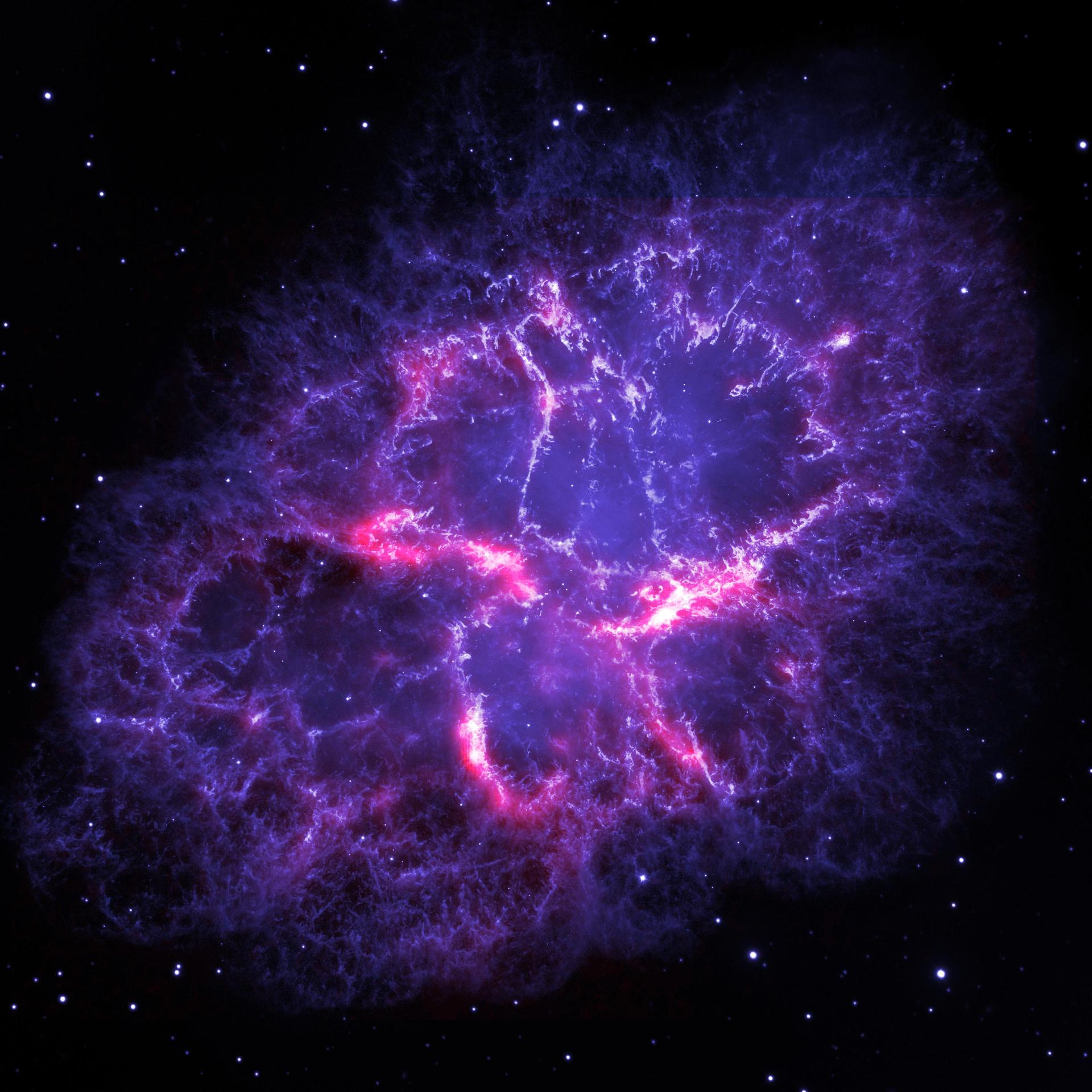
  • THE PHYSICS OF CREATION: CONTENTS

    THE PHYSICS OF CREATION: CONTENTS

    Copyright © Harold Aspden, 2003

    The book is presented Chapter by Chapter as a series of PDF documents which can be read using the Adobe Acrobat Reader. Press on the Chapter No. to access the relevant pages.

    Title

    Contents

    Introduction

    Chapter 1: Nature’s Coded Messages

    Chapter 2: Gravitation and the Continuum

    Chapter 3: The Ubiquitous Muon

    Chapter 4: The Creation of the Proton

    Chapter 5: The Law of Gravity

    Chapter 6: The Quantum Underworld

    Chapter 7: Aether Structure

    Chapter 8: Creation: Stars and Planets

    Chapter 9: General Discussion

    Chapter 10: The Epilogue

    Appendix I: The Exclusion Zone of Interaction Energy

    Appendix II: Inertia and E = Mc2

    Appendix III: The Electron’s Anomalous Magnetic Moment

    Appendix IV: Hydrogen as a Star

    Appendix V: The Angular Momentum of the Solar System

    Appendix VI: The Hypotheses of Fechner and Einstein

    Appendix VII: Einstein and 100 Years of Wisdom

    Index


    Press to return to the main site index.
  • DR. ASPDEN’S BOOKS

    DR. ASPDEN’S BOOKS AND ENERGY SCIENCE REPORTS

    Where the book title is listed below in colour it provides a link to the full or partial text of the work. Otherwise, please note that it will take the author a liitle while longer before these web pages are updated to provide full access to all of the titles, this date being June 30, 2003.

    1960: The Theory of Gravitation

    This is a printed booklet which aimed to put on record the basic principles of the author’s theory as it had developed by the end of 1959. It marked a transition in the author’s career from a professional position with a major electrical manufacturer to a senior management position with IBM.

    1966: The Theory of Gravitation (2nd. Edition)

    This work is a photo reproduction of typescript written to update progress on the above theory since 1960.

    1969: Physics without Einstein

    This was a major work of 224 pages, printed in hardback and softback editions. Owing to its controversial nature and anticipated hostility of the scientific community it was not offered for publication by a regular publisher, but was published as a private venture by the author under the name Sabberton Publications, ‘Sabberton’ being the maiden name of the author’s wife.

    1972: Modern Aether Science

    This 165 page work was printed also in hardback and softback cover form. It was written to meet a request from readers of ‘Physics without Einstein’ who wanted to see a non-mathematical treatment of the subject. This book was then the subject of a sarcastic review by a rival author in the journal ‘Nature’ (239, p. 235, September 22, 1972): “Dr. Aspden is one of a group of unorthodox writers who, bewildered by the abstract but precise world of mathematical physics, escapes into a fairyland of outmoded physical description”.

    1975: Gravitation

    This was a shorter printed work in hardback and softback cover form, which concentrated on the progress of the author’s gravitational theory to incorporate advances to the 1975 period, by which time the theory was evolving to the stage where a breakthrough discovery was made concerning proton creation.

    1980: Physics Unified

    It was here that the theory could be presented in a consolidated form, linking gravitation and fundamental particle creation, and was ready to branch out in diverse directions trespassing deeply into the territory of quantum electrodynamics. This book is in a sense a second edition of ‘Physics without Einstein’. It has 206 pages and was published in hardback and softback covers.

    1996: Aether Science Papers

    Between 1980 and 1996 the author found that scientific periodicals were more willing to accept his papers for publication and took early retirement from IBM in 1983 expressly to become a Visiting Senior Research Fellow at Southampton University in the author’s hometown in England. In 1996 it was decided to publish in laminated covers this A4 size photo-reproduction of 14 of these papers together with a 69 page introductory text, which includes references to 106 published scientific papers by the author.

    1994-1997: Energy Science Reports

    These are ten research reports published between 1994 and 1997 which were intended to stir interest in the research theme discussed. It is now intended to consolidate further effort on the key technological issue of tapping aether energy in one future publication entitled ‘Energy Science’, which will feature in due course on this website.


    Reviews

    Pressto return to the main site index.

  • LECTURE NO. IIIc

    LECTURE NO. IIIc

    EINSTEIN’S ACCOUNT OF HIS THEORY

    Copyright © Harold Aspden, 2001

    INTRODUCTION

    As indicated in the Physics Note introduction to Part III of ‘The Physics of Creation’, our object here is to work through, chapter by chapter, Einstein’s own book ‘Relativity’, this being his authoritative explanation of the full scope of his theory as updated to 1952. We will, however, exclude the five appendices from this step by step commentary, as, apart from a comment already made in the Physics Note introduction they do not affect the case which Einstein presents in the main text.

    I will, however, stress from the outset why I have decided to proceed in this way. If the reader has understood the basis of the aether theory on which I rely and which I have presented in Part II of ‘The Physics of Creation’, it will be evident that I require the basic electric charges, which define the structure of the aether by sitting each at a lattice site in that structure, to share a concerted motion by moving all in synchronism with no relative retardation.

    This is tantamount to saying that the electric field of each of those charges moves as if it asserts an instantaneous action at a distance on charges located elsewhere. I justify this simply by noting that the relative spacing between any two charges sharing a common component of motion is not a changing quantity and so the mutual energy potential attributable to their electrostatic field interaction is invariant regardless of the fact that both charges experience a cyclic jitter motion that provides the performance platform for quantum theory.

    As I see it, if energy does not have to deploy to be redistributed as between those moving aether charges, there is no reason to expect any retardation owing to a finite speed of propagation of the field action. Accordingly, I accept the possibility that an electric field action at a distance can be instantaneous, and, indeed, I may note further that this ‘instantaneous “Coulomb Gauge” action’ is an assumption that is sometimes voiced by theoretical physicists specializing in quantum theory.

    So I begin by declaring quite openly that my aether theory stands on ground that is totally incompatible with any doctrine advocated by Einstein that purports to limit electric field action to a speed of light propagation restriction.

    That said, I will now list ‘look-out-for’ topics that I shall keep in mind as I progress, chapter by chapter, through Einstein’s book. These are:

    1. Does Einstein discuss the property he calls the ‘field’ for the separate cases of (a) the electric field, (b) the magnetic field and (c) the gravity field or are we to assume that his ‘field’ concept is all-embracing?

    2. Whereas Einstein in his Special Theory will be very concerned with the speed of light theme, which, as we know from Clerk Maxwell’s theory, concerns propagating waves involving lateral oscillations of magnetic and electric fields, where in his book will he discuss the possibility of different speeds at which the electric, magnetic and gravitational fields propagate in a longitudinal sense? Here I have in mind the field strengths which diminish in an inverse square of distance relationship, whereas the field strengths in the Maxwell wave diminish as a direct inverse relationship with distance travelled.

    3. How does Einstein’s theory address the specific case of the field interaction of two spaced-apart bodies of similar mass and similar electric charge? I have in mind here the gravitational interaction of two stars in a binary pair as a case which contrasts with the action between the sun and a planet, where the mass of the sun far outweighs that of the planet.

    With this introduction I now proceed the chapter by chapter commentary on the Einstein book. There are 32 short chapters, all of which Einstein thought were needed to present his ‘clear explanation’ of his theory.

    PART I: THE SPECIAL THEORY OF RELATIVITY

    I

    Here in this first chapter, on the subject of GEOMETRICAL PROPOSITIONS, Einstein refers to Euclidean geometry and debates ‘truth’ in the context of distance measurements on a ‘rigid’ body. His concluding words are: ‘Of course, the conviction of the “truth” of geometrical propositions in this sense is founded exclusively on experience or rather incomplete experience. For the present we shall assume the “truth” of the geometrical proposition, then at a later stage (in the general theory of relativity) we shall see that this “truth” is limited, and we shall consider the extent of its limitation.’ Accordingly, here the reader is warned that what is true according to our experience may not remain so if we accept his theory as it develops! So one reads on with an open mind to see how Einstein’s story develops.

    II

    Here Einstein writes under the heading THE SYSTEM OF COORDINATES and explains the use of the Cartesian system of coordinates in the physics of measurement by particular reference to the specification of position and measurement by indirect means where one seeks clarity in observation in the field of astronomy. He concludes that, in describing events in space, ‘the resulting relationship takes for granted that the laws of Euclidean geometry hold for “distances”, the “distances” being represented physically by means of the convention of two marks on a rigid body’. Here one can but begin to wonder how this argument will now advance.

    III

    The Subject now is SPACE AND TIME IN CLASSICAL MECHANICS. Einstein explains how the purpose of mechanics is to describe how bodies change their position in space with “time”. He then finds he needs to clarify what is meant by “position” and by “time”. He then argues his way forward, coming to a point which he says is self-evident, which is that ‘we entirely shun the vague word “space”, of which, we must honestly acknowledge, we cannot form the slightest conception and we replace it by “motion relative to a practically rigid body of reference”.’ He then moves on to replace these words “body of reference” by “system of co-ordinates”, which he says: ‘is a useful idea for mathematical description’. After this he then reverts to the notion of time, as measured by clocks, concluding the chapter with the words: ‘In this connection we have not taken account of the inaccuracy involved by the finiteness of the velocity of propagation of light. With this and with a second difficulty prevailing here we shall have to deal in detail later.’
    By this stage we see that we are being prepared for the inclusion of speed-of-light limitations in measurements pertaining to the realm of classical mechanics.

    IV

    Under the title THE GALILEAN SYSTEM OF CO-ORDINATES Einstein here opens his argument by referring to ‘the fundamental law of the mechanics of Galileo-Newton, which is known as the law of inertia. He explains that if we use a system of co-ordinates rigidly fixed to body Earth then every fixed star in the universe must every day describe a circle of immense radius, which he accepts is contrary to the law of inertia. Accordingly, he concludes that the law of inertia can only apply in a system of co-ordinates relative to which the fixed stars do not move in a circle. Here then he has introduced what is called a “GALILEAN system of co-ordinates”. Physics has now come into the act, and we are no longer concerned with mere geometry.

    V

    This chapter has the title THE PRINCIPLE OF RELATIVITY. After explaining how the mechanical laws of Galileo-Newton must be the same in two different GALILEAN co-ordinate systems, these being devoid of rotation, he then declares that ‘this statement is called the principle of relativity‘. Then follows a discussion of relative motion by reference to moving carriages, following which he converges on the theme of the Earth’s motion in orbit around the sun. Einstein then concludes that ‘if the principle of relativity were not valid we should therefore expect that the direction of motion of the Earth at any moment would enter into the laws of nature’. Then he points out that the most careful observations have never revealed such a property in terrestrial space and declares this as being a ‘very powerful argument in favour of the principle of relativity’.

    After five chapters we have reached a position where the classical understanding of mechanics and the inertial properties of matter has been adopted and renamed as ‘The Principle of Relativity’, but we have yet to see how this has any bearing upon the broader spectrum of physics pertaining to the propagation of light, the force of gravity and the electric and magnetic forces that span distances across space or, to be more specific in our use of Einstein’s terminology, across the distance separating different co-ordinate positions in a GALILEAN frame of reference.

    VI
    Here, in his chapter VI entitled THE THEOREM OF THE ADDITION OF VELOCITIES EMPLOYED IN CLASSICAL MECHANICS, Einstein merely explains how a man walking along a railway carriage at a certain speed would be seen to move faster by a stationary observer standing at the side of the railway. The speed of the train has to be added. Then, however, he declares that this result cannot be maintained in reality as, he states, ‘we shall see later’.

    VII

    Chapter VII: THE APPARENT INCOMPATIBILITY OF THE LAW OF PROPAGATION OF LIGHT WITH THE PRINCIPLE OF RELATIVITY. Einstein opens this chapter with the words:

    ‘There is hardly a simpler law in physics than that according to which light is propagated in empty space. Every child at school knows, or believes he knows, that this propagation takes place in straight lines with a velocity c=300,000 km/s.’

    At the end of his first paragraph he writes:

    ‘Who would imagine that this simple law has plunged the conscientiously thoughtful physicist into the greatest intellectual difficulties?’

    Einstein then discusses a ray of light transmitted from the stationary observer by the side of the railway track and considers the velocity of light relative to the moving carriage, concluding that it must be smaller than the velocity c, a result which he says: ‘comes into conflict with the principle of relativity’. It would appear, he declares: ‘that another law of propagation of light must necessarily hold with respect to the carriage’.

    Now here I confess that I had never in my school years been told that the constancy of the speed of light ranked as a ‘law’, nor would I have expected the laws of classical mechanics to be applicable to the reference frame governing the propagation of light as an electromagnetic wave. Indeed, on this point raised by Einstein, I would, as a schoolboy have merely presumed that a similar problem would arise if the speed of sound was considered instead of the speed of light, which would have brought the presence and movement of air into the picture and posed no problem for classical mechanics or the principle of relativity as so far defined. But one needs to recognize that ‘air’ exists as a real medium of reference.

    Einstein had spent five chapters to reach a point where he avoided the notion that space might contain a real medium and reducing it to a single system of coordinates defining one frame of reference, but in no way dealing with the possibility that the medium that fills space could be of dual or multiple composition and so defined by more that one overlapping frame of reference. The speed of light, not just sound, is affected by the presence of air and so depends on the motion of the co-ordinate system of that air and, for all Einstein knew, the medium that occupies what we call the vacuum could well itself have two co-ordinate systems in relative motion which, with air, puts three co-ordinate systems into the picture, not to mention the co-ordinate systems of the light transmitting source and the light receiving sensor. After all, the properties of the vacuum were not something one could found on mere assumption. Are we to expect the ‘principle of relativity’ to tell us that the physics of the problem are the same as viewed separately relative to all five of these overlapping co-ordinate reference frames?

    To say the speed of light is constant one has no option but to define the frame of reference, which means probing the properties of the aether by experiment in search of that reference frame. Surely one cannot just dismiss the aether, adopt a so-called ‘law’, fix an arbitrary reference frame, and then find fault with what one has just assumed.

    So how did Einstein then proceed in his chapter VII? He declared:

    ‘The law of the propagation of light in vacuo would then have to be replaced by a more complicated law conformable with the principle of relativity.’

    In the same paragraph he goes on to refer to the ‘epoch-making theoretical investigations of H. A. Lorentz on the electrodynamical and optical phenomena’, without explaining what these are, only then to add, still in the same paragraph:

    ‘Prominent theoretical physicists were therefore more inclined to reject the principle of relativity, in spite of the fact that no empirical data had been found which was contradictory to this principle.’

    He then rapidly in his next paragraph concludes by giving his own verdict on the subject by, without further ado, renaming the principle under discussion, which is now extended to include speed of light considerations, as ‘the special theory of relativity’.

    So we arrive at a point where the principles of classical mechanics have embraced speed of light considerations and a ‘principle’ is adopted for the sole reason that no contradictory empirical data had been found.

    Now, here, I want to point out that the student reading Einstein’s book has not, to this stage of the work, been given any background concerning the experimental physics that triggered the interest in what is under discussion. Guided by the book’s index reference to the ‘Michelson Morley experiment’ one sees that it will not be until chapter XVI that there is reference to any experimental data bearing on the subject. Evidently, Einstein is more intent on pursuing a kind of ‘brainwashing’ exercise to nurse the student into believing his ‘principle’ before saying: ‘Eureka, here is some evidence to prove it.’

    So here I will digress a little to refer to events of record in the pre-1905 period, 1905 being the year of publication of Einstein’s paper introducing his ‘Special Theory of Relativity’.

    In 1895 a paper by H. A. Lorentz entitled ‘Michelson’s Interference Experiment’ was published in German. It began by explaining that Clerk Maxwell has pointed out that if two points A and B ‘undergo displacement without carrying the ether with them’ the time required for light to travel to and fro between A and B must vary slightly with the speed of that displacement. Lorentz then discusses the experiment on this as carried out by Michelson in 1881 and the more conclusive experiment performed later (1887) by Michelson in collaboration with Morley. Mirrors, with light reflected to and fro many times between the mirrors were involved in the test, which failed to detect any motion of body Earth through the aether. Lorentz realized that this could mean that the aether within the apparatus could be sharing the Earth’s motion and so deny the possibility of measuring the speed of that motion.

    Lorentz did not mention an alternative possibility, which is that light waves in their passage through light waves of similar intensity moving in the opposite direction would entrap wave energy between those mirrors and that presence of energy could mean that the waves were not travelling freely as was assumed. If the wave nodes and antinodes set up by such standing wave conditions are carried along with the mirror system, as is in fact the case, then one might see why there is little or no evidence of wave interference fringes in such an experiment.

    In the event, however, Lorentz, duly acknowledging a similar interpretation of earlier date by Fitzgerald, went on to discuss the possibility that motion of the mirror apparatus through the aether might involve some structural distortion that could be direction-sensitive in a way which would account for the null finding in the Michelson-Morley experiment.

    In short, Lorentz contended that there is a general contraction, what we now call the ‘Fitzgerald contraction’, of any apparatus by a fractional amount (v/c)2/2 in the direction of motion at speed v and this, it works out, will exactly compensate for the effect which otherwise would have given a positive outcome from the Michelson-Morley experiment.

    Now, although Lorentz did imply that his argument here was based indirectly on the effect of electrodynamic interaction forces as between the molecules comprising the apparatus, I find this poses its own problems. Here I have in mind that two electrons, for example, carried along at the same speed side by side will experience a force of mutual attraction superimposed on their normal mutual electrostatic repulsion, but if they move along a common line, one behind the other, standard electrodynamic theory as it applied in the Lorentz era says there is no such mutual electrodynamic force. In other words one might expect a body composed of numerous particles which are electrically charged at the sub-atomic level to suffer a measure of contraction lateral to the direction of motion. This is exactly the opposite to contraction in the direction of motion. However, taking into account that the forces in the body are in equilibrium and that its molecules are somehow held together to form a solid body, the dominant force attributable to electrostatic action has to be one of mutual attraction. Accordingly, the electrodynamic action, as an offset action must be act primarily between moving charge of opposite polarity, and so will be repulsive overall lateral to the direction of motion. This is in accord with the Lorentz interpretation. My own misgivings here arise from my research into the true law of electrodynamics that was described in Part I of ‘The Physics of Creation’, where I took the Trouton-Noble experimental result as the definitive last item of evidence needed to derive the true emprical law of electrodynamics. This rules out any scope for anisotropy of electrodynamic action such as would support the notion of a Fitzgerald contraction.

    However, as to Einstein, he obviously was influenced by the contraction argument of the 1895 publication by Lorentz as giving a mathematical insight into the interpretation of the Michelson-Morley null result. One can only wonder if he was influenced further by the events of 1903 and 1904. In 1903 the experiment reported by Trouton and Noble, the one just referred to in the preceeding paragraph, demonstrated that the Earth’s motion through the aether could not be detected on the basis of the then-accepted law of electrodynamics. Two electrical charges as part of a suspended capacitor system when conveyed through space with body Earth should, given an electrodynamic frame of reference set by the aether, have caused a deflection as a measure of speed through the aether. This experiment gave a null result, again raising the issue of aether drag, but all it really proved was that parallel motion of two charges involves electrodynamic interaction forces that act directly along the line joining the two charges. It was not seen in this context at the time and was duly regarded as providing evidence supplementing the result of the Michelson-Morley experiment.

    Accordingly, Lorentz in 1904 presented a paper in which he formalized his theory bringing the contraction hypothesis into a theory and, along with that, the notion that time itself is also modified by a change of motion of the reference frame. Quoting the words of Lorentz:

    ‘I shall show that, if we start from any given state of motion in a system without translation, we may deduce from it a corresponding state that can exist in the same system after a translation has been imparted to it.’

    His object was clear. Guided mainly by theory related to electrodynamics he aimed to develop an algorithmic formulation by which he could explain electromagnetic phenomena in a way which embraced the outcome of the Michelson-Morley and Trouton-Noble experiments as well as the experimental findings of Kaufmann (1903) on the increase of mass of the electron at speeds approaching the speed of light. The formulation which pertained to the fundamental equations of classical electron theory came to be known as the ‘Lorentz transformation’, and one must wonder what Einstein had to offer, given this 1904 account by Lorentz.

    VIII
    Moving on from his preoccupation with velocity addition involving the speed of light, Einstein in this chapter VIII address THE IDEA OF TIME IN PHYSICS. Here he talks about lightning strikes and how two flashes seen as occurring simultaneously at A will be seen as simultaneous at B. Time, it seems, depends upon the readings given by clocks and a definition of ‘simultaneous’ applies if what is observed at A and B occur when the pointers on clocks at A and B read the same. This is hardly impressive reading for our notional student who is encouraged to study Einstein’s book.

    IX
    On much the same theme Einstein’s chapter IX entitled THE RELATIVITY OF SIMULTANEITY takes us back onto the railway carriage as we watch lightning strikes and wonder if they occur simultaneously. Einstein here explains how ‘before the advent of the theory of relativity it had always tacitly been assumed in physics that the statement of time had an absolute significance, i.e that it is independent of the motion of the body of reference.’ He then goes on to say that the reader has been shown ‘that this assumption is incompatible with the most natural definition of simultaneity’ and ‘if we discard this assumption, then the conflict between the law of the propagation of light in vacuo and the principle of relativity as developed in chapter VII disappears.’ The reader evidently must now believe that time itself has to depend upon the state of motion of a frame of reference and is being eased into a mould which looks remarkably close to that indicated by the Lorentz 1904 paper, as just discussed.

    X
    Here under the title ON THE RELATIVITY OF THE CONCEPT OF DISTANCE Einstein goes further by suggesting that if an observer on a train measures the length of the train and an observer on an embankment measures the length of the train as it passes, then the two lengths as measured may well be different. Einstein does not enlarge on this but resumes the discussion in the next chapter.

    XI
    This chapter is entitled; THE LORENTZ TRANSFORMATION, where we find that Einstein has simply adopted the teachings of Lorentz that emerged from his 1904 paper. The expression ‘principle of relativity’ is not mentioned in this chapter, but time and the measure of distance are seen to be subject to modification as a function of velocity v, all in order to assure conformity with the argument that v cannot ever be measured from within a frame of reference which moves at the velocity v.

    XII
    Having introduced the Lorentz transformation and its mathematical formulation in chapter XI, Einstein here applies this to the BEHAVIOUR OF MEASURING RODS AND CLOCKS IN MOTION. He merely declares that had he used the Galilean transformation, rods would not contract as a function of their motion and goes on to argue that the Lorentz transformation implies that as a consequence of its motion a clock will slow down.

    XIII
    Here we find that Einstein explores how the speed of light is affected in its passage through a liquid moving in a tube and he derives two equations, firstly that of the classical theory and secondly one according to the Lorentz transformation, which he finds ‘corresponds to the theorem of addition for velocities in one direction according to the theory of relativity’. He is writing under the heading: THEOREM OF THE ADDITION OF VELOCITIES: THE FIZEAU EXPERIMENT and at this stage states: ‘The question now arises as to which of these two theorems is the better in accordance with experience. He refers to a mid-19th century experiment by Fizeau and declares that it decides in favour of the equation derived from the principle of relativity. His concluding paragraph begins with the sentence: ‘Nevertheless we must now draw attention to the fact that a theory of this phenomenon was given by H. A. Lorentz long before the statement of the theory of relativity.’

    It seems that we have here fourteen chapters written by Einstein only to be told something that was evident from the earlier writings of Lorentz apart from the use of the expression ‘the theory of relativity’. Now, as to this Fizeau experiment, Fresnel and later (in 1846) Stokes derived on the basis of aether theory the formula that is an experimental match for the one Einstein claims as supporting the principle of relativity. This was before Fizeau performed the experiment (1859) and so Fizeau’s experiment really supports aether theory. Einstein had simply been misleading his student readers into thinking that one can expect, on classical theory, that the speed of light in a column of moving water will be c plus the velocity of that water. In fact, the nineteenth century physicist knew full well that light moves through water at rest at a fraction of its speed in vacuo and allowing for this, by bringing its refractive index into the equation, one gets the Fresnel expression that was duly confirmed by the experiment of Fizeau.

    So all we have is that, guided by Lorentz, Einstein is adopting what he calls the principle of relativity to explain an experimental result which supports aether theory, and when I search for any distinction I can draw between the Lorentz and Einstein arguments I can find this is summed up in a book on ‘Einstein’s Theory of Relativity’ by Max Born (1962 Edition of earlier 1924 publication). It is that Einstein eliminated the aether and replaced it by a ‘mathematical device for conveniently describing processes in matter and their relationships’, whereas ‘Lorentz was so attached to his assumption of an aether at absolute rest that he did not acknowledge the physical significance of the equivalence of infinite numbers of systems of reference which he had proved’. [Quotation from page 224 of the Dover 1962 Edition]

    To me that statement by Max Born is somewhat emotive and not justified. Just because one can infer that physical phenomena in general can manifest themselves equally in many different frames of reference that does not mean that central to all such frames there cannot be one having special character that somehow keeps the act together. The aether and its real existence is a nucleus from which to work in interpreting what we experience in physics. It cannot be eliminated if we are to see ourselves as belonging to a universe governed by order rather than one immersed in chaos. Yes, one can try to justify explanations that avoid the use of the word ‘aether’ but, if the price is to distort space and time to satisfy our mental needs, then I urge that we rely a little more on the intuition of Lorentz rather than that of Einstein and, in an rescue effort, explore where Lorentz went off course, leaving Einstein to flounder and sink in a sea of his own making.

    XV
    In this chapter, GENERAL RESULTS OF THE THEORY, Einstein moves on to discuss how ‘the special theory of relativity has rendered the Maxwell-Lorentz theory so plausible, that the latter would have been generally accepted by physicists even if experiment had decided less unequivocally in its favour.’ That is quite a statement and one which I trust no serious physicist could endorse. All the chapter deals with is the increase in energy by mass in motion and how that energy augments the mass more and more as the speed converges on the limiting value c.

    Anyone who has read about the discovery of the electron and the measurement of its charge/mass ratio at speeds approaching the limiting speed of light, coupled with the early theory on these matters prior to 1904, will know that the formula E=Mc2 and the related formula for increase of mass with speed were inevitable consequences stemming from experiments using the cathode ray tube and not a theory that was more concerned with the experiments of Michelson-Morley and Trouton-Noble.

    Both of the latter experiments conform with the assumption that the relevant electromagnetic frame moves with the test apparatus. The theory needed was one which explored the make-up of that electromagnetic reference frame and not one which reduced it to the mathematics of a geometrical set of co-ordinates.

    XVI
    EXPERIENCE AND THE SPECIAL THEORY OF RELATIVITY. This is a penultimate summary chapter for the first part of Einstein’s book, before he moves on to General Relativity. It surveys what has already been said but ends with an interesting note on the subject of contraction: ‘.. the prime factor in this contraction we find, not the motion itself with respect to the body of reference chosen in the particular case in point. Thus for a co-ordinate mirror system moving with the Earth the mirror system of Michelson and Morley is not shortened, but it is shortened for a co-ordinate system which is at rest relative to the sun.’

    One is tempted here to say that this is a way of telling that High School student for whom the book is intended, that to do any worthwhile experiments that can actually verify what Einstein is saying one has to be in a laboratory elsewhere in the universe and perform from there tests based on remote observation of the effects of motion in causing distortion of something in an laboratory here on Earth.

    XVII
    Here with the title: MINKOWSKI’S FOUR-DIMENSIONAL SPACE the student reader is introduced to something that depends upon time being a function of an imaginary number, the square root of minus 1. The topic really does not warrant further comment. In Einstein’s own concluding words (Page 57):

    ‘These inadequate remarks can give the reader only a vague notion of the important idea contributed by Minkowski. Without it the general theory of relativity, of which the fundamental ideas are developed in the following pages, would perhaps have got no farther than its long clothes.’

    So here, at the end of PART I of Einstein’s book, the reader is prepared for the task ahead. Shall we see Einstein adopting notions proposed by Minkowski, much as he has adopted those of Lorentz? And what are we to make of that reference to ‘long clothes’? Dare I suggest here that I am reminded of the 19th century Hans Christian Andersen fairytale of the emperor’s invisible clothes? Will the student then come to see the truth of what is implied and openly declare that Einstein has clothed his theory in an invisible web of mystery which, in spite of its alleged elegance, is really a theory having no substance.

    PART II: THE GENERAL THEORY OF RELATIVITY

    XVIII
    Einstein in this chapter, SPECIAL AND GENERAL PRINCIPLE OF RELATIVITY, again considers railway carriages moving relative to an embankment but now he extends the ambit of his enquiry beyond frames of reference that are in ‘uniform rectilinear motion and non-rotary motion’. He concludes by stating that ‘the Galileian law does not hold with respect to the non-uniformly moving carriage’, a result which he says compells us ‘to grant a kind of absolute reality to non-uniform motion, in opposition to the general principle of relativity’. This he then qualifies with the final comment that in ‘what follows we shall soon see that this conclusion cannot be maintained.’ Again, here, one must wonder if that High School student finds this easy to understand.

    XIX
    THE GRAVITATIONAL FIELD is a chapter in which Einstein introduces a law according to which the gravitational mass of a body is equal to its inertial mass. He concludes the chapter by saying ‘It is true that this important lawhad hitherto been recorded in mechanics, but it had not been interpreted‘. A satisfactory explanation is then promised in the next chapter.

    XX
    THE EQUALITY OF INERTIAL AND GRAVITATIONAL MASSAS AN ARGUMENT FOR THE GENERAL POSULATE OF RELATIVITY tells us that how an observer standing inside a large enclosing box senses forces if the box is accelerated by application of an external force. The point he makes is that, given a uniform rate of acceleration produced by that force, the observer in the box will sense a ‘kind of gravitational field’ which ‘we might easily suppose is only an apparent one’.

    XXI
    Next, under the heading IN WHAT RESPECTS ARE THE FOUNDATIONS OF CLASSICAL MECHANICS AND OF THE SPECIAL THEORY OF RELATIVITY UNSATISFACTORY’, Einstein talks about two pans on a gas range, one emitting steam and the other not, but the one producing steam having a bluish glow beneath it. The assumption is that the glow and the steam are connected in some way, one being a consequence of the other. However, he says, if no bluish glow exists in either case and steam comes from one pan and not the other, then one would be dissatisfied pending discovery of some circumstance to which one can attribute the different behaviour of the two pans. By analogy he then declares how, looking at two bodies of reference, and given an observable difference, whatever their states of motion, he cannot find an explanation within the scope of classical mechanics, or in the special theory of relativity. Accordingly, he states one needs ‘a physics which is conformable to the general principle of relativity, since the equations hold for every body of reference, whatever may be his state of motion.’

    Our student must surely now be wondering what kind of magic governs this so-called ‘general principle of relativity’ and be curious as to where we are headed.

    XXII
    Here Einstein presents A FEW INFERENCES FROM THE GENERAL PRINCIPLE OF RELATIVITY one being that one can produce what is effectively a gravitational field merely by accelerating a frame of reference. He also refers to a body in rectilinear motion with respect to frame K that is executing an accelerated and in general curvilnear motion with respect to an accelerated reference frame K’. In the context of gravitation there is, he says, ‘nothing essentially new’ to consider here, but there is a ‘new result of fundamental importance when we carry out the analogous consideration for a ray of light’. His conclusion is that ‘in general,rays of light are propagated curvilearly in gravitational fields’ and adds ‘This result is of great importance’. Elaborating on this he says that the general theory of relativity tells us that light rays grazing past the sun should be deflected through 1.7 seconds of arc.

    Here, at last, is something testable by observation that his theory has predicted! However, to this stage, Einstein has not shown how he arrives at this result. So far it is a mere statement intended to encourage onward study by the reader. Indeed, as he reaches the end of the chapter he states ‘we may entertain the hope that the general law of gravitation will be derivable from such gravitational fields of a special kind.’ Then he goes on to say ‘This hope has been realised in a most beautiful manner’ but ‘it was necessary to surmount a serious difficulty’ and, to progress, ‘we require to extend our ideas about the space-time continuum still farther.’

    XXIII
    This chapter opens by Einstein stating that he has so far ‘purposely refrained from speaking about the physical inyterpretation of space-time-data in the case of the general theory of relativity’, as a consequence of which he says he is ‘guilty of certain slovenliness’. To rectify this he goes back to the subject of BEHAVIOUR OF CLOCKS AND MEASURING RODS ON A ROTATING BODY OF REFERENCE.

    It seems that clocks carried by rotating discs near their perimeter upset one’s ‘definition of time with respect to the body of reference’. By the end of the chapter Einstein declares: ‘Thus all our previous conclusions based on general relativity would appear to be called into question. In reality we must make a subtle detour in order to be able to apply the postulate of general relativity exactly. I shall prepare the reader for this in the following paragraphs’. To read these paragraphs we have to turn to the next chapter.

    By now, even I am getting a little bewildered by what is billed on the book cover of this 15th edition of Einstein’s work as being ‘A clear explanation of the famous theory that brought about the atomic age’!

    XXIV
    Einstein now speaks about EUCLIDEAN AND NON-EUCLIDEAN CONTINUUM and is back on the theme of ‘measuring rods’. He concludes that ‘the method of Cartesian co-ordinates must then be discarded, and replaced by another which does not assume the validity of Euclidean geometry for rigid bodies.’

    XXV
    Einstein here introduces GAUSSIAN CO-ORDINATES and sums up this chapter by saying that ‘Gauss invented a method for mathematical treatment of continua in general, in which distance between neighbouring points are defined.’ A crucial statement then follows: ‘To every point of a continuum are assigned as many numbers (Gaussian co-ordinates) as the continuum has dimensions.’ The four-space dimensional continuum has been introduced and Einstein is now ready in his next chapter to bring Minkowski’s four-dimensional space with its square root of minus 1 time component into the Gaussian system.

    XXVI
    The stage just mentioned is implemented in this chapter under the heading THE SPACE-TIME CONTINUUM OF THE SPECIAL THEORY OF RELATIVITY CONSIDERED AS A EUCLIDEAN CONTINUUM.

    XXVII
    Here the chapter heading states the conclusion: THE SPACE-TIME CONTINUUM OF THE GENERAL THEORY OF RELATIVITY IS NOT A EUCLIDEAN CONTINUUM. Somehow from what is said in this chapter Einstein finds he can say: ‘Every physical description resolves itself into a number of statements, each of which refers to two events A and B. In terms of Gaussian co-ordinates, every such statement is expressed by the agreement of their four co-ordinates x1, x2, x3, x4. Thus, in reality, the description of the space-time contin by means of Gauss co-ordinates completely replaces the description with the aid of a body of reference.

    So we now see that Einstein, after building his scheme by reference to the geometry of rigid bodies has opted for a system of mathematics which adds the fourth dimension to our more familar world of three space dimensions and we have to contend with that imaginary square root of minus 1 term disguised as a space dimension denoted x4.

    XXVIII
    We are now ready to digest the EXACT FORMULATION OF THE GENERAL THEORY OF RELATIVITY. Einstein tells us that the idea of the general theory of relativity is that:

    ‘All Gaussian co-ordinate systems are essentially equivalent for the formulation of the general laws of nature.’

    In this chapter Einstein describes each of his four-dimensional worlds as a “mollusc” and says:

    ‘The general principle of relativity requires that all these molluscs can be used as reference-bodies with equal right and equal success in the formulation of the general laws of nature; the laws themselves must be quite independent of the choice of mollusc.’

    He then follows this with the concluding words:

    ‘The great power possessed by the general principle of relativity lies in the comprehensive limitation which is imposed on the laws of nature in consequence of what we have seen above.’

    XXIX
    We have arrived at chapter 29 which bears the title: THE SOLUTION OF THE PROBLEM OF GRAVITATION ON THE BASIS OF THE GENERAL PRINCIPLE OF RELATIVITY and find that Einstein opens with the following assurance:

    ‘If the reader has followed all our previous considerations, he will have no further difficulty in understanding the methods leading to the solution of the problem of gravitation.’

    Clearly we are on the downhill slope headed for enlightenment on how Einstein explains the force of gravity!

    Now here we find that Einstein lists three ‘demands’ governing his theory. They are

    ‘(a) The required generalisation must likewise satisfy the general postulate of relativity.
    (b) If there is any matter in the domain under consideration, only its inertial mass, and thus only its energy is of importance for its effect in exciting a field.
    (c) Gravitational field and matter together must satisfy the law of conservation of energy (and of impulse).’

    He then goes on, without giving any account of his theory of gravitation, to point to the weakness of Newton’s theory in not giving an explanation for the progressive motion of the elliptical orbit of a planet around the sun, most evident for the planet Mercury and he declares that the anomalous 43 seconds of arc advance per century evident from astronomical observation is explained by his theory. Our hypothetical High School student reader is not destined to be shown how this 43 seconds of arc figure is derived within the framework of general relativity. He will have wait until in later years he can tackle the complexities of tensor analysis as applied to the four-dimensional space-time world of Einstein’s imagination. However, I must here comment on Einstein’s words, as quoted from page 103 of his book:

    ‘This effect can be explained by means of classical mechanics only on the assumption of hypotheses which have little probability, and which were devised solely for this purpose.

    Here I wonder if Einstein is making reference here to Paul Gerber, a German school teacher who, in 1898, published a paper showing how the 43 seconds of arc figure is explained exactly if the force of gravity governing the radial component of oscillation of the planet Mercury in its orbit around the sun was subject to changes in gravitational action propagating at the finite speed of light. All Gerber had done was to incorporate into classical mechanics the notion that transfer of energy between the gravitational potential of the sun and planet interaction is subject to the limitations set by the speed of light. That is hardly ‘an assumption having little probability’ and it certainly is one that a High School student would appreciate from his knowledge of classical mechanics. If the period of radial oscillation is slowed down slightly by retardation of gravity propagation then that period will slip relative to the normal orbital period and so there will be a progressive advance of the perihelion of the elliptical motion.

    However, it seems that Einstein chose to ignore Gerber’s explanation and it so remains for those interested in the subject to form their own opinions. One can formulate a law of gravitation based on the Gerber theme, albeit by taking note that energy transfer is not strictly along a pencil thin line joining sun and planet, and so one can show how the planetary motion is explained, along with the deflection of light by the sun and a third consideration, the sun’s red shift. The law of gravitation found is the same as that derived by Einstein after struggling through the complicated maze which besets his theory. This has all been dealt with earlier in Part I of ‘The Physics of Creation’, but let us now see what Einstein’s further chapters have to say.

    PART III: CONSIDERATIONS ON THE UNIVERSE AS A WHOLE

    XXX
    This chapter entitled COSMOLOGICAL DIFICULTIES OF NEWTON’S THEORY is one of three chapters which conclude the main text of Einstein’s book. It offers nothing constructive, it being a mere criticism of Newton’s hypothesis concerned how stellar matter is distributed in the universe.

    XXXI
    THE POSSIBILITY OF A “FINITE” AND YET “UNBOUNDED” UNIVERSE is a chapter that talks again about geometry and measuring rods, going on from there to discuss curved space. It all leads Einstein to the statement ‘closed spaces without limits are conceivable’. Our High School reader might see this as meaning that if you go around in circles for ever you will still be within a closed space!

    XXXII
    THE STRUCTURE OF SPACE ACCORDING TO THE GENERAL THEORY OF RELATIVITY talks about Euclidean geometry as implying an infinite universe and concludes that if there is to be matter in the universe then the universe is of necessity finite. I note that Einstein throughout his work does not question the possibility that gravity might have a limited range of action in no way connected with his notion that space is curved.

    FINAL DISCUSSION

    In opening this LECTURE I listed three what I called ‘look-out-for’ topics. These first of these was:

    1. Does Einstein discuss the property he calls the ‘field’ for the separate cases of (a) the electric field, (b) the magnetic field and (c) the gravity field or are we to assume that his ‘field’ concept is all-embracing?

    The answer to this I found was negative. His attention seemed to be focussed only on his obsession with his theme ‘the principle of relativity’ with speed of light being the dominant factor in Part I, the special theory of relativity section of his book, and the gravity field being the exclusive theme of Part II, the general theory of relativity section of his book. I am, therefore, left to ponder on the problem of how the general theory of relativity treats the Coulomb interaction, whereas and the magnetic field, as a feature of electrodynamic interaction, is presumably dismissed as being covered by the Lorentz transformation and the Lorentz interest in the Trouton-Noble experiment. Nowhere did I see a glimmer of interest in trying to account for gravity as an electrodynamic interaction force, this surely being essential in moving forward towards a Unified Field Theory.

    The second topic was:

    2. Whereas Einstein in his Special Theory will be very concerned with the speed of light theme, which, as we know from Clerk Maxwell’s theory, concerns propagating waves involving lateral oscillations of magnetic and electric fields, where in his book will he discuss the possibility of different speeds at which the electric, magnetic and gravitational fields propagate in a longitudinal sense? Here I have in mind the field strengths which diminish in an inverse square of distance relationship, whereas the field strengths in the Maxwell wave diminish as a direct inverse relationship with distance travelled.

    So far as I could see Einstein did not discuss the velocity at which perturbations of the magnetic field or the electric field propagate. Even concerning the gravity field one must assume that he regards that as being attributable to curvature of his space medium or ‘molusc’ to use his own term. How that curvature might alter transiently as the source mass accelerates is somewhat of a mystery, though it is probably inferred that speed of light constraints apply.

    The third topic is:

    3. How does Einstein’s theory address the specific case of the field interaction of two spaced-apart bodies of similar mass and similar electric charge? I have in mind here the gravitational interaction of two stars in a binary pair as a case which contrasts with the action between the sun and a planet, where the mass of the sun far outweighs that of the planet.

    This is certainly not discussed by Einstein but it is a vital consideration for any serious cosmologist interested in binary stars. Here one cannot expect Einstein himself to have had the foresight to discuss this topic, but one must point an accusing finger at the modern cosmologist who is unwilling to depart from the doctrines of Einstein’s theory. This is a subject, however, that we have addressed by reference to the binary star DI Herculis in LECTURE NO. IIIb and, as the reader will have already seen or may there see, Einstein’s theory stands defeated on the test of what is obseerved astronomically.

    This ends the Part III section of this work ‘The Physics of Creation’.


    Press ‘The Physics of Creation’ to return to its index page.
    Press to return to the main site index.