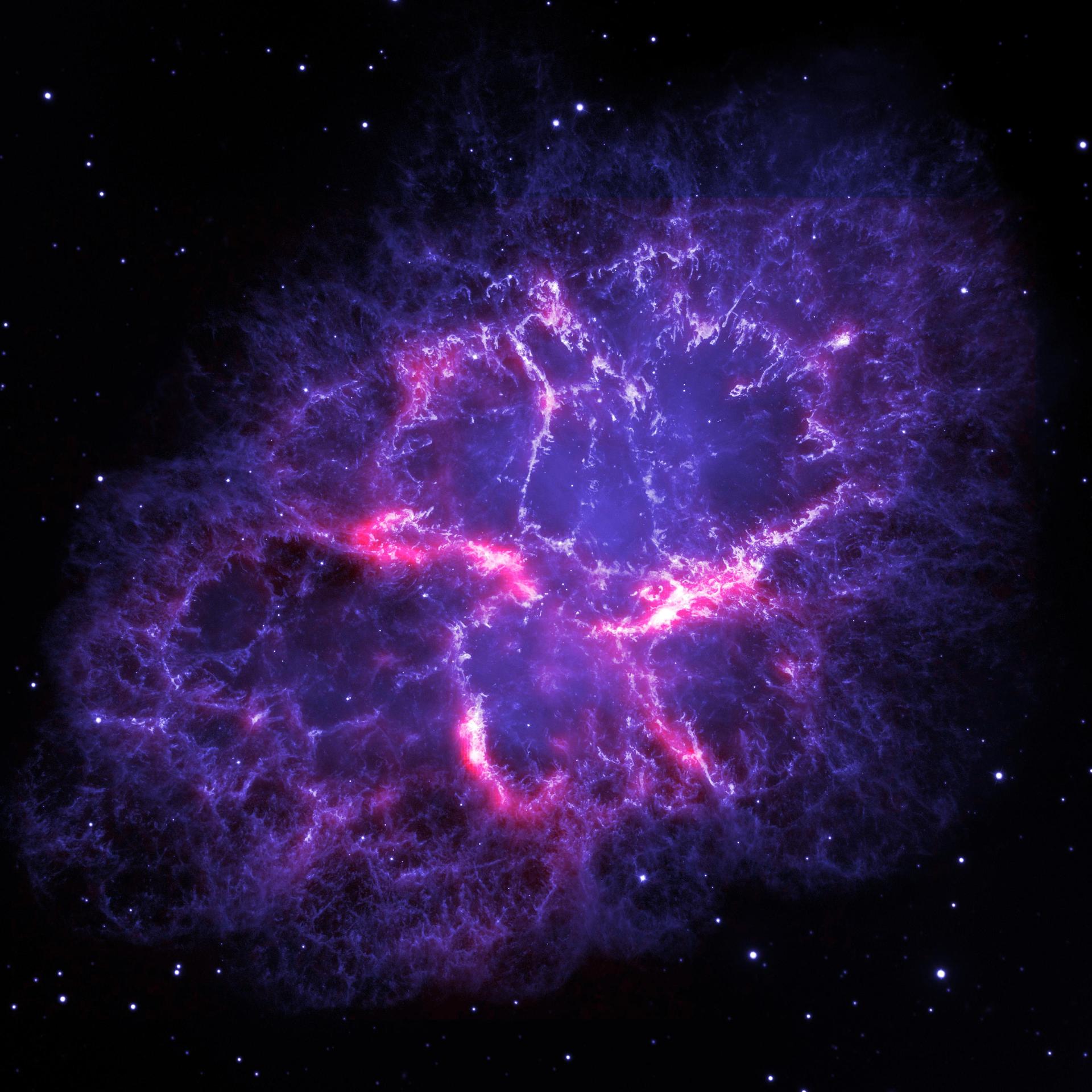
Crab Nebula (M1) — supernova remnant imaged by Herschel and Hubble Space Telescopes

Category: Papers & Publications

Peer-reviewed papers and publications by Harold Aspden

Crab Nebula (M1), supernova remnant · ESA/Herschel/PACS; NASA, ESA & A. Loll/J. Hester (Arizona State Univ.) · NASA Image Library ↗

  • 1990b

    1990b

    The following is a paper by H. Aspden published in New Energy Technology, Proceedings of a 1988 Symposium held by the Planetary Association for Clean Energy, Ottawa/Hull, Canada, pp. 1-12 (1990).

    THE SCIENTIFIC BASIS FOR TAPPING ENERGY IN THE VACUUM

    Abstract: The thought of extracting energy from a hidden but active field environment more plentiful than air or water is rejected outright by orthodox scientists. Yet there are sound
    scientific reasons for expecting that we should be able to extract ‘free energy’ from that hidden field.

    Commentary: This was the first occasion on which the author spoke to a conference audience about the possibility of tapping ‘free energy’ from the aether medium. 1988 was the year in which the author turned his attentions to technological possibilities developing from his theoretical work. In a sense, 1988 was the year in which the author began to think less in terms of ‘Aether Science’ and more in terms of ‘Energy Science’. The topic of the paper was presented in general terms. The author had in mind the subject of the article that was to be published in the weeks following the conference [1988e], namely ‘The Vacuum as our Future Energy Source’. However, also discussed was the theme that ‘warm superconductivity’ could ultimately be a source of ‘free energy’ and the author became resolved to enlarge in that theme in his further writings.


  • 1990a

    1990a

    The following is a paper by H. Aspden published in Physics Essays, v. 3, pp. 39-45 (1990).

    STANDING WAVE INTERFEROMETRY

    Abstract: The effect of energy in standing waves upon the component wave velocities is discussed. The Silvertooth experiment, using a specially constructed photo detector that can scan along a standing optical wave with anomalous results, is shown to have a possible explanation which suggests that the energy can affect wave velocity. The technological implications of the Silvertooth experiment are of sufficient consequence to warrant further
    investigation.

    Commentary: Silvertooth had given a quite convincing account to the author describing an experiment by which Silvertooth had, in an enclosed laboratory experiment, detected motion at near to 400 km/s through space. The experiment had not been reported as verified by eye-witnesses able to authenticate Silvertooth’s findings. However, if confirmed, those findings clearly had a dramatic effect on the author’s endeavours to promote an aether-based theory. Accordingly, the author prepared his position, as expressed in the above paper, and has waited patiently to hear of confirmation or otherwise of the Silvertooth position. The author’s plan to write an updated and definitive version of a book about the aether has been delayed partly owing to that possibility. Now, in present circumstances and with the strength of the position refuting Einstein’s theory expressed earlier in this work, the author has been obliged to assume that the Silvertooth experiment could well be destined to remain an unresolved issue. If it were to be refuted then the author’s account of the aether properties in governing the speed of light will stand on the case presented in ‘Physics Unified’ . If the Silvertooth experiment were to be confirmed, then the aether theory advocated here would hold its ground, but some questions would arise as to why other experiments give the results
    they do. It would take many years for those issues to clarify.

    Accordingly, since the theme of ‘Energy Science’ spurs the author forward in his own venture and our energy future is a prime issue confronting physical science today, the questions raised by this author in the subject paper on the Silvertooth experiment are left
    as open issues.


    The full text of this paper may also be seen in PDF format as Paper No. 12 in the author’s 1996 book Aether Science Papers which is of record in the author’s website www.aspden.org.


  • 1989f

    1989f

    The following is a paper by H. Aspden published in Electronics and Wireless World, pp. 29-31 (January 1989).

    ANTI-GRAVITY ELECTRONICS

    Abstract: Reinterpretation of Newton’s Third Law of Motion suggests that it depends upon an electronic action. Electronic interaction therefore explains the paradoxical anti-gravity properties of the force-precessed gyroscope.

    Commentary: The author’s theory is a theory which explains gravitation. It had not been imagined that ‘anti-gravity’ could be a serious scientific proposition, even when Professor Laithwaite in U.K. attracted media attention by demonstrating the anti-gravitational properties of a gyroscope machine at the Royal Institution. However, eventually, the author visited Professor Laithwaite and witnessed a demonstration which stirred one’s curiosity. Then, later in 1988, the author had occasion to handle and examine a gyroscopic machine which Scotsman J. S. Strachan demonstrated at a conference in Canada at which the author was delivering his own paper on the ‘free energy’ theme.

    On returning to U.K. the author wrote the subject paper, drawing attention to the very important fact that the law that action balances reaction is really a consequence of energy conservation principles and that, under certain special circumstances, the law can be breached. For example, energy conservation in a mechanical system during a collision between two bodies, seen microscopically as electrical charges, will, owing to a symmetry in their mutual electrical interaction during approach and separation, means that Newton’s rule about relative velocities before and after impact applies. However, if circumstances involve a third body that asserts a charge affecting that interaction and so the collision, then the
    action-reaction balance as between the two primary bodies is upset.

    This was the theme of the paper. It reported on the loss of weight evidenced by the Strachan machine. In opening the debate on this anti-gravity theme by the subject article, the author found that it aroused enormous interest, whereas the fundamentals of the aether,
    magnetism and the theory of gravitation, as such, were of little concern. However, as ever, the scientific establishment stood aloof from the scene, but the U.K. Institute of Physics did not hesitate to publish a very critical article on the subject once a Dutch physicist entered the debate. The attack, though specifically directed at this author and the subject paper, was presented as a general attack on the majority of professional physicists who, it was declared, did not understand the teachings of Isaac Newton. Readers may, therefore, be interested in the author’s ‘defence’ which has been published by the Institute of Physics in their periodical ‘Physics Education‘ under the title ‘The Law of Perpetual Motion’. See abstract [1993c] in these Web pages.


  • 1989e

    1989e

    The following is a paper by H. Aspden published in Speculations in Science and Technology, v. 12, pp. 17-20 (1989).

    EXTREMELY LOW FREQUENCY ELECTROMAGNETIC RADIATION AND BIOLOGICAL EFFECTS

    Abstract: Although there is a vast amount of evidence to show that extremely low frequency electromagnetic (ELF) radiation is a health hazard, there is no currently accepted physical reason why this should be so. One possible explanation is presented, based on an existing theory for the gyromagnetic reaction anomalies.

    Commentary: The author was here beginning to see the relevance of g-factor reaction effects involving ion cyclotron resonance in our body fluids. The theme introduced by this first paper evolved as the author came to develop the theory that ions, of the kind we have in our blood, are subject to hadron-electrodynamics, as opposed to lepton-electrodynamics. The hadron-hadron reaction can, by the author’s g-factor theory, exhibit anomalies. See later references [1991c] and Energy Science Reports No. 10 to be found in Book and Report section of these Web pages.


  • 1989d

    1989d

    The following is a paper by H. Aspden published in Hadronic Journal, v. 12, pp. 101-108 (1989).

    CONSERVATIVE HADRON INTERACTIONS EXEMPLIFIED BY THE CREATION OF THE KAON

    Abstract: Following the theme of earlier Hadronic Journal papers discussing meson creation in terms of conservation of energy, charge, and the volume of space bounding charge, it is shown that there is important evidence bearing upon the mediating role of the Japanese H-quantum as a graviton. Gravitation as a quantum-based phenomenon in the special sense of its association with discrete particle resonance states is a possibility that has been ignored.
    This paper develops on this theme and extends in detail the author’s earlier summary description of the kaon creation process. The relevant meson masses are deduced and found to be in accord with measurement data.


    The full text of this paper may also be seen in PDF format as Paper No. 8 in the author’s 1996 book Aether Science Papers which is of record in the author’s website www.aspden.org.


  • 1989c

    1989c

    The following is a paper by H. Aspden published in Physics Essays, v. 2, pp. 360-367 (1989).

    A THEORY OF PION CREATION

    Abstract: Pion creation is discussed using the same physical principles as those involved in a recent paper [Physics Essays, 1, 72 (1988)] on proton creation. The proton-electron mass
    ratio was deduced theoretically with part per million concordance with its measured value. Now it is shown that the theory for the charged pion gives a pion/electron mass ratio also in precise accord with its measured value. Other meson creation is discussed and particularly the neutral pion, which is dependent upon resonant interactions that account for its lifetime and mass in a way that supports the proton creation theory.


    The full text of this paper may also be seen in PDF format as Paper No. 11 in the author’s 1996 book Aether Science Papers which is of record in the author’s website www.aspden.org.


  • 1989b

    1989b

    The following is a paper by H. Aspden published in Physics Essays, v. 2, pp. 173-179 (1989).

    THE THEORY OF THE GRAVITATION CONSTANT

    Abstract: This summary account of the author’s theory of gravitation enables the reader to calculate G in terms of the electron charge-mass ratio. A classical approach to electrodynamics adapted to relate to lepton interactions yields the unifying link with the gravitational interaction. The tau-lepton is found to be a primary ‘graviton’ mediator. The theory has a common foundation with methods of deriving the fine structure constant and the
    proton-electron mass ratio already published in summary form.


    The full text of this paper may also be seen in PDF format as Paper No. 10 in the author’s 1996 book Aether Science Papers which is of record in the author’s website www.aspden.org.


  • 1989a

    1989a

    The following is a paper by H. Aspden published in Speculations in Science and Technology, v. 12, pp. 179-186 (1989).

    THE SUPERGRAVITON AND ITS TECHNOLOGICAL EFFECT

    Abstract: This paper shows how the 2.587 Gev graviton discussed in the first issue of Speculations in Science and Technology accounts for a supergraviton state of 95.18 GeV. This suggests a pairing of the 2.587 Gev graviton with the 92.6+/-1.7 Gev Zo boson in a resonant response in certain molecular systems. Technological implications are discussed with emphasis on the ‘warm’ superconductor phenomenon found in perovskite compositions having molecular masses that are integral multiples of 95.18 Gev/c2.

    Commentary: 1988 was a year when the author decided to switch attention to technology and apply what had emerged from his theoretical research to more practical problems. The subject paper was written in September 1988. In the author’s 1969 book ‘Physics without Einstein’, superconductivity was discussed on pp. 14-16. The theme there emerged from the argument that electrons in collision do not radiate energy. Thus the electron current will be sustained naturally and we must look to other causes for ohmic resistance loss resulting in atoms dissipating energy by generating photons. However, once the author had recognized that there could be electric regenerative processes at work by which interaction between electrons and heavy ions try to bring order into the thermodynamic chaos within a metal carrying current, a new picture of superconductivity emerged.

    When warm superconductivity was discovered, the necessary clues were
    available and the subject paper was written to present the author’s case. There had to be a ‘supergraviton’ form which could interact with groups of atoms in a molecule and allow them to take the impact of an electron by transferring the thrust to the centre of inertial mass as between that group of atoms and the supergravitons providing the inertial balance. In the perfect situation that action would occur in the universal inertial frame, so that there would be no energy-dissipating vibrations. The angular momentum imparted by the blow would be conserved until a reciprocal impact occur as magnetic induction effects operated to set up the necessary EMF and a new electron was driven forward to sustain the current. This process would transfer heat energy from the heavy atomic ion to the inductive system and superconductivity would result. The key to this action is the equality or near-equality of mass of the atomic group involved and the virtual mass of the ‘supergraviton’.

    The subject paper showed how a supergraviton was justified on the author’s theory, where the action was in dense matter. The gravitational theory had, at this stage, developed to show how the 2.587 Gev gravitons were normally part of of three-charge cluster formed in association with a pair of tau leptons. The supergraviton is a higher mass form of such a cluster, where the 2.587 Gev gravitons develop an association with the parent of a Zo boson.

    A reader wishing to study the paper should keep the following points in mind. Concerning the role of the omega(783) meson and the reason that four such mesons are produced by the decay of two tau leptons is connected with the subject discussed in the author’s Hadronic Journal paper [1986j]. (See entry No. 9 in Table I and the last entry in Table II in that paper.) Two tau leptons of opposite polarity deploy their energy into the proton creation scenario and have just enough energy to create four (P:Q) systems, Q being the dimuon charge quantum mentioned in the Physics Today item [1984f]. These four neutral systems come under attack from the bombarding muon lepton field and duly shed a muon each to leave four omega(783) mesons. Then the graviton-tau-lepton clusters that are building the supergraviton allow a 2.587 Gev graviton to pair up with each of three omega(783) mesons and, by their annihilation processes, transfer just enough energy to compact the fourth omega(783) meson into the core element of the supergraviton.

    The point of this energy transaction is that the resulting cluster of four particles has a mass, an energy and a charge space occupancy volume exactly compatible with the normal graviton-tau clusters that account for gravitation in normal matter of low density.

    As the subject paper shows the result is a supergraviton having a mass energy of 95.18 Gev. This is 102 atomic mass units but the supergraviton has to deploy its dynamic balancing action over a group of atoms and its effective mass tends to be reduced to 101 atomic mass units in the warm superconductors. For example, as noted in the paper, Sr2CuO4 is a warm superconductor and it has 303 nucleons in each molecule. This means that three supergravitons are interacting with each molecule on a dynamic gravitational basis.

    As a final comment, when the author wrote the paper in 1988 the Zo boson was said to have a measured mass-energy of 92.6+/-1.7 Gev. This energy is that applicable to the supergraviton less the gravitational effect of three 2.587 Gev graviton charge volumes, which is the energy of a single 2.587 Gev graviton. From this the author had derived 92.6 Gev as the theoretical Zo mass-energy. Later, however, it seems that a smaller mass-energy was adopted for the Zo boson in the tables of measurement data. In this regard, therefore, the author stresses that the source action from which the supergraviton is created is not the staged decay action we see as the Zo boson. The latter will form by a rapid mutual decay of two of the omega(783) mesons, owing to their opposite polarity, to leave a quasi-stable neutral complex which comprises the charged core component from which the supergraviton develops and a single omega(783) charged meson. This complex will have a mass-energy that is twice 0.783 Gev below the value 92.6 Gev, or 91.0 Gev and this is therefore identified as the Zo mass-energy as measured experimentally.

  • 1988g

    1988g

    The following is a paper by H. Aspden delivered at a Conference on ‘Physical Interpretations of Relativity Theory’, held at the Imperial College in London in September 1988 under the auspices of the British Society for the Philosophy of Science.

    FOUR QUESTIONS CONCERNING RELATIVITY

    Abstract: The physical reality underlying the experimental support for relativity poses certain unanswered questions of particular significance to the role of the ‘observer’ versus the role of a physical electromagnetic reference frame. These questions, which concern electrodynbamic interactions, energy transfer, and standing waves as forcing ‘influences, causal to invariance, are discussed. It is concluded that a physical insight into the meaning of the theory of relativity (RT) has no certain basis until further experiments resolve some of the open issues of which the most important is whether the field energy entrained by standing waves in test apparatus causes the vacuum coextensive with that apparatus to have an electromagnetic reference frame seated, and comoving with the apparatus, even though that same vacuum region presents a different frame of reference to freely moving electromagnetic waves.


  • 1988f

    1988f

    The following is a paper by H. Aspden published in The Toth-Maatian Review, v. 7, pp. 3725-3734 (1988).

    THE PROTON FACTOR AND ITS UNKNOWN EFFECTS

    Abstract: By speculating on a theme related to the proton, the mysterious appearance of hydrogen gas in high voltage electrical discharges and the proton structure of atomic nuclei, it is shown that we have reason to doubt the way in which experts portray atomic nuclear structure. There are uncertainties as to how protons can migrate through solid matter and how they can suddenly disappear from nearby substance to keep a balance. These uncertainties can cloud our knowledge of how our body cells might be affected in physical
    environments in which this proton factor is of concern, and particularly the danger to health should one live in close proximity to overhead high voltage electric power lines.