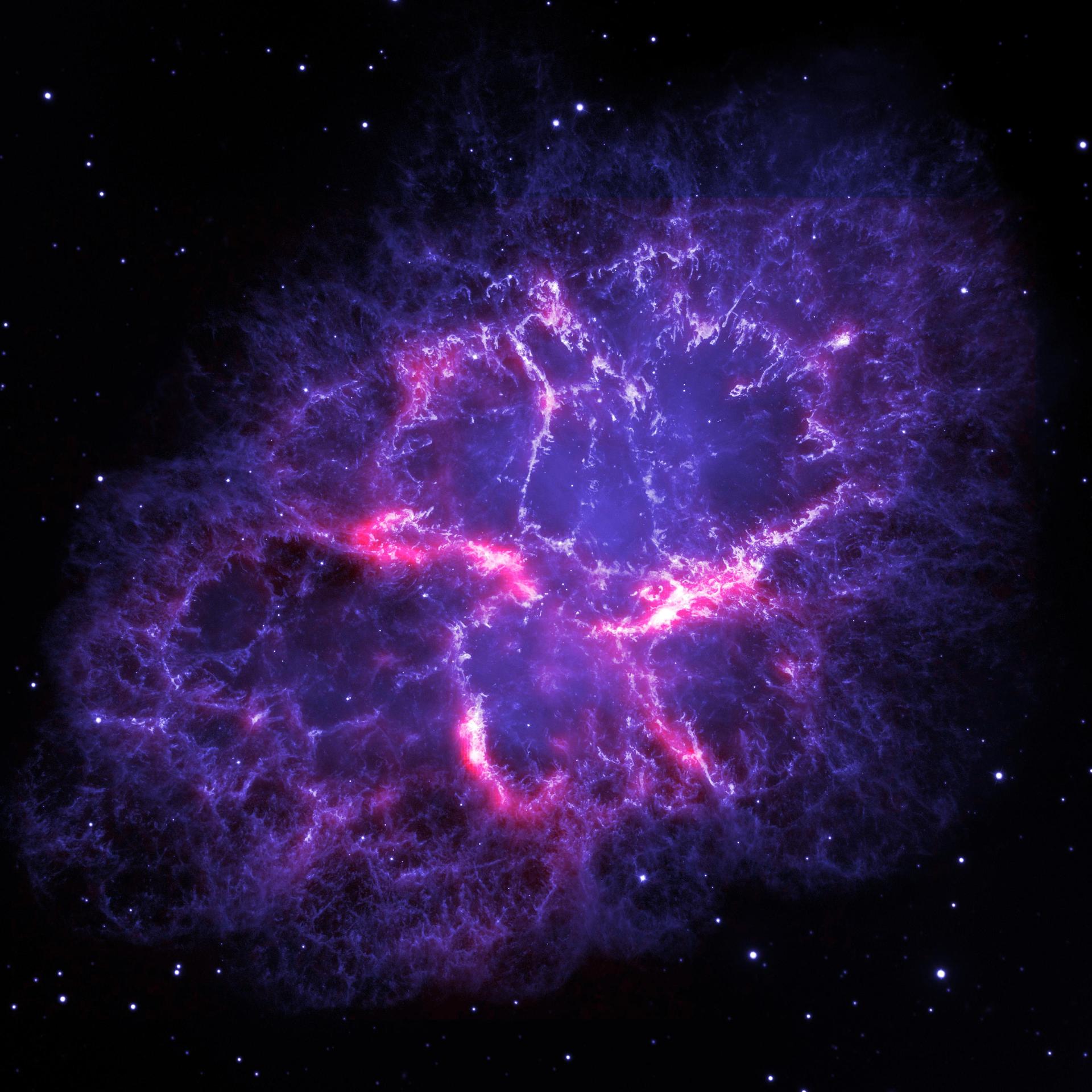
Crab Nebula (M1) — supernova remnant imaged by Herschel and Hubble Space Telescopes

Category: Papers & Publications

Peer-reviewed papers and publications by Harold Aspden

Crab Nebula (M1), supernova remnant · ESA/Herschel/PACS; NASA, ESA & A. Loll/J. Hester (Arizona State Univ.) · NASA Image Library ↗

  • 1988e

    1988e

    The following is a paper by H. Aspden published in Magnets in Your Future, v. 3, pp. 15-18 (August 1988).

    THE VACUUM AS OUR FUTURE ENERGY SOURCE

    Commentary: The author here shows the way in which one can access vacuum energy by ferromagnetic techniques. This was the author’s first published account of the way forward. The method described features in the author’s U.K. and U.S. patent specifications referenced in these abstracts as [1990e] and [1991e], respectively. This, in a sense, marks the beginning of the author’s earnest endeavours to prove that the aether can serve as an energy source, though an earlier proposal, the subject of a patent specification [1979b] suggested a route involving harnessing the aether energy source by ion acceleration in a plasma discharge.


  • 1988d

    1988d

    The following is a paper by H. Aspden published in Magnets in Your Future, v. 3, pp. 19-24 (May, 1988).

    DO WE REALLY UNDERSTAND MAGNETISM?

    Commentary: Responding to an invitation to contribute an article on magnetism, the author here presents the case that the physicists who regard ferromagnetism as an electron spin property are deceived by the Dirac philosophy. As a result they are not engaging in the research needed to make “the breakthrough by which we can access a cheap, safe and abundant source of energy that will suffice for all future needs.”


  • 1988c

    1988c

    The following is a paper by H. Aspden published in Physics Essays, v. 1, pp. 72-76 (1988).

    A THEORY OF PROTON CREATION

    Abstract: The hitherto unknown role of the muon in physics is now shown to be connected with the processes of proton creation in a primordial muon field. It is possible to deduce not only the mass of the proton in relation to that of the muon, but also the mass of the muon quantum that creates the proton. The advance reported depends upon the discovery of an equation that shows that the merger of a muon pair followed by energy minimization can serve to nucleate further particle synthesis by muon merger to give a unique particle some 8.8989795 times the mass of the muon quantum involved. This leads to the creation of a proton having a mass that is a little greater than 1836.152 times the electron mass, in good accord with the measured value.

    Commentary: In this paper the author set out to show how the proton-electron mass ratio can be derived theoretical from a causal theory of proton creation without requiring the reader to track through prior published work by the author. Apart from its intrinsic scientific merit, this paper has the merit of being self-contained in its presentation.


    The full text of this paper may also be seen in PDF format as Paper No. 9 in the author’s 1996 book Aether Science Papers which is of record in the author’s website www.aspden.org.


  • 1988b

    1988b

    The following is a paper by H. Aspden published in Hadronic Journal, v. 11, pp. 169-176 (1988).

    THE THEORY OF THE PROTON CONSTANTS

    Abstract: The proton/electron mass ratio and the proton magnetic moment measured in nuclear magnetons have values now known to a very high degree of precision. The only theory of record that gives physical reasoning which can account for these dimensionless
    numerical ratios is one reported in the Hadronic Journal in its extended application to the neutron and the deuteron. In view of the recent CODATA specification of the proton constants, which is of higher precision than was known when the proton theory was first
    published, it is appropriate to review that theory and present it in a simplified and updated form. It is found that the theory remains viable, notwithstanding the stringent demands imposed by the measurement data.


    The full text of this paper may also be seen in PDF format as Paper No. 11 in the author’s 1996 book Aether Science Papers which is of record in the author’s website www.aspden.org.


  • 1988a

    1988a

    The following is a paper by H. Aspden published in Hadronic Journal, v. 11, pp. 307-313 (1988).

    INSTANTANEOUS ELECTRODYNAMIC POTENTIAL WITH RETARDED ENERGY TRANSFER

    Abstract: Relativistic electrodynamics (ED) derivations of the Lorentz force can be questioned if, as for the weak interaction, the hadron-hadron ED interaction differs from the lepton-lepton ED interaction. The argument raised by C. K. Whitney in a recent Hadronic Journal paper is here developed in a radically different way. By deriving the Neumann potential from the Coulomb law, assuming instantaneous action but retarded energy transfer in a zero-point energy background, it is shown that the hadron-hadron ED interaction should be anomalous. This is deemed to be relevant to the experimental issues raised by Whitney.

    Commentary: After very many years of effort to decipher how Nature determines the Neumann potential, the author finally resolved the issue and this paper presents the solution. The Neumann potential is the primary action which governs electrodynamic
    interaction force between electric charge in motion and the law of electrodynamics needed to understand gravitation is derived from that potential [1969a]. Accordingly, this paper closes the project which has preoccupied the author for so long. Orthodox teachings based on retarded potential theory has made the subject far too complex mathematically and has failed to give satisfactory solutions. Nature, it seems, has a way of avoiding such complication and, as the reader will by studying the subject paper, the mathematics involved is now so simple as to pose no difficulties for students.


    The full text of this paper may also be seen in PDF format as Paper No. 11 in the author’s 1996 book Aether Science Papers which is of record in the author’s website www.aspden.org.


  • 1987p

    1987p

    The following is a paper by H. Aspden presented in a Poster Session at the Institute of Physics (U.K.) conference, ELECTROSTATICS ’87, held at Oxford University on 8-10 April, 1987.

    CHARGE INDUCTION WITHIN A FARADAY CAGE

    The following paper was written in 1984. It describes an experiment performed when the author was a Visiting Senior Research Fellow at the University of Southampton in England. The paper was not published at that time but a summary account of the experiment was presented in a poster session at the above conference. It was shown that, contrary to standard belief, it is possible for charge to exist on metal objects within the cage that are connected to the cage by copper wire. The effect is small but attributable to the incidence of thermal radiation. It affects certain measurements of G, the constant of gravitation.


  • 1987o

    1987o

    The following is an Abstract of a paper by H. Aspden at a conference on Quantum Physics held at the University of Gdansk in Poland on 21-25 September 1987.

    TESTS OF PHOTON THEORY IN TERMS OF PRECISION MEASUREMENT

    Abstract: The author’s photon theory, which gives a theoretical value of the reciprocal of the fine-structure constant as 137.0359148 for actions in space undisturbed by matter is extended to the material environment. It is shown that effects related to our motion through the cosmic reference frame can account for the part-per-million discrepancies between the above theoretical value and that measured. The photon theory is further supported by a phenomenon connected with resonance effects in an interaction between atomic electrons and the natural oscillations of the space medium, which are at a frequency involving resonant interaction with the gravity field. This concerns the extreme scarcity of the element promethium.


  • 1987n

    1987n

    The following is an Abstract of a paper by H. Aspden and D. H. Gieskieng published in Speculations in Science and Technlogy, v. 10, p. 8 (1987).

    AN ANTENNA WITH ANOMALOUS RADIATION PROPERTIES

    Abstract: Antennas designed to radiate electric and magnetic fields in quadrature timephase are found to have anomalous radiation properties relative to the in-phase propagation properties of the conventional dipole. It is shown that there is a marked advantage in wave survival efficiency over the dipole, increasingly evident beyond a mile range. This is attributed to the excitation of a natural wave propagation mode by the new antenna, rather than the dipole’s forced wave propagation and the degeneration of the latter over the short range into a natural wave with some energy dissipation.

    These effects occur principally over the first few hundred metres of propagation and are distinguished from ground reflection factors by being performed at special canyon-type sites in Colorado.

    The phenomenon is discussed in relation to other anomalous evidence in conventional coaxial signal propagation at 5 MHz reported from the Center for Atmospheric and Space Sciences at Utah State University. Propagation between two atomic clocks along a 500-metre coaxial cable indicates that signal speed can fluctuate by up to 1% above or below the speed of light. It is suggested that this is really a fluctuating phase shift of up to a quarter wavelength attributable to the spurious excitation of the natural resonance of the field in relation to the forced wave propagation at the signal source.

    Principal references:

    Gieskieng, D.H., The Mines Magazine, p. 29 (January 1981).
    Aspden, H., Wireless Wid, 88, 37 (October, 1982).
    Aspden, H., Lett. Nuovo Cimento, 41, 252 (1984).


    The above Abstract was published with a notice which stated: ‘For copies of the complete paper, which has 28 pages, 6 figures and 14 references, please contact Dr. Aspden.’ this offer has now been withdrawn. The full paper will be published in these Web pages in the near future [H. Aspden, 25 April, 2004].

  • 1987m

    1987m

    The following is a conference paper by H. Aspden presented at a NATO Advanced Research Workshop held in Bridgeport, Connecticut, June 23-27, 1986. It was published in 1987 by Plenum Press in ‘Quantum Uncertainties’ Eds. Honig, Kraft & Panarella, NATO ASI Series B; Physics Volume 162 at pp. 245-359.

    THE THEORETICAL NATURE OF THE PHOTON IN A LATTICE VACUUM

    Abstract: This paper summarizes the author’s theory of the photon, showing how Planck’s radiation law can be derived from aether theory involving a structured aether in which charges occupy lattice sites set in an electrically neutralizing background continuum.

    The advance in this paper is to draw attention to an open issue which has bearing upon a potential paradox. The theory gives reason for suspecting that, though h is invariant in the formula E=hf, the energy quantum shed by an atom in producing the photon radiation may have a very small amount of its energy deployed into priming the perturbation of the photon spin at the frequency f. The result should be that h, as measured from analysis of optical spectra will appear to be larger by a few parts in ten million compared with the value exhibited, for example, in Josephson and quantized Hall resistance experiments. Precision measurements of the fine structure constant by different techniques may eventually clarify this issue.

    See reference [1986k], the research contribution of which was inspired by the author’s attendance at this NATO meeting. The photon theory is there advanced to explain the causal basis of electron diffraction and extended to account for single neutron diffraction.


  • 1987k

    1987k

    The following is a paper by H. Aspden published in Electronics and Wireless World, p. 230 (1987).

    EARTHQUAKE

    Abstract: Laboratories monitoring earthquake tremors, as well as radio enthusiasts within a few hundred miles of regions prone to earthquakes, may find a radio technique backs up ether theory.

    Commentary: This is an account of something observed by a radio enthusiast in Switzerland during a period before a quite disturbing earth tremor arrived owing to an earthquake not too far away in Italy.

    M. Markert was working a little way from his house where his radio equipment was receiving an amplitude-modulated long wave transmission from a BBC station in England. So that he could follow this BBC programme while outside, Markert had his own local frequency-modulated retransmission facility and was receiving the station with a small portable receiver with clarity even though it was coming into his house as AM and being retransmitted as FM. Then the reception became distorted and Markert rushed back to his house to check the incoming AM signal. That was still coming in with clarity. Onward checking indicated that only the FM signal was distorted even though the AM signal was clear. Then the earthquake tremor struck and soon thereafter everything returned to normal. There was no fault with his equipment. His conclusion had to be that the effects of the earthquake were felt by the FM signal but not the AM signal!

    My contribution in writing the subject paper was to point to this as evidence of the aether. A earthquake tremor involves bulk deployment of matter and I believe that the aether can be drastically disturbed by the sudden movement of matter. Now a very small movement of the lattice structure of the aether I describe in these Web pages can have a significant effect by distorting an FM radio signal but a judder of the electromagnetic reference frame would have little or no effect on the energy and so upon the signal carried by a long wave AM transmission. Accordingly, I see this phenomernon as observed by Markert as one more indication that there is a real aether.

    This 1987 article in Electronics and Wireless World drew this to readers attention. I may add also that an insert in the body of the article was headed:

    A Boost to Ether Theory?

    It reads:

    Readers may recall Dr. Aspden’s earlier article “The ether – an assessment” in Wireless World. October [1982], if not his book Modern Aether Science. Though adherence to ether belief may seem futile, Dr. Aspden says he can now point to its predictive power.

    There is currently no accepted explanation for the proton-electron mass ratio, but amongst Aspden’s many scientific papers is “Calculation of the proton mass in a lattice model of the ether”. By a major technological advance, the proton-electron mass ratio was recently measured to within a precision of 41 parts per billion, a severe test for the value given by ether theory. The authors of the experiment have acknowledged in their report that the value given by Dr. Aspden’s theory was “remarkably close to the experimentally measured value (i.e. within two standard deviations)”. They also said that this was “even more curious” taking into account that the theory was published several years before direct precision measurement of this ratio had begun.